In this article
- The appliance that quietly changed how we eat
- From blocks of ice to the electric cold box
- The clever trick: making cold by moving heat
- Following the refrigerant on its endless loop
- The compressor and the parts that do the work
- Inside the cold box: how it stays organised
- Frost, defrosting, and the freezer
- Energy, efficiency, and running costs
- Getting more from your fridge
- Where refrigeration is heading
Of all the machines in the modern home, the refrigerator may be the one we appreciate the least relative to how much it does. It runs silently, day and night, year after year, never switched off, asking for nothing but a steady supply of electricity. And in return it performs something close to a miracle: it holds back the relentless natural process of decay, keeping food fresh and safe for days or weeks rather than hours. It is no exaggeration to say that cheap, reliable refrigeration reshaped how humanity eats, shops, and lives.
Yet hardly anyone knows how it works, and the way it works is genuinely counterintuitive. A refrigerator does not “make cold” in any straightforward sense—there is no cold being generated inside it. Instead it performs a clever bit of physics, moving heat from where you do not want it to where you do not care about it. This article explains that trick from the ground up: the strange history of artificial cold, the elegant cycle that powers every fridge, the job each component does, and how to get the most out of the humming box in your kitchen.
The appliance that quietly changed how we eat
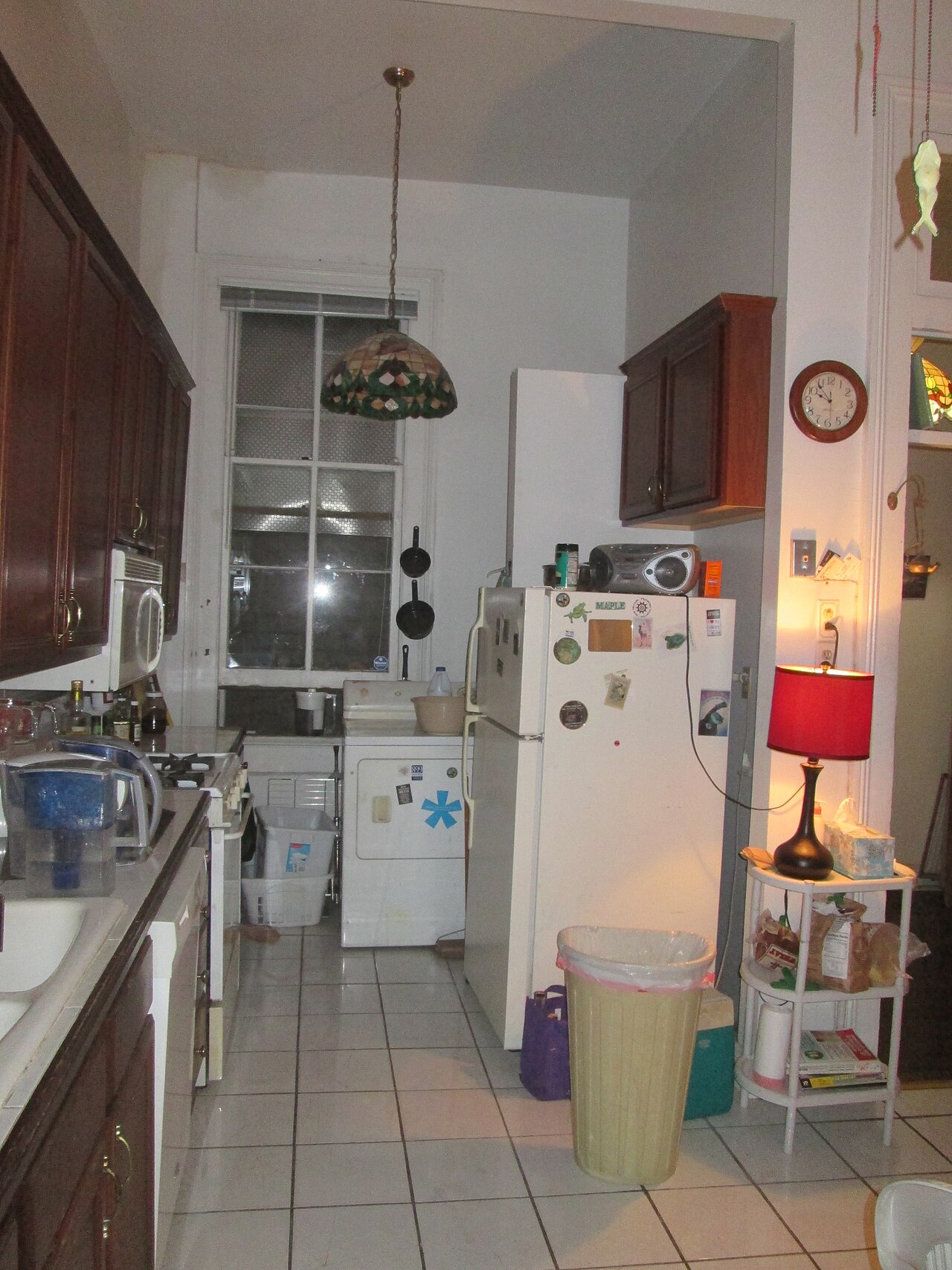
Before reliable refrigeration, keeping food was a constant, anxious battle. Meat had to be eaten quickly or heavily salted and smoked; milk soured within a day; vegetables wilted; and people shopped almost daily for perishables because there was no way to store them. Entire cuisines and ways of life were shaped by the simple fact that food rotted fast. The arrival of the home refrigerator broke that constraint, and the consequences rippled out far beyond the kitchen.
With a fridge, families could buy food in larger quantities and less often, which made supermarkets and weekly shopping possible. Fresh produce, dairy, and meat could be transported across countries in refrigerated trucks and railcars, divorcing what people ate from what grew nearby. Leftovers became a normal part of life rather than a gamble. The refrigerator is one of those rare inventions whose real significance is social as much as technical—it changed the rhythm of daily life so thoroughly that we now find it almost impossible to imagine doing without it.
From blocks of ice to the electric cold box
For most of human history, the only way to keep things cold was to bring in something colder, which usually meant ice. Wealthy households and businesses relied on the “icebox,” an insulated wooden cabinet into which a large block of ice was placed, delivered regularly by an iceman. As the ice slowly melted it kept the contents cool, and the meltwater drained away into a tray that someone had to remember to empty. It worked, but it was messy, required constant deliveries, and the cooling faded as the ice shrank.
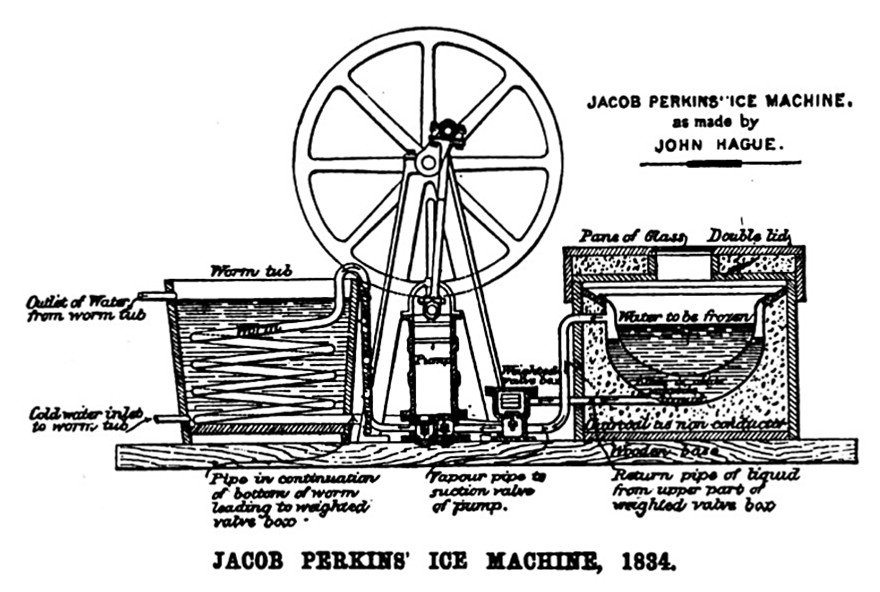
The science that would replace the icebox was worked out in the nineteenth century. Inventors like Jacob Perkins built early machines demonstrating that you could produce cold mechanically, by exploiting the way certain substances absorb heat as they evaporate. For decades these machines were large and industrial, used for making ice commercially and for chilling breweries and meat-packing plants rather than for the home.
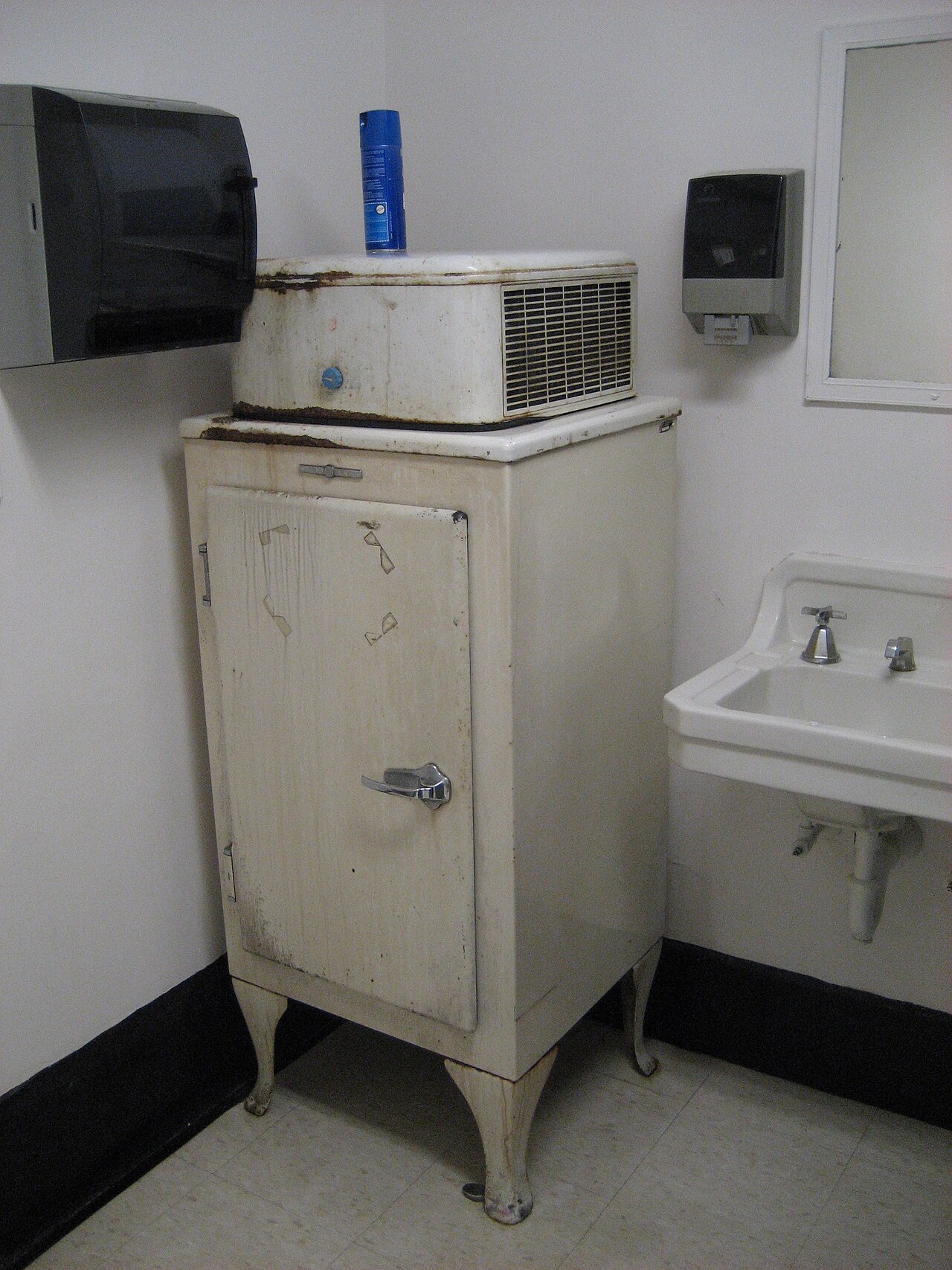
The leap into the household came in the early twentieth century, as electric motors shrank and the technology matured. Early home refrigerators, like the distinctive General Electric “Monitor-Top” with its cooling unit mounted in a cylinder on top, brought mechanical refrigeration into ordinary kitchens. They were expensive luxuries at first, but prices fell steadily, and by the middle of the century the refrigerator had become a standard fixture. The iceman, once a familiar figure on every street, simply vanished.
The clever trick: making cold by moving heat
Here is the idea that makes refrigeration possible, and it is worth slowing down for because it overturns most people’s intuition. Cold is not a thing that can be created; cold is simply the absence of heat. So to make the inside of a box colder, you cannot add cold—you have to remove heat and dump it somewhere else. A refrigerator is, fundamentally, a heat pump: a machine for picking up heat from inside the cabinet and carrying it outside into the room.
The way it does this relies on a beautiful piece of everyday physics. When a liquid evaporates into a gas, it absorbs heat from its surroundings—this is exactly why stepping out of a swimming pool feels cold, as the water evaporating off your skin draws warmth away. And the reverse is also true: when a gas is compressed and condenses back into a liquid, it releases that heat. A refrigerator exploits this by circulating a special fluid, called a refrigerant, in a sealed loop, deliberately making it evaporate inside the fridge to soak up heat and condense outside the fridge to release it. The refrigerant is simply a heat-carrying courier, endlessly ferrying warmth out of the cabinet.
Following the refrigerant on its endless loop
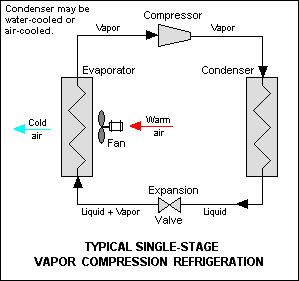
It becomes clearest if you follow the refrigerant around its circuit. Picture it starting as a cold, low-pressure liquid entering the coils inside the fridge, called the evaporator. Here, in the cold interior, the liquid evaporates into a gas, and in doing so it greedily absorbs heat from the air and food inside the cabinet—this is the moment the cooling actually happens. The food gives up its warmth to the evaporating refrigerant.
Now a cool, low-pressure gas carrying that absorbed heat, the refrigerant travels to the compressor, which squeezes it hard. Compressing a gas makes it hot and raises its pressure, so the refrigerant emerges as a hot, high-pressure gas. It then flows into the condenser coils—usually the warm black grille on the back or underneath the fridge—where, exposed to the cooler room air, it releases its heat and condenses back into a liquid. This is why the back of a fridge is warm: that is the heat from inside your food being expelled into your kitchen.
Finally the now-warm, high-pressure liquid passes through a narrow expansion valve, which causes its pressure to drop suddenly. This sharp drop in pressure makes it turn cold again, and the cold liquid heads back into the evaporator to begin the whole cycle once more. Round and round it goes, thousands of times a day, each loop carrying another small load of heat from the inside of the fridge to the outside. It never stops as long as the fridge needs cooling, which is the secret of how a sealed box stays cold indefinitely.
The compressor and the parts that do the work
The single most important component, and the only one that consumes significant power, is the compressor. It is the pump that drives the entire cycle, squeezing the refrigerant gas and pushing it around the loop. Usually a sealed unit at the bottom rear of the fridge, the compressor is the source of the gentle humming you hear, switching on and off as the fridge works to maintain its temperature. When people say a fridge has “died,” it is most often the compressor that has failed.
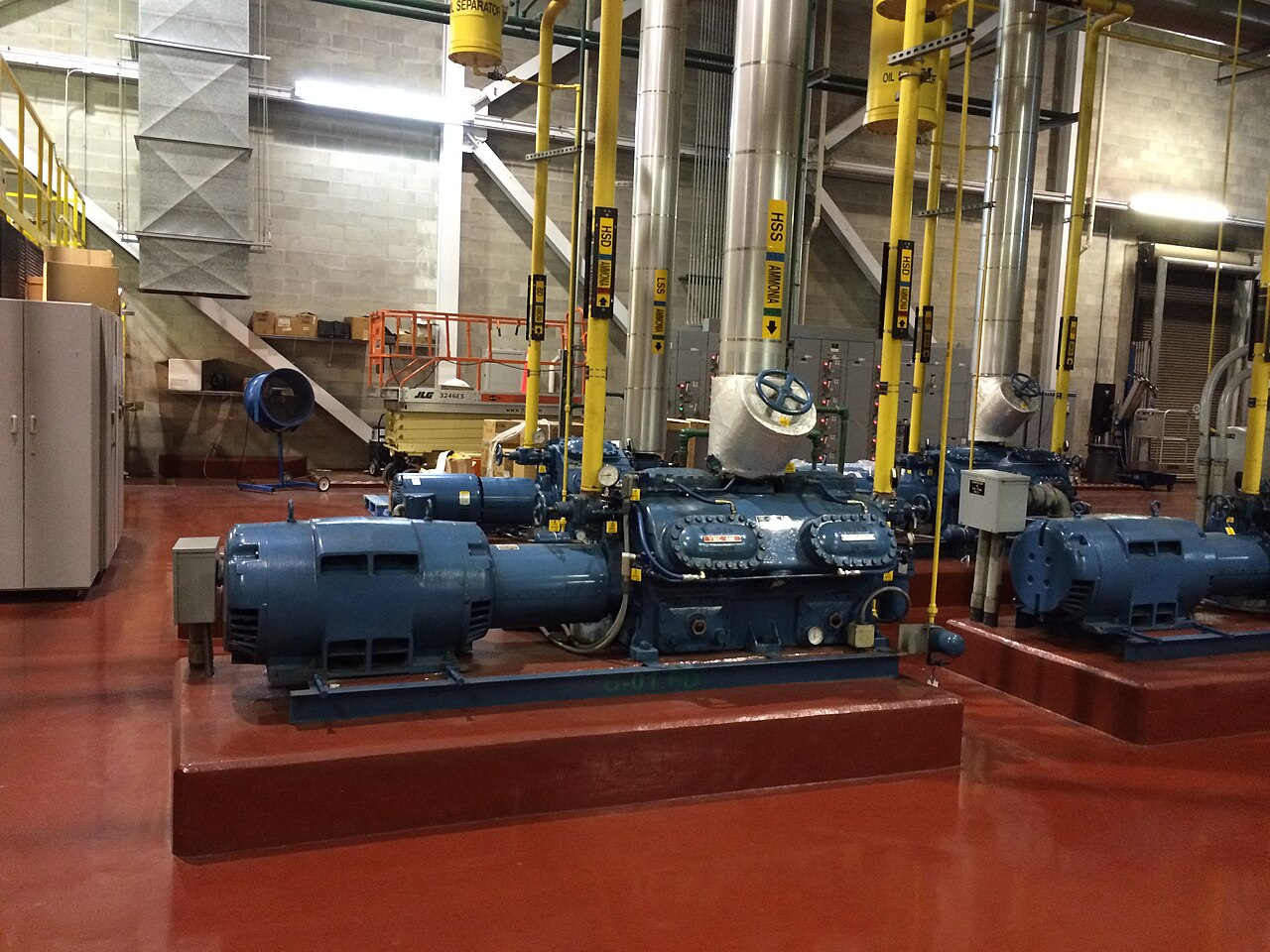
Surrounding the compressor are the other essential pieces: the condenser coils that shed heat to the room, the evaporator coils that absorb heat from inside, and the expansion valve that triggers the crucial pressure drop. A thermostat senses the interior temperature and switches the compressor on when it drifts too warm and off when it is cold enough, which is why a fridge runs in cycles rather than continuously. Wrapping all of it is thick insulation in the walls and door, whose job is to slow the inevitable seeping of warmth back in from the room—the better the insulation, the less often the compressor has to run.
Inside the cold box: how it stays organised
The interior of a fridge is more thoughtfully designed than it appears. Cold air, being denser, naturally sinks, so without help the bottom of the fridge would be far colder than the top. Many fridges use a small internal fan to circulate air and even out the temperature, while the layout itself accounts for the remaining variation: the top shelves and door tend to be slightly warmer, the back and lower shelves colder.
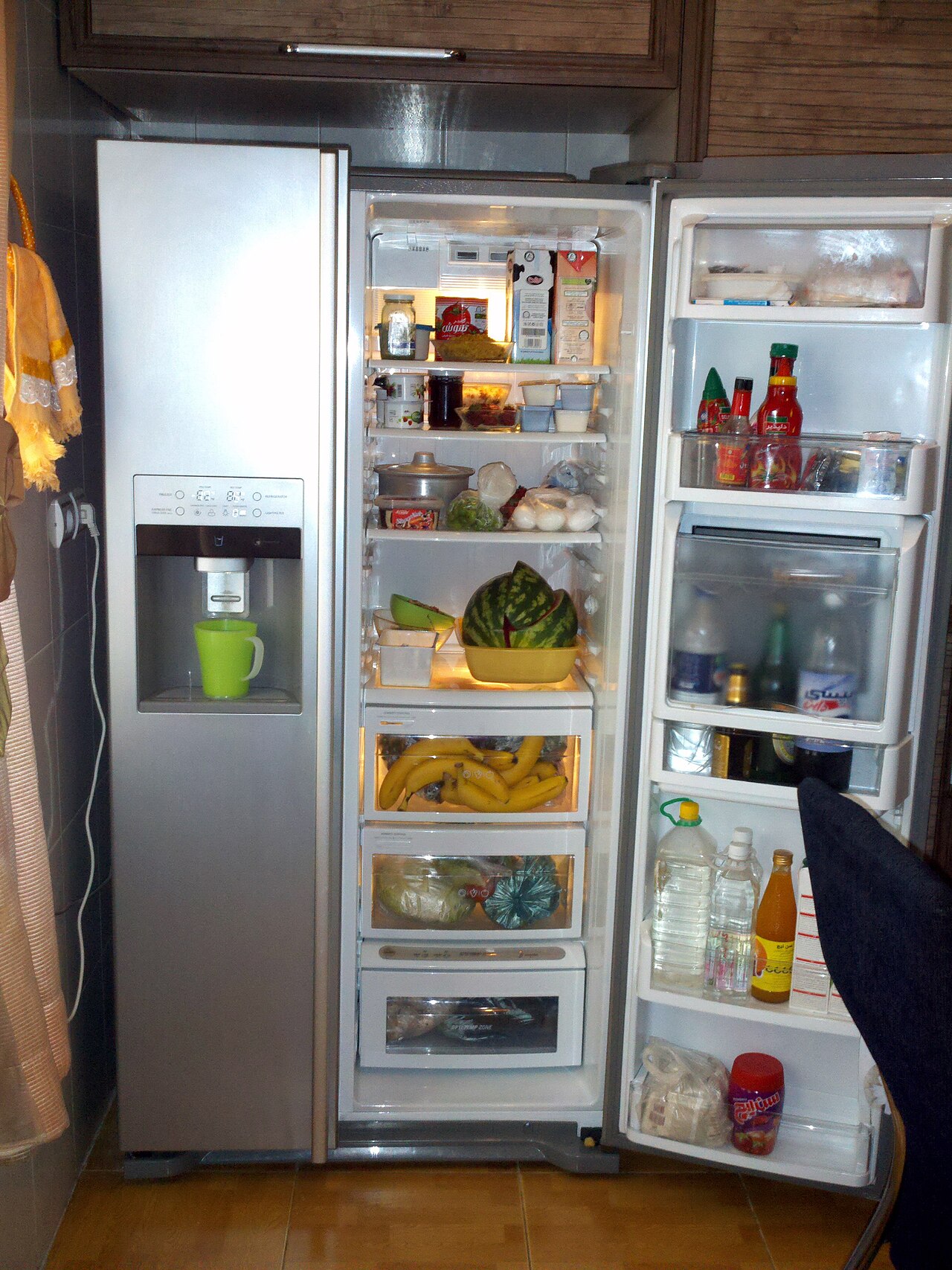
This is why the design guides you, often without your realising it, toward storing food sensibly. The drawers at the bottom, the crisper bins, are sealed off to hold humidity for vegetables that would otherwise dry out. The door shelves, being the warmest and most temperature-variable part as they are opened and closed, are really best for items that tolerate it rather than for the milk most people keep there. Understanding that a fridge is not a uniform cold space, but a landscape of slightly different zones, is the key to using it well and keeping food fresh longer.
Frost, defrosting, and the freezer
The freezer compartment works on exactly the same principle as the fridge, simply taken further—the refrigeration cycle pulls enough heat out to drop the temperature well below freezing. The challenge in a freezer is frost. The air inside carries a little moisture, and whenever you open the door, humid room air sneaks in. That moisture freezes onto the cold surfaces, and over time, in older freezers, it builds into thick layers of frost that had to be manually defrosted with the appliance switched off—a tedious chore older generations remember well.
Most modern freezers are “frost-free,” and they achieve this with a clever automated routine. Periodically, a small heating element briefly warms the cooling coils just enough to melt any accumulated frost, and the resulting water drains away to a tray near the warm compressor, where it harmlessly evaporates. It seems paradoxical to put a heater inside a freezer, but it is far more convenient than the manual defrosting it replaced, at the small cost of a little extra energy.
Energy, efficiency, and running costs
Because a fridge runs every hour of every day for its entire life, its energy efficiency matters more than almost any other appliance. A refrigerator that is even modestly wasteful adds up to a significant cost over the ten or fifteen years it might run. This is why energy-efficiency labels are taken so seriously for fridges, and why a more efficient model can be worth the higher purchase price over its lifetime.
Modern fridges have become dramatically more efficient than their ancestors, partly through better insulation and partly through smarter compressors. Older fridges had compressors that ran flat-out or not at all; newer “inverter” compressors can vary their speed, running gently and continuously to hold a steady temperature rather than lurching on and off, which uses less energy and lasts longer. The refrigerants themselves have also changed repeatedly over the decades, moving away from chemicals that harmed the ozone layer and, more recently, those that contribute heavily to global warming, toward gentler alternatives.
Getting more from your fridge
A few simple habits make a real difference to how well a fridge works and how much it costs to run. Keeping it reasonably full helps, because the cold mass of food holds temperature and steadies things when the door opens—though stuffing it so full that air cannot circulate has the opposite effect. Leaving space around the back so the condenser coils can shed heat, and occasionally vacuuming the dust off those coils, lets the fridge work less hard. And not putting hot food straight in, but letting it cool a little first, spares the compressor a sudden burden.
The biggest avoidable waste is simply leaving the door open or opening it repeatedly, each time letting cold air tumble out and warm air flood in. A good door seal matters too; if the rubber gasket is cracked or loose, the fridge fights a constant losing battle against warm air leaking in. None of this is complicated, but because the fridge is so reliable and undemanding, these small efficiencies are easy to overlook—and they add up over the many years a fridge faithfully runs.
Where refrigeration is heading
The basic vapor-compression cycle has dominated refrigeration for a century and is unlikely to be replaced soon, but it keeps being refined. Variable-speed inverter compressors, better insulation, and more environmentally friendly refrigerants are steadily improving efficiency and reducing the environmental harm of the gases involved. Researchers are also exploring genuinely different cooling methods, such as magnetic refrigeration, which uses the way certain materials heat and cool when exposed to a magnetic field, potentially doing away with refrigerant gases altogether—though such ideas remain mostly in the laboratory.
The more visible changes are in features rather than physics. Fridges are sprouting touchscreens, cameras that let you see inside from the shop, and connections to the rest of the smart home, with varying degrees of genuine usefulness. Whether or not anyone needs a fridge that talks to a phone, the core machine beneath all the gadgetry remains the same quiet marvel it has always been: a sealed loop of refrigerant, endlessly carrying heat out of a box, holding decay at bay so that the food inside stays fresh. It is one of the most consequential machines ever built, and it does its world-changing work without ever asking us to notice.