In this article
- The machine that gave us back our time
- From the river and the washboard to the electric drum
- How a washing machine actually cleans clothes
- A walk through the wash cycle
- The parts hidden behind the panel
- Front-loaders versus top-loaders
- The brain: sensors and programmes
- Washing better and making it last
- Where the washing machine is heading
It is easy to overlook the washing machine. It sits in a corner of the kitchen or a utility room, does its work behind a closed door, and is summoned only when the laundry basket overflows. But few household machines have done more to change ordinary life, and particularly the lives of women, who for most of history bore the crushing burden of doing the wash by hand. Laundry was once one of the most physically exhausting and time-consuming tasks of the entire week. The machine that took it over quietly handed back countless hours of human labour.
Behind its mundane exterior, the washing machine is a genuinely clever piece of engineering, combining mechanics, water management, heating, and increasingly sophisticated electronics into a sealed box that you simply load and forget. This article looks at how it works: the surprisingly brutal history of getting clothes clean, the three things that actually do the cleaning, what happens during each stage of a wash, the difference between the front-loaders and top-loaders you see in showrooms, and how to wash in a way that keeps both your clothes and your machine in good health.

The machine that gave us back our time
To appreciate the washing machine you have to understand what it replaced. Doing laundry by hand was an all-day ordeal, often a full day set aside each week purely for washing. It meant hauling and heating large quantities of water, scrubbing each item against a rough board, wringing it out by sheer muscle, and hanging it to dry. The work was hard on the hands and the back, and it consumed an enormous share of the time and energy of whoever, almost always a woman, was responsible for the household.
The automatic washing machine did not just make this easier; it largely abolished it. By taking over the washing, rinsing, and spinning entirely, it converted a day of heavy labour into a few minutes of loading and the press of a button. Historians of technology often point to the washing machine as one of the appliances that did the most to free up time, especially for women, contributing in its own quiet way to broader social changes over the twentieth century. It is a reminder that some of the most profound technologies are not the glamorous ones but the ones that silently remove drudgery.
From the river and the washboard to the electric drum
For most of human history, washing clothes meant water, agitation, and muscle. People scrubbed garments in rivers and streams, beat them against rocks, and trampled them underfoot. The washboard, a ridged surface of wood, glass, or metal, was a step up: you rubbed the wet, soapy cloth against its corrugations to work dirt loose. Effective, but exhausting, and hard on both the fabric and the hands.

Mechanisation crept in slowly. Early devices were hand-cranked tubs that sloshed the clothes around, sparing some of the scrubbing. A major leap was the wringer, often called a mangle: two rollers you fed the wet washing through to squeeze out the water, replacing the punishing hand-wringing. Wringer washing machines, which combined a powered washing tub with a set of these rollers on top, were a common sight in homes for much of the early and mid twentieth century.
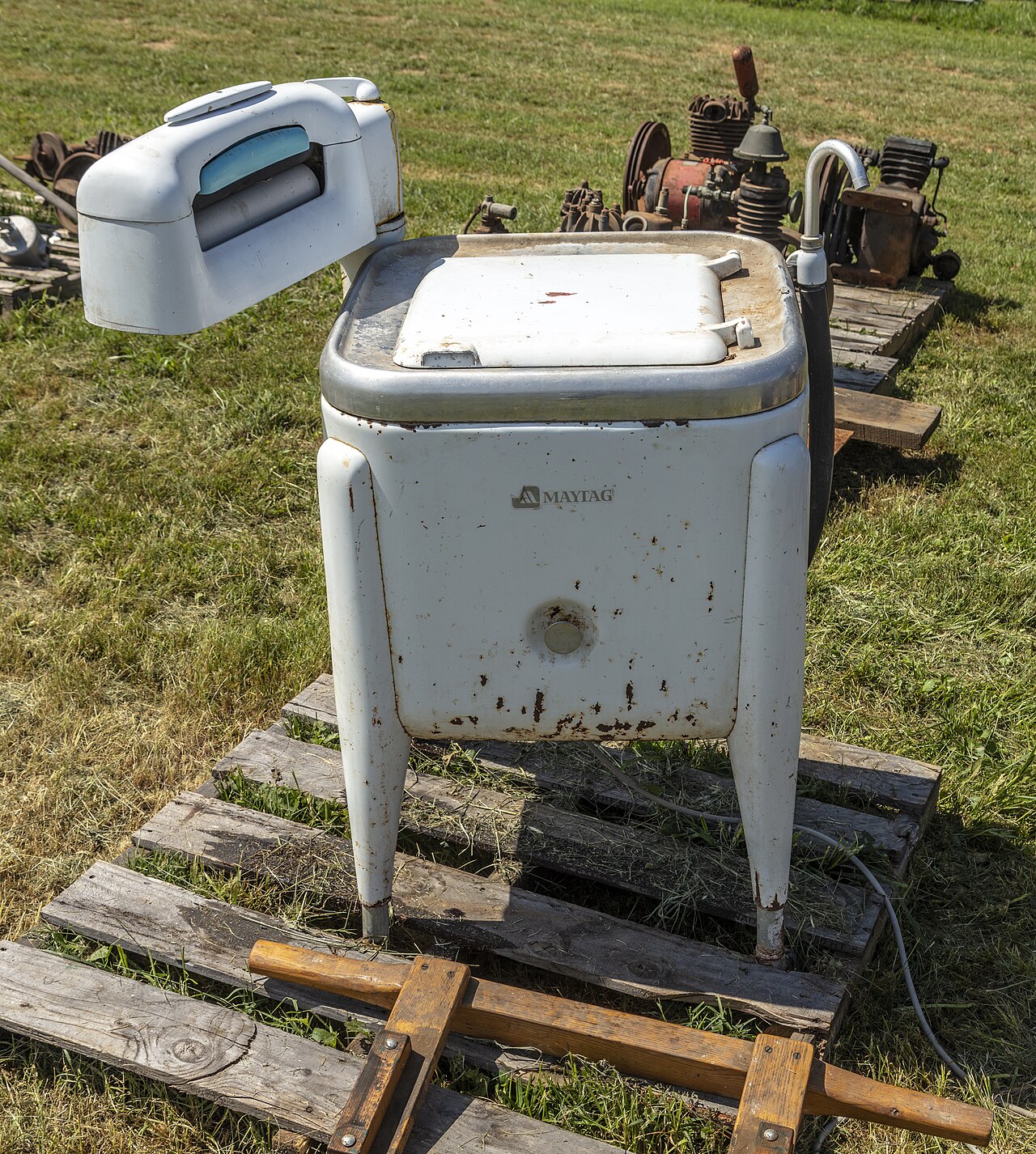
The true revolution was the fully automatic electric machine, which arrived in stages through the twentieth century and combined every step—washing, rinsing, and spinning the water out—into a single sequence requiring no intervention. Once electric motors, water valves, and eventually timers and electronics could be built reliably and cheaply, the modern washing machine took shape, and the washboard and wringer joined the iceman in the museum of obsolete domestic technology.
How a washing machine actually cleans clothes
Cleaning clothes comes down to a combination of three things working together, and a washing machine is essentially a device for delivering all three in the right measure. The first is mechanical action—the physical movement that loosens and dislodges dirt from the fibres. The second is the chemistry of detergent, which does the actual work of lifting grease and grime away and holding it suspended in the water so it can be rinsed off. The third is heat, since warm water helps the detergent work and dissolves greasy soils more effectively.

The genius of the machine is how it provides the mechanical action without damaging the clothes. Rather than scrubbing fabric against a rough surface, a modern front-loading machine uses a rotating drum with paddles, called lifters, on the inside. As the drum turns, the lifters carry the wet clothes up and then drop them back down into the water with a gentle tumbling motion. This repeated lifting and dropping flexes the fabric and forces detergent-laden water through it again and again, working dirt loose far more gently than a washboard ever could. The holes in the inner drum let water flow freely between the drum and the watertight outer tub that surrounds it.
A walk through the wash cycle
When you close the door and start a cycle, a precise sequence unfolds. First the machine takes in water through an inlet valve, drawing detergent from the dispenser drawer along the way. If the cycle calls for it, a heating element warms the water to the chosen temperature—the machine measures the temperature and holds it steady. Then the main wash begins: the drum rotates back and forth, tumbling the clothes through the hot, soapy water for an extended period to let the mechanical action and detergent do their work.
Once the wash is done, a pump drains the dirty water away. The machine then refills with clean water for the rinse, tumbling again to flush the loosened dirt and detergent out of the fabric, often repeating this rinse more than once. Finally comes the spin: the drum accelerates to very high speed, sometimes well over a thousand rotations a minute, and centrifugal force flings the water out of the clothes and through the drum holes to be pumped away. This is why clothes emerge merely damp rather than soaking—the spin has already extracted most of the water, which is also the noisiest and most vigorous part of the whole process.
The parts hidden behind the panel
Behind the front panel, a washing machine is a robust assembly built to cope with water, heat, and violent motion. At its core are two drums: the perforated inner drum that holds the clothes and spins, and the solid, watertight outer tub that contains the water and surrounds the inner drum. A powerful electric motor drives the drum, in older machines through a belt and in many modern ones directly, allowing both the gentle tumbling of the wash and the ferocious speed of the spin.

Supporting these are the water inlet valves that let clean water in, a drain pump that forces dirty water out, and usually a heating element at the bottom of the tub to warm the water. One of the most important and least visible components is the set of heavy counterweights—often big blocks of concrete—bolted to the tub, along with springs and shock absorbers. Their job is to stop the machine from shaking itself across the floor during the high-speed spin, when an unbalanced load can generate tremendous forces. A rubber door seal keeps the water sealed in, and the whole assembly is engineered to survive years of repeated, punishing cycles.
Front-loaders versus top-loaders
The two main designs you encounter work on the same principles but differ in orientation and method. A front-loader has a horizontal drum you load through a door in the front, and it cleans using the tumbling action described above, lifting and dropping clothes through a relatively small amount of water. A traditional top-loader has a vertical drum you load from above, and many use a central post called an agitator that twists back and forth, dragging the clothes through a tub filled with much more water.
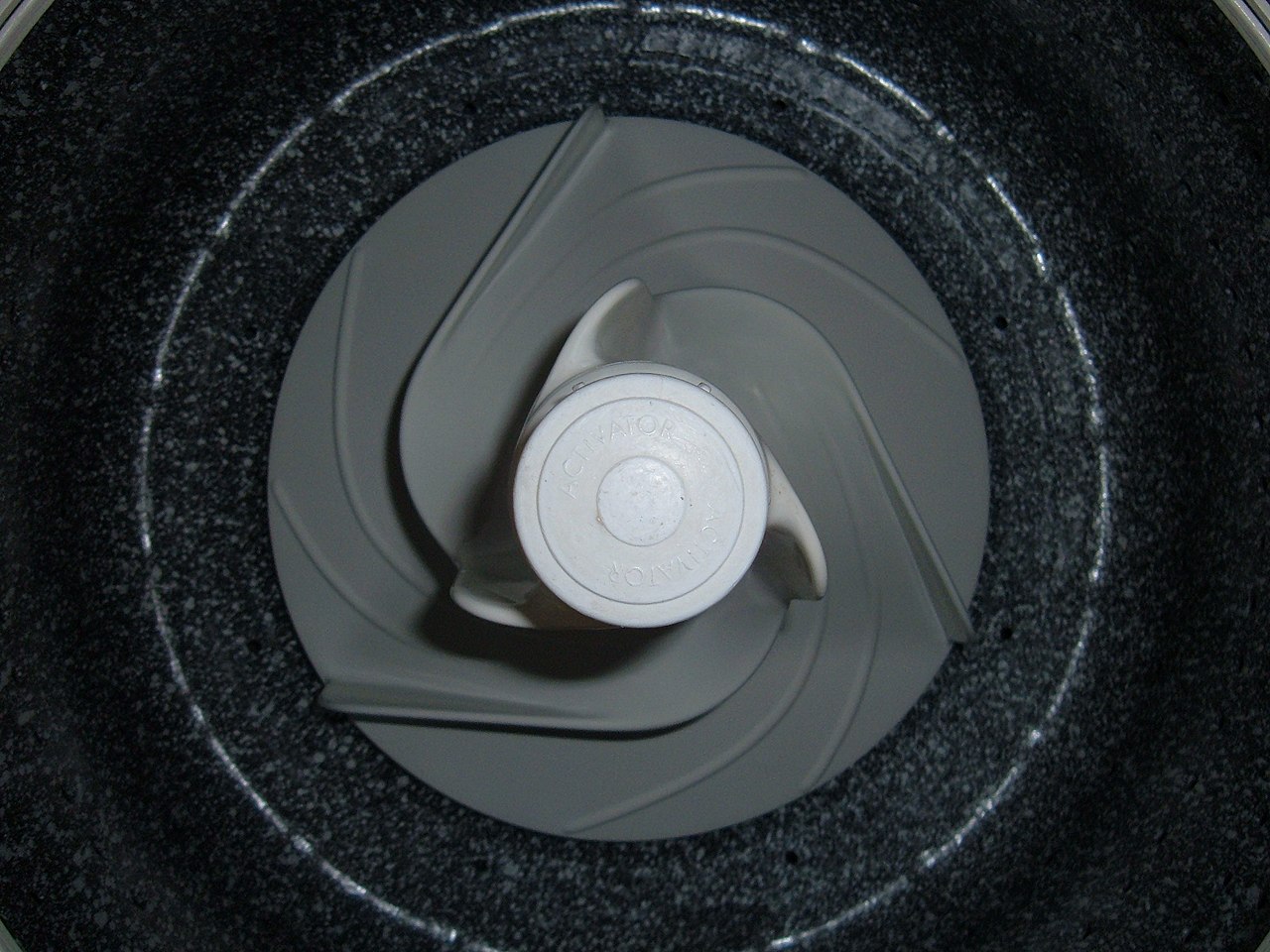
Each has trade-offs. Front-loaders generally use considerably less water and energy, since they do not need to fill a deep tub, and their gentle tumbling is kinder to fabrics and can spin faster, leaving clothes drier. Top-loaders are often cheaper, can be easier on the back to load, and tend to run faster cycles, though the agitator design can be harder on clothes and uses more water. The broad trend, driven by concerns about water and energy use, has been toward the more efficient front-loading design in much of the world, though preferences vary by region.
The brain: sensors and programmes
Early washing machines were controlled by a purely mechanical timer—a clockwork-like dial that turned slowly, switching the motor, valves, and pump on and off in a fixed sequence. That distinctive clunking dial defined the machine for decades. Modern machines have replaced it with an electronic controller, a small computer that manages the whole process with far more flexibility and precision.
This brain enables the array of programmes on the control panel—cottons, synthetics, delicates, quick wash, and so on—each simply a different recipe of temperature, water level, wash time, and spin speed tuned for a type of load. Sensors feed it information: a temperature sensor lets it hold the water at the right heat, and many machines now weigh the load or detect how much water the fabric is absorbing, automatically adjusting the water and detergent used so a half-empty machine does not waste resources. The most advanced even sense imbalances during the spin and redistribute the load or slow down to avoid the alarming bang and shudder of an off-balance drum. It is a quiet layer of intelligence that makes the machine both gentler and more efficient than its purely mechanical ancestors.
Washing better and making it last
A few habits help both your clothes and the machine. Overloading is a common mistake; a drum stuffed too full cannot tumble the clothes properly, so they do not get the mechanical action they need and come out poorly washed. Using too much detergent is another, since excess suds are hard to rinse away and leave residue on fabric and inside the machine. Washing at lower temperatures when clothes are only lightly soiled saves a surprising amount of energy, because heating the water is by far the most power-hungry part of the cycle.
The machine itself needs a little care, especially front-loaders. Because they seal tightly and wash in cooler water, moisture and residue can linger and breed mould and odours around the rubber door seal. Leaving the door ajar between washes to let it dry, wiping the seal occasionally, and running an empty hot maintenance wash now and then keeps it fresh. Cleaning out the lint filter and checking pockets for stray coins and tissues spares the drain pump. None of this is demanding, but a machine that is looked after will run reliably for many years rather than failing early.
Where the washing machine is heading
The washing machine keeps getting quieter, gentler, and more efficient, squeezing more cleaning out of less water, energy, and detergent. Direct-drive motors without belts run more quietly and last longer, and ever-smarter sensors fine-tune each wash to the actual load rather than a fixed programme. Combined washer-dryers that handle the whole laundry process in one drum continue to improve, appealing to homes short on space.
Like every other appliance, washing machines are also gaining connectivity, able to be started from a phone, to download specialised wash cycles, or to alert you when the load is done—features of varying genuine usefulness. A more meaningful frontier is the growing awareness that washing synthetic clothes sheds tiny plastic fibres into the water, and future machines may include filters to capture them. Whatever refinements come, the essential job stays the same as it was when the first electric drum began to turn: water, detergent, heat, and gentle motion, working together in a sealed box to lift the dirt of daily life out of our clothes—and to spare us the washboard our great-grandparents knew all too well.