Deep in the interior of southern Africa rise the magnificent stone ruins of Great Zimbabwe, the remains of one of the greatest cities of medieval Africa. Its massive walls, built of granite blocks fitted together without a drop of mortar, curve and soar across the landscape, the enduring monument to a powerful and sophisticated African civilization built by the ancestors of the Shona people.
You come expecting ruins and find the capital of a great kingdom, a city of stone that grew rich on the trade in gold and cattle and that dominated a vast region of southern Africa for centuries. Here rise the soaring walls of the Great Enclosure, the mysterious conical tower, and the ancient complex on the hill, the works of master African builders.
This is the story of Great Zimbabwe, told with proper recognition of its African origins and its true greatness, and with an honest confrontation of the colonial lie that long denied them. It is the story of a great African kingdom, its gold and its trade, its soapstone birds, and the modern nation that took its very name. Come and walk this magnificent city of stone with me, in the heart of southern Africa.
In This Article
- The Great City of Stone in the African Interior
- The Shona People Who Built It
- The Great Enclosure and Its Soaring Walls
- The Mysterious Conical Tower
- The Ancient Complex on the Hill
- The Soapstone Birds of Zimbabwe
- The Great Kingdom It Ruled
- The Decline and the Silence
- The City That Named a Nation
- A Heritage of All Africa
- The Gold and the Trade That Made It Rich
- The Lie the Colonizers Told
- Walking the Ruins of a Great Kingdom
The Great City of Stone in the African Interior
Deep in the interior of southern Africa, amid the hills and grasslands of the country that takes its name from them, rise the magnificent stone ruins of Great Zimbabwe, the remains of one of the greatest cities of medieval Africa. Its massive walls, built of granite blocks fitted together without mortar, curve and soar across the landscape, the enduring monument to a powerful and sophisticated African civilization.

Great Zimbabwe was the capital of a great kingdom, a city of stone that flourished for centuries, its people growing rich on the trade in gold and cattle that linked the interior of Africa to the wider world of the Indian Ocean. At its height it was home to a substantial population, the center of a state that dominated a vast region of southern Africa.
The walls of Great Zimbabwe are among the most impressive architectural achievements of pre-colonial Africa, raised without mortar by the skilled builders of the Shona people, whose descendants live in the region to this day. The great curving walls, the soaring conical tower, and the hilltop complex are the work of a civilization of real sophistication and power, and they stand as a monument to its greatness.
This is the story of Great Zimbabwe, the great city of stone that was the capital of a mighty African kingdom, told with proper recognition of its African origins and its true significance. It is a story that must be told honestly, for the history of Great Zimbabwe was long distorted by colonial prejudice. Come and explore this magnificent city with me, and discover one of the great achievements of medieval Africa.
There is a grandeur and a mystery to Great Zimbabwe that makes an immediate impression, the great curving walls rising from the grass, the sense of a vanished civilization of real power and sophistication. To come upon these ruins in the African interior is to have one’s assumptions challenged and enriched, to encounter the tangible evidence of a great medieval African kingdom.
The very name of the site, meaning great stone houses in the Shona language, tells us that the builders and their descendants always knew what these monuments were and who had made them. It was only the colonizers who denied the obvious truth, and the name itself stands as a quiet rebuke to that denial, an African name for an African achievement.
The Shona People Who Built It
Great Zimbabwe was built by the ancestors of the Shona people, the African population who live in the region to this day, and this fact, long denied by colonial prejudice, must be affirmed clearly and unequivocally. The great city of stone was the achievement of an African civilization, the work of skilled African builders and the center of a powerful African kingdom.

The builders of Great Zimbabwe were master craftsmen in stone, and their achievement in raising the great walls without mortar, fitting the granite blocks together with such precision that the walls have stood for many centuries, is a testament to their skill and sophistication. The architecture of the city reflects a mature and confident building tradition, developed over generations.
The Shona civilization that built Great Zimbabwe was a sophisticated one, with a complex society, a powerful state, and extensive trading connections reaching to the coast and beyond. The city was the capital of this civilization, the seat of its rulers and the center of its power, and its ruins are the enduring monument to the greatness the Shona achieved in the medieval period.
To understand Great Zimbabwe is, first and foremost, to recognize it as an African achievement, the work of the ancestral Shona people, and to honor the civilization that created it. The long history of colonial denial of this truth makes its clear affirmation all the more important, for Great Zimbabwe stands as a proud monument to the sophistication and power of pre-colonial African civilization.
The recognition of the African origins of Great Zimbabwe is not merely a matter of historical accuracy but of justice, a correction of centuries of colonial distortion and a restoration of the truth about the African past. To affirm that this magnificent city was built by Africans is to honor the greatness of the Shona civilization and to reject the racism that long denied it.
The Great Enclosure and Its Soaring Walls
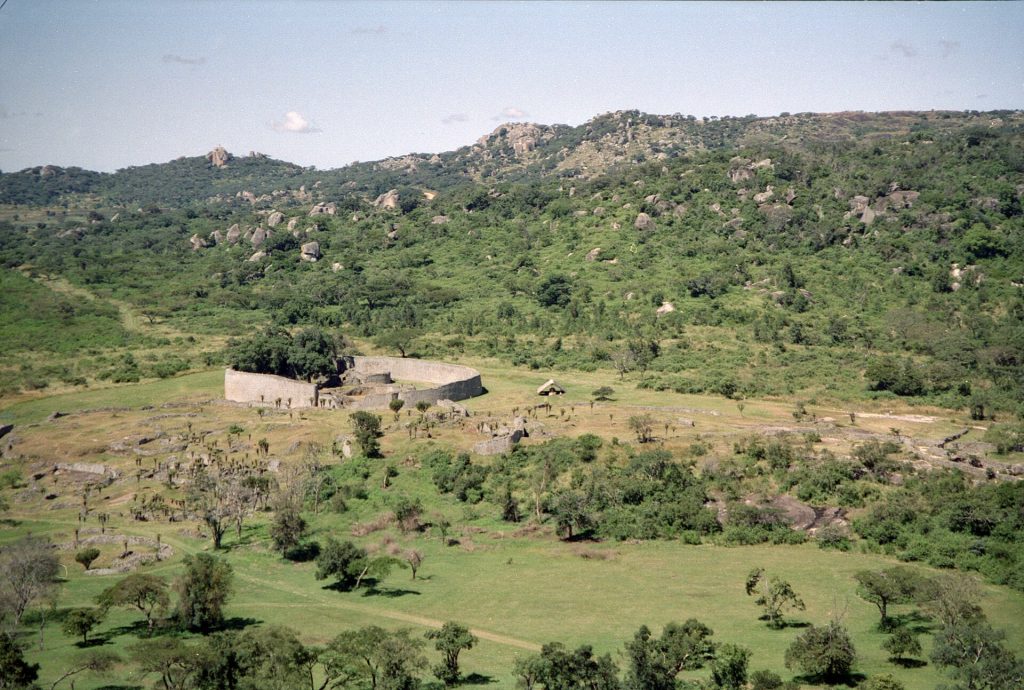
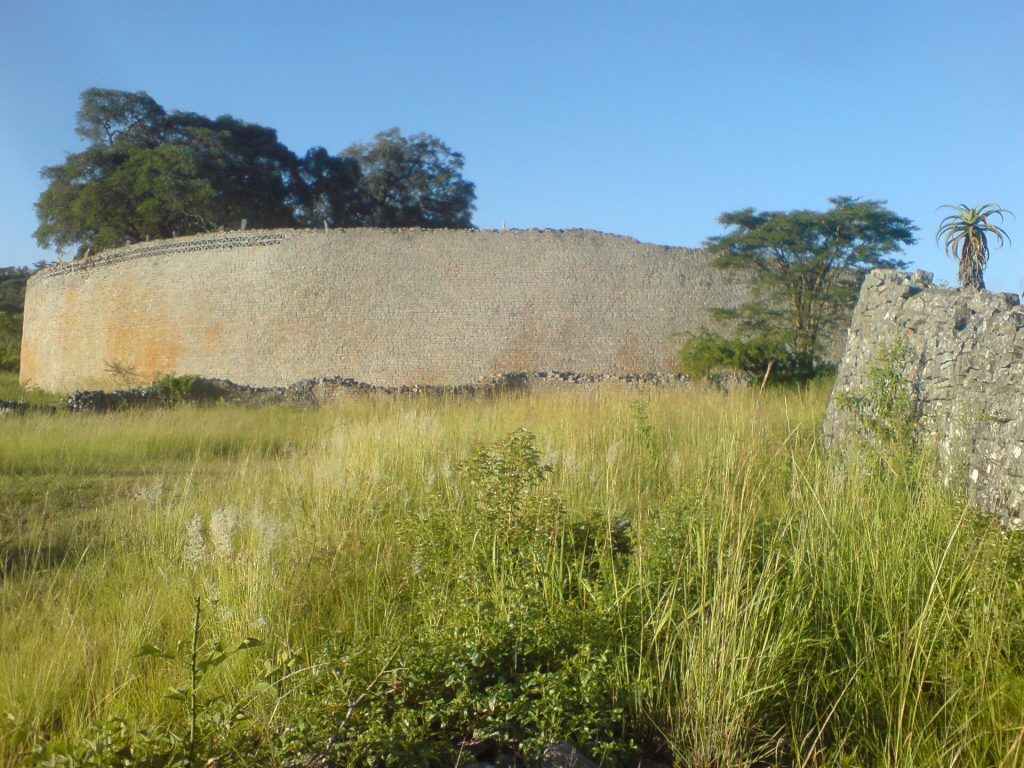
The most magnificent of the structures at Great Zimbabwe is the Great Enclosure, an immense oval of curving stone walls that is among the largest ancient structures in sub-Saharan Africa. Its walls rise to a great height, many meters tall, and stretch for a considerable distance, enclosing a large space and forming one of the most impressive architectural achievements of medieval Africa.

The walls of the Great Enclosure were built entirely of granite blocks, fitted together without any mortar, in a technique of dry-stone construction of remarkable skill. The walls are thick at the base and taper toward the top, and their smooth curving forms, decorated in places with patterns, reflect a mature and refined architectural tradition.
The Great Enclosure is thought to have been a royal residence or a place of great importance, the seat of the rulers of the kingdom or a center of ritual and power. Within its walls and around them are the remains of structures and spaces that speak of the life of the elite of the city, the rulers who governed the kingdom from this magnificent enclosure.
To stand within the Great Enclosure, surrounded by its soaring curving walls, is to feel the power and the sophistication of the civilization that built it, an African kingdom capable of raising monuments of such scale and refinement. The Great Enclosure is the crowning achievement of Great Zimbabwe, and one of the great architectural monuments of the whole continent of Africa.
View on Google Maps (-20.2673, 30.9339)
The decorative patterns worked into some of the walls of the Great Enclosure, including the famous chevron pattern along the top of one great stretch of wall, reveal an architecture concerned not only with strength but with beauty and meaning. These decorative elements, executed in the same dry-stone technique, add a refinement to the great walls and speak of the artistry of the builders.
The Mysterious Conical Tower
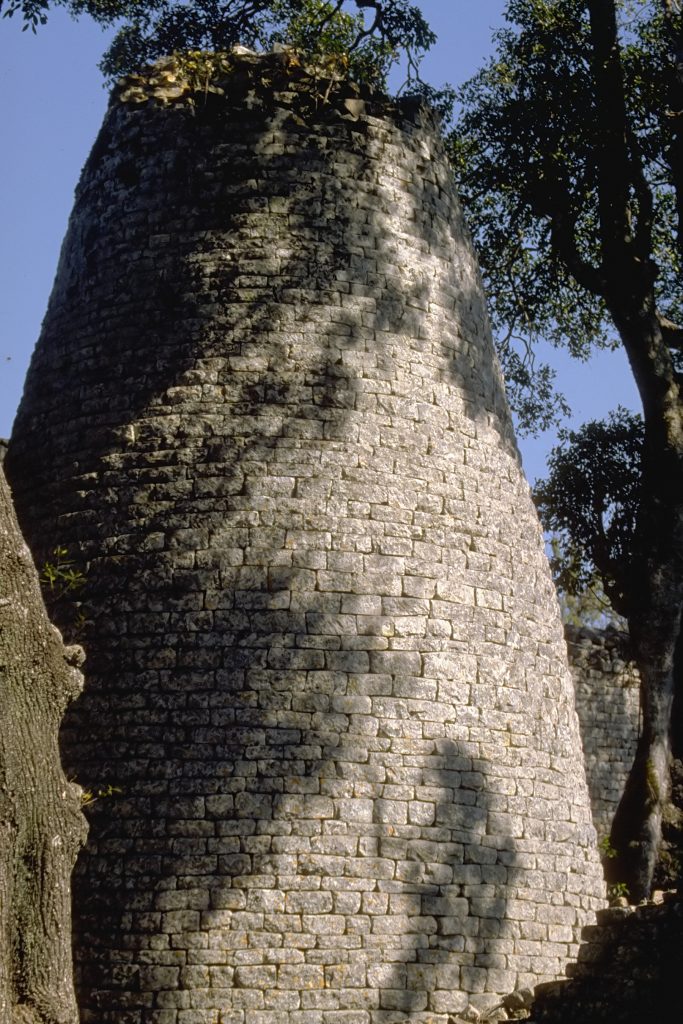
Within the Great Enclosure stands one of the most striking and enigmatic features of Great Zimbabwe, the great conical tower, a solid structure of stone rising many meters high, tapering toward its top like a great granary or a monumental symbol. The tower is one of the iconic images of Great Zimbabwe, and its meaning has intrigued observers for generations.

The tower is solid, built entirely of stone with no interior chamber, and its purpose remains a matter of interpretation. It has been suggested that it may have symbolized a granary, associated with the prosperity and the authority of the rulers, or that it served some ritual or symbolic function connected to the power of the kingdom. Whatever its precise meaning, it was clearly a structure of great importance.
The building of so large a solid tower, requiring the fitting of countless stones without mortar into a stable tapering form, was a considerable feat of engineering and design, and the tower stands as a testament to the skill of the builders. Its enigmatic presence within the Great Enclosure adds to the mystery and the majesty of the site.
The conical tower has become one of the great symbols of Great Zimbabwe and of the civilization that built it, an image of the power and the sophistication of the kingdom. To stand before it, contemplating its solid mass and its mysterious purpose, is to be drawn into the world of the builders, and to feel the enduring power of the monuments they raised.
Comparisons with the great monuments of other civilizations only underscore the achievement of the builders of the conical tower, who created a monumental structure of real presence and power using nothing but fitted stone. The tower stands as one of the most distinctive and memorable monuments in all of Africa, an enigmatic and majestic symbol of the vanished kingdom.
The Ancient Complex on the Hill
The oldest part of Great Zimbabwe is the Hill Complex, a group of structures built high on a great granite hill overlooking the site, dating from the earliest period of the city’s history. Here, among the natural boulders of the hilltop, the builders raised walls and enclosures, integrating their stone architecture with the dramatic natural rock formations of the hill.
The Hill Complex is thought to have been a place of ritual and power, perhaps the residence of the rulers or the priests, and its commanding position above the site gave it both practical and symbolic significance. From this height, the rulers could survey their city and their kingdom, and the complex was clearly a place of the greatest importance in the life of Great Zimbabwe.
The integration of the built walls with the natural granite boulders of the hill creates a striking and dramatic architecture, the works of human hands blending with the forms of the landscape. This use of the natural rock, combined with the skill of the dry-stone building, gives the Hill Complex a powerful and distinctive character, quite different from the great oval of the enclosure below.
It was on this hill that the famous soapstone birds of Great Zimbabwe were found, and the complex is bound up with the ritual and religious life of the city. The Hill Complex, the oldest part of the site, is where the story of Great Zimbabwe began, and it remains one of the most atmospheric and significant parts of the great city of stone.
The dramatic natural boulders of the hill, incorporated into the architecture of the complex, create a landscape of great atmosphere and power, where the works of the builders seem to grow organically from the living rock. The Hill Complex is among the most evocative parts of Great Zimbabwe, a place where the human and the natural combine into something majestic and profound.
The Soapstone Birds of Zimbabwe
Among the most precious and significant artifacts of Great Zimbabwe are the soapstone birds, a number of carved stone monoliths depicting birds, found at the site and thought to have had great ritual and symbolic significance. These carvings are among the finest surviving works of art of the civilization that built the city, and they have become powerful symbols of Zimbabwe.

The birds, carved from soapstone and mounted on tall columns, are thought to represent a species of eagle, and they were probably associated with the rulers and with the spiritual life of the kingdom, perhaps serving as symbols of royal or divine power or as representations of the ancestors. Their exact meaning is uncertain, but their importance to the civilization that made them is clear.
The Zimbabwe birds have become the great national symbol of the modern country of Zimbabwe, which took its name from the great city, and the image of the bird appears on the national flag and the coat of arms of the nation. In this way, the ancient artifacts of Great Zimbabwe live on as the emblems of the modern African state that draws its identity from the great city.
The soapstone birds are among the most treasured artifacts of pre-colonial Africa, and their journey, including the removal of some from the site during the colonial era and efforts to recover them, is itself part of the story of Great Zimbabwe and its meaning. As symbols of a great African civilization and of the modern nation, the birds carry a profound significance for the people of Zimbabwe and for all of Africa.
The story of the removal of some of the birds during the colonial era, and the long efforts to recover and reunite them, is bound up with the wider story of the reclaiming of African heritage from the depredations of colonialism. The birds, as symbols of the great civilization and of the modern nation, carry a significance that goes far beyond their considerable artistic value.
The Great Kingdom It Ruled
Great Zimbabwe was not merely a city but the capital of a great kingdom, a powerful African state that dominated a vast region of southern Africa during the medieval period. From this city of stone, the rulers of the kingdom governed a large territory, controlled the valuable trade in gold, and commanded the wealth and the power of one of the great states of the continent.

The kingdom of Great Zimbabwe was the greatest of a series of states that arose in the region, built on the wealth of gold and cattle and on the sophistication of its society and administration. At its height, the kingdom controlled a large population and a wide territory, and its capital was the greatest city of the interior of southern Africa.
The rulers of the kingdom governed from the great stone complexes of the city, and the architecture of Great Zimbabwe reflects the hierarchy and the power of this state, with its royal enclosures, its hilltop complex, and its monuments of authority. The kingdom was a sophisticated political entity, capable of organizing the labor and the resources to build a great city and to control a valuable trade.
To understand Great Zimbabwe is to understand it as the seat of this great kingdom, one of the most powerful African states of its age. The city was the physical expression of the kingdom’s wealth and authority, and its ruins stand as the monument to a sophisticated African state that flourished for centuries in the interior of southern Africa, a testament to the political achievement of pre-colonial Africa.
The organization of labor and resources required to build a city of stone on the scale of Great Zimbabwe testifies to the sophistication of the kingdom’s administration and the authority of its rulers. Only a powerful and well-organized state could have raised such monuments, and the great walls are the physical evidence of the political achievement of the kingdom of Zimbabwe.
The Decline and the Silence
Like all great cities, Great Zimbabwe eventually declined, and by the sixteenth or seventeenth century the great city of stone had been largely abandoned, its people dispersed, its great walls left to the grasslands. The reasons for this decline are debated, and likely several, including perhaps the exhaustion of the surrounding land, shifts in the patterns of trade, and political changes.

The decline of Great Zimbabwe did not mean the end of the civilization that built it, for the Shona kingdoms continued, and successor states arose that carried on the traditions of the great city. But the capital itself was left behind, its great monuments no longer the center of a living kingdom, standing silent amid the landscape as the power that had built them moved elsewhere.
The abandonment of the city was part of the natural cycle of the rise and fall of capitals and kingdoms, a process common to civilizations across the world. The great walls of Great Zimbabwe, no longer the seat of power, endured as a monument to the greatness that had passed, waiting through the centuries to tell their story to later ages.
The silence that settled over Great Zimbabwe after its abandonment preserved its great walls, and the city endured as a ruin, a monument to the vanished kingdom that had built it. The decline of the city was the end of a chapter, but the monuments remained, and they would become, in time, the great symbol of the African past and of the modern nation that would take its name from them.
The rise of successor states, drawing on the traditions of Great Zimbabwe, meant that the civilization that built the great city continued to flourish in new centers even after the capital was left behind. The story of Great Zimbabwe is thus not one of a civilization that vanished but of one that evolved and moved, its achievements carried forward by the peoples of the region.
The City That Named a Nation
There is no more powerful testament to the significance of Great Zimbabwe than the fact that the modern nation took its very name from the great city, calling itself Zimbabwe in honor of the monument to its African past. When the country won its independence from colonial rule, it chose to name itself after the great city of stone, reclaiming its African heritage.
The choice of the name was a profound act of reclamation, an affirmation of the African origins of the great monument and of the greatness of the pre-colonial civilization that built it. In taking the name of Great Zimbabwe, the new nation rejected the colonial denial of its heritage and embraced the sophistication and power of its African past.
The symbols of the modern nation, too, are drawn from Great Zimbabwe, above all the soapstone bird, which appears on the national flag and the coat of arms, a constant reminder of the great civilization from which the nation takes its identity. In these symbols, the ancient monuments of Great Zimbabwe live on as the emblems of the modern African state.
The naming of the nation after Great Zimbabwe reflects the deep significance of the great city as a symbol of African achievement and of the reclaiming of African history from colonial distortion. The great city of stone is not merely a ruin but the very source of the modern nation’s name and identity, a living link between the greatness of the medieval past and the independent African nation of the present day.
The choice of the name Zimbabwe, derived from a term in the Shona language associated with the great stone houses, was a powerful assertion of African identity and heritage at the birth of the modern nation. In naming itself after the great city, the nation declared its connection to the greatness of the African past and its rejection of the colonial distortion of its history.
A Heritage of All Africa
The outstanding significance of Great Zimbabwe has been recognized by its designation as a heritage of universal value, an acknowledgment of its status as one of the great monuments of pre-colonial Africa and of its importance to the history of the whole continent. This recognition has affirmed the greatness of the city and the civilization that built it.

The recognition celebrates Great Zimbabwe as a monument to the sophistication and power of medieval African civilization, a great city of stone that stands as evidence of the achievements of pre-colonial Africa. In doing so, it helps to correct the colonial distortion of African history and to honor the true greatness of the African past.
The designation has brought attention and resources to the preservation and study of the site, ensuring that this magnificent monument is protected and interpreted for future generations, and that its true history is told. It has also affirmed the central place of Great Zimbabwe in the heritage of the nation and of the whole of Africa.
To appreciate Great Zimbabwe as a heritage of all Africa is to recognize it as a monument not only to a particular kingdom but to the sophistication and achievement of pre-colonial African civilization as a whole. It stands as a proud symbol of the African past, a great city of stone that testifies to the greatness of the medieval African world, and one of the most important historic sites on the entire continent.
The recognition of Great Zimbabwe as a heritage of universal value has been especially meaningful given the long colonial denial of its African origins, for it represents an international affirmation of the truth that the colonizers sought to suppress. In honoring the site, the world acknowledges the greatness of the African civilization that built it.
The Gold and the Trade That Made It Rich
The wealth and power of Great Zimbabwe rested on trade, above all the trade in gold, for the region was rich in gold, and the city stood at the center of a network that carried this precious metal from the interior to the coast and out into the wider world of the Indian Ocean. This trade made Great Zimbabwe rich and powerful, the capital of a kingdom that controlled a valuable commerce.

The evidence of this trade is written in the artifacts found at the site, including Chinese pottery, coins from Arabia, and glass beads, objects that came from far across the Indian Ocean and that testify to the extensive trading connections of the city. Through the Swahili cities of the coast, Great Zimbabwe was linked to the great trading world of the Indian Ocean, exchanging its gold for the goods of distant lands.
Alongside gold, the wealth of Great Zimbabwe rested on cattle, which were central to the economy and the society of the kingdom, a measure of wealth and status and a foundation of its power. The combination of gold and cattle gave the rulers of Great Zimbabwe the resources to build their great city and to dominate a vast region of southern Africa.
The trade that made Great Zimbabwe rich connected the interior of Africa to the wider world, part of the vast network of the Indian Ocean commerce that linked Africa, Arabia, India, and beyond. To understand the city is to understand it as a great trading power, its wealth and its monuments built on the gold of the interior and the commerce of the coast, a node in one of the great trading systems of the medieval world.
The far-flung origins of the objects found at Great Zimbabwe, from China and Arabia and beyond, vividly demonstrate the reach of the trading connections that the city commanded, linking the African interior to the great commercial world of the Indian Ocean. These finds are among the most compelling evidence of the sophistication and the connectedness of the kingdom.
The Lie the Colonizers Told
The history of Great Zimbabwe cannot be told honestly without confronting the shameful colonial denial of its African origins, one of the most notorious examples of the racism that distorted the understanding of African history. When European colonizers encountered the great ruins, many refused to believe that they could have been built by Africans, and they invented false theories attributing the city to outsiders.

These colonial theories, which claimed that Great Zimbabwe must have been built by ancient foreigners rather than by Africans, were driven not by evidence but by racist prejudice, by the refusal to accept that a sophisticated African civilization could have raised such monuments. The colonial regime that ruled the country even suppressed the archaeological evidence that pointed clearly to the African origins of the city.
The truth, established beyond doubt by archaeology, is that Great Zimbabwe was built by the ancestors of the Shona people, an African civilization of great sophistication and power. The colonial denial of this truth was a lie, a distortion of history in the service of racism, and its exposure and correction is an important part of the story of the city and of the reclaiming of African history.
The confrontation with this colonial denial is essential to an honest account of Great Zimbabwe, for the site stands not only as a monument to a great African civilization but as a symbol of the struggle against the racist distortion of African history. The clear affirmation of its African origins is a matter of justice and of truth, and it is central to the meaning of Great Zimbabwe today.
The eventual triumph of the truth about Great Zimbabwe, the acceptance of its African origins in the face of the colonial denial, was a victory for scholarship and for justice, and it forms an important chapter in the wider history of the reclaiming of the African past. The site stands today as a symbol of that reclaiming, a proud monument to African achievement.
Walking the Ruins of a Great Kingdom
Visiting Great Zimbabwe today is a profound and moving experience, an encounter with the ruins of one of the great civilizations of medieval Africa in a setting of real beauty. The site lies in the interior of the country of Zimbabwe, amid hills and grasslands, and to walk among its great stone walls is to step into the world of a powerful African kingdom.
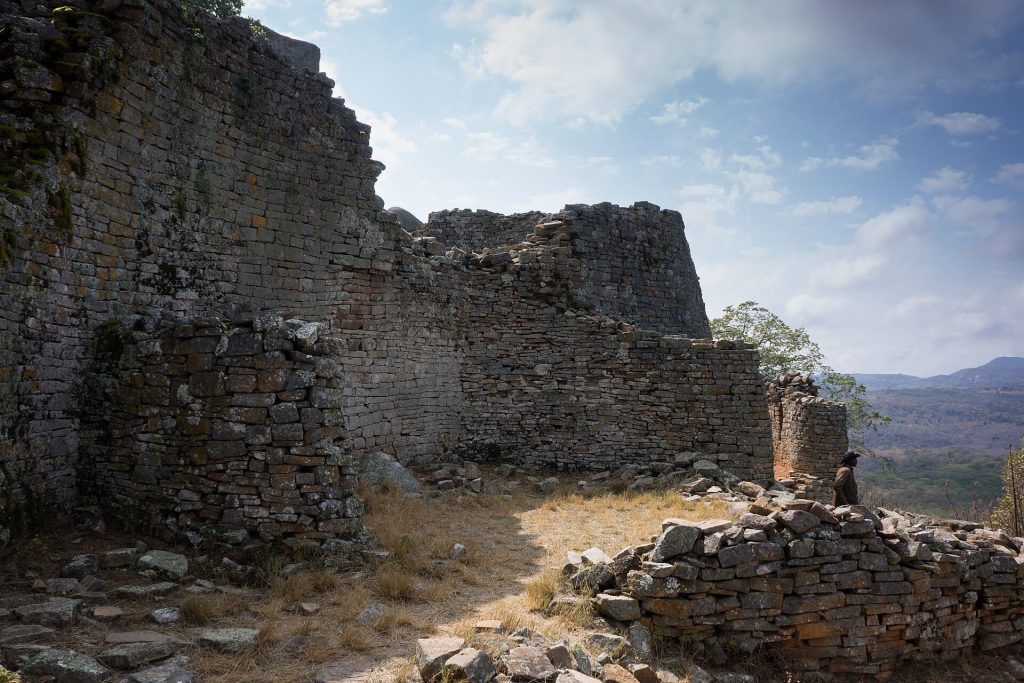
Explore the Great Enclosure, walking within its soaring curving walls and standing before the mysterious conical tower, and climb to the Hill Complex, where the oldest structures of the city blend with the natural granite boulders and command sweeping views over the site. Take in the scale and the sophistication of the architecture, the achievement of the Shona builders who raised these monuments without mortar.
Visit the site museum, which displays artifacts from the city, including the famous soapstone birds, and which tells the story of Great Zimbabwe and of the civilization that built it. Learn the true history of the site, the greatness of the kingdom, and the struggle against the colonial denial of its African origins, and let this knowledge deepen your appreciation of what you see.
Come to Great Zimbabwe, then, ready to encounter one of the great achievements of pre-colonial Africa, a magnificent city of stone built by a powerful African civilization. Walk its great walls, contemplate its conical tower and its soapstone birds, and honor the greatness of the Shona kingdom that raised it. It is among the most important and most inspiring historic sites in all of Africa, a proud monument to the sophistication and power of the medieval African world.
The setting of Great Zimbabwe, amid the hills and grasslands of the interior, adds greatly to the experience of a visit, the great stone walls rising from a landscape of real beauty. To explore the site is to combine the encounter with a great civilization and the pleasure of a magnificent natural setting, a combination that makes Great Zimbabwe one of the most rewarding destinations in all of Africa.
Castles Nearby
To continue exploring the great fortresses and monuments of Africa and the wider world:
You May Like
Mafra, the Palace a King Built From a Vow