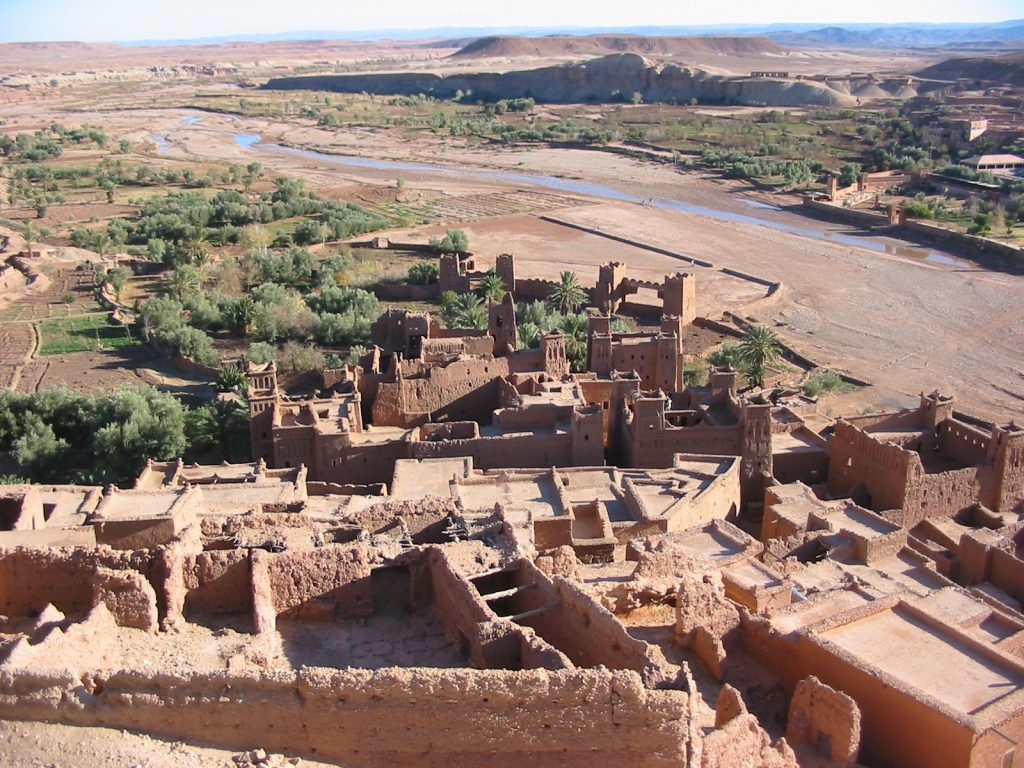
On the edge of the Sahara, where the great Atlas Mountains give way to the desert, rises one of the most extraordinary and beautiful fortified villages in the world: Aït Benhaddou, a cluster of earthen towers and houses climbing a hillside above a river, glowing golden in the desert sun. Built entirely of clay and earth, it seems to grow from the very ground on which it stands.
You come expecting a village and find a masterpiece, a ksar of tall tapering towers decorated with geometric patterns, rising in tiers to a fortified granary at the summit, a marvel of the ancient art of building in earth. For centuries it stood on the great caravan route across the Atlas, a fortified stop on the road between the Sahara and Marrakesh.
This is the story of Aït Benhaddou, the earthen city on the edge of the desert, from the caravan trade that made it rich and the Amazigh culture that built it, through its towers and its granary, to its decline, its fame in the movies, and its survival as one of the great monuments of Morocco. Come and wander its glowing earthen streets with me, on the edge of the Sahara.
In This Article
- The Earthen City That Glows in the Desert Sun
- The Great Caravan Route Across the Atlas
- The Salt, the Gold, and the Desert Trade
- The Dramatic Setting on the River
- A Heritage of Earthen Architecture
- The Fragile Beauty of the Earthen Village
- The Ancient Art of Building in Earth
- The Towers and Kasbahs of the Ksar
- The Fortified Granary on the Summit
- The Amazigh Heritage of the Ksar
- The Life of the Fortified Village
- Decline, Rediscovery, and the Movies
- Wandering the Earthen Streets of the Ksar
The Earthen City That Glows in the Desert Sun
On the edge of the Sahara, where the great Atlas Mountains give way to the desert, rises one of the most extraordinary and beautiful fortified villages in the world: Aït Benhaddou, a cluster of earthen towers and houses climbing a hillside above a river, glowing golden in the desert sun. Built entirely of clay and earth, it seems to grow organically from the very ground on which it stands, a masterpiece of the traditional architecture of southern Morocco.
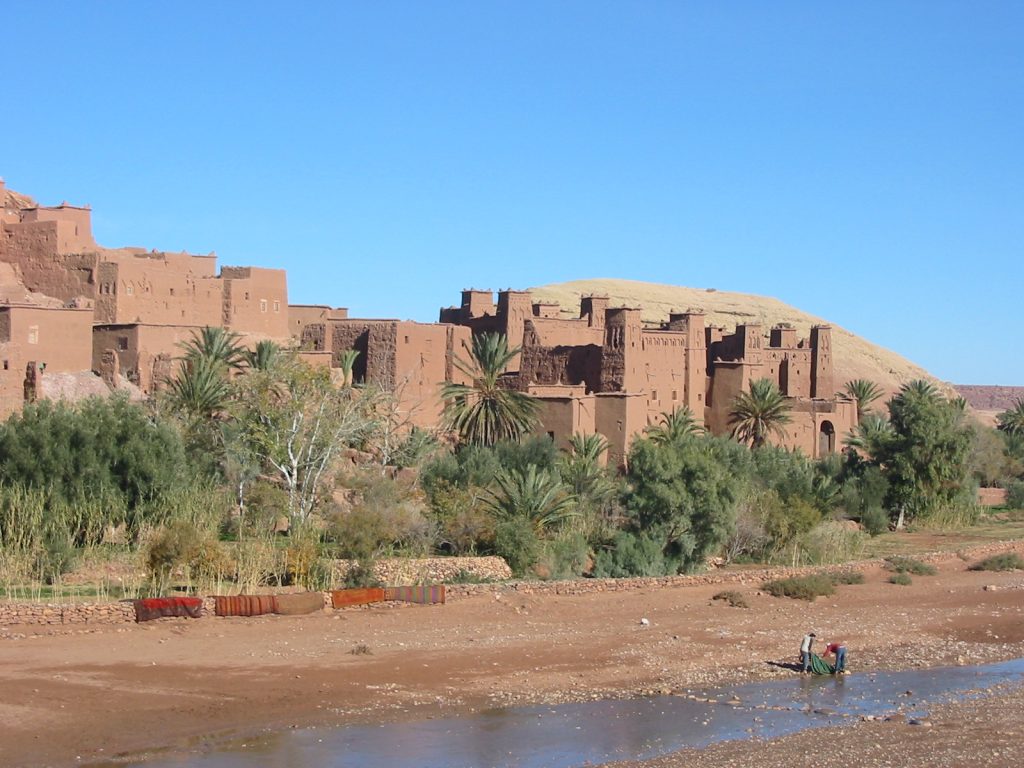
Aït Benhaddou is a ksar, a fortified village of the kind that once dotted the caravan routes of southern Morocco, its houses and towers packed tightly together within defensive walls, its architecture a marvel of building in earth. Its tall, tapering towers, decorated with geometric patterns pressed into the clay, rise in tiers up the hillside, culminating in a fortified granary at the summit.
For centuries, Aït Benhaddou stood on one of the great caravan routes that crossed the Atlas Mountains, linking the Sahara and the trade of the desert to the great city of Marrakesh beyond the peaks. It was a place of trade and defense, a fortified stop on the long and perilous journeys of the caravans, and its architecture reflects both the wealth of the trade and the need for protection.
This is the story of Aït Benhaddou, the earthen city on the edge of the desert, told with appreciation for the extraordinary architecture and the rich history of the ksars of southern Morocco. It is a place of great beauty and of a way of life now largely vanished, a monument to the traditional building and the caravan trade of the Atlas. Come and explore this glowing earthen village with me, on the edge of the Sahara.
The first sight of Aït Benhaddou, its earthen towers clustered on the hillside against the mountains and the sky, is one that few visitors ever forget, a vision of a way of building and a way of life that seem to belong to another age entirely. It is a place that stirs the imagination, a fortified village of clay that looks like something from a dream or a legend, and yet is entirely real.
There is a harmony between the village and its landscape that reflects the deep wisdom of the traditional architecture, building in the materials of the land itself, in forms perfectly suited to the climate and the setting. Aït Benhaddou does not impose itself upon the landscape but grows from it, and this harmony is part of the profound beauty of the place.
The Great Caravan Route Across the Atlas
The importance of Aït Benhaddou lay in its position on one of the great caravan routes of Morocco, the trade road that crossed the high passes of the Atlas Mountains, linking the Sahara and the lands beyond to the great city of Marrakesh. Along this route traveled the caravans that carried the trade of the desert, and Aït Benhaddou was one of the fortified stops on their long journey.

The trans-Saharan trade was one of the great commercial systems of the pre-modern world, carrying gold, salt, and other goods across the vast desert, and the routes that crossed the Atlas connected this trade to the cities of Morocco and the wider Mediterranean world. Aït Benhaddou stood at a key point on this network, a stop on the route through the mountains.
The village grew and prospered on the traffic of the caravans, providing shelter, provisions, and safety to the traders who passed through on their way across the mountains. Its architecture, with its caravanserai for the traders and its defensive walls and towers, reflects this role as a fortified stop on the trade route, a place of commerce and of refuge.
The trade that gave Aït Benhaddou its importance shaped its whole history and character, and the village must be understood as a creature of the caravan route, a fortified settlement that flourished on the traffic of the desert trade. To understand Aït Benhaddou is to remember the great caravans that once passed through it, and the trade that made this earthen village a place of wealth and importance on the edge of the Sahara.
The caravans that crossed the Atlas were remarkable enterprises, great trains of camels and traders making the long and dangerous journey through the mountains and the desert, and the fortified villages along the routes were essential to their survival, providing the shelter, provisions, and security without which the trade could not have continued. Aït Benhaddou was one link in this vital chain.
The Salt, the Gold, and the Desert Trade
The trade that sustained Aït Benhaddou and the caravan routes it served was one of the great commercial systems of the pre-modern world, carrying precious goods across the vast Sahara and over the passes of the Atlas. Chief among these goods were salt, mined in the desert and worth its weight in gold in the lands to the south, and gold itself, brought north from the great goldfields of West Africa.

The trans-Saharan trade linked the Mediterranean world of Morocco to the great kingdoms and cities of West Africa, carrying not only salt and gold but a whole range of goods, and it made the routes across the desert and the mountains among the most important commercial arteries of their age. Aït Benhaddou stood at a key point on this network, a fortified stop on the mountain crossing.
The wealth generated by this trade flowed through the villages and cities along the routes, and it was this wealth that built the great kasbahs and the fortified villages of southern Morocco, including Aït Benhaddou. The tall earthen towers of the ksar were, in a sense, built on the profits of the caravan trade, monuments to the commerce that crossed the desert and the mountains.
To understand Aït Benhaddou is to remember this great trade, the caravans laden with salt and gold making their long and perilous journeys across the Sahara and over the Atlas, stopping at the fortified villages along the way. The ksar was a creature of this trade, and its earthen towers stand as a monument to the great commercial system that once connected the Mediterranean world to the heart of Africa.
The exchange of salt for gold along these routes was one of the great commercial phenomena of the pre-modern world, salt being so scarce and so essential in the lands to the south that it could command a value equal to gold itself. The villages along the routes, including Aït Benhaddou, were the beneficiaries of this extraordinary trade, and their prosperity rose and fell with the fortunes of the caravans.
The Dramatic Setting on the River
Part of the extraordinary beauty of Aït Benhaddou lies in its setting, for the earthen village rises on a hillside above a river, against a backdrop of mountains and desert that gives the whole scene a dramatic and unforgettable quality. The clustered towers of the ksar, glowing in the sun, are framed by the stark and beautiful landscape of the Atlas foothills and the edge of the Sahara.

The village sits in a valley through which a river flows, and the contrast between the green of the valley floor, the earthen tones of the village, and the bare mountains beyond creates a landscape of great beauty. The crossing of the river to reach the ksar, historically by stepping stones and now also by a bridge, adds to the drama of the approach.
The quality of the light in this land, on the edge of the desert, transforms the village through the day, the earthen towers shifting from pale gold in the morning to deep amber in the evening, glowing most magnificently in the low light of dawn and dusk. This interplay of light and earth is one of the great beauties of Aït Benhaddou, and it draws photographers and painters as well as ordinary travelers.
The setting of Aït Benhaddou is inseparable from its beauty and its power, the earthen village and its dramatic landscape forming a single unforgettable scene. It is this combination of extraordinary architecture and dramatic setting that has made the village so beloved and so famous, one of the great sights of Morocco and a scene of real and lasting magic on the edge of the desert.
Photographers and filmmakers have long been drawn to the quality of the light at Aït Benhaddou, and the golden glow of the earthen towers at sunrise and sunset has become one of the iconic images of Morocco. To witness the village transformed by the low light of dawn or dusk is to understand why it has so captivated all who have seen it.
A Heritage of Earthen Architecture
The outstanding significance of Aït Benhaddou has been recognized by its designation as a heritage of universal value, an acknowledgment of its status as one of the finest surviving examples of the traditional earthen architecture and the fortified villages of southern Morocco. This recognition has confirmed the village’s place among the great monuments of the world.

The recognition celebrates Aït Benhaddou as a masterpiece of building in earth, a village that has preserved its architectural authenticity, its traditional configuration, and its ancient building materials and techniques. In an age when so much traditional architecture has been lost or replaced by modern building, the survival of Aït Benhaddou is precious.
The designation has brought attention and resources to the preservation of the village, supporting the continuation of the traditional building techniques that are essential to its survival, for the earthen structures require constant maintenance and renewal. The preservation of Aït Benhaddou is thus not only the protection of a monument but the continuation of a living tradition of building.
To appreciate Aït Benhaddou as a heritage of world importance is to recognize it as a supreme example of a building tradition and a way of life that have shaped the landscape of southern Morocco for centuries. It stands as a monument to the ingenuity and the artistry of the builders in earth, and one of the most beautiful and significant examples of traditional architecture to survive anywhere in the world.
The Fragile Beauty of the Earthen Village
For all its beauty, Aït Benhaddou is fragile, for the earthen architecture that gives the village its character is vulnerable to the elements, and the preservation of the ksar is an ongoing challenge that requires constant care. The clay structures must be regularly maintained and renewed, for the rains and the weather steadily wear away the earthen walls.

The traditional techniques of building and maintaining the earthen structures are essential to the survival of the village, and their continuation is a key part of the preservation effort. The knowledge of how to build and repair in earth, passed down through the generations, is itself a precious heritage, without which the village could not endure.
The village has faced natural challenges as well, including the damage inflicted by earthquakes, which pose a particular threat to the earthen structures, and the assessment and repair of such damage is part of the ongoing work of preservation. The care of Aït Benhaddou is a continuous task, a constant effort to preserve the fragile beauty of the earthen village.
The fragility of Aït Benhaddou is part of what makes it so precious, for it is a living monument that must be constantly tended if it is to survive, a village of earth that endures only through the continuation of the traditional building and the ongoing work of preservation. To appreciate the village is to appreciate this fragility, and the dedication required to preserve one of the most beautiful earthen settlements in the world.
The commitment to preserving Aït Benhaddou through the continuation of traditional methods, rather than through modern materials that would destroy its authenticity, reflects a deep understanding of what makes the village precious. It is not merely the appearance but the authentic fabric and technique of the earthen architecture that must be preserved, and this commitment is essential to the survival of the ksar.
The Ancient Art of Building in Earth
The most remarkable feature of Aït Benhaddou is its architecture, for the entire village is built of earth, using the ancient techniques of building in clay that have been practiced in southern Morocco for centuries. The houses, the towers, the walls, and the granary are all constructed of rammed earth and adobe, materials drawn from the very ground on which the village stands.

The builders used a sophisticated combination of techniques, employing rammed earth, a mixture of clay and other materials packed tight within wooden frames, for the lower and load-bearing parts of the structures, and lighter adobe, or sun-dried clay bricks, for the upper floors, reducing the weight on the walls. This clever use of materials allowed the construction of the tall towers that give the village its distinctive skyline.
The earthen architecture is not only practical but beautiful, the tall towers decorated with geometric patterns pressed and carved into the clay, the whole village glowing in warm earthen tones that shift with the light of the day. This is a building tradition of great refinement, developed over centuries to suit the climate and the materials of the desert edge, and Aït Benhaddou is one of its supreme achievements.
Building in earth requires constant maintenance, for the clay structures are vulnerable to the rains and the elements, and the preservation of Aït Benhaddou has depended on the continuation of the traditional building techniques. This living tradition of earthen construction is part of what makes the village so precious, a place where the ancient art of building in earth survives and continues.
View on Google Maps (31.0472, -7.1318)
The building tradition of Aït Benhaddou reflects a profound understanding of the materials and the climate of the desert edge, for the thick earthen walls provide insulation against the fierce heat of the day and the cold of the desert night, keeping the interiors cool and comfortable. This practical wisdom, developed over centuries, is part of the genius of the traditional architecture.
The Towers and Kasbahs of the Ksar
Within Aït Benhaddou rise the tall tower-houses known as kasbahs, the fortified dwellings that are the most striking feature of the village and of the traditional architecture of southern Morocco. These tall, tapering towers, built of earth and decorated with geometric patterns, were the homes of the more prominent families, and their height and their decoration reflected the status of their owners.
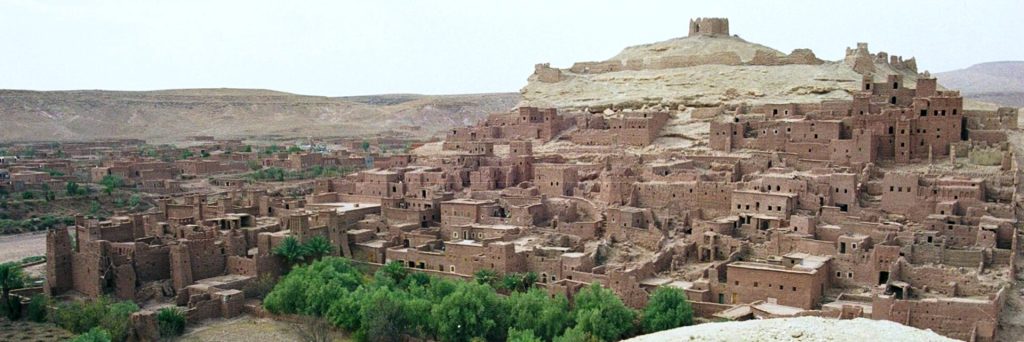
The kasbahs are both dwellings and fortifications, their tall walls and their defensive design reflecting the need for protection in a land where security could not be taken for granted. Their upper floors provided living space and refuge, while their design allowed the defense of the home against attack, combining the functions of house and fortress in a single structure.
The decoration of the kasbahs, with geometric patterns pressed and carved into the clay of the upper walls, is one of the beauties of the architecture, transforming the practical towers into works of art. These patterns, part of the traditional decorative repertoire of the region, give the towers a refinement and a beauty that lift them far above mere utility.
The kasbahs of Aït Benhaddou, rising in tiers up the hillside, create the distinctive and unforgettable skyline of the village, a cluster of earthen towers glowing in the desert sun. They are the crowning glory of the ksar, the tall fortified houses that embody the wealth, the status, and the artistry of the traditional society that built them, and one of the great sights of southern Morocco.
The kasbahs of southern Morocco, of which those at Aït Benhaddou are among the finest, are one of the great architectural traditions of North Africa, a distinctive form of fortified earthen dwelling found nowhere else in quite the same way. To see them clustered together at Aït Benhaddou is to appreciate the full beauty and sophistication of this tradition at its height.
The Fortified Granary on the Summit
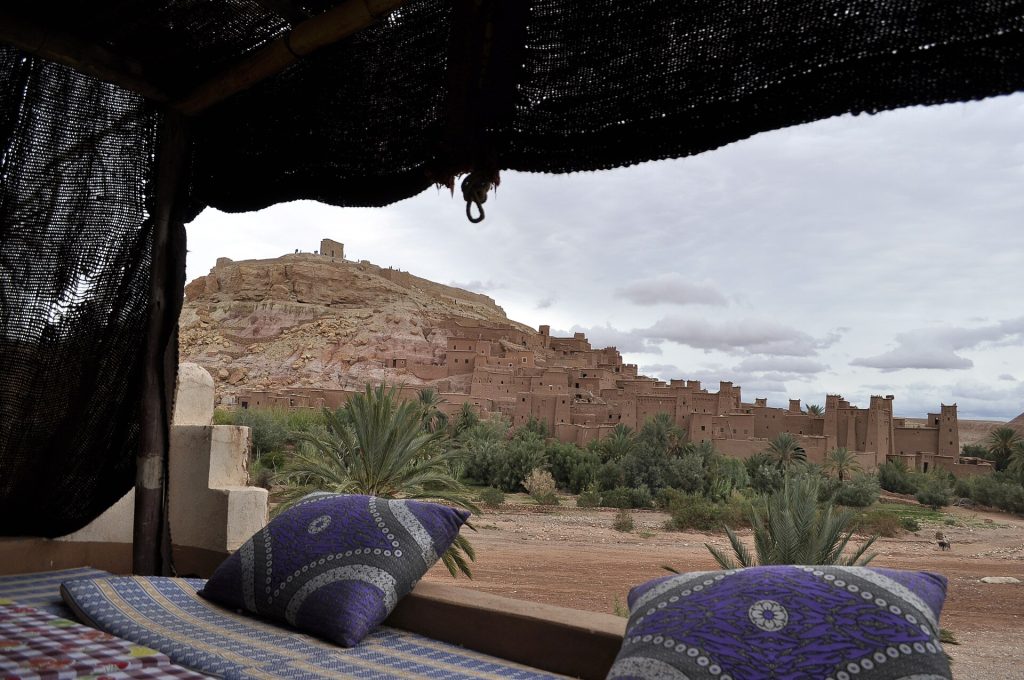
Crowning the summit of the hill above Aït Benhaddou stands a fortified granary, an agadir, the communal storehouse where the people of the village kept their grain and their valuables in safety. Positioned at the highest and most defensible point of the settlement, the granary was both a practical necessity and a place of refuge in times of danger.

The fortified granary was a common feature of the ksars and villages of southern Morocco, a communal structure for the safe storage of the precious grain that was the foundation of life in this harsh and uncertain land. Its position at the summit, within its own defenses, reflected the importance of protecting the food supply against raiders and against the uncertainties of the desert edge.
From the granary at the summit, the whole village spreads out below, the tiers of earthen towers descending to the river, and the view commands the surrounding landscape of mountains and desert. The climb to the granary is one of the highlights of a visit to Aït Benhaddou, rewarding the visitor with a magnificent panorama and a sense of the whole layout of the ksar.
The granary crowning the hill is a fitting symbol of the whole settlement, a fortified communal structure that embodies the values of the society that built the village, the concern for security, the importance of the food supply, and the communal life of the ksar. It is the crown of Aït Benhaddou, standing guard over the earthen village and the trade route it once served.
The communal ownership and use of the granary reflected the cooperative social organization of the ksar, in which the community came together to protect its most vital resources. In this the granary was not only a practical structure but an expression of the social bonds that held the village together, the shared institutions on which the life of the community depended.
The Amazigh Heritage of the Ksar
Aït Benhaddou is a monument to the culture of the Amazigh, the Berber people who are the indigenous inhabitants of Morocco and much of North Africa, and whose traditions shaped the architecture and the life of the ksar. The very name of the village, and the whole tradition of building and living that it embodies, belongs to this ancient culture of the mountains and the desert edge.
The Amazigh have inhabited North Africa since ancient times, and their culture, with its distinctive language, traditions, and architecture, has endured through the many changes of the region’s history. The ksars and kasbahs of southern Morocco are among the great achievements of this culture, a building tradition perfectly adapted to the land and the way of life of the Amazigh.
The society that built and inhabited Aït Benhaddou was organized around the extended family and the community, with the kasbahs of the prominent families and the communal structures like the granary and the mosque reflecting the social order of the ksar. This traditional way of life, bound up with the caravan trade and the agriculture of the valley, endured for centuries.
To appreciate Aït Benhaddou is to appreciate it as a monument to the Amazigh culture that created it, one of the great living traditions of North Africa. The village is not merely a beautiful ruin but the expression of a whole way of life and a whole culture, the Berber heritage of the mountains and the desert that gave rise to the extraordinary earthen architecture of the ksar.
The endurance of the Amazigh culture, its language, traditions, and architecture, through the many centuries and the many changes of Morocco’s history, is a remarkable testament to its resilience and its deep roots in the land. Aït Benhaddou stands as one of the great monuments to this enduring culture, a village that embodies the heritage of the Berber people of the mountains and the desert.
The Life of the Fortified Village
Within the walls of Aït Benhaddou, the ksar was a complete community, with its houses and towers, its narrow winding streets, its mosque, and its communal structures, a whole world of daily life packed within the defensive walls. To wander the narrow lanes of the village is to enter this vanished world, to imagine the life that once filled the earthen streets.
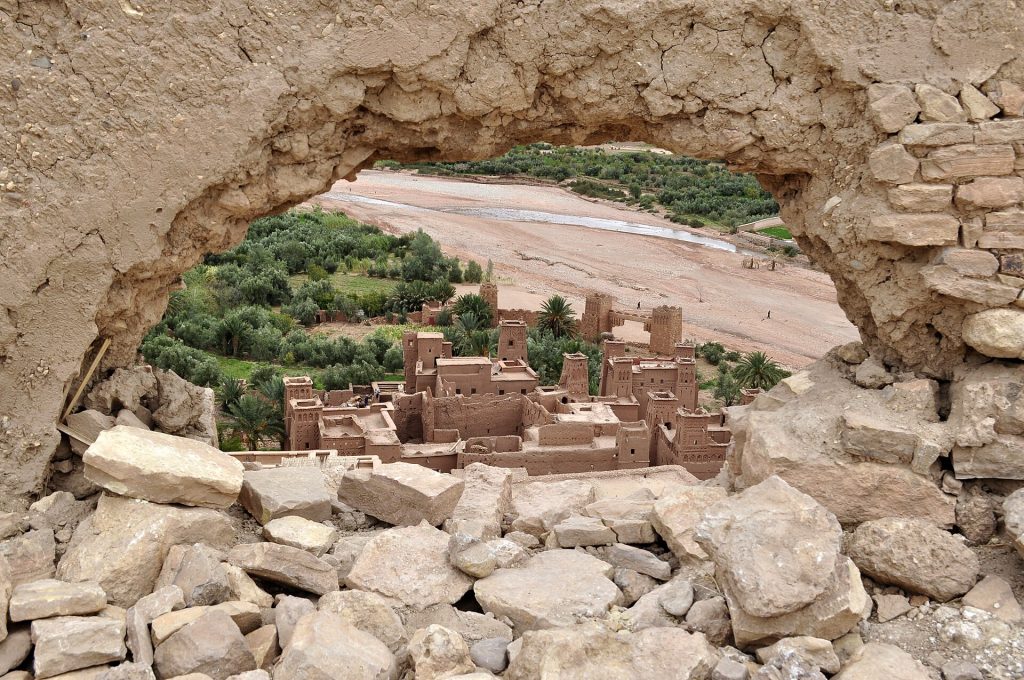
The mosque was the religious heart of the community, the place of worship and of gathering, and it reflected the Islamic faith that shaped the life of the village alongside the older Amazigh traditions. The caravanserai provided lodging for the traders passing through, and the various structures of the ksar together supported the whole life of the settlement.
The narrow streets of the village, winding between the tall earthen walls, provided shade from the fierce desert sun and a defensible layout that could be guarded against attack. The whole design of the ksar, from the packed houses to the defensive walls to the granary at the summit, reflected the need for security and the communal way of life of the people who lived there.
To imagine Aït Benhaddou in its living days is to picture the narrow streets full of life, the caravans passing through, the families dwelling in their earthen towers, the whole community of the ksar going about its daily existence within the walls. Though the village is now largely empty of permanent residents, the traces of this vanished life endure in the earthen streets and houses, a monument to the traditional life of the fortified villages of southern Morocco.
Decline, Rediscovery, and the Movies
In the twentieth century, as the old caravan routes lost their importance and modern roads and transport transformed the region, Aït Benhaddou declined, and most of its inhabitants moved to modern dwellings across the river, leaving the ancient ksar largely empty. The village that had thrived on the caravan trade was left behind by the changes of the modern world.
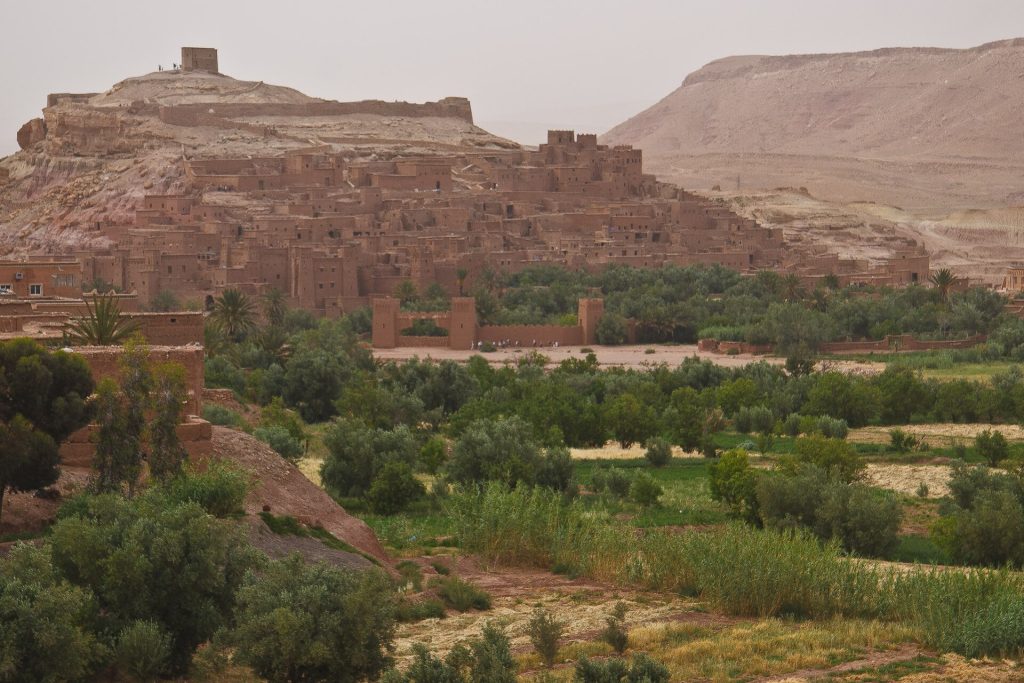
But Aït Benhaddou found an unexpected new life through the movies, for its extraordinary architecture and its dramatic setting made it a favorite location for filmmakers, and it has appeared in a great many famous films and television productions. Its earthen towers have served as the backdrop for epics set in ancient and imagined worlds, bringing the village to the attention of audiences around the globe.
This cinematic fame has brought visitors and attention to Aït Benhaddou, and in a sense the movies have helped to save the village, providing an economic reason for its preservation and drawing the tourism that now sustains the local community. The dramatic beauty that once served the caravan trade now serves the film industry and the traveler.
The story of Aït Benhaddou’s decline and its rediscovery through film is a striking one, the tale of a village that lost its ancient purpose only to find a new one, its earthen towers preserved not for the caravans but for the cameras and the visitors. It is a reminder of how the monuments of the past can find new meaning and new life in the modern world, and how the beauty of Aït Benhaddou has ensured its survival.
The list of films and productions shot at Aït Benhaddou reads like a catalogue of the great epics of cinema, for its timeless earthen architecture has served as the setting for stories from many ages and imagined worlds. This cinematic career has made the village familiar to millions who have never set foot in Morocco, its towers glimpsed in countless films even by those who do not know its name.
Wandering the Earthen Streets of the Ksar
Visiting Aït Benhaddou is one of the great experiences that Morocco can offer, an encounter with an extraordinary earthen village in a setting of real drama and beauty on the edge of the Sahara. The village lies not far from the town of Ouarzazate, in the valley below the great passes of the Atlas, and to explore its earthen streets and towers is to step into a vanished world.
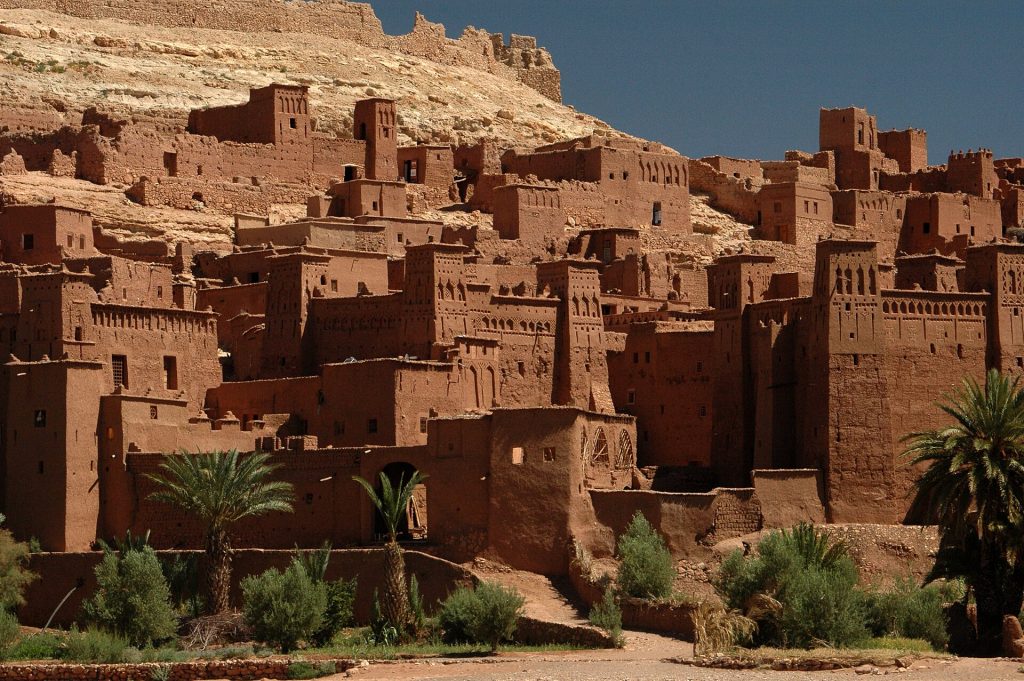
Cross the river to the ksar, ideally by the old route, and climb the winding streets among the earthen towers, exploring the kasbahs and the narrow lanes and making your way up to the fortified granary at the summit. From the top, take in the magnificent panorama over the village, the river, and the surrounding landscape of mountains and desert.
Take the time to appreciate the extraordinary architecture, the tall towers of rammed earth and adobe with their geometric decoration, the whole village glowing in the warm tones of the clay. Come early or late in the day if you can, when the low sun sets the earthen towers ablaze with golden light, one of the great sights of southern Morocco.
Come to Aït Benhaddou, then, ready to be enchanted by one of the most beautiful and extraordinary villages in the world, a masterpiece of earthen architecture on the edge of the desert. Wander its glowing streets, climb to its granary, and imagine the caravans that once passed through on their way across the mountains. It is among the most magical and memorable places in all of Morocco, a monument to the traditional life and architecture of the Atlas and the Sahara.
A visit to Aït Benhaddou combines naturally with the exploration of the wider region, from the town of Ouarzazate with its film studios to the dramatic landscapes of the Atlas and the desert beyond. But it is the ksar itself, glowing on its hillside, that is the great prize, one of the most beautiful and memorable places that any traveler to Morocco can hope to see.
Castles Nearby
To continue exploring the great fortresses and monuments of Africa and beyond:
You May Like
Mafra, the Palace a King Built From a Vow


One thought on “Aït Benhaddou: The Earthen City on the Edge of the Sahara”