A short boat ride from the city of Dakar, off the coast of Senegal, lies a small and beautiful island whose name has become synonymous with one of the greatest tragedies in human history. This is Gorée, and upon it stands a modest pink building, the House of Slaves, that has become one of the most powerful memorials to the Atlantic slave trade anywhere in the world.
You come to an island of charm and peace, its narrow streets lined with faded pastel houses, and you find at its heart a place of the deepest sorrow, a former slave-trading house with its dark cells and its famous Door of No Return opening onto the ocean. It has drawn pilgrims from across the world, from popes and presidents to countless ordinary people, all come to remember and to mourn.
This is the story of Gorée Island and its House of Slaves, told with honesty and respect, including the scholarly debates that surround it. It is a story of the slave trade and of memory, of a small island that has become a symbol of one of history’s greatest crimes. Come and confront this history with me, on the island of memory off the coast of Senegal.

In This Article
- The Island of Memory Off the Coast of Dakar
- The Little Island That Everyone Wanted
- The Women Traders of Gorée
- The Trade That Scarred a Continent
- The Beauty That Deepens the Sorrow
- Why Gorée Must Be Remembered
- The House of Slaves and Its Builder
- The Dark Cells of the Ground Floor
- The Door of No Return
- The Curator Who Gave the House Its Voice
- Memory, History, and the Scholarly Debate
- A Place of Pilgrimage for the World
- Confronting History on the Island of Gorée
The Island of Memory Off the Coast of Dakar
A short boat ride from the bustling city of Dakar, the capital of Senegal, lies a small and beautiful island whose name has become synonymous with one of the greatest tragedies in human history. This is Gorée Island, and upon it stands a modest pink building, the House of Slaves, that has become one of the most powerful and moving memorials to the Atlantic slave trade anywhere in the world.

Gorée is an island of great charm, its narrow streets lined with old colonial houses in faded pastel colors, its quiet lanes and gardens giving it an air of peace that stands in the sharpest contrast to the terrible history it commemorates. For this small and lovely island was, for centuries, caught up in the machinery of the slave trade, and it has become a place of pilgrimage and mourning.
The House of Slaves is the emotional heart of the island, a former slave-trading house preserved as a memorial and museum, with its dark holding cells and its famous Door of No Return. It has drawn pilgrims and visitors from across the world, including popes, presidents, and countless ordinary people, all come to remember and to mourn the victims of the slave trade.
This is the story of Gorée Island and its House of Slaves, told with honesty and with respect for the immense suffering it commemorates. It is a story of the slave trade and of memory, of a small island that has become a symbol of one of history’s greatest crimes, and of the debates that surround it. Come and confront this history with me, on the island of memory off the coast of Senegal.
There is a stillness on Gorée that seems to hold the weight of its history, a quiet that settles over the visitor as the ferry pulls away from the noise of Dakar and the island comes into view. It is in this stillness, amid the beauty of the old streets, that the terrible history of the House of Slaves makes its deepest impression, the peace of the present opening onto the sorrow of the past.
The Little Island That Everyone Wanted
Gorée Island has a long and complex history, for despite its small size, its position off the coast of West Africa made it a valuable prize, and it was contested by the European powers for centuries. The island passed through the hands of the Portuguese, the Dutch, the English, and the French, changing ownership repeatedly as the powers competed for control of the trade of the coast.

The island’s value lay in its position and its safe anchorage, which made it a useful base for the trade of the region, a stopping point on the sea routes and a center for commerce with the mainland. Over the centuries, the European powers built fortifications and trading establishments on the island, and it became a significant center of their activities on the coast of Senegal.
For much of its history, Gorée was under French control, and it developed a distinctive society, including a class of wealthy Afro-European traders, often women known by a particular local term, who played an important role in the commerce of the island. These traders were deeply involved in the economic life of Gorée, including, in many cases, in the slave trade.
The complex history of Gorée, its passing among the European powers and the distinctive society that developed upon it, forms the backdrop to the House of Slaves and its terrible associations. To understand the island is to understand this long history of European competition and of the society that grew up on this small but strategically valuable island off the coast of Senegal.
The layers of history on Gorée, the successive European powers and the distinctive local society, have left their mark on the fabric of the island, in its fortifications, its churches, its old houses, and its whole atmosphere. To walk the island is to move through this layered past, from the era of the trading powers to the memory of the slave trade to the living present, all held together on this small patch of land off the coast.
The Women Traders of Gorée
One of the most distinctive features of the society of Gorée was the presence of a class of wealthy Afro-European women traders, known by a particular local term, who played a remarkable and prominent role in the commercial life of the island. These women, the daughters of unions between European men and African women, formed a distinctive and influential group within the society of Gorée.

These women traders held property, owned ships, and conducted business on their own account, wielding real economic power in the commerce of the island, which included, in many cases, participation in the slave trade. The House of Slaves itself is associated with one such woman, a wealthy trader who lived in the house in the early nineteenth century.
The existence of this class of powerful Afro-European women traders illustrates the complex and intricate social world that developed on Gorée and along the coast, a world of mixed heritage and shifting identities in which the categories of European and African blurred. Their involvement in the slave trade is a reminder of the complex web of participation that the trade created, implicating many hands.
The society of Gorée, with its distinctive class of women traders, is an important part of the island’s history and of the wider story of the coast, a reminder of the complexity of the human relationships that the trade created. To understand the House of Slaves is to understand something of this society, the world of the wealthy traders who owned such houses and participated in the commerce, including the trade in human beings.
The word used for these women traders has itself become part of the cultural memory of Senegal, evoking a whole vanished world of wealth, influence, and complex identity on the coast. Their story complicates any simple telling of the history of the slave trade, revealing the intricate human realities of participation and complicity that the trade created among the peoples of the coast.
The Trade That Scarred a Continent
The House of Slaves stands as a memorial to the Atlantic slave trade, the vast and terrible commerce that tore millions of Africans from their homes and carried them into slavery across the ocean over the course of centuries. This trade was one of the greatest crimes in human history, and its consequences have shaped the modern world in profound and enduring ways.

The trade reduced human beings to commodities, inflicting suffering on a scale almost impossible to comprehend, and it drew in the coasts of West Africa, including Senegal and Gorée, as the sources of the enslaved. The whole apparatus of the trade, the ships, the trading posts, the holding houses, was a machinery of organized cruelty on an enormous scale.
The Atlantic slave trade created the African diaspora, scattering the descendants of the enslaved across the Americas and beyond, and its legacies, in the injustices it entrenched and the societies it shaped, endure to this day. The House of Slaves and the island of Gorée have become symbols of this vast history, places where its memory is kept alive.
To understand the House of Slaves is to understand it as a memorial to this immense tragedy, a symbol of the whole terrible trade rather than merely a record of one location. Whatever the specific history of the house, it stands for the millions who suffered in the Atlantic slave trade, and it keeps alive the memory of a history that shaped the world and that must never be forgotten.
The Beauty That Deepens the Sorrow
One of the most striking aspects of Gorée is the contrast between the beauty and peace of the island and the terrible history it commemorates, a contrast that gives a visit to the island its particular emotional power. Gorée is a place of real charm, its narrow streets lined with old colonial houses in faded pastel colors, its lanes shaded by trees, its whole atmosphere one of tranquility.

The island has become a place of art and culture as well as of memory, home to artists and musicians, its beauty drawing visitors who come for its charm as well as for its history. This living, peaceful present sits alongside the terrible past, and the combination gives Gorée a complex and affecting character that stays with the visitor.
The contrast between the beauty of the island and the horror of its history deepens the impact of a visit, for the very loveliness of the setting makes the tragedy it commemorates all the more poignant. There is something almost unbearable in the peace of the island, knowing what took place here, and this dissonance is part of the power of Gorée as a place of memory.
To experience Gorée is to hold together its beauty and its sorrow, to walk its lovely streets while remembering the terrible history they witnessed. The island asks the visitor to confront this contrast, to find in the very peace of the present a deeper awareness of the suffering of the past, and in doing so it performs one of the most important functions of any place of memory.
Why Gorée Must Be Remembered
The great importance of Gorée and the House of Slaves lies in their power as places of memory, their ability to make the immense and often abstract tragedy of the slave trade concrete, present, and impossible to ignore. Whatever the debates about the specific history of the house, its significance as a symbol and a memorial is real and profound.

The remembering of Gorée matters because the slave trade shaped the modern world in profound and enduring ways, and because the memory of such a crime must be kept alive if its lessons are to be learned and its victims honored. The house and the island have become sacred sites of this memory, places where the world comes to remember and to mourn.
The debates that surround the house, far from diminishing its importance, are themselves part of its significance, raising vital questions about the relationship between history and memory, between accuracy and symbol. To engage honestly with these debates while honoring the memory the house enshrines is to think seriously about how we remember the past.
To visit Gorée, or to learn its history from afar, is to accept the responsibility of remembering, of bearing witness to a history that must never be repeated. This is why the island and its House of Slaves matter, why they have become places of pilgrimage for the world, and why the honest and thoughtful telling of their story is so important. Gorée stands as a memorial to one of history’s greatest crimes, and in remembering it, we honor the victims and keep faith with the truth.
The honest remembering of Gorée, holding together the reality of the trade and the questions about the specific site, is itself a model of how difficult histories can be approached with both integrity and compassion. In this the House of Slaves offers a lesson not only about the past but about the very act of remembering, about the responsibility to seek truth while honoring the memory of the victims.
The House of Slaves and Its Builder
The House of Slaves that stands on Gorée today was built in the later eighteenth century, one of a number of houses on the island associated with the slave trade. It was constructed by a member of one of the prominent trading families of the island, and it became associated in particular with a wealthy Afro-French woman trader who lived there in the early nineteenth century.

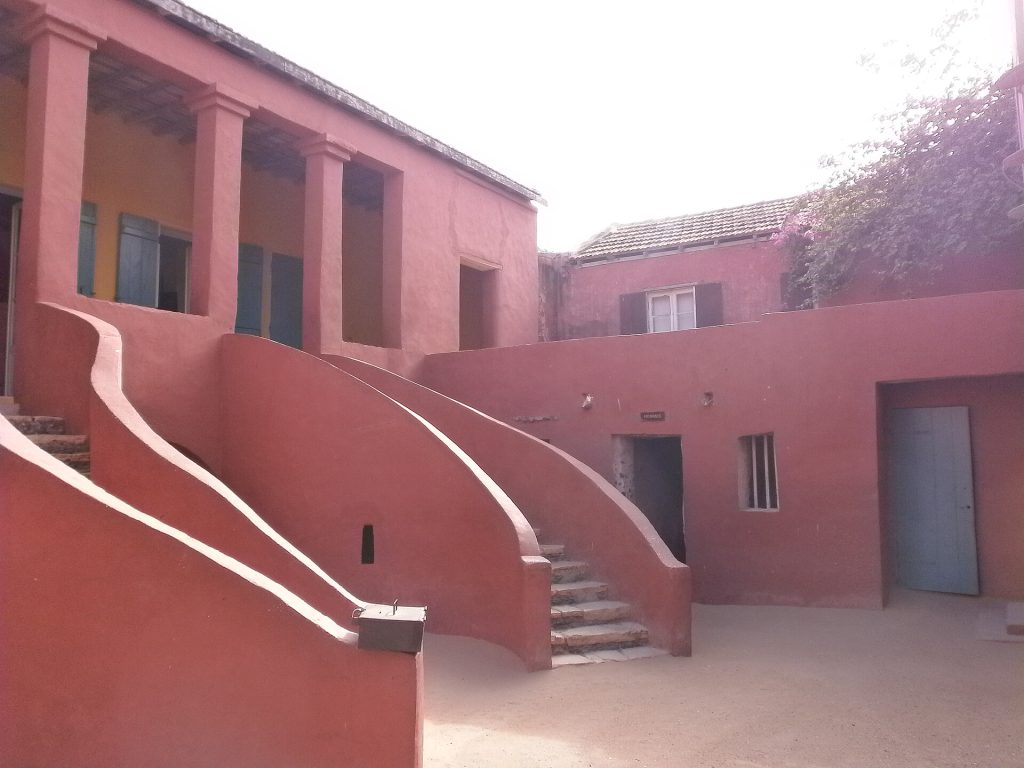
The house is a handsome two-story building, painted in a faded pink, with an elegant curving double staircase in its courtyard, and at first glance it looks like a gracious colonial residence rather than a site of horror. But beneath the elegant living quarters of the upper floor lay the dark holding cells of the ground floor, where, according to the memorial’s interpretation, enslaved people were held before being shipped across the ocean.
The families who owned such houses on Gorée were deeply involved in the trade, owning ships and participating in the commerce that included the trade in human beings, and the house served, in this interpretation, as a holding center for the enslaved. The contrast between the comfortable living quarters above and the grim cells below has made the house a powerful symbol of the moral horror of the slave trade.
The House of Slaves was preserved and established as a memorial and museum in the twentieth century, and it became, above all through the work of its long-serving curator, one of the most famous and moving memorials to the slave trade in the world. Its interpretation of its own history, and the debates that surround it, form an important part of its story.
The elegant double staircase in the courtyard of the house, curving up to the living quarters above, has become one of the iconic images of the memorial, its beauty standing in terrible contrast to the dark cells below. This juxtaposition, of grace above and horror below, captures the moral catastrophe of the slave trade in a single architectural image, and it is among the most affecting features of the house.
The Dark Cells of the Ground Floor
The most harrowing places in the House of Slaves are the dark cells of the ground floor, small, cramped, airless chambers where, according to the memorial, enslaved men, women, and children were held in terrible conditions before being shipped across the ocean. To enter these cells is a deeply sobering experience, a confrontation with the reality of the suffering that the slave trade inflicted.

The cells are dark and small, and the accounts of the conditions within them, the crowding, the shackles, the lack of air and light, the deliberate separation of families, evoke the horror of the experience of the enslaved. Separate cells are shown for men, for women, and for children, and each carries its own weight of remembered suffering.
The memorial’s curator, in his powerful and moving presentations, brought the history of these cells vividly to life for the countless visitors who came to the house, describing the conditions of the enslaved and the terrible realities of the trade. His interpretations, delivered with great emotional force, made the House of Slaves one of the most affecting memorials of its kind.
To stand in these cells, whatever the debates about the precise history of the house, is to confront the reality of the slave trade in the most direct and moving way, to imagine the suffering of the enslaved and to honor their memory. The cells of the House of Slaves have become a place of pilgrimage and mourning, where the horror of the trade is made present and undeniable.
View on Google Maps (14.6671, -17.3972)
It is important, whatever the debates about the specific numbers, to recognize that the enslaved held in such places were individuals, each with a name, a family, and a life that was stolen, and that the cells stand as a memorial to their suffering. The power of the House of Slaves lies in its ability to make this suffering present, to move the visitor to remember and to mourn the victims of the trade.
The Door of No Return
At the rear of the House of Slaves, opening directly onto the ocean, is the feature that has made the house world-famous: the Door of No Return, the doorway through which, according to the memorial, the enslaved passed from the cells to the ships waiting to carry them across the sea. It is one of the most powerful and evocative images associated with the entire history of the slave trade.

The door frames a view of the open ocean, the vast expanse of water across which the enslaved were carried to a lifetime of bondage in the Americas, never to return. For the countless visitors who come to the house, standing at this door, looking out at the ocean, is an overwhelming experience, a moment of confrontation with the immense tragedy of the slave trade.
The Door of No Return at Gorée has become one of the great symbols of the African diaspora and of the memory of the slave trade, a place of pilgrimage for the descendants of the enslaved and for all who come to remember. It has been the setting for moments of great emotional and symbolic power, visited by world leaders and by countless ordinary people seeking to connect with this history.
Whatever the scholarly debates about the precise role of this particular house in the slave trade, the Door of No Return has taken on a profound symbolic meaning as a memorial to the millions who were carried away from Africa into slavery. It stands as a threshold between remembering and forgetting, a powerful and moving symbol of one of history’s greatest crimes.
The image of the Door of No Return, framing the ocean across which the enslaved were carried away, has become one of the defining symbols of the memory of the slave trade, reproduced and evoked around the world. Its power lies in its simplicity and its finality, the small opening onto the vast sea capturing the immense tragedy of the millions who passed, in reality or in symbol, from Africa into bondage.
The Curator Who Gave the House Its Voice
The House of Slaves owes much of its fame and its emotional power to its long-serving curator, a man who devoted his life to the memorial and who, through his moving and impassioned presentations, made the house one of the most famous sites of memory of the slave trade in the world. For decades, he welcomed visitors and told the story of the house and of the trade with great force.

His interpretations, delivered with deep emotion and conviction, brought the history of the slave trade vividly to life and moved countless visitors to tears, and he became, in a sense, the voice of the House of Slaves and of the memory it enshrines. Through his work, the house became a major destination for pilgrims and visitors from across the world.
The curator claimed that a very large number of enslaved people had passed through the house, a claim that has been disputed by historians but that captured the emotional and symbolic significance of the site as a memorial to the trade. His role in shaping the meaning and the fame of the house was immense, and his legacy endures in the memorial he did so much to create.
The story of the curator is an important part of the story of the House of Slaves, for he did more than anyone to give the house its voice and its power as a place of memory. His devotion and his eloquence transformed a former trading house into one of the great memorials of the slave trade, a place that continues to move and to teach the many who visit it.
The curator’s decades of devotion made him inseparable from the House of Slaves in the minds of the many who visited during his long tenure, and his passing was mourned as the loss of a great voice for the memory of the slave trade. His legacy endures in the memorial he shaped and in the countless visitors he moved to remember, a testament to the power of a single dedicated life.
Memory, History, and the Scholarly Debate
The House of Slaves is the subject of a significant scholarly debate, and an honest account of the site must engage with this debate directly and thoughtfully. Historians have questioned the specific claims made about the house, particularly regarding the very large numbers of enslaved people said to have passed through it, arguing that the actual scale of the slave trade through this particular house and island was far smaller.
Scholars have pointed out that the great majority of the enslaved shipped from the region left from other points, and that the numbers associated with the House of Slaves in its popular presentation are not supported by the historical evidence. This scholarly critique does not deny the reality or the horror of the slave trade, but questions the specific historical claims made about this particular site.
This debate raises important and difficult questions about the relationship between historical accuracy and the power of memory and symbol. The House of Slaves has become a powerful memorial and a place of pilgrimage precisely because of its emotional and symbolic force, even as historians question the specific claims made about its history. It stands as a symbol of the whole trade rather than a precise record of one location.
An honest engagement with the House of Slaves must hold both of these truths together: the reality and horror of the slave trade, which is beyond dispute, and the scholarly questions about the specific history of this particular house. The site’s significance as a symbol and a place of memory is real and profound, even as its precise historical role is debated, and both dimensions are part of its complex and important story.
The care with which this debate must be handled reflects the seriousness of the subject, for to question the specific claims about the house is not to diminish the reality of the slave trade but to seek the truth about a particular site. The most thoughtful approach honors both the demand for historical accuracy and the profound significance of the house as a symbol and a place of memory, holding the two in a careful balance.
A Place of Pilgrimage for the World
Whatever the debates about its precise history, the House of Slaves has become one of the most important places of pilgrimage in the world for the memory of the slave trade, drawing enormous numbers of visitors each year and serving as a powerful symbol of remembrance for the African diaspora and for all humanity. Its significance as a place of memory is beyond question.

The house has been visited by some of the most prominent figures in the world, including religious leaders, heads of state, and figures of great moral authority, all come to pay their respects and to bear witness to the history of the slave trade. These visits have brought international attention to the house and affirmed its status as a memorial of universal significance.
For the descendants of the enslaved among the African diaspora, the pilgrimage to Gorée and the House of Slaves has a special meaning, a return to the coast from which their ancestors were taken, an act of remembrance and of reconnection. The house has become a place where this history can be confronted and where the ancestors can be honored.
The status of the House of Slaves as a place of pilgrimage reflects the power of the site as a symbol, a place where the immense and often abstract tragedy of the slave trade is made concrete and present. Whatever the historical debates, the house has become a sacred site of memory, a place where the world comes to remember the victims of one of history’s greatest crimes.
The visits of world leaders and figures of great moral authority to the House of Slaves have often been moments of deep emotional and symbolic power, occasions on which the world’s attention was drawn to the memory of the slave trade. These visits have affirmed the status of Gorée as a site of universal significance, a place where the memory of a great crime is honored by the whole of humanity.
Confronting History on the Island of Gorée
Visiting Gorée Island and the House of Slaves is a profound and moving experience, a confrontation with one of the darkest chapters in human history in a setting of great beauty and peace. The island is easily reached by ferry from Dakar, and to walk its quiet, colorful streets is to enter a world that seems far removed from the tragedy it commemorates, a contrast that only deepens the impact of the visit.

At the House of Slaves, descend into the dark cells, stand at the Door of No Return looking out at the ocean, and learn the history of the slave trade and of the memory that the house enshrines. Come with an awareness of both the reality of the trade and the debates about the specific history of the house, and you will find the experience all the more thought-provoking and moving.
Explore the wider island of Gorée as well, with its old colonial houses, its fortifications, and its museums, which together tell the story of the island and its long and complex history. The whole island is recognized as a site of universal heritage, a monument to the memory of the slave trade and to the history of the West African coast.
Come to Gorée Island, then, ready to remember and to reflect, to confront the history of the slave trade and to honor the memory of its victims. Whatever the scholarly debates, the House of Slaves stands as one of the great memorials to this history, a place of pilgrimage and mourning on a beautiful island off the coast of Senegal, and a powerful reminder of a history that must never be forgotten.
A visit to Gorée is often described by those who make it as an experience they never forget, a confrontation with history that stays with them for the rest of their lives. The combination of the island’s beauty, the power of the House of Slaves, and the weight of the history it commemorates makes Gorée one of the most affecting places that any traveler can visit, a place that changes those who come to it.
Castles Nearby
To continue exploring the great fortresses and memorials of Africa and the wider world:
You May Like
Mafra, the Palace a King Built From a Vow


One thought on “The House of Slaves: Memory and Mourning on Gorée Island”