- A White Basilica on the Roof of the World
- The Town on the Highest Great Lake
- A Sacred Place Long Before the Church
- The Sculptor Who Carved the Virgin
- The Dark Virgin and Her Crowned Image
- The White Moorish Basilica
- A Catholic Shrine in the Andes
- Patroness of a Whole Nation
- The Famous Blessing of the Vehicles
- Feasts, Dancers and Pilgrims
- Where Old and New Faith Meet
- What Visitors Find by the Lake
- A Name That Travelled the World
- The Island of the Sun Offshore
- Miracles and the Record of Gratitude
- An Andean Catholicism All Its Own
- The Long Road of the Pilgrims
- If You Go: Practical Notes
At nearly four thousand metres above the sea, on the shore of a lake so high and so vast that it feels like an inland ocean, stands a gleaming white basilica that draws pilgrims from across the Andes. This is Copacabana, a small town on the Bolivian side of Lake Titicaca, and at its heart is one of the most beloved Marian shrines in all of South America: the sanctuary of Our Lady of Copacabana, patroness of Bolivia.
People come here for many reasons. Some come to pray before a dark, crowned image of the Virgin carved more than four centuries ago. Some come for the great feasts, when the streets fill with dancers and music. Some come, remarkably, to have their cars and trucks blessed in a ritual found almost nowhere else. And some come simply for the astonishing setting, where the white church, the blue lake and the thin bright air of the high Andes combine into something unforgettable.
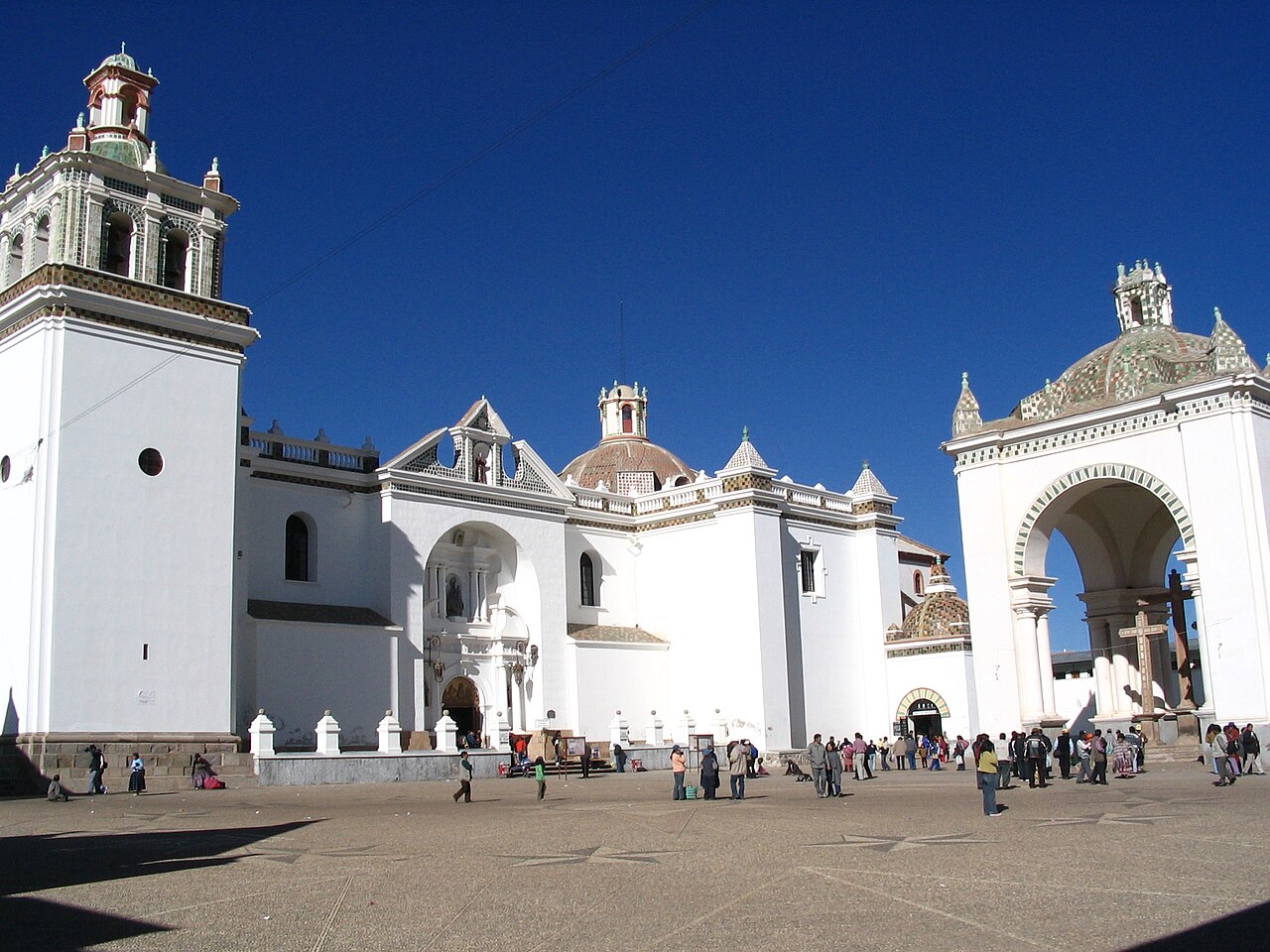
Photo: Wikimedia Commons, Wikimedia Commons (CC BY-SA 3.0)
A White Basilica on the Roof of the World
The basilica of Copacabana dominates its town. Brilliant white, with domes and arches that recall the architecture of southern Spain and the wider Mediterranean world, it sits surrounded by a broad walled courtyard, an island of order and beauty in a small, busy Andean town. Against the deep blue of the high-altitude sky and the lake beyond, the whiteness of the church is almost dazzling.
This is no modest country chapel. It is a substantial and richly decorated sanctuary, built to honour an image believed to work miracles and to receive the crowds of pilgrims who have come here for centuries. The scale and grandeur of the church, in so remote and high a place, are themselves a measure of how important the shrine became to the faith of the region.
Inside, the basilica is rich with gilded altarpieces, chapels and devotional art, all leading the eye toward the image of the Virgin that is the reason the whole place exists. To step in from the bright thin air outside is to enter a hushed, golden world dedicated entirely to Our Lady of Copacabana.
The Town on the Highest Great Lake
Copacabana sits on the shore of Lake Titicaca, the highest large navigable lake in the world, straddling the border between Bolivia and Peru high in the Andes. This is an extraordinary landscape: a huge, deep blue lake set among bare brown hills and snow-touched peaks, under a sky of unusual clarity and intensity at such altitude. The lake has been sacred to the peoples of the Andes for thousands of years.
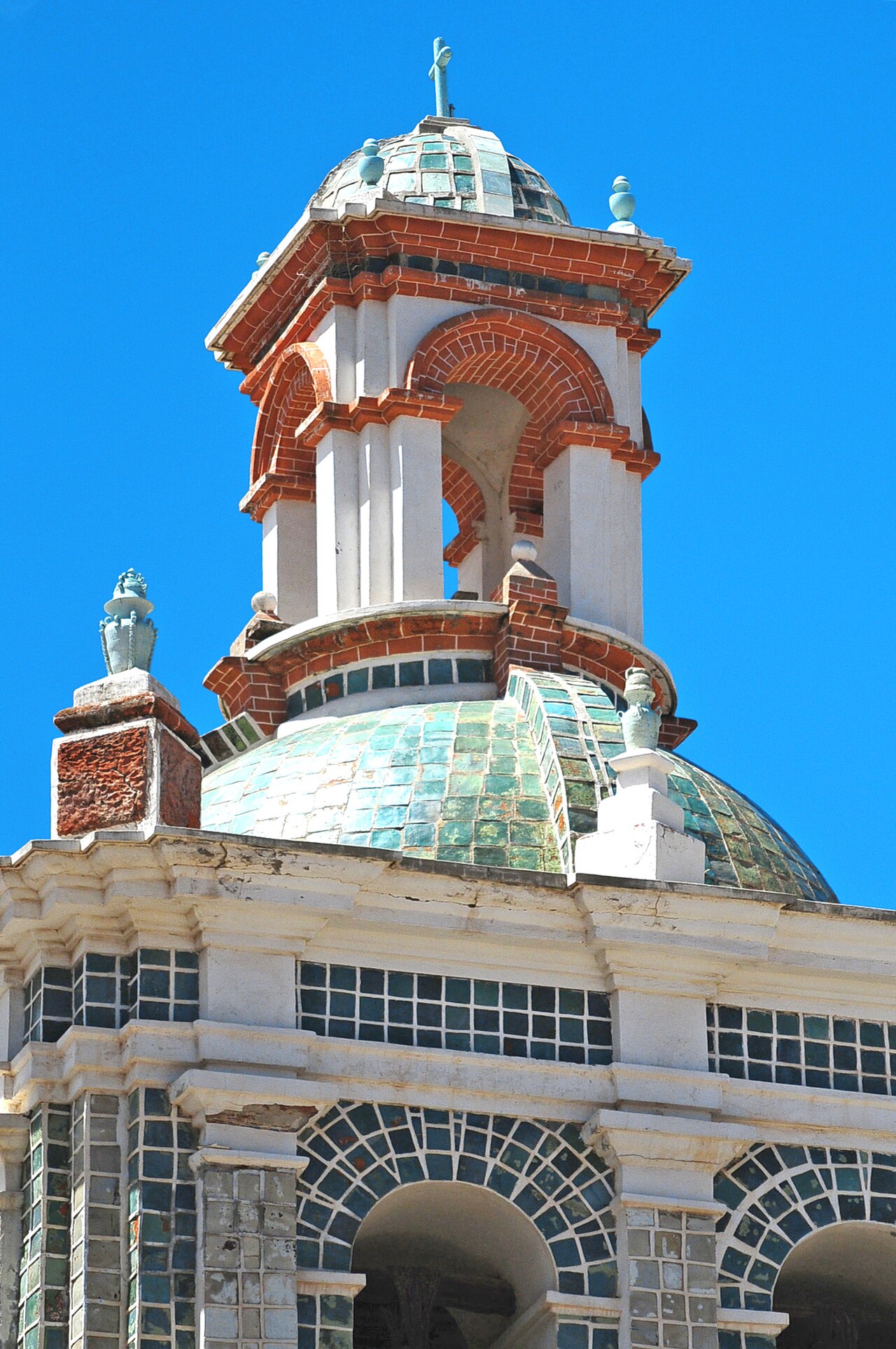
Photo: LBM1948, Wikimedia Commons (CC BY-SA 4.0)
The town is a gateway to the lake and its islands, including the Island of the Sun, long held in Andean tradition to be the birthplace of the sun itself. For centuries Copacabana has been a place where travellers and pilgrims gather before crossing the water, and that role as a threshold, between land and lake, between worlds, runs deep in its character.
The altitude shapes everything here. The air is thin and cold, the light is sharp, and visitors often feel the effects of the height. But that same altitude gives Copacabana its peculiar magic, the sense of being on the roof of the world, where the lake meets the sky and a white basilica rises between them.
A Sacred Place Long Before the Church
One of the most important things to understand about Copacabana is that it was a sacred place long before the Christian shrine was built. The shores and islands of Lake Titicaca were holy to the Andean peoples for many centuries, bound up with their myths of origin and their worship, and Copacabana itself was a site of pre-Christian religious significance.
When Christianity came to the Andes with the Spanish, it did not arrive in an empty spiritual landscape but encountered these deep and ancient devotions. The establishment of a Christian shrine at Copacabana, like so many across the Americas, took place on ground already considered sacred, and the new faith grew up entwined with the old in ways that still mark the religion of the region today.
This layering of the sacred gives Copacabana a particular depth. The pilgrims who come to honour the Virgin walk in a place that has drawn worshippers for far longer than Christianity has existed in the Andes, and the devotion to Our Lady here carries within it echoes of a much older reverence for this lake and its shores.
The Sculptor Who Carved the Virgin
The story of the shrine in its Christian form turns on a single remarkable figure: an indigenous Andean sculptor, a descendant of the Inca nobility, who in the later sixteenth century carved the image of the Virgin that would become the heart of Copacabana devotion. The tradition tells how this artist, moved by faith and persistence, created a statue of the Virgin Mary holding the child Jesus for his local community.
That an indigenous artist created the beloved image is no small detail. It speaks to the way the people of the Andes took the new faith and made it their own, shaping its central devotion with their own hands. The Virgin of Copacabana is, from the very beginning, an Andean Virgin, carved by an Andean for Andean believers, and this has always been part of why she is so cherished by the people of the region.
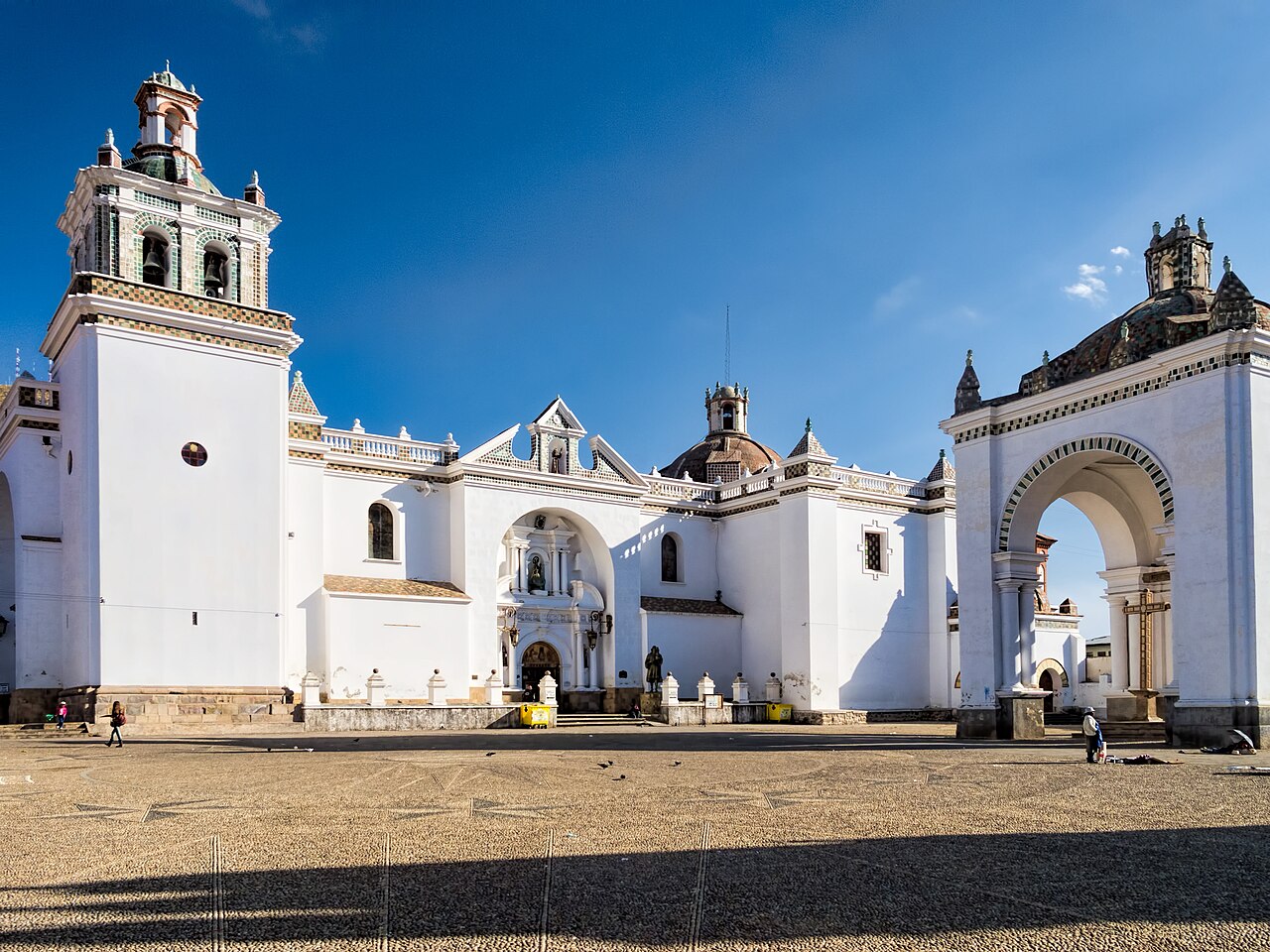
Photo: Dan Lundberg, Wikimedia Commons (CC BY-SA 2.0)
The image was soon associated with miracles, and devotion to it spread rapidly. What had begun as a local statue became the focus of a great regional cult, and the modest early shrine grew over time into the grand white basilica that stands today.
The Dark Virgin and Her Crowned Image
The image of Our Lady of Copacabana shows the Virgin Mary, dark of complexion, holding the child Jesus and dressed in richly worked robes, often crowned and adorned as befits her status as a queen of heaven and patroness of a nation. Like a number of beloved Marian images across the Catholic world, she belongs to the tradition of dark Madonnas, and her dark features have only deepened the love of the Andean faithful for her.
The statue is treated with the greatest reverence. It is kept within the basilica and, by long tradition, is not moved from its place for fear of misfortune, a belief that itself testifies to how powerfully the image is felt to be bound up with the wellbeing of the people and the land. Pilgrims come before her to pray, to give thanks, and to ask her help in every kind of need.
To stand before the Virgin of Copacabana is to stand before an image that has gathered the hopes and prayers of generations of Andean believers. She is not a distant figure but a mother close to her people, and the devotion that surrounds her is warm, intimate and deeply personal.
The White Moorish Basilica
The basilica that houses the image is itself a work of great beauty. Built and elaborated over the centuries, it shows the influence of Moorish and Mediterranean styles, with its white walls, its domes, and its decorative detailing, an echo of the architecture of southern Spain transplanted to the high Andes. The large walled forecourt sets the church apart, creating a sacred precinct in the heart of the town.
The contrast between the gleaming white exterior and the rich, golden interior is part of the experience of the shrine. Outside, all is bright and clear under the Andean sun; inside, the eye is drawn through shadow and gilded ornament toward the crowned image of the Virgin. The whole building is designed to honour her and to lift the pilgrim toward the holy.
For all its grandeur, the basilica remains a working centre of devotion rather than a museum. Masses are celebrated, pilgrims pray, candles burn, and the rhythm of the religious life of the town flows through its courts and chapels, as it has for centuries.
A Catholic Shrine in the Andes
Copacabana is a Roman Catholic sanctuary, and it stands within the great tradition of Marian devotion that is so central to Catholic faith throughout Latin America. In Catholic understanding, the Virgin Mary is honoured as the Mother of God and invoked as a powerful intercessor, and shrines dedicated to her beloved images draw the faithful to pray, to give thanks and to ask her prayers before her Son.
The Virgin of Copacabana has received the highest honours the church can give to such an image, including a solemn crowning that recognised her status as a queen and patroness, and her basilica is one of the principal Marian shrines of the continent. The devotion to her is woven into the official life of the church in Bolivia and into the everyday faith of its people.
For Catholics, the meaning of Copacabana lies in this union of the universal and the local: the universal Catholic devotion to Mary, expressed here through a particular, cherished Andean image, carved by an indigenous artist, enthroned by a high lake, and loved by a whole nation as its mother and protector.
Patroness of a Whole Nation
Our Lady of Copacabana is the patroness of Bolivia, and her significance reaches far beyond the town that bears her name. For Bolivians, she is a national figure, a heavenly mother to the whole country, and devotion to her is part of what binds the nation together across its many regions and peoples. To honour the Virgin of Copacabana is, for many Bolivians, an expression of national as well as religious identity.
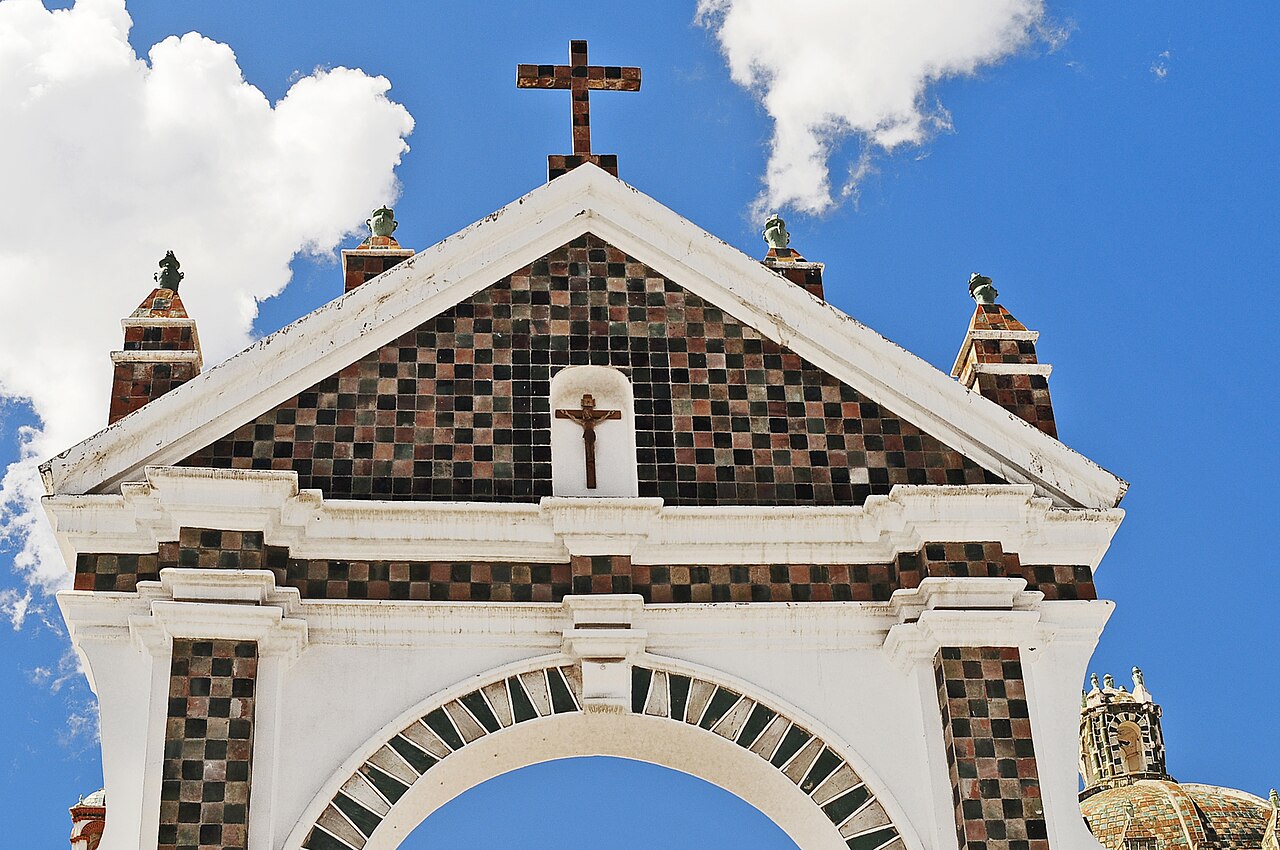
Photo: LBM1948, Wikimedia Commons (CC BY-SA 4.0)
This national role gives the shrine a particular weight. Pilgrims come not only as individuals with private petitions but as members of a people who look to this Virgin as their protector. In times of difficulty and celebration alike, Bolivians turn to Our Lady of Copacabana, and her image presides over the spiritual life of the nation from her basilica above the lake.
That a small town on the shore of Lake Titicaca should hold the patroness of an entire country is a striking testament to the power of the devotion that grew up here, from the hands of a single indigenous sculptor to the heart of a nation.
The Famous Blessing of the Vehicles
Among the many devotions of Copacabana, one has become especially famous and is found in few other places: the blessing of vehicles. Pilgrims drive their cars, trucks and buses to the shrine, often decorating them elaborately with flowers, garlands and ribbons, and bring them before the church to be blessed by a priest, asking the Virgin protection on the roads.
The sight of brightly adorned vehicles lined up before the white basilica, sprinkled with holy water and showered with flower petals, is one of the most distinctive at Copacabana. In a region where mountain roads can be dangerous, the desire to place ones vehicle, and ones safety, under the protection of the Virgin is deeply felt, and the ritual draws people from far and wide.
This blessing of cars is a vivid example of how living devotion adapts to the realities of modern life. The ancient instinct to seek divine protection for a journey finds expression here in the blessing of the machines on which people now depend, all under the gaze of the Virgin who has watched over travellers at this lakeside crossing for centuries.
Feasts, Dancers and Pilgrims
The great feasts of Copacabana are among the most vibrant religious celebrations in the Andes. On the principal days dedicated to the Virgin, the town fills with pilgrims, and the streets come alive with processions, music and the spectacular costumed dances that are such a feature of Andean Catholic festivity. Faith here is not quiet and private but loud, colourful and communal.
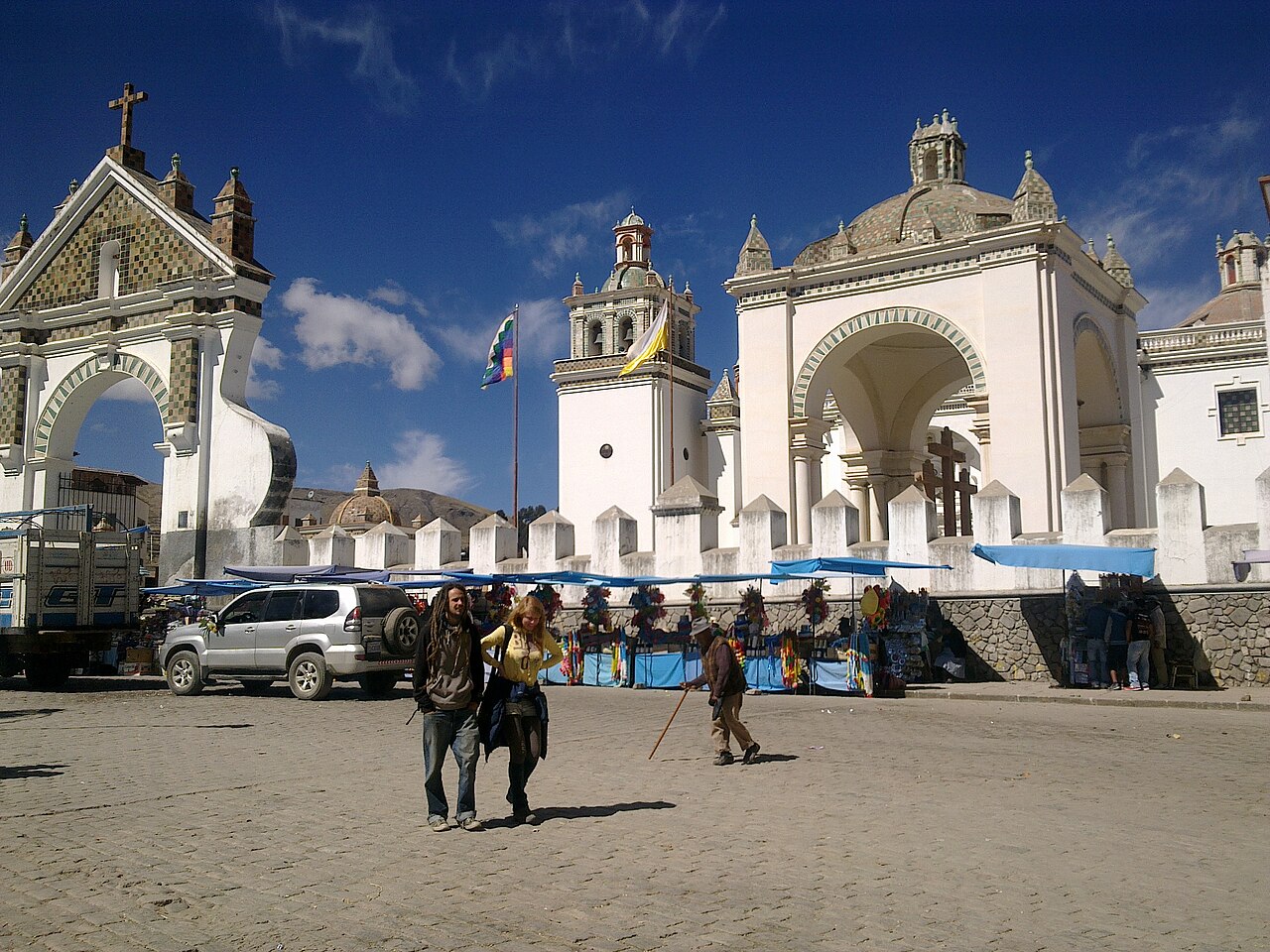
Photo: Sasha India, Wikimedia Commons (CC BY 2.0)
These celebrations blend Catholic devotion with the rich cultural traditions of the Andean peoples, in dances and customs that reach back into the pre-Christian past. The result is a festivity of extraordinary energy and beauty, in which the honouring of the Virgin becomes a whole-community expression of faith, identity and joy.
For pilgrims, these feasts are the high points of the devotional year, occasions to come to the Virgin in the company of thousands of others, to dance and pray and celebrate, and to renew their bond with Our Lady of Copacabana. The sight and sound of the town in full festival is something that stays with all who witness it.
Where Old and New Faith Meet
Perhaps more than almost any other major shrine, Copacabana embodies the meeting of old and new faith in the Andes. The Christian devotion to the Virgin grew up on ground already sacred to the peoples of the lake, and to this day the religion of the region carries within it the intertwining of Catholic and ancient Andean elements, in its festivals, its customs and its sense of the holiness of the land.
This does not lessen the Catholic character of the shrine, which is unmistakable, but it gives it a particular texture. The Virgin of Copacabana is honoured by a people whose spiritual world has been shaped by many centuries of faith, and the devotion to her draws on the deep Andean reverence for the lake, the mountains and the sun as well as on Christian belief.
To understand Copacabana, then, is to understand something about the religion of the Andes as a whole: a faith in which the Catholic devotion brought by the Spanish took root in ancient sacred ground and grew into something distinctively Andean, of which the white basilica above Lake Titicaca is one of the most beautiful expressions.
What Visitors Find by the Lake
For the traveller, Copacabana offers a rare combination: a great religious shrine, a stunning natural setting, and a vivid living culture, all in one small high-altitude town. Visitors come to see the white basilica and its crowned Virgin, to take in the vastness of Lake Titicaca, and often to journey out to the sacred islands that lie offshore.
The town itself, busy with pilgrims and travellers, has a character all its own, shaped by its double role as a national shrine and a lakeside crossing point. The thin bright air, the blue of the lake, the whiteness of the church and the colour of the local life combine into an experience that is unlike anywhere else, even for those who arrive with no religious purpose.
And for those who come as pilgrims, or who are simply open to the spirit of the place, Copacabana offers something deeper: the chance to stand before a beloved image of the Virgin in one of the most extraordinary settings on earth, and to feel the long devotion of the Andean people to their mother by the high blue lake.
A Name That Travelled the World
There is a curious footnote to the fame of Copacabana that surprises many visitors: the name itself has travelled far beyond this small Bolivian town. The devotion to Our Lady of Copacabana spread widely through the Spanish-speaking world, carrying the name with it, and over time Copacabana came to be attached to places and things far from Lake Titicaca, including, most famously, a celebrated beach on the far side of the continent.
This spread of the name is itself a measure of how powerful the devotion to the Virgin of Copacabana became. A name born on the shore of a high Andean lake, attached to a beloved image of the Virgin, was carried by the faith of generations across oceans and continents until it became known around the world, even to many who have no idea of its origin in this lakeside shrine.
For the pilgrim standing before the white basilica, this is a quiet reminder of the reach of the devotion. The Virgin honoured here gathered such love that her name escaped the mountains entirely and went out into the wider world, even as her image remained fixed in its place above the lake, watching over the people who first carved and crowned her.
The Island of the Sun Offshore
No account of Copacabana is complete without the islands that lie offshore in Lake Titicaca, above all the Island of the Sun. In Andean tradition this island is held to be the birthplace of the sun and a place of profound sacredness, and for centuries it drew pilgrims of the older faith just as the basilica now draws pilgrims of the new. Copacabana has long served as the gateway to these holy islands.
This connection deepens the meaning of the town. The pilgrim who comes to honour the Virgin stands at the edge of a lake whose islands have been sacred for far longer than the Christian shrine has existed, and many visitors combine their time at the basilica with a journey across the water to the Island of the Sun. The two devotions, ancient and Christian, sit side by side along this shore.
The presence of the sacred islands just offshore is part of what gives Copacabana its extraordinary depth as a holy place. It is not only a Christian shrine but a point where the long religious history of the Andes gathers, a threshold between the town and the sacred waters, between the basilica and the older holiness of the lake.
Miracles and the Record of Gratitude
Like all great pilgrimage shrines, Copacabana is bound up with stories of miracles, of prayers answered and help received, and these accounts are the lifeblood of the devotion. From the earliest days, the image of the Virgin was associated with healings and wonders, and it was this reputation that transformed a local statue into the focus of a great regional cult and drew ever larger crowds to the lakeside town.
The gratitude of those who believe their prayers were answered is expressed in many ways at Copacabana, from offerings left at the shrine to the simple act of returning, year after year, to give thanks. The flower-decked vehicles brought for blessing, the pilgrims who come on the great feasts, the candles burning before the image, all are part of a vast ongoing exchange of petition and thanksgiving between the people and their Virgin.
This living record of gratitude is what keeps Copacabana from being merely a beautiful building in a stunning setting. It is a place where real hopes are brought and, the faithful believe, real help is given, and the long accumulation of answered prayers is woven into the very atmosphere of the shrine. To come here is to enter a place saturated with the trust of generations.
An Andean Catholicism All Its Own
Copacabana is one of the clearest windows onto the distinctive form that Catholicism has taken in the Andes. Here the universal faith of the church, with its devotion to the Virgin Mary and its sacraments and feasts, is lived out in a way deeply shaped by the cultures, traditions and landscapes of the Andean world, producing a religion that is unmistakably Catholic and unmistakably Andean at once.
This shows in the indigenous origins of the beloved image, carved by an Andean sculptor; in the festivals, where Catholic processions blend with the costumed dances of Andean tradition; in the blessing of vehicles, which adapts ancient instincts to modern life; and in the deep sense, running through it all, of the holiness of the lake, the mountains and the land. The result is a faith of great vitality and beauty.
For the visitor willing to look beyond the surface, Copacabana offers a profound lesson in how a world religion becomes rooted in a particular place and people. The Catholicism of the Andes is not a pale copy of European faith but a living tradition with its own genius, and the white basilica above Lake Titicaca, with its dark Virgin and its joyful feasts, is one of its most radiant expressions.
The Long Road of the Pilgrims
For many of the faithful, reaching Copacabana is itself an act of devotion, a journey undertaken in a spirit of pilgrimage rather than mere travel. Some come from nearby towns and villages; others travel great distances across Bolivia and beyond, drawn by a vow made, a favour sought, or a thanksgiving to be offered. The hardship of the road, especially at such altitude, is part of what gives the arrival its meaning.
This understanding of pilgrimage as a journey of the heart, in which the effort of getting there is bound up with the prayer one carries, is ancient and universal in the Christian world, and it is felt strongly at Copacabana. To climb up to the high lake, to come at last within sight of the white basilica, and to stand finally before the crowned Virgin is, for the pilgrim, the fulfilment of a journey that may have been long in planning and longer in hoping.
The crowds that gather on the great feasts are, in this sense, the visible end of countless individual journeys, each pilgrim carrying their own burden of need or gratitude to lay before Our Lady of Copacabana. That convergence of so many private pilgrimages into one great public devotion is part of what makes the shrine so moving, and it links the faithful of the Andes to pilgrims at holy places the world over, who have always understood that the road to the shrine is part of the prayer.
If You Go: Practical Notes
Copacabana lies on the Bolivian shore of Lake Titicaca, reached by road from La Paz and other centres, and it sits at very high altitude, so visitors should allow time to acclimatise and take the effects of the thin air seriously. The cold, especially at night, and the strong high-altitude sun both call for preparation, with warm layers and sun protection equally important.
As a major working shrine, the basilica asks for respectful behaviour, particularly during Mass and the great feasts when pilgrims fill the town. Modest dress and quiet within the church are appropriate, and visitors who happen upon one of the festivals will find an extraordinary spectacle that deserves to be witnessed with courtesy as well as wonder. Boat trips to the sacred islands of the lake are a natural complement to a visit.
However one comes to it, Copacabana tends to leave a lasting impression. A white basilica by the highest of great lakes, a dark Virgin carved by an Andean hand, the blessing of flower-decked cars, the dances of the feasts, and the deep meeting of old and new faith all combine to make it one of the most distinctive and moving holy places in the Americas, and a fitting patroness shrine for the high heart of Bolivia. Few places gather so much, the sacred lake, the ancient faith, the carved Virgin and the joyful crowds, into a single unforgettable scene above the water.