- One of the Oldest Monasteries on Earth
- The Mountain of the Servants of God
- Sixteen Centuries Without a Break
- A Church That Still Prays in Syriac
- Who the Syriac Orthodox Are
- The Great Domed Church and Its Mosaics
- A Living Monastery, Not a Ruin
- A School for a Threatened Heritage
- The Hard Centuries and the Diaspora
- A Symbol of Endurance
- What Pilgrims and Visitors Find
- The Saints Behind the Name
- A Great Centre of Ancient Learning
- The Daily Life of the Community
- A Living Bridge to the Early Church
- The Wider World of Tur Abdin
- If You Go: Practical Notes
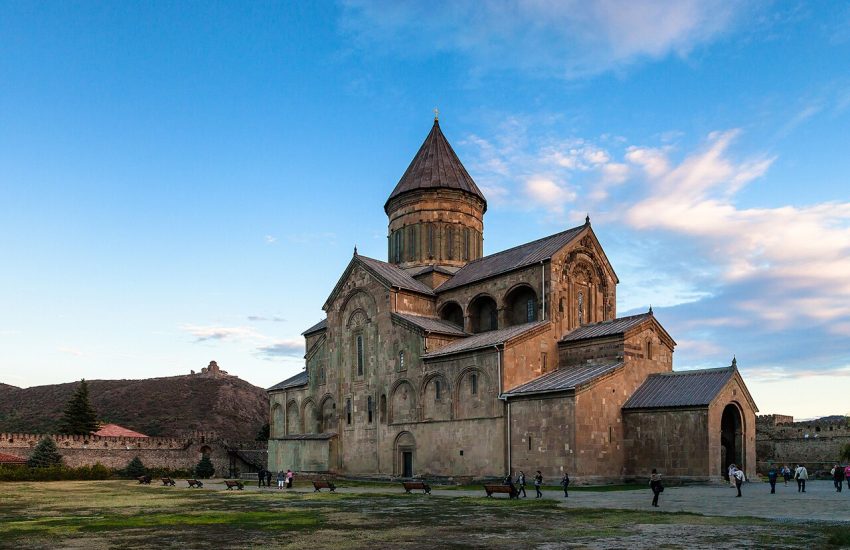
On a stony plateau in the far southeast of Turkey, in a region of low hills and ancient villages near the Syrian border, stands a monastery that has been praying without interruption for more than sixteen hundred years. Mor Gabriel, known in the old language as Deyrulumur, is one of the oldest surviving monasteries in the world, and for the Syriac Orthodox Church it is something close to a beating heart: a place where an ancient form of Christianity, in one of the oldest Christian languages still in use, has survived against extraordinary odds.
To visit Mor Gabriel is to step into a living link with the earliest centuries of the faith. The monks and nuns here still chant in Syriac, a language descended from the Aramaic of the ancient Near East, and the rhythms of their prayer reach back through an unbroken chain to the age when this region was a great centre of Eastern Christianity. The buildings are old; the faith inside them is older still.

Photo: Christian Koehn, Wikimedia Commons (CC BY-SA 2.0 de)
One of the Oldest Monasteries on Earth
The claim is a large one, but Mor Gabriel earns it. Founded in the late fourth century, it ranks among the very oldest monasteries anywhere that have remained in continuous use, a survivor from the first great age of Christian monasticism. While countless monasteries of comparable antiquity have long since fallen into ruin or been abandoned, Mor Gabriel has endured, generation after generation, through every upheaval the region has known.
That continuity is what makes it so precious. This is not a restored monument or a reconstructed site but a genuinely ancient community that never stopped. The walls have been repaired and rebuilt over the centuries, but the life within them, the daily round of prayer, the keeping of the faith, the use of the old language, has carried on unbroken since an age when much of Europe had not yet been converted.
For anyone interested in the deep history of Christianity, Mor Gabriel offers something rare: a direct, living thread back to the world of the early church, preserved not in a book or a museum but in a working monastery still standing on its ancient ground.
The Mountain of the Servants of God
Mor Gabriel sits in a region known as Tur Abdin, an evocative name that means, in the old language, the mountain of the servants of God. The name is well earned, for this plateau was once dotted with monasteries and churches, a great heartland of Syriac Christianity where monks and ascetics gathered in such numbers that the whole landscape was given over to the service of God.

Photo: Mar Sharb, Wikimedia Commons (CC BY 2.0)
For many centuries Tur Abdin was one of the most important centres of Eastern monasticism, a place whose spiritual life rivalled the great monastic regions of the wider Christian world. The villages of the plateau were Christian, the hills were full of holy sites, and Mor Gabriel was among the greatest of its many monasteries, a centre of learning and prayer whose influence reached far beyond the region.
Today Tur Abdin is much changed, its Christian population vastly reduced by the upheavals of modern history, but Mor Gabriel endures as the chief surviving witness to what this plateau once was: a true mountain of the servants of God, where the ancient faith took deep root and, in this one great monastery at least, still lives.
Sixteen Centuries Without a Break
The sheer span of Mor Gabriel history is difficult to grasp. Founded in the late fourth century, it has lived through the late Roman and Byzantine eras, the coming of Islam, the rule of successive empires and dynasties, the Mongol invasions, the long centuries of Ottoman rule, and the turbulent modern history of the region, and through all of it the monastery has kept its life of prayer going.
Such endurance was never guaranteed. The history of Tur Abdin includes periods of great suffering, persecution and violence, and the Christian community of the region has been gravely diminished over time. That Mor Gabriel survived where so much else was lost is partly a matter of its importance, partly of the determination of those who refused to let it die, and partly, the faithful would say, of the protection of God and the saints to whom it is dedicated.
To stand in the monastery and reflect that the same prayers have risen from this spot, in the same ancient language, for more than sixteen centuries is genuinely moving. Few places on earth offer so direct and so long a continuity of human devotion, maintained through every storm that history could throw at it.
A Church That Still Prays in Syriac
At the heart of what makes Mor Gabriel so significant is its language. The Syriac Orthodox Church uses Syriac, a literary and liturgical language that developed from Aramaic, the everyday speech of much of the ancient Near East and the language most scholars connect to the world of Jesus and his first followers. To hear the liturgy chanted in Syriac at Mor Gabriel is to hear a tongue with the deepest possible roots in the Christian story.
Syriac is far more than a relic. It is one of the great languages of early Christianity, the vehicle of an immense body of theology, hymnody and spiritual writing that shaped the faith across the East. The Syriac tradition produced poets and teachers of the first rank, and its hymns and prayers are among the treasures of Christian literature. At Mor Gabriel this whole heritage is not studied at a distance but used, sung and lived.
For the Syriac Orthodox faithful, the survival of their language in the worship of the church is bound up with the survival of their identity as a people. To pray in Syriac is to remain who they are, heirs of one of the most ancient branches of Christianity, and Mor Gabriel is one of the great strongholds where that ancient voice still sounds.
Who the Syriac Orthodox Are
The Syriac Orthodox Church is one of the ancient Oriental Orthodox churches, a family of eastern Christian communities whose history diverged from that of the wider church in the early Christian centuries over questions of theology and the great councils. These churches, which include the Coptic, Armenian, Ethiopian and Syriac traditions among others, preserve forms of Christianity of immense antiquity, distinct from both the Eastern Orthodox and the Catholic and Protestant West.

Photo: Gerry Lynch, Wikimedia Commons (CC BY-SA 3.0)
The Syriac Orthodox in particular carry a heritage that reaches back to the earliest Christian communities of Syria and Mesopotamia, regions evangelised in the apostolic age and among the first anywhere to embrace the faith. Their church is not a later offshoot but one of the original trunks of the Christian tree, with its own ancient liturgy, theology and spiritual culture, expressed in the Syriac language.
Understanding this helps explain why Mor Gabriel matters so much. It is not simply an old building but the spiritual heartland of a whole ancient church, a people whose Christianity is among the oldest in the world and who have held to it through centuries of difficulty. For the Syriac Orthodox, Mor Gabriel is a mother house, a place that anchors their identity and their faith.
The Great Domed Church and Its Mosaics
The monastery contains several churches and chapels, the most important of which is a great domed church of considerable age, a fine example of the early Christian architecture of the region. Its construction reflects the importance the monastery held in the centuries when Tur Abdin was a flourishing centre of the faith, and it remains the principal place of worship for the community.

Photo: Nevit Dilmen, Wikimedia Commons (CC BY-SA 3.0)
Among the treasures of the monastery are remains of early mosaics and other ancient decoration, precious survivals from the first centuries of the monastery life that link the present community to its distant founders. The age and beauty of these features make the churches of Mor Gabriel important not only as places of prayer but as monuments of early Christian art in a region where so much has been lost.
To enter the great church is to step into a space shaped by sixteen centuries of worship, where the architecture itself speaks of the antiquity of the faith practised within it. The stone, the domes, the ancient decoration all combine to create an atmosphere of deep age and deep devotion, the fitting setting for a community that has prayed here since the early church.
A Living Monastery, Not a Ruin
It is important to stress that Mor Gabriel is a living monastery, not an abandoned ruin preserved for tourists. A community continues to live here, maintaining the round of prayer, caring for the buildings, and keeping alive the traditions of Syriac monasticism. The monastery is also the seat of a bishop of the Syriac Orthodox Church, giving it an important role in the ongoing life of that ancient communion.
This living quality transforms a visit. To come to Mor Gabriel is not merely to look at old stones but to encounter a real, continuing community of faith, going about its ancient work in the present day. The prayers chanted in the great church are not reenactments but the genuine worship of people who have given their lives to God in this place, as others did before them for over a thousand years.
That continuity of living faith is the true treasure of Mor Gabriel, greater even than its ancient buildings and mosaics. It is a place where the early church has never quite ended, where a thread of devotion first spun in the fourth century is still being drawn out, day by day, in the prayers of those who live there now.
A School for a Threatened Heritage
Beyond its life of prayer, Mor Gabriel has long played a vital role in preserving the heritage of the Syriac Orthodox people, above all through education. The monastery has served as a place where the young could learn the Syriac language, the traditions of the church, and the faith of their ancestors, ensuring that an ancient heritage would be passed on to new generations rather than dying out.
This educational role has been especially important given the threats the community has faced. As the Christian population of Tur Abdin declined and many families emigrated, the danger that the language and traditions would be lost grew ever more real. Mor Gabriel, by teaching and preserving, has been a crucial bulwark against that loss, a place where the heritage could be kept alive and handed on.
In this sense the monastery is not only a centre of worship but a guardian of an entire culture. The survival of Syriac Christianity depends in part on places like Mor Gabriel, where the language is still taught and the traditions still lived, and where the young can connect with the deep roots of their people faith.
The Hard Centuries and the Diaspora
The modern history of the Syriac Orthodox of Tur Abdin has been marked by great suffering. The community endured terrible losses in the upheavals of the early twentieth century, and over the following decades many were driven by violence, insecurity and hardship to leave their ancient homeland, scattering into a wide diaspora across Europe and beyond. The Christian population of the region, once dominant, was reduced to a small remnant.
Through all of this, Mor Gabriel remained, a fixed point amid the dispersal of its people. For the Syriac Orthodox now living far from Tur Abdin, the monastery became a powerful symbol of the homeland they had lost and the faith they carried with them into exile. Many maintain a deep attachment to it, returning when they can and supporting its survival from abroad.
The monastery has also faced challenges to its very land and existence in recent times, struggles that drew international attention to the plight of this ancient community. That it has weathered these difficulties, as it weathered so many before, is a testament to the determination of the Syriac Orthodox to preserve the heart of their heritage against every threat.
A Symbol of Endurance
More than anything, Mor Gabriel has become a symbol of endurance, of the stubborn survival of an ancient faith and an ancient people against overwhelming odds. In a region where so much Christian life has been extinguished, the continued existence of this praying community is itself a kind of quiet defiance, a refusal to let one of the oldest forms of Christianity disappear from its native soil.

Photo: KediCobani, Wikimedia Commons (CC BY-SA 4.0)
For the worldwide Syriac Orthodox community, the monastery embodies their identity and their hope. As long as Mor Gabriel stands and prays, the ancient church of Tur Abdin is not dead, and the language and traditions of their ancestors have a living home. The monastery carries, in this way, the weight of a whole people longing to endure.
This symbolic power gives Mor Gabriel a significance far beyond its size. It is not a large or famous site by the standards of the great shrines of the world, but for those who understand what it represents, it is among the most moving of all Christian places, a small flame of ancient faith kept burning through the darkest of times.
What Pilgrims and Visitors Find
Those who make the journey to Mor Gabriel find a place of deep peace and deep age, set in a landscape of stark beauty. The monastery, with its honey-coloured stone, its courtyards and its ancient churches, sits amid the wide horizons of the Tur Abdin plateau, and the quiet of the place, broken only by the chanting of the community, makes a powerful impression.
Pilgrims from the Syriac Orthodox diaspora come with a particular emotion, returning to the heartland of their faith and their people, often after long years abroad. For them the visit is a homecoming, a chance to pray in the great church of their ancestors and to feel, however briefly, the continuity of a heritage that exile cannot extinguish. Other visitors, drawn by the antiquity and significance of the site, find themselves caught up in its atmosphere of ancient devotion.
Whoever comes, Mor Gabriel tends to leave a deep mark. There is something humbling about standing in a place where the same faith has been practised in the same language for over sixteen centuries, through every conceivable trial, and where it is practised still. It is a reminder of the astonishing persistence of the human longing for God, and of the courage of those who have kept that longing alive against all odds.
The Saints Behind the Name
The monastery carries the name of Mor Gabriel, honouring a revered holy man and bishop associated with the community in its long history, whose memory became so bound up with the place that his name eventually attached to the whole monastery. In the Syriac tradition the title Mor, meaning lord or saint, is given to the holy figures whose lives shaped the church, and the monastery has been linked over the centuries with several such saints and founders.
These holy figures are not distant abstractions to the community but living presences, remembered in prayer and honoured as patrons and protectors of the monastery. The continuity of devotion to them across so many centuries is part of what binds the present community to its origins, a chain of remembrance reaching back to the founders and early saints of the fourth and fifth centuries.
To pray at Mor Gabriel is, in this sense, to join a vast company stretching across sixteen hundred years, the saints and monks and faithful who have honoured these same patrons in this same place. The name of the monastery itself is a reminder of that long communion, a thread of holiness running from the early church to the present day.
A Great Centre of Ancient Learning
In the great centuries of Syriac Christianity, Mor Gabriel and the other monasteries of Tur Abdin were not only houses of prayer but centres of learning and culture. The Syriac tradition was one of the most intellectually vibrant in the early Christian world, producing a vast literature of theology, biblical commentary, hymnody, history and science, and the monasteries were the places where this learning was nurtured, copied and preserved.
Monks at such monasteries laboured to copy manuscripts by hand, preserving the works of the great Syriac writers and the scriptures in their ancient language, and ensuring that this immense heritage would be handed down through the generations. The Syriac scholars and translators played a crucial role in the wider intellectual history of the region, and the monasteries of Tur Abdin were among the workshops where that heritage was kept alive.
Mor Gabriel thus stands within a tradition of learning as well as prayer, a place where, for many centuries, the life of the mind and the life of the spirit went hand in hand. The educational role the monastery still plays today, teaching the language and traditions of the church, is a continuation of this ancient vocation as a guardian of knowledge as well as faith.
The Daily Life of the Community
The daily life of Mor Gabriel follows the ancient rhythms of Syriac monasticism, an existence ordered around prayer, work and the keeping of the traditions of the church. The community rises for prayer, gathers for the liturgy in the great church, and structures its day according to a pattern of devotion that has changed little across the centuries. Between the times of prayer there is work to be done, the care of the buildings, the land and the visitors who come.
This life is demanding and quiet, lived far from the noise of the modern world, and it requires real dedication from those who embrace it. The members of the community have given their lives to God in this place, taking up a vocation that links them to the monks and ascetics of the early church, who first sought God in the deserts and mountains of the Christian East. Their faithfulness is the living substance of the monastery.
For visitors, witnessing even a little of this daily life is among the most moving aspects of a visit. The sight of the community at prayer, the sound of the Syriac chant filling the ancient church, the sense of a life wholly ordered toward God, all convey something that no description can fully capture: the reality of a way of life that has endured, in this place, since the dawn of Christian monasticism.
A Living Bridge to the Early Church
Perhaps the deepest significance of Mor Gabriel is that it serves as a living bridge to the early church, a connection not of stone and memory but of continuous, unbroken life. In an age when the early centuries of Christianity can seem impossibly remote, accessible only through ancient texts and ruined sites, Mor Gabriel offers something different: a community that has never stopped living the faith of that early age, in its original language and its ancient forms.
The Christianity preserved here predates the great divisions that later separated the churches of East and West, and it carries forms of worship, theology and spirituality that reach back to the earliest Christian centuries of Syria and Mesopotamia. To encounter it is to glimpse what the faith looked like in regions that were among the very first to embrace it, before so much of the later history of the church had unfolded.
This makes Mor Gabriel a treasure not only for the Syriac Orthodox but for all Christians, and indeed for anyone interested in the history of the faith. It is a window onto the ancient church that is also a living reality, a place where the deep past is present, and where the long continuity of Christian devotion can be felt with unusual immediacy. Few places anywhere offer so direct a link to the origins of the faith.
The Wider World of Tur Abdin
Although Mor Gabriel is the most famous of the monasteries of Tur Abdin, it is not alone. The plateau is dotted with the remains and the survivors of a once vast network of Christian sites, ancient churches, monasteries and villages that together made this region one of the great heartlands of Eastern Christianity. To understand Mor Gabriel fully is to see it as the chief survivor of this larger Christian landscape.
Other monasteries in the region, some still functioning, others in ruins, testify to the depth of the Christian presence here over the centuries. The very stones of the plateau, with their old churches and inscriptions in the ancient language, speak of a time when Tur Abdin was thoroughly Christian, its hills alive with the prayer of monks and the faith of village communities. Mor Gabriel carries the memory of all of this.
For the traveller, exploring something of this wider world deepens the meaning of a visit to Mor Gabriel. The monastery is not an isolated curiosity but the surviving heart of a whole Christian region, and to glimpse the broader landscape of Tur Abdin, its other churches and its ancient villages, is to understand more fully what Mor Gabriel represents: the endurance of a faith that once filled this entire plateau, and that still, in this great monastery, refuses to die. It is a heritage of extraordinary depth, and Mor Gabriel remains its living guardian.
If You Go: Practical Notes
Mor Gabriel lies in the Tur Abdin region of southeastern Turkey, near the towns of Midyat and Mardin, and is usually reached by road through this historic and beautiful but sometimes sensitive border region. Visitors should check current conditions and travel thoughtfully, and be aware that as a working monastery with a resident community, Mor Gabriel asks for respectful and quiet behaviour from all who come.
Modest dress is expected, and visitors should be mindful that they are guests in a living religious community, not customers at a tourist attraction. Times of prayer and the life of the monks and nuns deserve to be respected, and a quiet, attentive presence is the right way to experience the place. Those interested in the wider heritage of Tur Abdin will find other ancient Syriac churches and monasteries in the surrounding region.
However one comes to it, Mor Gabriel rewards the journey with something rare. It is a place where the deep past of Christianity is not a memory but a living reality, where an ancient language still rises in prayer, and where a small community keeps faith with sixteen centuries of devotion. To visit is to touch one of the oldest living threads in the whole fabric of the Christian world, and to come away with a deeper sense of how much endurance the keeping of a faith can require. In a world that forgets quickly, Mor Gabriel remembers, and goes on remembering, century after century.