The ancient Romans called the southern corner of Arabia by a hopeful name, Arabia Felix, meaning Fortunate or Happy Arabia. While the rest of the Arabian peninsula was harsh desert, this land caught the monsoon rains, grew green with terraced fields, and grew rich on the trade in frankincense and myrrh that the whole ancient world craved. That is the land of the Yemenis, a people whose history stretches back to legendary kingdoms and whose homeland is among the most strikingly beautiful in all of Arabia. It is also, in our own time, the scene of one of the world’s gravest humanitarian tragedies. To know the Yemenis is to know both the fortunate land of old and the suffering nation of today.
In This Article
- The Land of the Queen of Sheba
- The Roots of the Yemeni Tongue
- Cities That Rise Like Towers
- A Mountain People
- Islam and the Long Centuries
- Coffee, the Gift of Yemen
- Two Yemens and a Difficult Union
- The Tragedy of the Present War
- The Island at the Edge of the World
- The Yemeni Character
- The Flavors of the Yemeni Table
- Crafts, Dress, and Daily Beauty
- A Fortunate Land Awaiting Better Days

The Land of the Queen of Sheba
Long before Islam, southern Arabia was home to a string of wealthy kingdoms whose names still carry an air of legend. Greatest among them was Saba, the realm remembered in scripture and tradition as the kingdom of the Queen of Sheba, whose famous visit to King Solomon is told in both the Bible and the Quran. The Sabaeans built one of the engineering marvels of the ancient world, the great dam at Marib, which held back the seasonal floods and watered a vast oasis, supporting a flourishing civilization for over a thousand years.
These southern Arabian kingdoms grew immensely rich as the source and the middlemen of the incense trade. Frankincense and myrrh, burned in temples from Egypt to Rome, came largely from this region, and the caravans that carried them north made the rulers of Yemen wealthy and famous. The eventual breaking of the Marib dam, remembered in tradition as a great catastrophe, became a symbol of the passing of that golden age and is woven into the Yemeni sense of a glorious and ancient past.

The Roots of the Yemeni Tongue
Yemenis today speak Arabic, in dialects that are among the most distinctive and, in some ways, the most archaic in the entire Arabic speaking world, preserving features lost elsewhere. Arabic belongs to the Semitic branch of the great Afro Asiatic language family, which also includes Hebrew, Aramaic, and the languages of the Horn of Africa. But Yemen holds a special place in this family, because southern Arabia was home to its own separate group of ancient Semitic tongues, the Old South Arabian languages such as Sabaean, written in a beautiful angular script quite different from later Arabic.
Most remarkably, a few of these old South Arabian languages did not entirely die out. In the remote eastern reaches of Yemen and on the island of Socotra, small communities still speak Modern South Arabian languages such as Mehri and Soqotri, tongues that are not dialects of Arabic at all but separate Semitic languages, living relics of the speech of Arabia Felix. These endangered languages make Yemen a treasure house of Semitic linguistic history, a place where the deep past of the language family can still be heard spoken aloud.
Cities That Rise Like Towers
Yemen possesses some of the most extraordinary architecture on earth, the work of a people who learned to build upward long before the modern skyscraper. In the desert valley of the Hadhramaut stands Shibam, a walled town packed with tower houses of mud brick that rise as high as eight stories, earning it the nickname of the Manhattan of the desert. These earthen towers, some of them centuries old, have sheltered families for generations and represent one of the oldest examples of high rise urban planning anywhere in the world.

The old city of the capital, Sanaa, is no less astonishing. Inhabited for more than two thousand years and set high in the mountains, it is a forest of tall tower houses built of stone and brick, their upper floors decorated with intricate friezes of white gypsum and crowned with windows of colored stained glass that glow at night. To walk its ancient streets is to step into a living medieval city, and it is rightly counted among the wonders of the Islamic world and protected as a site of world heritage.
A Mountain People
Unlike the flat deserts that cover much of Arabia, the heart of Yemen is mountainous, a rugged highland of peaks and deep valleys that catches the rains and turns green in season. For thousands of years the Yemenis have carved the steep slopes into staircases of terraced fields, an immense feat of patient labor that allows farming on land that would otherwise be too steep to cultivate. These terraces, climbing the mountainsides in graceful curves, are among the most beautiful agricultural landscapes anywhere, and they speak to the deep bond between this people and their demanding land.

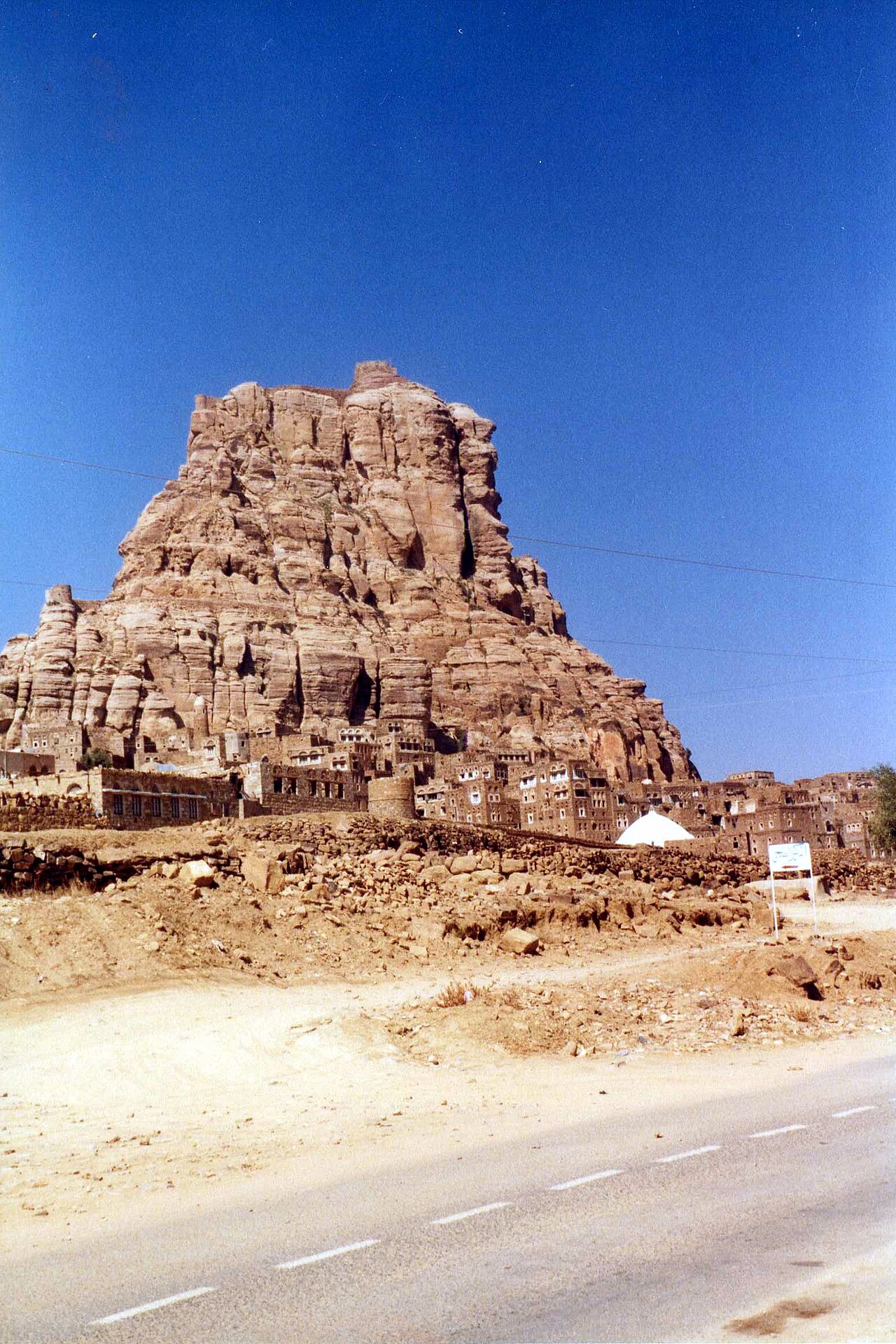
In these highlands sit fortified stone villages and towns, perched on hilltops and ridges for defense, built from the rock of the mountains themselves so that they seem to grow out of the landscape. The mountain environment shaped a hardy, independent people, organized for much of their history into powerful tribes whose loyalties and rivalries remain a central feature of Yemeni society to this day.
Islam and the Long Centuries
Yemen embraced Islam very early, in the lifetime of the Prophet Muhammad, and it has been a deeply religious land ever since. Over the centuries it developed its own distinct religious character, divided mainly between followers of the Shafi school of Sunni Islam in the south and the lowlands, and the Zaydis, a branch of Shia Islam, in the northern highlands. For more than a thousand years, a line of Zaydi imams ruled much of northern Yemen, combining religious and political authority in a state that preserved its independence through long isolation.
Yemen lay somewhat apart from the great centers of Islamic power, and this isolation allowed it to keep its own traditions, its own architecture, and its own ways. The town of Zabid in the coastal plain became, for a time, one of the most important centers of Islamic scholarship in the entire Arab world, its university drawing students from far and wide. The legacy of that learning, like so much of Yemen’s heritage, survives in its old mosques, libraries, and the narrow lanes of its historic towns.

Coffee, the Gift of Yemen
The world owes Yemen a debt it rarely remembers each morning, for it was here that coffee first became the drink we know. While the coffee plant came originally from Ethiopia across the narrow sea, it was in Yemen that people first cultivated it seriously and brewed the roasted beans into a beverage, spreading the habit through the Muslim world from the fifteenth century onward. For a long time Yemen held a near monopoly on the coffee trade, and the beans were shipped to the world through a port whose name became a byword for coffee itself, Mocha.
The terraced mountains that grow Yemeni coffee still produce some of the most prized and distinctive beans in the world, grown slowly at high altitude in the old way. In a tragic irony, many Yemeni farmers over the last century turned from coffee to growing qat, a mild narcotic leaf chewed daily by a large share of the population, a habit that consumes enormous amounts of water and farmland in a country that can spare neither. The story of Yemeni coffee, glorious in the past and struggling in the present, mirrors the larger fortunes of the land.

Two Yemens and a Difficult Union
The modern history of Yemen has been turbulent. In the twentieth century the country was effectively split in two. The north, after the long rule of the Zaydi imams, became a republic following a revolution and civil war in the 1960s. The south, centered on the great port of Aden which the British had ruled as a colony for over a century, became independent and then, uniquely in the Arab world, adopted a Marxist government allied with the Soviet Union. For decades, North Yemen and South Yemen existed as two separate and often hostile states.

In 1990 the two Yemens united into a single republic, a moment of real hope. But the union was uneasy from the start, and a southern attempt to break away led to another civil war just a few years later. The unified state struggled with deep poverty, weak institutions, regional divisions, and the constant tension between the old north and south. These fault lines, never truly healed, would help set the stage for the catastrophe that was to come.
The Tragedy of the Present War
Any honest account of the Yemenis today must confront the devastating war that has engulfed their country. After the upheavals that swept the Arab world early in the last decade, Yemen slid into a complex and brutal conflict, as a movement from the northern highlands seized the capital and a coalition of outside powers intervened with a long bombing campaign in support of the displaced government. The result has been years of fighting, blockade, and collapse that the United Nations has repeatedly described as one of the worst humanitarian crises in the world.
The human cost has been almost unbearable to contemplate. Hundreds of thousands have died from the fighting and from the hunger and disease that war has brought, including a famine that has threatened millions and an outbreak of cholera among the largest ever recorded. Children have suffered most of all. It is essential, in writing about the beauty and the deep history of Yemen, never to look away from this present reality, in which an ancient and gifted people has been brought to the edge of starvation by a war they did not choose.
The Island at the Edge of the World
Far out in the Arabian Sea, hundreds of miles from the mainland, lies one of Yemen’s most extraordinary treasures, the island of Socotra. Isolated for millions of years, it evolved a collection of plants and animals found nowhere else on earth, earning it the nickname of the Galapagos of the Indian Ocean. Its most famous inhabitant is the dragon blood tree, a strange umbrella shaped tree that bleeds a deep red sap, giving the island’s landscapes an almost alien beauty.
The people of Socotra speak their own ancient Semitic language and have preserved a way of life shaped by their long isolation. The island is a living museum of nature and of human heritage alike, recognized as a site of world importance. Even amid the troubles of the mainland, Socotra stands as a reminder of the wonders that the Yemeni homeland contains, and of how much would be lost to the world if they were not protected.

The Yemeni Character
Yemenis are often described, by themselves and by those who know them, as a proud, hospitable, and resilient people, deeply attached to their tribes, their faith, and their mountains. The tradition of hospitality is fierce even by the high standards of Arabia, and a guest is treated as a trust to be honored and protected. The men of the highlands traditionally wear the jambiya, a curved dagger tucked into the belt, less a weapon now than a proud symbol of manhood and tribal identity passed down through families.
This is also a people with a powerful tradition of poetry and oral storytelling, where verse is composed and traded in social gatherings and even used to conduct disputes and negotiations. For all the hardship of recent years, the Yemenis have shown an astonishing capacity to endure, to keep their families and communities together, and to preserve their dignity and their traditions under conditions that would crush many others.
The Flavors of the Yemeni Table
Yemeni cooking is hearty, fragrant, and distinct from that of its neighbors. The national dish, saltah, is a bubbling stew eaten from a communal pot, topped with a frothy green sauce made from fenugreek and served with flatbread for scooping. Slow cooked lamb, spiced rice dishes, and a rich array of breads fill the table, often flavored with the warm spice blends that this old crossroads of the spice trade knows so well. The clay oven, or tannour, bakes the bread that is central to every meal.
Sweetness comes in the form of bint al sahn, a flaky layered honey bread brushed with butter and dripping with honey and black seed, a festive dish served on special occasions. And of course there is coffee, often brewed in the old Yemeni way not only from the bean but also from the dried husk, producing a light, spiced drink called qishr that is flavored with ginger and cinnamon. Around these dishes, families and guests gather in the long midday meal that anchors the Yemeni day.
Crafts, Dress, and Daily Beauty
For all its poverty and its present troubles, Yemen has a rich tradition of craft and adornment. Its silversmiths, long famous, produced intricate jewelry, much of it once made by the country’s ancient Jewish community, whose craftsmanship was renowned across the region before most of them departed in the twentieth century. The ornate hilts and sheaths of the jambiya daggers are themselves works of art, the finest of them prized heirlooms passed down for generations.
The decorated houses of Sanaa, with their white gypsum tracery and jewel like stained glass fanlights called qamariya, show a love of beauty woven into the very fabric of daily life. Women’s dress varies richly from region to region, with bright patterns and silver ornaments in the countryside. This instinct for decoration, for making the ordinary beautiful, runs through Yemeni culture and offers a glimpse of the spirit that endures beneath the hardship of the present moment.
A Fortunate Land Awaiting Better Days
It is hard to write the ending of the Yemeni story, because its present chapter is one of unresolved suffering. Here is a people heir to the legendary kingdoms of Sheba, builders of mud brick towers and mountain cities of breathtaking beauty, the cultivators who gave the world its coffee, the keepers of some of the most ancient languages of Arabia. And here too is a people enduring war, hunger, and the collapse of the ordinary world, watching their incomparable heritage damaged and their children go without.
The Romans called it Arabia Felix, the fortunate land, and for much of history the name fit. To remember that is not to deny the tragedy of the present but to insist on the fuller truth, that the Yemenis are far more than the war that now defines them in the headlines. They are an ancient, creative, and tenacious people, and the deepest hope one can hold for them is that the fortune in their old name might one day return, and that peace will let the world see again the beauty that this remarkable land has always held.


