On the western flank of the South Indian peninsula, where the Arabian Sea breaks against a green coast and the land climbs through coffee-scented hills to a high, dry plateau, live the Kannada people, one of the oldest and most accomplished civilisations of the Indian south. They number some fifty million or more, the great majority of them living in the state of Karnataka, of which their language is the soul. To the outside world Karnataka is known mainly through its restless capital, Bengaluru, the city that became the byword for India’s software revolution, yet behind that glass-and-steel image lies a heritage of empires, temple-builders, poets, and saints that reaches back well over two thousand years.
The Kannada speak a Dravidian language with one of the longest and richest literary traditions in all of India, and their land has been the heartland of some of the subcontinent’s most powerful kingdoms. From the boulder-strewn ruins of Hampi, once the capital of an empire that dazzled foreign travellers, to the impossibly intricate carved temples of the Hoysalas, to the planned monuments of the maharajas of Mysore, the Kannada country is a museum of Indian genius in stone. This is the story of who the Kannadigas are, where their language comes from, and how they became at once the keepers of an ancient culture and the engineers of India’s digital future.
In This Article
- A land of three Karnatakas
- A Dravidian tongue with two thousand years of letters
- The early kingdoms and the rise of the Chalukyas
- The Hoysalas and the miracle of carved stone
- Vijayanagara, the city of victory
- The Deccan sultanates and the dome of Bijapur
- The kingdom of Mysore, Tipu Sultan, and the Wodeyars
- Bringing the Kannada lands together
- Coffee, waterfalls, and the green wall of the Ghats
- Bengaluru, the garden city that became Silicon Valley
- The Kannada table
- Music, dance, and the Sandalwood screen
- An ancient people facing the future

A land of three Karnatakas
Karnataka is a land of striking geographic contrasts, and Kannada identity has been shaped by the meeting of very different terrains. Along the west runs a narrow, humid coastal strip backed by the wall of the Western Ghats, a chain of forested mountains that catch the monsoon and feed countless rivers and waterfalls. These hills are among the wettest and most biodiverse places in India, cloaked in rainforest and dotted with the plantations that make Karnataka the source of the overwhelming majority of India’s coffee. Beyond the Ghats the land opens onto the vast Deccan plateau, a high tableland of black soil and red earth, drier and more austere, where most Kannada people actually live.
People often speak loosely of several Karnatakas. There is the lush coastal and Malnad hill country of the west; the old princely heartland around Mysuru and Bengaluru in the south, historically the most developed; and the drier, historically poorer northern districts around towns like Bijapur and Kalaburagi, which carry a strong Indo-Persian and Deccan sultanate legacy. These regions speak different dialects of Kannada, eat differently, and remember different histories, and tensions between the more prosperous south and the neglected north remain a live political theme. Yet across all of them the Kannada language and a shared pride in the region’s deep history bind people together.

A Dravidian tongue with two thousand years of letters
Kannada belongs to the Dravidian family of languages, the great independent language family of South India that is entirely distinct in its deep ancestry from the Indo-Aryan languages of the north such as Hindi and Bengali. Within the Dravidian family, scholars place Kannada in the South-Dravidian branch, where its closest sibling is Tamil, with Malayalam and the smaller language Tulu also near relatives, and Telugu a slightly more distant cousin. Kannada and Telugu even share a closely related script, a rounded, looping alphabet descended from the ancient Brahmi writing system, so that the two written languages look almost like variants of one another to the untrained eye.
What sets Kannada apart is the sheer antiquity of its written record. Kannada inscriptions on stone go back many centuries, with the Halmidi inscription of around the fifth or sixth century usually cited as the oldest substantial example, and a continuous literary tradition stretching from at least the ninth century to the present. That literary heritage is so distinguished that Kannada has been formally recognised by the Indian government as a classical language, an honour shared by only a handful of Indian tongues. Its medieval poets produced epics, its saint-poets created a revolutionary body of devotional verse, and in modern times Kannada writers have won the Jnanpith, India’s highest literary award, more often than the authors of any other Indian language, a remarkable testament to a living literary culture.
The richness of that tradition includes one of the most extraordinary social and literary movements in Indian history, the Vachana poetry of the twelfth-century Lingayat saints. Writing in plain, direct Kannada rather than scholarly Sanskrit, figures such as Basavanna and the woman mystic Akka Mahadevi composed short, fierce free-verse meditations that rejected caste hierarchy, ritual, and temple worship in favour of a direct and personal devotion. This movement gave rise to the Lingayat or Veerashaiva community, which remains one of the largest and most influential groups in Karnataka today, and it stands as an early and powerful assertion of social equality expressed through the Kannada language itself.
The early kingdoms and the rise of the Chalukyas
The recorded history of the Kannada country begins with the Kadamba dynasty, founded around the fourth century, traditionally regarded as the first kingdom to use Kannada as a language of administration. They were followed by the Western Gangas, and then by one of the great imperial powers of early medieval India, the Chalukyas of Badami, who from the sixth century ruled much of the Deccan and waged long wars with the Pallavas of the Tamil country to the south. At their capital and its nearby sites the Chalukyas pioneered a tradition of rock-cut and structural temple architecture that experimented boldly with both northern and southern styles, laying foundations that would influence Indian temple-building for centuries.
Power on the plateau then passed to the Rashtrakutas, an empire so formidable that a visiting Arab traveller ranked their ruler among the four great kings of the world. Under these successive Kannada-speaking dynasties the Deccan was for a long period the political and cultural pivot of the entire subcontinent, a fact often forgotten in histories that focus on the north. The temples, inscriptions, and courtly literature these empires produced established Kannada as a language of high culture and power, not merely of everyday speech.
The Hoysalas and the miracle of carved stone
If one artistic achievement defines the Kannada country in the popular imagination, it is the temple architecture of the Hoysala dynasty, which ruled the southern Deccan between roughly the eleventh and fourteenth centuries. The Hoysalas built in a soft, soapstone-like rock that hardens on exposure, and their sculptors exploited this material to produce carving of almost unbelievable density and delicacy. The temples at Belur, Halebidu, and Somanathapura are covered, inch by inch, in friezes of elephants, horsemen, dancers, deities, and scenes from the epics, along with individual sculptures so finely worked that the bracelets seem to move on the wrists of the stone goddesses.
These star-shaped, intricately layered temples are among the supreme masterpieces of Indian art, and several of them have been recognised as UNESCO World Heritage Sites. They represent a high point not just of Kannada civilisation but of human craftsmanship, the patient labour of generations of guild sculptors who often signed their work, leaving us the rare gift of named medieval artists. To stand before a Hoysala wall is to understand the depth of the cultural confidence of the Kannada kingdoms at their height.

Vijayanagara, the city of victory
The grandest chapter in Kannada history is the empire of Vijayanagara, founded in the fourteenth century and ruled for more than two hundred years from a spectacular capital on the banks of the Tungabhadra river, in a landscape of giant granite boulders that looks like the surface of another planet. Vijayanagara rose as the great bulwark of Hindu power in the south at a time when Muslim sultanates were pressing down from the north, and at its peak it controlled most of peninsular India and grew immensely wealthy on trade in spices, cotton, and horses.
Foreign visitors, including Portuguese and Persian travellers, left astonished accounts of the capital, describing a city larger than the great cities of Europe, with bustling bazaars where diamonds and pearls were sold in the open, vast irrigation works, and a court of dazzling splendour. The empire was a patron of Kannada, Telugu, Sanskrit, and Tamil letters alike, a true crossroads of southern culture. In 1565 a coalition of Deccan sultanates defeated Vijayanagara at the battle of Talikota and sacked the capital, and the magnificent city was abandoned to the boulders and the river. Its ruins at Hampi, temples, palaces, royal baths, and the famous stone chariot, remain one of the most haunting and beautiful archaeological landscapes in the world.

The Deccan sultanates and the dome of Bijapur
The northern districts of the Kannada country tell a very different story, one of Persian poetry, Islamic architecture, and the sultanates of the Deccan. After the decline of earlier Hindu powers, much of the north came under the Bahmani sultanate and later its successor, the Adil Shahi dynasty of Bijapur. These were sophisticated, cosmopolitan courts that drew scholars, architects, and soldiers from across the Persian and Arab worlds, and they left the Kannada landscape some of the finest Indo-Islamic monuments in India.
The supreme example is the Gol Gumbaz at Bijapur, the mausoleum of one of the Adil Shahi sultans, crowned by one of the largest masonry domes ever built anywhere in the world. Its whispering gallery, where the faintest sound travels around the vast interior, still astonishes visitors. This Deccan heritage means that the Kannada cultural inheritance is not only that of Hindu temple-builders but also of Muslim sultans, and the north of the state carries an Urdu-inflected, Persianate flavour quite distinct from the southern heartland, a reminder of how many worlds the Kannada country has absorbed.

The kingdom of Mysore, Tipu Sultan, and the Wodeyars
In the south, after the fall of Vijayanagara, a local dynasty of governors, the Wodeyars, built up the kingdom of Mysore, which would become one of the most important princely states in southern India. In the eighteenth century the kingdom was seized by a brilliant and ruthless military commander, Hyder Ali, and his son Tipu Sultan, the celebrated Tiger of Mysore. Tipu was one of the most formidable opponents the British East India Company ever faced, fighting a series of wars against the Company and its allies, experimenting with rocket artillery that genuinely alarmed the British, and seeking alliances as far away as France.
Tipu remains a deeply contested figure to this day. To many he is a heroic anti-colonial resistance leader and a moderniser who died sword in hand defending his capital in 1799; to others, particularly in some communities, his record of warfare and religious persecution makes him a more troubling figure. After his death the British restored the Wodeyar dynasty as rulers of a princely Mysore under their paramountcy, and under enlightened maharajas and gifted administrators, Mysore became one of the best-governed and most progressive states in India, an early adopter of hydroelectric power, public education, and industry. The magnificent Mysore Palace, rebuilt in an opulent style in the early twentieth century and famously illuminated by tens of thousands of lights, stands as the glittering symbol of that era.

Bringing the Kannada lands together
For all the glory of its past, the Kannada-speaking people entered the twentieth century politically fragmented. Under British rule and the patchwork of princely states, Kannada speakers were scattered across the princely state of Mysore, the Bombay and Madras presidencies, the Nizam’s Hyderabad state, and the tiny territory of Coorg. They were a majority nowhere in their own administrative units except Mysore, and many felt their language was being marginalised. A long movement for the unification of all Kannada-speaking areas into a single state gathered force, championed by writers and public figures who saw language as the natural basis of a people’s political home.
When India reorganised its states along linguistic lines in 1956, the Kannada lands were finally brought together into a single enlarged Mysore State, which was renamed Karnataka in 1973 to reflect the identity of all its people rather than just the old princely core. This unification is remembered each year on Karnataka Rajyotsava day, when the red-and-yellow Kannada flag flies across the state. Yet the legacy of that fragmentation lingers in the developmental gap between the prosperous south and the long-neglected north, a divide that still shapes the state’s politics and its sense of itself.

Coffee, waterfalls, and the green wall of the Ghats
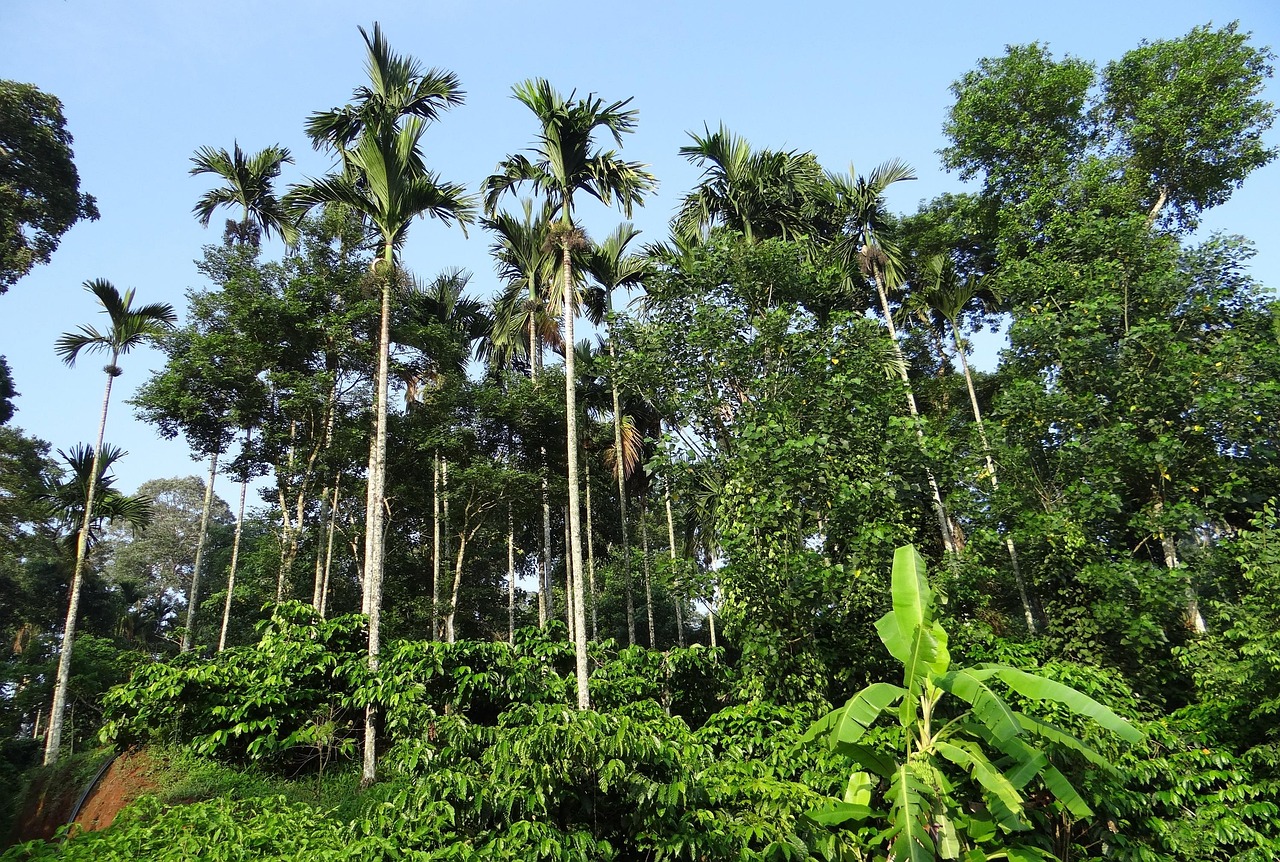
The natural wealth of Karnataka is concentrated in the Western Ghats, the chain of mountains that runs down the western edge of the state and ranks among the world’s great biodiversity hotspots. These forests shelter elephants, tigers, and an astonishing variety of plants and birds, and they give rise to the rivers that water the plateau. It was in the hill districts of Kodagu, or Coorg, and the surrounding Malnad that coffee cultivation took root, and today Karnataka produces the large majority of all the coffee grown in India, its plantations spreading their dark glossy leaves and white blossom across the misty hills.
The Ghats also produce some of India’s most spectacular waterfalls, the most famous being Jog Falls, where the Sharavathi river hurls itself off the plateau in a series of great cascades during the monsoon. The hill country is a world apart from the dusty plains, cool and green and culturally distinctive, home to the proud martial community of the Kodavas with their own customs and traditions. Between the coast, the Ghats, and the plateau, Karnataka packs an extraordinary range of landscapes and ways of life into a single Kannada-speaking state.
Bengaluru, the garden city that became Silicon Valley
No account of the modern Kannada people can avoid the phenomenon of Bengaluru, the state capital and one of the fastest-growing major cities in the world. Once known as a sleepy, temperate retreat full of gardens, lakes, and pensioners, valued for its mild climate at over nine hundred metres of elevation, Bengaluru was transformed in the late twentieth century into the undisputed capital of India’s information technology industry. The reasons lay partly in the city’s long history as a centre of public-sector science and engineering, with aerospace, defence, and research institutions seeding a deep pool of technical talent.
From the 1980s and 1990s, Indian software giants and the global technology firms that followed them built their largest campuses here, and Bengaluru became shorthand around the world for outsourcing, software, and the rise of India as a technology power. The boom brought staggering wealth, a cosmopolitan young workforce drawn from every Indian state, and the headaches of explosive growth: clogged traffic, vanishing lakes, and a strained infrastructure. It also created tension over Kannada identity in a city where migrants now form a huge share of the population, fuelling periodic movements to protect the place of the Kannada language in its own capital. Bengaluru today embodies the central drama of the modern Kannada people, the effort to remain themselves while hosting the future.
The Kannada table
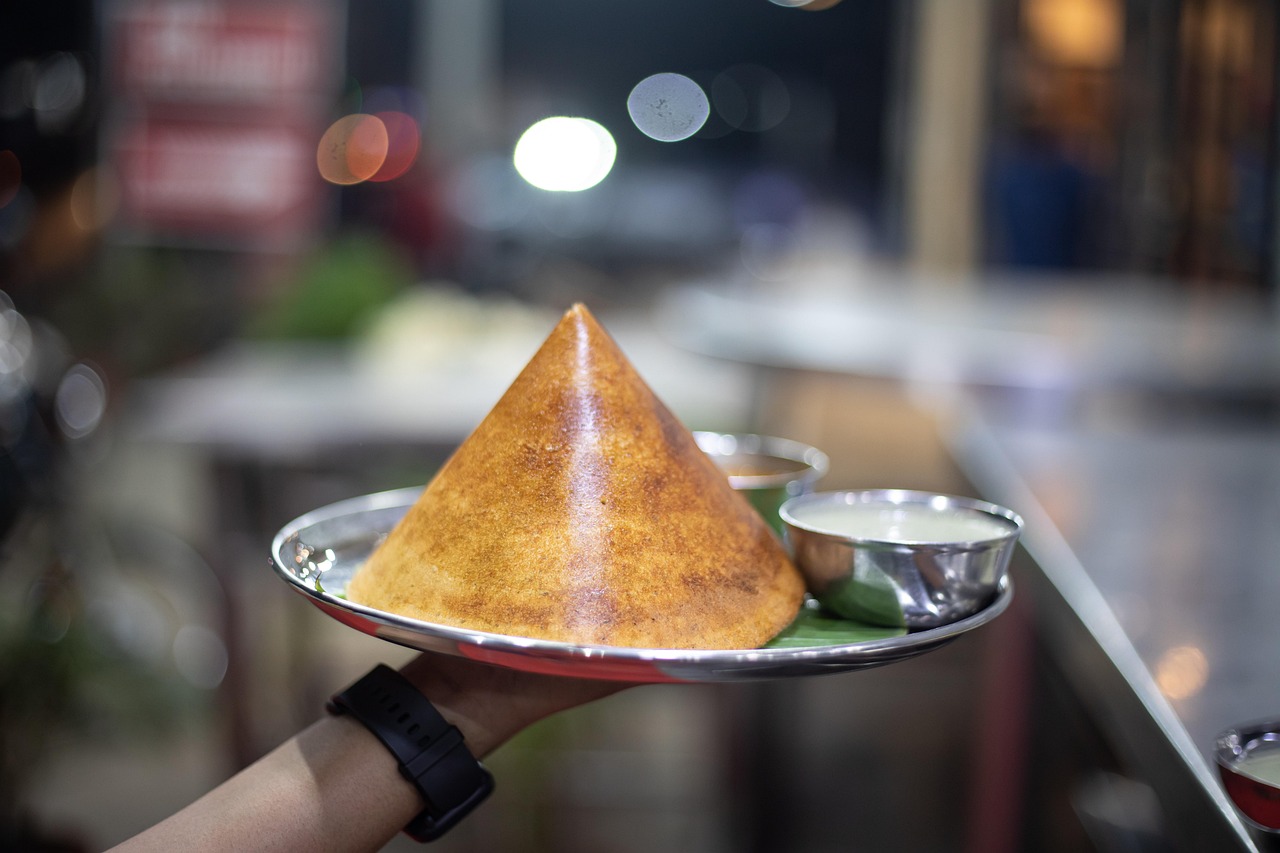
Kannada cuisine is as varied as the state’s landscapes. The southern Mysore region is famous for a refined vegetarian tradition, the source of beloved dishes that have spread across India and the world, including the crisp masala dosa and the savoury rava idli, both of which are often claimed to have been invented or perfected in the kitchens of old Bengaluru and Mysuru. The cooking here tends to be subtly spiced and a little sweet, built on rice, lentils, and ghee, and the strong filter coffee of the south, grown in the state’s own hills, is practically a sacrament.
Travel to the coast and the food changes utterly, becoming a fiery, coconut-rich cuisine of fresh seafood, the celebrated Mangalorean fish curries and the ghee-roast dishes that have become popular far beyond Karnataka. Go north and the staple shifts from rice to jowar millet, eaten as the flat rotti bread with fierce chutneys and the spicy vegetable dishes of the dry plateau. In a single state one can eat three or four genuinely distinct regional cuisines, all of them carried and celebrated in the Kannada language.
Music, dance, and the Sandalwood screen
Karnataka is one of the twin homelands of Carnatic music, the classical music of South India, and the city of Mysuru in particular was a great royal patron of musicians, instrument-makers, and the related classical dance traditions. The state has produced legendary vocalists and instrumentalists revered across the south, and music remains woven into temple festivals, weddings, and daily devotion. The Kannada literary tradition, already noted for its unmatched tally of national literary awards, continues to flourish in fiction, poetry, and drama.
The Kannada film industry, nicknamed Sandalwood after the fragrant wood for which the region was historically famous, is a major cultural force, and in recent years a handful of Kannada films have broken out of regional cinema to become enormous pan-Indian and even global hits, bringing fresh attention and pride to the Kannada screen. Between classical music in the concert hall, devotional song in the temple, and blockbuster spectacle in the cinema, the cultural life of the Kannada people is as layered and vigorous as their history.
An ancient people facing the future
The Kannada enter the twenty-first century carrying one of the deepest cultural inheritances in India, a Dravidian language honoured as classical, a literary tradition of unrivalled honours, the architectural miracles of the Hoysalas and the haunting ruins of Vijayanagara, the domes of the Deccan sultanates, and the elegant legacy of princely Mysore. At the same time they have made their capital into one of the engines of the global digital economy, an achievement that has reshaped not only Karnataka but India’s place in the world. The challenge they wrestle with is the one that runs through this whole story, how to honour a heritage that is genuinely among the great achievements of human civilisation while embracing a rush of change that threatens to overwhelm the very identity that produced it.
To meet the Kannada people is to encounter a civilisation that has been at the centre of South Indian history for two thousand years, that built empires foreign travellers struggled to describe, and that now writes the code running on machines across the planet. Spread across coast, mountain, and plateau, divided by dialect and development yet united by a language they cherish, the Kannadigas remain one of the great peoples of India, ancient and modern at once, and very much still shaping their own future.
You May Like
The Damara, an Ancient People of Namibia