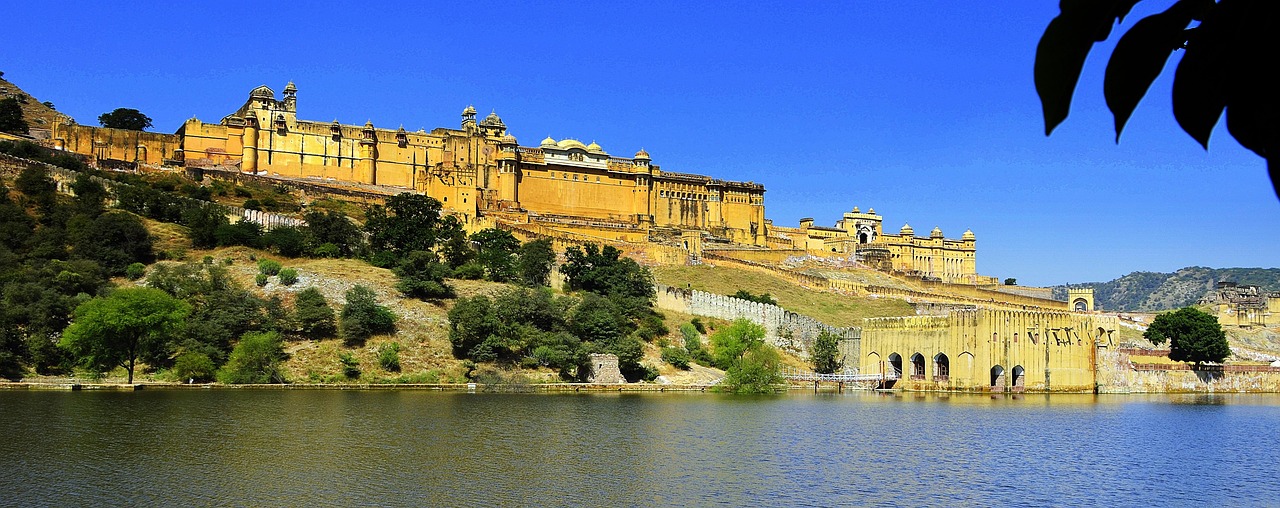
In the northwest of India, where the fertile plains give way to thorn scrub and finally to the rolling sands of a great desert, lies the largest state in the country by area and one of the most instantly recognisable cultures on earth. This is Rajasthan, the Land of Kings, and its people, the Rajasthanis, have given the world an image of India that is almost a cliche of itself: honey-coloured forts crowning rocky hills, palaces floating on still lakes, women in mirror-flecked skirts of crimson and saffron, mustachioed men in turbans of every imaginable colour, and camels swaying across endless dunes at sunset. Behind this dazzling surface lies a people forged by harsh land and constant war, bound together by codes of honour, valour, and hospitality that they hold among the deepest in India.
The Rajasthanis number some seventy million or more, and at the heart of their historical identity stands the Rajput, the warrior-aristocrat whose clans ruled the dozens of princely states that gave the region its old name of Rajputana. Yet Rajasthan is far more than its warriors. It is a land of shrewd merchants whose trading houses spread across India, of farmers and herders who wrest a living from one of the driest inhabited regions on the subcontinent, of folk musicians and puppeteers, and of a religious life that ranges from blood-soaked tales of self-sacrifice to the gentle nonviolence of the Jains. This is the story of who the Rajasthanis are, where their language comes from, and how this desert people built a civilisation of extraordinary colour and pride.
In This Article
- A land of desert, hills, and the great dividing range
- The tongues of Rajasthan and where they come from
- The Rajputs, sons of kings
- Forts on every hill
- The Rajputs and the Mughals, war and accommodation
- The Marwaris, merchants who conquered with the ledger
- From princely Rajputana to a single state
- Gods of the desert and the temples of nonviolence
- Colour, music, and the living folk traditions
- Cooking in a land without water
- The harder realities
- Jaipur and the cities of the plain
- The pride of the desert
A land of desert, hills, and the great dividing range
Rajasthan is dominated by the Thar, the great Indian desert that spreads across its western half, a vast expanse of sand dunes, scrub, and oasis towns that ranks among the most densely populated deserts in the world. Running diagonally across the state from the southwest to the northeast are the Aravalli hills, one of the oldest mountain ranges on the planet, worn down by unimaginable ages into low, rugged ridges. These hills are the great divide of Rajasthan, holding back the desert and separating the arid west from the somewhat greener, more fertile southeast, and their rocky heights gave the Rajputs the natural fortresses on which they built their power.
Water, or rather its scarcity, has shaped Rajasthani life more than anything else. The west receives barely any rain, and for centuries survival depended on elaborate systems of step-wells, tanks, and rainwater harvesting that are marvels of traditional engineering, along with the famous hardiness of the desert people and their camels. The eastern districts, watered a little more generously and including the fertile lands around the capital Jaipur, support more intensive farming. This contrast between the desert west, with its great caravan cities like Jaisalmer and Bikaner, and the relatively lusher east and south, with cities like Jaipur and Udaipur, runs through the whole culture of the region.

The tongues of Rajasthan and where they come from
The language of the Rajasthanis belongs to a completely different family from the Dravidian tongues of the south. Rajasthani is an Indo-Aryan language, part of the vast Indo-European family that stretches from India across Iran and into Europe, and its closest relatives are the neighbouring north Indian languages, especially Hindi and Gujarati. Indo-Aryan languages descend from the ancient Sanskrit and the everyday Prakrit dialects that grew out of it, and Rajasthani took shape over the medieval centuries from a western Prakrit closely connected to the ancestor of Gujarati, the two sharing a common parent often called Old Western Rajasthani or Maru-Gurjar before they slowly diverged into the speech of the northern plains and the desert.
Strictly speaking, Rajasthani is less a single language than a cluster of closely related tongues and dialects, of which Marwari, spoken in the desert west, is the most widely used, alongside Mewari, Dhundhari, Harauti, and others. The relationship of these speech-forms to Hindi is politically charged: official India has long treated Rajasthani as a dialect group of Hindi rather than a separate language, and Hindi serves as the language of education and government, while many Rajasthanis campaign for their tongue to be recognised in its own right. Whatever the politics, Rajasthani carries a magnificent literary heritage, above all in the bardic tradition of the Charans and Bhats, court poets who composed heroic epics celebrating the valour and sacrifice of the Rajput clans, works that still stir powerful emotion today.

The Rajputs, sons of kings
At the centre of Rajasthan’s historical identity stands the Rajput, a term derived from the Sanskrit for son of a king. The Rajputs emerged as a warrior aristocracy in the early medieval centuries, organised into proud clans that traced their descent, in their own legends, from the sun, the moon, and the sacred fire. By the medieval period these clans, the Sisodias of Mewar, the Rathores of Marwar, the Kachhwahas of Amber and Jaipur, the Bhatis of Jaisalmer, and many others, had carved out a patchwork of kingdoms across the region, each ruled from a great fort and locked in shifting webs of alliance, marriage, and feud.
Rajput culture revolved around an intense code of honour, martial valour, loyalty, and the absolute defence of one’s land and women. From this code came some of the most harrowing customs in Indian history. When a fort faced inevitable defeat, the men would sometimes don saffron robes and ride out in a suicidal last charge called saka, knowing they would die, while the women, to escape capture and dishonour, performed jauhar, mass self-immolation on a great fire. These terrible events, recorded at fortresses such as Chittorgarh, are remembered by Rajputs with a mixture of grief and fierce pride, and they sit at the heart of the heroic self-image of the community. It is important to see them honestly, as acts born of a brutal warrior ethic and a patriarchal valuation of female purity, not merely as romantic legend.

Forts on every hill
If one thing physically defines Rajasthan, it is the fort. Almost every Rajput capital was built around a massive stronghold crowning a hill or rising from the desert, and these fortresses are among the most spectacular military architecture in the world. Six of the great hill forts of Rajasthan, including Chittorgarh, Kumbhalgarh with its colossal wall said to be among the longest in the world, Ranthambore, and the golden fortress of Jaisalmer, have together been recognised as a UNESCO World Heritage Site. The towering Mehrangarh at Jodhpur, rising sheer from a rocky outcrop above a sea of blue-painted houses, and the lake-girdled palaces of Udaipur, show how the Rajputs combined defensive power with breathtaking beauty.
Within these forts the Rajput courts developed a refined high culture, patronising miniature painting in distinctive regional schools, music, and architecture that blended Hindu traditions with influences absorbed from the Mughals. The palaces, with their mirrored halls, delicate screens of carved stone, and courtyards designed to catch the desert breeze, represent the gentler, artistic face of a people more often remembered for war. The honey and rose coloured stone of these buildings, glowing at dawn and dusk, gives Rajasthan much of its legendary visual magic.

The Rajputs and the Mughals, war and accommodation
The relationship between the Rajput kingdoms and the Mughal empire is one of the great dramas of Indian history, and it divided the Rajputs deeply. The emperor Akbar, in the sixteenth century, sought to win over the proud Rajput clans rather than simply crush them, marrying Rajput princesses, granting Rajput nobles high rank in his service, and drawing their armies into the imperial cause. Many clans, above all the Kachhwahas of Amber, embraced this alliance and rose to enormous wealth and influence as pillars of the Mughal state, their princes commanding Mughal armies across the subcontinent.
Yet others chose defiance, and none more famously than Maharana Pratap of Mewar, who refused to bow to Akbar and waged a long guerrilla resistance from the hills, fighting the celebrated battle of Haldighati and spending years as a fugitive rather than submit. Pratap, mounted on his loyal horse Chetak, became the supreme symbol of Rajput honour and uncompromising independence, revered to this day. The contrast between Mewar’s defiance and Amber’s accommodation captures the central tension of Rajput history, the choice between honour unto death and the pragmatic survival that preserved the dynasties and their splendour.

The Marwaris, merchants who conquered with the ledger
Rajasthan did not produce only warriors. From the arid lands of Marwar and the Shekhawati region came one of the most successful merchant communities in the history of India, the Marwaris. In a land too dry for easy farming, trade and finance were natural paths to wealth, and Rajasthani merchant families, many of them Jain or Vaishnav Hindu, built networks of moneylending and commerce that spread first across India and then, in the colonial era, into the great cities of Calcutta, Bombay, and beyond.
The Marwaris became the bankers and traders of much of India, and in the twentieth century their families founded some of the largest industrial and business empires in the country, names that still dominate Indian commerce today. The lavishly painted merchant mansions, the havelis of towns like Shekhawati, with their walls covered in frescoes, stand as monuments to this commercial wealth. The Marwari diaspora across India is a reminder that the Rajasthani genius lay as much in the counting house as on the battlefield, and that this desert people exported not only soldiers but also one of the subcontinent’s great commercial cultures.

From princely Rajputana to a single state
Under British rule the kingdoms of the region were preserved as a collection of princely states, more than twenty of them, grouped together as the Rajputana Agency, their maharajas and maharanas retaining their thrones and their splendour under overall British paramountcy. This arrangement froze the old political map in place, and the princes, freed from constant warfare, poured their resources into palaces, hunting, and lavish display, even as the condition of ordinary peasants and herders often remained desperately poor.
When India became independent in 1947, the patient and determined effort to integrate these states into the new republic was one of the great achievements of the era, and one by one the Rajput rulers acceded, surrendering their sovereignty in exchange, initially, for privy purses and ceremonial privileges that were later abolished. The many states were gradually merged, and in 1956 the modern state of Rajasthan took its final shape, uniting almost the entire historical region under one government with Jaipur as its capital. The descendants of the old ruling houses remain prominent figures, some turning their palaces into renowned luxury hotels, others entering politics, the warrior aristocracy reinventing itself for a democratic age.
Gods of the desert and the temples of nonviolence
Religious life in Rajasthan is vivid, varied, and deeply woven into the landscape. Alongside the worship of the great pan-Indian Hindu deities, the Rajasthanis venerate a rich array of local folk gods and deified heroes, warriors and saints who died protecting cattle or defending honour and are now worshipped at shrines across the countryside. The Mother Goddess in her many fierce forms is especially powerful here, the protector of clans and the patron of warriors, and pilgrimage to her hilltop temples draws huge crowds.
Rajasthan is also one of the great strongholds of Jainism, the ancient Indian religion of radical nonviolence, and the wealthy Jain merchant community endowed some of the most exquisite temples in all of India. The marble Jain temples of Dilwara on Mount Abu and at Ranakpur, with their forests of intricately carved pillars no two of which are alike, are masterpieces of devotion in stone, a serene counterpoint to the martial spirit of the forts. And at Pushkar, around a sacred lake ringed with bathing ghats and temples, stands one of the very few temples in the world dedicated to the creator god Brahma, drawing pilgrims and, at the time of the famous camel fair, a vast gathering of traders, herders, and travellers from across the desert.

Colour, music, and the living folk traditions
Perhaps no Indian people is so associated with sheer colour as the Rajasthanis. In a landscape of brown and gold, the people answer the bareness of the desert with an explosion of brilliant dress: the vast swirling skirts and veils of the women, heavy with mirror-work and embroidery, the great turbans of the men, whose colour and style signal region, caste, and occasion, and silver jewellery worn in abundance. This love of colour extends to the festivals, the painted houses, and the decorated camels and cattle that fill the fairs.
The folk culture of Rajasthan is among the richest in India. Hereditary communities of musicians, the Manganiyars and Langas, have for generations sung the praises of patrons and gods in haunting desert melodies that have now found audiences around the world. Folk dances such as the whirling ghoomar and the astonishing kalbeliya of the snake-charmer community, the leather-puppet theatre, the epic storytelling performed before painted scrolls, and the craft traditions of block-printed cloth, blue pottery, and miniature painting all flourish here. This is a culture that turned a hard and unforgiving land into one of the most artistically exuberant places on earth.

Cooking in a land without water
Rajasthani cuisine is the food of a desert, ingenious in its adaptation to a place where fresh vegetables and water were scarce and ingredients had to keep for a long time. The most famous dish is dal baati churma, hard wheat balls baked in the embers, traditionally cracked open and drenched in ghee, served with lentils and a sweet crumble, a meal designed to be cooked in the open and to last. Because greens were rare in the dry west, cooks made brilliant use of dried lentils, beans, and pulses, of dried berries and desert beans like the ker and sangri gathered from the scrub, and of buttermilk and gram flour in dishes such as the gram-flour curry called gatte ki sabzi.
The cuisine is generally rich in ghee and fierce with red chilli, the famous fiery laal maas, a mutton curry stained scarlet with chillies, being a celebrated meat dish of the Rajput hunting tradition. At the same time, the strong Jain and Vaishnav presence produced a refined vegetarian cooking and a love of sweets, and the snack and sweet shops of the region are renowned across India. Like everything in Rajasthan, the food carries the memory of scarcity transformed, by skill and generosity, into abundance and celebration.
The harder realities
The romance of Rajasthan should not obscure its hard realities. This is one of the poorer and more socially conservative parts of India, long burdened by low literacy, especially among women, by deeply entrenched caste and gender hierarchies, and by social practices that have caused real suffering. The valuation of female honour that produced the historical jauhar has darker modern echoes in the persistence of child marriage, in a skewed sex ratio in some districts, and in the rare but shocking cases of women being pressured toward self-immolation, a practice that India has had to outlaw and combat. Confronting this heritage honestly is part of any true account of the Rajasthani people.
The desert itself imposes constant hardship, with recurrent drought, water shortage, and the slow advance of the sands threatening farming and herding livelihoods, even as the region works to harness solar power from its abundant sunshine and to expand irrigation through long canals carrying water across the Thar. Tourism has brought wealth and pride but also pressures, turning living forts and palaces into spectacles for visitors. The Rajasthanis navigate the tension between fierce attachment to tradition and the demands of a modernising, more equal India, a tension felt keenly in a society that wears its history so visibly.
Jaipur and the cities of the plain
The modern face of Rajasthan is best seen in its great cities, above all Jaipur, the capital and the largest urban centre, famous around the world as the Pink City. Founded in the early eighteenth century by the astronomer-king Sawai Jai Singh II, Jaipur was one of the first planned cities of India, laid out on a careful grid according to ancient principles of town planning, with broad straight avenues, ordered market squares, and a great walled old city later painted the distinctive terracotta pink that gave it its nickname. Jai Singh was a passionate man of science as well as a ruler, and he built the extraordinary open-air observatory of the Jantar Mantar, its giant masonry instruments still able to measure the heavens with remarkable accuracy, now recognised as a World Heritage Site.
Jaipur sits at the eastern apex of a tourist circuit, often called the Golden Triangle when joined with Delhi and Agra, that has made Rajasthan one of the most visited regions in India. Around it the other historic cities each guard their own character: Udaipur with its romantic lakes and white palaces, sometimes called the Venice of the East; sun-baked Jodhpur beneath its mighty fort, its old houses washed in blue; golden Jaisalmer rising like a mirage from the desert; and Bikaner with its camel-breeding farms and grand havelis. These cities, once the jealously guarded capitals of rival kingdoms, are now the proud showcases of a shared Rajasthani heritage, drawing visitors from across the world to witness the living legacy of the Land of Kings.
The pride of the desert
The Rajasthanis carry one of the most powerful and instantly recognisable identities in India, built on a deep attachment to land, lineage, honour, and hospitality. Theirs is a heritage of warrior clans who died rather than yield, of merchants who built commercial empires from the sand, of artists who filled a barren land with colour and song, and of a religious life that ranges from the worship of deified heroes to the marble serenity of Jain temples. The forts and palaces that crown their hills are not dead monuments but the living symbols of a people who remember exactly who their ancestors were.
To understand the Rajasthanis is to see how a harsh environment can produce not poverty of spirit but extravagance of it, a determination to meet scarcity with generosity and bareness with beauty. They face the real challenges of poverty, inequality, and a changing climate with the same stubborn resilience their ancestors brought to the desert and the battlefield. Proud, colourful, hospitable, and fierce, the Rajasthanis remain among the most vivid and distinctive of all the peoples of India, the keepers of the Land of Kings.
You May Like
The Damara, an Ancient People of Namibia