If the world has an image of the Indian as a shrewd, enterprising, and globe spanning trader, it owes much of that image to the Gujaratis. From a sun baked land of coast and desert on the western edge of India, this remarkable people built one of the most successful commercial cultures on earth, sailing the seas for trade, like the seafaring Tamils of the south, thousands of years ago and today running businesses and corner shops on every continent. They gave the world Mahatma Gandhi and the philosophy of nonviolence, a vegetarian cuisine of subtle sweetness, and a diaspora so successful that Gujaratis abroad have become a byword for industry and prosperity. This is the story of India’s great merchant people.
In This Article
- A Land Between Desert and Sea
- The Roots of the Gujarati Tongue
- An Ancient Crossroads of Trade
- The Way of Nonviolence
- Masters of Craft and Color
- The Gujarati Table
- Nine Nights of Dance
- A Shadow on the Record
- A People of the Whole World
- Faith and the Many Communities
- The White Desert and Its People
- The Business Mind and the Community
- The Enterprising Soul of India

A Land Between Desert and Sea
Gujarat occupies the northwestern corner of India, a state of contrasts where the parched salt deserts of Kutch meet the longest coastline of any Indian state. That coastline is the key to understanding the Gujaratis. With natural harbors facing the Arabian Sea and the trade routes to Arabia, Persia, and Africa, Gujarat was perfectly placed to become a maritime trading power, and its ports buzzed with commerce for millennia. The sea made the Gujaratis outward looking, mobile, and commercially minded in a way that has defined them ever since.

Inland the land rises from fertile cotton growing plains to the white wilderness of the Rann of Kutch, a vast seasonal salt marsh that floods in the monsoon and dries into a blinding white expanse, one of the most surreal landscapes in all of India. This challenging environment bred a hardy, resourceful people, and the contrast between the rich farmland and the harsh desert is mirrored in a culture that prizes both the security of home and the boldness to venture far in search of fortune.
The Roots of the Gujarati Tongue
The Gujaratis speak Gujarati, a language belonging to the Indo Aryan branch of the great Indo European language family, the same family that includes Hindi, Punjabi, and Bengali, as well as Persian and the languages of Europe. Like its northern Indian sisters, Gujarati descends from ancient Sanskrit through intermediate stages, developing into a distinct language with its own graceful script, derived from the same source as the Devanagari used for Hindi but written without the connecting line across the top.
Gujarati is spoken by more than fifty million people and carries a rich literary tradition, including a beautiful heritage of devotional poetry. As befits a trading people, Gujaratis have long been multilingual by necessity, mixing easily with speakers of Hindi, English, and the languages of the many lands where they have settled. The mercantile communities developed their own specialized vocabularies of trade and accounting, and the language traveled with the merchants across the Indian Ocean world.
An Ancient Crossroads of Trade
The commercial genius of Gujarat is no recent thing. More than four thousand years ago, the region was part of the great Indus Valley civilization, one of the world’s first urban cultures, and the remains of its planned cities, such as Dholavira and the ancient port of Lothal, show that the people of this land were trading by sea with Mesopotamia in the dawn of history. The instinct for commerce and the connection to distant shores were woven into Gujarat from the very beginning.
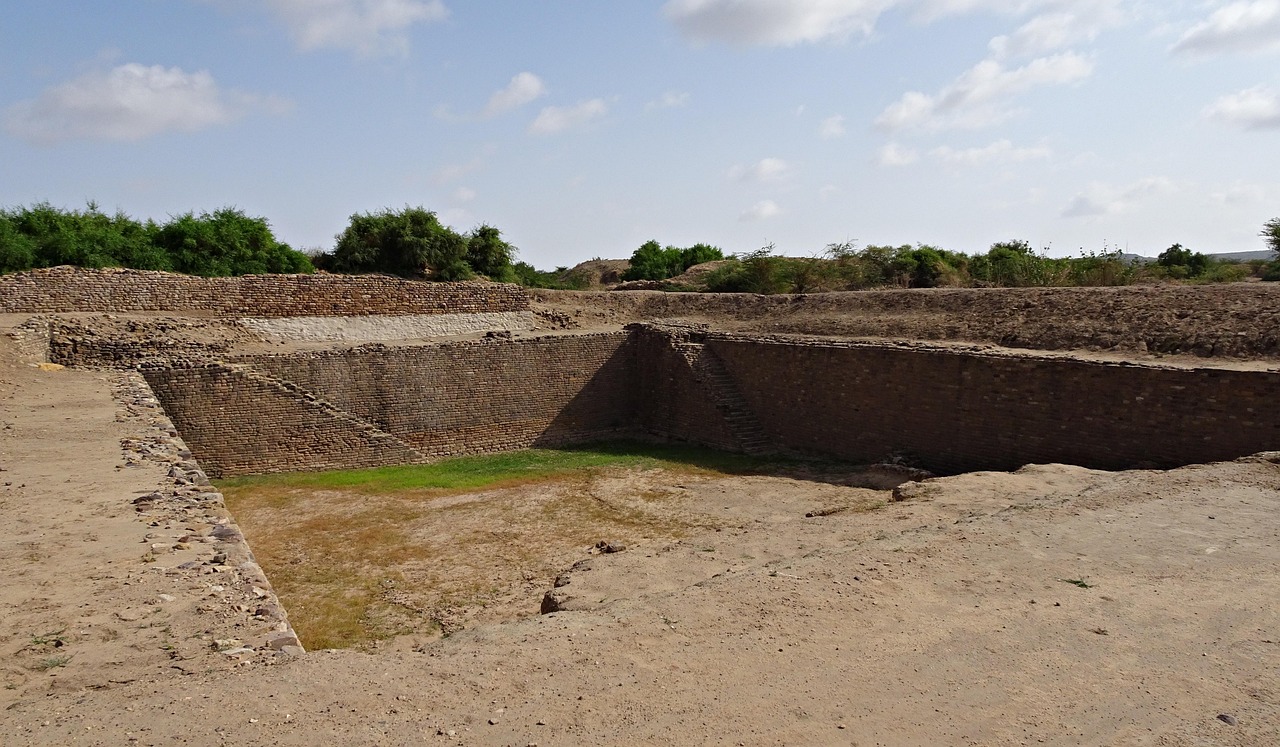
Through the centuries that followed, Gujarat’s ports remained among the busiest in the world, exporting the famous cotton textiles, indigo, and spices that the world craved, and welcoming traders from Arabia, Persia, East Africa, and Europe. This long exposure to outside peoples and faiths made Gujarat unusually cosmopolitan and tolerant, a place where Hindus, Jains, Muslims, Parsis, and others lived and traded side by side, and where the arts of the merchant, negotiation, credit, and far flung partnership, were raised to a high pitch.
The Way of Nonviolence
Gujarat’s most influential gift to the world was a person, Mohandas Karamchand Gandhi, the Mahatma, who was born in a small coastal town of the region. It is no accident that the apostle of nonviolence came from Gujarat, for the land was a stronghold of Jainism, an ancient religion whose central principle is ahimsa, the absolute refusal to harm any living being. This deep cultural commitment to nonviolence and vegetarianism shaped Gandhi and shaped Gujarati society as a whole.
The Jain influence runs through Gujarati life far beyond the relatively small number of actual Jains. It is visible in the overwhelming preference for vegetarianism, in a businesslike ethic of honesty and frugality, in great traditions of charity, and in an ornate religious architecture of breathtaking detail. Gandhi drew on this heritage to forge the philosophy of nonviolent resistance that would free India and inspire movements for justice around the world, from the American civil rights struggle to countless others.

Masters of Craft and Color
Gujarat is one of the great craft regions of India, famous above all for its textiles. The intricate double ikat weaving called patola, in which both the warp and weft threads are dyed in precise patterns before weaving, is so painstaking that a single sari can take many months to make, and the finest examples are treasured heirlooms. The mirror work embroidery of Kutch, the tie dye bandhani, and the block printed cottons of the region are admired and collected around the world.

This love of color and pattern extends to every part of Gujarati life, from the vivid dress of the desert communities to the elaborately decorated homes and temples. The region is also famous for its stepwells, the extraordinary subterranean structures built to reach groundwater, which descend many stories underground in galleries of carved stone, turning the simple act of drawing water into a work of monumental art. These cool, shaded depths are among the most distinctive architectural creations of India.

The Gujarati Table
Gujarati cuisine is one of the most distinctive in India, almost entirely vegetarian and famous for a characteristic touch of sweetness that balances the salt and spice. The classic Gujarati thali is a feast in itself, a great platter holding many small bowls of different vegetable dishes, lentils, flatbreads, rice, pickles, and sweets, offering an entire symphony of flavors in a single meal, traditionally served with endless refills until the guest is thoroughly satisfied.

The cuisine is full of clever and delicious creations, the steamed savory cakes called dhokla, the spiced snacks and farsan that are a Gujarati specialty, and a whole world of sweets. This is food shaped by a vegetarian culture that, far from being limited, became extraordinarily inventive in coaxing richness and variety from grains, pulses, and vegetables. Like the Gujarati merchant, the Gujarati cook is resourceful, turning simple ingredients into something memorable.
Nine Nights of Dance
The great festival of the Gujaratis is Navratri, nine nights dedicated to the worship of the divine feminine, celebrated with an explosion of dance unmatched anywhere in India. Across the state, in village squares and vast city grounds alike, people gather night after night to perform the garba and the dandiya raas, circling dances in which dancers in dazzling traditional dress move together, often striking decorated sticks in time to the music. The energy and joy of these gatherings, which can draw thousands, is legendary.
Navratri captures the Gujarati love of color, community, and celebration, a time when the normally hardworking and businesslike society gives itself over to days of devotion and dance. The whirling circles of dancers, the music building through the night, the brilliant costumes and ornaments, make it one of the most spectacular festivals in the country, and Gujarati communities recreate it with passion wherever they have settled around the world.

A Shadow on the Record
An honest portrait of Gujarat must acknowledge the darker chapters alongside the bright ones. For all its long tradition of trade across communities, the region has also seen terrible outbreaks of communal violence between Hindus and Muslims. The most notorious occurred in 2002, when riots swept the state and large numbers of people, overwhelmingly Muslims, were killed in horrific circumstances, leaving a deep scar and a lasting controversy that no fair account can ignore.
This violence sits uneasily beside the Gandhian heritage of nonviolence and the long history of mercantile tolerance, a reminder that no society is simple or wholly one thing. The tensions of religion and politics that run through modern India have left their mark on Gujarat as elsewhere, and the memory of such events remains painful and divisive. To celebrate the Gujarati genius for commerce and culture is not to look away from these tragedies but to hold the full picture honestly.

A People of the Whole World
No Indian people has spread across the globe as successfully as the Gujaratis. Their ancient trading instinct, combined with the disruptions of history, carried them first across the Indian Ocean to East Africa, where they built thriving merchant communities, and then, often as twice migrants, on to Britain, North America, and beyond. The Gujarati shopkeeper, motel owner, jeweler, and businessman became a familiar figure on several continents, famous for hard work, thrift, and a genius for commerce.
In the United States, Gujaratis came to own a remarkable share of the country’s motels and have prospered in business and the professions, while in Britain and East Africa they built some of the most successful immigrant communities anywhere. Through it all they maintained tight community networks, their religion and vegetarianism, their language, and their festivals, passing on the commercial values and the cultural identity to new generations born far from Gujarat. The global Gujarati success story is one of the most striking of any diaspora in the world.
Faith and the Many Communities
Gujarat is home to a rich tapestry of religious communities that reflects its long openness to the world. The Hindu majority encompasses many devotional traditions, and the influential Jain community, though small in number, has shaped the whole society’s values around nonviolence and charity. Gujarat has long had significant Muslim communities, including merchant groups with deep roots in the Indian Ocean trade, and it became the great refuge of the Parsis, Zoroastrians who fled persecution in Persia more than a thousand years ago and built a remarkable community in India.
The many mercantile communities of Gujarat, Hindu, Jain, Muslim, and Parsi alike, developed sophisticated traditions of business, credit, and philanthropy, and many of India’s greatest industrial and business families trace their roots to this entrepreneurial soil. The blending of deep religious devotion with worldly commercial success is a defining feature of Gujarati culture, where making money and giving generously to charity have long gone hand in hand.
The White Desert and Its People
The far western district of Kutch is a world apart, a borderland of salt desert, scrub, and isolated villages that has nurtured some of the most colorful traditional cultures in India. The communities of Kutch, many of them herders and craftspeople, are renowned for their dazzling embroidery, their silver jewelry, and their richly decorated mud and mirror houses. In a harsh and remote land, these people poured their creativity into adornment, producing folk art of astonishing beauty and intricacy.
Each winter, when the floodwaters retreat and the Rann dries into a vast white plain, the desert comes alive with a great festival that draws visitors from across the world to witness the full moon rising over the salt and to experience the music, dance, and crafts of the region. The Rann of Kutch, once seen as a barren wasteland on the edge of the country, has become a symbol of the surprising beauty and resilience of Gujarat’s desert margins and the proud, creative people who live there.
The Business Mind and the Community
There is a particular Gujarati genius for business that has become almost proverbial across India, a combination of sharp commercial instinct, willingness to take calculated risks, frugality in spending, and an unrivaled talent for building networks of trust. Young Gujaratis often grow up immersed in the family business, learning the arts of trade from childhood, and the dream of running one’s own enterprise rather than working for others runs deep in the culture. This entrepreneurial spirit has made Gujarat one of the most industrialized and prosperous states in India.
Crucially, this commercial drive is balanced by a powerful sense of community and obligation. The tight knit caste and religious communities provided the credit, partnerships, and mutual support that allowed Gujarati business to flourish, and the tradition of philanthropy meant that wealth carried a duty to give back through temples, schools, hospitals, and charity. This blend of individual enterprise and collective solidarity is the secret behind the remarkable success of Gujaratis both at home and across the world.
The Enterprising Soul of India
To understand the Gujaratis is to understand a people who turned the challenges of their land, its deserts and its long exposed coast, into the foundation of an extraordinary commercial civilization. They sailed the seas when much of the world stayed home, built businesses on every continent, and prospered through hard work, thrift, and an unshakable community spirit. They gave the world the moral force of Gandhi and the joyous nights of Navratri, a cuisine of vegetarian invention and textiles of breathtaking craft.
Like any people, they carry both triumphs and tragedies in their history, the openness of the merchant alongside the wounds of communal strife. But the enduring image of the Gujarati remains that of the enterprising, resourceful, and deeply rooted traveler who can make a home and a living anywhere on earth while never forgetting where they came from. They are, in many ways, the enterprising soul of India, carried to every corner of the globe.
You May Like
The Zaza, a Mountain People of Eastern Anatolia


2 thoughts on “The Merchant People Who Sailed the World, How the Gujaratis Made Trade an Art and Nonviolence a Creed”