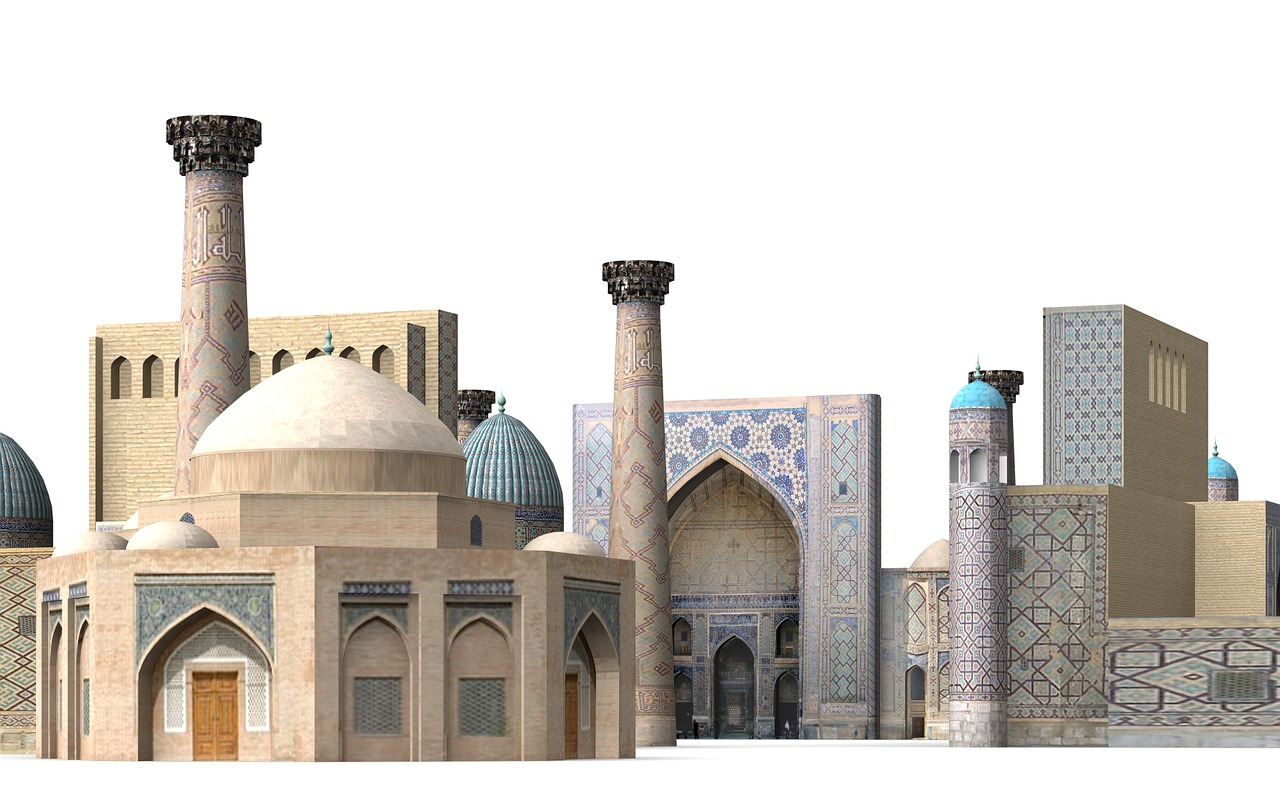
In the oases and river valleys of Central Asia, in the ancient cities of Samarkand, Bukhara, and Khiva, live the Uzbeks, the most numerous of the Central Asian peoples and the great settled, urban civilisation of the region. Unlike the nomadic Kazakhs and Kyrgyz, the Uzbeks are heirs to the towns, the trade, and the high culture of the Silk Road, builders of some of the most magnificent monuments in the Islamic world.
The Uzbeks represent a fusion: a Turkic-speaking people descended from steppe nomads who settled among the ancient, partly Persian-speaking civilisation of the oases and made its cities, its arts, and its learning their own. In them the worlds of the steppe and the sown, of the Turkic horseman and the Persian city, came together to form a distinctive culture.
This profile follows the Uzbeks along the lines of the series: their origins as nomads who became city dwellers, the coming of the name Uzbek, the Turkic language of Transoxiana, the homeland of the oases, the great Silk Road cities, the legacy of Timur, Islam and Sufism, the crafts and the bazaar, the music, the food, and the history that shaped the Uzbeks today.
- Origins, Nomads Who Became City Dwellers
- The Name and the Coming of the Uzbeks
- Language, the Turkic Tongue of Transoxiana
- The Homeland of the Oases and Rivers
- The Cities of the Silk Road
- The Legacy of Timur and the Timurids
- Religion, Islam and the Sufi Tradition
- Crafts, Silk, Ceramics and the Bazaar
- Music, the Shashmaqom and Dance
- Food, Plov and the Table
- History, Khanates, Russia and the Soviet Century
- The Uzbek Today
Origins, Nomads Who Became City Dwellers
The Uzbeks are a people of dual heritage, formed from the meeting of Turkic nomads from the northern steppe with the ancient settled civilisation of the oases of Central Asia, a region long known as Transoxiana, the land beyond the Oxus river. This fusion is the key to understanding the Uzbek people.
The settled population of the oases was anciently of Iranian, Persian-speaking stock, heirs to one of the oldest urban civilisations of the world, with great cities, irrigation, trade, and learning. Over many centuries waves of Turkic peoples moved into this land from the steppe, settling and gradually mingling with the older population.
The Uzbeks as such emerged from the last great wave of these Turkic nomads, who entered the region in the late medieval period and gave their name and their Turkic speech to the settled, increasingly Turkicised population of the oases. The result was a people both Turkic in language and heir to the ancient urban civilisation of Central Asia.
This blending of the nomadic Turkic and the settled Persian worlds gave the Uzbeks their distinctive character as a settled, urban, Turkic-speaking people, set apart from their still largely nomadic Kazakh and Kyrgyz neighbours.
This double inheritance, Turkic in speech and steppe in ancestry yet rooted in one of the oldest urban civilisations on earth, makes the Uzbeks unusual among the Turkic peoples and explains the depth and sophistication of their culture. They are the settled cousins of the nomads, a people who exchanged the yurt for the walled city and the herd for the irrigated field, while keeping the Turkic tongue of their steppe forebears.
The Name and the Coming of the Uzbeks
The name Uzbek is generally traced to the nomadic confederations of the steppe in the late medieval period, and it came to be attached to the Turkic groups who, under their leaders, conquered the settled oases of Transoxiana around the start of the sixteenth century.
These conquerors, the Uzbeks of the steppe, established new dynasties ruling the great cities, and over time their name spread to embrace the whole settled, Turkic-speaking population of the region, including the descendants of much older Turkic and Persian inhabitants.
The modern Uzbek people is thus the product of this long layering, the ancient settled population, the earlier waves of Turkic settlement, and the final Uzbek conquest, all merged into a single people sharing a Turkic language and the urban culture of the oases.
The boundaries of the Uzbek identity were given their modern form only in the twentieth century, under Soviet rule, when the national republic of Uzbekistan was created and a standard Uzbek identity and language were defined.
The drawing of Uzbek national borders under Soviet rule, which fixed for the first time a clear line between Uzbek, Tajik, Kazakh, and other identities that had long overlapped in the oases, was a profound act of modern nation-making. It transformed a fluid world of cities, dialects, and mixed populations into a set of defined republics, and the legacy of those decisions still shapes the politics of Central Asia today.
Language, the Turkic Tongue of Transoxiana
The Uzbek language belongs to the Turkic family, within the Karluk branch, distinct from the Kipchak branch of Kazakh and Kyrgyz. It is descended from the Chagatai Turkic literary language that flourished in Central Asia and was the medium of a great body of classical literature.
Centuries of contact with Persian, the old language of the oasis civilisation and of high culture, deeply influenced Uzbek, especially the dialects of the great cities, giving the language a character shaped by the meeting of Turkic and Persian worlds.
The classical Chagatai language, from which Uzbek descends, was the vehicle of a celebrated literary tradition, above all the works of the great poet Alisher Navoi, honoured as the founder of Uzbek literature and one of the giants of Turkic letters.
The language has been written in several scripts over the past century, in Arabic script in earlier times and then in Latin and Cyrillic under Soviet rule, with a return toward the Latin script promoted in independent Uzbekistan.
The towering figure of Alisher Navoi, who in the fifteenth century demonstrated that the Turkic language could rival Persian as a vehicle for the highest poetry, occupies a place in Uzbek culture comparable to that of the greatest national poets elsewhere. His works remain a cornerstone of Uzbek literary identity, a proof that the Turkic tongue of Central Asia could carry a literature of the first rank.
The Homeland of the Oases and Rivers
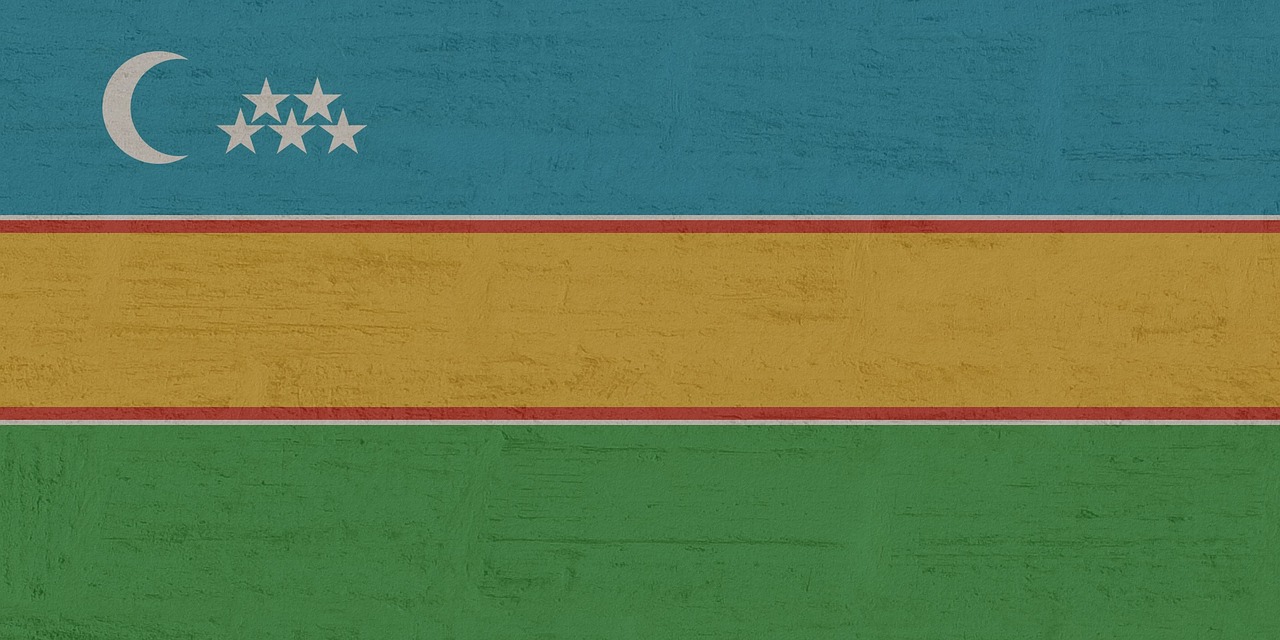
The Uzbek homeland is the heart of Central Asia, the land of oases, river valleys, and deserts watered by the great rivers, the Amu Darya and Syr Darya, that flow from the mountains across the dry plains. Between the deserts lie the fertile oases where the cities and farms of the Uzbeks were built.
The fertile Fergana Valley, the oases of Samarkand and Bukhara, the region of Khiva, and the valleys watered by the rivers form the populous core of the Uzbek world, an ancient landscape of irrigated agriculture, walled cities, and caravan routes.
Beyond modern Uzbekistan, large Uzbek populations live in neighbouring countries, the legacy of a settled people whose oases and cities were scattered across the region and whose modern borders cut across older patterns of settlement.
This homeland of oasis and river, of city and irrigated field, shaped the Uzbeks as a settled, agricultural, and urban people, in contrast to the open steppe and high mountain homelands of their nomadic neighbours.
The lifeblood of this homeland was always water, and the elaborate irrigation drawn from the two great rivers turned desert margins into gardens and made possible the dense populations and rich cities of the oases. The same dependence on river water would later bring catastrophe, as the diversion of the rivers for cotton in the Soviet era drained the Aral Sea and scarred the land.
The Cities of the Silk Road
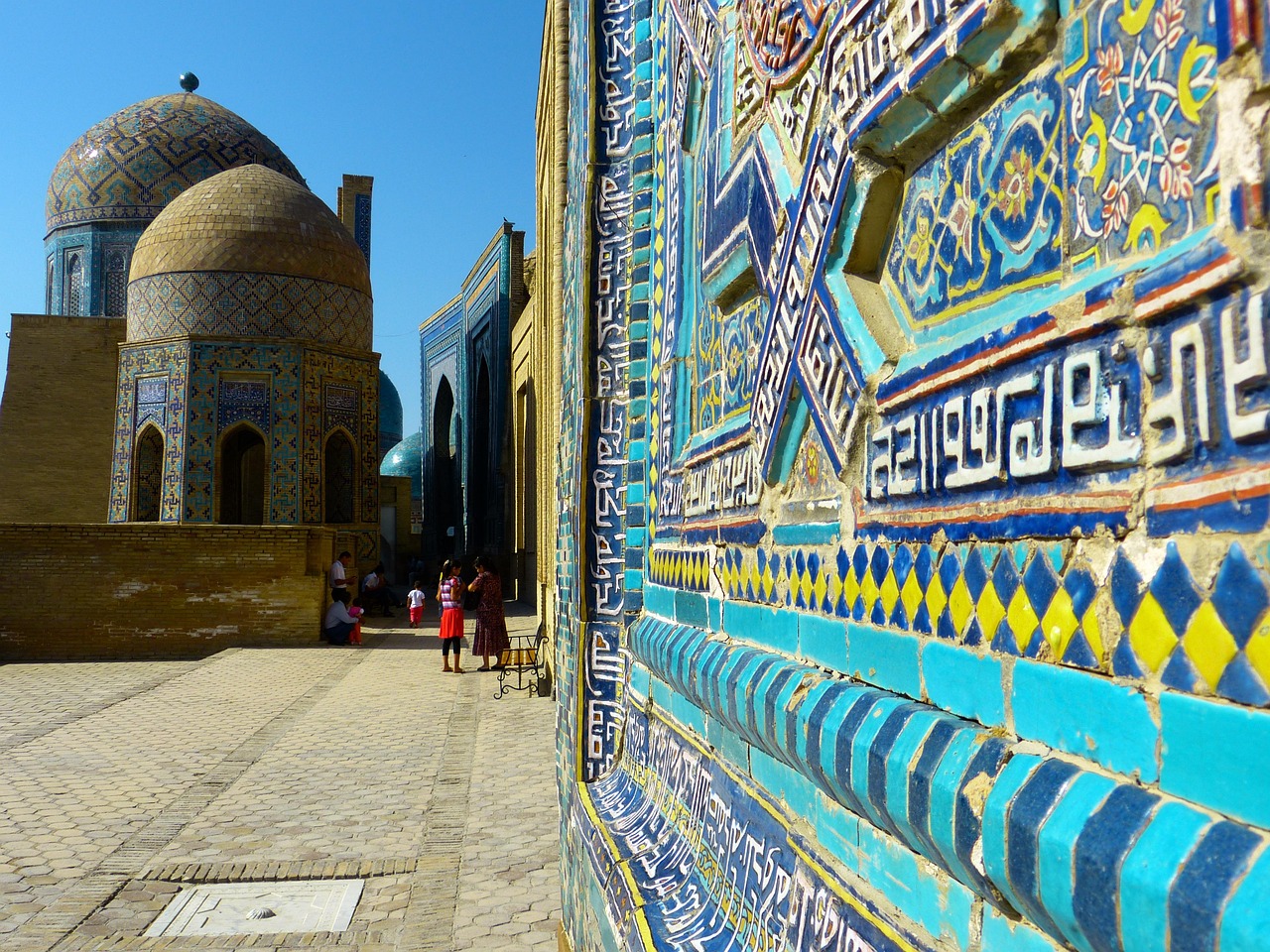
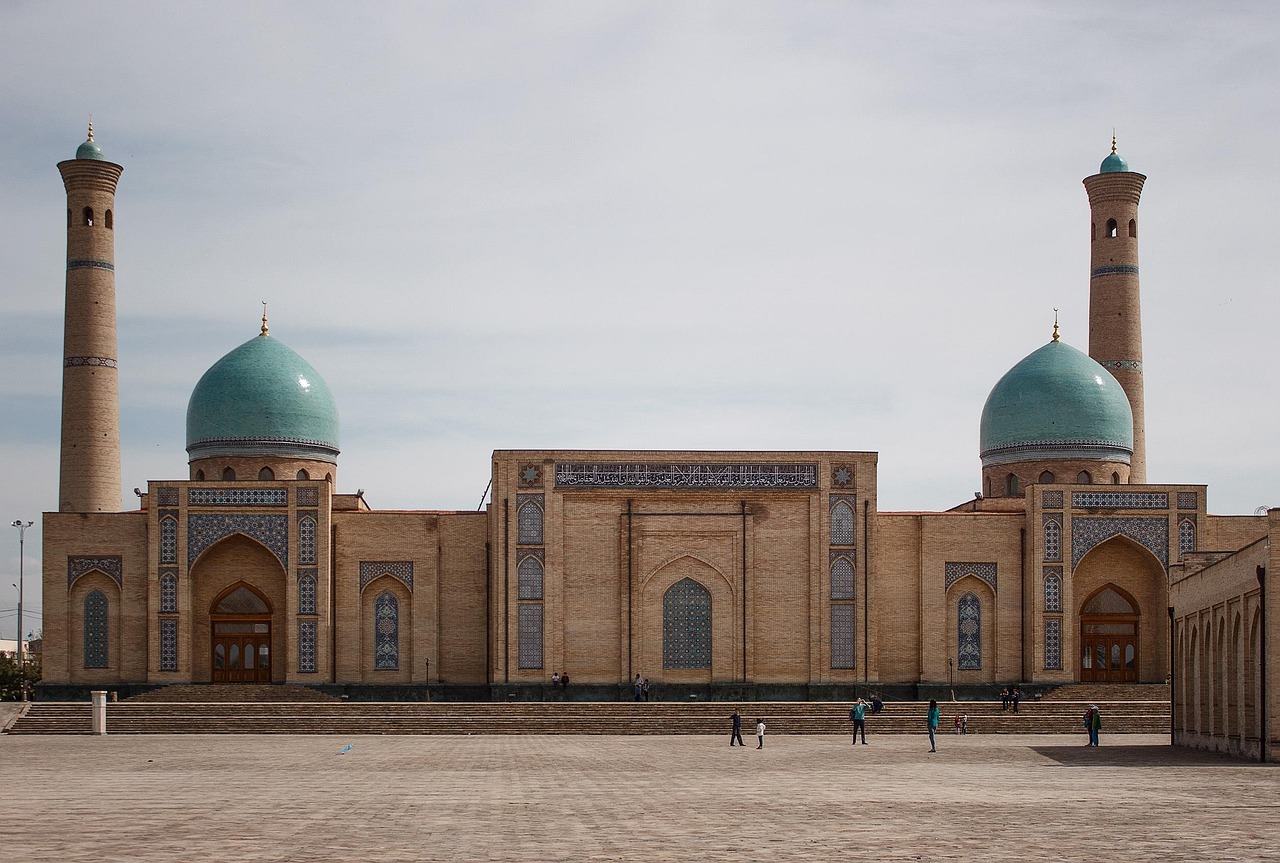
The Uzbeks are above all the people of the great cities of the Silk Road, the ancient urban centres that were among the most important in the medieval world. Samarkand, Bukhara, and Khiva are jewels of Islamic civilisation, famed for their mosques, madrasas, minarets, and mausoleums.
These cities stood at the crossroads of the trade routes linking China, India, Persia, and the West, and through them flowed the silk, spices, and goods of the Silk Road, along with ideas, religions, arts, and learning. The cities grew rich and brilliant on this trade.
Samarkand in particular, with its Registan square ringed by towering tiled madrasas, and Bukhara, a holy city of countless mosques and madrasas, became centres of Islamic learning, art, and architecture renowned throughout the world.
The monumental architecture of these cities, with its dazzling tilework in blue and gold, its great portals and ribbed domes, represents one of the supreme achievements of Islamic civilisation and the proudest heritage of the Uzbek people.
To walk through the Registan of Samarkand, ringed by its three great tiled madrasas, or through the mosque-filled lanes of Bukhara, is to stand amid one of the supreme achievements of human civilisation, a concentration of Islamic art and architecture with few equals anywhere. These cities were not merely beautiful but learned, drawing scholars, poets, and scientists from across the Muslim world to their courts and colleges.
The Legacy of Timur and the Timurids
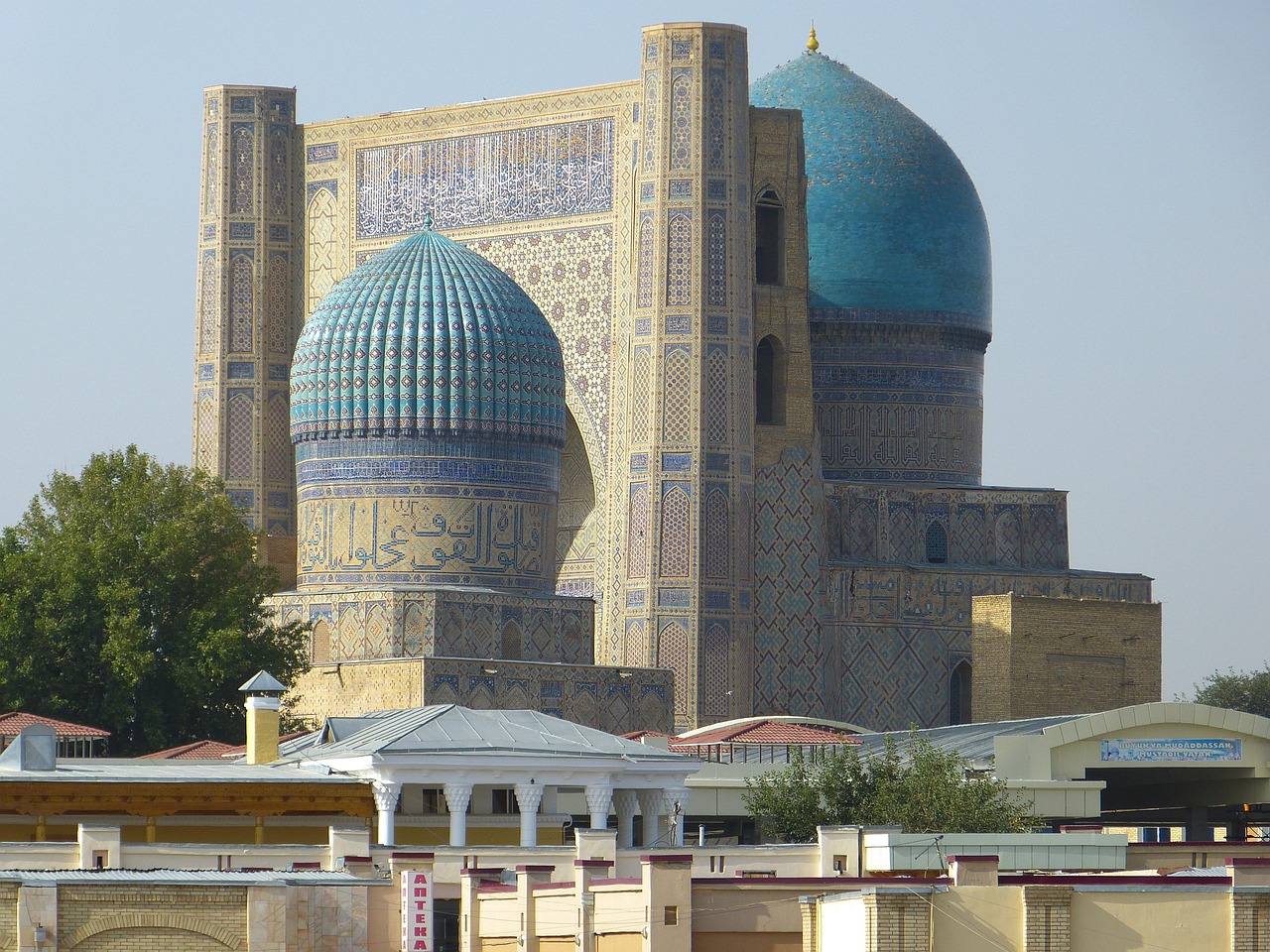
The most famous figure of Uzbek and Central Asian history is Timur, known in the West as Tamerlane, the conqueror who in the fourteenth century built a vast empire from his capital at Samarkand. Though Timur predates the Uzbeks proper, he is embraced as a national hero and the founder of the region’s greatest age.
Timur and his successors, the Timurid dynasty, made Samarkand and later Herat into centres of extraordinary cultural brilliance, patronising architecture, art, science, and literature in a golden age that left the great monuments still admired today.
The Timurid age produced not only conquest but a flowering of culture, including the astronomy of Timur’s grandson Ulugh Beg, whose great observatory at Samarkand made notable contributions to science, and the literature of the Chagatai language.
The memory of Timur and the Timurid golden age is central to modern Uzbek national identity, with Timur celebrated as a national symbol and the Timurid heritage held up as the proudest period of the nation’s past.
The grandeur of Timur’s Samarkand, raised with the labour and artistry of craftsmen gathered from across his conquests, set a standard of magnificence that defined the visual culture of the whole region for centuries afterward. That his grandson Ulugh Beg should have been not a warrior but an astronomer of genius, building one of the finest observatories of the medieval world, captures the extraordinary fusion of conquest and culture that marked the Timurid age.
Religion, Islam and the Sufi Tradition
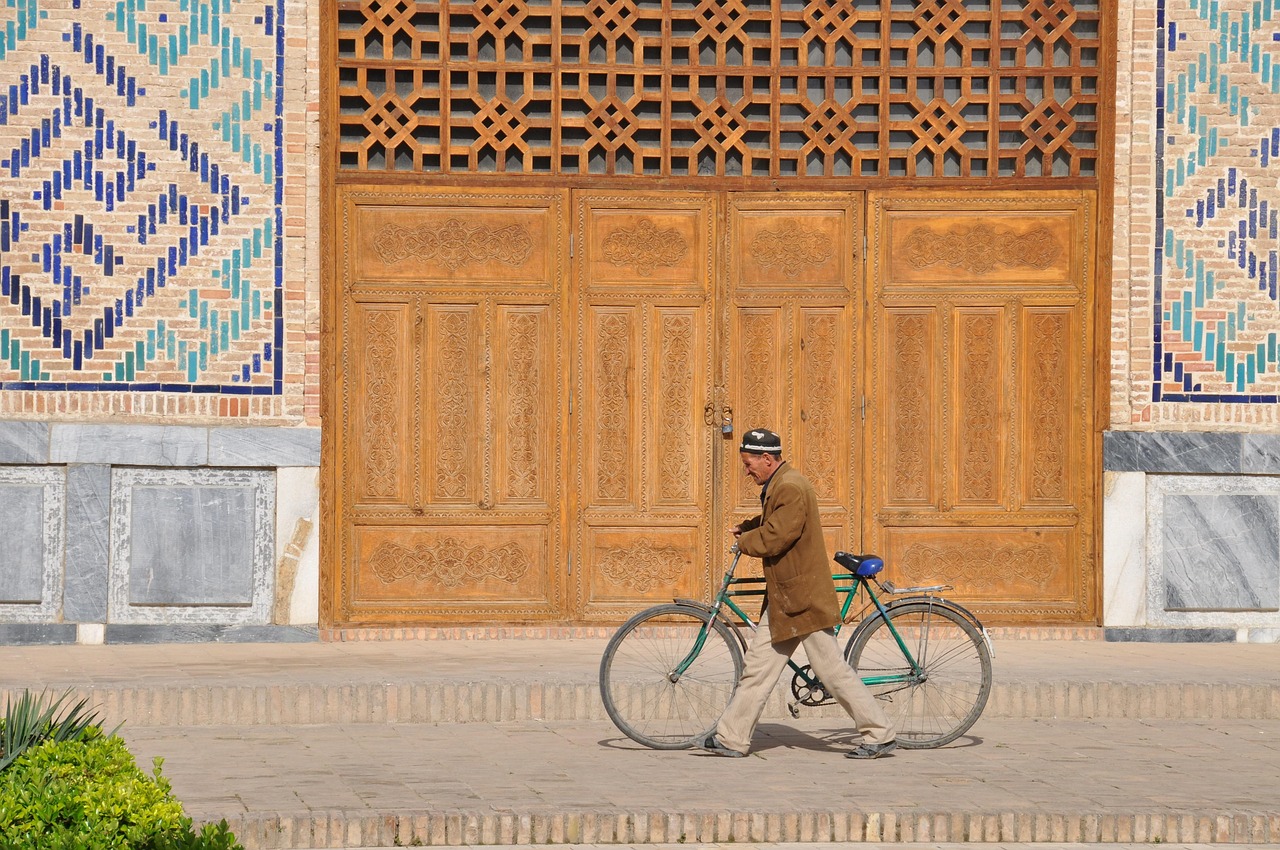
The Uzbeks are predominantly Sunni Muslims, and Islam has been central to their civilisation for well over a thousand years. The cities of Bukhara and Samarkand were among the greatest centres of Islamic learning, theology, and law in the entire Muslim world.
Bukhara in particular was renowned as a holy city, a centre of religious scholarship whose madrasas trained scholars and whose name was a byword for Islamic learning across Asia. The region produced many of the great figures of Islamic scholarship.
The mystical tradition of Sufism was especially strong in Central Asia, and the great Sufi orders and saints of the region, whose shrines remain places of pilgrimage, shaped the spiritual life of the Uzbeks profoundly, blending devotion, music, and the veneration of holy men.
Under Soviet rule religion was suppressed, but Islam survived deeply rooted in Uzbek culture and identity, and since independence there has been a revival of religious practice alongside the careful management of religion by the state.
The standing of Bukhara as one of the holiest cities of Islam, its skyline crowded with the minarets and domes of its madrasas, made Central Asia a heartland of Muslim learning whose scholars shaped the faith far beyond the region. The deep roots of Sufism, with its shrines, music, and veneration of saints, gave Uzbek Islam a mystical and devotional richness that survived even the long Soviet campaign against religion.
Crafts, Silk, Ceramics and the Bazaar
The settled, urban civilisation of the Uzbeks gave rise to a rich tradition of craft and art, centred on the bazaars and workshops of the great cities. Silk weaving, above all the brilliant tie-dyed ikat fabrics, ceramics, metalwork, woodcarving, and gold embroidery flourished.
The famous tilework of the monuments, the glazed ceramics in blue and turquoise, and the intricate decorative arts reflect the high material culture of the oasis cities, where skilled artisans served the courts, the mosques, and the wealthy merchants.
The bazaar was the heart of the Uzbek city, a centre of trade, craft, and social life where the goods of the Silk Road and the products of local workshops were bought and sold, and these markets remain vibrant features of Uzbek life today.
The crafts of silk, ceramic, embroidery, and metal, passed down through generations of urban artisans, are among the proudest expressions of Uzbek culture and are the subject of active revival and celebration.
The brilliant ikat silks of Uzbekistan, their patterns blurred where the dyed threads meet, and the blue-and-turquoise glazed ceramics of the oasis workshops, are among the most recognisable products of Central Asian art. Sustained over centuries by the wealth of the Silk Road and the patronage of court and mosque, these crafts turned the Uzbek city into a workshop of beauty whose traditions artisans still carry on today.
Music, the Shashmaqom and Dance
Uzbek culture is rich in music, above all in the classical tradition known as the Shashmaqom, a sophisticated suite of modal music with roots in the courts and cities of Bukhara and the wider region, blending Turkic and Persian elements into a refined art music.
Alongside this classical tradition are the folk music, song, and dance of the regions, the lively dances performed at celebrations, and the music of the festivals and the bazaar, reflecting the urban and settled character of Uzbek culture.
Instruments such as the long-necked lutes, the frame drum, and others accompany the songs and dances, and the tradition of the singer and the poet is deeply prized, heir to the classical literary culture of the region.
Music and dance are central to Uzbek celebration and identity, the Shashmaqom honoured as a national treasure and the folk traditions kept alive in festival and performance, expressing the rich heritage of the oasis civilisation.
The Shashmaqom, a grand cycle of modal suites uniting instrumental music, classical poetry, and refined song, represents the high art music of the oasis civilisation, as sophisticated in its way as the architecture of the great cities. Performed at court and in the homes of the cultured, it blended Turkic and Persian sensibilities into a tradition now honoured as one of the treasures of Uzbek heritage.
Food, Plov and the Table
The Uzbek table is among the richest in Central Asia, reflecting the settled, agricultural life of the oases. The national dish is plov, a celebrated preparation of rice cooked with meat, carrots, onions, and spices, prepared with ceremony and served at gatherings and feasts.
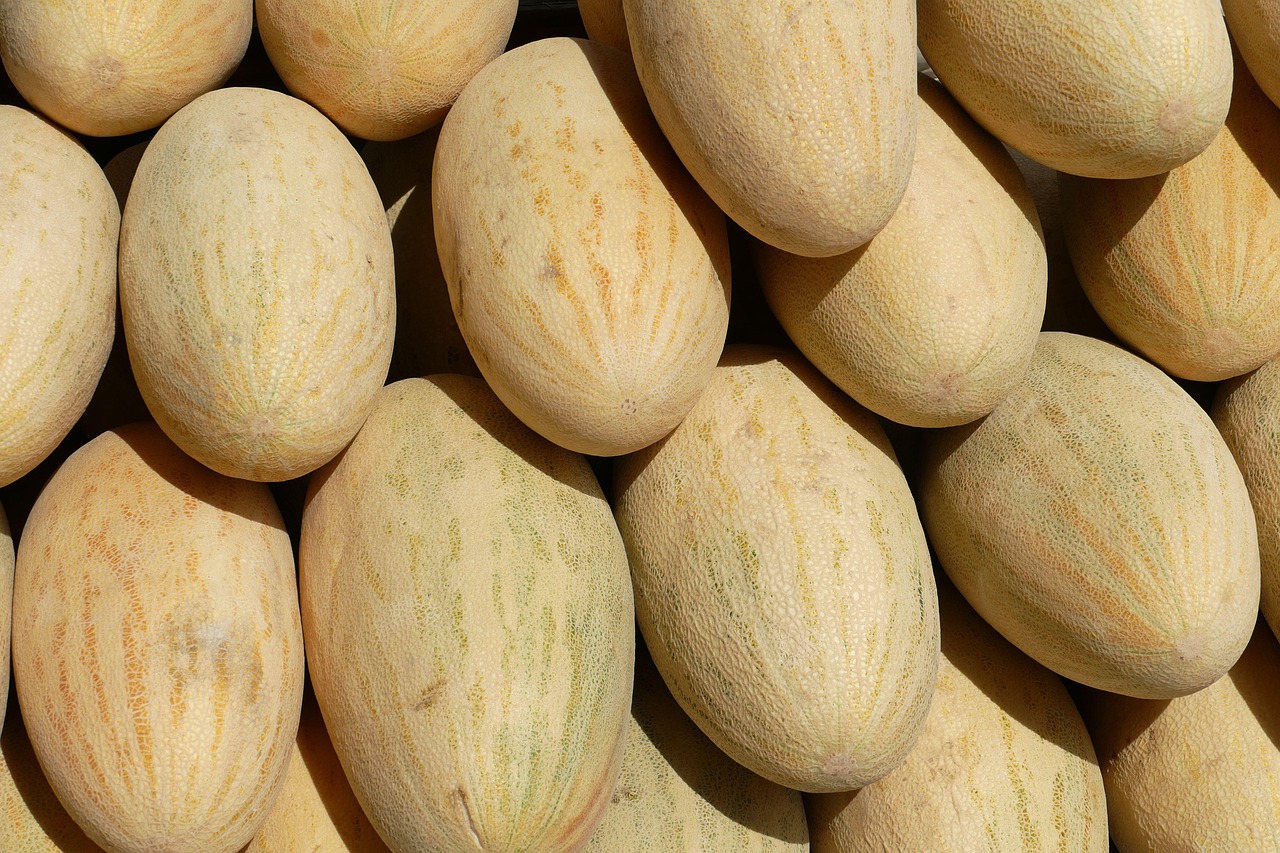
The cuisine is rich in bread, the round flat non baked in clay ovens and treated with reverence, in kebabs, dumplings, soups, and the fruits and vegetables of the fertile oases, famed for their melons, grapes, and apricots.
Hospitality is a central value, and the table, with its plov, bread, tea, and sweets, is the focus of social life and celebration, governed by deep traditions of welcome and generosity rooted in the settled culture of the cities and villages.
The cuisine reflects the agricultural bounty of the irrigated oases and the trade of the Silk Road, a rich and varied table that stands in contrast to the meat-and-milk diet of the nomadic peoples of the steppe and mountains.
The making of plov is treated almost as a sacred art among the Uzbeks, prepared in vast cauldrons for weddings and gatherings and surrounded by its own customs and ceremony, with regional styles competing for renown. Together with the round non bread, never to be placed upside down or wasted, it expresses a culture in which the table is the centre of hospitality and the food of the settled oasis a source of deep pride.
History, Khanates, Russia and the Soviet Century
After the Uzbek conquest of the early sixteenth century, the region was ruled by a succession of Uzbek khanates and emirates centred on Bukhara, Khiva, and later Kokand, which governed the oases and cities through the following centuries, sometimes brilliant, sometimes troubled by division and decline.
In the nineteenth century the Russian Empire conquered Central Asia, absorbing the khanates and the oases into the empire. Russian and then Soviet rule transformed the region profoundly, bringing cotton agriculture, industry, and modernisation along with the suppression of religion and tradition.
Under Soviet rule the national republic of Uzbekistan was created, and the modern Uzbek nation, language, and borders were given their present form. The Soviet century brought education, urbanisation, and development along with the costs of collectivisation, repression, and the environmental disaster of the Aral Sea.
With the collapse of the Soviet Union, Uzbekistan became an independent state, the most populous in Central Asia, and the Uzbeks set about reasserting their language, culture, and national identity and reclaiming the heritage of their great cities and golden age.
The khanates and emirates that ruled the oases after the Uzbek conquest preserved the high culture of the cities even as the wider region declined with the shifting of world trade away from the overland Silk Road. Their eventual absorption into the Russian Empire, and then the radical remaking of the region under Soviet rule, brought the Uzbeks abruptly into the modern world, with all its transformations and traumas.
The Uzbek Today
Today the Uzbeks are the most numerous people of Central Asia, the titular nation of Uzbekistan, with large communities also in neighbouring countries. Uzbekistan, with its ancient cities and its agricultural and mineral wealth, is the demographic heart of the region.
Cultural revival has been vigorous since independence, with the celebration of the Timurid heritage, the restoration of the great monuments of Samarkand and Bukhara, the revival of the crafts and the Shashmaqom, the honouring of Navoi and the classical literature, and the reassertion of the Uzbek language.
The challenges ahead are those of a nation balancing its rich heritage with a modern present, managing the legacy of the Soviet century, the environmental wounds of the Aral Sea and cotton monoculture, and the pressures of a globalised world while keeping alive its language and traditions. Like the Kazakhs and the other peoples of the region, the Uzbeks reclaim their distinct heritage.
In the blue domes of Samarkand, the madrasas of Bukhara, the ceremony of the plov, the music of the Shashmaqom, and the memory of Timur and the Silk Road, the Uzbeks continue to tell a story as rich as the oases themselves—the story of nomads who became city dwellers and built one of the great civilisations of the Islamic world.
As the most populous nation of Central Asia, sitting at its geographic and cultural heart, the Uzbeks carry a particular weight in the future of the region, heirs to its greatest cities and its deepest urban traditions. Their effort since independence to restore the monuments of Samarkand and Bukhara, revive the classical arts, and reclaim the memory of the Timurid golden age is a conscious gathering-up of one of the richest heritages in the Islamic world.
You May Like
The Zaza, a Mountain People of Eastern Anatolia


2 thoughts on “People of the Silk Road Cities, the Story of the Uzbeks of Central Asia”
Comments are closed.