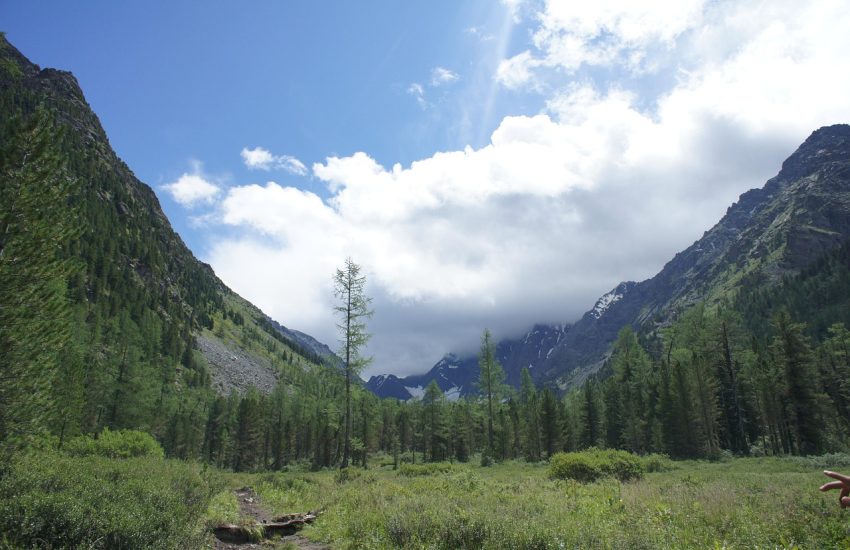
Far to the northeast of Moscow, where the forests thicken and the roads grow long between villages, lies a country of rivers, snow, and dark green taiga. This is the land of the Komi, a people who for many centuries have lived along the great rivers of the European north, in a world of endless woods where winter arrives early and stays late. Their homeland stretches from the middle Volga watershed up toward the Arctic, across a territory larger than many European nations, yet known to few outsiders. To travel through it is to pass hour after hour of pine and birch, broken only by silver rivers and the wooden roofs of scattered settlements.
The Komi are one of the Finno-Ugric peoples, distant relatives of the Finns, the Estonians, the Hungarians, and their closer kin the Udmurts and the Mari. For a thousand years and more they hunted the forest, fished the rivers, herded reindeer on the tundra edge, and traded furs that were prized as far away as the markets of medieval Europe. They were among the first northern peoples to be drawn into the orbit of the Russian state, and among the first to accept Christianity in their own tongue. Their story is one of quiet endurance in a hard land, of a language that survived where many others faded, and of a culture shaped entirely by the forest.
This article is part of our Folks series, in which we travel from people to people across the vast spaces of Russia and its neighbours, telling the story of each nation in turn. Here we follow the Komi through the whole arc of their life, and to make the journey clear we will move through these stages in order:
- Origins and the deep past of the Komi
- The name they carry and what it means
- Their language and the words of the forest
- The homeland of rivers and taiga
- The old way of life in the northern woods
- Society, kinship, and the village world
- Religion, from forest spirits to the cross
- Traditions, story, and song
- Crafts and the work of skilled hands
- Food and the table of the north
- Festivals and the turning of the year
- History under the Russian state
- The Komi today
Origins and the Deep Past of the Komi
The origins of the Komi reach back into the shadowy prehistory of the northern forests, long before any written record. Linguists trace them to an ancient Finno-Ugric community that once lived somewhere between the Volga bend and the Ural mountains, sharing a common speech with the ancestors of the Udmurts. Over slow centuries this community split, and one branch drifted northward along the rivers, following the fish and the fur-bearing animals deeper into the taiga. These northern migrants became the Komi.
Archaeologists have found traces of their forebears in the many small cultures that rose and fell along the Kama, the Vychegda, and the Pechora rivers. These were peoples of hunters and fishers who worked bone, stone, and later bronze and iron, leaving behind burial grounds, hill forts, and hoards of small cast figures shaped like birds, beasts, and spirits. That distinctive metal art, sometimes called the Perm animal style, is one of the clearest signs of the ancient world from which the Komi emerged.
By the early medieval period the ancestors of the Komi had settled into two broad groups that still exist today. One occupied the basin of the Kama and its tributaries and became known to history as the Permians; the other pushed further north into the lands of the Vychegda and Pechora. From these two roots grew the two main branches of the modern people, the Komi-Permyaks and the Komi-Zyrians, closely related yet each with its own path through the centuries.
What united them from the beginning was the forest itself. Unlike the steppe peoples to the south, the Komi never became horsemen or herders of great flocks; the taiga gave them fur, fish, game, and timber instead. Their whole early history is the story of small communities learning to read the woods and the water, and slowly spreading their villages ever deeper into one of the coldest inhabited corners of Europe.
The Name They Carry and What It Means
The people call themselves Komi, a word they use both for the nation and, in older usage, for a fellow member of it. Its exact origin is debated, but many scholars link it to an old word for the Kama river or for the land and people around it, so that to be Komi is, in a sense, to belong to the country of the great river. It is a name born from geography, tying the people forever to the waters that shaped their life.
For much of recorded history, however, outsiders knew them by a different name. Russians called them Zyryane, and the northern Komi are still often called Komi-Zyrians. The origin of Zyryane is uncertain; some connect it to a word meaning those who live at the edge or on the frontier, which fits a people settled at the far rim of the Russian world. The southern group, living in the Kama forests, became the Komi-Permyaks, the second part of the name preserving the old land of Perm.
The word Perm itself has a long and tangled story. It appears in the oldest Russian chronicles as the name of a rich northern land of fur and forest, a place of legend and wealth beyond the ordinary world. Whether it came from a Komi word, a neighbouring Finnic tongue, or something older still, it fixed the Komi country in the medieval imagination as a distant, half-mythical realm at the edge of the known.
So a single people carries several names at once, layered by history: Komi to themselves, Zyryane and Permyaki to their neighbours, and Perm to the chroniclers of old. Each name is a small window onto how the people saw their land and how the wider world saw them, and together they show a nation long known and long important, even when it lived far from the centres of power.
Their Language and the Words of the Forest

The Komi language belongs to the Permic branch of the Finno-Ugric family, its closest relative being Udmurt, with which it shares a common ancestor a couple of thousand years back. To a Russian ear it sounds entirely foreign, full of soft sounds and long strings of suffixes, for like its relatives it builds meaning by adding endings to words rather than by using many small separate words. A single Komi word can carry an idea that would need a whole phrase in English.
There are two main literary forms, Komi-Zyrian in the north and Komi-Permyak in the south, close enough that speakers can broadly understand one another but distinct enough to have their own written standards. Within each there are many local dialects, shaped by the isolation of villages scattered across huge distances of forest. For centuries a person might live a whole life hearing only the speech of their own river valley.
The Komi have one of the oldest written traditions of any people in the Russian north. In the fourteenth century a missionary created a special alphabet for them, known as the Old Permic script, made partly from local tally marks and partly from Greek and Slavic letters. It was used to translate prayers and scripture, making Komi one of the very few native languages of the region to be written down in the Middle Ages, long before printing reached these forests.
That early script eventually fell out of use, and in modern times the language has been written in the Cyrillic alphabet, with extra letters for its particular sounds. Today Komi is taught in schools within the Komi Republic and appears in newspapers, books, and broadcasts, yet like many minority languages it faces steady pressure from Russian. Keeping it alive in the mouths of the young has become one of the quiet struggles of the people.
The Homeland of Rivers and Taiga
The heart of the Komi land is the Komi Republic, a vast territory in the northeast of European Russia, reaching from the taiga in the south up to the tundra along the Arctic edge. To its southwest lies the Komi-Permyak country, now part of Perm Krai, in the forests of the upper Kama. Together these regions form a land defined above all by its rivers, its trees, and its long, hard winters.
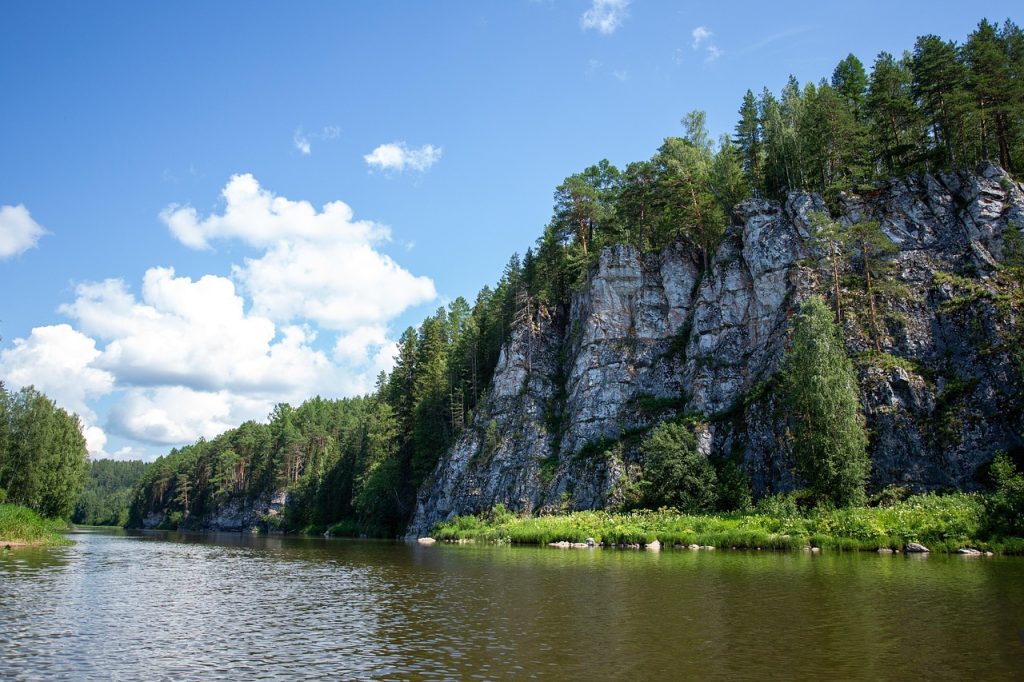
The great rivers are the highways of this country. The Vychegda, the Pechora, the Mezen, and the upper Kama and their countless tributaries carried people, goods, and news through a land with few roads. Villages grew along their banks, boats replaced carts, and in winter the frozen rivers became smooth roads of ice. To understand the Komi is to understand that for most of their history the water, not the land, was the true path from place to place.
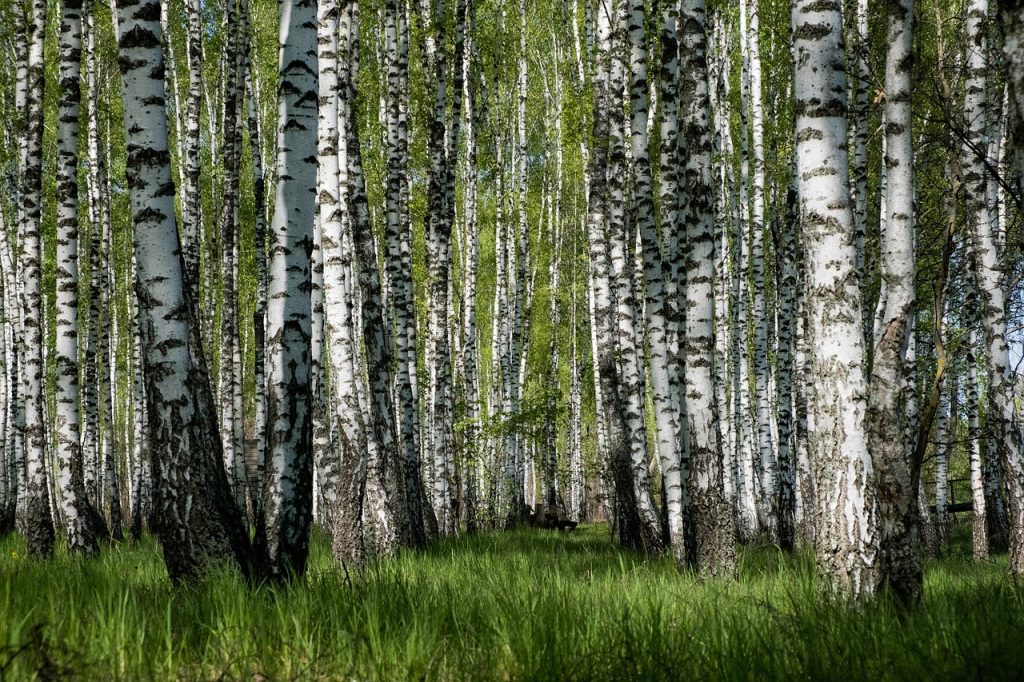
Beyond the rivers stretches the taiga, the northern forest of spruce, pine, fir, and birch that covers most of the land in dark green. It is a world rich in game and fur but poor in farmland, with a growing season so short that grain often failed. Further north the forest thins into tundra, treeless and windswept, where the ground stays frozen and reindeer graze on moss under the low Arctic sky. The Ural mountains rise along the eastern edge, marking the border of Europe and Asia.
Winter dominates everything. Snow lies deep for half the year, rivers freeze solid, and temperatures can plunge far below zero for weeks on end. The brief summer explodes with light, midges, and sudden green, then fades quickly back toward frost. This rhythm of long cold and short warmth shaped every part of Komi life, from the timber of their houses to the fur of their clothes and the stored food that carried them through the dark months.
The Old Way of Life in the Northern Woods

For most of their history the Komi lived by combining several ways of winning a living from the land, none of which alone could feed a family in so harsh a place. They hunted, they fished, they kept a little livestock, they gathered from the forest, and where they could they scratched out fields of hardy grain. It was a life of constant work through the seasons, each one bringing its own tasks and its own dangers.
Hunting was central, above all the hunting of fur-bearing animals: squirrel, marten, fox, ermine, and others whose pelts were the great wealth of the north. A skilled hunter would set off into the deep forest for weeks, following trap lines that ran for many miles, sleeping in small forest cabins, and reading the snow for tracks. The furs he brought back were not just clothing but money, the goods with which the Komi paid tribute and bought what the forest could not give.
Fishing filled the rivers and lakes with a second harvest, taken with nets, weirs, and traps through the open season and through holes in the winter ice. In the far north, along the tundra edge, some Komi families took up the herding of reindeer, following the animals on their long seasonal migrations in a life utterly different from that of the forest villages further south. This northern reindeer world linked the Komi to their Nenets neighbours of the tundra.
Farming was always the hardest and least certain part of the round. In the short summers the Komi grew rye, barley, and oats, along with turnips and later potatoes, often on land cleared from the forest by burning. Cattle, sheep, and horses were kept where meadows allowed, giving milk, wool, and hides. Yet the cold and the poor soil meant that the forest and the river, not the field, remained the true providers, and a bad harvest sent people back to the woods to survive.
Society, Kinship, and the Village World
Komi society was built around the village and the extended family. Settlements were usually strung along a riverbank, a line of sturdy log houses facing the water, with barns, bathhouses, and storehouses raised on posts against the damp and the animals. Each household was a small working unit in which several generations often lived and laboured together, sharing the endless tasks of a northern homestead.
Kinship ties reached beyond the single house to bind whole villages and river valleys. People knew their relatives across many settlements, and these networks mattered greatly in a land where survival often depended on help from others: for a hunt, a harvest, the raising of a house, or aid in a hard winter. Marriage wove families together, and the choice of a partner was as much a matter for the households as for the young people themselves.
Within the community, respect flowed toward age, skill, and knowledge. A great hunter, a wise elder, a woman famed for her weaving or her healing, all held standing among their neighbours. Village affairs were often settled by gatherings of household heads, who decided matters of shared land, disputes, and common work. It was a world without great lords among the Komi themselves, more a society of roughly equal peasant and hunter families than one of sharp classes.
Over this local world lay the wider structures of first the tribute-collectors and later the Russian state, which saw the Komi mainly as a source of fur and, later, of taxes and labour. But in daily life it was the village, the river valley, and the web of kin that shaped a person, telling them who they were, whom they could count on, and what was expected of them from birth to death.
Religion, from Forest Spirits to the Cross
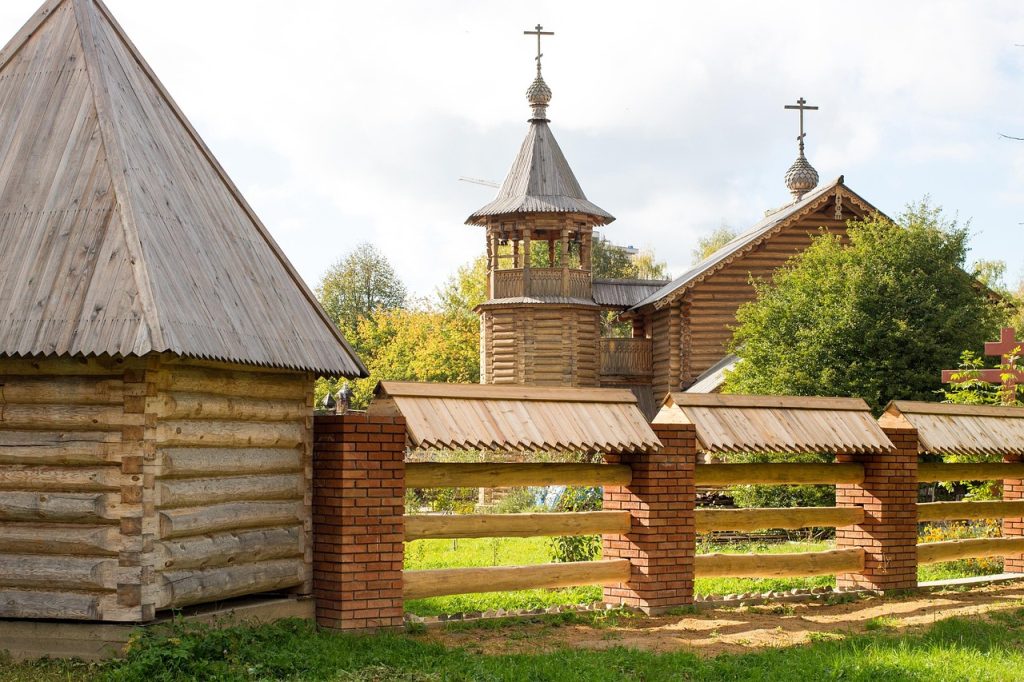
Before Christianity, the Komi lived in a world full of spirits. The forest, the rivers, the wind, and the household each had their unseen owners and guardians, powers that had to be respected, fed, and asked for favour. A hunter entering the woods might leave a small offering to the master of the forest; a household kept on good terms with the spirit of the home. Behind these lesser powers stood greater figures of sky and earth in the old northern belief.
Special people, whom outsiders sometimes called sorcerers or shamans, were believed to deal with these spirits, to heal, to foretell, and to protect the community from harm. Sacred groves, springs, and stones dotted the land, places where the boundary between the human and the spirit world felt thin. Much of this older belief left deep traces that lingered for centuries beneath the surface of the new faith.
Christianity came to the Komi in the fourteenth century through the work of a missionary later honoured as a saint, who is remembered for preaching in the Komi tongue and creating the first alphabet for the language. Rather than simply imposing Slavic worship, he translated prayers into Komi and trained local clergy, so that the new faith could be received in words the people understood. This gentle approach helped Orthodoxy take root more deeply here than a foreign creed might otherwise have done.
In time the Komi became a firmly Orthodox Christian people, building the small wooden churches with their shingled towers and iron crosses that still stand in many villages. Yet the old ways did not vanish entirely; folk custom kept many spirits, charms, and seasonal rites alive alongside the church calendar, blending the two into a single living tradition. To this day, faith among the Komi carries echoes of both the forest and the cross.
Traditions, Story, and Song
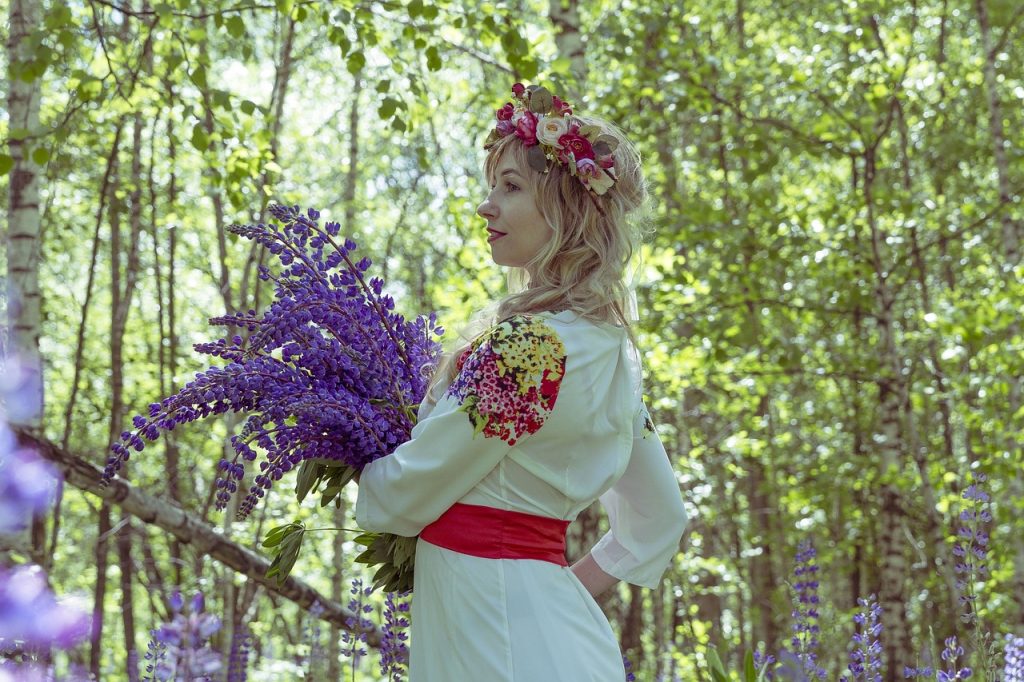
The Komi carried their history and their imagination not in books but in a rich oral tradition, told and sung around the hearth through the long winter nights. There were tales of heroes and giants, of clever hunters and cunning spirits, of the origin of rivers and hills, passed from grandparent to grandchild across the generations. In these stories the forest world came alive, its animals speaking, its spirits scheming, its heroes braving the dangers of the deep woods.
Among the most famous figures of Komi legend is a mighty hero-sorcerer of the old days, remembered as a champion of the people against invaders and against the coming of the new order, a being of great strength and magical power tied to the land itself. Such legendary strongmen, half history and half myth, embodied the spirit of a people who valued endurance, cunning, and a deep bond with their forest home.
Song ran through every part of life. There were wedding laments and joyful marriage songs, lullabies, work songs to ease the rhythm of labour, and long narrative songs that told stories in verse. Women in particular were the keepers of much of this musical tradition, singing as they wove, spun, and reaped, their voices carrying the memory of the community from one generation to the next.
The visible side of tradition showed in dress and ornament. Festive Komi costume, especially for women, was rich with woven and embroidered patterns, bright sashes, and headdresses that marked a woman as maiden or wife. Geometric designs, often in red on white, decorated shirts, towels, and belts, each pattern carrying old meanings of protection and blessing. To dress in full festive clothing was to wear the identity and history of the people.
Crafts and the Work of Skilled Hands
Living in a land of endless forest, the Komi became masters of working wood, bark, and other gifts of the taiga. From timber they raised their houses, barns, and churches, fitting great logs together without nails in a craft passed down through generations of carpenters. The same skill shaped boats for the rivers, sledges for the snow, and a whole household world of tools, vessels, and furniture, all cut and carved from the woods around them.
Birch bark was a material of endless use. Peeled in sheets from the trees, it was folded and woven into baskets, boxes, shoes, and containers of every kind, light, waterproof, and strong. A well-made birch-bark vessel could hold flour or berries for years, and skilled workers decorated them with pressed and scratched patterns. Alongside bark, the Komi worked leather and fur into clothing and footwear suited to the brutal cold.
Textile crafts were the special domain of women. They spun thread from flax, wool, and hemp, wove cloth on simple looms, and covered it with the woven and embroidered patterns that marked Komi work. Sashes and belts were finger-woven in bright geometric designs, and the making of a girl’s dowry of woven goods was a serious labour of years. These textiles clothed the family and adorned the great moments of life.
Metalwork and other trades rounded out the picture. Echoes of the ancient Perm animal style, with its cast figures of birds and beasts, survived in folk ornament and in the small charms people carried. Blacksmiths forged tools and fittings, and hunters crafted their own gear for the forest. In every case the crafts of the Komi were shaped by need and by the materials at hand, turning the raw stuff of the taiga into a whole way of living.
Food and the Table of the North
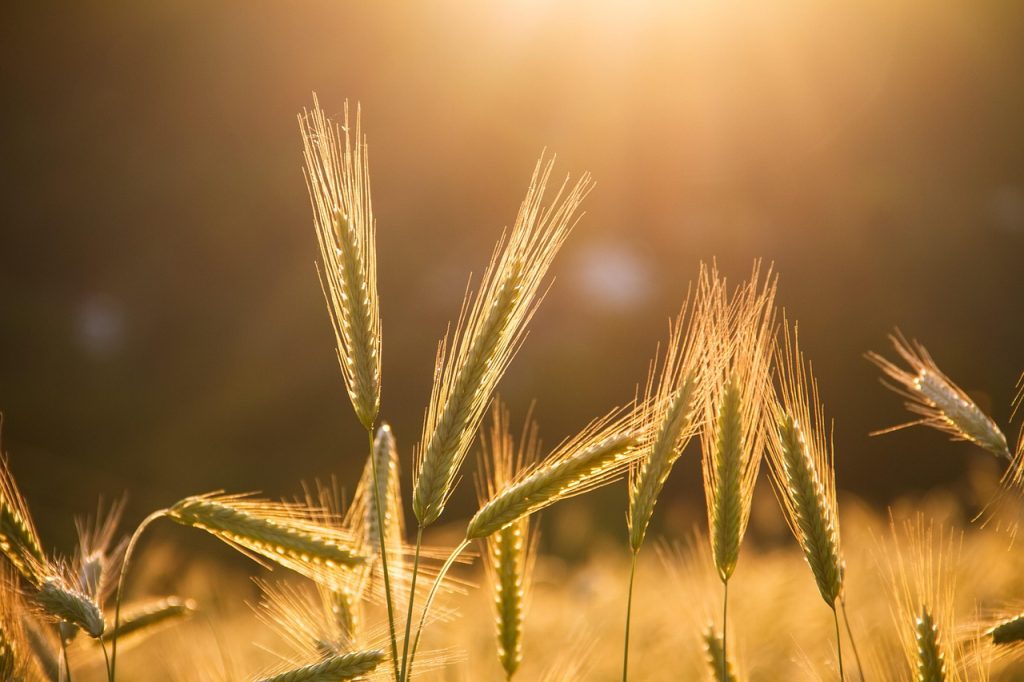
The food of the Komi was the food of the northern forest and river, built around what the land could reliably give. Bread, above all rye bread, was the heart of the meal, baked in the great masonry ovens that also heated the house. Grain porridges of barley and oats filled the belly through the cold, and where the harvest was thin, people stretched their flour with other forest foods to make it last.
Fish was perhaps the most important food of all, taken fresh in season and preserved for the long winter by salting, drying, and freezing. It appeared boiled in soups, baked into pies, and eaten in countless ways, a steady source of nourishment when little else was sure. Game from the hunt, from wildfowl to elk, added meat to the table, while in the reindeer-herding north the deer gave both meat and milk.
The forest itself was a vast pantry. In summer and autumn families gathered mushrooms and wild berries in great quantities, lingonberries, cranberries, cloudberries, and bilberries among them, preserving them for the months ahead. Berries were eaten fresh, dried, soaked, and cooked into drinks and fillings, bringing a rare sweetness and vital nourishment to the northern diet through the darkest part of the year.
Pies and baked dishes were a special pride of the Komi kitchen. Open and closed pastries were filled with fish, meat, mushrooms, berries, or grain, and served at every gathering and feast. Dairy from the household cows, in the form of soured milk, butter, and simple cheeses, added richness where herds allowed. Simple, hearty, and closely tied to the seasons, Komi food was the taste of survival and celebration alike in a hard land.
Festivals and the Turning of the Year
The festivals of the Komi followed the great wheel of the year, blending the Orthodox calendar with older seasonal rites rooted in the rhythm of farming, hunting, and the return of the light. Winter, spring, summer, and autumn each had their markers, moments when the hard round of work paused for gathering, feasting, and the renewal of ties between neighbours and kin.
The deep of winter brought the great cluster of feasts around Christmas and the New Year, a time of visiting, fortune-telling, and mumming, when young people dressed in disguise went from house to house. The long darkness was pushed back with light, food, and merriment, and old customs of divination looked ahead to the fortunes of the coming year, especially in matters of marriage and harvest.
As winter loosened its grip, the people marked the coming of spring and the return of the sun with feasting and the burning away of the cold season, echoing the wider Slavic and Finnic customs of the pancake-week farewell to winter. Later came the bright festivals of high summer around midsummer, tied to the church feast of Saint John but keeping the old magic of the shortest night, with bonfires, herb-gathering, and youthful games among the birches.
Autumn festivals gave thanks for the harvest and the hunt, marking the safe gathering of grain and berries before the return of the cold. Woven through all of these were the countless small rites of village life: the blessings at birth, the songs and laments of weddings, the customs of death and remembrance. Together the festivals gave shape to the Komi year and bound the community to its land, its faith, and its past.
History under the Russian State
The Komi were among the earliest of the northern peoples to be drawn into the Russian world. From the medieval centuries the wealthy fur lands of Perm and the northern rivers attracted the interest of Novgorod and then of Moscow, which sought the tribute of pelts that made the north so valuable. Through trade, mission, and the slow spread of Russian settlement, the Komi country was gradually bound to the growing Russian state.
Christianization in the fourteenth century was a turning point, tying the Komi both to the Orthodox faith and to Moscow’s authority. In the centuries that followed, the Komi lands became a source of fur, timber, salt, and other northern wealth for the state and its merchants. The people paid their tribute in furs, traded at northern markets, and lived under the growing weight of taxes and obligations, while keeping much of their own village life intact.
The northern position of the Komi land gave it a grim role in later times as a place of exile and, in the twentieth century, of vast prison camps. The Soviet period brought the forced settlement of many outsiders, the growth of mining, oil, gas, and timber industries, and the reshaping of the old forest economy. A Komi autonomous region was created, which gave the language and culture official standing even as industrialization transformed the land.
These changes cut both ways. Schools, publishing, and institutions in the Komi language grew under the new order, and a native intelligentsia emerged; yet industrial development, in-migration, and the pressures of a centralized state also weakened the old ways and steadily reduced the Komi to a minority in parts of their own homeland. The modern Komi people carry the marks of this whole long history, of endurance, loss, and survival within the Russian state.
The Komi Today

Today the Komi live mainly in the Komi Republic and in the Komi-Permyak lands of Perm Krai, along with communities scattered across Russia. They number several hundred thousand, a people who have held on to their identity through centuries of pressure in one of Europe’s harshest corners. Their republic is a land of forests and rivers still, but also of oil and gas fields, mines, and industrial towns that have drawn people from across the country.
Like many of the smaller peoples of Russia, the Komi face the steady challenge of keeping their language and culture alive in a modern, Russian-speaking world. Komi is taught in schools, used in some media, and championed by writers, scholars, and cultural activists, yet fewer of the young speak it fluently than in the past. The balance between the pull of the wider world and the desire to hold on to a distinct heritage is a constant one.
At the same time there has been a real revival of interest in Komi culture. Folk ensembles, festivals, museums, and craft workshops keep the songs, costumes, and skills of the past in living memory, and scholars record the dialects and legends of the forest villages. National holidays and cultural days celebrate the Komi heritage, and the ancient patterns of Komi embroidery and the old legends find new life in modern art and design.
The story of the Komi is a story of a forest people who met the wider world early and endured, holding their language, their faith, and their bond with the taiga through everything that came. From here our Folks journey moves on to another of the many peoples who share the vast expanse of Russia, carrying with us the memory of this northern land of rivers, snow, and quiet endurance.