A few kilometers from the sea near modern Volos, in the same generous plains of Thessaly that cradled Sesklo, lies a settlement built around a striking idea. At Dimini, the houses do not simply cluster on a hill; they sit at the center of a series of concentric stone walls that ring the mound like the growth rings of a tree. To stand there is to look at one of the earliest experiments in Europe in enclosing a community, in drawing deliberate circles around who belonged and what mattered. Dimini flourished in the later Greek Neolithic, roughly five to six thousand years ago, and its ringed plan has made it one of the most debated and evocative prehistoric sites on the continent. Was it a fortress, a ceremonial center, a chief’s stronghold, or simply a village that grew ring by ring? The answer is still argued today, and that mystery is a large part of why Dimini endures.
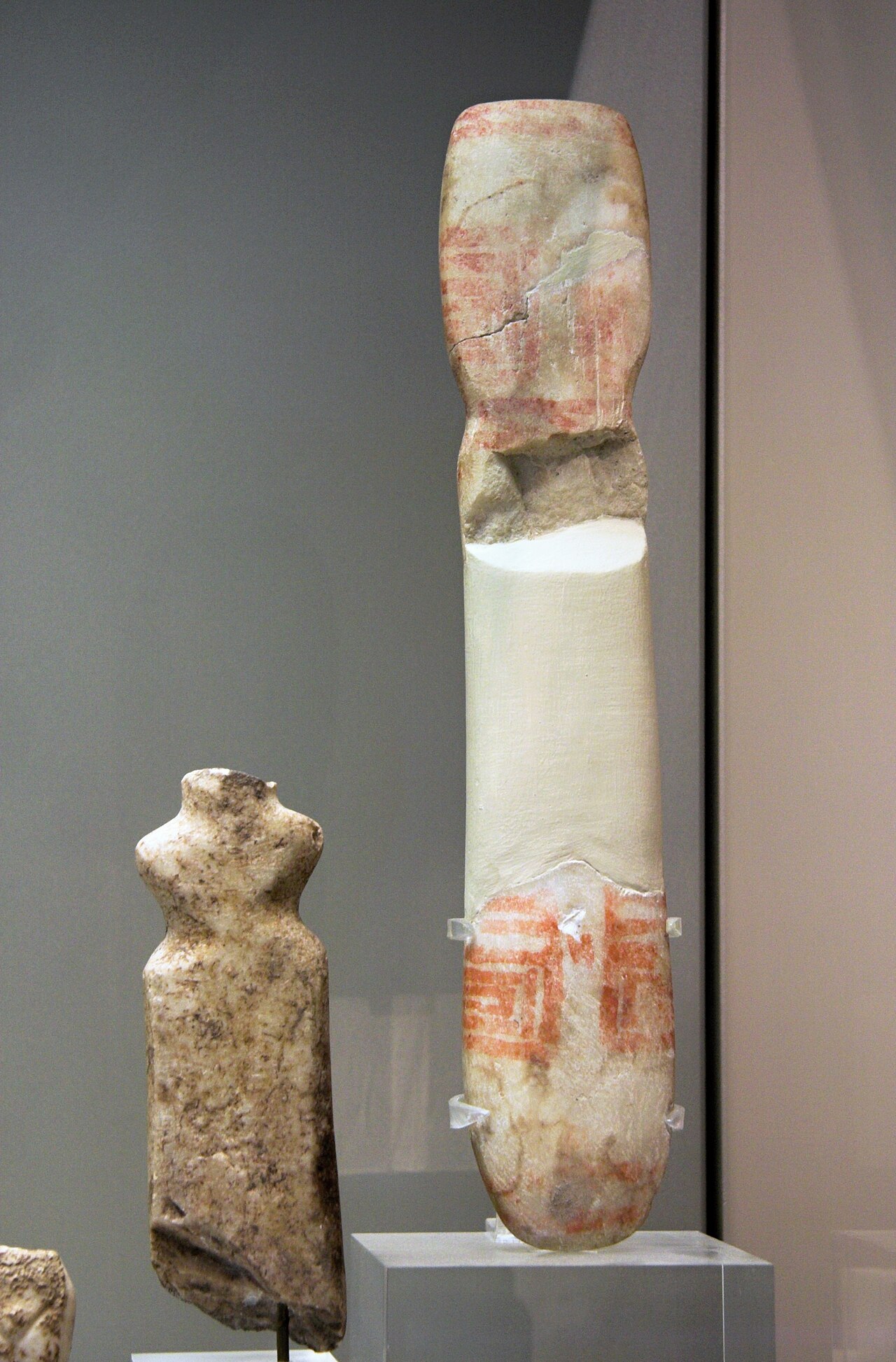
Table of Contents
- A Mound by the Thessalian Sea
- The Rings That Made It Famous
- What Stood at the Heart
- Fortress or Symbol?
- Living Between the Walls
- Potters, Weavers, and Toolmakers
- A Hint of Gold and Distant Trade
- The Harbor That Time Forgot
- The Fading of the Rings
- Dimini and Sesklo, the Twin Mounds
- Reading the Circles Today
- Walking the Rings Now
- How the Rings Came to Light
- The Daily World Inside the Walls
- Nearby in Europe’s Ancient Story
- Circles in the Earth
A Mound by the Thessalian Sea
Dimini rises from the coastal plain a short distance inland from the Pagasetic Gulf, close enough to the water that its people could reach the sea within an easy walk. In prehistory the shoreline lay nearer than it does today, and the settlement enjoyed the best of two worlds: the rich farmland of the Thessalian plain and the resources of the coast. It was a location built for prosperity.
Like its neighbor Sesklo, Dimini is a tell, a mound formed by generations of building and rebuilding on the same spot. But where Sesklo sprawled, Dimini organized itself into rings, and that difference in layout is the key to everything that makes the site famous. The mound is modest in size, yet its architecture punches far above its footprint in historical significance.
Prosperity, in the Neolithic as in every age, came from having options. A community that could farm the plain, graze animals on its margins, and gather resources from the nearby sea was insulated against the failure of any single source of food. Dimini enjoyed exactly that layered security, and it is no surprise that people invested such effort in building and rebuilding on this favored spot until it rose into the layered mound we see today.

The Rings That Made It Famous
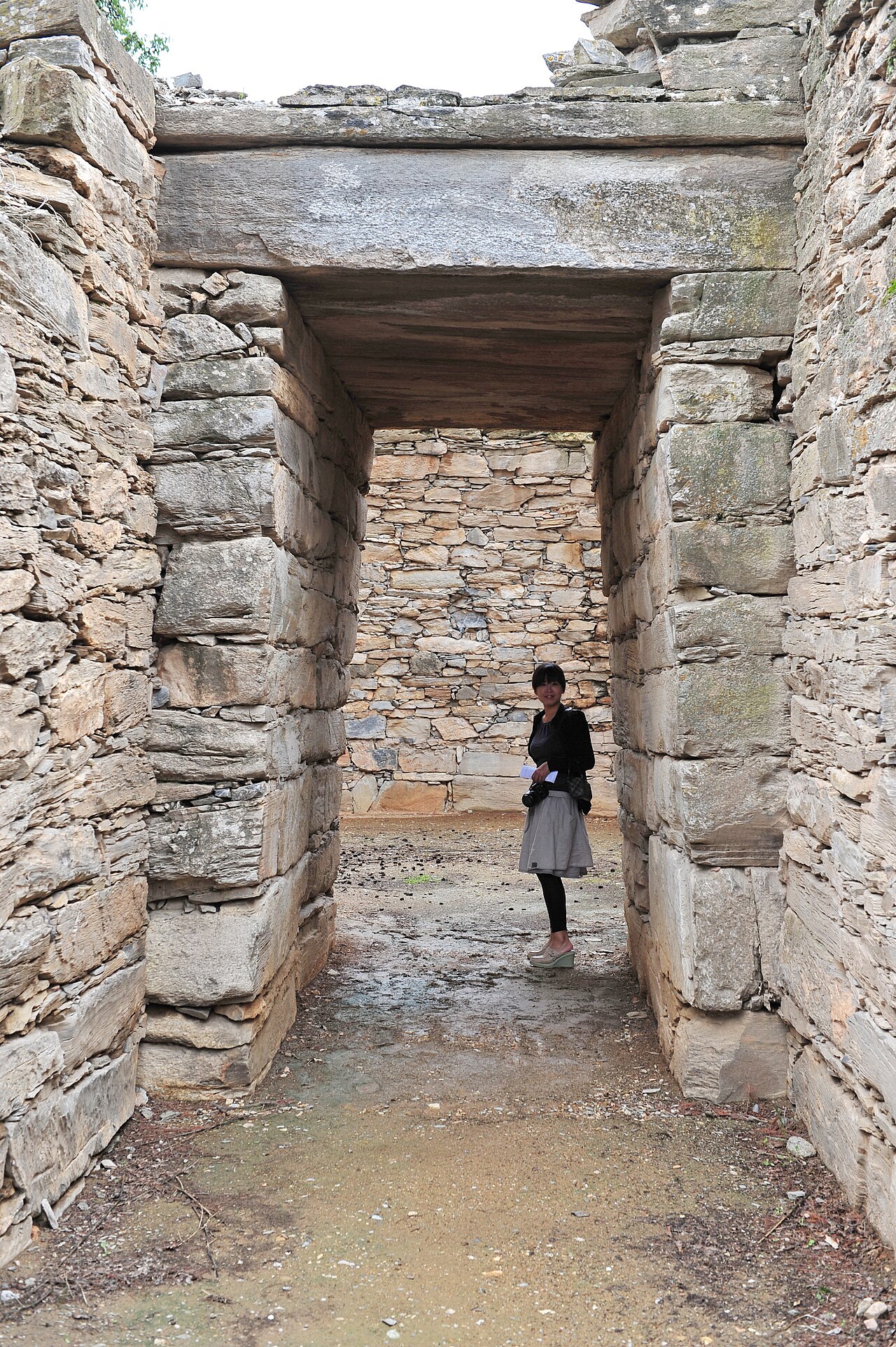
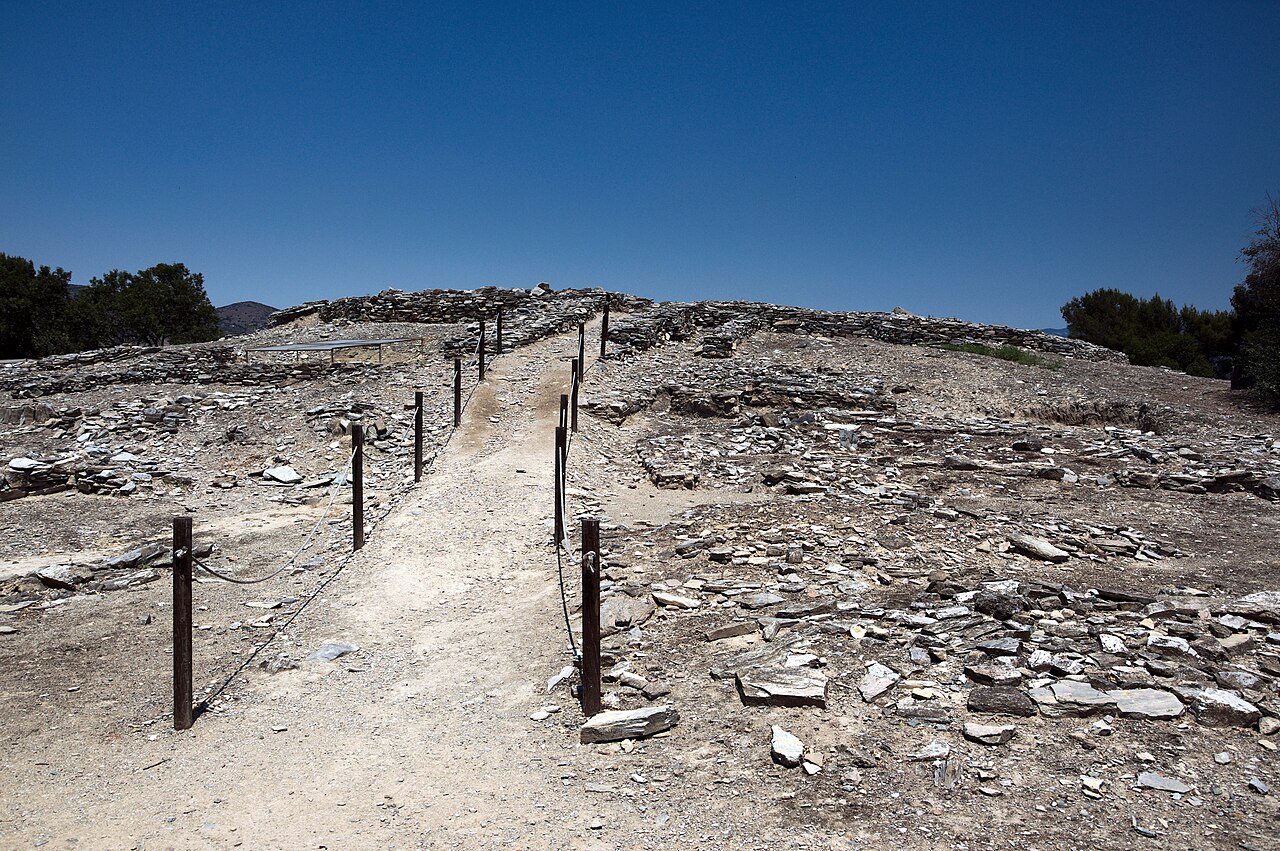
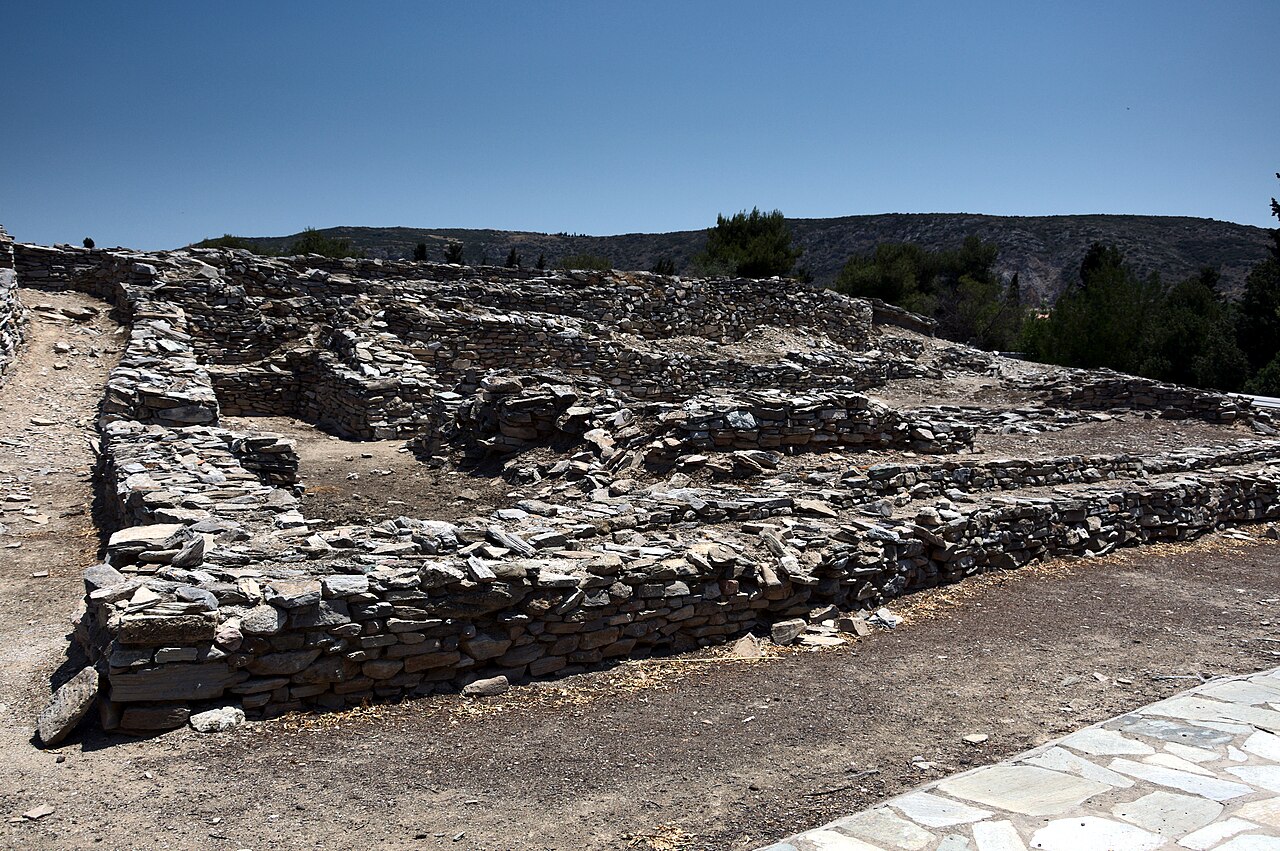
The defining feature of Dimini is its set of concentric enclosure walls, built of stone and arranged one inside the next, with the settlement’s core at the very center. Depending on how one counts, there are several of these rings, pierced by narrow gateways and connected by radial passages that lead inward toward the heart of the site. Walking Dimini means passing through wall after wall, gate after gate, drawing steadily closer to the center.
This layout is unlike anything at Sesklo and rare in the European Neolithic as a whole. It has invited comparison to everything from later citadels to symbolic mandalas. Whatever its purpose, the ringed plan represents a deliberate act of design. Someone, or some community, decided that the settlement should be built as a series of nested circles, and that decision has fascinated archaeologists ever since it was uncovered.
Estimates of how many rings once stood have varied as excavation has progressed, but the essential impression never changes: to enter Dimini was to cross boundary after boundary. Each wall marked a transition, and the cumulative effect must have been powerful, a sense of penetrating ever deeper into a protected and meaningful core that few other settlements of the age could match.
Archaeologists have noted that the radial passages linking the rings turned the whole settlement into a kind of controlled circuit, guiding anyone who entered along a set path toward the middle. This is a sophisticated idea, the deliberate choreographing of movement through built space, and its presence at a settlement this old is one of the reasons Dimini looms so large in discussions of early European architecture.
What Stood at the Heart
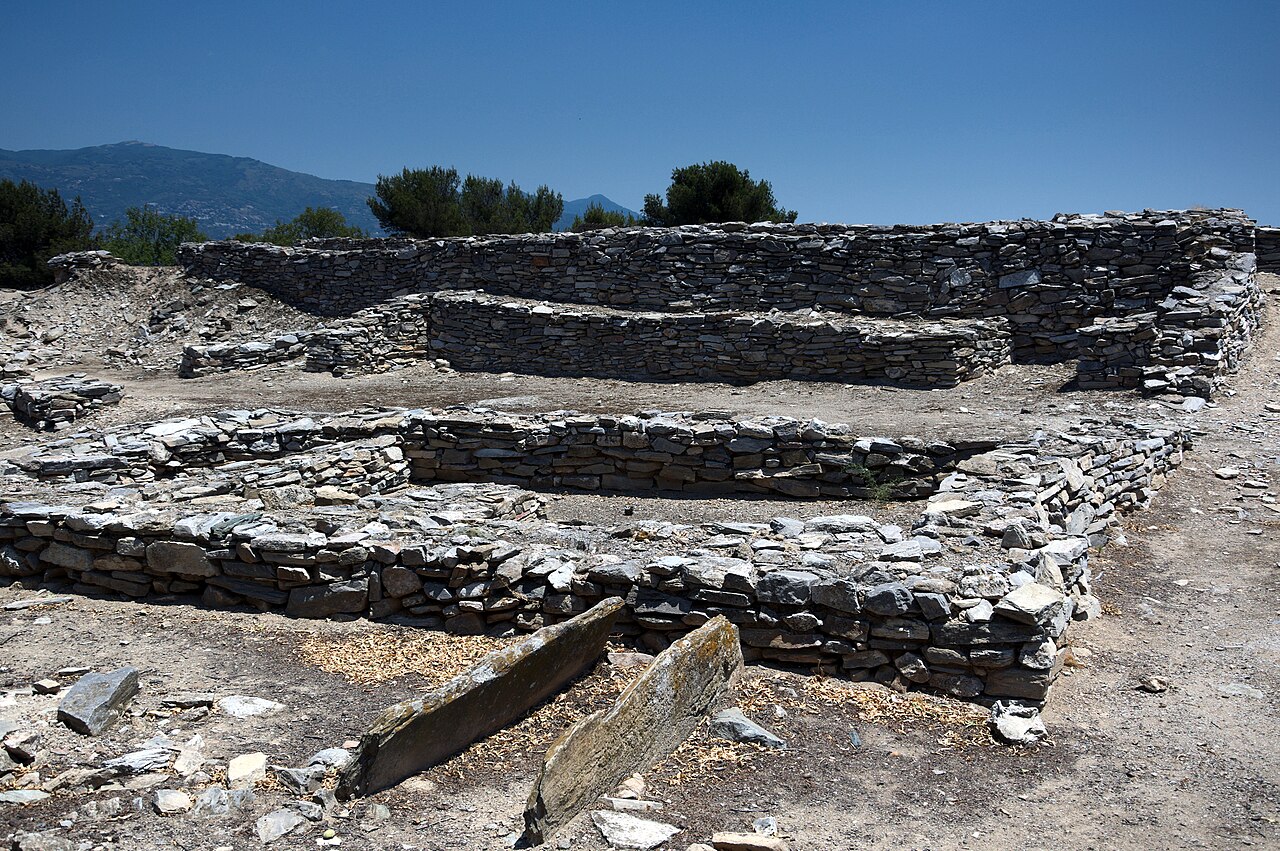
At the very center of the rings, on the highest ground, stood the most important buildings of Dimini, including a large structure with a porch and a main hall that archaeologists often interpret as a megaron, a term borrowed from later Greek architecture for a rectangular hall with a central hearth. This central complex sat within its own courtyard, set apart from the ordinary dwellings arranged among the outer rings.
The presence of a distinct, elevated core building strongly suggests that Dimini had a focal point of authority or ritual, a place where the community’s leaders lived, met, or performed ceremonies. The whole architecture of the site funnels attention and movement toward this center, a physical expression of the idea that some spaces, and perhaps some people, stood at the heart of things while others lived toward the edges.
The very act of funneling all movement toward this central hall would have lent it enormous psychological weight. To approach the heart of Dimini was to feel the settlement close in around you, ring by ring, until you stood at its focal point. Whoever controlled that space controlled the symbolic center of the entire community.
If the central hall did serve as the residence or meeting place of a leading family, then Dimini offers one of the earliest architectural expressions in Europe of concentrated authority. The community had not only accepted that some households mattered more than others but had built that inequality into the very plan of their home, placing the powerful, quite literally, at the center of everything.
Fortress or Symbol?
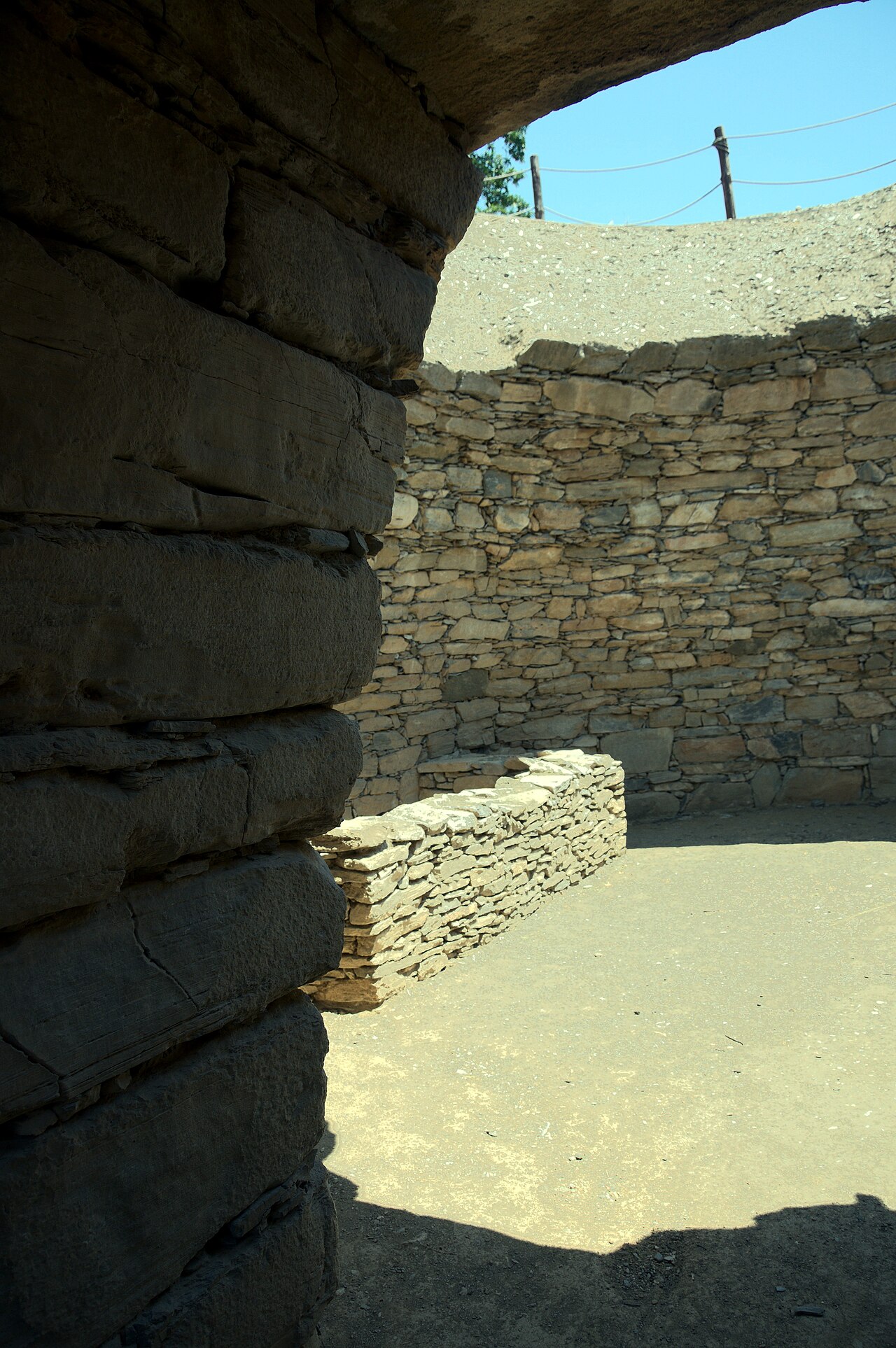
The great debate about Dimini centers on those concentric walls. Were they defensive fortifications, built to protect the community from raiders in an increasingly competitive Neolithic world? Or were they primarily symbolic and social, marking boundaries of status and sacredness rather than repelling attackers? Scholars have argued passionately on both sides for decades.
The walls are not especially tall or thick by the standards of true military fortifications, which leads some to doubt a purely defensive function. Yet the sheer effort of building multiple stone rings suggests they mattered a great deal. The most likely answer may be that they did several things at once: providing some security, controlling access, organizing space, and proclaiming the importance of the community and its center. At Dimini, defense and meaning were probably woven together.
It is also worth remembering that in the Neolithic, walls did more than stop people. They declared permanence and investment, showing any visitor that this community intended to stay and had the collective muscle to shape the land on a grand scale. Even a wall that could be climbed still spoke loudly about the people who raised it.
Modern interpretations increasingly favor this blended reading, seeing the rings as multipurpose from the start. A boundary can keep danger out, keep livestock in, mark the sacred from the mundane, and broadcast a community’s pride all at the same time. The people of Dimini did not necessarily separate these functions the way we do, and their walls likely answered several needs at once.
Living Between the Walls
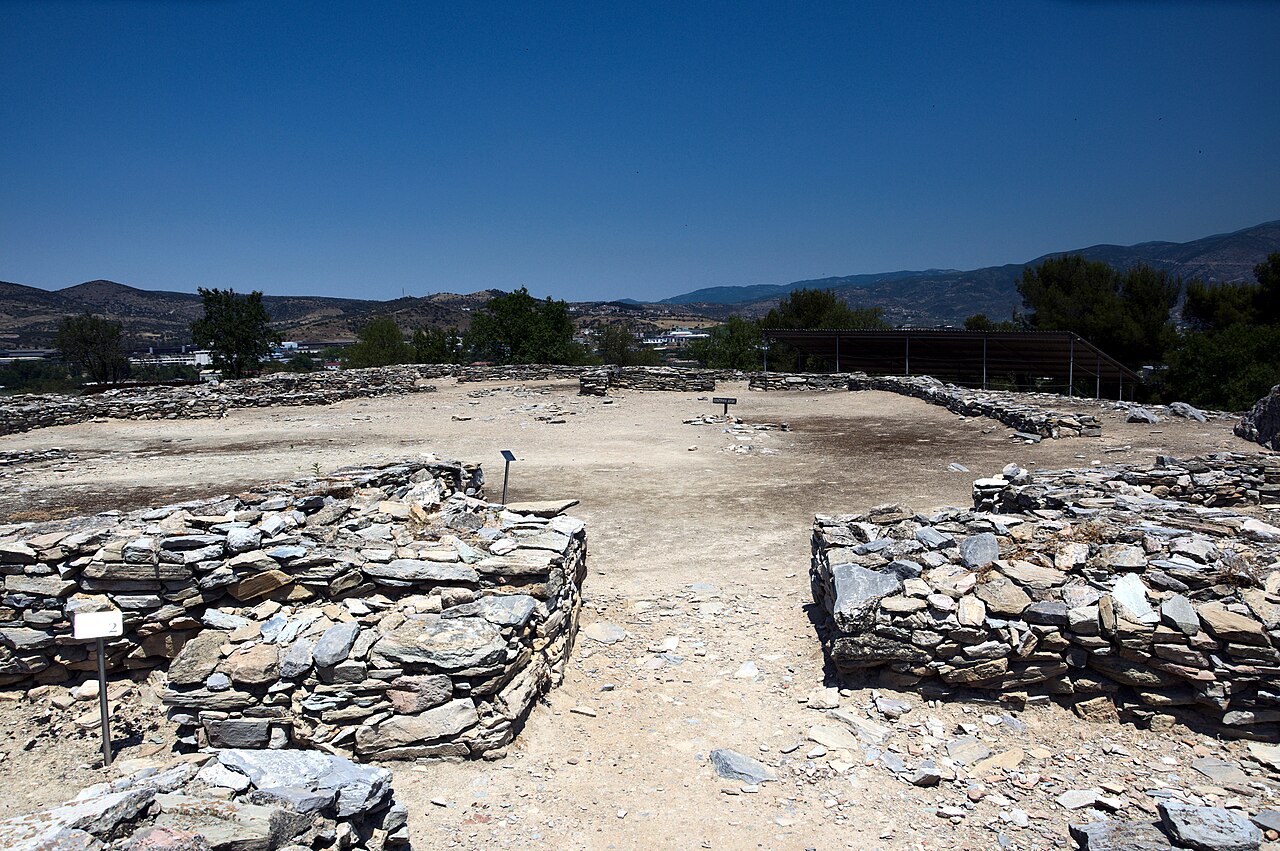
Between the concentric rings, in the spaces the walls enclosed, the ordinary people of Dimini built their homes. These were rectangular houses of stone footings and mudbrick or timber-framed walls, much like those at Sesklo, arranged in the zones between one ring and the next. Courtyards, work areas, and storage spaces filled the gaps, turning the rings into inhabited neighborhoods rather than empty defensive perimeters.
This arrangement gives Dimini an unusual texture. Instead of a single dense cluster of houses, the settlement was divided into bands of habitation separated by walls, with movement channeled through gates and passages. It was a community that experienced its own home as a series of thresholds, always aware of moving inward toward the center or outward toward the edge. Space at Dimini was never neutral; it was structured and charged with meaning.
The rhythm of rebuilding is important to picture. When a house wore out or a generation passed, the old walls were leveled and a new home rose on the same footprint, slowly lifting the whole settlement higher. In this way the very ground of Dimini became an archive of its families, each layer of collapsed and rebuilt homes preserving a chapter of the community’s long life between the rings.
The result, over centuries, was a settlement whose physical form and social form grew up together. Homes, walls, courtyards, and passages all reinforced one another, producing a place where the way people lived and the way they built became almost impossible to separate. To understand a Dimini house is to understand the whole ringed community around it.
Potters, Weavers, and Toolmakers
The people of Dimini were skilled craftworkers. Their pottery, decorated in styles that define the later Thessalian Neolithic, shows a continuing tradition of fine ceramics reaching back through Sesklo and beyond. Spindle whorls and loom weights point to the weaving of textiles, while stone and bone tools reveal the everyday work of farming, building, and processing food and hides.
Among the most intriguing finds are those hinting at specialized activity, including workshops for making tools and ornaments. A community organized enough to build concentric walls and a central complex would also have been organized enough to support people who devoted much of their time to particular crafts. The material culture of Dimini paints a picture of a settlement that was not just surviving but producing, trading, and creating with real sophistication.
The specialization implied by these crafts hints at a community complex enough to let some members focus on particular skills rather than every household producing everything for itself. That kind of economic differentiation, still modest at Dimini, is one of the quiet engines of social complexity, and its presence here places the settlement firmly on the road toward the more stratified societies of the coming Bronze Age.
Finished goods from these workshops would have circulated both within the settlement and beyond it, tying Dimini into the exchange networks that laced the Neolithic Aegean together. A finely made pot or a well-crafted ornament was not just an object but a message, carrying the identity and skill of its makers out into a wider world of trading neighbors.
A Hint of Gold and Distant Trade
Excavations at Dimini and its surroundings have turned up objects that speak of wealth and long-distance connection, including items of gold and materials that came from far away. In the broader region and period, gold and copper were beginning to appear, foreshadowing the metal-rich world of the Bronze Age that would follow. Dimini stood on the threshold of that transformation.
These finds place Dimini within the same web of Aegean and Balkan exchange that connected Sesklo to the wider world. Obsidian from the islands, fine stone, shells, and precious materials all moved along networks of trade and gift-giving. The concentric walls may have enclosed a community, but that community was anything but closed off. Dimini looked outward, trading and connecting across the sea and the land.
The appearance of gold and other precious materials is especially telling because it signals the dawn of a new relationship with wealth. Objects were beginning to carry value beyond their usefulness, marking status and prestige. In this respect Dimini stands at a hinge in European history, a Neolithic community already reaching toward the metal-rich, status-conscious world that the Bronze Age would soon usher in.
Standing on this threshold, Dimini embodies a moment of transition that would soon accelerate dramatically. Within a few centuries, metal, wealth, and hierarchy would reshape the societies of the Aegean beyond recognition, and the ringed mound in Thessaly can be read as an early, tentative sketch of that coming world, drawn in stone walls and the first gleam of gold.
The Harbor That Time Forgot
Near Dimini, at a site sometimes linked to the settlement, archaeologists have found evidence pointing toward maritime activity, suggesting the community had access to the sea and perhaps something like a harbor or landing place. In an age of small boats and coastal voyaging, such access would have been a tremendous advantage, opening routes for trade, fishing, and communication with other Aegean communities.
This coastal dimension adds another layer to Dimini’s story. It was not only an inland farming settlement with a striking plan but also a community with one foot in the wider maritime world of the Neolithic Aegean. The sea brought obsidian, shells, and news of distant places, tying this ringed mound in Thessaly to a network that stretched across the islands and beyond.
The image of small Neolithic boats setting out from a landing near Dimini, laden with goods or returning with obsidian and shells, transforms our sense of the site. This was not a landlocked farming village turned inward on itself but a community with horizons, linked by water to the islands and coasts of the wider Aegean. The rings enclosed a center, but the settlement’s imagination stretched out across the sea.
The Fading of the Rings
Like all settlements, Dimini eventually declined. The Neolithic community that built and inhabited the concentric rings gradually faded, and the site’s importance shifted over the centuries. Yet the location remained significant into later periods; the wider area around Dimini would see continued activity, and in the Bronze Age the nearby region became part of the world of Mycenaean Greece, with important tombs found close by.
The end of Neolithic Dimini was not a sudden catastrophe so much as a long transformation, as the ways people organized themselves changed and new centers of power emerged. But the rings endured in the earth, preserved beneath the soil until archaeologists uncovered them and revealed one of the most distinctive settlement plans of prehistoric Europe.
The proximity of later Mycenaean tombs to Dimini gives the location a remarkable historical depth, layering the age of heroes and palaces directly onto ground first made important by Neolithic farmers. Few places capture so vividly the long continuity of human attachment to a single stretch of land, from the first ringed village to the warrior aristocracies of the Bronze Age.
Dimini and Sesklo, the Twin Mounds
Dimini is almost impossible to discuss without Sesklo, its famous neighbor. Together they define the archaeology of Neolithic Thessaly, and by extension much of what we know about the earliest settled societies of Greece. Broadly, Sesklo represents the earlier phase and Dimini the later, and the contrast between the sprawling open town and the tightly ringed settlement captures a real evolution in how communities chose to live.
Some have imagined the two as rivals, competing centers on the same fertile plain, though the reality was probably more complex and more cooperative than any simple rivalry. What matters is that between them, Sesklo and Dimini preserve a long and detailed record of the Thessalian Neolithic, from its flourishing beginnings to its later, more structured forms. They are the twin pillars on which Greek prehistory rests.
Studied together, the two mounds also let archaeologists calibrate the long chronology of the Thessalian Neolithic with unusual precision. The shift from the open plan of early Sesklo to the ringed plan of Dimini is one of the clearest windows we have into how the priorities of an entire society evolved across many centuries.
For students of prehistory, then, a visit to one mound almost demands a visit to the other. Sesklo and Dimini are two halves of a single story, and only by holding them together can we appreciate the full sweep of how the first farmers of Greece learned, over thousands of years, to build, organize, and reimagine the communities they called home.
Reading the Circles Today
The enduring appeal of Dimini lies in its readability as a symbol. Concentric circles converging on a center are among the most universal and evocative forms humans make, appearing in art, religion, and architecture across the world. To find them realized in stone nearly six thousand years ago, in a real inhabited settlement, feels almost uncanny, as if the people of Dimini had stumbled onto a template deep in the human imagination.
Whatever practical purposes the walls served, they also expressed something about how this community understood itself: as a thing with a center and edges, with insiders and gateways, with a heart that had to be reached by passing through successive thresholds. In that sense, Dimini is not only an archaeological site but a diagram of how early societies began to think about order, belonging, and the shape of a shared world.
That such a resonant form appeared so early, in a modest farming settlement rather than a grand civilization, is a reminder that the deep patterns of human imagination are older than any empire. The people of Dimini were thinking in circles, in centers and thresholds, thousands of years before philosophers and architects would give those ideas names.
Perhaps that is the deepest lesson of Dimini. Long before written philosophy or monumental temples, ordinary farming people were already grappling, in stone and soil, with questions of order, belonging, and the shape of a shared life. Their answer was a set of circles converging on a center, and it remains one of the most eloquent statements the European Neolithic ever made.
Walking the Rings Now
Today Dimini is an accessible archaeological site, its concentric walls, gateways, and central complex laid out for visitors to walk through much as its ancient inhabitants once did. Passing from the outer ring inward toward the megaron at the center, a modern visitor can physically experience the logic of the place, the sense of approaching something important step by step, threshold by threshold.
Set against the backdrop of the Thessalian plain and the nearby gulf, the site is quiet and contemplative, far from the crowds of Greece’s classical monuments. But for anyone curious about the deep origins of settled life, Dimini offers something the great temples cannot: the chance to walk inside one of Europe’s earliest and most deliberate visions of what a community should look like.
There is a particular pleasure in experiencing an ancient plan with your own feet rather than reading about it. At Dimini the architecture does the explaining. As you pass through each gate and feel the walls draw closer, the intentions of its builders become intuitively clear, and the abstract debates about fortress versus symbol give way to the simple, physical sense of approaching a guarded and meaningful heart.
How the Rings Came to Light
Dimini entered the record of archaeology at the turn of the twentieth century, when Greek pioneers of prehistoric research, most notably Christos Tsountas, turned their attention to the Neolithic mounds of Thessaly. Digging at Dimini and Sesklo in the early 1900s, Tsountas revealed that these unassuming hills held the remains of some of the oldest settled communities in Europe, and his work laid the foundation for all later study of the Greek Neolithic.
Later campaigns, particularly through the middle of the twentieth century, refined the picture, tracing the concentric walls, mapping the central buildings, and dating the phases of occupation. Each season of excavation added detail to the extraordinary plan of the site, until Dimini stood revealed as one of the clearest examples anywhere of a Neolithic settlement organized around a deliberate, symbolic geometry.
What the early excavators grasped, and what still strikes visitors today, is that Dimini was not an accident of organic growth but the product of intention. The rings, the gates, the central hall, all of it spoke of planning, of a community that had a picture in its mind of what its home should be and then built that picture into the ground.
It is a testament to the skill of those early researchers that the broad outlines they established still stand today. Modern science has added dates and refined details, but the fundamental recognition that Dimini was a planned, ringed Neolithic settlement of great antiquity came from the patient trowels of archaeologists working more than a century ago on a quiet Thessalian mound.
The Daily World Inside the Walls
Life inside the rings of Dimini would have been intensely communal. With homes packed into the bands between the walls and movement funneled through narrow gateways, neighbors were constantly present, their comings and goings shaped by the architecture around them. The settlement was small enough that everyone likely knew everyone, and the shared passage toward the central courtyard would have made the heart of the community a natural gathering place.
The work of daily survival went on much as it did across Neolithic Thessaly: grain was ground, animals were tended, pots were shaped and fired, textiles were woven, and tools were made and mended. But at Dimini all of this happened within a uniquely structured space, one that constantly reminded its inhabitants of the difference between center and edge, inside and outside, threshold and open ground.
This heightened sense of spatial order may have reinforced social order as well. Where you lived among the rings, how close to the center you moved, and who controlled the central buildings could all have carried social weight. In this way, the architecture of Dimini was not just a backdrop to community life but an active participant in shaping it.
Over the generations, this constant negotiation of shared space would have knit the community tightly together while also encoding its hierarchies. Dimini was intimate by necessity, a place where privacy was scarce and cooperation essential, and where the daily walk toward the center reminded everyone, consciously or not, of the shape of their small and carefully ordered world.
Nearby in Europe’s Ancient Story
- The Hill in Thessaly Where Europe First Built a Town: The Story of Sesklo
- Fish-Faced Idols on a Roaring River: The Mesolithic Mystery of Lepenski Vir
- A Bulldozer Uncovered the Oldest Gold Ever Found: The Story of the Varna Necropolis
Circles in the Earth
Dimini reminds us that prehistoric people were not merely reacting to necessity but actively imagining how their world should be shaped. The decision to build a settlement as a series of nested rings was a creative act, an idea made permanent in stone, and it still speaks to us across nearly six thousand years.
In the concentric walls of this small Thessalian mound we can read the early stirrings of ambitions that would echo through all of later history: the marking of sacred and ordinary space, the concentration of authority at a center, and the human urge to draw a meaningful line around the place we call home. Dimini is where those ideas took the shape of circles in the earth.


One thought on “The Neolithic Village Built as a Set of Concentric Rings: The Story of Dimini”