In eastern Bulgaria, near the modern town of Provadia, archaeologists have uncovered a settlement that upends our tidy assumptions about where and why the first towns arose. It was not born beside a great river delta or a fertile floodplain, but around a resource so ordinary that we barely think about it: salt. Here, more than six thousand years ago, people built a fortified settlement whose entire economy revolved around boiling brine into solid salt, a substance so valuable in the ancient world that it functioned almost like money. The site is often called Solnitsata, meaning the salt works, and its excavators have made a bold claim: that this may be the oldest prehistoric town in Europe. Ringed by massive stone walls and surrounded by evidence of wealth and trade, Solnitsata tells a story in which the humble crystal that seasons our food helped give birth to urban life itself.
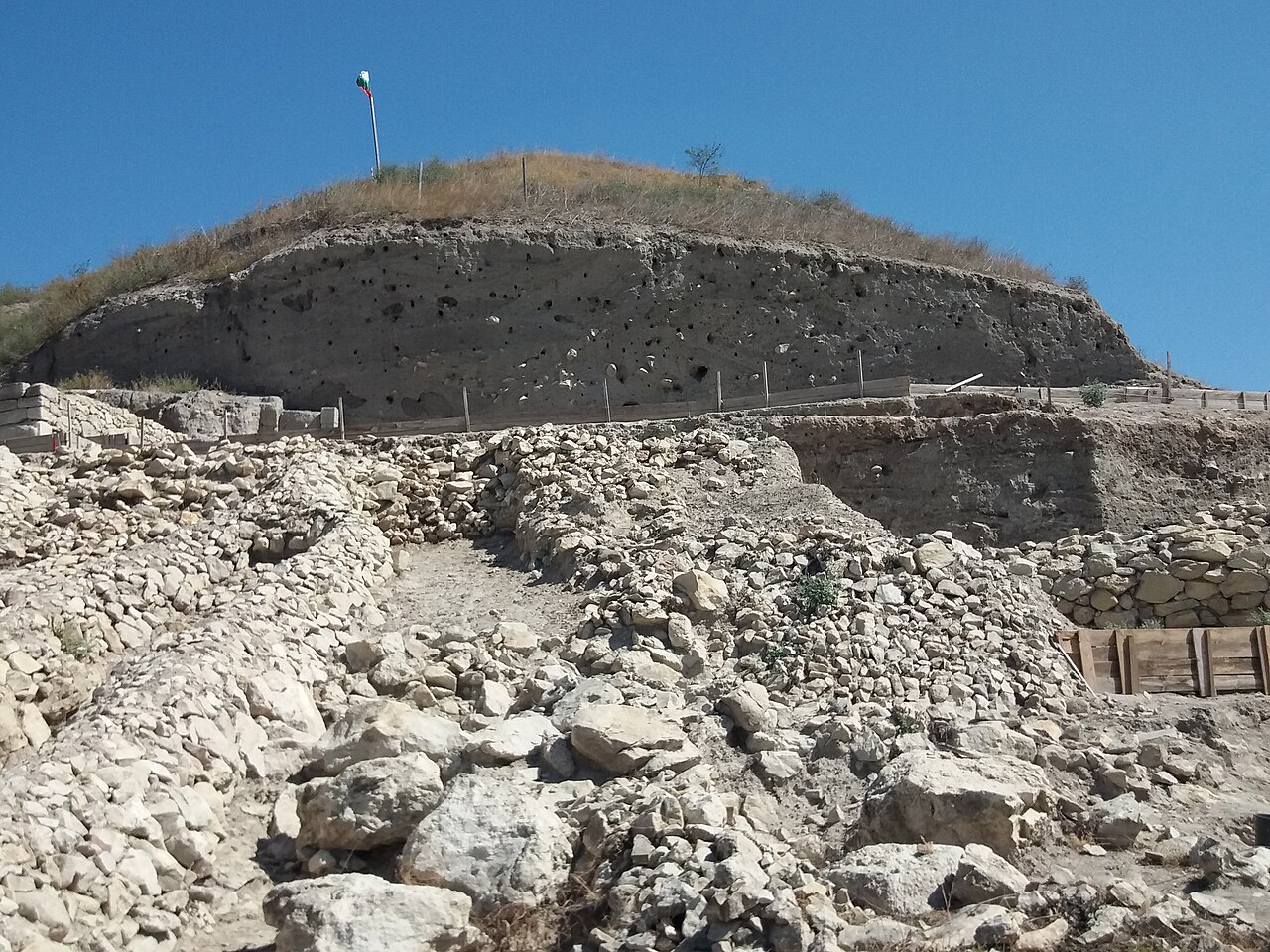
Table of Contents
- The Treasure Hidden in Brine
- Europe’s Oldest Town?
- Walls Fit for a Fortune
- Boiling the Sea That Wasn’t There
- Gold, Trade, and the Fruits of Salt
- Living in a Company Town
- Pits, Offerings, and the Sacred
- The Salt Town and the Golden Graves
- Rewriting the Story of the First Towns
- Uncovering the Salt Works
- The Enduring Power of Salt
- Provadia Today
- A World on the Verge of Metal
- How to Turn Water Into Wealth
- Nearby in Europe’s Ancient Story
- Founded on a Crystal
The Treasure Hidden in Brine
It is hard for modern people, who buy salt cheaply by the sack, to grasp how precious it once was. Salt preserves meat and fish, keeps food safe through long winters, is essential to human and animal health, and in a world without refrigeration it was nothing less than a technology of survival. Wherever salt could be produced in quantity, wealth and power tended to follow.
At Provadia, nature had provided an extraordinary gift: a massive underground dome of rock salt, one of the largest in southeastern Europe, feeding salty springs at the surface. The people who settled here discovered that by collecting this brine and boiling it in clay vessels over fires, they could produce solid, tradeable blocks of salt. That discovery transformed an ordinary spot into one of the most valuable pieces of real estate in Neolithic and Chalcolithic Europe.
Control of such a resource conferred a kind of power that is easy to underestimate today. A community that could produce salt reliably held leverage over every neighbor who could not, and that leverage translated into trade, influence, and wealth. In a very real sense, whoever controlled the salt springs of Provadia controlled a currency, and the settlement that grew around them was built on that quiet monopoly.
Europe’s Oldest Town?
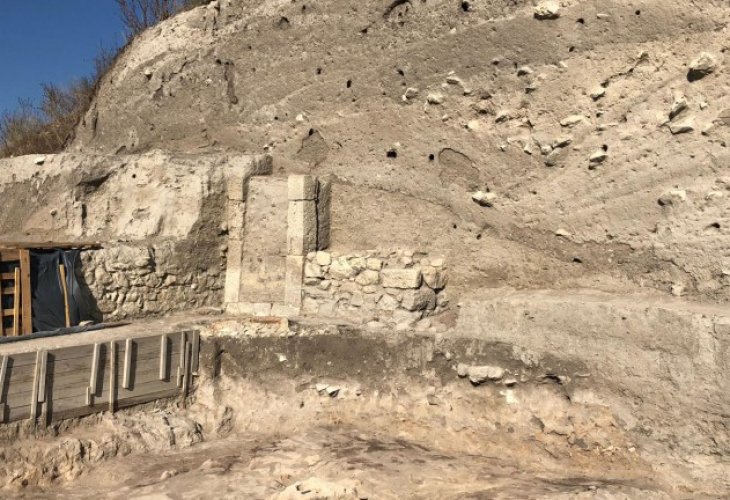
The lead excavator of the site has argued forcefully that Solnitsata deserves to be called the oldest town in Europe. The claim rests not on a single feature but on a cluster of them: a substantial permanent population, formidable fortifications, specialized production on a large scale, evidence of wealth, and a degree of social organization far beyond that of a simple village.
This claim is debated, as such claims always are, since the very definition of a town is slippery when applied to prehistory. But whether or not Solnitsata wins the title outright, the argument itself is revealing. Here was a community whose size, defenses, and economic specialization pushed it toward something genuinely urban, and it did so on the strength of a single industry. Salt, not conquest or agriculture alone, built this early town.
The willingness of researchers to even debate the word town here is itself significant. It signals that Solnitsata crossed some threshold of scale and complexity that ordinary Neolithic villages never approached. Whatever label we finally settle on, the site clearly represents a leap toward a denser, more organized, and more specialized way of living together than anything that had come before it in the region.
Modern archaeology increasingly recognizes that the birth of the town was not a single event but a threshold crossed independently in different places for different reasons. Solnitsata is one of those places, and its particular route to urbanism, paved with salt rather than grain, is exactly what makes it such a valuable and thought-provoking case for anyone studying the deep origins of city life.
Walls Fit for a Fortune
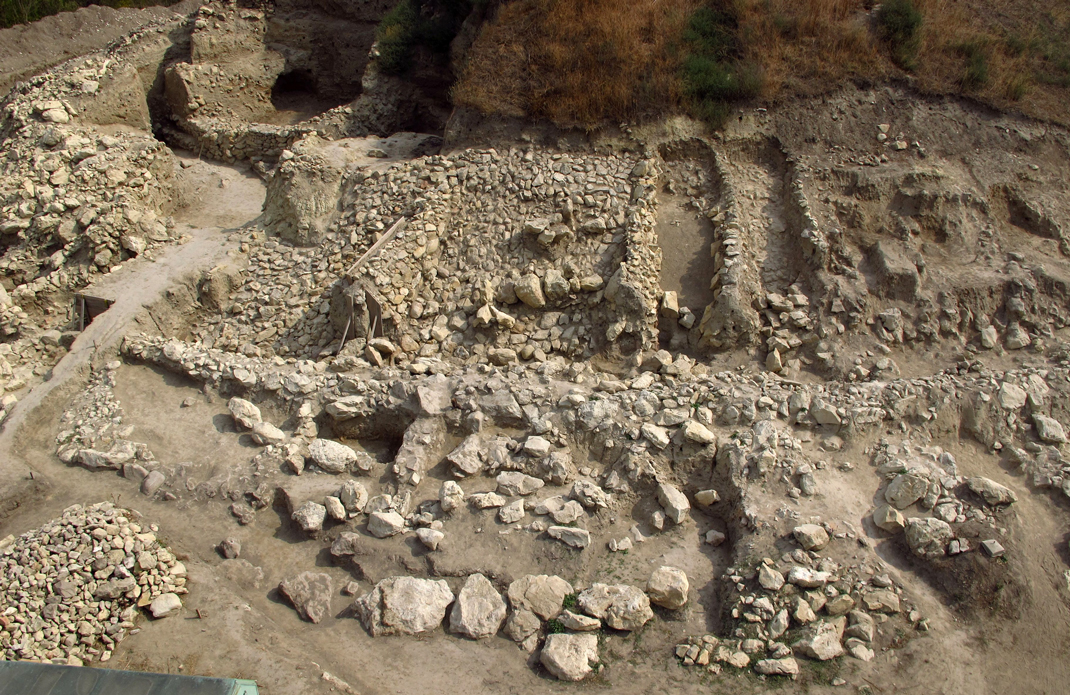
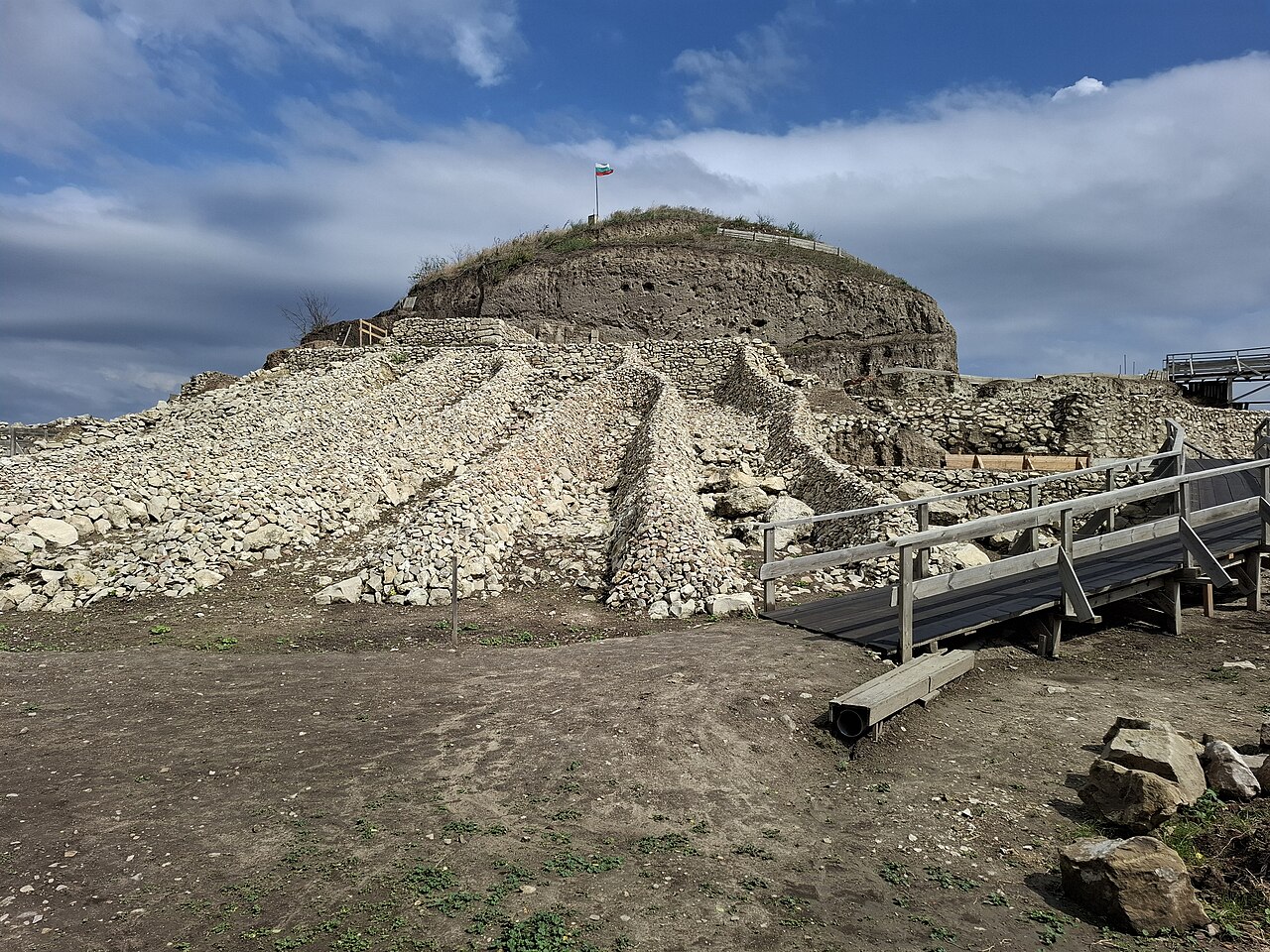
One of the most striking features of Solnitsata is its fortifications. The settlement was surrounded by thick stone walls, in places several meters high, an enormous investment of labor for a community of this age. Few settlements in prehistoric Europe were defended on such a scale, and the presence of these walls tells us something crucial: the people here had something worth protecting.
That something was salt and the wealth it generated. A settlement producing a commodity as valuable as salt would have been a tempting target for raiders and rivals, and the massive walls of Solnitsata can be read as a direct response to that threat. In a sense, the fortifications are the clearest proof of the site’s prosperity. You do not build great walls around a place unless it holds a fortune worth defending.
Their construction also implies a community capable of mobilizing large amounts of coordinated labor, quarrying, hauling, and stacking stone on a scale far beyond the needs of a simple farming village. That organizational capacity is itself a marker of a complex society, and it fits perfectly with the picture of a wealthy, specialized town that had both the means and the motive to fortify itself heavily.
Standing before the reconstructed height of these defenses, it becomes almost impossible to doubt that Solnitsata was a place of consequence. Ordinary villages simply did not command the labor, the organization, or the wealth to wall themselves in like this. The fortifications are, in effect, a signature, a message from the past declaring in stone that something valuable and important once stood here.
Boiling the Sea That Wasn’t There
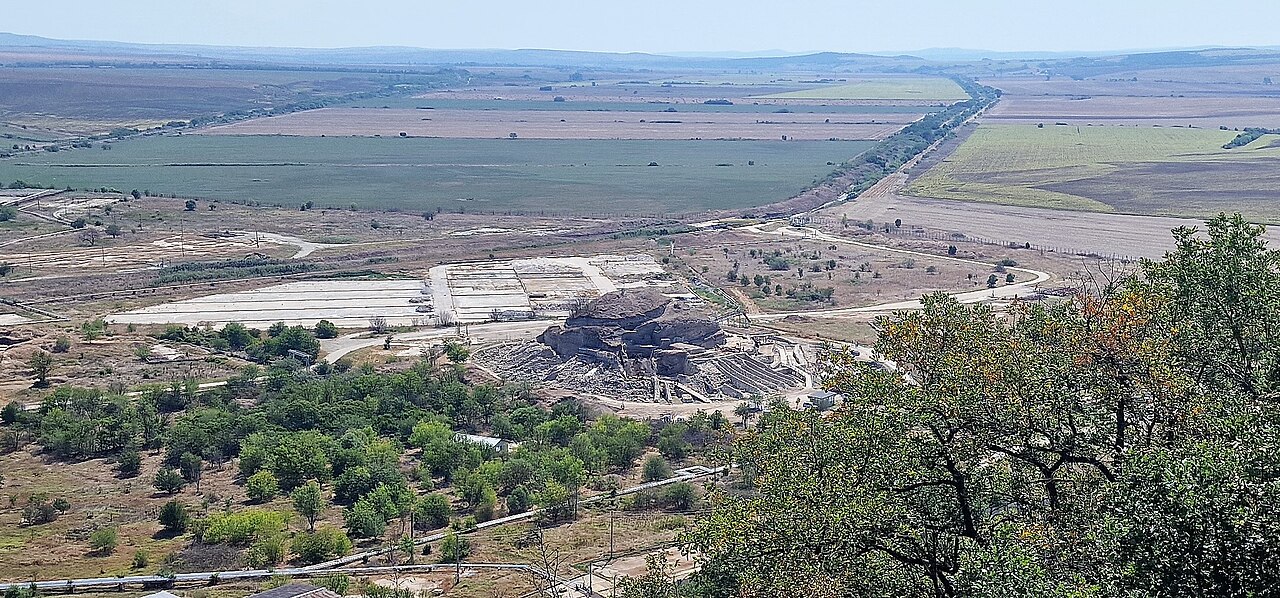
The heart of Solnitsata’s economy was the production of salt through a process called briquetage: brine from the salty springs was collected and heated in specially made clay vessels until the water evaporated, leaving behind solid salt. Over time this was scaled up dramatically, with evidence suggesting the site could produce salt in quantities far beyond local needs, turning it into a genuine export industry.
Archaeologists have found enormous numbers of the ceramic vessels used in this process, along with the installations where brine was heated. The scale is remarkable for the period, pointing to organized, repeated, large-scale production rather than casual household activity. This was, in effect, one of Europe’s first factories, a place dedicated to manufacturing a valuable commodity for trade across a wide region.
The sheer volume of production hints at a settlement supplying salt to a wide hinterland, perhaps to communities scattered across much of the eastern Balkans. This transforms our image of the place from a self-sufficient village into a regional economic hub, a center whose product tied together the daily lives of people over a large territory. Few settlements of the age can claim such reach.
Comparisons with later, better-documented salt-producing sites across Europe show just how precocious Provadia was. The techniques pioneered here in the Chalcolithic would be repeated, in one form or another, for thousands of years, a testament to the enduring logic of turning brine into tradeable blocks of salt over open fire.
Gold, Trade, and the Fruits of Salt
The wealth that salt generated at Provadia did not stay hidden. The wider region of Chalcolithic Bulgaria is famous for producing some of the earliest worked gold in the world, most spectacularly at the nearby Varna Necropolis, whose graves held astonishing quantities of gold ornaments. Many scholars link the extraordinary wealth of Varna directly to the salt trade centered on places like Solnitsata.
In this reading, the salt boiled at Provadia was traded across the Balkans and beyond, and the profits flowed back as gold, copper, and other precious goods. The salt town and the golden cemetery become two faces of the same phenomenon: a Chalcolithic society growing rich and complex on the strength of a specialized industry. Solnitsata may well be the economic engine behind some of prehistoric Europe’s most dazzling treasures.
The relationship between salt and gold here is a vivid illustration of how wealth flowed and transformed in the ancient world. A perishable, everyday commodity boiled from spring water became, through the alchemy of trade, the imperishable gold that adorned the most powerful members of society in death. The invisible salt of Provadia and the glittering treasures of Varna are, in economic terms, the same wealth wearing two very different faces.
This flow of value also tells us that the people of the Chalcolithic Balkans had already developed sophisticated systems of exchange, trust, and prestige. Salt from Provadia and gold at Varna could only be linked through networks in which goods, and the wealth they represented, moved smoothly across distances and communities, a level of economic integration remarkable for its early date.
Living in a Company Town
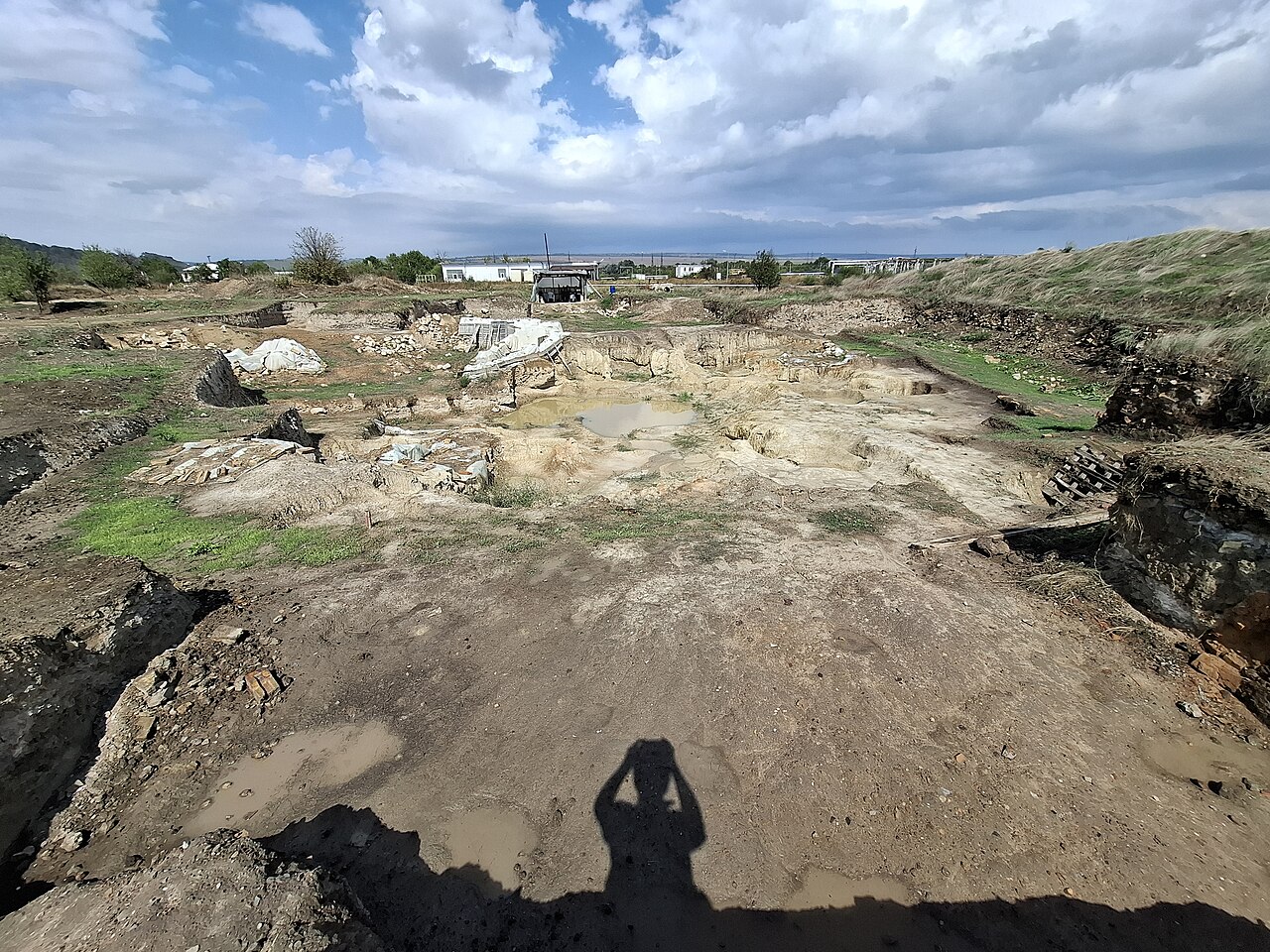
The people of Solnitsata lived in two-story houses built within and around the fortified settlement, their lives organized around the rhythms of salt production and trade. This was, in a sense, one of the world’s first company towns, a community whose existence and prosperity depended on a single industry. Daily life would have been shaped by the constant work of collecting brine, tending fires, making vessels, and packaging salt for transport.
Around this industrial core, people still farmed, herded animals, and carried out the ordinary tasks of Chalcolithic life. But it was salt that set Solnitsata apart and gave it its character. The town’s identity, wealth, and vulnerability all flowed from the white crystal it produced, and the community organized itself, defended itself, and connected to the wider world through that single, precious substance.
Such total dependence on one industry brought both prosperity and vulnerability, a tension familiar to company towns throughout history. As long as the salt flowed and the trade routes held, Solnitsata thrived. But a community so specialized was also exposed to disruption, and its fortunes were bound tightly to the continued value of the single commodity on which it had staked its existence.
Children growing up in Solnitsata would have known the sights and smells of salt-making as the everyday texture of home: the steam rising from the boiling vessels, the stacks of drying cakes, the caravans arriving and departing with goods to trade. To be from Provadia was to belong to a place defined by a single, precious craft, and that shared identity likely bound the community as tightly as its stone walls.
Pits, Offerings, and the Sacred
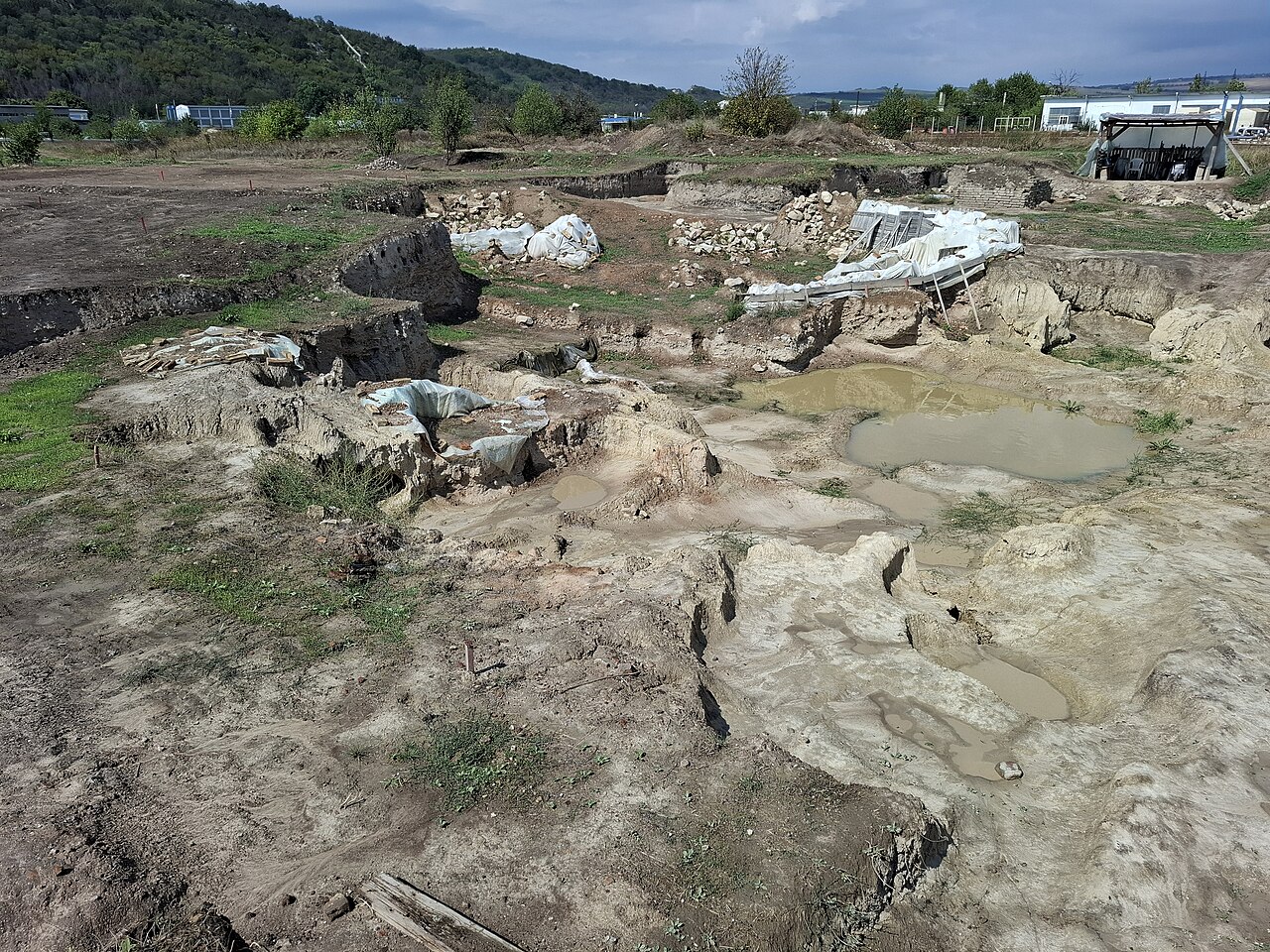
Alongside the evidence of industry and defense, excavators have found signs of ritual activity at Solnitsata, including pits containing deliberate deposits and other traces of ceremonial practice. In a community whose fortunes depended on the mysterious gift of the salt springs, it would hardly be surprising if the source of that wealth was treated as sacred, surrounded by ritual and belief.
These ritual features remind us that Solnitsata was not merely an economic machine but a living human community with a spiritual dimension. The people here made sense of their world, their prosperity, and their dangers through ceremony and belief, just as they defended their wealth with walls and generated it with fire and brine. Salt, gold, ritual, and fortification were all threads in the same rich fabric of this early town’s life.
The pairing of the sacred and the economic is a recurring theme in early societies, where the sources of prosperity were often wrapped in religious meaning. At Solnitsata, the salt springs that fed the town may well have been regarded with awe, their bounty acknowledged through offerings and ceremony. Wealth and worship were not separate spheres here but intertwined aspects of a single way of understanding the world.
Taken together with the walls and the salt works, these traces of ceremony complete our portrait of Solnitsata as a fully rounded community. It was industrious, wealthy, and well defended, but also reflective and reverent, a place where people not only produced and traded but also wondered, worshipped, and gave thanks for the salty springs that had made their remarkable town possible.
The Salt Town and the Golden Graves
No discussion of Solnitsata is complete without the Varna Necropolis, the famous Chalcolithic cemetery near the Black Sea coast where archaeologists found the oldest processed gold in the world, buried with individuals of evidently high status. The connection between the two sites is one of the most compelling stories in European prehistory.
If the wealth of Varna was built on the salt trade, then Solnitsata was the source of that wealth, the industrial heart whose product made such spectacular displays of status possible. Together, the salt town and the golden cemetery reveal a Chalcolithic society that had developed marked inequalities, long-distance trade, and concentrated wealth, all centuries before the more famous civilizations of the Bronze Age. The two sites illuminate each other, industry and treasure telling a single story.
Considered side by side, the two sites also help date and contextualize one another, anchoring the salt economy and the gold-rich burials to the same vibrant Chalcolithic world. Neither makes full sense in isolation. It is only when we place the humble salt works and the dazzling cemetery within a single connected society that the true sophistication of prehistoric Bulgaria comes into focus.
Rewriting the Story of the First Towns
Solnitsata matters because it challenges the standard narrative of how urban life began. We often assume that the first towns and cities arose in the great river valleys of Mesopotamia and Egypt, driven by irrigation agriculture and the need to manage surplus grain. Solnitsata suggests a different, complementary path: that specialized production of a valuable commodity could, on its own, drive the growth of dense, wealthy, defended communities.
This is a profound idea. It means that the roots of urbanism are more varied than the classic model implies, and that Europe had its own early experiments in town-building, powered not by rivers but by salt. Whether or not it is technically the oldest town on the continent, Solnitsata expands our sense of what the first towns could look like and what forces could bring them into being.
By broadening the range of forces that could give rise to towns, Solnitsata invites us to look for other, similar stories elsewhere, cases where a prized resource rather than a great river became the seed of urban life. It is a reminder that the human road to towns and cities was not a single highway but a web of many paths, and that Europe walked one of them earlier than we tend to assume.
In the end, the debate over whether Solnitsata is the single oldest town in Europe may matter less than the door it opens. By showing that a specialized industry could power the rise of a dense, defended, wealthy community six thousand years ago, it enriches and complicates the whole story of how humanity first began to gather into towns, and it does so from an unexpected corner of the Balkans.
Uncovering the Salt Works
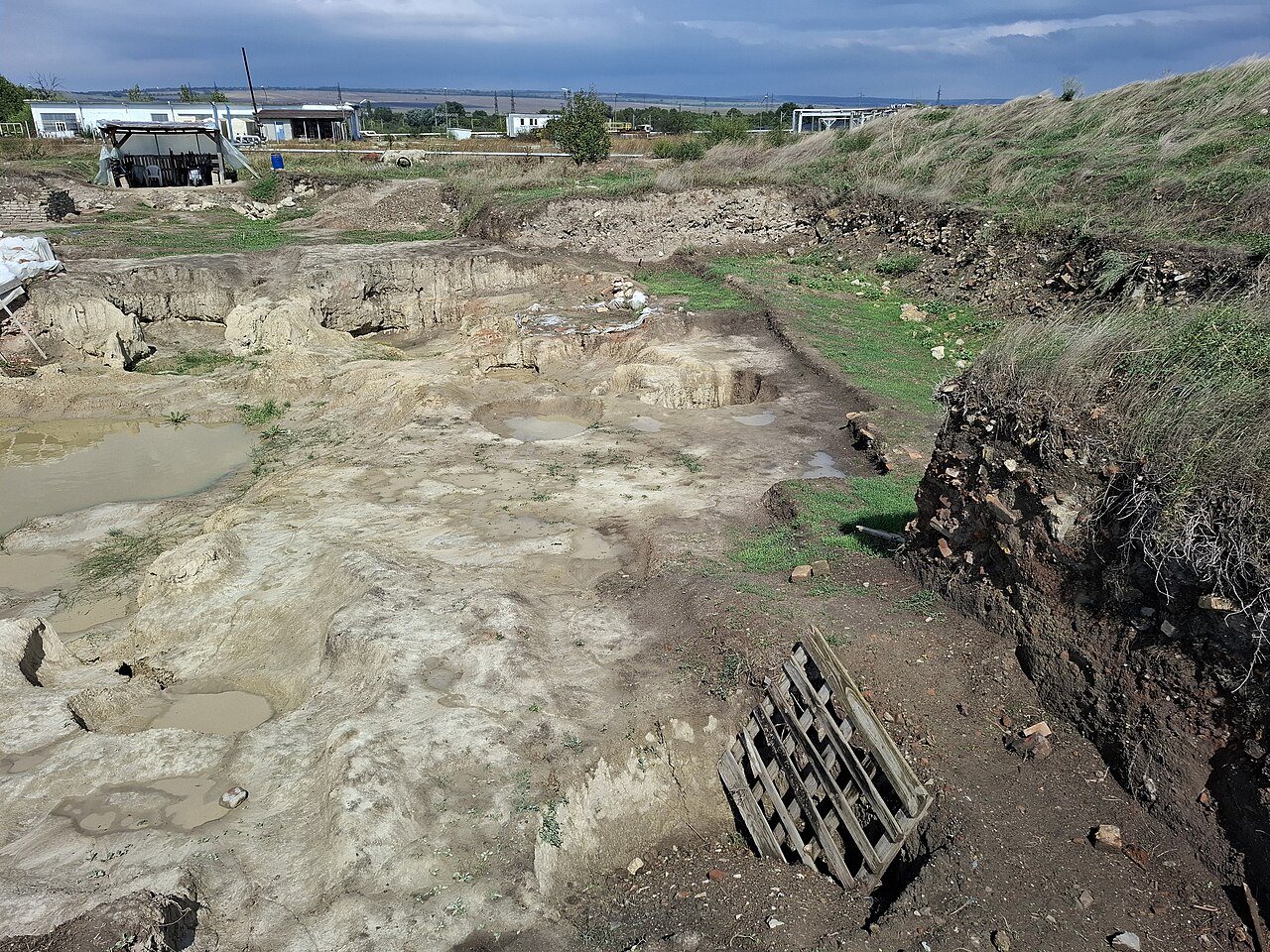
The systematic excavation of Solnitsata, led by Bulgarian archaeologists in the twenty-first century, brought the site to international attention. As the massive walls, the salt-production installations, and the evidence of wealth emerged from the ground, the excavators pieced together the picture of a fortified salt-producing town of remarkable age and sophistication.
The findings sparked headlines around the world, with the site frequently described as the oldest known town in Europe. Behind the headlines lies careful, ongoing archaeological work, dating the phases of the settlement, analyzing the vessels and installations, and reconstructing the salt-based economy that made Provadia extraordinary. Each season adds detail to one of the most surprising chapters in the story of European civilization.
Ongoing research continues to test and refine the town claim, weighing Solnitsata against other early European settlements and probing exactly how large, dense, and organized it really was. That scholarly caution is healthy, but it does not diminish the site’s importance. Whatever the final verdict on its title, Provadia has permanently enriched our understanding of how complex Chalcolithic Europe truly was.
The Enduring Power of Salt
The story of Solnitsata is ultimately the story of salt’s power to shape human history, a power that would echo down the millennia. Salt roads, salt taxes, salt wars, and salt-based economies recur throughout the ancient and medieval world, from the salt caravans of the Sahara to the salt monopolies of empires. Provadia stands near the very beginning of that long history, one of the first places where salt built a town.
There is a poetic irony in the fact that one of Europe’s earliest towns may have been founded not on gold, grain, or conquest, but on the simple, essential crystal we now take entirely for granted. Solnitsata reminds us that the foundations of civilization are often hidden in the ordinary, and that the substances we overlook can be the ones that quietly change the world.
From these ancient beginnings, salt would go on to shape trade routes, fund treasuries, and even give us words and customs still in use today. Provadia sits near the source of that long river of history, a place where, for the first time in Europe on such a scale, people grasped that the white crystal in their vessels was worth building walls, forging alliances, and founding a town to protect.
So the next time salt is passed across a table without a second thought, it is worth recalling Provadia and the walled town that rose around its springs. In that ancient place, the most ordinary of substances was extraordinary enough to build a town, fund a treasure, and earn a lasting place in the long story of how humanity learned to live together in ever greater numbers.
Provadia Today
Today the site near Provadia, sometimes presented to the public as Provadia-Solnitsata, offers visitors a chance to encounter this remarkable chapter of prehistory, with its ancient walls and the story of its salt-based economy interpreted for a modern audience. Set in the rolling landscape of northeastern Bulgaria, it is a place where the deep past feels surprisingly close.
For anyone tracing the origins of towns and cities, Solnitsata is an essential and often overlooked stop. It stands as a monument to human ingenuity, to the surprising sources of wealth and power, and to the idea that even the most humble substances can become the cornerstone of civilization. In the story of Europe’s first towns, the salt works of Provadia occupy a place all their own.
Encountering Solnitsata in person, even in its reconstructed and interpreted form, drives home a lesson that no textbook quite conveys: that the grand story of civilization is stitched together from surprising, humble threads. Here, on a modest Bulgarian hillside, one of those threads was salt, and following it leads straight to the heart of how European town life began.
A World on the Verge of Metal
To appreciate Solnitsata, it helps to picture the world of Chalcolithic southeastern Europe around the fifth millennium BCE. This was the Copper Age, a dynamic era when communities across the Balkans were mastering metalworking, expanding trade, and developing the first sharp inequalities of wealth and status. It was a time of experimentation and acceleration, when the relatively egalitarian world of the early Neolithic was giving way to something more complex and competitive.
The Balkans in this period were, in many ways, one of the most advanced regions on Earth. Here people were mining and smelting copper, crafting elaborate ceramics, and, at places like Varna, working gold with astonishing skill. Into this ferment stepped the salt producers of Provadia, whose control of a vital commodity gave them a powerful role in the economy of the age.
Solnitsata, then, was not an isolated marvel but a product of its time, one node in a network of increasingly sophisticated communities. Its rise reflects the broader transformation of Chalcolithic Europe, a world learning to specialize, to trade over long distances, and to concentrate wealth and power in ways that pointed toward the civilizations still to come.
Seen in this light, Solnitsata becomes a key that helps unlock the whole Chalcolithic Balkans. Its salt economy, its fortifications, and its links to the gold of Varna all point to a region pulsing with trade, ambition, and inequality, a corner of prehistoric Europe that was, for a few remarkable centuries, among the most dynamic places anywhere on the planet.
How to Turn Water Into Wealth
The technology behind Solnitsata’s fortune was deceptively simple, but scaling it up required real organization. Brine drawn from the salt springs was poured into shallow clay vessels and basins and then heated over fires until the water boiled away, leaving crusts and cakes of solid salt behind. Doing this once is a household chore; doing it on the scale evident at Provadia was an industrial undertaking.
Everything about the operation had to be coordinated: the gathering of fuel to keep countless fires burning, the manufacture of vast numbers of ceramic vessels, the collection and distribution of brine, and the packaging and transport of the finished salt. This demanded planning, cooperation, and a workforce dedicated to production. The very complexity of the salt industry helped drive the social complexity of the town that grew up around it.
The finished product, molded into standardized cakes or blocks, was ideal for trade. Compact, durable, and universally needed, salt cakes could travel far and exchange hands many times. In this way the fires of Provadia reached across the Balkans, seasoning food and preserving meat in communities that never saw the springs from which their salt had come.
The fuel demand alone would have shaped the landscape around Provadia, as woodlands were harvested to feed the endless fires beneath the brine vessels. Industry on this scale always leaves a mark on its environment, and the salt works of Solnitsata were no exception, their smoke and their appetite for wood a constant feature of life in and around the fortified town.
Nearby in Europe’s Ancient Story
- A Bulldozer Uncovered the Oldest Gold Ever Found: The Story of the Varna Necropolis
- Fish-Faced Idols on a Roaring River: The Mesolithic Mystery of Lepenski Vir
- The Hill in Thessaly Where Europe First Built a Town: The Story of Sesklo
Founded on a Crystal
Solnitsata stands as one of prehistory’s great surprises, a town that grew rich and powerful on the strength of boiling brine into salt. Its massive walls, its industrial scale, and its links to the golden graves of Varna together sketch a picture of a Chalcolithic society far more complex and connected than we once imagined.
In an age dazzled by gold and monuments, it is worth remembering that some of history’s turning points hinged on the plainest of things. At Provadia, six thousand years ago, salt was king, and around it rose what may be the oldest town in Europe, a community founded, quite literally, on a crystal.


One thought on “Europe’s Oldest Town May Have Been Built on Salt: The Story of Solnitsata”