South of Mexico City, in the modern state of Morelos, a fortified hill rises abruptly from the surrounding valley, its slopes reshaped into terraces, plazas, and defensive walls by hands that worked here more than a thousand years ago. This is Xochicalco, a city built not on flat, easily accessible ground like so many earlier Mesoamerican capitals, but deliberately atop a defensible summit, at a moment in history when defense mattered more than convenience.
Xochicalco flourished roughly between 650 and 900 CE, precisely the period when Teotihuacan, the dominant power of central Mexico for centuries, was collapsing and fragmenting the political order that had structured the region. Into that vacuum stepped a handful of ambitious regional capitals, and Xochicalco became one of the most successful, drawing together architectural and artistic influences from the Maya lowlands, the Zapotec valleys of Oaxaca, and the Gulf Coast in a way no earlier central Mexican city had done so visibly.
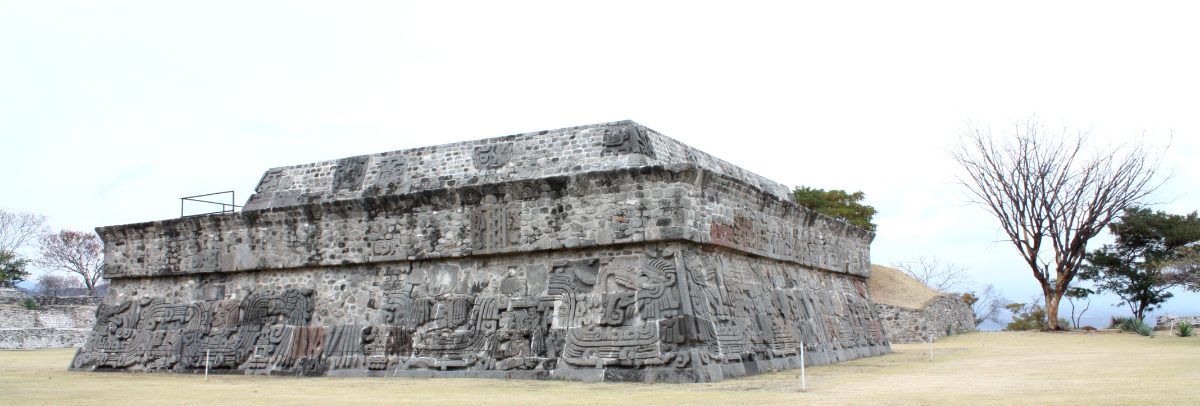
Table of Contents
- Arriving at the Fortress on the Hill
- An Epiclassic Crossroads: Who Built Xochicalco?
- The Temple of the Feathered Serpent
- A Council of Astronomers Carved in Stone
- What Language Did Xochicalco’s People Speak?
- The Observatory Cave and the Watching of the Sun
- Walls, Moats, and a City Built for War
- Ballgame, Ritual, and the Gods of Xochicalco
- Rise, Burning, and Fall of a Hilltop Power
- Rediscovery and Visiting Xochicalco Today
- Nearby Places to Explore
- Closing Thoughts
Arriving at the Fortress on the Hill
Visitors today reach Xochicalco via a modern road that climbs steadily out of the valley floor, and the change in elevation is part of the experience: by the time the ceremonial plazas come into view, it is obvious why this location was chosen. From the main plaza, sightlines extend for kilometers across the Morelos countryside, meaning no army could have approached without being seen well in advance, a defensive advantage built directly into the city’s geography rather than added afterward.
The site’s structures spread across several artificially leveled terraces connected by staircases and retaining walls, an engineering effort that required moving enormous quantities of earth and stone simply to create flat building surfaces atop an irregular hill. This terracing, more than any single monument, represents the base labor investment that made Xochicalco possible, and it still shapes how visitors move through the site today, climbing from one plaza to the next along routes that closely follow the ancient circulation pattern.
Most people arrive at the acropolis and the main plaza first, but a full visit properly includes the fortifications ringing the settlement’s edges, the ballcourts tucked into lower terraces, and the underground observatory carved into the hillside itself, features that together reveal Xochicalco as a city planned with equal attention to ceremony, defense, and astronomical observation.
The name Xochicalco itself comes from Nahuatl and translates roughly to ‘place of the house of flowers,’ a name applied by later Nahua-speaking populations who encountered the ruins long after the city’s political collapse, rather than a name the original builders necessarily used for their own home, another reminder of how much of what we call this city is filtered through later interpretation.
An Epiclassic Crossroads: Who Built Xochicalco?
Unlike cities with a clear single-culture identity, Xochicalco presents archaeologists with a genuine puzzle. Its art and architecture blend Maya-style relief carving, Zapotec-influenced glyphic elements, and central Mexican Teotihuacan-derived motifs into a single coherent style, sometimes called Epiclassic international style, that does not map neatly onto any one known ethnic or linguistic group of the period.
Some scholars connect Xochicalco to groups later called the Olmeca-Xicalanca, Gulf Coast populations who migrated into central Mexico during the political instability following Teotihuacan’s decline, bringing artistic traditions from the coast with them. Others emphasize continuity with earlier local populations of the Morelos region, arguing that Xochicalco’s rulers deliberately borrowed foreign artistic conventions to project cosmopolitan legitimacy rather than because foreign populations physically settled the city in large numbers.
The most compelling explanation may combine both possibilities: a core local population under rulers who actively recruited or hosted representatives, artisans, and possibly priests from multiple regions, using Xochicalco’s relative safety and rising political importance to become a genuine meeting point for Epiclassic Mesoamerica’s most influential cultural traditions.
Ceramic evidence recovered from residential terraces shows trade connections reaching as far as the Gulf Coast, the Pacific coast of Guerrero, and the Maya region, supporting the picture of Xochicalco as a genuine node in a wide exchange network rather than an isolated regional capital, and helping explain why its artistic style absorbed influences from so many directions at once.
The Cleveland Museum of Art and other institutions hold a distinct category of small stone offering figures labeled in scholarship simply as Xochicalco style, recovered not from the city itself but from sites in the neighboring Guerrero region, evidence that the artistic conventions developed at Xochicalco spread through emulation or trade well beyond the fortified hilltop where they originated.
The Temple of the Feathered Serpent
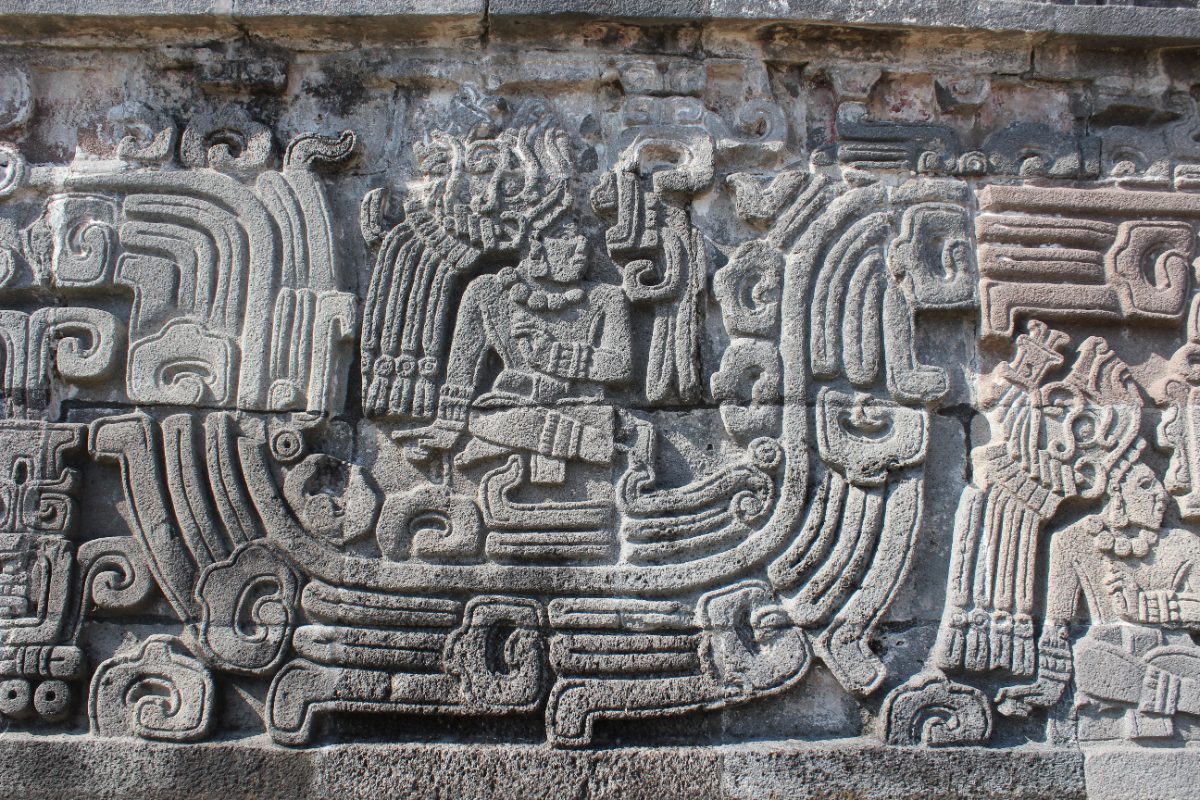
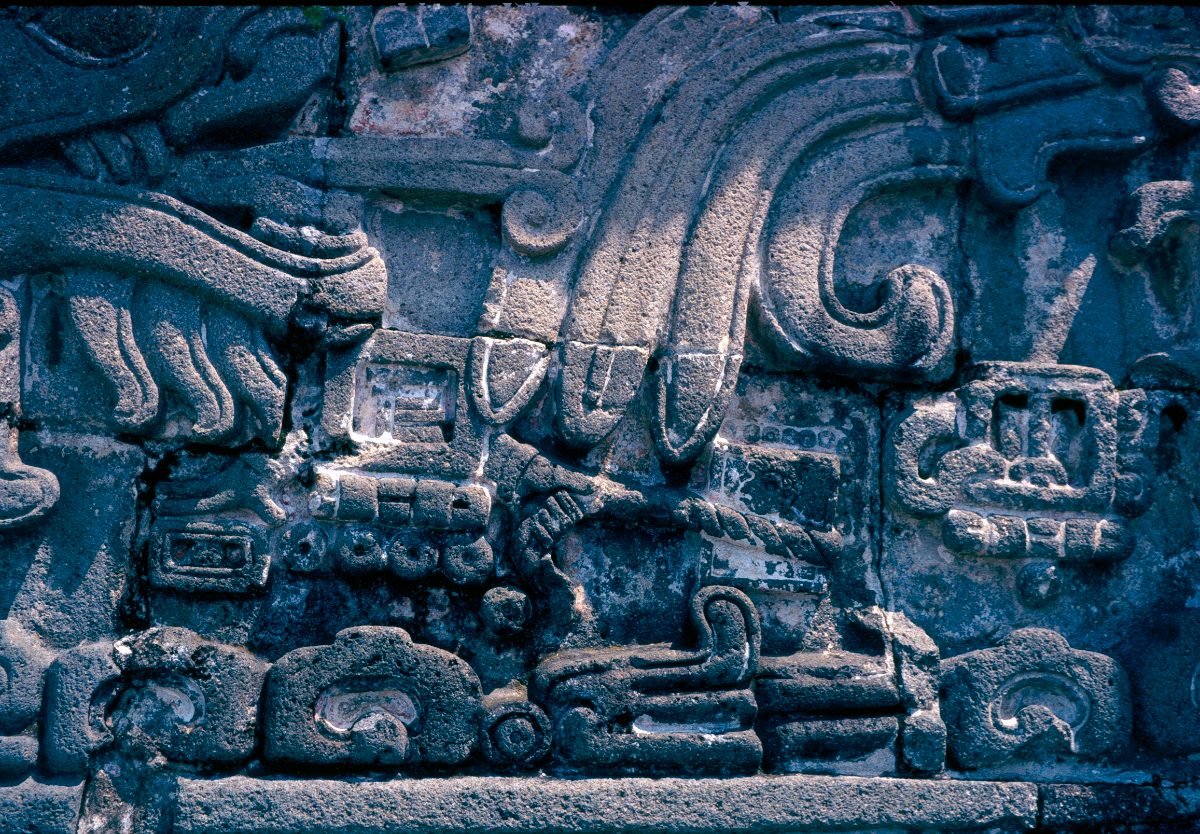
The Temple of the Feathered Serpent, known locally as the Pirámide de Quetzalcóatl, is Xochicalco’s defining monument and among the most studied relief-carved structures anywhere in Mesoamerica. Its talud-tablero base is wrapped in undulating serpent bodies, feathers rendered in careful overlapping detail, with seated human figures nestled within the serpents’ coils, each accompanied by glyphic name signs and calendar dates.
Unlike the smooth, largely unadorned pyramid faces typical of earlier Teotihuacan architecture, the temple’s surface functions almost as a public document, a carved text meant to be read and interpreted by anyone with the cultural literacy to recognize its calendar signs and seated dignitaries. This shift toward dense narrative relief carving on a major pyramid reflects broader Epiclassic trends visible at other contemporary sites, but Xochicalco’s version is unusually well preserved and complete.
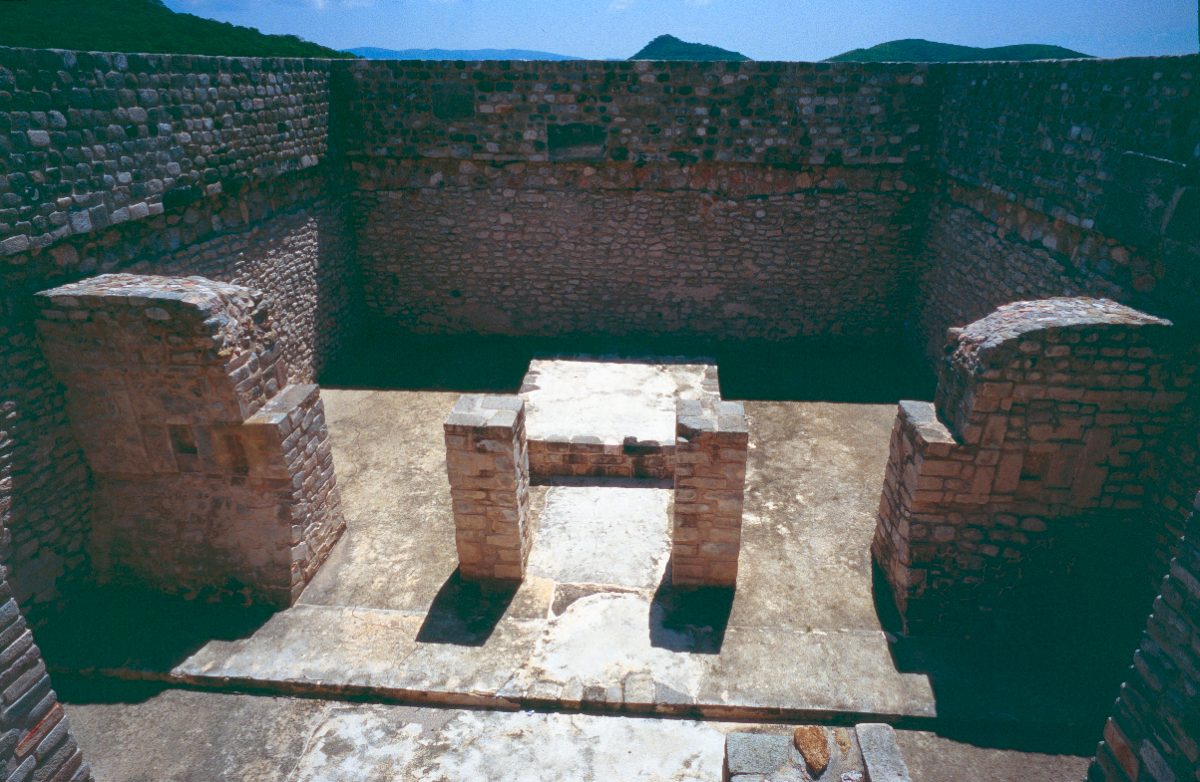
Excavation and restoration work through the twentieth century recovered enough of the original relief program to allow fairly confident interpretation of its overall theme, even where individual glyphs remain debated. Most researchers agree the temple commemorates some kind of significant gathering or political-religious event, its precise nature the subject of the site’s most famous scholarly debate.
Conservation teams have had to carefully balance public access against the fragility of the temple’s carved surfaces, since centuries of exposure to rain and temperature swings had already eroded some details before modern protective measures were put in place, a challenge shared with many open-air Mesoamerican relief monuments.
The talud-tablero architectural technique visible in the temple’s base, alternating sloped and vertical wall sections, originated centuries earlier at Teotihuacan, and its continued use at Xochicalco shows how thoroughly later Epiclassic builders drew on that earlier capital’s architectural vocabulary even while developing an entirely new decorative program suited to their own political moment.
A Council of Astronomers Carved in Stone
That debate centers on the seated figures carved among the temple’s serpent coils. Several wear clothing and glyphic markers associated with different Mesoamerican regions, leading a number of archaeologists to propose that the relief depicts an actual historical gathering, perhaps gathered at Xochicalco to reconcile differences between regional calendar systems that had drifted out of alignment during the political fragmentation following Teotihuacan’s fall.
This interpretation, sometimes called the calendar congress hypothesis, suggests that representatives from Maya, Zapotec, and Gulf Coast traditions convened at Xochicalco specifically because of its neutral, rising status as an Epiclassic crossroads, and that the temple relief commemorates the successful outcome of that meeting. Not all scholars accept this reading; some argue the figures instead represent conquered rulers or tribute-bearing subordinates rather than diplomatic equals gathered by choice.
Whichever interpretation proves correct, the underlying evidence is not in dispute: Xochicalco’s elite clearly wanted to project an image of the city as a place where multiple regional traditions converged, whether through genuine diplomacy, conquest, or careful political theater designed to elevate the city’s prestige beyond what its size alone might justify.
Regardless of which interpretation of the relief proves correct, the calendar glyphs themselves demonstrate a level of technical sophistication that required close collaboration, or at minimum close observation, between scribes trained in different regional glyphic traditions, since successfully rendering both Maya-style and central Mexican calendar notation side by side was no small technical achievement.
Comparative studies with contemporary Maya calendar inscriptions have helped some researchers propose specific correlations between the glyphs at Xochicalco and known Maya date systems, lending indirect support to the idea that whoever commissioned the relief had access to genuine cross-regional calendrical expertise rather than a purely local or symbolic invention.
What Language Did Xochicalco’s People Speak?
Because Xochicalco’s population appears to have been genuinely multiethnic, at least among its elite class, pinning down a single spoken language for the city is difficult, and honesty requires acknowledging real uncertainty here. No deciphered written corpus survives that would let linguists identify the vernacular language of Xochicalco’s markets and households with confidence.
Some scholars propose that early forms of Nahuatl, which would later become the dominant language of the Aztec empire, were already present in the Morelos region during Xochicalco’s peak, given the area’s later, well-documented Nahua-speaking populations. Others caution that Nahuatl’s expansion across central Mexico is generally dated somewhat later, and that Xochicalco’s founding population may instead have spoken an Otomanguean language related to those of the Oaxaca valleys, or possibly a now-extinct central Mexican language that left no clear modern descendants.
Given the site’s demonstrated ties to Maya, Zapotec, and Gulf Coast cultures, it is entirely plausible that Xochicalco was functionally multilingual at its height, with elite visitors, resident artisans, and local populations speaking several different languages side by side, reflecting the same cosmopolitan character visible in its architecture and relief carving.
Colonial-era place names throughout Morelos are overwhelmingly Nahuatl, but linguists caution that this reflects the language spoken at the time of Spanish contact, several centuries after Xochicalco’s fall, rather than proof of continuous Nahuatl presence stretching back to the Epiclassic period, since population movements and language shift were common across central Mexico during the intervening centuries.
The Observatory Cave and the Watching of the Sun
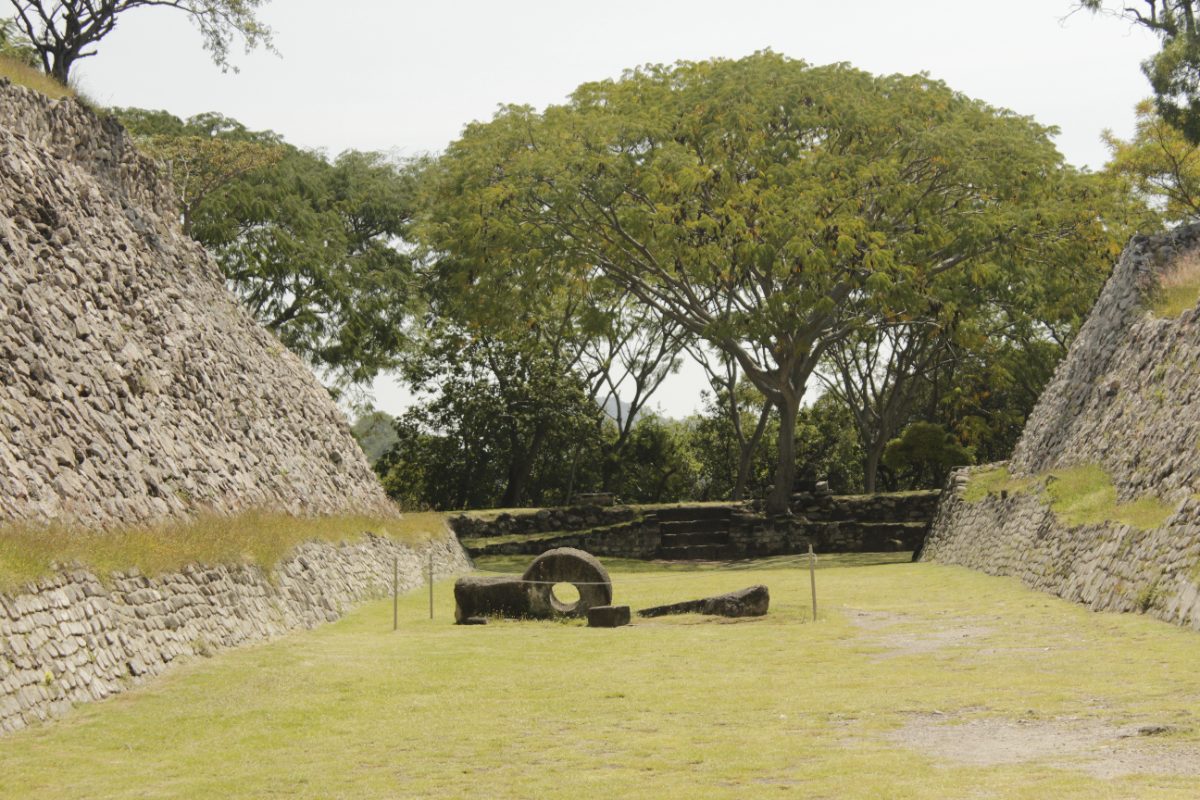
Beneath Xochicalco’s main plaza lies one of the most remarkable astronomical features in ancient Mesoamerica: a natural cave, modified by its builders with a vertical shaft cut through solid rock to the surface above. For roughly two months around the summer solstice, sunlight entering through this shaft falls directly onto the cave floor, illuminating the chamber in a way visible nowhere else in the structure during the rest of the year.
This engineering feat allowed Xochicalco’s astronomer-priests to track the sun’s zenith passage, the moment when the sun sits directly overhead at local noon, a phenomenon that occurs only within the tropics and carried deep calendrical and agricultural significance across ancient Mesoamerica. The shaft functions essentially as a camera obscura, projecting a controlled beam of light rather than simply admitting general illumination, a level of astronomical precision that required sophisticated understanding of the sun’s annual movement.
Combined with the calendar glyphs carved onto the Temple of the Feathered Serpent above, the observatory cave reinforces the picture of Xochicalco as a city where astronomical knowledge carried real political weight, useful both for coordinating agricultural cycles and for the kind of calendar-reconciliation diplomacy the temple relief may commemorate.
Modern astronomers who have studied the shaft’s alignment confirm that its geometry was deliberately calculated rather than a fortunate natural accident, requiring builders to understand both the cave’s interior geometry and the precise angle of the sun’s path at this specific latitude, a level of applied astronomical engineering rarely preserved so clearly at other Mesoamerican sites.
Similar zenith-observation techniques, though rarely as architecturally elaborate as Xochicalco’s shaft and cave system, appear in various forms at other ancient Mesoamerican sites, reflecting a shared preoccupation across the region with tracking the sun’s position for both practical agricultural planning and deeper cosmological reasons tied to the maintenance of world order.
Walls, Moats, and a City Built for War
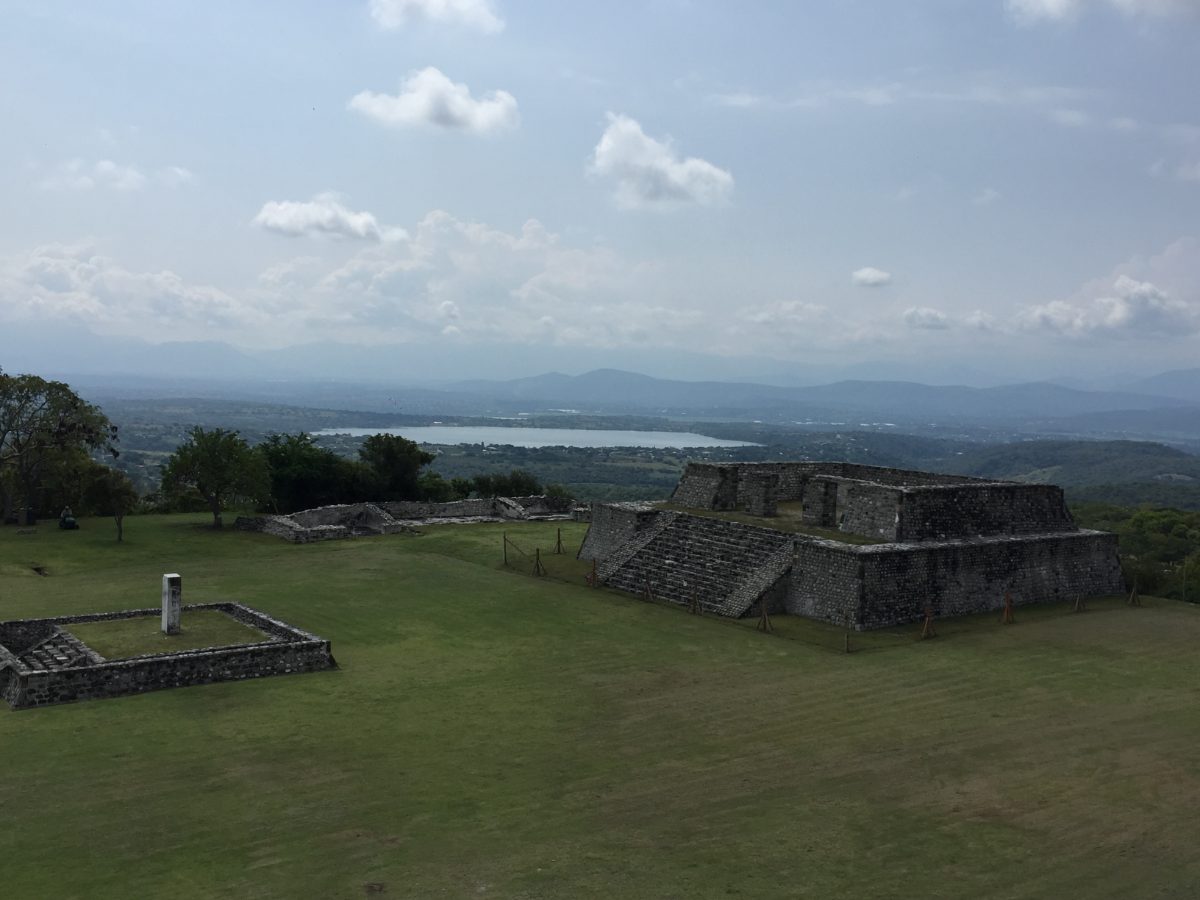
Xochicalco’s defenses are as carefully engineered as its temples. Stone walls, dry moats cut into the hillside, and steep terraced approaches surround the ceremonial core, features entirely absent from the earlier, more open city plan of Teotihuacan. This shift toward visible, deliberate fortification reflects the genuinely unstable political climate of the Epiclassic period, when no single dominant power could guarantee regional peace the way Teotihuacan once had.
Archaeologists have identified multiple defensive rings extending outward from the acropolis, suggesting a layered defense-in-depth strategy rather than a single perimeter wall. Combined with the hilltop’s natural steepness, these fortifications would have made Xochicalco an extremely costly target for any rival power to attack directly, a calculation that likely factored heavily into the city’s ability to grow safely during a genuinely dangerous era.
Yet fortification alone could not guarantee permanent security, and the eventual violent end of Xochicalco’s ceremonial core, discussed further below, shows that even a well-defended hilltop capital remained vulnerable to whatever combination of internal and external pressures eventually brought its central authority down.
Some researchers have also proposed that the fortifications served a secondary purpose beyond pure defense, controlling and monitoring who could access the ceremonial core at all, effectively turning the walls into an instrument of social and political stratification as much as military protection.
Comparable fortification systems appear at a handful of other Epiclassic sites scattered across central Mexico, suggesting that Xochicalco’s defensive innovations were part of a broader regional response to instability rather than a solution unique to this one city, even if Xochicalco’s version remains among the best preserved and most thoroughly studied examples.
Ballgame, Ritual, and the Gods of Xochicalco
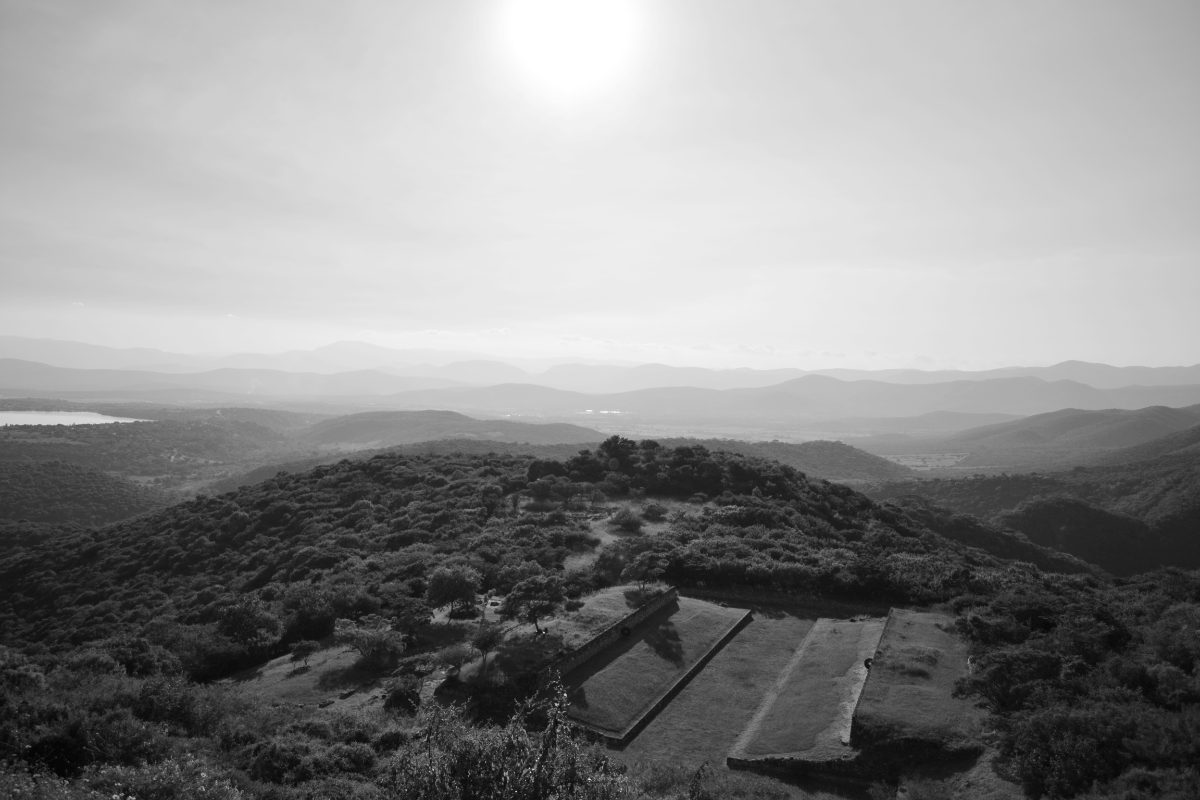
Like most major Mesoamerican centers, Xochicalco built at least one formal ballcourt for the ritual ballgame, situated on a lower terrace within the fortified core. The ballgame here likely carried the same layered meaning found across the region: part athletic contest, part cosmological reenactment tied to themes of the sun’s daily struggle against darkness, and part political spectacle used to reinforce the authority of the city’s rulers before an assembled public.
Carved reliefs and sculpted stone fragments recovered from residential and elite areas depict serpents, animal figures, and ritual iconography consistent with broader Epiclassic religious themes centered on fertility, the calendar, and the maintenance of cosmic balance through ritual performance and periodic bloodletting, themes visible throughout the Temple of the Feathered Serpent’s carved program as well.
Daily religious practice likely extended well beyond the monumental core, with household shrines and smaller offerings scattered through residential terraces, indicating that Xochicalco’s inhabitants, regardless of their specific ethnic or linguistic background, shared in a common ritual framework that bound the city’s cosmopolitan population together.
Small clay figurines recovered from household contexts, many depicting deities associated with rain, fertility, and the earth, suggest that ordinary residents maintained their own domestic religious practices alongside the grander state ceremonies performed at the temple and ballcourt, a pattern common across ancient Mesoamerican cities where household and civic religion operated as complementary rather than competing systems.
Rise, Burning, and Fall of a Hilltop Power
Xochicalco’s rise was rapid and closely tied to the political vacuum left by Teotihuacan’s decline during the seventh century. Within a few generations, the city grew from a modest hilltop settlement into one of the most architecturally sophisticated capitals in central Mexico, drawing artisans, traders, and quite possibly diplomatic representatives from across a wide swath of Mesoamerica.
Its fall, by contrast, appears to have been sudden and violent. Archaeological evidence from the acropolis shows clear signs of deliberate burning around 900 CE, with elite residential structures destroyed in what most researchers interpret as an internal uprising or external conquest rather than gradual abandonment. Whether the attackers were rival Epiclassic powers, disaffected subject populations, or invaders from further afield remains unresolved, since no surviving text names the parties involved.
After this destruction, Xochicalco’s political importance collapsed, and the city never regained its earlier prominence, though the surrounding region continued to be inhabited. By the time later Nahua-speaking populations dominated central Mexico, Xochicalco had already passed from living political memory into the kind of half-forgotten ruin that later Aztec rulers occasionally visited out of antiquarian curiosity rather than active use.
Population estimates for Xochicalco at its height range up into the tens of thousands when surrounding residential terraces are included, a substantial figure for a hilltop settlement and evidence that the city’s fortified core supported a genuinely large and economically diverse community rather than serving merely as a ceremonial outpost for a small ruling elite.
Trade goods and stylistic influence from Xochicalco continued circulating for some time even after the city’s political collapse, since artisans and traders who had learned techniques and motifs during the city’s peak did not simply disappear, carrying elements of Xochicalco’s visual language into the workshops of later Postclassic centers even as the city itself lay in ruins.
Rediscovery and Visiting Xochicalco Today
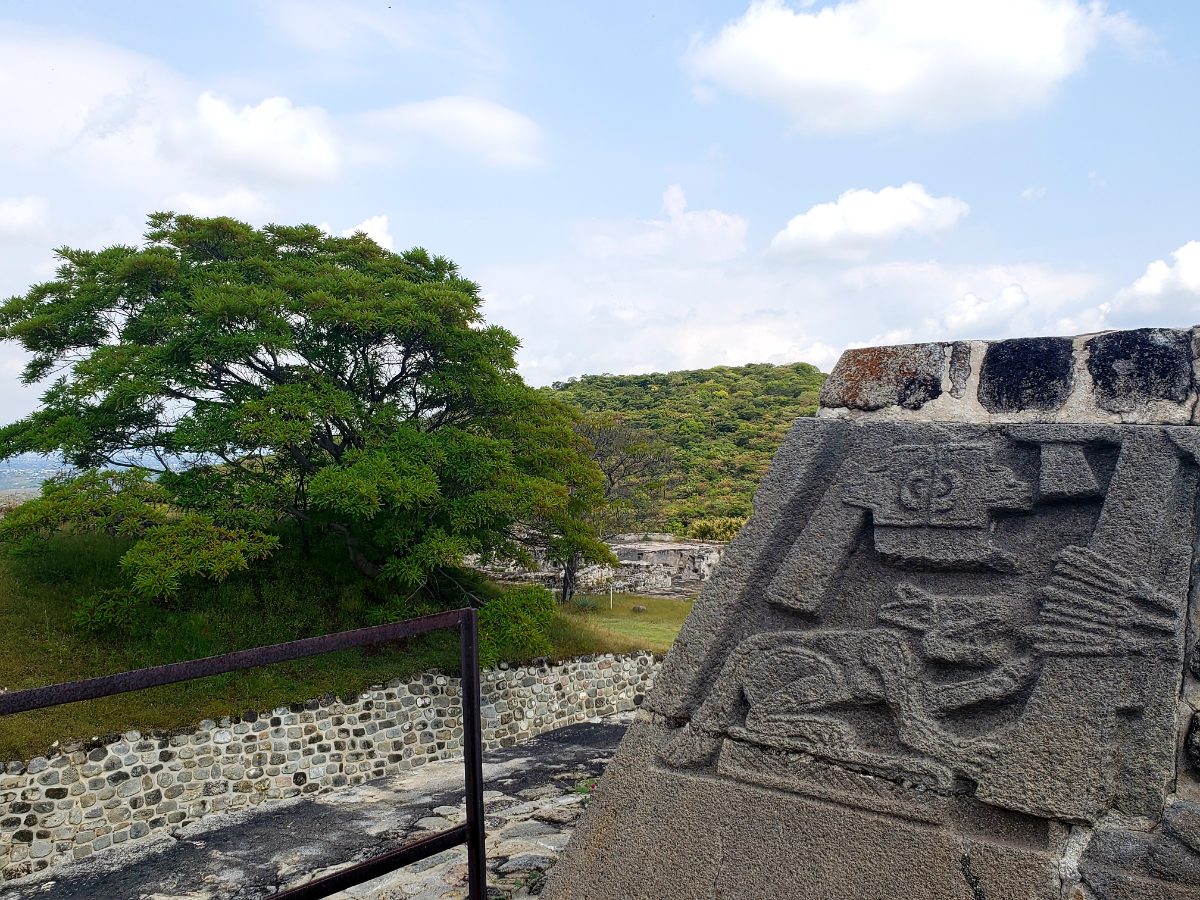
Xochicalco attracted scholarly attention as early as the eighteenth century, when travelers and colonial officials documented the visible ruins protruding from the hillside vegetation, though systematic archaeological excavation did not begin until the twentieth century. Mexican archaeologists conducted major investigations from the 1990s onward, uncovering the observatory cave, stabilizing the Temple of the Feathered Serpent, and mapping the extensive fortification system that surrounds the ceremonial core.
UNESCO added Xochicalco to the World Heritage List in 1999, recognizing both the artistic quality of its relief carving and its significance as a rare, well-preserved example of a fortified Epiclassic capital reflecting the political fragmentation that followed Teotihuacan’s collapse.
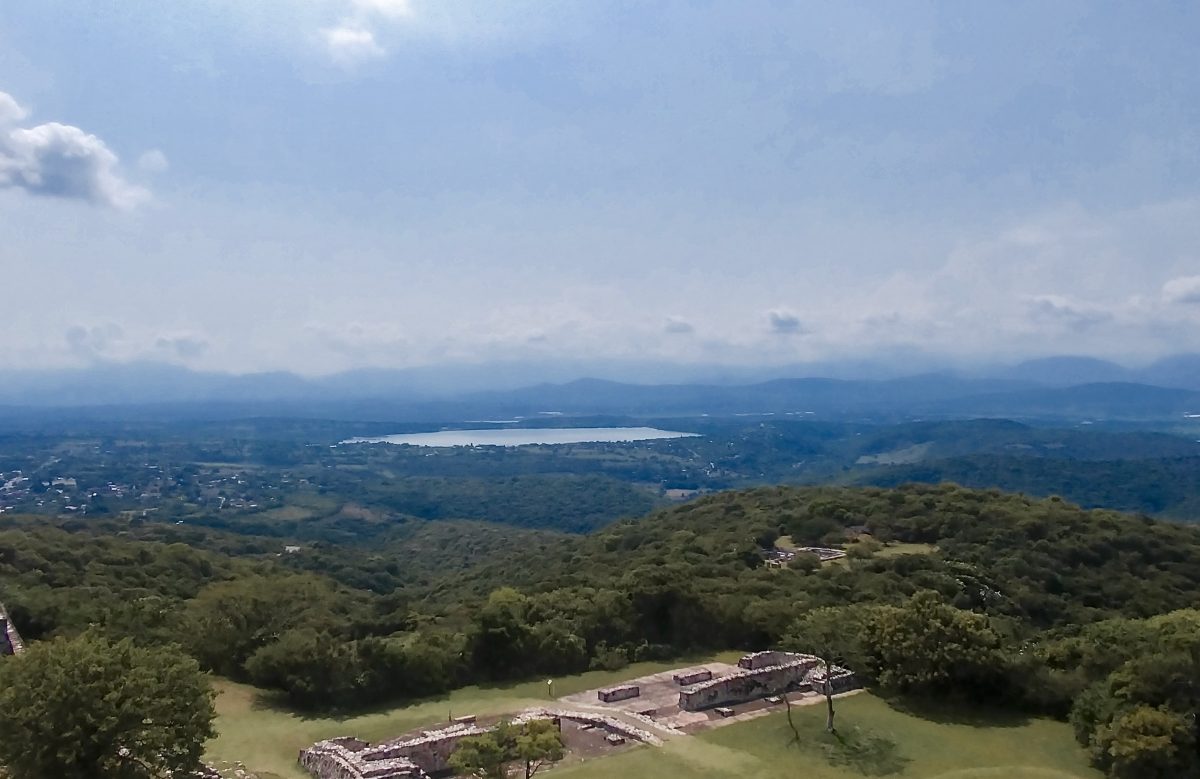
Today the site includes a modern visitor center with a small museum displaying recovered sculpture and ceramics, along with a marked walking route connecting the main plaza, the acropolis, the ballcourt, and the observatory cave. The climb up the fortified terraces can be strenuous in the midday heat of the Morelos valley, and visitors are generally advised to arrive early, both for comfort and for the clearest views across the surrounding countryside that made this hilltop so strategically valuable in the first place.
Researchers continue to reexamine artifacts recovered decades ago using updated dating techniques and comparative analysis, meaning our understanding of Xochicalco’s chronology and external connections remains an active and evolving area of study rather than a settled question, with new interpretations of the calendar reliefs still appearing in academic literature.
Nearby Places to Explore
Xochicalco’s Epiclassic rise makes the most sense in the context of the central Mexican cities that came immediately before and after it. The following related sites, covered elsewhere on this site, help place Xochicalco within the wider arc of ancient Mexican history.
- Teotihuacán: The Pyramid of the Sun and the Lost City of the Gods
- Tula: The Toltec City the Aztecs Called Their Origin
- Monte Alban: The Zapotec Capital Carved Into a Mountain
Each of these related cities shares Xochicalco’s broader historical moment, whether as the fallen giant whose decline created the opportunity for Xochicalco’s rise, or as a later capital that inherited pieces of the artistic and political traditions the Epiclassic period had scattered across central Mexico.
Closing Thoughts
Xochicalco captures a genuinely unusual moment in Mesoamerican history, a brief window when no single empire dominated central Mexico and ambitious regional cities competed, cooperated, and borrowed freely from one another’s artistic and intellectual traditions. Its carved temple, defensive walls, and underground observatory together tell the story of a city that took both diplomacy and defense seriously, hedging against the uncertainty of its era with equal investment in stone walls and calendar science.
Whether the seated figures on the Temple of the Feathered Serpent represent a genuine council of astronomers or something closer to a monument of conquest, Xochicalco stands as clear proof that the centuries after Teotihuacan’s fall were not simply a dark age of decline, but a period of real, if unstable, innovation across central Mexico.
You May Like
Mafra, the Palace a King Built From a Vow


One thought on “Xochicalco, the Fortified City of the Feathered Serpent”