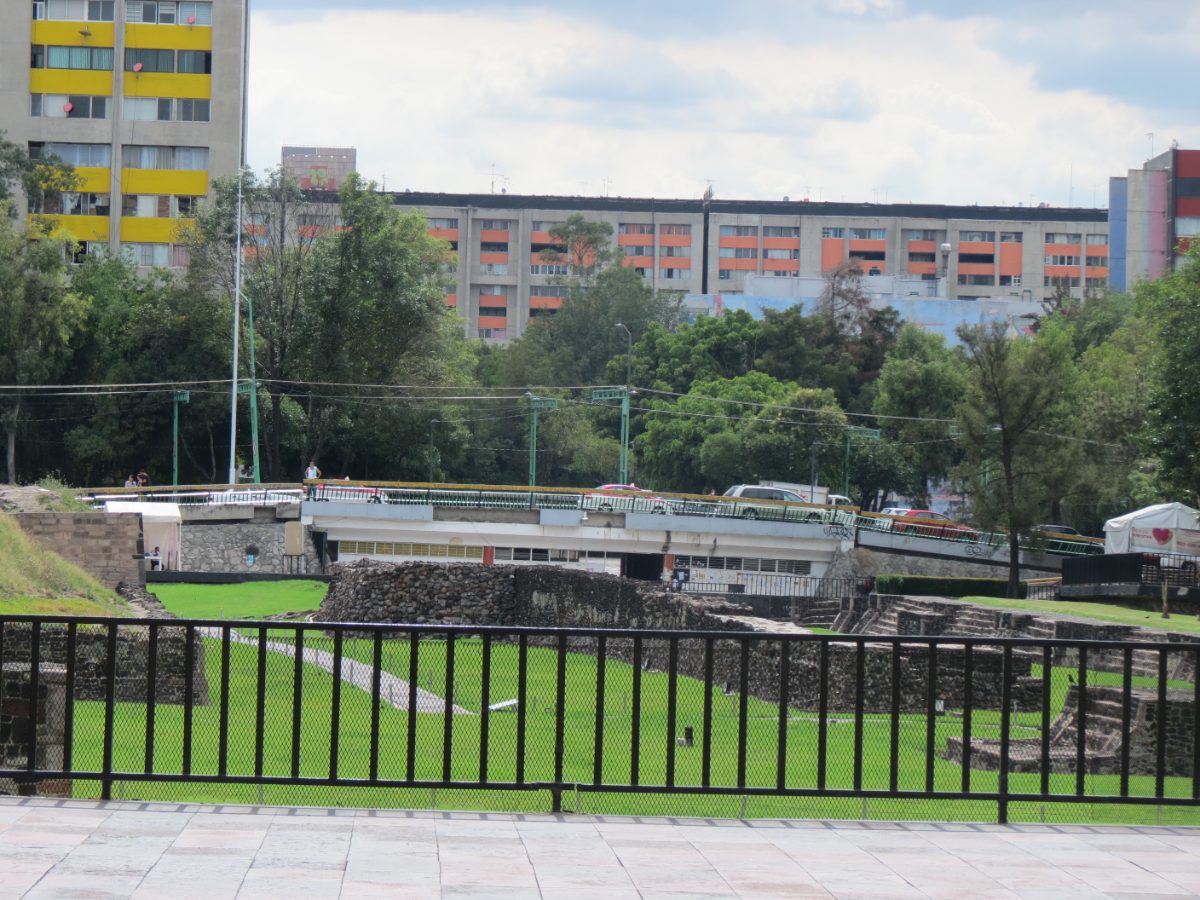
In the northern reaches of Mexico City, a plaza brings together three distinct layers of history in a single open space: excavated stone platforms from an Aztec ceremonial center, a colonial Spanish church built from the same stones that once faced Mexica temples, and mid-twentieth-century apartment towers ringing the square. This is Tlatelolco, and few places in Mexico compress so many centuries of dramatic history into so small a footprint.
Long before Spanish conquest, Tlatelolco was not a minor suburb of its far more famous neighbor Tenochtitlan but an independent Mexica city in its own right, built on its own island in Lake Texcoco and home to the largest and most sophisticated marketplace that Spanish conquistadors had ever personally witnessed, a claim recorded directly in their own written accounts of the conquest.
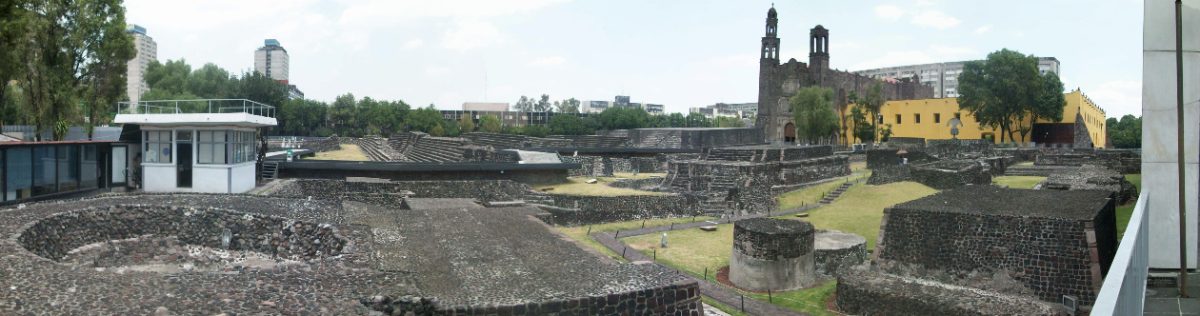
Table of Contents
- Arriving at the Square of Three Cultures
- Twin City on the Lake: Tlatelolco and Tenochtitlan
- The Greatest Market the Conquistadors Had Ever Seen
- The Templo Mayor of Tlatelolco
- What Language Did Tlatelolco’s Merchants Speak?
- Pochteca: Merchants, Gods, and the Marketplace
- Conquest by Tenochtitlan and the Loss of Independence
- The Last Stand and the Fall of the Aztec Empire
- The Colegio de Santa Cruz and the Preservation of Nahuatl
- From Ruins to Plaza de las Tres Culturas
- Nearby Places to Explore
- Closing Thoughts
Arriving at the Square of Three Cultures
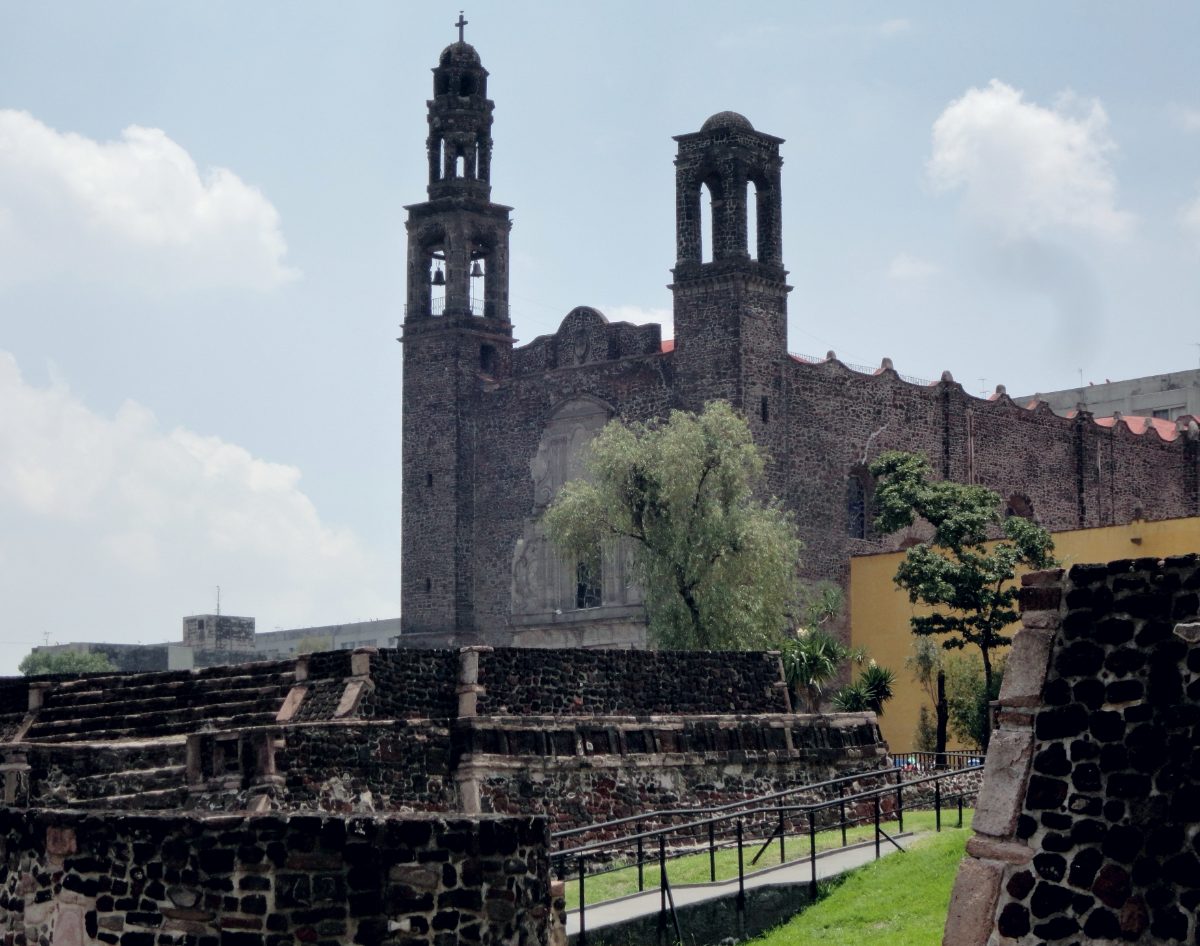
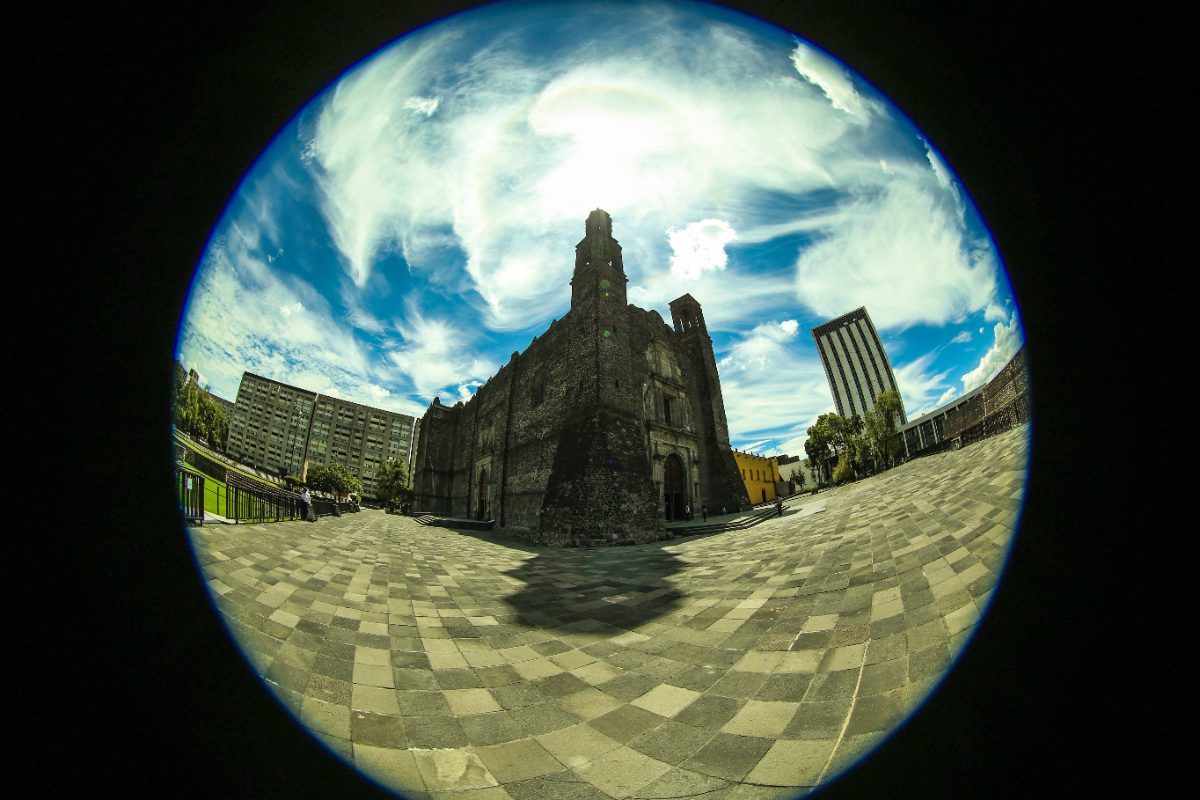
The modern name for this space, Plaza de las Tres Culturas, or Plaza of the Three Cultures, was coined specifically to describe the deliberate juxtaposition visible today: excavated pre-Hispanic ruins in the plaza’s center, the colonial-era Templo de Santiago church standing at its edge, and the surrounding mid-twentieth-century residential and government buildings constructed as part of a large urban housing project completed in the 1960s.
Walking into the plaza, visitors first see the excavated stone platforms of Tlatelolco’s ceremonial core, considerably smaller in scale than Tenochtitlan’s Templo Mayor across the city center but still an active archaeological site under continued study, with informational plaques throughout explaining the layered construction phases visible in the exposed stonework.
A large bronze plaque near the ruins bears an inscription, added by Mexican authorities decades after the conquest, describing the site’s fall to Spanish forces in 1521 not as either a purely Spanish triumph or purely indigenous defeat but as, in the plaque’s own phrasing, the painful birth of the mestizo nation that Mexico would become, a framing that captures how deliberately this specific plaza has been used to narrate Mexican national identity.
The name Tlatelolco itself derives from Nahuatl and is generally translated as something close to place of the mound of earth or place of the small hills, a reference to the artificial raised platforms the Mexica built to establish stable ground on what had originally been marshy lakebed terrain, an engineering challenge shared with neighboring Tenochtitlan given both cities’ shared island foundations.
Unlike the more heavily touristed Templo Mayor ruins near Mexico City’s central cathedral, Tlatelolco’s archaeological zone sits within a working residential neighborhood, giving visitors a somewhat different experience, walking past apartment buildings and local shops on the way to ruins that remain, despite their historical significance, comparatively uncrowded on most days.
Twin City on the Lake: Tlatelolco and Tenochtitlan
According to Mexica historical tradition, Tlatelolco was founded on its own island in Lake Texcoco only a matter of years after Tenochtitlan’s own traditional founding date, with some accounts placing Tlatelolco’s establishment around 1337, by a group closely related to the founders of Tenochtitlan but organized as a politically separate altepetl, the Nahuatl term for an independent city-state with its own ruling dynasty.
For generations, Tlatelolco and Tenochtitlan developed side by side, connected by causeways and canals but governed independently, each with its own tlatoani, or ruler, and its own patron temple precinct, a relationship sometimes compared to twin sister cities that cooperated closely while maintaining distinct political identities and, at times, real rivalry.
This arrangement persisted for over a century until 1473, when Tenochtitlan’s ruler Axayacatl conquered Tlatelolco militarily, ending its political independence and folding its territory directly into Tenochtitlan’s expanding domain, though notably without destroying the marketplace that had already made Tlatelolco famous throughout the Valley of Mexico, a decision discussed further below.
Some Mexica historical traditions describe the founding of Tlatelolco as resulting from an internal political split among the original Mexica migrants, with one faction settling at Tenochtitlan and another establishing Tlatelolco nearby, a narrative that, whatever its precise historical accuracy, reflects genuine awareness among the Mexica themselves of the two cities’ close kinship alongside their distinct political identities.
Causeways connecting Tlatelolco to the mainland and to neighboring Tenochtitlan doubled as flood control and transportation infrastructure, engineering achievements that required sophisticated understanding of the lake’s hydrology, since managing water levels around two densely populated island cities demanded constant maintenance and coordination between both cities’ governing authorities.
The Greatest Market the Conquistadors Had Ever Seen
Spanish conquistador Hernán Cortés and his soldier-chronicler Bernal Díaz del Castillo both left detailed written descriptions of Tlatelolco’s marketplace, and both men, who had traveled extensively through Spain and other parts of Europe before arriving in Mexico, described it in terms of genuine astonishment, comparing its scale, organization, and sheer variety of goods favorably against the largest markets either had ever personally seen anywhere in the known world.
Díaz del Castillo’s account describes distinct sections of the market organized by specific categories of goods: gold and silver ornaments, cotton textiles, cacao beans used as currency, slaves, exotic feathers from tropical birds, pottery, medicinal herbs, and prepared foods, each product type confined to its own designated area of the plaza, with market officials actively supervising transactions and settling disputes according to established commercial law.
Estimates recorded by Spanish observers suggested tens of thousands of people passed through the market on its busiest trading days, a scale that, if accurate, would have made Tlatelolco’s marketplace larger than most European cities of the period in terms of daily foot traffic alone, let alone comparable European markets, underscoring just how economically sophisticated and densely populated the Valley of Mexico had become by the time of Spanish contact.
Beyond Díaz del Castillo’s famous account, other Spanish and later colonial sources corroborate the scale and organization of Tlatelolco’s market, describing designated officials who patrolled the grounds specifically to verify accurate weights and measures, an early form of consumer protection regulation that impressed Spanish observers accustomed to considerably less formalized market oversight in their own European cities.
Modern historians studying pre-Hispanic Mesoamerican economics frequently cite Tlatelolco’s marketplace as evidence against older assumptions that complex market economies with standardized currency, in this case cacao beans and lengths of woven cotton cloth serving currency-like functions, only developed in societies with direct European or Old World contact and influence.
The Templo Mayor of Tlatelolco
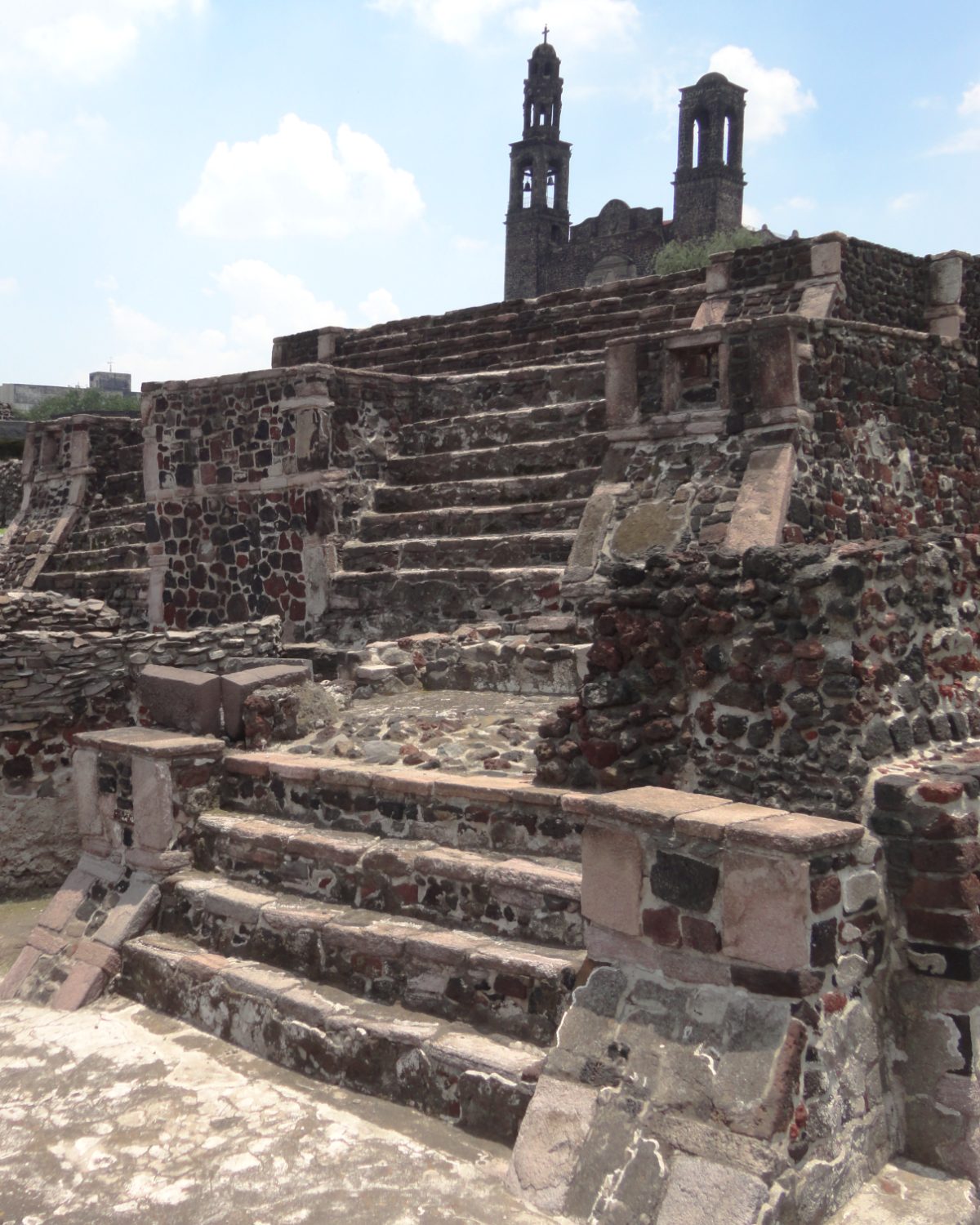
Tlatelolco maintained its own ceremonial precinct centered on a Templo Mayor structure architecturally similar in concept to its more famous counterpart in Tenochtitlan, a twin pyramid dedicated jointly to Huitzilopochtli, the Mexica patron god of war and the sun, and Tlaloc, the rain and fertility deity, reflecting the same dual religious focus on martial success and agricultural survival found throughout Mexica state religion.
Archaeological excavation at Tlatelolco has revealed multiple construction phases of this temple complex, each building phase encasing earlier versions in the layered rebuilding pattern common across Mesoamerican pyramid construction, along with surrounding structures including smaller temples, a ballcourt, and residential compounds for the priests and nobility who administered the precinct’s religious life.
Because Tlatelolco remained a functioning ceremonial center even after losing political independence to Tenochtitlan in 1473, later construction phases at the temple likely reflect continued royal patronage from Tenochtitlan’s rulers, who had clear practical incentive to maintain good relations with a religious and commercial center as economically important as Tlatelolco had become.
Artifacts recovered from Tlatelolco’s temple precinct, including ceramic offerings and sculptural fragments, closely parallel finds from Tenochtitlan’s own Templo Mayor excavations, reinforcing the close religious and artistic ties between the two cities even after Tlatelolco’s political subordination in 1473.
Ongoing excavation continues to reveal new details about the Tlatelolco precinct’s construction history, and archaeologists periodically announce newly uncovered offerings or architectural features, indicating that despite decades of study, the site still holds considerable potential for future discovery beneath the modern plaza’s surface.
What Language Did Tlatelolco’s Merchants Speak?
Tlatelolco’s population spoke Nahuatl, the same language spoken throughout Tenochtitlan and across the broader Aztec Triple Alliance, reflecting the close ethnic and political ties between the two sister cities from their shared founding through the period of Tlatelolco’s eventual absorption into Tenochtitlan’s expanding empire.
Nahuatl functioned not merely as Tlatelolco’s local language but as a genuine lingua franca of long-distance trade across much of Mesoamerica by the time of Spanish contact, a status directly tied to the prominence of Tlatelolco’s own marketplace, since merchants traveling from distant regions to trade at Tlatelolco needed at least functional Nahuatl to conduct business successfully within the market’s highly organized commercial system.
This linguistic dominance persisted and, in some respects, deepened after Spanish conquest, since colonial missionaries based at Tlatelolco itself, discussed further below, undertook some of the most extensive documentation of Nahuatl language and Mexica culture produced anywhere during the early colonial period, work that remains foundational to modern scholarly understanding of pre-Hispanic Nahua civilization.
Colonial-era Nahuatl documents produced at Tlatelolco specifically, including market regulations and legal records, provide linguists with valuable examples of formal administrative Nahuatl usage, complementing the more literary and religious Nahuatl texts produced elsewhere in the early colonial period.
Because so much surviving colonial-era Nahuatl documentation originates specifically from Tlatelolco and its associated college, some modern linguists studying Classical Nahuatl rely disproportionately on Tlatelolco-derived sources, a methodological consideration scholars must account for when generalizing conclusions about Nahuatl usage across the broader and considerably more linguistically diverse Aztec Triple Alliance.
Pochteca: Merchants, Gods, and the Marketplace
The pochteca, a specialized class of long-distance merchants, held a distinctive and unusually privileged social position within Mexica society, closely associated with Tlatelolco specifically given the city’s role as the empire’s premier commercial hub. Unlike merchants in many other ancient societies, the pochteca sometimes traveled disguised as commoners into hostile or unconquered territory, gathering intelligence useful to Mexica military and political leadership alongside their ordinary trading activities.
Pochteca merchants maintained their own patron deity, Yacatecuhtli, god of travelers and merchants, and their own specific religious observances and social organizations distinct from the broader Mexica nobility, reflecting a genuine occupational identity that granted successful merchants significant wealth and social standing even though they were not born into the traditional warrior or priestly nobility that dominated most other positions of Mexica political power.
Market regulation at Tlatelolco extended into religious ritual as well, with specific ceremonies tied to the agricultural and commercial calendar performed to ensure continued prosperity of trade, reflecting how thoroughly Mexica religious practice extended into essentially every aspect of public life, including the seemingly secular business of buying and selling goods in an open marketplace.
Successful pochteca merchants could accumulate substantial personal wealth through long-distance trade, yet Mexica social convention required them to display this wealth cautiously and avoid open ostentation that might provoke jealousy or suspicion among the traditional warrior nobility, a delicate social balancing act reflecting the somewhat ambiguous status merchants occupied within the broader Mexica social hierarchy.
Conquest by Tenochtitlan and the Loss of Independence
Tenochtitlan’s 1473 conquest of Tlatelolco followed a documented pattern of escalating tension between the two sister cities, with Mexica historical accounts describing specific grievances and provocations, including alleged insults directed at Tenochtitlan’s ruling family, that Axayacatl used to justify military action against a city that had, until that point, remained formally independent despite generations of close cooperation.
Following its defeat, Tlatelolco lost its own ruling tlatoani dynasty, and Tenochtitlan subsequently appointed governors to administer the city directly, a significant reduction in political status even though Tlatelolco’s economic importance, centered overwhelmingly on its marketplace, ensured the city retained substantial practical significance within the broader Aztec imperial structure.
This arrangement, political subordination paired with continued economic centrality, meant Tlatelolco entered the final decades before Spanish contact as simultaneously one of the most commercially vital and politically dependent cities within the Aztec Triple Alliance, a somewhat unusual combination that shaped its distinct historical trajectory compared to fully independent altepetl elsewhere in the Valley of Mexico.
Despite losing formal political independence, Tlatelolco’s elite families retained considerable local social influence, and some scholars note that Tlatelolco continued producing distinguished scholars, merchants, and religious specialists throughout the following decades, evidence that conquest by Tenochtitlan did not entirely erase the city’s distinct local identity and institutional continuity.
Tenochtitlan’s decision to preserve rather than dismantle Tlatelolco’s marketplace after conquest reflects a pragmatic streak often visible in Mexica imperial policy more broadly, prioritizing continued economic productivity and tribute extraction over the kind of total destruction that might satisfy short-term military triumph but would ultimately weaken the empire’s own commercial interests.
The Last Stand and the Fall of the Aztec Empire
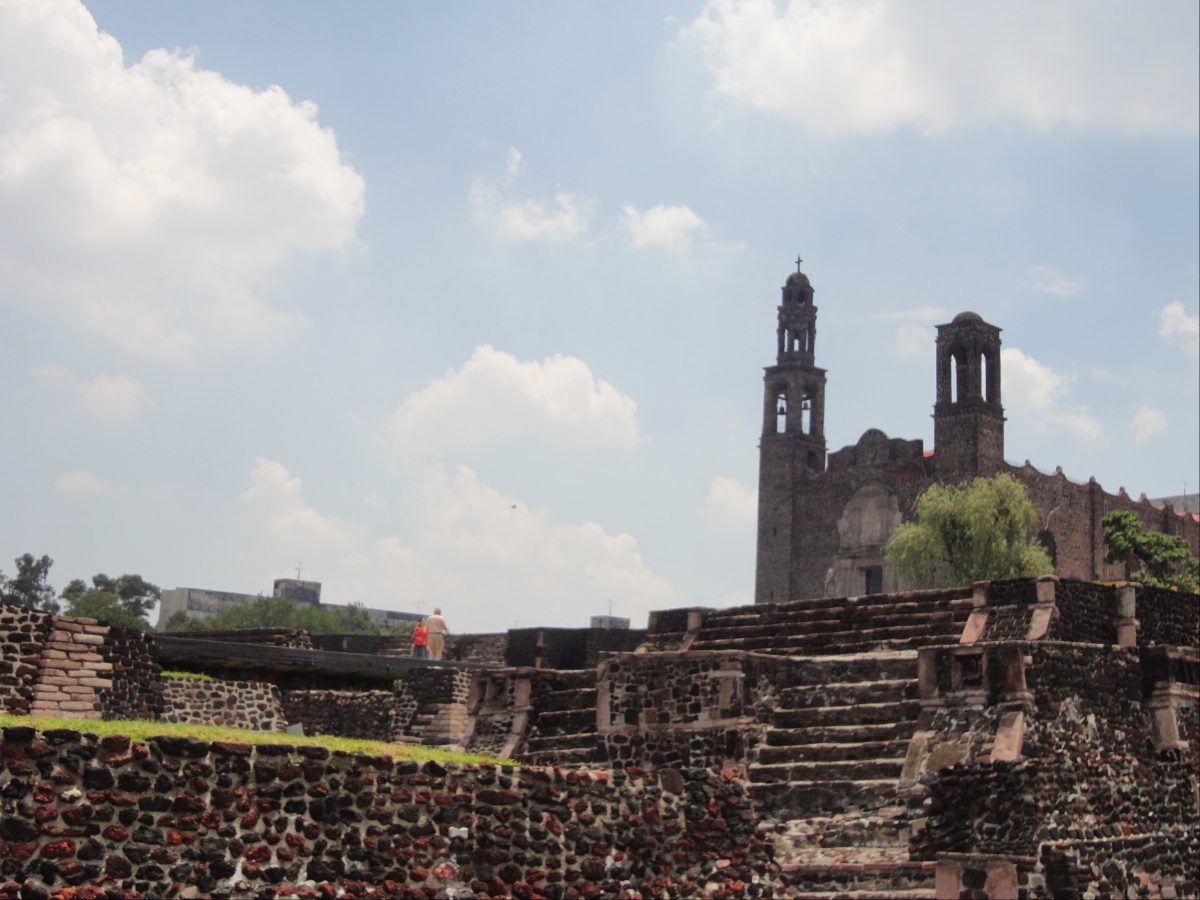
Tlatelolco’s most dramatic historical moment came not during its own conquest by Tenochtitlan but nearly fifty years later, in 1521, when the city became the final battleground of Spanish conquistador Hernán Cortés’s siege of the Aztec capital, as Mexica defenders under the leadership of the young ruler Cuauhtemoc retreated into Tlatelolco after Tenochtitlan’s own defenses had been overwhelmed.
Spanish and allied indigenous forces fought house to house and street to street through Tlatelolco during the siege’s final weeks, and it was within this specific district that Cuauhtemoc, the last independent Mexica ruler, was ultimately captured, an event traditionally marked as the definitive end of independent Aztec political authority and the beginning of Spanish colonial rule over central Mexico.
The scale of destruction and loss of life during these final weeks of fighting at Tlatelolco was severe enough that Spanish chroniclers themselves recorded considerable unease at the devastation, and the bronze plaque installed centuries later at the modern plaza, describing the conquest as neither victory nor defeat but the painful birth of a new mestizo people, was deliberately positioned at this specific site precisely because of its symbolic weight as the empire’s final stand.
Contemporary indigenous accounts of the siege’s final weeks, recorded decades later through Nahuatl-speaking informants working with Spanish missionaries, describe severe famine and disease compounding the military devastation within Tlatelolco’s crowded streets, conditions that likely killed as many defenders and civilians as the fighting itself during the siege’s brutal final phase.
Cuauhtemoc’s eventual fate after capture, held by Cortés and later executed years afterward during a separate expedition to Honduras, cemented his lasting status in Mexican historical memory as a symbol of indigenous resistance, and his capture specifically at Tlatelolco rather than Tenochtitlan is a detail many general accounts of the conquest overlook despite its precise historical accuracy.
The Colegio de Santa Cruz and the Preservation of Nahuatl
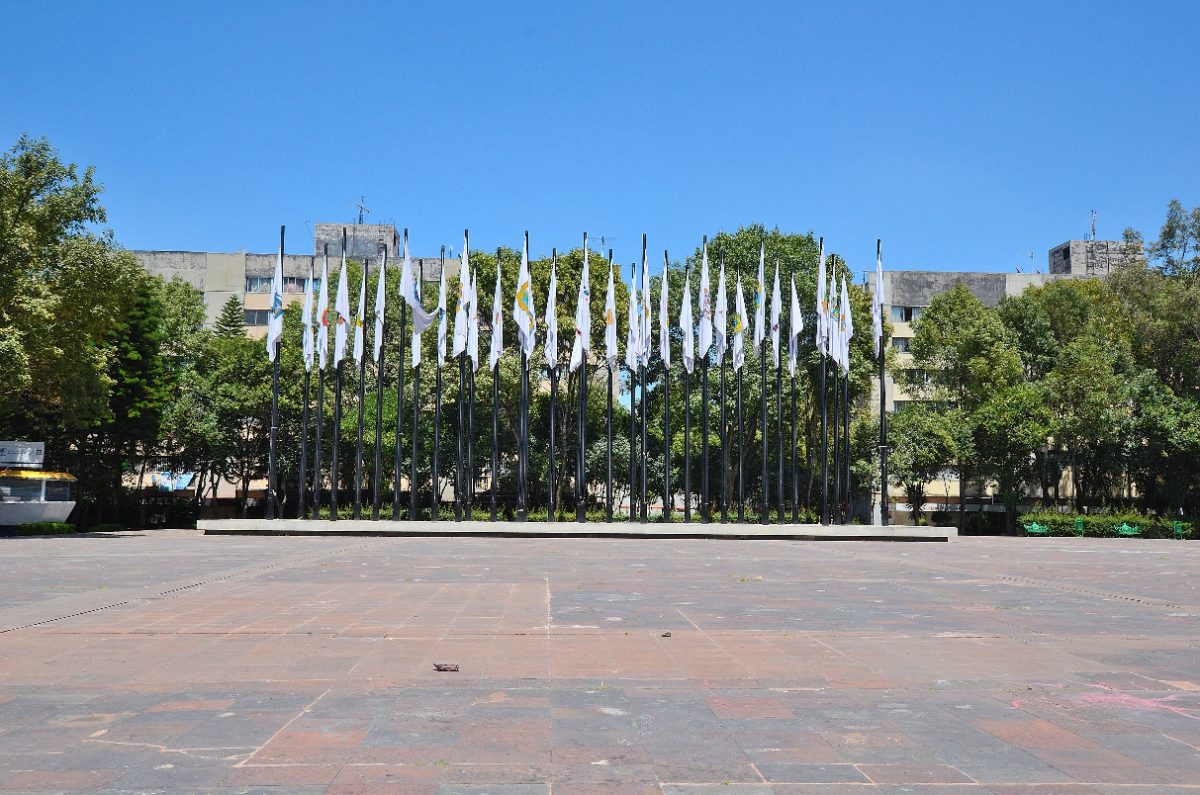
In the decades following conquest, Spanish Franciscan missionaries established the Colegio de Santa Cruz de Tlatelolco directly at the site of the former Mexica ceremonial precinct, founded in 1536 as one of the earliest institutions of higher education in the Americas, specifically intended to educate sons of the indigenous nobility in both Christian doctrine and European academic subjects including Latin, rhetoric, and philosophy.
The college became, somewhat unexpectedly, a crucial site for the documentation and preservation of pre-Hispanic Nahua culture, since indigenous students trained there in both Nahuatl and Latin literacy assisted Franciscan friar Bernardino de Sahagun in compiling the extraordinarily detailed ethnographic work now known as the Florentine Codex, drawing directly on the memories and testimony of Nahua elders who had themselves witnessed Mexica society before Spanish conquest.
Without the Colegio de Santa Cruz and the specific indigenous scholars trained there, much of what modern historians know about pre-Hispanic Mexica religion, daily life, and language would likely have been lost entirely, making Tlatelolco’s colonial-era role in cultural preservation nearly as historically significant as its earlier pre-Hispanic prominence as a commercial capital.
The Colegio de Santa Cruz eventually declined in influence and resources during the later colonial period, as Spanish colonial authorities grew increasingly ambivalent about educating indigenous nobility to the same advanced academic level as Spanish colonists, but its early decades left an documentary legacy whose value to modern historians of Mexica civilization is difficult to overstate.
From Ruins to Plaza de las Tres Culturas
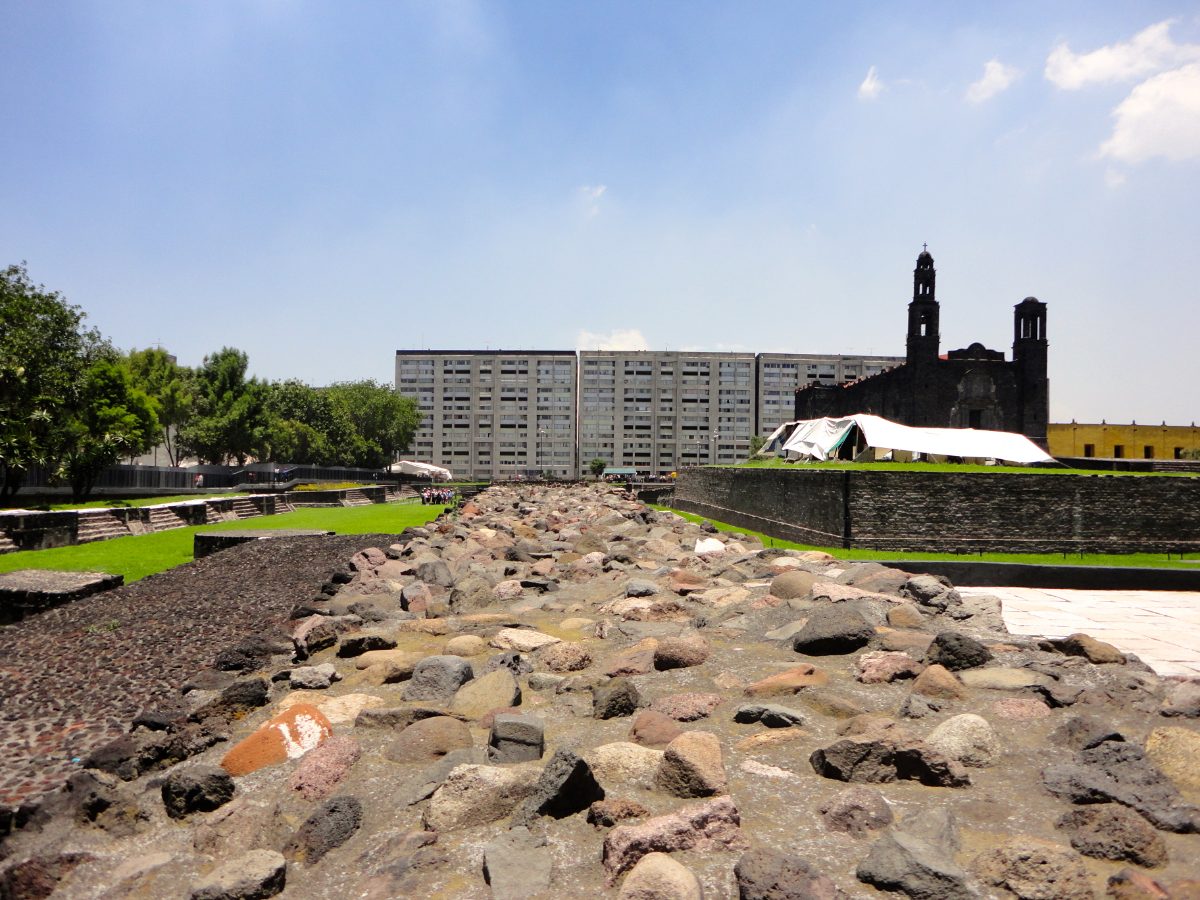
Systematic archaeological excavation at Tlatelolco began in earnest during the twentieth century, revealing the layered temple platforms, residential compounds, and ceremonial structures that visitors can see today alongside the colonial church and college buildings constructed directly atop portions of the original Mexica precinct.
The surrounding modern Nonoalco-Tlatelolco housing complex, built during the 1960s as a large-scale urban renewal project, gave the plaza its current name and its distinctive juxtaposition of ancient ruins, colonial architecture, and modern residential towers, a physical arrangement its planners intended to represent, quite literally in stone and concrete, the layered cultural heritage of modern Mexican national identity.
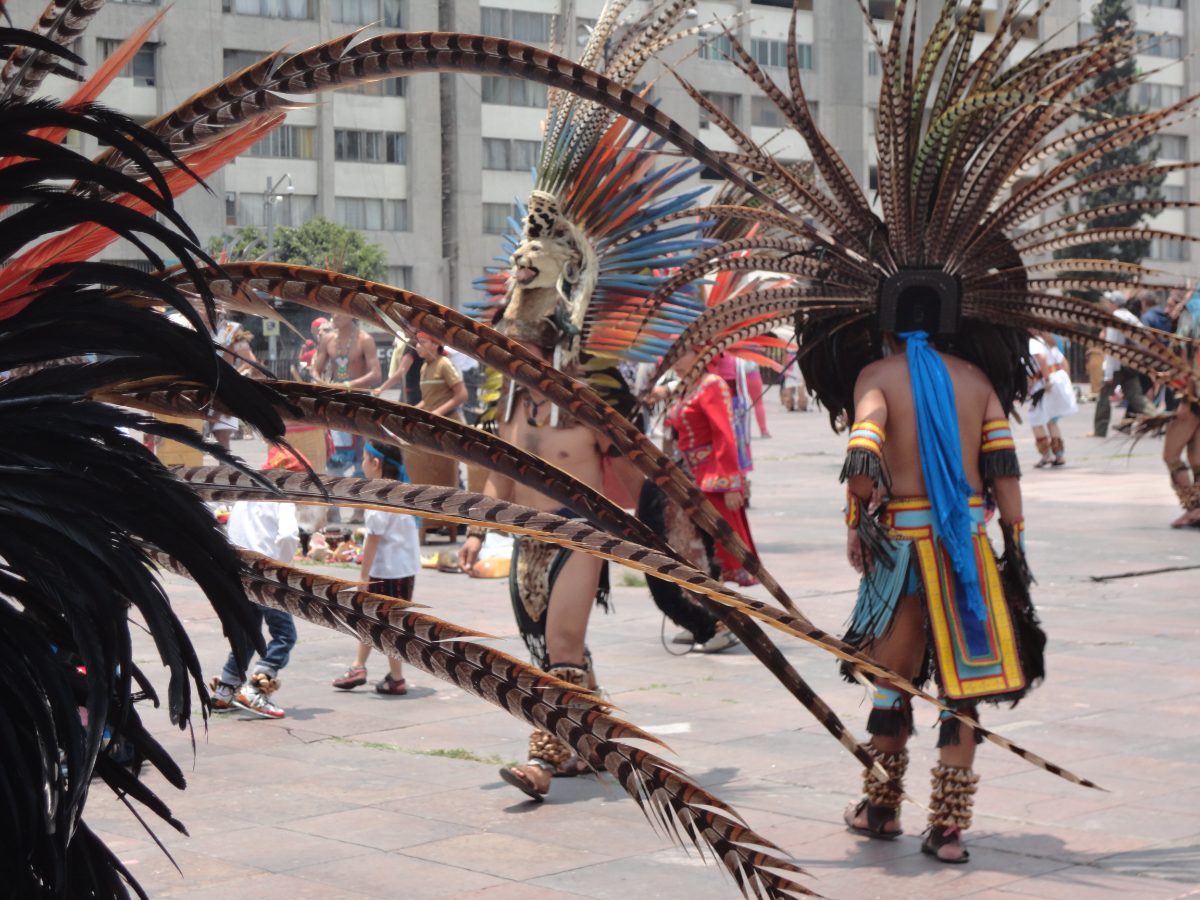
Today the plaza remains a functioning public space and archaeological zone, with the Templo de Santiago church still holding religious services, a small site museum documenting the pre-Hispanic ruins, and occasional performances of traditional Mexica dance held within view of the excavated temple platforms, connecting the site’s ancient religious functions to contemporary cultural expression in a way relatively few archaeological sites manage to sustain.
The Nonoalco-Tlatelolco housing complex surrounding the plaza gained a separate and much darker place in modern Mexican history in 1968, when a student protest gathering in the plaza shortly before the Mexico City Olympics ended in violence between demonstrators and government security forces, an event that remains a significant, painful chapter in twentieth-century Mexican political history distinct from, though occurring at, the same historic site.
Nearby Places to Explore
Tlatelolco’s close historical ties to Tenochtitlan and the broader Aztec world connect it directly to several other major central Mexican sites covered elsewhere on this site, each offering useful context for understanding Tlatelolco’s place within the wider Aztec Triple Alliance.
- Templo Mayor: The Aztec Great Pyramid at the Center of the World
- Tula: The Toltec City the Aztecs Called Their Origin
- Teotihuacán: The Pyramid of the Sun and the Lost City of the Gods
Closing Thoughts
Tlatelolco’s history moves through an unusually compressed arc: independent sister city to Tenochtitlan, home to the most impressive marketplace Spanish conquistadors had personally ever seen, conquered and subordinated by its own former ally, and finally the desperate last battleground where the Aztec Empire’s independent political existence came to its violent end in 1521.
What followed proved just as historically significant as what came before, as the same ground that saw Cuauhtemoc’s capture became, within a generation, a center for preserving the very Nahua language and culture that conquest had nearly extinguished, a layered legacy the modern Plaza de las Tres Culturas still visibly and deliberately commemorates today.