Deep in Colombia’s Sierra Nevada de Santa Marta, where jungle-covered peaks rise almost directly from the Caribbean coast, stone terraces climb a mountainside that archaeologists estimate was first built up roughly twelve hundred years ago. Spanish-speaking treasure hunters who stumbled onto it in the 1970s called it Ciudad Perdida, the Lost City, a name that stuck even after its true history came into focus.
Long before the Inca built Machu Picchu, the Tairona people were already terracing this mountainside, connecting their city with stone stairways and paved roads that still survive beneath the jungle canopy, still walked today by both descendant indigenous communities and the trekkers who make the multi-day journey to reach it.
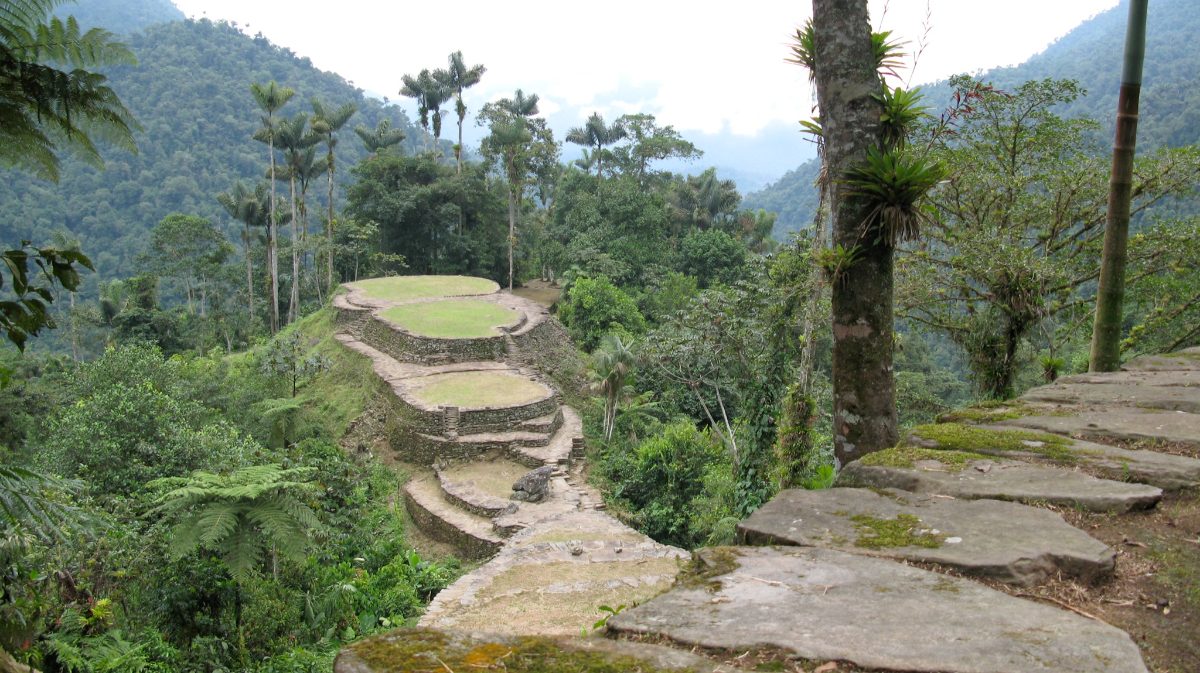
Table of Contents
- A City Hidden in the Sierra Nevada
- Older Than Machu Picchu
- Teyuna, the Name the Builders Actually Used
- 169 Terraces and a Staircase Through the Jungle
- What Language Did the Tairona Speak?
- Found by Looters, Again
- A Site Caught in Conflict
- The Kogi, Wiwa, and the Heart of the World
- Gold Work and Tairona Craft
- Trekking to Ciudad Perdida Today
- Nearby Places to Explore
A City Hidden in the Sierra Nevada
The Sierra Nevada de Santa Marta is one of the world’s highest coastal mountain ranges, rising from Caribbean beaches to snow-capped peaks within a remarkably short distance, creating a compressed range of climate zones that made the region attractive to settlement long before European contact.
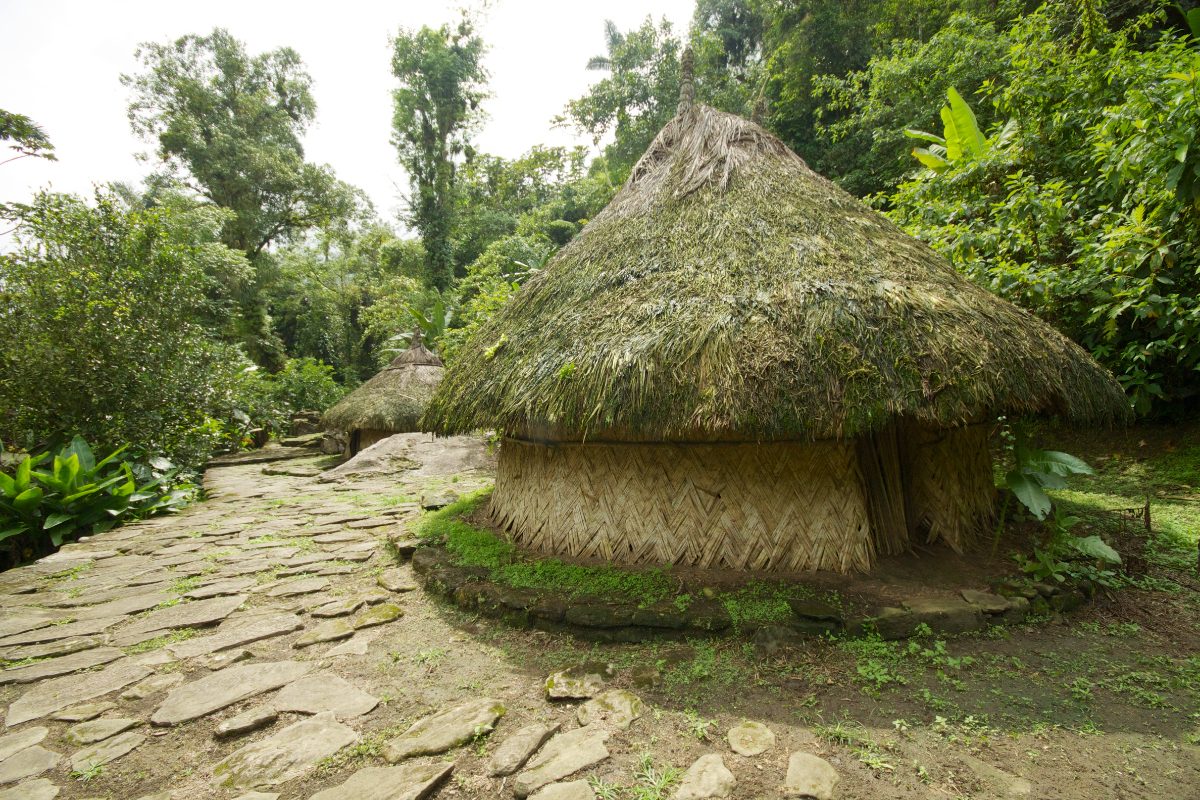
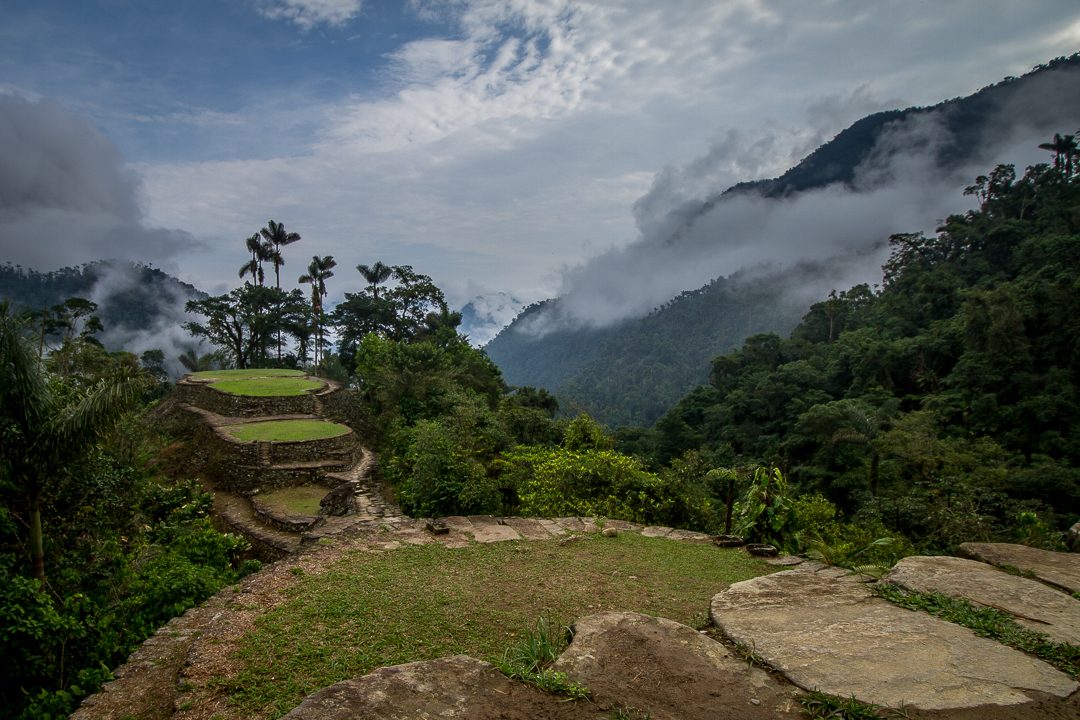
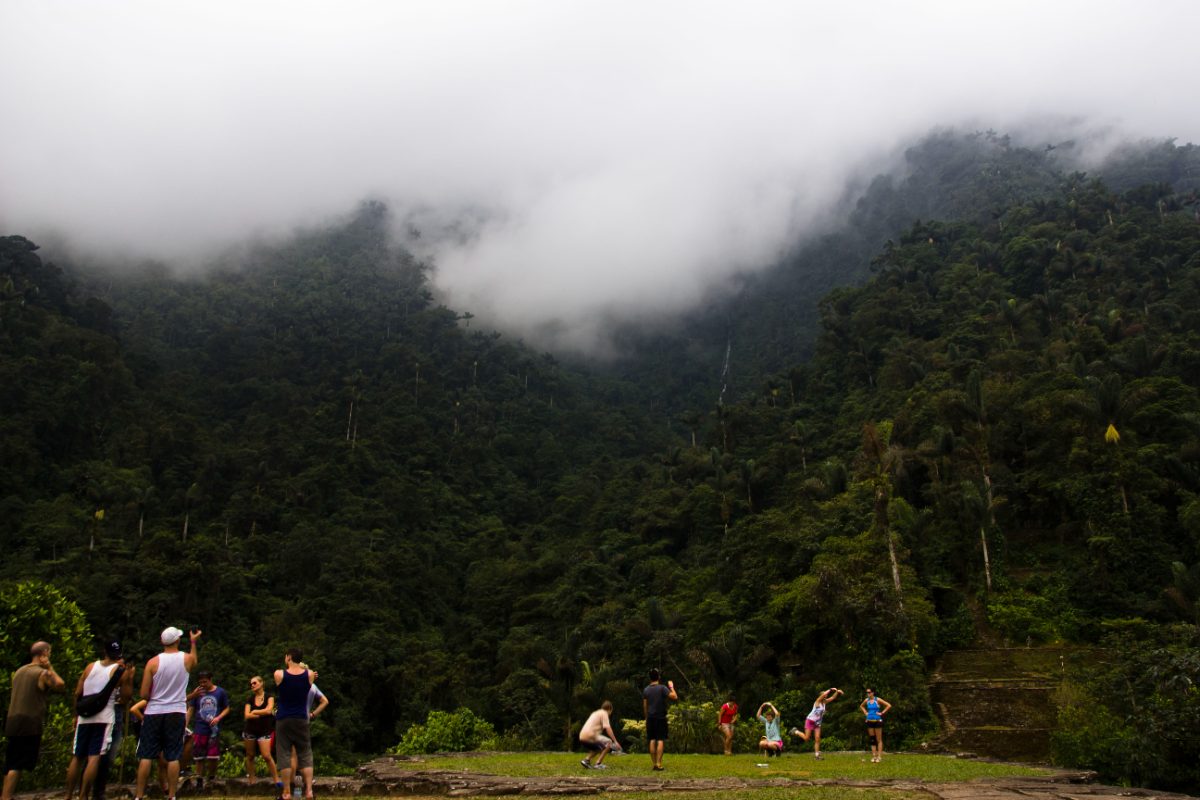
Ciudad Perdida itself sits at roughly 1,200 meters elevation, wrapped in dense, humid jungle that receives heavy rainfall much of the year, conditions that both nourished the terraced agriculture the city depended on and helped conceal its stone structures from outside discovery for centuries after its builders had gone.
This dramatic elevation change over such a short horizontal distance means the Sierra Nevada supports an unusually wide range of ecosystems, from coastal mangroves and dry forest near sea level to cloud forest and alpine paramo near its highest peaks, a biodiversity that Tairona farmers would have had to understand and adapt to across the different elevations where they built terraces and settlements.
Rainfall patterns across the Sierra Nevada vary considerably by elevation and by season, and Tairona agricultural terracing appears to have been carefully engineered to manage water runoff and prevent erosion on the steep mountain slopes, a practical engineering achievement that receives less popular attention than the gold artifacts recovered from the region but was arguably just as essential to the city’s ability to sustain a significant population.
Modern climate researchers have also taken interest in the Sierra Nevada given its status as an isolated massif rising directly from tropical coastline, treating it as a valuable natural laboratory for studying how mountain ecosystems respond to environmental change, a scientific interest that runs alongside, and occasionally intersects with, ongoing archaeological work at Ciudad Perdida itself.
Older Than Machu Picchu
Archaeological dating places the founding of Ciudad Perdida at around 800 CE, making it roughly six and a half centuries older than Machu Picchu, a comparison Colombian tourism materials invoke often, and with good reason, since it repositions this site as one of the oldest known urban centers in the Andean and northern South American world.
That age gap matters historically as well as for marketing. It places Ciudad Perdida’s origins firmly within the broader Tairona cultural tradition on Colombia’s Caribbean coast, a civilization that developed independently of, and considerably earlier than, the Inca expansion that would later dominate much of the Andes further south.
Some tourism materials go further and describe Ciudad Perdida as predating the Inca Empire itself by several centuries, which is broadly accurate, since Tairona civilization on Colombia’s Caribbean coast developed independently along its own cultural trajectory rather than as any kind of precursor to or influence on the later, geographically distant Inca state further south in Peru.
Tourism promotion emphasizing the Machu Picchu comparison has undeniably helped raise Ciudad Perdida’s international profile, though some Colombian heritage advocates argue the comparison risks overshadowing the site’s own distinct Tairona identity and history in favor of measuring it primarily against a more famous foreign landmark.
Radiocarbon dating from multiple excavated contexts across the site has helped refine this founding estimate over the years, and continued fieldwork occasionally adjusts the precise chronology, though the broad picture of a Tairona settlement founded well before the rise of the Inca state remains consistently supported by the accumulated evidence.
Teyuna, the Name the Builders Actually Used
Unlike many sites in this series, descendant communities in the Sierra Nevada still use a name believed to be closer to the original: Teyuna. Indigenous Kogi, Wiwa, Arhuaco, and Kankuamo peoples living in the surrounding mountains today trace their ancestry and spiritual practice directly back to the Tairona builders of this city.
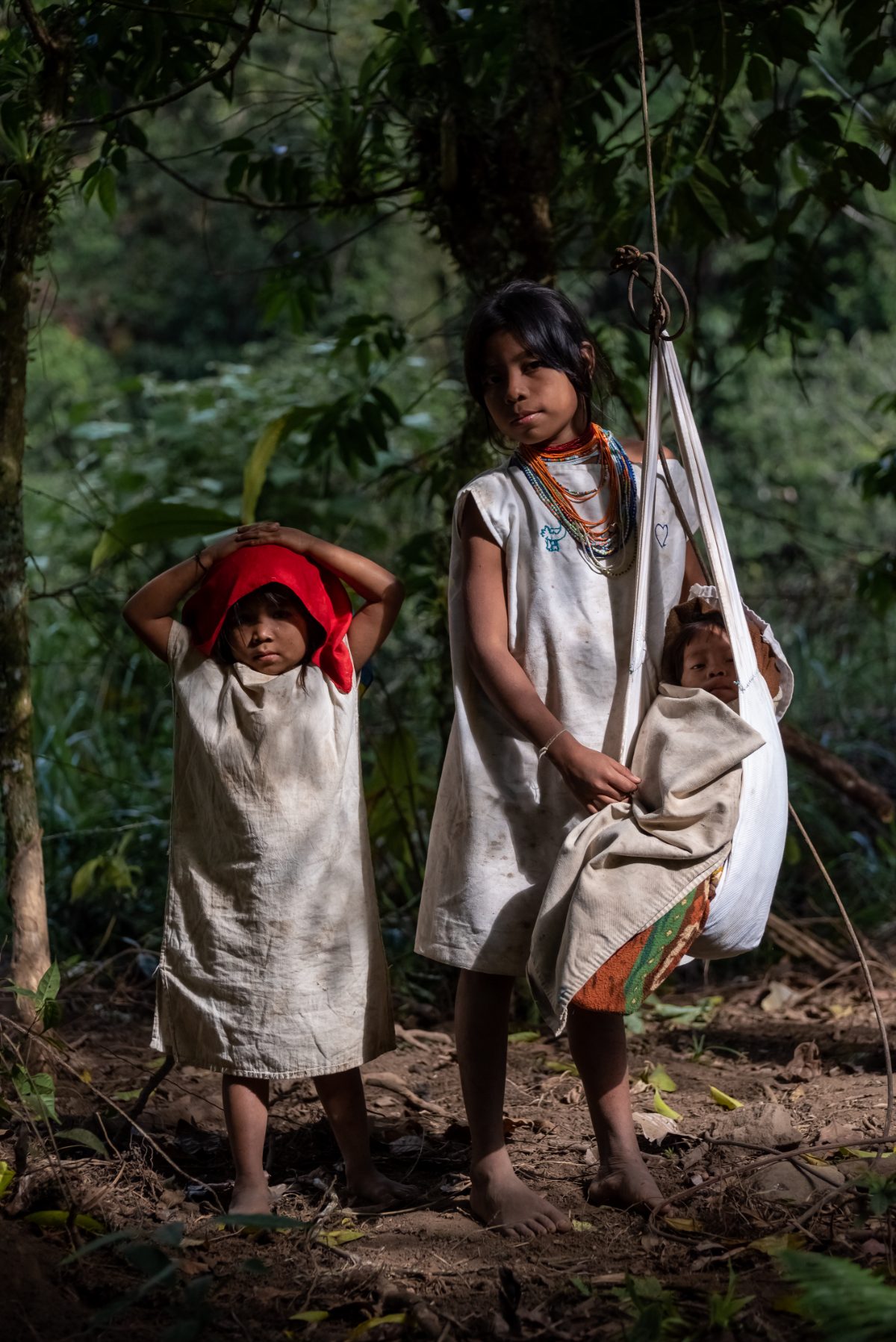
That living connection gives Ciudad Perdida, or Teyuna, a different character than sites where descendant communities and their languages have largely vanished. Here, the people who consider this place sacred are not distant historical abstractions but living neighbors of the archaeological site itself.
Colombian heritage authorities have increasingly adopted Teyuna alongside Ciudad Perdida in official site naming, reflecting a broader regional trend toward recognizing indigenous place names and indigenous communities’ own connection to archaeological sites long known primarily by Spanish colonial-era or more recent Spanish-language labels.
Anthropologists working closely with Kogi and Wiwa communities have relied heavily on oral tradition and living ritual practice to help interpret the archaeological remains at Ciudad Perdida, an unusually direct form of collaboration between descendant communities and researchers compared to sites elsewhere in this series where no such living cultural link survives.
This close relationship between contemporary indigenous identity and ancient archaeological remains distinguishes Ciudad Perdida sharply from sites in this series where the connection between past builders and present populations has been severed by centuries of conquest, disease, forced migration, or linguistic replacement.
169 Terraces and a Staircase Through the Jungle
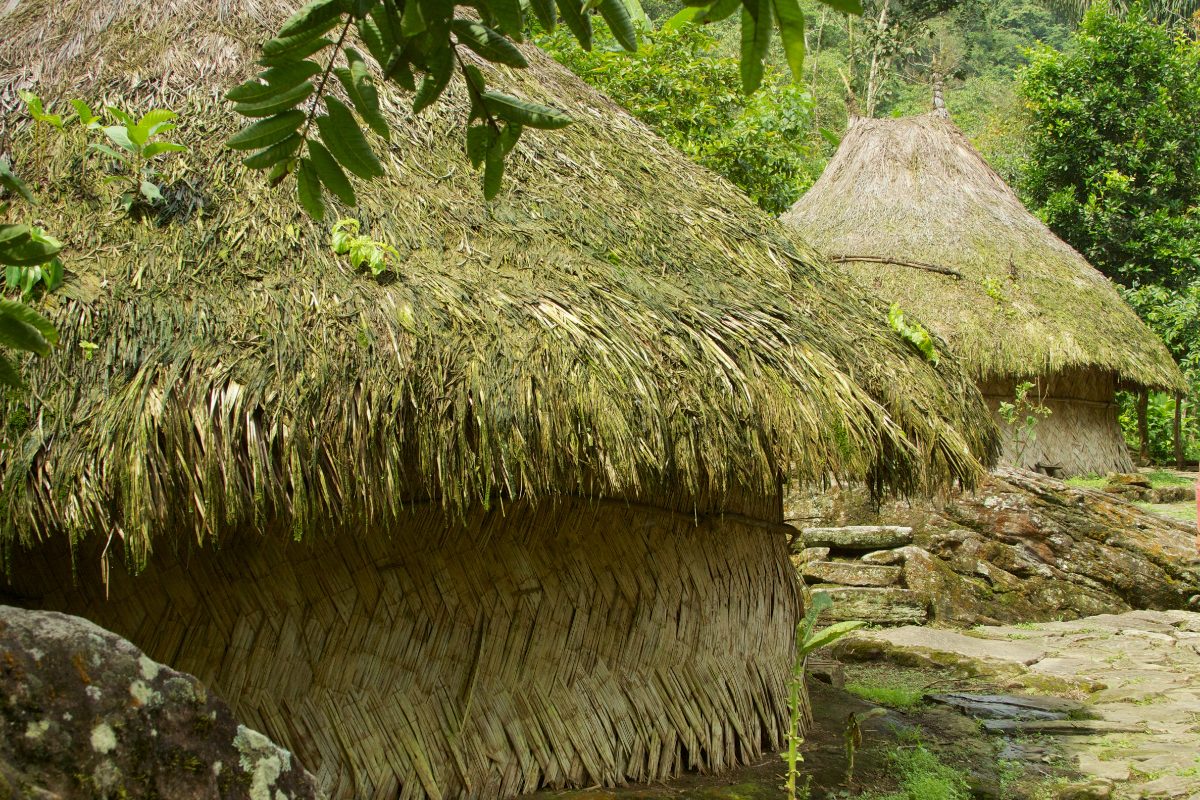
Ciudad Perdida’s core consists of roughly 169 stone terraces cut into the mountainside, originally supporting circular houses built from perishable materials that have long since decayed, leaving only their stone foundations behind. Connecting these terraces is a network of paved stone paths and plazas that once tied the settlement together.
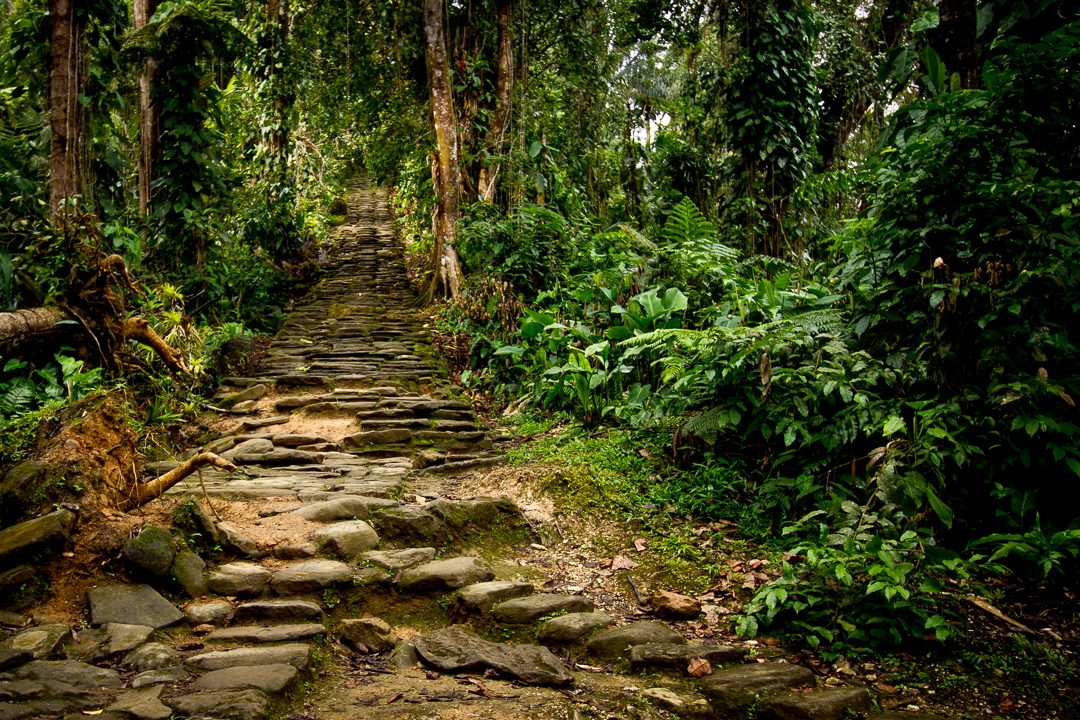
The most famous approach is a stone stairway of well over a thousand steps climbing steeply up from the Buritaca River valley, a construction that remains in active use today by both trekkers and the descendant indigenous communities who continue to visit the site for ceremonial purposes.
Excavated plazas and larger terraces likely served administrative or ceremonial functions distinct from the smaller residential terraces that made up the bulk of the settlement, suggesting a degree of social and spatial organization consistent with what archaeologists would expect from a genuine urban center rather than a loosely organized village cluster.
Stone-lined drainage channels running alongside many of the terraces demonstrate careful attention to managing the heavy rainfall typical of this cloud forest environment, preventing the kind of erosion that might otherwise have destabilized a mountainside settlement built almost entirely from earth and stone rather than more rigid modern construction materials.
Later restoration work has focused on stabilizing exposed stonework and clearing selective vegetation to make key structures visible to visitors, while deliberately leaving much of the surrounding jungle canopy intact, both to protect the wider ecosystem and to preserve something of the atmosphere of genuine discovery that draws many trekkers to the site in the first place.
What Language Did the Tairona Speak?
No direct written record of the Tairona language survives, but linguists generally classify it within the Chibchan language family, a group of related languages spoken across parts of Colombia, Panama, and Central America both before and after European contact. The Kogi, Wiwa, and other descendant peoples living in the Sierra Nevada today speak Chibchan languages believed to descend from, or be closely related to, the speech of the original Tairona builders.
This makes Ciudad Perdida somewhat unusual among sites in this series: rather than a language lost entirely to history, there is a living, if evolved, linguistic thread connecting the ancient builders to communities still speaking related languages in the surrounding mountains today.
Comparative linguistic study of Chibchan languages across Colombia, Panama, and parts of Central America has helped researchers reconstruct plausible connections between the Tairona and neighboring pre-Columbian peoples, even without a directly attested Tairona vocabulary or written corpus surviving from before European contact.
Efforts to document and support continued use of Kogi, Wiwa, and Arhuaco languages have gained increasing attention from Colombian linguists and cultural preservation advocates in recent decades, part of a broader national conversation about protecting indigenous heritage that extends well beyond the archaeological remains at Ciudad Perdida itself.
Found by Looters, Again
As at Sipan in Peru, Ciudad Perdida’s modern rediscovery began with looting rather than archaeology. In 1972, local treasure hunters found gold artifacts at the site and began selling pieces on the black market, drawing attention that eventually led Colombian authorities and archaeologists to investigate and secure the location.
Colombian archaeologists began systematic study of the site later in the 1970s, gradually documenting its terraces, pathways, and ceremonial spaces even as looting had already damaged or removed an unknown quantity of artifacts before formal protection could be established.
The scale of looting at Ciudad Perdida before formal protection began remains difficult to quantify precisely, though the gold objects that did surface on the black market in the early 1970s were significant enough to attract serious criminal interest, mirroring the same dynamic of illicit antiquities trade that has damaged countless other Latin American archaeological sites before proper study could occur.
Colombian archaeologist Alvaro Soto Holguin led some of the earliest systematic excavation efforts at the site in the years following its rediscovery, working under difficult logistical conditions given the site’s remote jungle location and the need to protect ongoing fieldwork from further disturbance by looters still operating in the surrounding area.
Formal government protection of the site was established relatively quickly once its significance became clear, a faster institutional response than occurred at some comparable sites elsewhere in Latin America, though enforcement in such a remote, densely forested location has always posed practical challenges for Colombian heritage authorities.
A Site Caught in Conflict
Ciudad Perdida’s remote jungle location, an asset for its builders and later for its preservation, also made it vulnerable during Colombia’s decades of internal armed conflict. Guerrilla and paramilitary groups operated in the surrounding Sierra Nevada region for years, and the site was closed to visitors at various points for safety reasons.
Most notably, in 2003 a group of foreign tourists trekking to the site were kidnapped by ELN guerrillas, an incident that drew international attention and led to a temporary closure before the trek reopened under improved security conditions in subsequent years, as Colombia’s broader security situation gradually stabilized.
Colombian military and park authorities have since established a more consistent security presence along the trekking route, and the broader normalization of Colombia’s security situation over the past two decades has made the journey to Ciudad Perdida considerably safer than during the years immediately surrounding the 2003 kidnapping incident.
During the years the trek remained closed or heavily restricted, some archaeological and conservation work at the site slowed considerably, since researchers and maintenance crews faced many of the same security concerns that kept tourists away, illustrating how armed conflict can indirectly affect heritage preservation even at sites not directly targeted by violence.
The broader normalization of Colombia’s tourism sector following the 2016 peace agreement between the government and the country’s largest guerrilla group has contributed significantly to renewed international interest in destinations like Ciudad Perdida, part of a wider rehabilitation of Colombia’s global reputation as a travel destination over the past decade.
The Kogi, Wiwa, and the Heart of the World
The Kogi people, among the most prominent descendant communities in the Sierra Nevada, refer to their mountain homeland as the heart of the world, a place they believe holds spiritual responsibility for maintaining ecological and cosmic balance far beyond the immediate region.
Kogi spiritual leaders, called mamos, continue to conduct pilgrimages and ceremonies at Ciudad Perdida and other sacred sites throughout the Sierra Nevada, treating the mountains not as an abandoned archaeological zone but as an active, living landscape still bound up with contemporary indigenous religious practice.
Kogi cosmology holds that actions taken elsewhere in the world have direct spiritual consequences for the Sierra Nevada’s ecological balance, a belief system that has led Kogi leaders to engage in international outreach in recent decades, appearing in documentaries and public forums to advocate for environmental protection framed explicitly through their own indigenous spiritual worldview.
Wiwa and Arhuaco communities living in other parts of the Sierra Nevada maintain related but distinct cultural and linguistic traditions from the Kogi, together forming a mosaic of indigenous groups who each claim ancestral and spiritual ties to the mountain range and, by extension, to sites like Ciudad Perdida within it.
Visitors trekking to Ciudad Perdida today sometimes encounter Kogi community members along the route, and growing awareness of indigenous perspectives has led some tour operators to establish direct arrangements with local communities, channeling a portion of tourism revenue back toward the same populations whose ancestors built the site being visited.
Gold Work and Tairona Craft
The Tairona were renowned goldsmiths, producing intricate cast and hammered ornaments depicting animals, human figures, and mythological beings, work that places them among the most accomplished metalworking traditions documented anywhere in pre-Columbian Colombia.
Much of this goldwork, including pieces looted from Ciudad Perdida itself before formal protection began, is now held in Colombian museum collections, including Bogota’s renowned Museo del Oro, giving visitors elsewhere in the country a chance to see Tairona craftsmanship even without making the demanding trek to the site itself.
Tairona metalworkers primarily used a gold-copper alloy known as tumbaga, which could be worked more easily than pure gold while still achieving a lustrous golden surface through chemical treatments similar in principle to techniques documented among the Moche and other Andean goldworking traditions covered elsewhere in this series, despite the considerable geographic and cultural distance separating these societies.
Beyond gold, Tairona artisans also worked stone, shell, and ceramic into finely detailed ornaments and ceremonial objects, reflecting a broader craft economy that likely supported both local elite consumption and trade relationships extending along the Caribbean coast and into the interior highlands of what is now Colombia.
The Museo del Oro’s Tairona collection remains one of the most accessible ways for visitors unable to make the demanding jungle trek to still encounter high-quality examples of the metalwork tradition associated with Ciudad Perdida and the wider Tairona cultural sphere along Colombia’s Caribbean coast.
Trekking to Ciudad Perdida Today
Reaching Ciudad Perdida still requires a multi-day guided trek through dense jungle, typically taking four to five days round trip depending on the route and pace chosen, a journey involving river crossings, steep climbs, and overnight stays at rustic camps along the way.
That physical demand keeps visitor numbers considerably lower than at more accessible sites like Machu Picchu, preserving something of the isolation that protected Ciudad Perdida for centuries, while guided tours now typically include indigenous perspectives on the site’s ongoing spiritual significance to the surrounding Kogi and Wiwa communities.
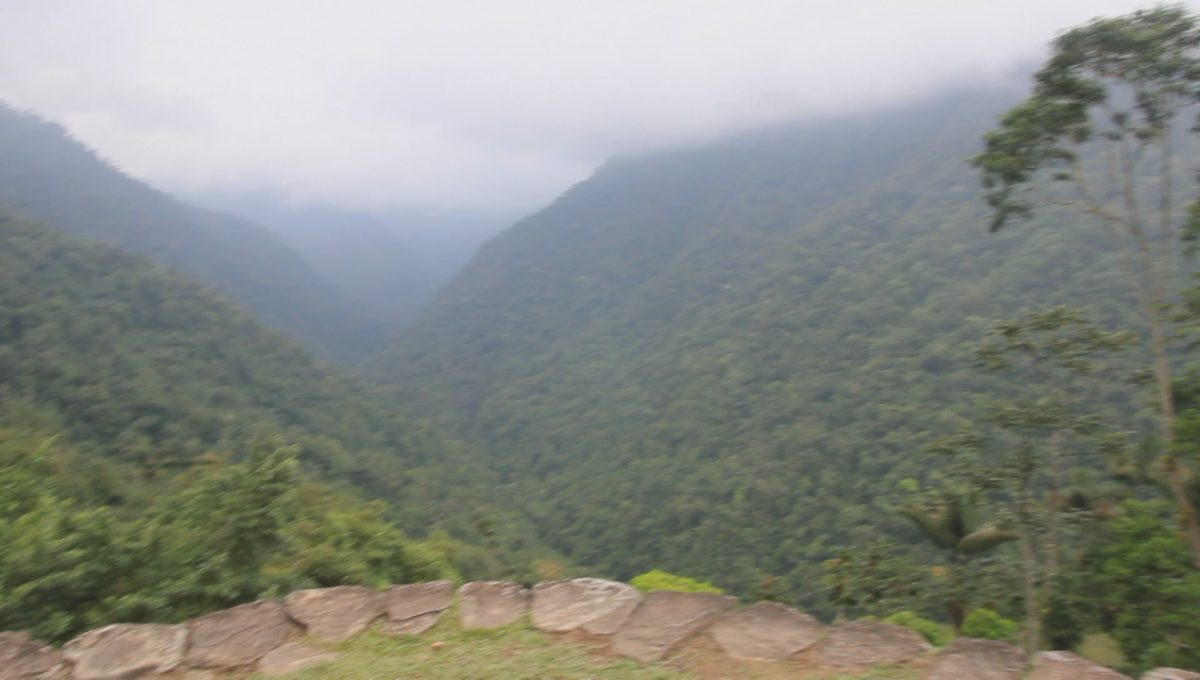
Guides leading these treks today are frequently drawn from local communities near the trailhead, including some with direct indigenous heritage, and increasingly incorporate discussion of Kogi and Wiwa perspectives on the site’s ongoing sacred status alongside the more conventional archaeological history relayed to visiting trekkers.
Camps along the trekking route provide basic accommodation, typically hammocks or simple bunks under covered shelters, and the shared, physically demanding nature of the journey has become part of the site’s appeal for many visitors seeking an experience distinct from the more heavily infrastructured tourism found at better-known archaeological destinations elsewhere in South America.
Physical fitness requirements for the trek are real but moderate, generally achievable by reasonably healthy adults without technical climbing experience, though the combination of heat, humidity, river crossings, and sustained daily walking makes adequate preparation and proper gear considerably more important than for most conventional day-trip archaeological visits elsewhere in this series.
Nearby Places to Explore
Ciudad Perdida’s history connects to other Andean and South American sites covered elsewhere in this series.
- Sipan’s Looted Royal Tomb Rewrote Moche History
- Kuelap, the Andean Fortress the Inca Struggled to Conquer
- How the Wari Empire Ruled the Andes Long Before the Inca
Closing Thoughts
Ciudad Perdida stands apart from many sites in this series because its story has not fully ended. Descendant Kogi, Wiwa, Arhuaco, and Kankuamo communities still live in the surrounding mountains, still speak languages related to whatever the Tairona once spoke, and still treat this terraced mountainside as an active spiritual center rather than a purely historical curiosity.
That living continuity, combined with a founding date centuries before Machu Picchu and a history entangled with both looting and armed conflict, makes Ciudad Perdida one of the more complicated and, in some ways, more genuinely alive archaeological sites anywhere in South America.
You May Like
Hohensalzburg Fortress: The Great White Stronghold That Never Fell


One thought on “Ciudad Perdida Predates Machu Picchu by 650 Years”