In 1987, on Peru’s arid north coast, a farming village called Sipan became the site of one of the richest royal tombs ever excavated anywhere in the Americas, a find so significant that archaeologists still compare it to the discovery of Tutankhamun’s tomb in Egypt. The man buried there has been known ever since simply as the Lord of Sipan.
What makes the story remarkable is not just the gold recovered, but how close it came to being lost entirely. Looters had already broken into the tomb before archaeologists ever set foot inside, and the race to save what remained turned into one of Peruvian archaeology’s most dramatic rescue operations.
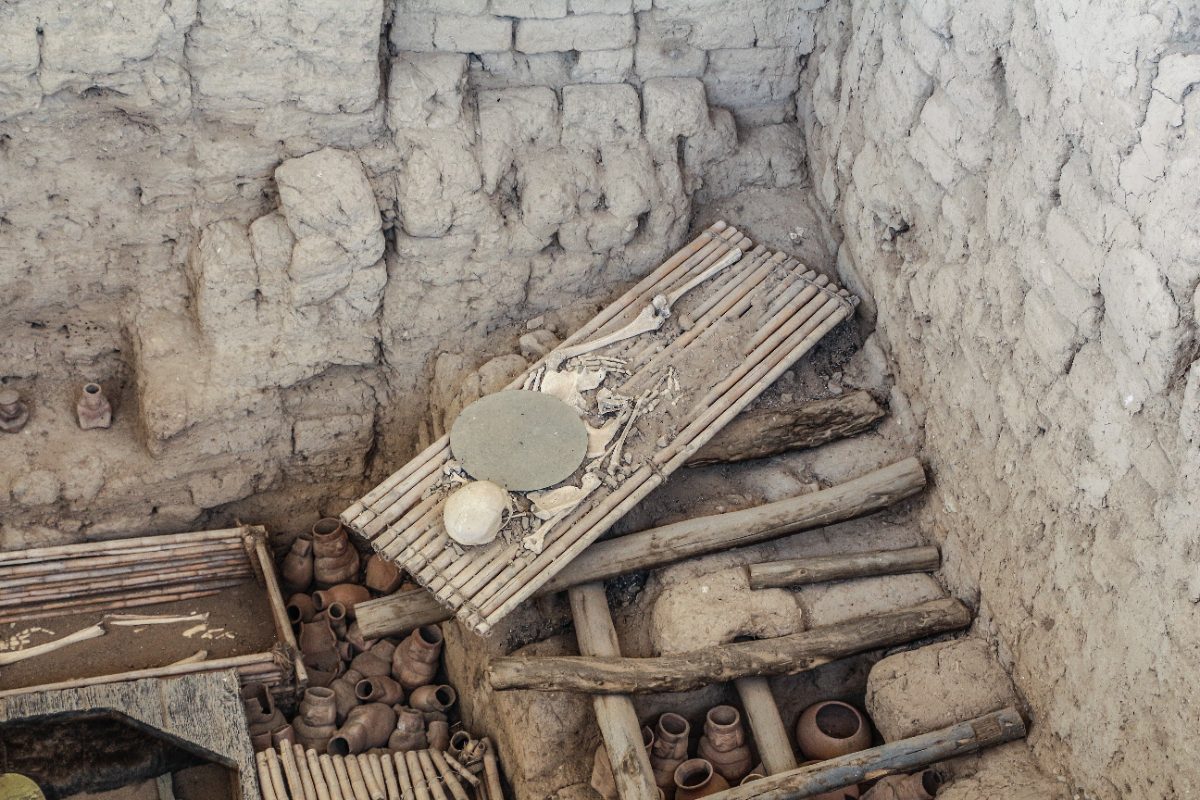
Table of Contents
- A Discovery That Started With Looters
- Racing the Huaqueros
- Inside the Tomb of the Lord of Sipan
- Gold, Silver, and a Necklace of Peanuts
- What Language Did the Moche Speak?
- Companions for the Afterlife
- The Old Lord and Other Tombs
- The Moche World Without an Empire
- Sacrifice Ceremonies in Moche Art
- The Museum and Visiting Sipan Today
- Nearby Places to Explore
A Discovery That Started With Looters
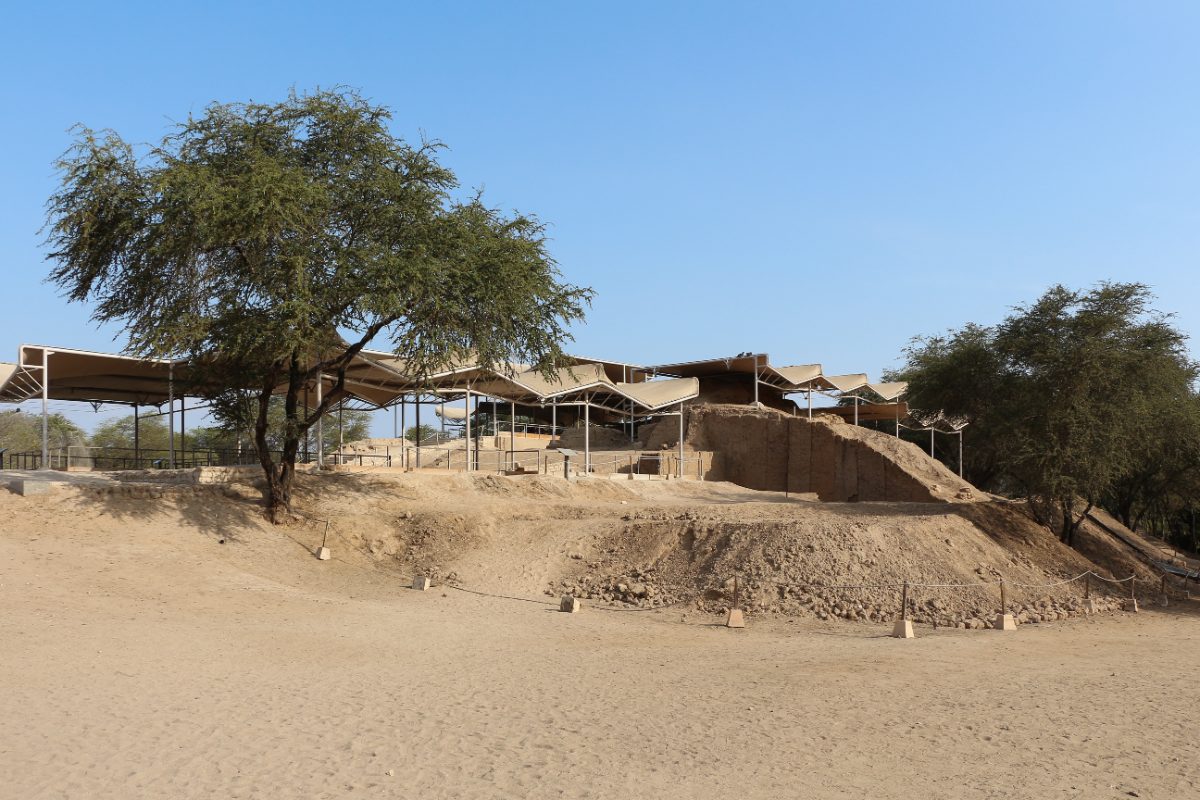
Sipan sits within the Lambayeque region, part of the arid coastal plain that supported the Moche civilization roughly two thousand years ago. The site itself, known to archaeologists as Huaca Rajada, consists of several eroded adobe pyramid platforms rising from otherwise flat farmland, unremarkable in appearance to anyone unfamiliar with what lay beneath.
In February 1987, local huaqueros, a term used across Peru for tomb looters, tunneled into one of the platforms and struck an undisturbed royal burial. Word of the find spread quickly through the black market for pre-Columbian artifacts, and pieces from the tomb began surfacing for sale before authorities knew what had been found.
The Lambayeque valley’s dry climate, similar to much of Peru’s desert coastline, is part of why so much organic material, including textiles, feathers, and wood, survived in the tomb at all, conditions that would have destroyed comparable material in wetter regions of the Americas within a fraction of the time.
Huaca Rajada’s platforms had been eroding gradually for centuries before the 1987 discovery, their adobe brick construction slowly melting under occasional rains and constant wind, which is part of why the mounds appeared to the untrained eye as little more than unusual natural hills rather than obvious archaeological monuments worth protecting.
Farming communities near Sipan had long known of the mounds’ existence, treating them as unremarkable features of the local landscape for generations, which makes the sudden global attention following the 1987 discovery all the more striking given how ordinary the site had appeared to residents living beside it for so long.
Racing the Huaqueros
Archaeologist Walter Alva, then director of the Bruning Museum in nearby Lambayeque, learned of the looting after police intercepted looted artifacts and reached out for expert help identifying them. Alva recognized the pieces as exceptional in quality, unlike typical looted material, and moved quickly to secure the site before further destruction could occur.
The situation escalated when a confrontation between looters and police turned violent, an indication of just how much money was already at stake in the illegal antiquities trade surrounding the find. Alva’s team began controlled excavation soon after, working to document and rescue what the initial looting had not already destroyed or scattered onto the black market.
Alva later described the excavation as taking place under armed guard, a necessary precaution given how much the tomb’s contents were already worth on the international black market for pre-Columbian artifacts, a trade that has devastated countless other Peruvian sites before archaeologists ever had a chance to study them properly.
The confrontation between looters and authorities at Sipan became a widely cited case study in Peruvian heritage protection policy, prompting increased government attention toward safeguarding archaeological sites across the north coast, a region long targeted by looters precisely because of how many undiscovered Moche and Sican tombs likely remain buried beneath its farmland.
News coverage of the standoff and subsequent excavation drew national attention across Peru, transforming what might have remained a local story into a case widely credited with raising public awareness of looting’s cost to the country’s own understanding of its pre-Columbian past.
Inside the Tomb of the Lord of Sipan
What Alva’s team found beneath the looted entry tunnel was, remarkably, still largely intact: a wooden burial chamber containing the remains of a Moche ruler dressed in extraordinary regalia, undisturbed by the looters who had apparently dug into an adjacent, less important area of the platform.
The ruler, who came to be called the Lord of Sipan, was buried wearing layered necklaces, ear ornaments, a gold and silver crown, and ceremonial backflaps, all arranged in a manner that closely matched imagery long known from Moche ceramics depicting an important, semi-divine warrior-priest figure archaeologists had previously only encountered in art rather than in an actual burial.
Textile fragments recovered from the burial, though heavily deteriorated, preserved traces of the elaborate garments the Lord of Sipan would have worn in life, giving conservators rare material evidence to compare directly against the woven clothing depicted so often in Moche painted ceramics.
The precision with which excavators documented the tomb’s layout, recording the exact position of every bead, ornament, and bone before removal, allowed later researchers to reconstruct with unusual confidence how the Lord of Sipan’s regalia was actually worn and arranged in life, rather than relying purely on artistic depictions that might simplify or idealize real ceremonial dress.
Wooden coffin remnants recovered from the burial chamber, though fragile, provided rare direct evidence of Moche woodworking and construction techniques, complementing the far more commonly studied ceramic and metal artifacts that dominate most museum collections of Moche material culture.
Gold, Silver, and a Necklace of Peanuts
Among the tomb’s most famous pieces is a necklace made of gold and silver beads shaped like peanuts, alternating between the two metals in a design thought to symbolize duality, perhaps the pairing of sun and moon, or male and female cosmological forces central to Moche religious thought.
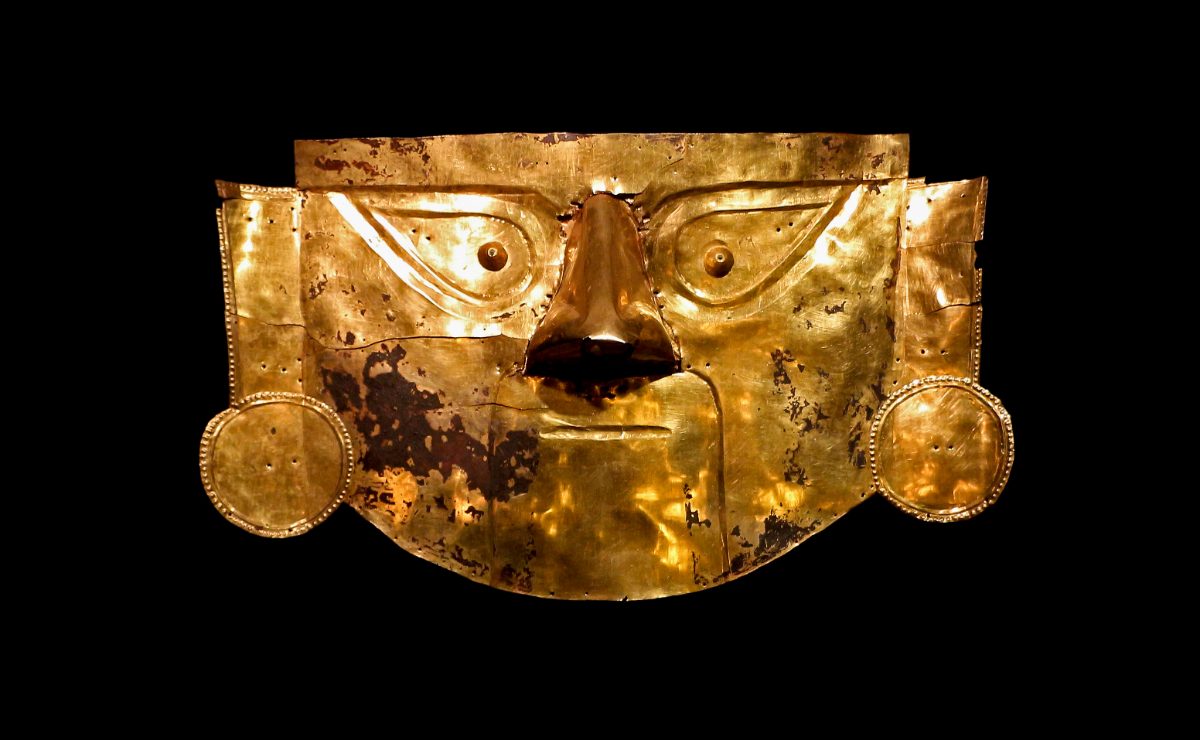
Other objects included gold nose ornaments, a gilded copper scepter, and turquoise and shell inlaid jewelry, all evidence of the extensive craft specialization and long-distance trade networks the Moche maintained along Peru’s coast and into the Andean highlands to acquire materials found nowhere near Sipan itself.
Metalworking analysis has shown that Moche artisans achieved this gold and silver alloying and gilding through sophisticated techniques, including depletion gilding, which enriches a copper-gold alloy’s surface with pure gold through repeated chemical treatment, a method requiring considerable technical knowledge passed down through specialized craft lineages.
Beyond gold and silver, the tomb also contained large quantities of gilded copper and shell ornaments, materials that, while less intrinsically valuable than precious metal, carried their own symbolic weight tied to the sea and to trade goods sourced from distant coastal and highland regions well beyond the immediate Lambayeque valley.
Comparable metalwork traditions appear across the broader Sican and later Chimu cultures that followed the Moche in the same coastal region, suggesting later north coast societies inherited and adapted metalworking techniques originally refined by Moche craftsmen centuries before Sipan’s tombs were sealed.
Analysis of trace elements in the gold and silver recovered from Sipan has helped researchers trace likely ore sources back to specific highland mining regions, physical confirmation of exchange networks connecting Moche coastal valleys to Andean communities living at far higher elevations inland.
What Language Did the Moche Speak?
No Moche writing system has ever been identified, meaning everything known about their beliefs and social structure comes from interpreting imagery on ceramics, murals, and metalwork rather than from any deciphered text. This makes pinning down the Moche’s spoken language considerably harder than for literate civilizations like the Maya.
Many scholars associate the Moche with an early form of Muchik, also called Mochica, a language historically spoken in the same coastal Lambayeque region and documented by Spanish colonial missionaries centuries after the Moche civilization had declined. Whether Muchik descends directly from the Moche’s own speech or simply came to dominate the same region later remains a genuinely open question, since no inscriptions survive to confirm the connection.
Muchik survived as a spoken language on Peru’s north coast well into the colonial period, with Spanish priests compiling grammars and vocabularies to aid religious conversion, before it eventually fell out of use entirely by the early twentieth century, leaving only these colonial-era documents as a record of a language once spoken across the same coastal valleys the Moche had occupied centuries earlier.
Because so much interpretation of Moche society depends on reading imagery rather than text, archaeologists remain cautious about assuming direct one-to-one correspondence between artistic motifs and specific historical events, treating the Sipan tomb as an unusually strong confirmation of a broader pattern rather than definitive proof of any single narrative.
Companions for the Afterlife
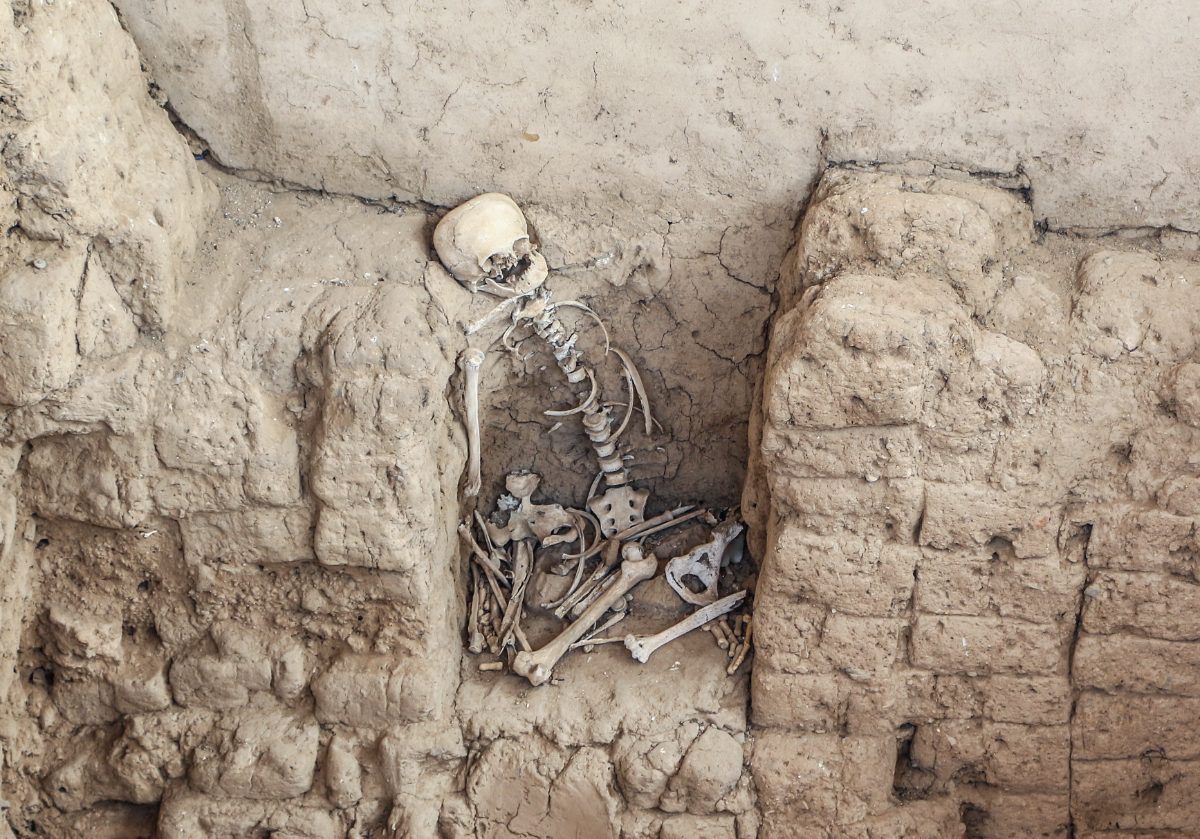
The Lord of Sipan was not buried alone. Excavators found the remains of several other individuals interred alongside him, including guards positioned near the tomb’s entrance, a young child, and animals including a dog and llamas, all apparently included as companions or attendants for the journey into the afterlife.
Some accompanying skeletons showed evidence consistent with sacrifice, including missing feet on certain guard burials, a detail some archaeologists interpret as a symbolic measure meant to prevent the guards from wandering away from their post in death, echoing the duties they presumably held in life.
Similar attendant burials have been documented at other major Moche tombs, suggesting this practice reflected an established elite funerary custom rather than something unique to Sipan alone, part of a broader pattern across the ancient Andes in which powerful rulers were accompanied into death by servants, guards, and animals believed necessary for their status and comfort in the afterlife.
Osteological analysis of the accompanying skeletons has allowed researchers to estimate ages, general health, and in some cases probable cause of death for the individuals buried alongside the Lord of Sipan, adding a layer of human detail to what might otherwise remain an abstract discussion of elite funerary symbolism.
Similar sacrificial and companion burial patterns documented at other Andean sites, both before and after the Moche period, suggest this practice reflected deep and long-lasting regional beliefs about status, service, and the afterlife rather than a custom unique to any single culture or century.
The Old Lord and Other Tombs
Excavations at Huaca Rajada continued well beyond the initial 1987 discovery, eventually revealing an earlier tomb beneath the Lord of Sipan’s own burial. Archaeologists named its occupant the Old Lord of Sipan, a ruler who appears to have predated the more famous burial by a generation or more and may represent a direct predecessor or ancestor figure.
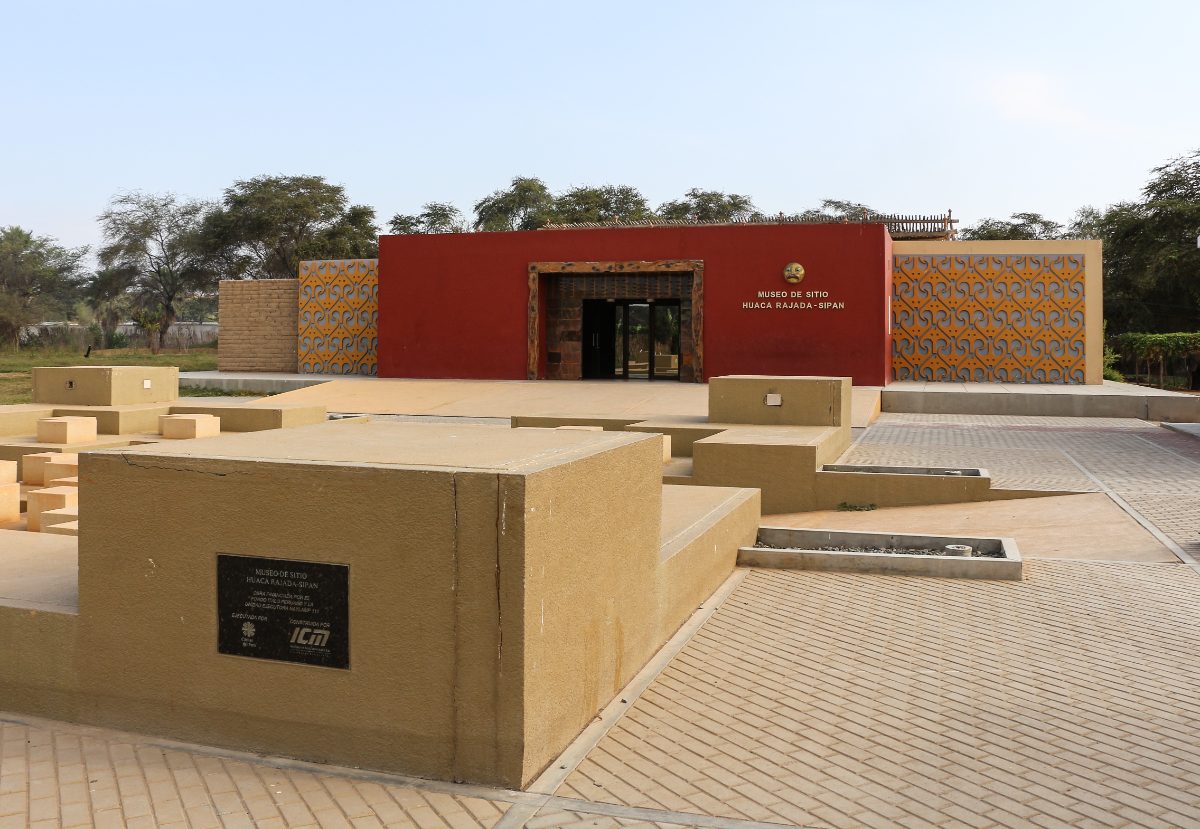
Additional tombs uncovered at the site over subsequent decades, including a warrior priest burial, have given archaeologists an increasingly detailed picture of how Sipan’s ruling dynasty organized itself across generations, each burial adding new detail to the site’s overall chronology and social structure.
Comparing grave goods between the Old Lord and the later Lord of Sipan has allowed archaeologists to trace how royal regalia and burial customs evolved across at least two generations of the same ruling lineage, offering a rare multigenerational snapshot of Moche elite culture rarely available at other sites where only a single royal tomb survives intact.
Radiocarbon dating and stratigraphic analysis place the Old Lord’s burial roughly a century or more before the more famous tomb above it, meaning the platform at Huaca Rajada was reused and rebuilt across several generations, a pattern of layered construction echoed at many other major Andean ceremonial and funerary sites.
Some archaeologists have proposed that the succession of tombs at Huaca Rajada, each built directly above the last, reflects a deliberate strategy by successive rulers to claim legitimacy through physical association with their predecessors, a pattern of dynastic continuity expressed architecturally rather than through any surviving written genealogy.
The Moche World Without an Empire
Unlike the Inca who came many centuries later, the Moche never unified Peru’s north coast under a single centralized state. Instead, they operated as a network of related valley-based polities sharing artistic style, religious iconography, and elite burial customs, while each valley likely retained considerable local political independence under its own ruling lords.
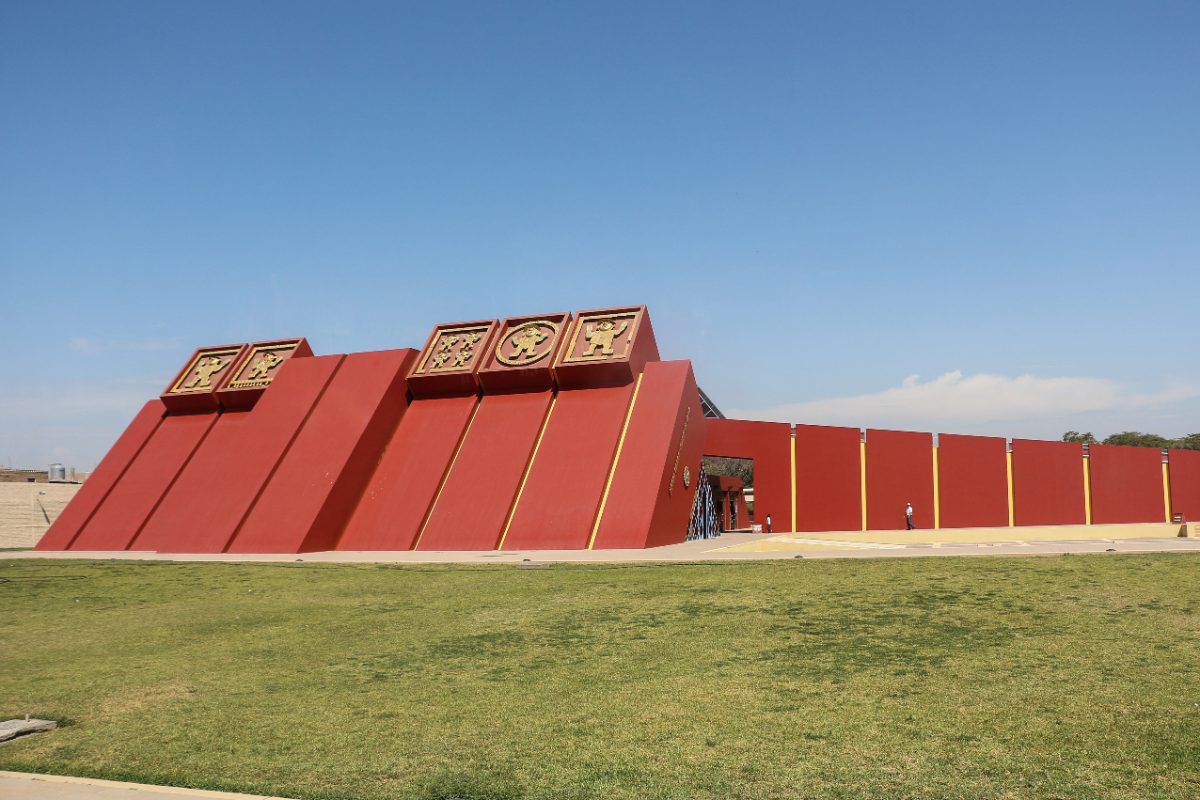
Sipan’s extraordinary wealth suggests the Lambayeque valley held significant regional importance during the Lord of Sipan’s lifetime, though the exact political relationship between Sipan and other major Moche centers further south, including the Huacas del Sol and de la Luna near modern Trujillo, remains an active area of archaeological research.
Irrigation canals built by Moche engineers to water the otherwise arid Lambayeque valley represent another significant, if less visually dramatic, achievement than the gold recovered from Sipan’s tombs, technology that allowed a substantial agricultural population to thrive along a coastline that receives almost no rainfall for most of the year.
Comparative studies between Sipan and the Huacas del Sol and de la Luna complex further south have highlighted both shared religious iconography and distinct regional variations in burial practice, reinforcing the picture of Moche civilization as a constellation of related but politically independent valley kingdoms rather than a single unified state.
Each valley polity likely maintained its own local ruling lineage and ceremonial center, loosely bound to neighboring valleys through shared religious practice, trade, and probably periodic conflict, a decentralized model quite different from the highly centralized administrative bureaucracy the Inca would later impose across a far larger stretch of the Andes.
Sacrifice Ceremonies in Moche Art
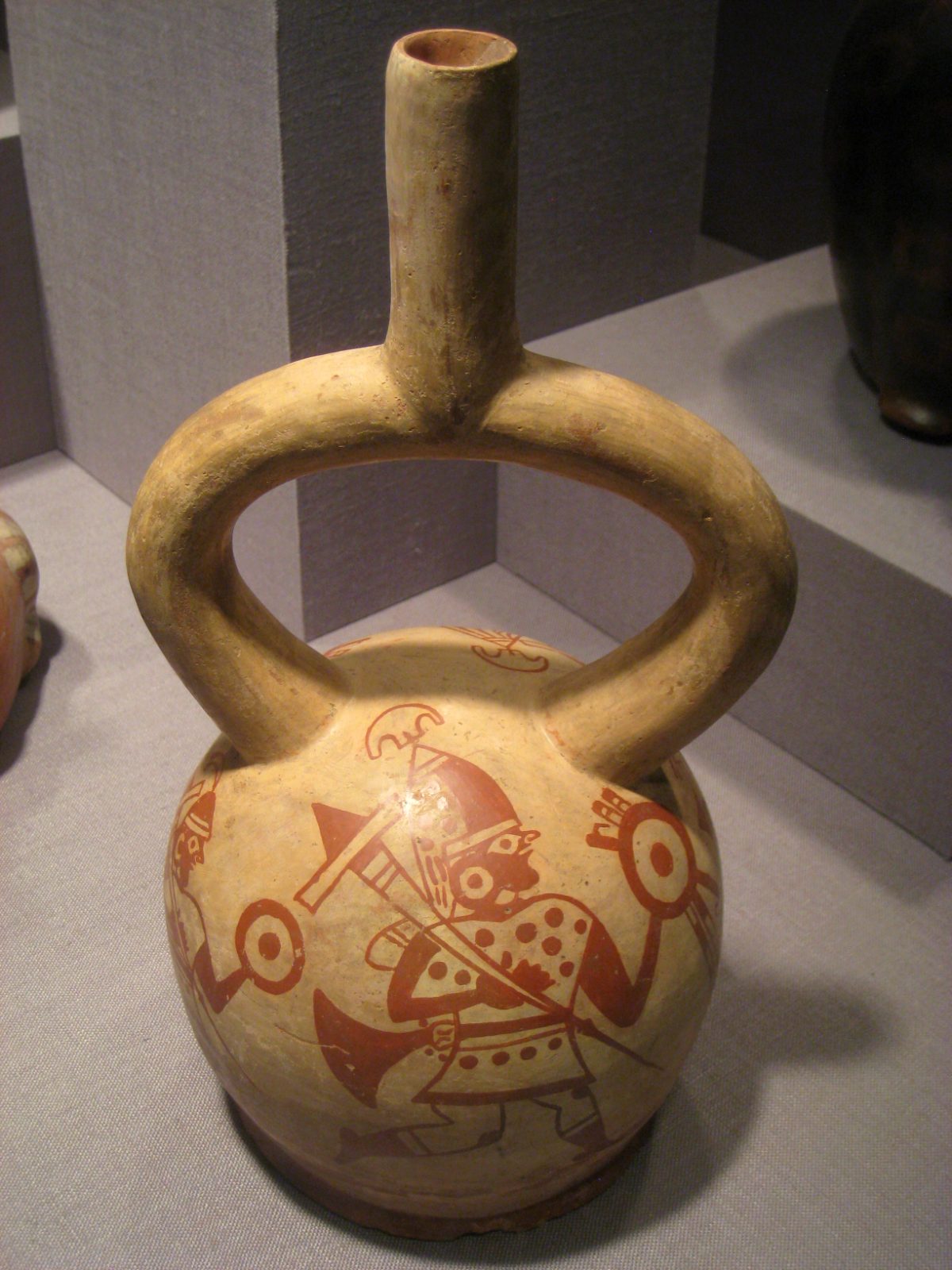
Moche ceramics and murals frequently depict a recurring scene modern scholars call the Sacrifice Ceremony, showing elaborately dressed figures presenting cups of blood, drawn from bound captives, to a dominant warrior-priest figure closely resembling the regalia found in the Lord of Sipan’s tomb.
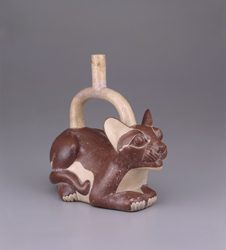
The tomb’s discovery effectively confirmed that this was not purely mythological imagery but reflected an actual ritual office held by real, historical individuals, transforming how archaeologists interpreted decades of previously excavated Moche art depicting the same recurring ceremonial figures and scenes.
Some researchers propose that the Sacrifice Ceremony scene may have been reenacted periodically as an actual ritual performance involving real captives, rather than functioning purely as a symbolic or mythological motif, meaning the individuals depicted receiving and presenting blood in these images may correspond to specific historical office holders, including men later buried at Sipan itself.
Fineline painted vessels depicting warriors, prisoners, and ceremonial regalia nearly identical to items found in the Sipan tombs have been recovered from Moche sites hundreds of kilometers apart, evidence that this ceremonial complex and its associated imagery were shared across a wide cultural sphere rather than confined to any single valley or ruling family.
Understanding this ceremony as a real historical practice rather than pure myth has reshaped broader academic discussion of violence, captivity, and religious authority in Moche society, prompting renewed scholarly interest in how power was displayed, justified, and ritually enacted among the elite of Peru’s north coast.
The Museum and Visiting Sipan Today
Recognizing the scale of what had been found, Walter Alva helped establish the Royal Tombs of Sipan Museum in the nearby town of Lambayeque, a purpose-built facility designed to echo Moche pyramidal architecture and to keep the recovered treasures within the region where they were discovered rather than sending them to a distant national capital.
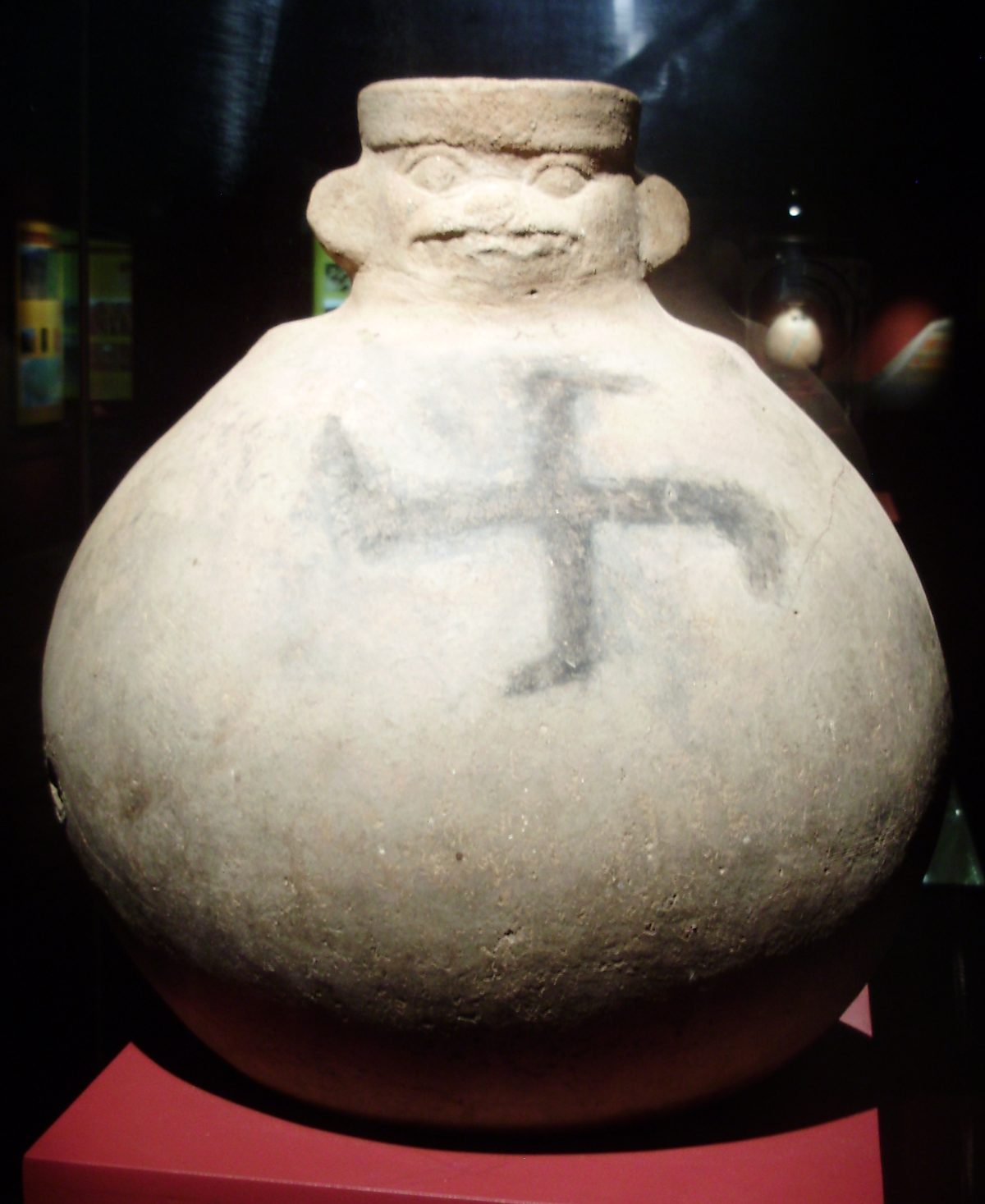
Visitors today can tour both the museum’s extensive gold and ceramic collections and the excavated tombs at Huaca Rajada itself, along with a smaller site museum near the original discovery location, making Sipan one of the more complete archaeological experiences available on Peru’s north coast.
Alva’s insistence on keeping the Sipan treasures within Lambayeque, rather than transferring them to Lima’s national museums as had often happened with major finds in the past, reflected a broader shift in Peruvian archaeological policy toward preserving regional heritage close to its place of origin, a decision that has since made Lambayeque an important cultural tourism destination in its own right.
The museum’s design deliberately avoids displaying artifacts as isolated art objects, instead presenting them within reconstructed contextual layouts approximating how excavators actually found them in the tomb, an approach intended to communicate archaeological process and meaning rather than treating the gold purely as decorative treasure.
Beyond the main museum, smaller community-run exhibits near the original excavation site give visitors a closer look at the specific tunnels and platforms where the discovery unfolded, grounding the museum’s polished displays in the actual dusty farmland where the entire story began back in 1987.
Nearby Places to Explore
Sipan’s history connects to other Andean sites covered elsewhere in this series.
- Caral Is the Oldest City Ever Built in the Americas
- How the Wari Empire Ruled the Andes Long Before the Inca
- Cerro Sechin, the Peruvian Temple Carved With Warriors and Their Victims
Closing Thoughts
The Lord of Sipan’s tomb transformed how archaeologists understand Moche civilization, turning centuries of enigmatic ceramic imagery into evidence of a real, richly documented ritual and political world. It also stands as a case study in the ongoing race between looting and legitimate archaeology across Peru, one this particular tomb very nearly lost.
What survives today, housed in a museum built specifically to keep this heritage close to home, remains one of the most complete windows available into the beliefs, wealth, and funerary customs of a civilization that left no written words behind, only gold, ceramic, and the bodies of the people who once ruled from this quiet stretch of coastal Peru.
You May Like
Hohensalzburg Fortress: The Great White Stronghold That Never Fell


5 thoughts on “Sipan’s Looted Royal Tomb Rewrote Moche History”