Northeast of modern Mexico City, a grid of pyramids and avenues sprawls across more than 20 square kilometers, once home to what may have been the largest city in the pre-Columbian Americas. At its peak, Teotihuacan likely housed more than 100,000 people, rivaling the largest cities anywhere in the world at the time.
And yet almost everything about the people who built it remains a mystery. We do not know what they called themselves, what language they spoke, or even what name the city originally carried. ‘Teotihuacan’ is an Aztec word, applied centuries after the city had already been abandoned and left in ruins.
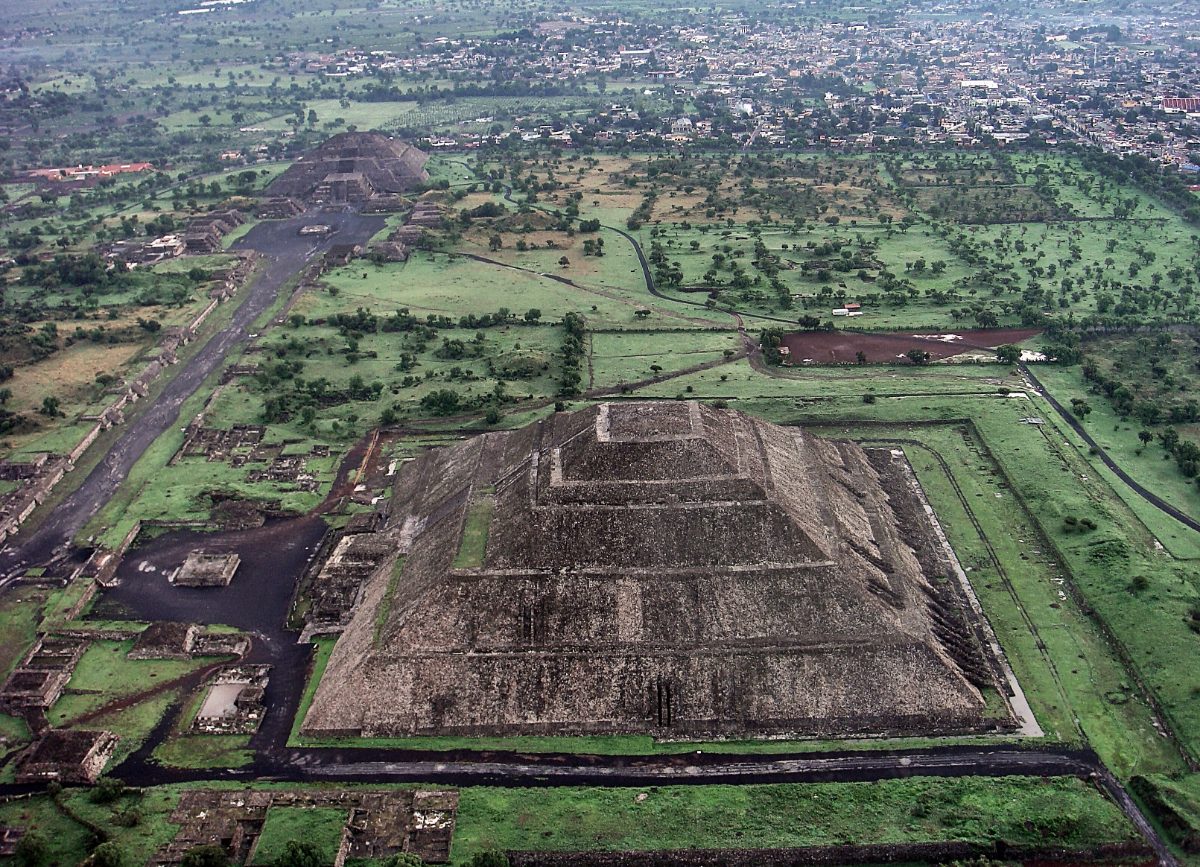
Table of Contents
- A City Whose Builders’ Name Is Lost
- The Pyramid of the Sun and Its Hidden Cave
- The Pyramid of the Moon and the Sacrifices Beneath It
- Walking the Avenue of the Dead
- The Citadel and the Feathered Serpent Temple
- A Language and a People We Still Cannot Name
- Gods, Rain, and the Storm Deity Tlaloc
- An Empire Without an Emperor’s Name
- Why Teotihuacan Collapsed and Burned
- How the Aztecs Inherited a Ruin
- Nearby Places
A City Whose Builders’ Name Is Lost
By the time the Aztecs encountered the ruins of Teotihuacan in the 14th century, the city had already been abandoned for roughly 600 years. They gave it the name we still use today, Teotihuacan, meaning roughly ‘place where the gods were created’ or ‘birthplace of the gods’ in Nahuatl, and wove it into their own origin myths as the site where the sun and moon were born.
But the Aztecs did not build it, and they knew it. The city’s true founders left no written histories that have been deciphered, no king lists, and no clear self-designation. Archaeologists simply call them Teotihuacanos, a placeholder name describing people defined entirely by the city they left behind rather than by anything they called themselves.
Construction at the site began around 100 BCE, with the city reaching its greatest size and influence between 100 and 650 CE, centuries before the Aztec empire, the Toltec city of Tula, or most of the Maya city-states most people associate with ancient Mexico.
At its height, Teotihuacan was organized into distinct residential districts, some apparently home to specific ethnic or regional groups from elsewhere in Mesoamerica, including what appears to have been a neighborhood of Oaxacan migrants connected to the Zapotec world centered at Monte Alban. This diversity suggests the city functioned as a genuine cosmopolitan center, drawing craftsmen, traders, and possibly diplomats from far beyond the Basin of Mexico.
Modern estimates of the city’s population vary, but most researchers agree it likely exceeded 100,000 residents at its peak between roughly 300 and 500 CE, making it comparable in scale to contemporary cities in the Roman world and considerably larger than most other Mesoamerican settlements of the era.
The Pyramid of the Sun and Its Hidden Cave
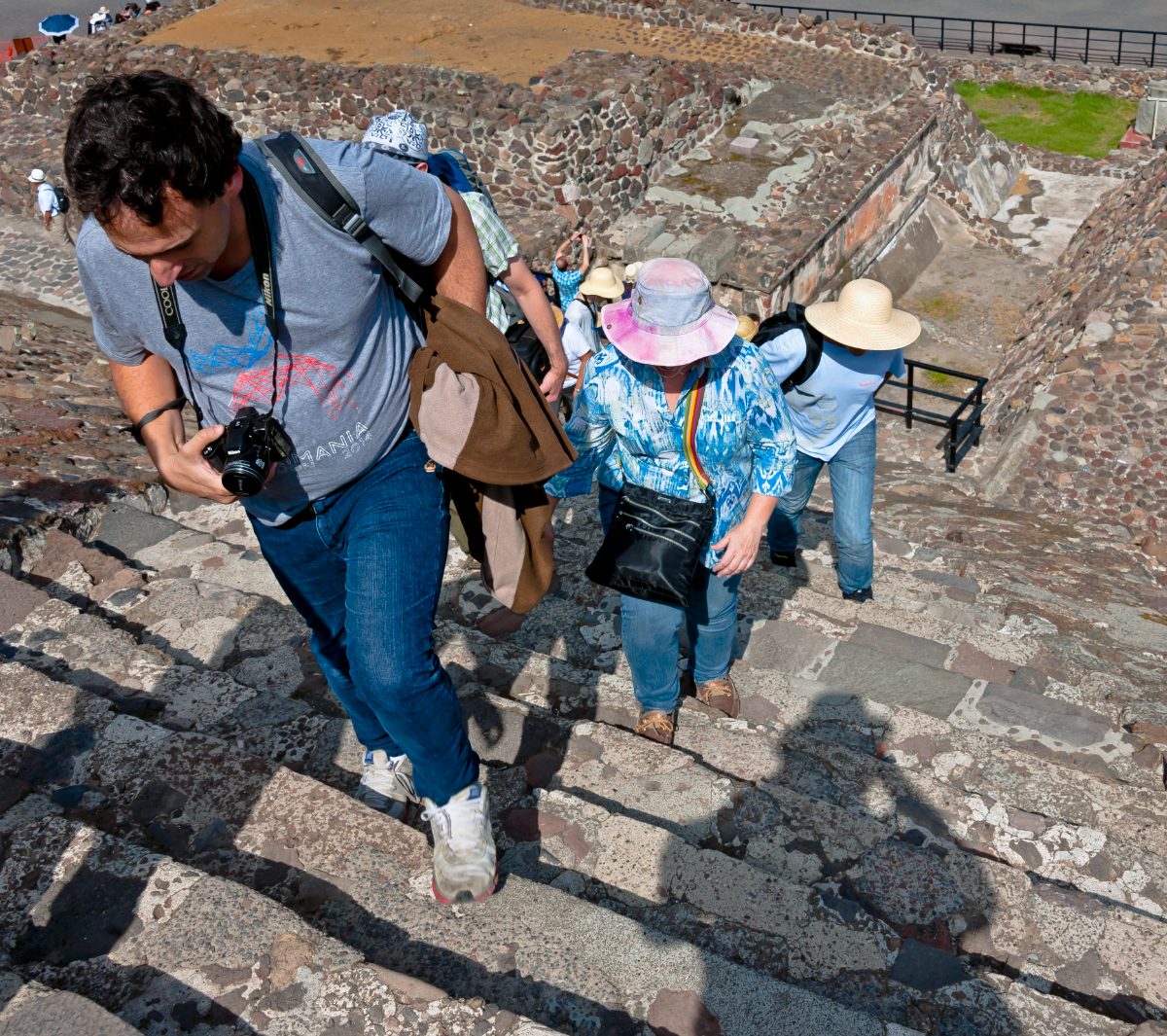
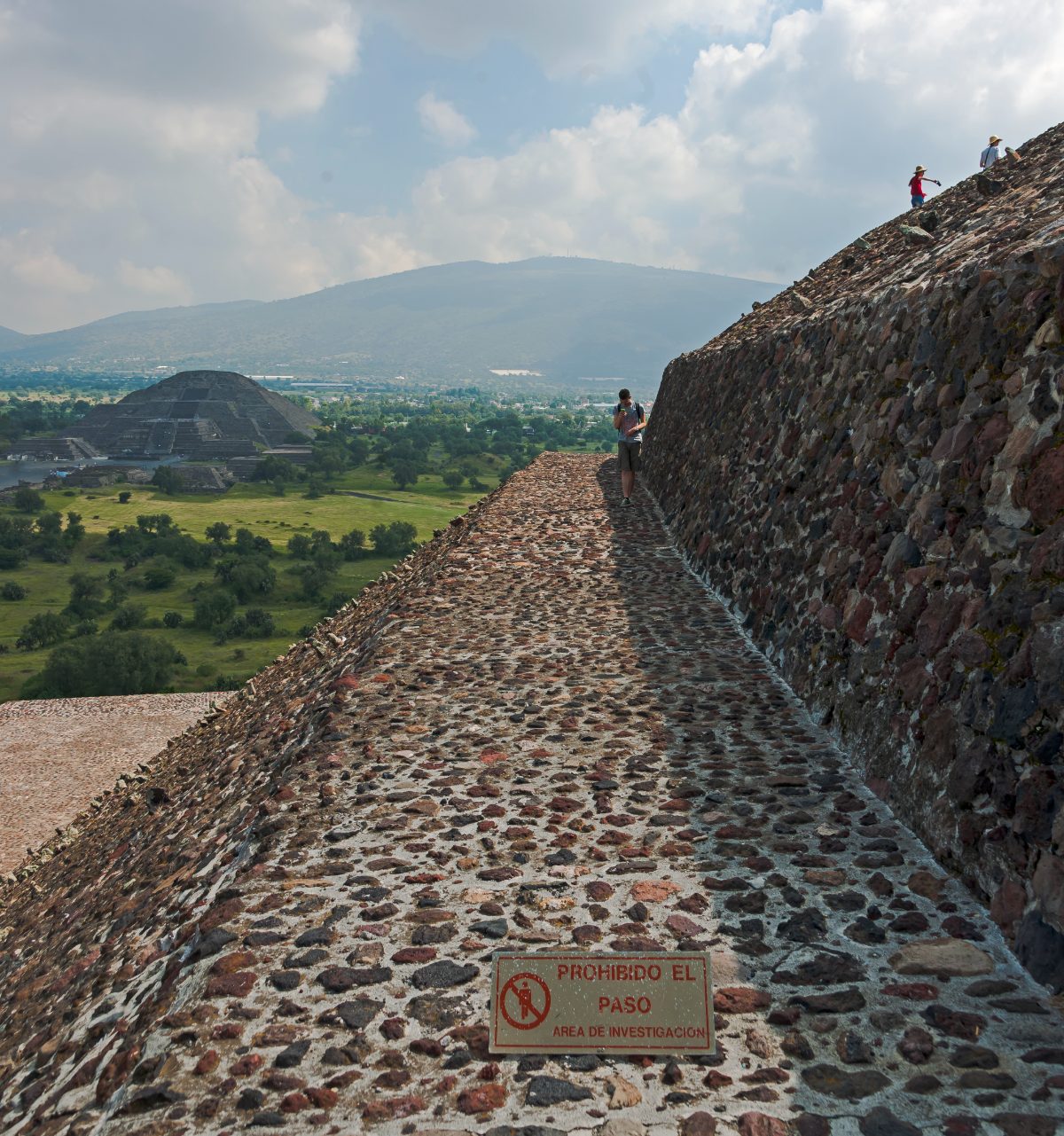
The Pyramid of the Sun is the largest structure at Teotihuacan and one of the largest pyramids ever built in the ancient world, rising roughly 65 meters with a base nearly as large as that of Egypt’s Great Pyramid of Giza. Its sheer volume of packed earth, rubble, and adobe brick represents an almost unimaginable mobilization of labor for a society without draft animals, iron tools, or the wheel used for transport.
Beneath the pyramid, archaeologists discovered a natural cave and tunnel system that had been artificially modified and extended, likely serving as the symbolic origin point that determined where the entire pyramid, and possibly the whole city, would be built. In Mesoamerican cosmology, caves were frequently understood as entrances to the underworld and places of creation, suggesting the pyramid was deliberately positioned over a site already considered sacred before construction even began.
Excavations inside the tunnel uncovered chambers containing pyrite mirrors, greenstone figurines, and shell ornaments, offerings that suggest the space was used for ritual purposes tied directly to the pyramid’s religious significance rather than serving any structural or defensive function.
The tunnel beneath the Pyramid of the Sun was first explored extensively in the 1970s, though later excavations using ground-penetrating radar and robotic cameras in the 2000s revealed additional chambers and confirmed that portions of the passage had been deliberately sealed in antiquity, likely once the ritual purpose tied to its construction had been fulfilled.
Some researchers have proposed that the cave system may have originally been a natural lava tube, later modified and formalized by Teotihuacan’s builders into a more structured ceremonial space, blending a naturally sacred landscape feature with deliberate architectural design in a pattern seen at other Mesoamerican sites where caves held cosmological significance.
The Pyramid of the Moon and the Sacrifices Beneath It
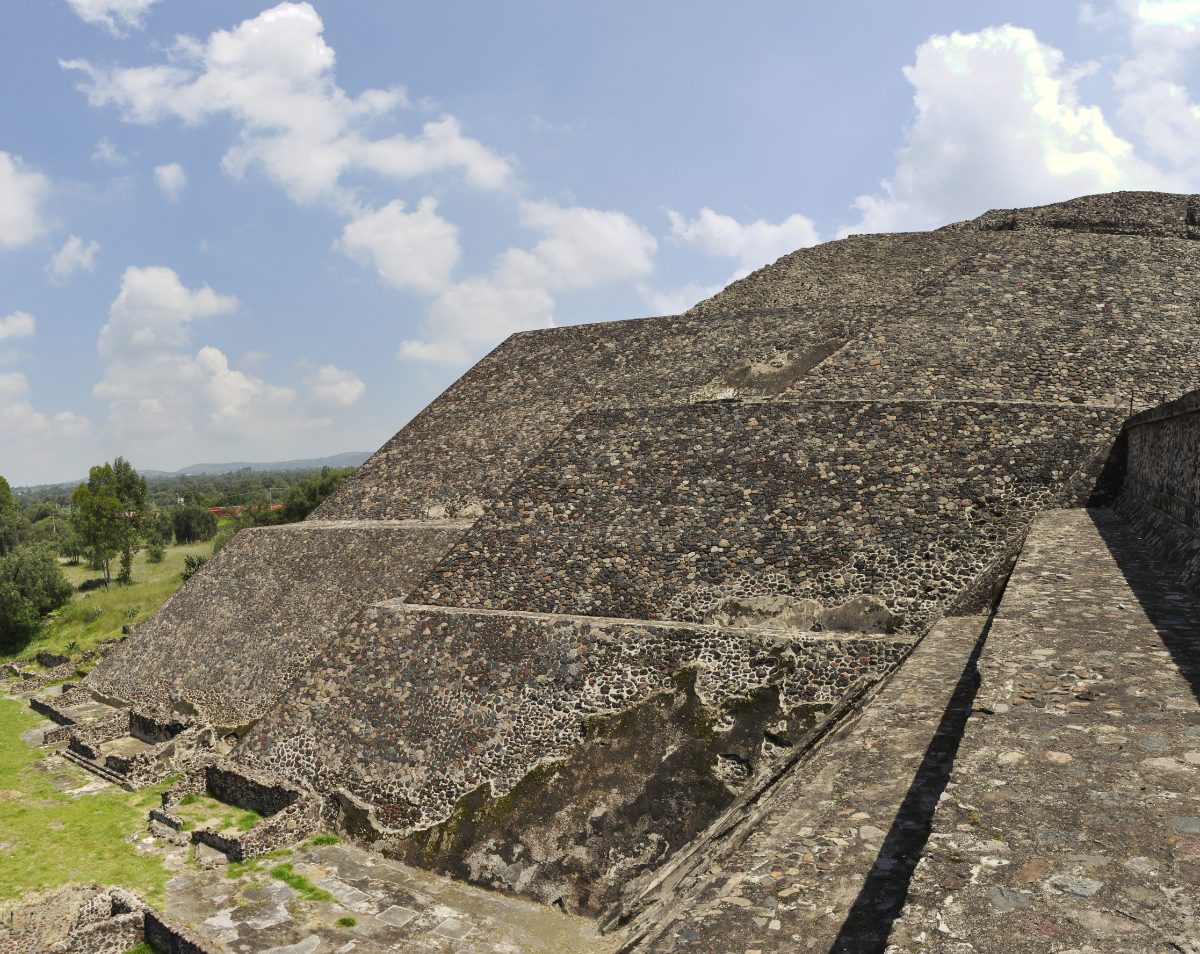
At the northern end of the city stands the Pyramid of the Moon, smaller than its counterpart but arguably more revealing to archaeologists, since excavations here have been more extensive and less disruptive to the original structure. Built in at least seven stages over centuries, each expansion buried the previous version, a pattern of continual renewal that echoes construction practices seen at other major Mesoamerican and Andean ceremonial sites.
Excavations beneath the Pyramid of the Moon uncovered dedicatory burials, including individuals believed to have been sacrificed during construction, some found alongside animals such as wolves, pumas, and eagles that carried symbolic importance in Mesoamerican religious thought. These offerings appear to mark the completion of specific building phases rather than representing random burials.
The scale and formality of these burials point to a highly organized state capable of directing large-scale ritual, labor, and resource allocation, reinforcing the idea that Teotihuacan operated under centralized religious and political authority even though no ruler’s name or portrait has been definitively identified.
Excavation of the plaza in front of the Pyramid of the Moon uncovered a large greenstone statue believed to represent a water or fertility deity, alongside caches of obsidian blades, shells imported from both Pacific and Gulf coasts, and finely worked jade, underscoring the enormous trade networks the city could draw upon for even routine ceremonial offerings.
The consistency of these dedicatory patterns across multiple construction phases, spanning likely more than two centuries, suggests a stable religious and administrative tradition capable of maintaining ritual continuity across several generations of builders and priests.
Walking the Avenue of the Dead
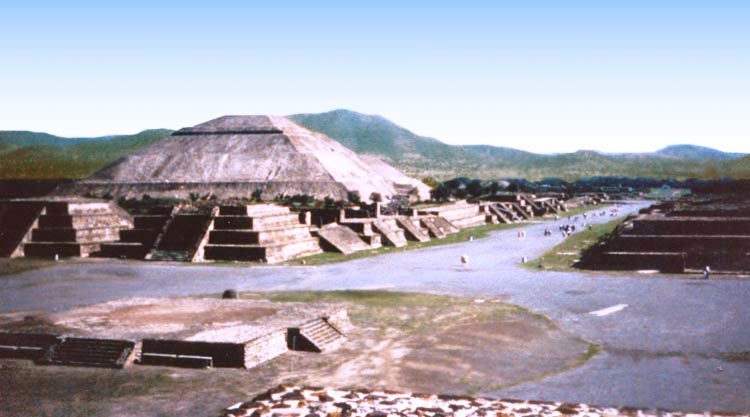
The Avenue of the Dead, a name given by the Aztecs who mistook the structures lining it for tombs, runs for more than two kilometers through the heart of the city, connecting the Pyramid of the Moon at its northern end to the Ciudadela, or Citadel, complex to the south. The name stuck even after later research showed most of the flanking platforms served as temple bases and elite residences rather than burial sites.
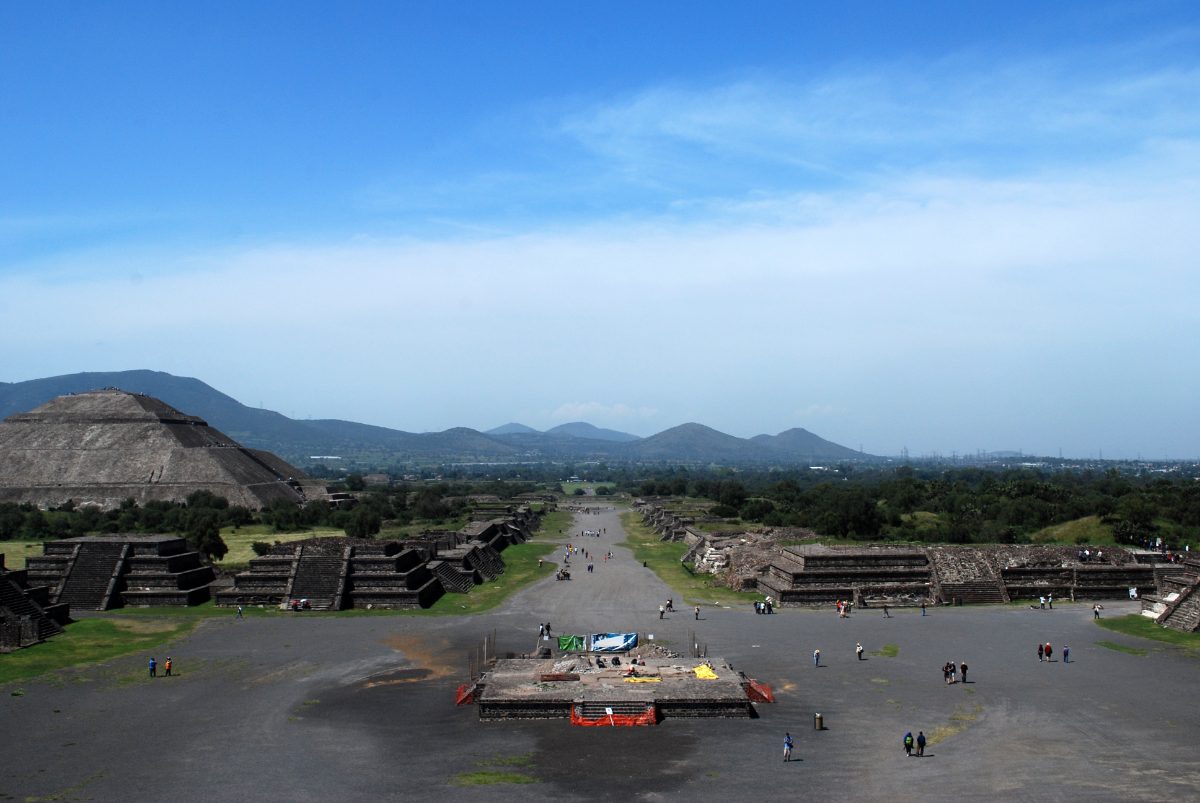
The avenue was laid out according to a precise grid that governed the entire city’s layout, oriented roughly 15.5 degrees east of true north, an alignment believed to correspond to astronomical observations, possibly tracking the setting position of the Pleiades star cluster on specific ceremonially important dates.
Walking its length today, visitors pass the remains of dozens of platform temples, plazas, and residential compounds, giving a sense of just how much of the ancient city’s population lived within a tightly integrated urban core rather than dispersed across the surrounding landscape.
Many of the platforms lining the avenue supported multi-room residential compounds built around open courtyards, a housing style found throughout the city and used by families across a range of social classes, from modest artisan households to wealthier compounds closer to the ceremonial core.
Some of these residential compounds have yielded workshop debris tied to specific crafts, including obsidian tool production and ceramic manufacturing, suggesting Teotihuacan organized at least part of its economy around specialized neighborhood-based industries supplying goods for both local use and long-distance trade.
The Citadel and the Feathered Serpent Temple
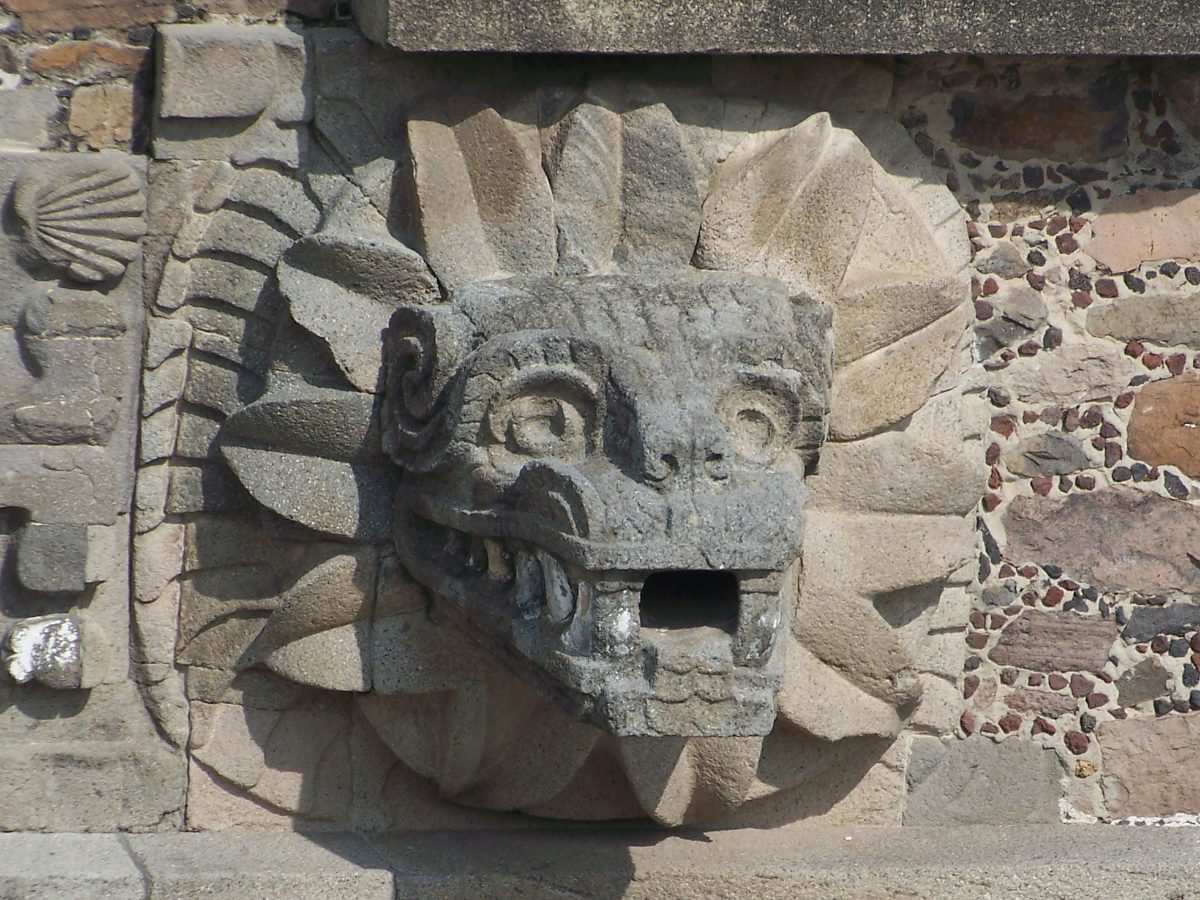
At the southern end of the Avenue of the Dead sits the Ciudadela, a massive walled plaza that likely functioned as a civic and religious center, possibly even the residence of the city’s rulers. At its heart stands the Temple of the Feathered Serpent, decorated with alternating carved heads of a feathered serpent deity and a still-debated second figure, sometimes interpreted as an early form of the storm god or a war-associated headdress.
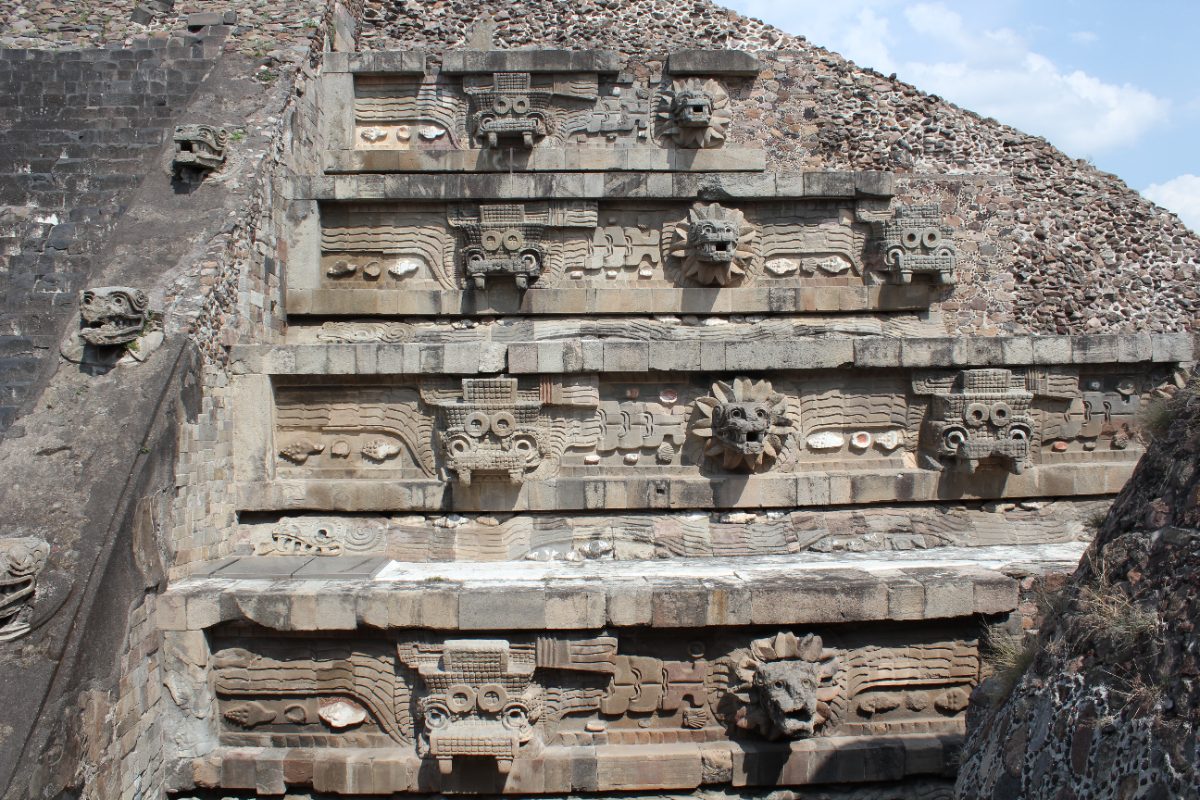
Excavations beneath the temple uncovered mass graves containing more than 200 sacrificed individuals, many bound and dressed in warrior-associated regalia, buried as dedicatory offerings during the structure’s construction. The scale of the sacrifice, one of the largest documented at any Mesoamerican site, suggests the temple held extraordinary religious and political importance, possibly tied to militaristic ideology and the legitimization of ruling authority.
The feathered serpent imagery here predates and likely influenced the much later Aztec deity Quetzalcoatl, illustrating how deeply Teotihuacan’s religious symbolism was absorbed into the belief systems of Mesoamerican cultures that rose long after the city itself had fallen into ruin.
The Ciudadela’s massive scale, capable of holding tens of thousands of people within its walled plaza, suggests it hosted large public ceremonies involving significant portions of the city’s population, reinforcing the idea that religious spectacle played a central role in maintaining social and political cohesion.
Later construction phases partially buried the most elaborately carved facade of the Temple of the Feathered Serpent beneath a plainer platform, a modification some archaeologists interpret as a deliberate softening of the temple’s overtly militaristic imagery, possibly reflecting a shift in political or religious ideology during the city’s middle period.
A Language and a People We Still Cannot Name
Unlike the Maya, whose hieroglyphic writing has been substantially deciphered, or the Inca, whose Quechua language survives as a living tongue spoken by millions today, Teotihuacan left behind no confirmed writing system and no language that can be connected to it with confidence. Some symbols and glyph-like markings appear on murals and ceramics, but scholars remain divided on whether these represent a true writing system, a set of place-name or calendar notations, or purely symbolic and religious imagery.
Proposals for what language the Teotihuacanos spoke have included early forms of Nahuatl, Totonac, Mixe-Zoquean languages, and Otomi, based on later population distributions and loanword patterns in surrounding regions, but none of these hypotheses has been confirmed. This stands in sharp contrast to nearly every other major site examined in this series, most of which have at least a plausible linguistic descendant or documented historical record.
The absence of decipherable text is especially striking given the city’s obvious sophistication in astronomy, urban planning, and religious organization. Whatever record-keeping system Teotihuacan’s administrators used to manage a city of well over 100,000 people, it either was never committed to a form that survives, or it has simply not yet been recognized and decoded by modern researchers.
Some scholars have suggested Teotihuacan may have been genuinely multilingual, given its apparent role as a magnet for migrants from different regions of Mesoamerica, meaning no single language dominated the city even at its height, which would help explain why no single, clearly dominant script or language tradition survives in the archaeological record.
This linguistic uncertainty stands in useful contrast to a site like Cusco, where Quechua’s status as a living, spoken language today allows historians to draw a direct line between ancient administrative practice and modern usage. At Teotihuacan, no such living thread exists, leaving its inner intellectual and bureaucratic life far more opaque to modern researchers.
Gods, Rain, and the Storm Deity Tlaloc
Murals throughout Teotihuacan depict a storm and rain deity later known to the Aztecs as Tlaloc, recognizable by distinctive goggle-like eye rings and fanged mouth. Given the city’s dependence on seasonal rainfall for agriculture in the semi-arid Basin of Mexico, Tlaloc-associated imagery appears with striking frequency across temple facades, ceramics, and residential murals alike.
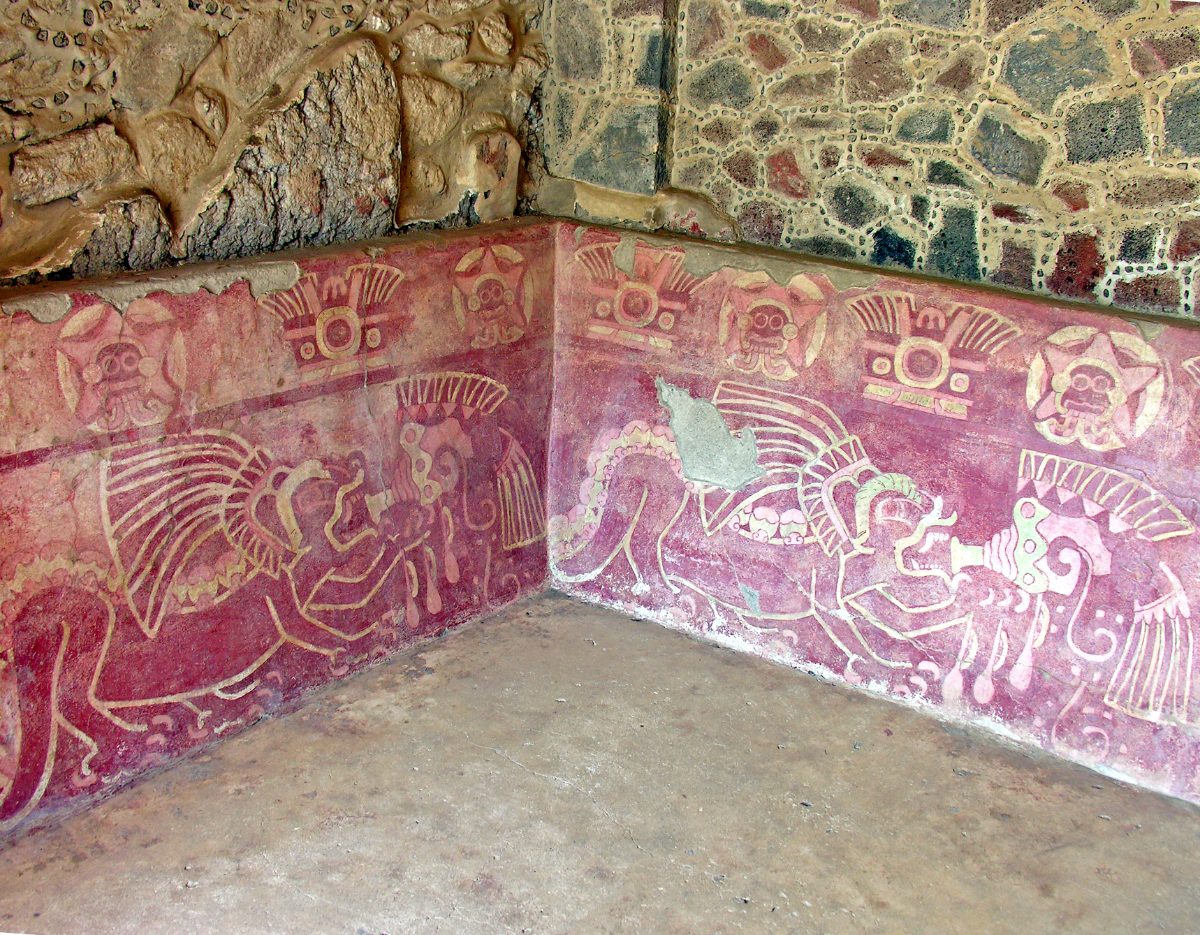
The jaguar also held major symbolic importance, associated with military orders, elite status, and possibly specific lineages or corporate groups within the city. Mural paintings such as those found in what archaeologists call the Jaguar Palace depict elaborately costumed feline figures in processional scenes whose exact religious or political meaning remains debated.
Religious practice at Teotihuacan appears to have blended state-sponsored ceremony centered on the great pyramids with smaller-scale household rituals conducted within the city’s many multi-family residential compounds, suggesting religion permeated daily life at every social level rather than being confined to an elite priestly class alone.
Feathered serpent imagery, storm deity motifs, and jaguar symbolism at Teotihuacan appear to have traveled well beyond the city itself, influencing religious iconography as far away as the Maya lowlands, where later rulers occasionally adopted Teotihuacan-style warrior costumes and symbols to bolster their own political legitimacy.
Ceramic incense burners recovered from residential compounds throughout the city depict layered imagery combining human faces, floral motifs, and animal symbolism, suggesting household-level religious practice was every bit as visually elaborate as the state ceremonies conducted at the great pyramids.
An Empire Without an Emperor’s Name
Despite governing what was likely the largest city in the pre-Columbian Americas at its height, Teotihuacan has produced no confirmed royal portraits, no king lists, and no dynastic monuments comparable to the stelae erected by Maya rulers at sites such as Calakmul or Copán. This has led some archaeologists to propose that the city may have been governed by a council or collective leadership structure rather than a single divine monarch, a strikingly different political model from most of its Mesoamerican contemporaries.
Teotihuacan’s influence, however, was unmistakable and far-reaching. Its distinctive architectural style, ceramics, and iconography appear at sites hundreds of kilometers away, including evidence of a Teotihuacan-linked presence at the Maya city of Tikal, where artifacts and even a possible foreign-influenced ruler suggest some form of military, diplomatic, or trade relationship existed between the two distant powers.
Obsidian mined near Teotihuacan was traded across enormous distances, and the city’s merchants and artisans appear to have maintained commercial networks reaching into Guatemala and beyond, projecting economic influence across Mesoamerica even without the military conquest model associated with later empires like the Aztecs.
Some archaeologists have proposed a four-part governing structure at Teotihuacan, possibly reflected in the city’s own quadripartite urban layout, with power shared among elite families or religious offices rather than concentrated in a single hereditary throne, though this remains a working hypothesis rather than settled fact.
Whatever its exact political structure, the absence of glorified individual rulers in Teotihuacan’s art stands in sharp contrast to the highly personalized royal portraiture found among the Classic Maya, suggesting a genuinely different approach to displaying and legitimizing political power.
Why Teotihuacan Collapsed and Burned
Sometime around 550 to 650 CE, Teotihuacan experienced a dramatic decline. Archaeological evidence shows that many of the city’s major temples and elite residential compounds along the Avenue of the Dead were deliberately burned, while more ordinary residential neighborhoods elsewhere in the city appear to have been left largely untouched.
This pattern has led many archaeologists to interpret the destruction as an internal uprising rather than a foreign invasion, possibly directed specifically at the ruling and religious elite by the city’s own population during a period of stress, whether from drought, resource scarcity, or political breakdown. Some evidence of a prolonged regional drought around this period lends support to environmental stress as a contributing factor.
Whatever the precise cause, the city’s population declined sharply in the following decades, and Teotihuacan never regained its former scale or influence, leaving behind a monumental ruin that would sit largely empty for the next 600 years, visited occasionally but never resettled at anything close to its former scale.
Isotopic and skeletal evidence from burials in the final decades before the city’s decline suggests rising signs of nutritional stress among parts of the population, consistent with the drought and resource-strain hypothesis and lending weight to the idea that internal social pressure, rather than external attack, drove the uprising archaeologists have identified in the burned temple remains.
Following the collapse, some former residents appear to have relocated to smaller regional centers throughout the Basin of Mexico and beyond, carrying elements of Teotihuacan’s architectural and religious traditions with them even as the great city itself was left to crumble.
How the Aztecs Inherited a Ruin
When the Aztecs rose to prominence in the Basin of Mexico centuries later, they encountered Teotihuacan’s ruins as an already-ancient mystery, much as later visitors would encounter the Aztecs’ own capital after the Spanish conquest. Rather than dismissing the site, they incorporated it directly into their religious cosmology, treating it as the place where their gods had sacrificed themselves to set the sun and moon in motion at the beginning of the current world age.
Aztec rulers made pilgrimages to the site, and Aztec artisans reused Teotihuacan-style imagery and even ancient objects scavenged from the ruins in their own religious offerings, treating them as powerful relics connecting their empire to a deep and prestigious past, much as later Toltec rulers at Tula had claimed connections to Teotihuacan’s legacy generations earlier.
This layering of civilizations, each one building meaning on top of a predecessor’s ruins without fully understanding who that predecessor actually was, is one of the most distinctive features of the Basin of Mexico’s history, and it makes Teotihuacan simultaneously one of the most studied and most mysterious sites anywhere in the Americas.
Spanish colonial chroniclers recorded Aztec accounts describing Teotihuacan as the site of a foundational myth in which the gods gathered in darkness to decide who would sacrifice themselves to become the sun, a story that gave the ruins enormous religious weight centuries after any memory of their original builders had faded entirely.
Modern archaeological investigation of the site began in earnest in the early 20th century and continues today, with new excavation and imaging technology steadily revealing details about a city that, despite more than a century of sustained research, still guards more questions than answers.
Nearby Places
Teotihuacan’s influence radiated across much of Mesoamerica, connecting it to cities that would rise, fall, and draw on its legacy long after its own decline.
- Tula, the Toltec capital that later claimed descent from Teotihuacan’s legacy
- Calakmul, the Maya Snake Kingdom whose rulers may have had contact with Teotihuacan’s distant power
- Monte Alban, the Zapotec capital that maintained its own diplomatic ties across the region during Teotihuacan’s rise
Closing Thoughts
Teotihuacan stands as a reminder of how much of the ancient past resists easy answers. It was, by any measure, one of the most important cities in the ancient world, ordered enough to plan a precise urban grid, powerful enough to project influence across a continent, and dedicated enough to bury hundreds of people beneath a single temple. Yet its builders left without a name we can pronounce, a language we can read, or a ruler we can identify. Sometimes the most important places are also the ones that keep their deepest secrets.
You May Like
Mafra, the Palace a King Built From a Vow