In the wide savannas and gallery forests of the Mato Grosso in central Brazil live the Bororo, a people whose villages once stretched across a vast stretch of the cerrado between the headwaters of great rivers. For centuries they moved between the open grassland and the wooded riverbanks, hunting, fishing, and gathering across a homeland shaped by long dry seasons and heavy summer rains. Their name for themselves speaks of the village clearing, the round plaza at the heart of every settlement where the living and the dead remain bound together.
The Bororo are remembered in anthropology far beyond their own numbers, because their intricate social order and their elaborate rituals for the dead drew scholars who tried to map the logic of their world. Yet the Bororo are not a museum people. They continue to farm, fish, and hold the ceremonies that mark a person’s passage out of life, adapting old patterns to a landscape now crossed by cattle ranches and highways. This article traces their origins, their language, their homeland, and the way of life that still turns around the great circular village.
Contents
- Origins of the Bororo People
- The Meaning of the Bororo Name
- The Bororo Language
- Homeland in the Mato Grosso
- The Old Way of Life
- Society and the Circular Village
- Religion and the World of Spirits
- Traditions and the Rites of the Dead
- Crafts and Feather Art
- Food and the Cerrado Harvest
- Festivals and Ceremonial Life
- History and Contact
- The Bororo Today
Origins of the Bororo People
The Bororo trace their presence in central Brazil back many generations, long before the first Portuguese expeditions pushed inland in search of gold and slaves. Archaeological traces and oral memory both place their ancestors along the rivers and savannas of what is now the state of Mato Grosso, a land of open grass broken by ribbons of forest following the water.
Early accounts described a people organized into numerous villages, each an independent settlement bound to others by shared language and ritual. The Bororo were once far more numerous, spread across a territory that reached toward the borderlands of present-day Bolivia, before disease and conflict following contact reduced their numbers sharply.
Their own origin stories tie the people to the land, the animals, and the ancestors in a single web of kinship. To be Bororo is to belong to a clan whose identity reaches back to the first beings who shaped the world, and this sense of deep rootedness still frames how the people understand their place in the cerrado.
The cerrado that the Bororo call home is one of the oldest and most biodiverse savannas on earth, and their ancestors learned to read it with great precision. Knowing where honey could be found, when the fruit trees ripened, and which stretches of river held fish in the dry season was the accumulated wisdom of many generations bound to this particular land.
Scholars believe the Bororo have occupied their central Brazilian homeland for a very long span, and their material culture and language both point to deep local roots rather than any recent arrival from elsewhere. This continuity gives their claim to the land a weight measured not in decades but in the memory of many lifetimes.

The Meaning of the Bororo Name
The word Bororo is often translated as village courtyard or the central plaza of the settlement, the cleared circle around which every house is arranged. This is fitting, for no single feature defines Bororo life more than the round village with its ceremonial center.
Outsiders applied several names to the people over the centuries, and neighboring groups and colonial writers used their own terms. The name that endured, however, points inward to the heart of the community rather than to any external marker, underlining how central the village plaza is to Bororo identity.
To call oneself Bororo is therefore to claim a place within that circle, among the clans and moieties whose houses ring the plaza. The name carries the whole social order within it, a reminder that identity and geography are, for this people, one and the same thing.
Because the plaza is where the men’s house stands and where the great ceremonies unfold, the name that means courtyard is really a name for the whole ordered life of the community. It gathers into a single word the idea of a people who arrange themselves in a deliberate pattern, facing one another across a shared center.

The Bororo Language
The Bororo speak a language belonging to the small Bororoan family, part of the broader set of tongues once grouped under the Macro-Jê stock of central Brazil. It is distinct from the Tupian and Arawakan languages that dominate much of the Amazon, marking the Bororo as inheritors of an older central Brazilian linguistic world.
The language remains spoken in the surviving villages, passed from parents and grandparents to children, though Portuguese has entered daily life through schooling, trade, and contact with the surrounding society. Bilingualism is now common, and elders worry about the pressures that erode the depth of the mother tongue.
Community schools and documentation projects have worked to record vocabulary, stories, and the ceremonial speech that accompanies rituals. For the Bororo, language is not merely communication but the vessel of clan names, song cycles, and the words spoken over the dead, so its survival is tied directly to the survival of their world.
Linguists have long been interested in Bororo precisely because it stands somewhat apart, a relatively isolated branch that offers clues to the deeper history of central Brazil. Every word recorded and every story transcribed adds to a picture of a linguistic heritage that might otherwise fade without trace.
Ceremonial speech, distinct from everyday talk, carries the weight of the great rituals, and mastering it is part of what it means to hold ritual authority. The survival of this specialized register is therefore bound to the survival of the ceremonies it serves.

Homeland in the Mato Grosso
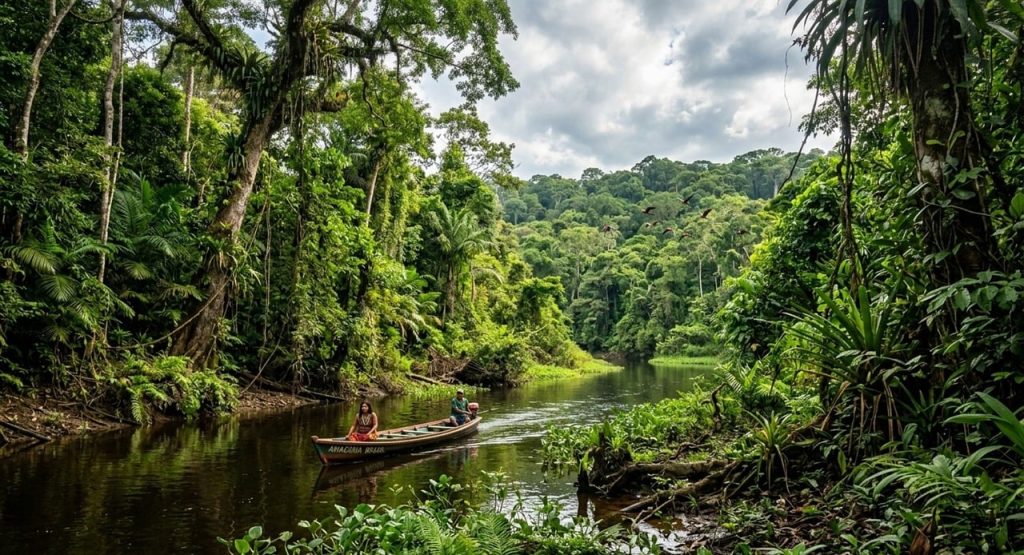
The Bororo homeland lies in the cerrado and gallery forests of Mato Grosso, a landscape of open savanna dotted with gnarled trees and cut by rivers whose banks carry denser woodland. It is a country of sharp seasons, with a long dry spell followed by heavy rains that swell the rivers and green the plain.
This environment shaped a mobile way of life in which villages sat near reliable water and moved when the land or the ritual calendar required it. The rivers provided fish, the forests game and fruit, and the savanna its own harvest of roots, honey, and small animals across the turning year.
Today the ancestral territory has been carved by cattle ranches, soybean fields, and roads, and the Bororo hold demarcated reserves that are only a fraction of the land their ancestors ranged. Defending these territories against encroachment remains one of the central struggles of the living community.
The seasonal flooding of the rivers renews the land each year, depositing nutrients and filling the channels with fish, and the Bororo timed much of their movement to this pulse. The rhythm of flood and drought was, in a real sense, the clock by which the older way of life was set.
The gallery forests that follow the rivers form green corridors across the open plain, sheltering game and providing timber, fruit, and medicinal plants. These wooded strips were as important to Bororo life as the savanna itself, and their protection remains a concern where ranching threatens to strip the riverbanks bare.
The Old Way of Life
In earlier times the Bororo lived by hunting, fishing, and gathering supplemented by modest gardens. Men pursued deer, peccary, and other game across the savanna and set fish traps and used bows along the rivers, while women gathered fruit, roots, and honey and tended the crops near the village.
Life followed the rhythm of the seasons, with the community drawing on the flooded rivers in the wet months and ranging more widely across the dry grassland when the waters fell. This seasonal movement kept the people in close reading of their land, its animals, and the signs that told them when to hunt or plant.
The village itself was the anchor of this life, a place to return to for ceremony, exchange, and the great rituals that bound the clans. Even a mobile people carried the pattern of the circular plaza in their minds, rebuilding it wherever they settled so that the social order remained intact.
Children learned by watching and doing, joining the hunt, the fishing, and the gathering from an early age until the skills of survival became second nature. In this way the knowledge of the land passed seamlessly from one generation to the next without any need for formal instruction.
Fire had its own place in this life, used to manage the savanna, drive game, and warm the long nights, and the careful use of burning was part of the inherited knowledge of the land. Reading when and where to let fire move across the grass was a skill as vital as tracking or fishing.

Society and the Circular Village
Bororo society is famous for its elaborate organization, built on clans grouped into two great halves, or moieties, that face each other across the village circle. A person belongs to the clan of the mother, and marriage must cross between the two halves, binding the whole community into a single system of exchange.
The circular village embodies this order in space. Houses are arranged around a central plaza that holds the men’s house, and each clan has its appointed place in the ring, so that the layout of the settlement is a map of the social world drawn on the ground.
The two moieties depend on each other for the most important tasks, above all the rites surrounding death, where one half performs the duties that the other cannot. This mutual obligation weaves the community together, ensuring that no clan stands alone and that the balance of the whole is constantly renewed.
The elegance of the Bororo system has fascinated anthropologists because it shows how a community can organize marriage, residence, and ritual duty through a single unified logic. Nothing in the arrangement of the village is accidental, and each clan’s position expresses its role in the larger whole.
Because descent runs through the mother, a child’s clan and place in the village are fixed at birth through the female line, and a man joins his wife’s household at marriage. This pattern shapes everything from where people live to who owes ritual duties to whom, giving women a central structural role in the continuity of the clans.
Visitors who mapped the villages found that even the smallest details of house placement carried meaning, so that an outsider could, in principle, read a family’s clan and standing simply from where they lived in the ring.

Religion and the World of Spirits
Bororo religion centers on a rich world of spirits and on the bope and aroe, categories of beings and souls that connect the living, the dead, and the powers of nature. Specialists mediate between the human community and these forces, guiding the rituals that keep the relationship in balance.
The soul of a person is understood to journey after death and to become part of the ancestral world, and much of Bororo ceremonial life is devoted to managing this passage. Fire, song, and ornament all play roles in the rites that escort the dead and protect the living from the dangers of the transition.
Ritual specialists, sometimes described as shamans, hold the knowledge of chants and the ability to communicate with spirits. Their role is essential in curing illness, ensuring successful hunts, and above all conducting the long funerary sequence that stands at the heart of Bororo religious life.
The relationship with the spirit world is understood as one of constant exchange and obligation, in which the living must give and receive in proper measure. Neglecting these duties is believed to invite misfortune, so ritual attention is woven through the ordinary business of hunting, curing, and mourning.
The specialists who deal with spirits are distinguished from one another by the kinds of power they handle, some tied to the forces of nature and others to the souls of the dead. Their careful separation of roles reflects the Bororo conviction that the unseen world is as ordered and divided as the village circle itself.

Traditions and the Rites of the Dead
No tradition defines the Bororo more than their elaborate funerary rites, a sequence of ceremonies that can extend for weeks or months after a death. The rituals move the deceased from the world of the living into the community of ancestors through stages of mourning, song, and dance.
During these rites the opposite moiety takes responsibility for the dead of the other, hunting a large animal whose spirit is offered in a symbolic act that honors the departed. The bones of the deceased are later cleaned, painted, and adorned before their final placement, completing the passage.
These ceremonies are among the most complex recorded anywhere, weaving together kinship, cosmology, and art in a single extended performance. For the Bororo they are not morbid but essential, the means by which the community renews itself and keeps faith with the ancestors who came before.
The length and intensity of the funerary rites reflect how seriously the Bororo take the passage of a soul into the ancestral world. Far from being a single event, death opens a long and carefully staged process in which the whole community shares the labor of grief and honor.
When the cleaned and painted bones are finally set to rest, often placed in a basket and returned to water or a chosen site, the long mourning reaches its close and the soul is understood to have joined the ancestors. Only then can the balance disturbed by death be considered fully restored.

Crafts and Feather Art
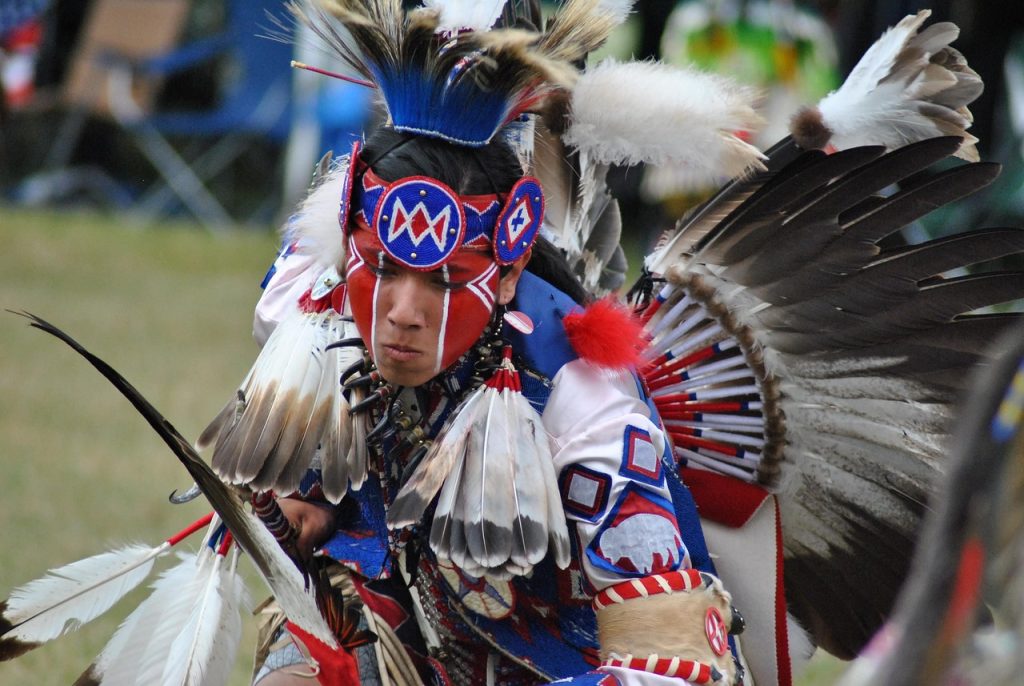
The Bororo are renowned for their feather art, crafting elaborate headdresses, ornaments, and body decorations from the brilliant plumage of macaws and other birds. These works are not idle decoration but ritual objects, worn during ceremonies to mark clan identity and to channel spiritual power.
Weaving, basketry, and the making of tools and ornaments round out the material culture, with each object tied to its use in daily or ceremonial life. Craftwork is knowledge as much as skill, since the right feathers, patterns, and forms belong to particular clans and occasions.
The care lavished on these objects reflects the Bororo understanding that beauty and meaning are inseparable. A finely made ornament is a statement of identity and a link to the spirit world, and the ability to produce it is a mark of standing within the community.
The knowledge of how to gather, prepare, and arrange feathers is guarded carefully, and the finest pieces represent the work of skilled hands and long practice. Such objects are inherited, exchanged, and displayed as tokens of clan identity that carry meaning well beyond their striking appearance.
Body painting complements the feather ornaments, with designs applied for ceremonies that mark clan identity and ritual status. Together the painted body and the feathered headdress transform a person into a living expression of the community’s cosmology during the great gatherings.

Food and the Cerrado Harvest
Bororo food came from the rivers, the forests, and the savanna, combining fish and game with fruit, honey, roots, and the produce of small gardens. Manioc and other cultivated crops added a reliable base to the wild harvest that the land offered across the seasons.
Fishing was especially important along the rivers, and the people used a variety of techniques suited to the flooded and low-water periods of the year. Game from the savanna and forest supplied meat, while gathering brought in the fruits and honey that the cerrado yields in abundance.
The seasonal round of food gathering was tightly linked to the ritual calendar, since certain hunts and harvests carried ceremonial weight beyond their value as nourishment. To eat was also, in many cases, to take part in the ongoing exchange between the human community and the living land.
Sharing food is itself a social act among the Bororo, reinforcing the ties of kinship and obligation that bind the clans. A successful hunt or a good catch is not merely a private gain but a resource distributed according to the expectations of the community.
The abundance of the wet season, when rivers teemed with fish, contrasted with the leaner dry months, and the Bororo stored and managed their resources to bridge the gap. This attention to the turning year meant that scarcity, when it came, could be met with foresight rather than crisis.

Festivals and Ceremonial Life
Beyond the funerary rites, Bororo life is marked by ceremonies tied to naming, initiation, and the great gatherings that bring clans together in the village plaza. These occasions fill the central circle with dance, song, and the display of feather ornaments in a burst of color and sound.
Music and dance carry the ceremonies, with rattles, chants, and choreographed movement enacting the relationships between clans and between the living and the spirit world. The plaza becomes a stage on which the whole social order is performed and renewed.
Such gatherings are also moments of exchange and reunion, drawing together people who may live in scattered communities and reaffirming the bonds of kinship and obligation. In the shared festival the abstract logic of moiety and clan takes on living, joyful form.
The great ceremonies also serve to transmit knowledge, as younger members learn the songs, dances, and ritual roles by taking part alongside their elders. In this way the festival is a school as much as a celebration, keeping the tradition intact by rehearsing it in full.
Songs handed down through generations recount the deeds of ancestors and the origins of clans, so that to sing at a festival is to recite a portion of the people’s history. The performance binds present and past, letting the community hear its own story told again in the voices of the living.
Preparation for a major ceremony can occupy a village for days, as ornaments are readied, songs rehearsed, and the plaza made ready for the gathering that follows. The anticipation itself becomes part of the event, drawing the community together in shared purpose.
History and Contact
The Bororo felt the weight of European expansion from the eighteenth century onward, as Portuguese colonists pushed into Mato Grosso in search of gold and the mining frontier advanced across their land. Slaving raids, warfare, and epidemic disease drove sharp declines in their population.
In later centuries missionaries, above all Salesian priests, established stations among the Bororo and recorded much of what is known of their culture, even as their presence pressed the people toward change. The twentieth century brought roads, ranching, and settlement that fragmented the ancestral territory.
Through all of this the Bororo held onto their language and their central rituals, adapting rather than surrendering their way of life. Their history is one of severe loss but also of stubborn continuity, a people who bent under pressure without breaking the thread of their identity.
The records left by missionaries, however much they reflected an outsider’s aims, preserved details of Bororo life that might otherwise have been lost, and today the community itself draws on and corrects these accounts. History for the Bororo is thus a contested and living resource rather than a closed book.
Each generation since contact has faced a new form of pressure, from mining and slaving to ranching and the highway, yet the core of Bororo identity proved remarkably durable. The people absorbed change at the edges while guarding the center, a strategy that carried their culture through centuries of upheaval.

The Bororo Today
Today the Bororo live in a set of demarcated reserves in Mato Grosso, numbering in the low thousands, a fraction of their former range but still a living community with its language and ceremonies intact. They combine farming and fishing with engagement in the wider Brazilian economy and political system.
Land remains the central issue, as the reserves sit amid an expanding frontier of agriculture and ranching that pressures their boundaries and resources. Bororo leaders take part in the wider indigenous movement in Brazil, pressing for the protection of their territory and rights.
At the same time the community works to keep its traditions alive for the young, teaching the language, the crafts, and above all the great rituals that define what it means to be Bororo. In holding the circle of the village they hold, still, the center of their world.
Younger Bororo increasingly move between the reserve and the towns for schooling and work, carrying their identity into new settings even as they remain tied to the village. This movement brings both challenge and opportunity, testing traditions while also giving the community new tools to defend itself.
Organizations led by the Bororo themselves now document language and ritual, negotiate with government agencies, and press their case in the courts and in public life. This active engagement marks a shift from a community acted upon by outsiders to one that increasingly speaks and acts for itself.
For the young who choose to stay and learn, the reward is a place within a living tradition that has weathered enormous change, and for the elders who teach them, it is the assurance that the circle of the village will not be left empty when they are gone.

Related Peoples of the Region
- Kawesqar People of the Patagonian Channels and Their Vanishing Canoe World
- Piaroa People of the Orinoco Forests and Their Philosophy of Peace
- Witoto and Bora Peoples of the Northwest Amazon and Their World of the Maloca
- Cofan People of the Ecuadorian Amazon and Their Fight to Save the Forest
- Nasa People of the Colombian Andes and Their Enduring Struggle for the Land
- Kamsa People of the Sibundoy Valley and Their Carnival of Forgiveness


