Carl Ritter, Skylas and Kipert made different determinations in their descriptions of the ancient city of Idyros. Ritter claims that the city on the slopes of the “Kopa Avova” cape to the north of Phaselis was “Idyropolis”. The city functioned as a shelter for sailors in ancient times. Although Skylas does not make a definitive determination, he writes that the ancient city was located between Phaselis and Lurnatsin (Rat Island).
In fact, this definition confirms Kipert in a way. In a map he prepared, Kipert shows the ancient city in the bay where “An Avuva” cape is located on the south-eastern coast of Kemer Mountain.
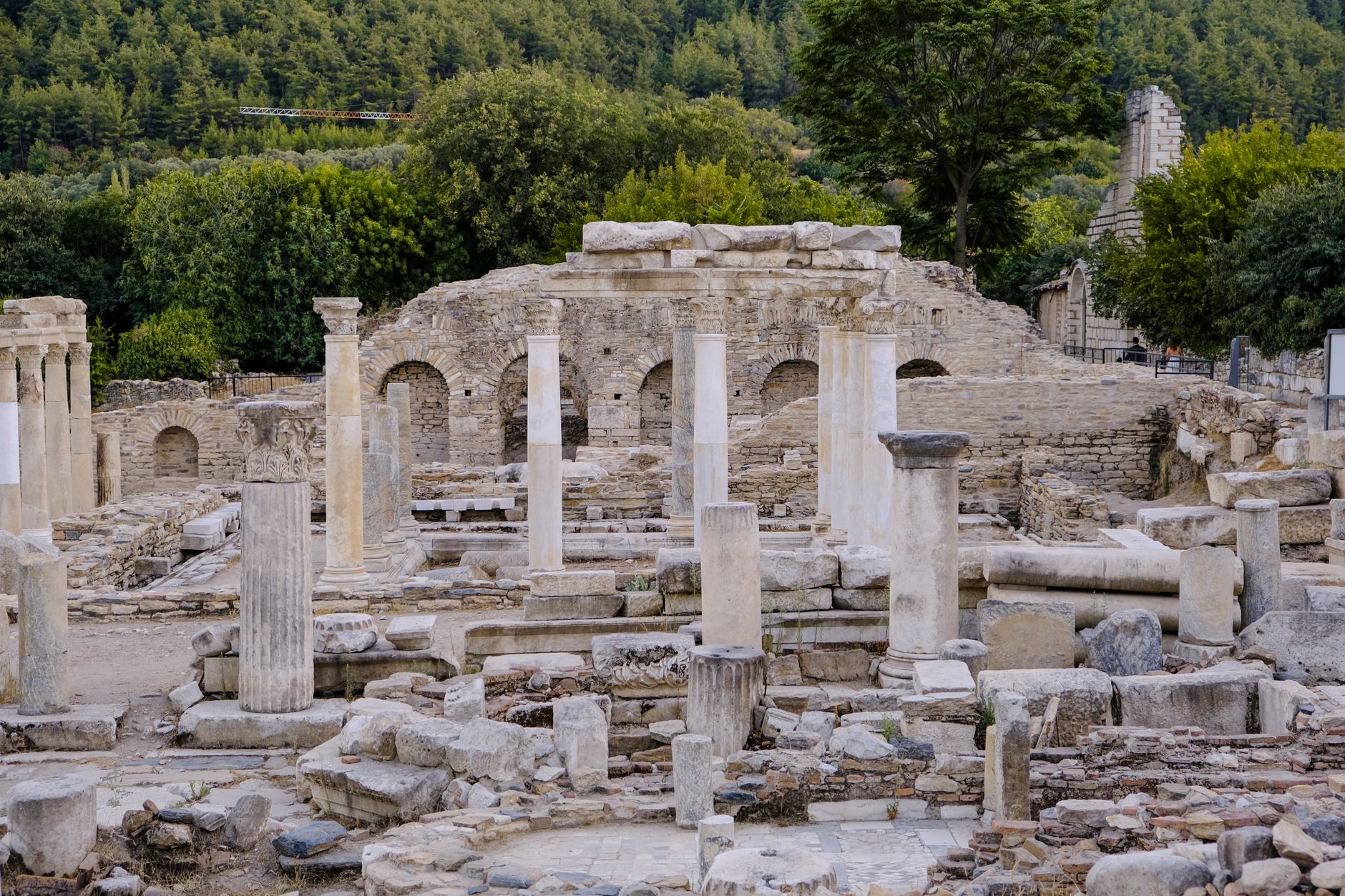
In the research carried out in 1977 by the Antalya Museum Directorate Experts in the specified places, ancient settlements were found in the place defined by Kipert and it was concluded that this was the Idyros City mentioned by Kipert. It is possible to see these surviving ruins of the city along the coast from the back of Özkaymak Hotel. One of these is a church thought to belong to the Byzantine period (A.D.
4th – 7th centuries) and the places connected to this Church are the basilica dating back to the 3rd century AD, the watchtower from the early Roman period, the structures whose function is not fully determined, and the bridge over the stream are among the most striking ones.
According to the information provided by Stephaenues Byzantinius from Hekataius; “IDYROS”, which is both the name of a region and a city, had an important function in the maritime traffic of ancient times. Sailing ships going from Egypt and the near east to the west of Lycia reached Idyros Port with the wind they took from the mouth of the Nile River. In addition, the place described by Pliny as “Illyris” could most likely be “Idyros” in the sailor language.
Church: The church, which has a basilical type plan, features a complex structure with a central nave with a central apse, a narthex, an exonarthex, a chapel in the south, a captisterium in the north and other structures around it. Its floor is covered with coarse-grained mosaic with geometric motifs. Here, the skeletons placed organically at a depth of approximately one meter to thirty centimeters are covered with circular inclined unadorned covering tiles.
Observation Post: At the southern end of the high hill located in the north of the port, there is an entrance with two towers in the south direction and a tower in the north-east direction, surrounded by walls in polygonal knitting technique. The towers can be entered from the inside. The wall thickness is approximately two meters. The larger structure for observation may also have been intended for defensive purposes.
You May Like
Aspendos Ancient Theater Travel Guide