In an extraordinary landscape of giant granite boulders in southern India lie the ruins of Hampi, the capital of the Vijayanagara Empire, once one of the largest and richest cities in the world. At its height it dazzled foreign visitors with its temples, palaces and bazaars, before it was destroyed in a single catastrophic defeat.
Spread over a wide area beside the Tungabhadra River, Hampi combines spectacular natural scenery with some of the finest temple architecture in India. Its stone chariot, its musical pillars and its towering temple gateways make it one of the most magnificent ruined cities in the world.
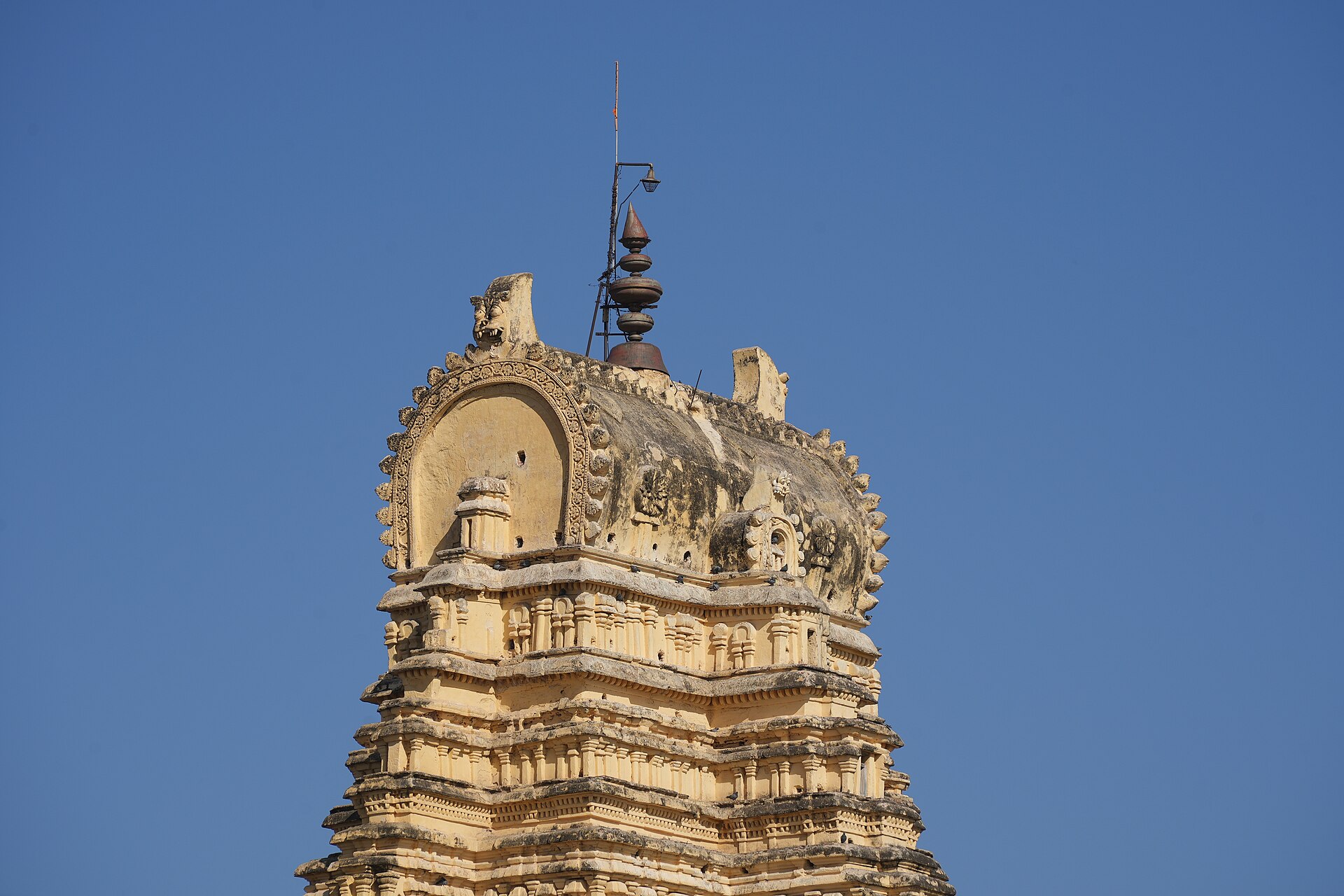
Table of Contents
- The Ruined Capital of Vijayanagara
- The Vijayanagara Empire
- A Landscape of Boulders and Temples
- The Virupaksha Temple
- The Vittala Temple and Stone Chariot
- The Royal Enclosure: Lotus Mahal and Elephant Stables
- The Great Statues
- Bazaars and City Life
- The Sack of 1565
- Rediscovery and UNESCO
- Getting There
- Nearby Places
- Closing Thoughts
The Ruined Capital of Vijayanagara
Hampi was the capital of the Vijayanagara Empire, which ruled much of southern India from the fourteenth to the sixteenth centuries. At its peak the city was enormous, home to perhaps half a million people, and famed for its wealth.
Foreign travellers who visited described a city of great splendour, with markets overflowing with gems and gold. Its ruins today spread over many square kilometres, a testament to its former greatness.
The Vijayanagara Empire
The Vijayanagara Empire rose as a powerful Hindu kingdom, at a time when much of India was ruled by Muslim sultanates to the north. For over two centuries it dominated the south, patronising art, religion and learning.
Its kings grew fabulously wealthy from trade in spices, cotton and gems, and used their riches to build the great temples and palaces of their capital. Hampi was the showpiece of this mighty empire.
A Landscape of Boulders and Temples
Hampi sits in one of the most striking landscapes in India, a vast expanse of huge, rounded granite boulders piled in fantastic shapes. The ancient builders wove their temples and palaces into this dramatic scenery.
The combination of golden stone, green palms and the winding river gives Hampi a unique and almost otherworldly beauty. The setting is as memorable as the monuments themselves.
The Virupaksha Temple
At the heart of Hampi stands the Virupaksha Temple, dedicated to a form of the god Shiva. Its towering gateway, or gopuram, rises high above the surrounding ruins, and unlike most of Hampi it is still an active place of worship.
The temple has ancient roots and was expanded by the Vijayanagara kings. Its soaring tower is the enduring symbol of Hampi and a focus of pilgrimage to this day.
The Vittala Temple and Stone Chariot
The most celebrated monument at Hampi is the Vittala Temple, a masterpiece of Vijayanagara architecture. In its courtyard stands the famous stone chariot, an exquisitely carved shrine in the form of a temple car, its wheels once able to turn.
The temple is also renowned for its musical pillars, slender stone columns that produce musical notes when tapped. The delicacy and skill of the carving here mark the high point of the empire’s art.


The Royal Enclosure: Lotus Mahal and Elephant Stables
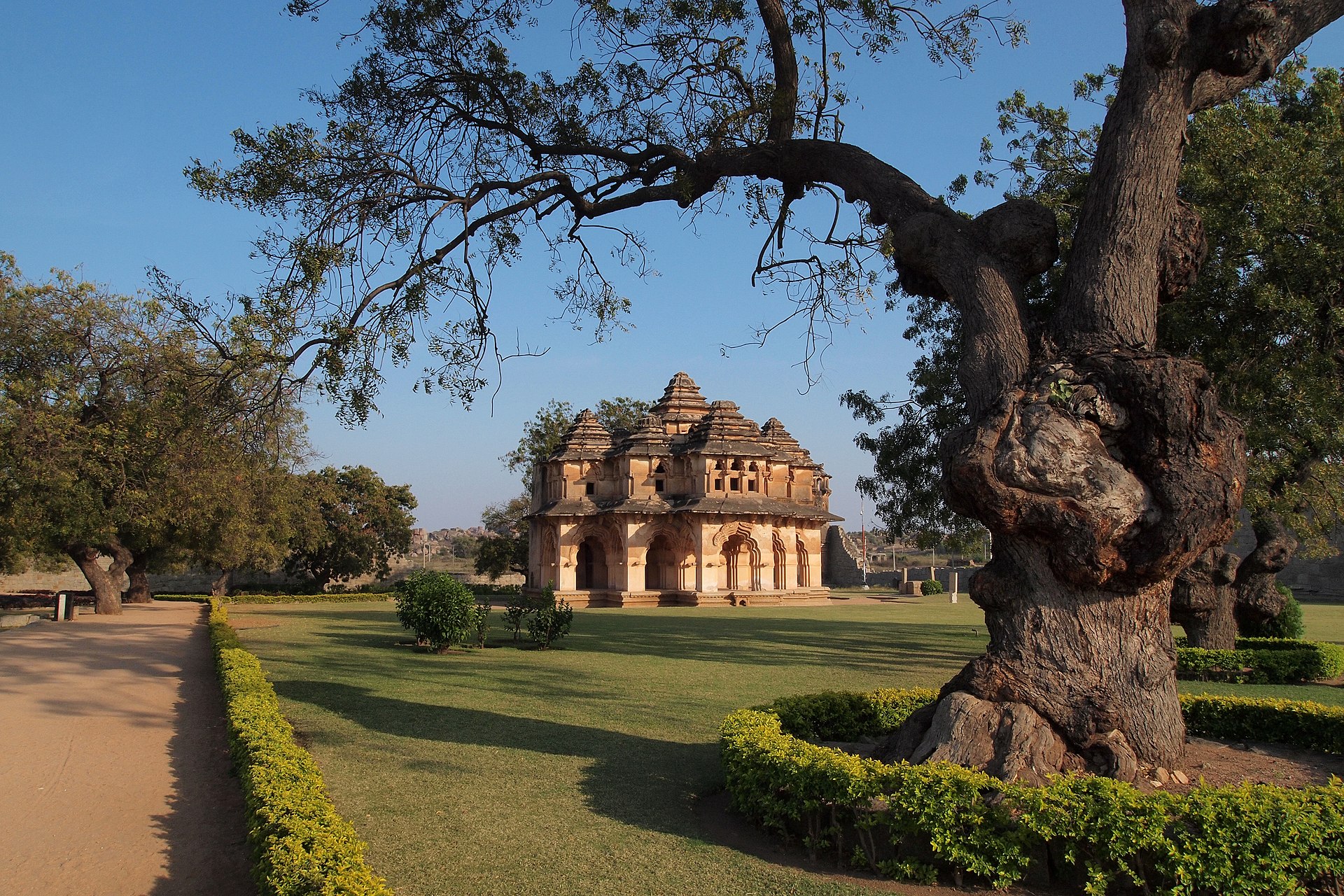
Away from the temples lies the royal enclosure, where the kings had their palaces and public buildings. Among the finest survivals is the Lotus Mahal, an elegant pavilion blending Hindu and Islamic styles, used by the royal women.
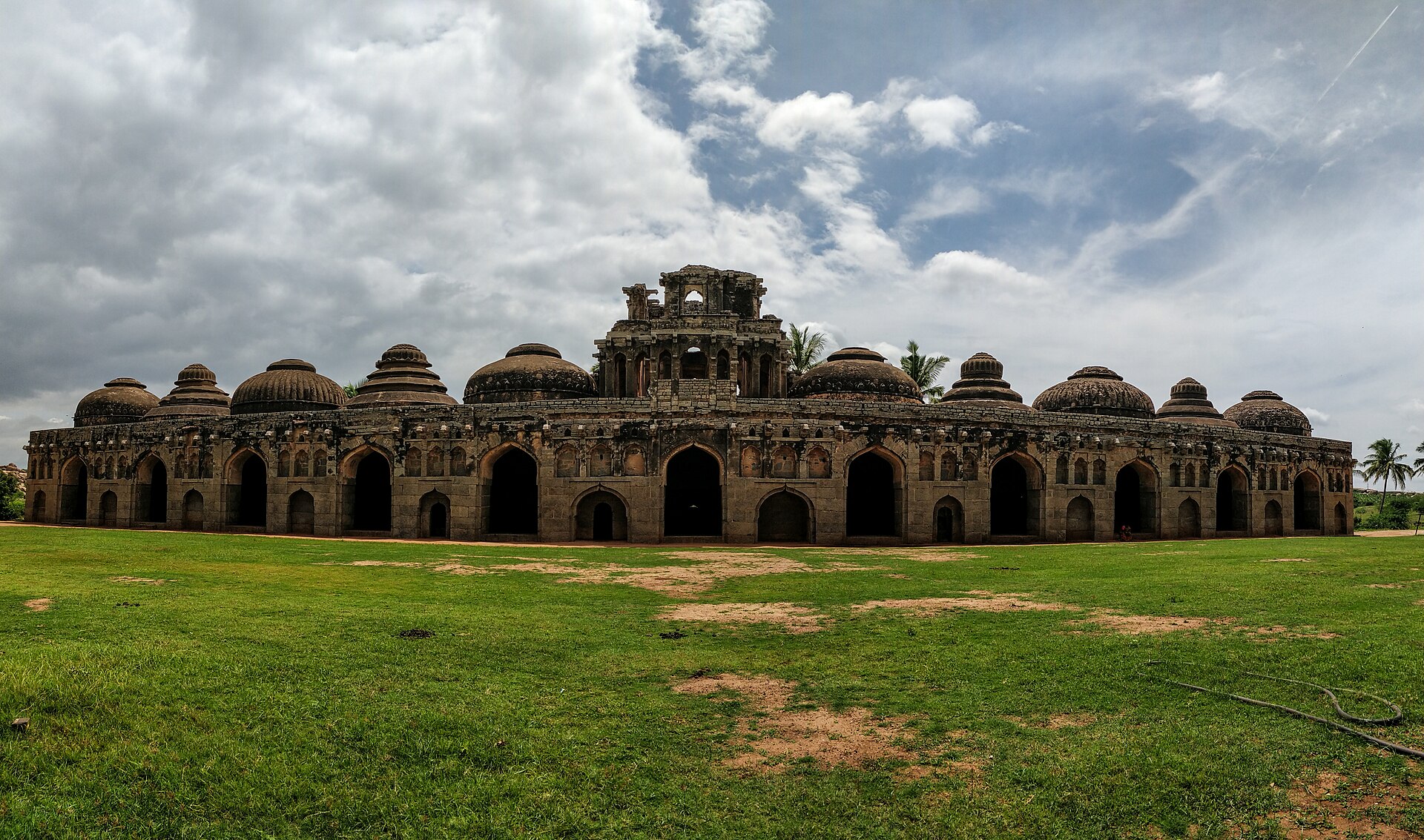
Nearby stand the grand domed elephant stables, a long row of chambers that once housed the royal war elephants. These buildings reveal the courtly life and military power of Vijayanagara.
The Great Statues
Hampi is home to several colossal statues carved from single boulders. Among the most striking is the great figure of Narasimha, a fierce lion-headed form of the god Vishnu, seated beneath a canopy of a many-headed serpent.
Other monolithic images, including a huge linga and a giant statue of Ganesha, show the devotion and ambition of the sculptors. These great figures are among the most memorable sights at Hampi.

Bazaars and City Life
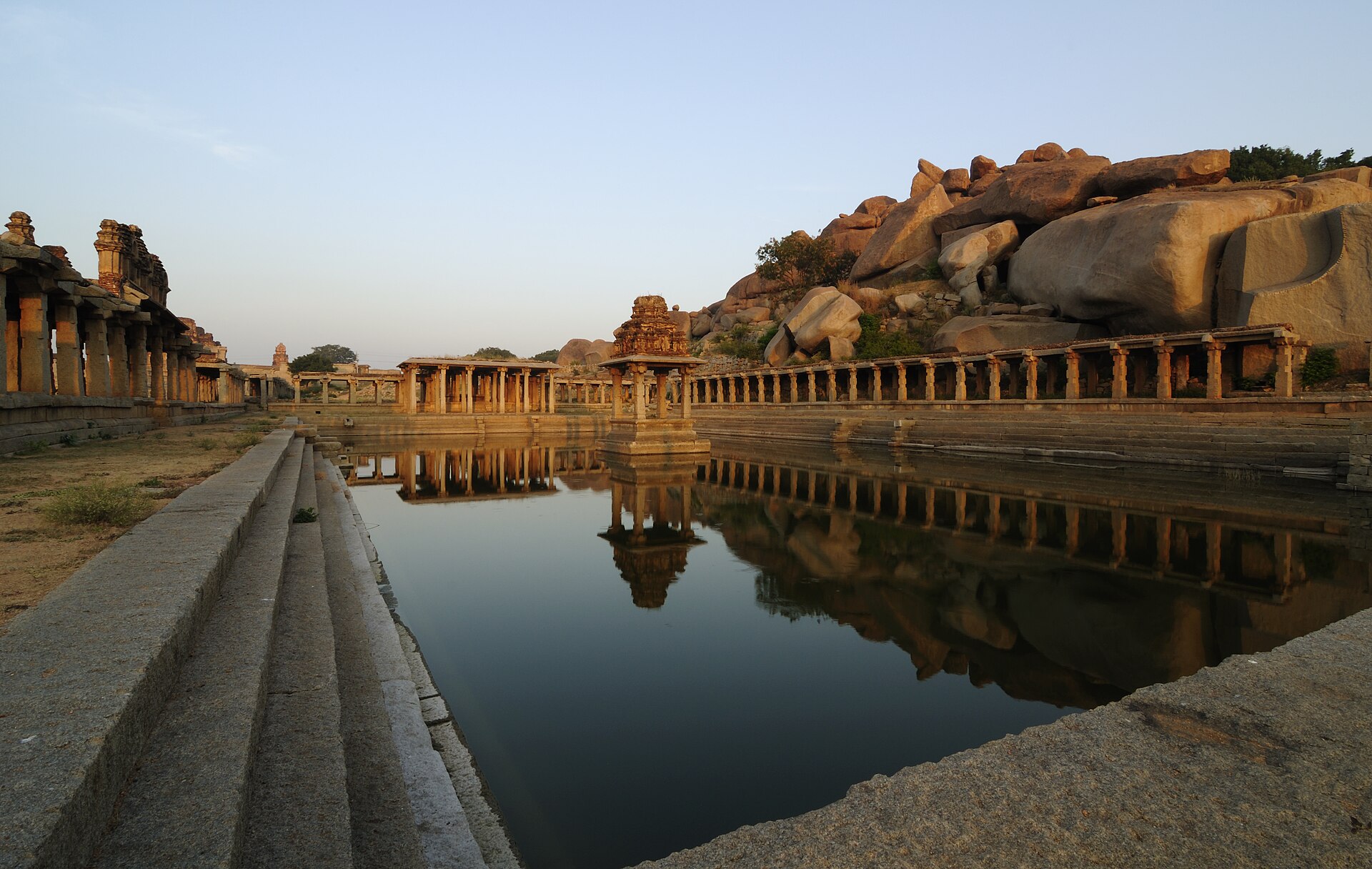
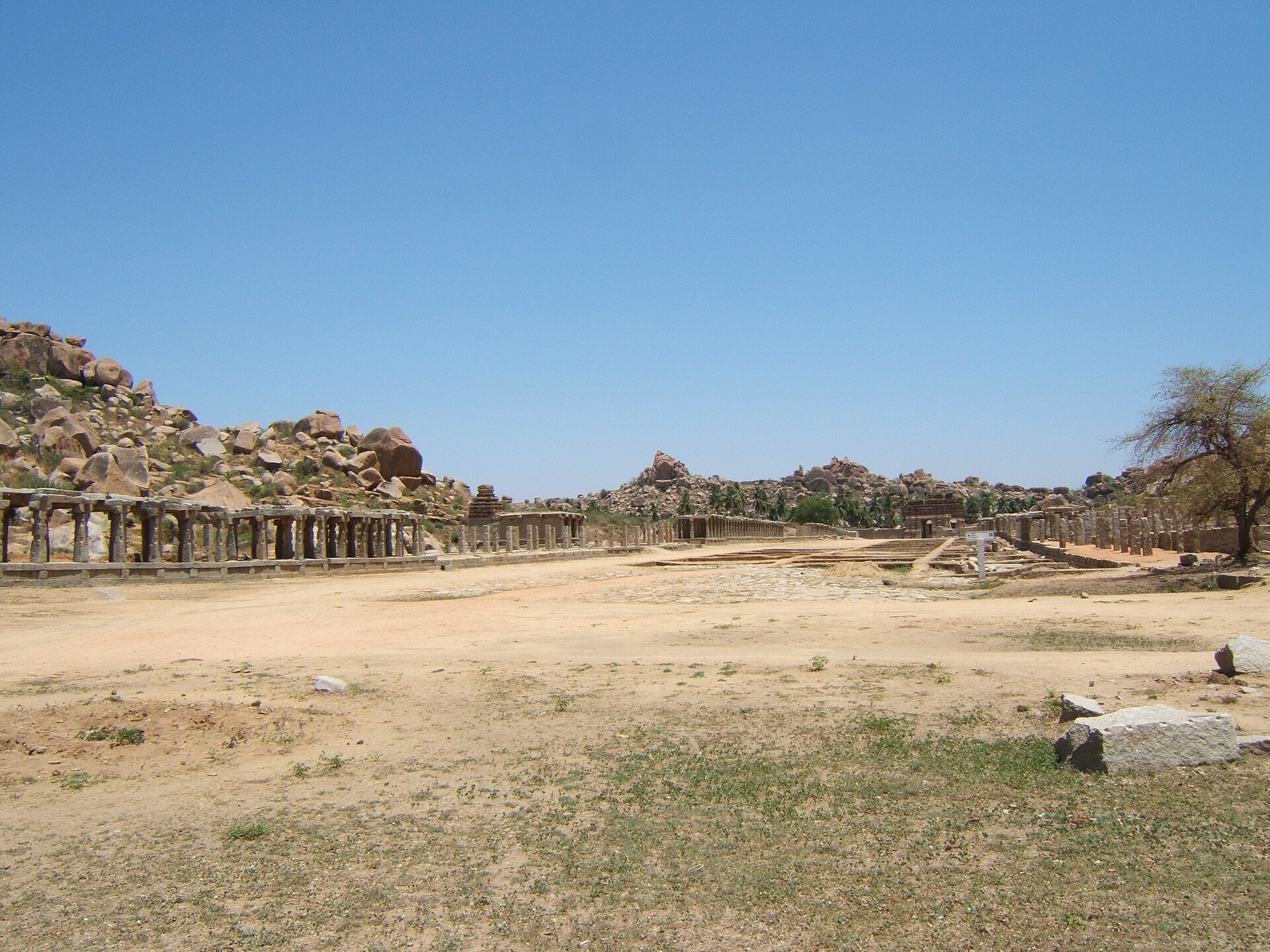
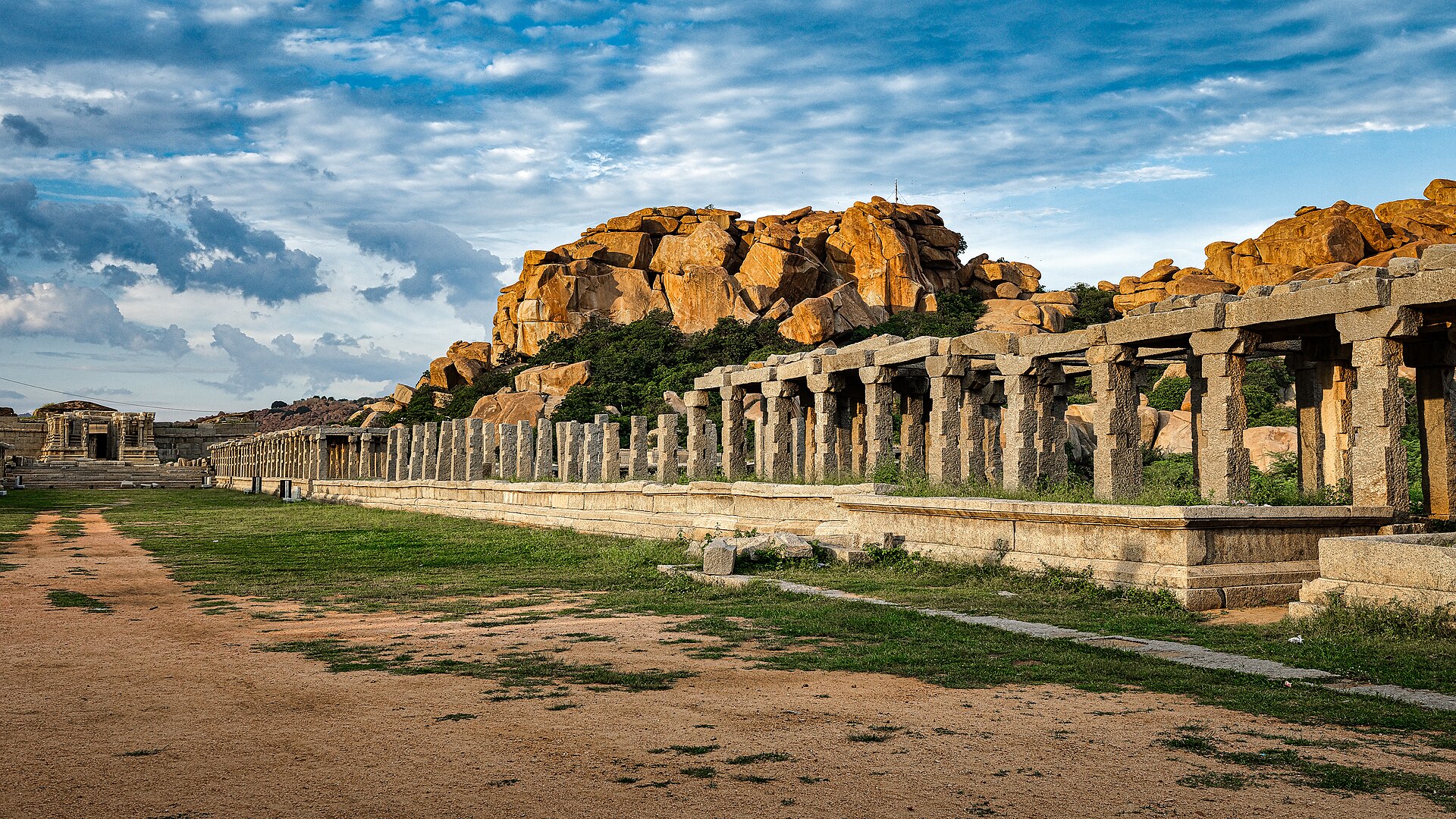
In front of the great temples ran long colonnaded bazaars, where merchants once sold precious goods from across Asia. The ruined pavilions of these market streets still stretch away from the temple gateways.
Foreign visitors marvelled at the diamonds, pearls and rich cloth on sale in these markets. The bazaars are a reminder that Hampi was not only a religious centre but one of the great commercial cities of its age.
The Sack of 1565
Hampi’s glory ended suddenly and violently. In 1565 the armies of a coalition of neighbouring sultanates defeated the Vijayanagara forces at the Battle of Talikota, and the victorious armies then captured and sacked the city.
For months the great capital was plundered and burned. The city never recovered, and its people abandoned it, leaving the temples and palaces to fall into the ruin we see today.
Rediscovery and UNESCO
After centuries of neglect, Hampi was studied and its monuments recorded and conserved, revealing the full extent of the once-great city. Its beauty and importance gradually became known to the wider world.
The group of monuments at Hampi was inscribed on the UNESCO World Heritage List in 1986. Today it is one of India’s most visited and beloved ancient sites, admired for both its architecture and its landscape.
Getting There
Hampi lies in the state of Karnataka in southern India, near the town of Hospet, which has a railway station. The nearest airports are at Hubli and the larger cities of Bengaluru and Hyderabad, several hours away.
From Hospet the ruins are a short drive away, and the site is best explored over a day or more by car, bicycle or on foot. The monuments are spread widely across the boulder-strewn landscape on both sides of the river.
Coordinates: 15.3350, 76.4600 — open Hampi in Google Maps.
Nearby Places
- Sigiriya — another spectacular South Asian royal site set in a dramatic rocky landscape.
- Anuradhapura — the sacred capital of Sri Lanka, another great ruined city of the Indian religious world.
- Bagan — the temple-covered plain of Myanmar, another magnificent capital of a vanished Asian kingdom.
Closing Thoughts
Hampi is the grandeur of southern India carved into a landscape of golden boulders: temples with soaring gateways, a stone chariot of exquisite skill, and the palaces of an empire that dazzled the medieval world.
Rich beyond measure and then destroyed in a single terrible year, its ruins still convey both the splendour of Vijayanagara and the tragedy of its fall. Set among its fantastic rocks, Hampi is one of the most beautiful and moving ancient cities on earth.
You May Like

Buda Castle: The Crown of Budapest Above the Danube


One thought on “Hampi: The Boulder-Strewn Ruins of India’s Mighty Vijayanagara Empire”