Rising almost two hundred metres straight out of the green plains of central Sri Lanka is a sheer column of rock crowned with ancient ruins. This is Sigiriya, the Lion Rock, where a fifth-century king built a palace and fortress in the sky, complete with gardens, frescoes and a gateway shaped like a giant lion.
Sigiriya is one of the best-preserved examples of ancient urban planning in Asia, uniting daring engineering, sophisticated art and beautiful landscape design. Its story of ambition, guilt and downfall is as dramatic as its setting.
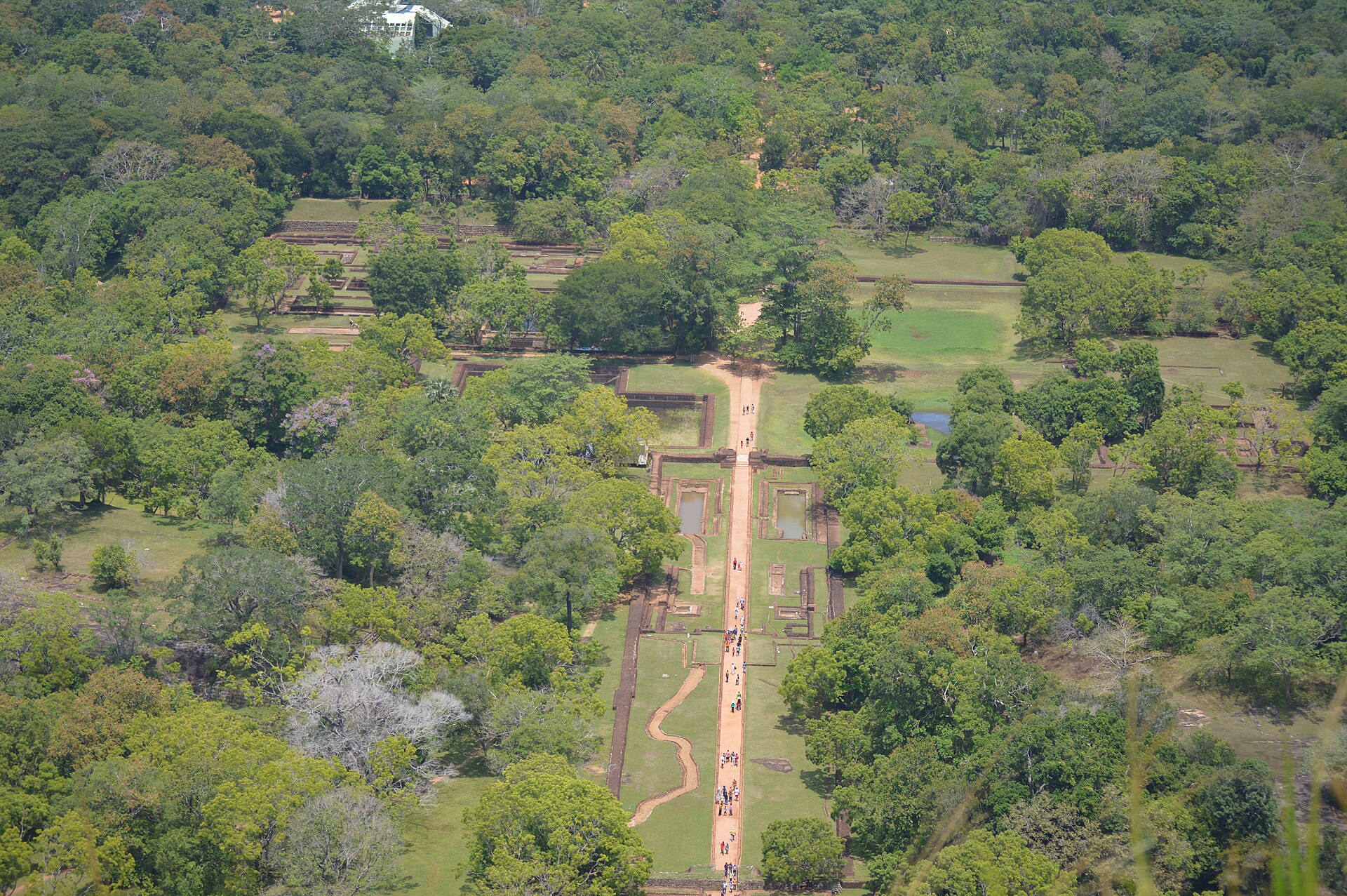
Table of Contents
- The Lion Rock of Sri Lanka
- King Kashyapa and a Palace in the Sky
- The Water Gardens
- The Boulder and Terraced Gardens
- The Ascent and the Lion Gateway
- The Sigiriya Frescoes
- The Mirror Wall and Ancient Graffiti
- The Summit Palace
- From Royal Fortress to Buddhist Monastery
- Rediscovery and UNESCO
- Nearby Places
- Closing Thoughts
The Lion Rock of Sri Lanka
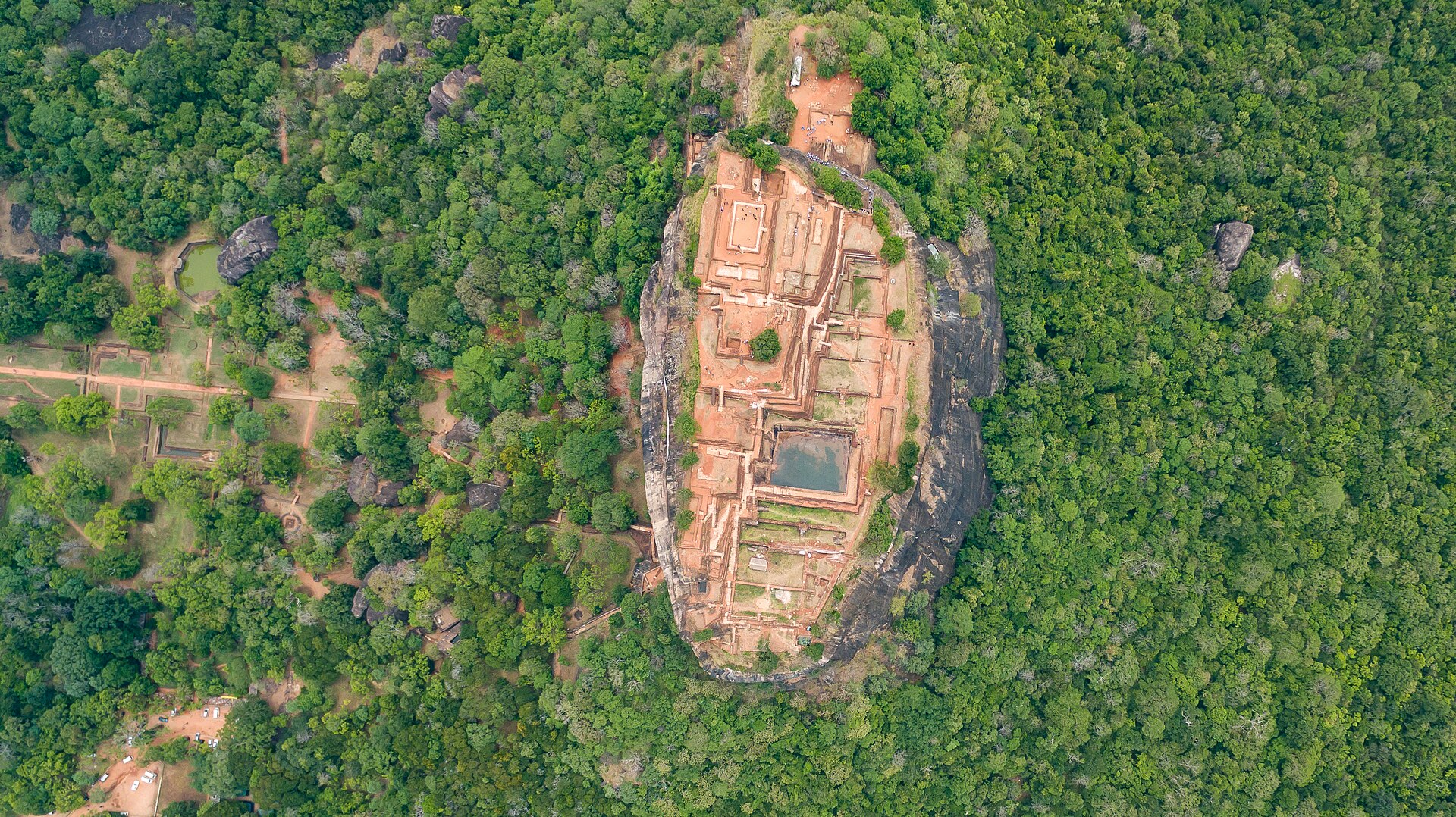
Sigiriya takes its name from the Sinhala words for lion rock, after the great lion figure that once framed the final approach to the summit. The rock itself is the hardened core of an ancient volcano, standing dramatically above the surrounding jungle.
From a distance it appears as a solitary orange-brown monolith, but its slopes and summit are covered with the remains of gardens, terraces and buildings. It is at once a natural wonder and a masterpiece of human design.
King Kashyapa and a Palace in the Sky
According to tradition, Sigiriya was transformed by King Kashyapa in the late fifth century AD. Having seized the throne from his father, and fearing revenge from his brother, he moved his capital to this all-but-impregnable rock.
There he built a royal residence unlike any other, a palace atop a sheer cliff, surrounded by pleasure gardens below. For a brief period Sigiriya was the capital of the island, a symbol of the king’s power and his isolation.
The Water Gardens
At the foot of the rock stretch some of the oldest surviving landscaped gardens in the world. The water gardens are laid out with striking symmetry, featuring pools, fountains and channels fed by an ingenious hydraulic system.
Remarkably, some of these ancient fountains still function during the rainy season, spouting water after fifteen centuries. The gardens show a sophisticated understanding of both engineering and design.
The Boulder and Terraced Gardens
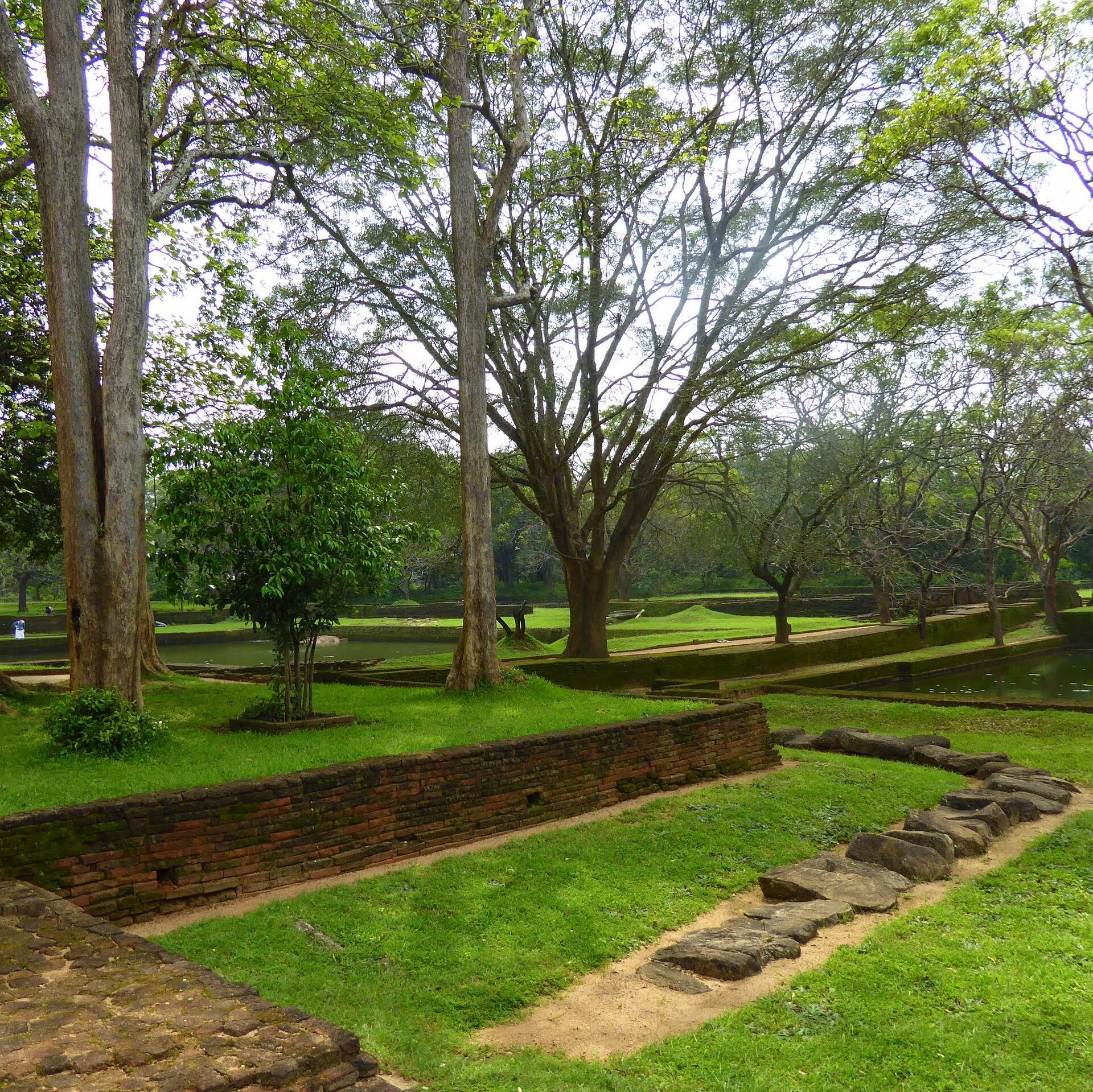
Beyond the formal water gardens, the landscape becomes wilder. The boulder gardens wind among huge natural rocks, many of which were once bases for pavilions and shelters, their sockets and grooves still visible.
Above them, terraced gardens climb the lower slopes in a series of retaining walls and staircases, guiding the visitor upward toward the rock itself. Together they form a carefully planned progression from order to nature to ascent.

The Ascent and the Lion Gateway
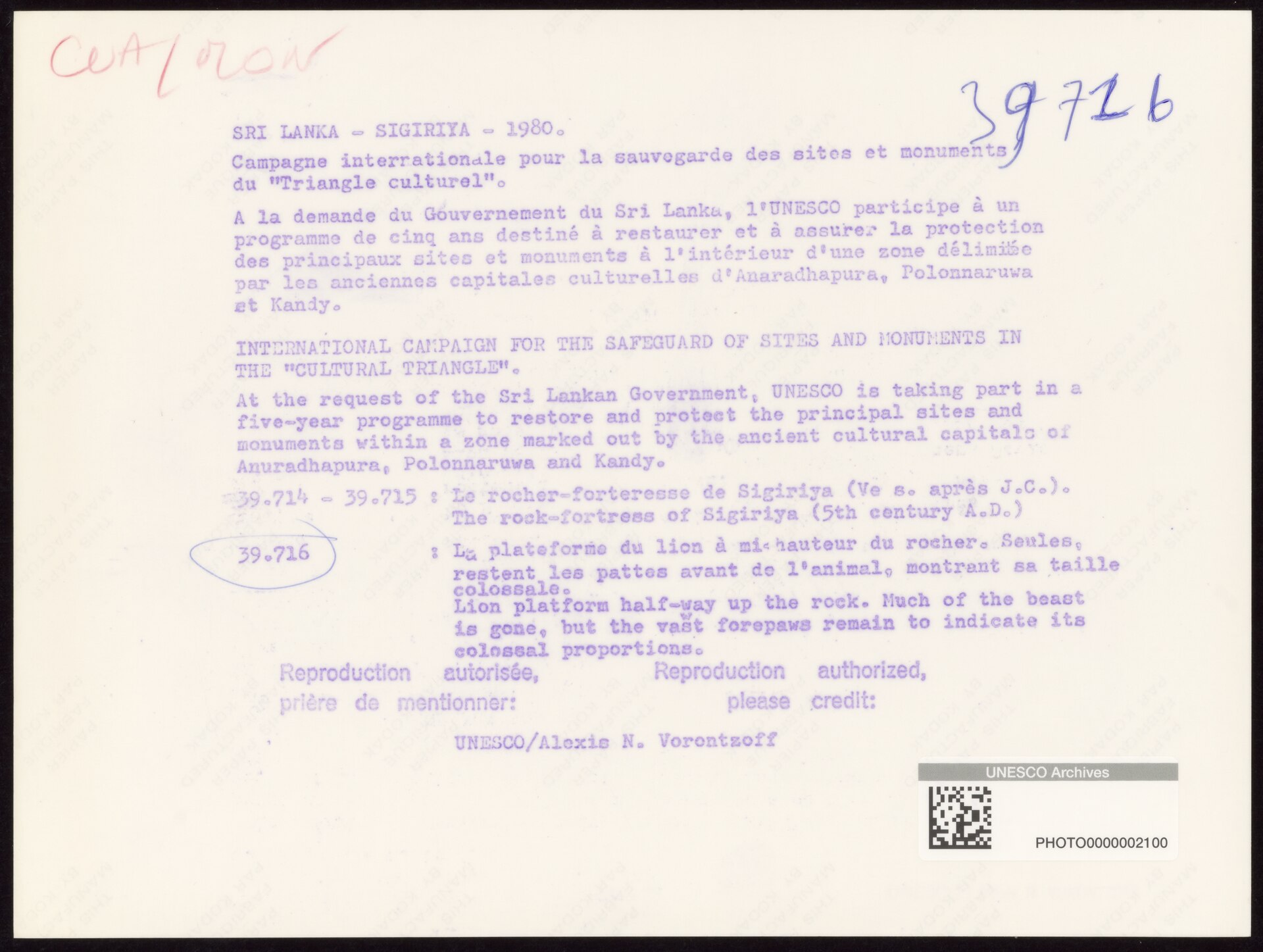
The climb to the summit passes along staircases clinging to the rock face. Halfway up, a terrace once held a colossal lion built of brick and plaster, through whose mouth the final stairway climbed toward the palace.
Today only the enormous lion paws remain, flanking the base of the last ascent and giving the rock its name. To pass between them was to enter the very jaws of the lion on the way to the king’s residence.
The Sigiriya Frescoes
Sheltered in a hollow of the rock face are the celebrated Sigiriya frescoes, paintings of graceful female figures adorned with jewels and flowers. Once there may have been hundreds of them covering a great expanse of the cliff.
Painted in warm, glowing colours, they have survived for more than fifteen hundred years and rank among the finest ancient paintings in South Asia. Their exact meaning, whether goddesses, court ladies or celestial beings, is still debated.

The Mirror Wall and Ancient Graffiti
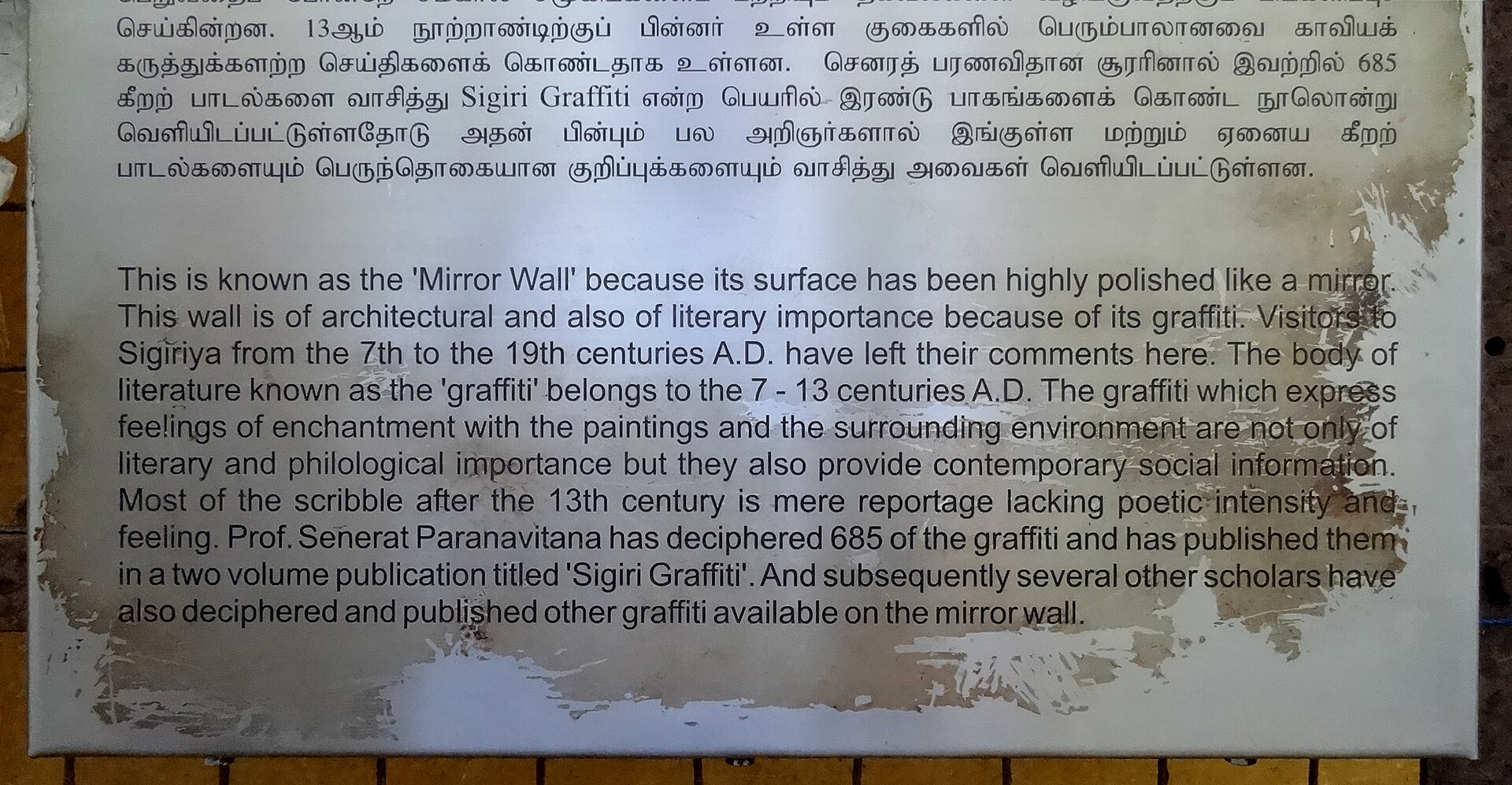
Below the frescoes runs the mirror wall, once polished to such a high sheen that the king could reportedly see his reflection in it as he passed. It was made of a fine plaster that has endured remarkably well.
Over the centuries visitors covered it with verses and comments, many praising the beauty of the painted maidens. These ancient graffiti are a precious record of the Sinhala language and of tourism at Sigiriya more than a thousand years ago.
The Summit Palace
At the very top of the rock, more than a hectare of flat summit was leveled and built upon. Here stood the royal palace, with terraces, cisterns cut into the stone, and gardens, all commanding breathtaking views in every direction.
Living at such a height, the king was both magnificently secure and utterly cut off. The foundations and pools that survive on the summit still convey the ambition of building a palace on the roof of the world.

From Royal Fortress to Buddhist Monastery
Kashyapa’s reign ended in defeat. When his brother finally returned with an army, the king came down from his rock to fight and lost, and Sigiriya’s brief time as a capital was over.
Afterwards the site was handed to Buddhist monks and served for centuries as a monastery, its caves and shelters used for meditation, before it too was gradually abandoned and reclaimed by the jungle.

Rediscovery and UNESCO
Sigiriya was known to local people and monks but was brought to wider attention by British explorers and antiquarians in the nineteenth century, and archaeological work has since revealed the full extent of its gardens and buildings.
The ancient city of Sigiriya was inscribed on the UNESCO World Heritage List in 1982. Today it is one of Sri Lanka’s most treasured sites, drawing visitors to climb the rock and marvel at a palace built in the sky.
Nearby Places
- Masada — another royal fortress built defiantly atop an isolated rock, as a refuge from feared enemies.
- Petra — a very different ancient capital that also worked wonders with rock, water and dramatic landscape.
- Thebes — an ancient royal and religious capital famed, like Sigiriya, for its surviving paintings and sacred art.
Closing Thoughts
Sigiriya is a place where landscape, engineering and art come together with rare drama: symmetrical water gardens at the foot of a sheer rock, painted maidens on its face, and a king’s palace on its summit.
Born of one ruler’s ambition and fear, and abandoned almost as quickly as it rose, the Lion Rock endures as one of the wonders of Asia, a fortress in the sky that still astonishes everyone who makes the climb.
You May Like
Mafra, the Palace a King Built From a Vow


3 thoughts on “Sigiriya: The Sky Palace a Guilty King Built on a Sri Lankan Rock”