Hidden among the desert mountains of southern Jordan lies a city carved not from blocks of stone but into the living rock itself. Petra, the ancient capital of the Nabataeans, greets visitors with towering facades cut straight from rose-coloured cliffs, and for centuries it was almost unknown to the outside world.
Once a wealthy hub of the caravan trade, Petra was a meeting point of Arabian, Greek and Roman worlds. Its monuments blend all of them into something wholly its own, and today it stands as one of the most spectacular archaeological sites on earth.

Table of Contents
- The Rose-Red City Hidden in the Desert
- The Nabataeans: Masters of the Incense Trade
- Entering Through the Siq
- The Treasury: Petra’s Masterpiece
- Water Engineering in a Barren Land
- The Street of Facades and the Royal Tombs
- The Theatre and the Colonnaded Heart
- The Monastery High Above the City
- Roman Rule, Earthquakes, and Decline
- Rediscovery and Petra Today
- Nearby Places
- Closing Thoughts
The Rose-Red City Hidden in the Desert
Petra lies in a basin among rugged sandstone mountains, reached only through narrow gorges that made it both defensible and dramatic. The rock ranges through shades of red, pink and gold, giving the city its famous nickname, the rose-red city.
For all its beauty, Petra sits in an arid landscape with little rainfall. That it could support a thriving city of tens of thousands is a testament to the extraordinary skill of its builders in mastering a hostile environment.

The Nabataeans: Masters of the Incense Trade
The Nabataeans were originally a nomadic Arab people who grew rich by controlling the caravan routes that carried frankincense, myrrh and spices from southern Arabia to the Mediterranean. Petra sat at the crossroads of these lucrative trades.
From this commerce the Nabataeans built a kingdom that at its height reached into modern Syria, Israel and Saudi Arabia. The wealth of the caravans paid for the monuments that still astonish visitors today.
Entering Through the Siq
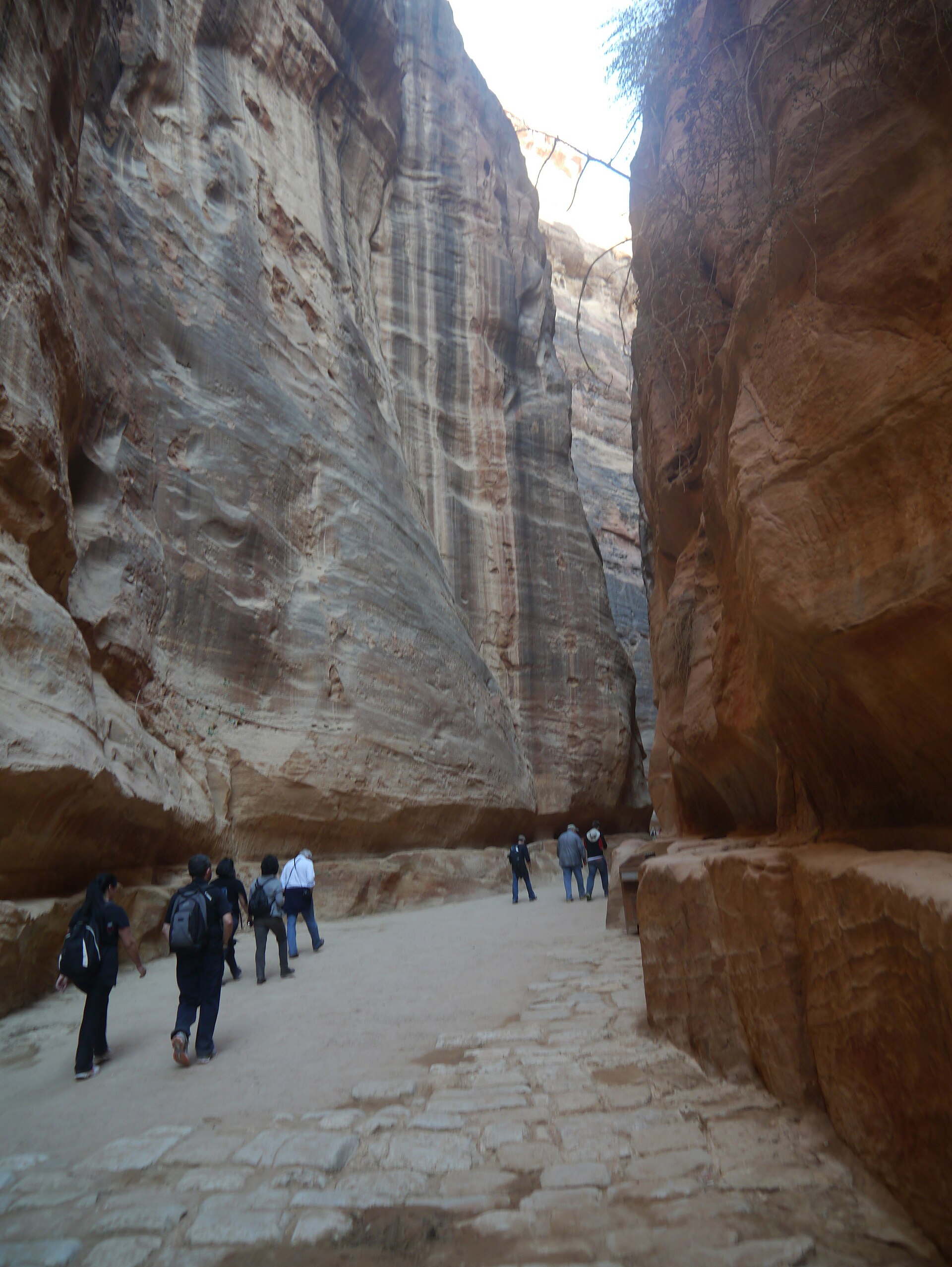
The approach to Petra is one of the great dramatic entrances in the world. Visitors walk for over a kilometre through the Siq, a deep, winding cleft in the rock so narrow that in places the walls almost meet overhead.
The gorge twists and darkens, building anticipation, until at a final turn it suddenly frames a first glimpse of the Treasury glowing in the sunlight beyond, an effect the ancient builders surely intended.
The Treasury: Petra’s Masterpiece
The Treasury, known in Arabic as Al-Khazneh, is Petra’s most famous monument, a facade some forty metres high carved with columns, figures and a great urn, all cut directly into the cliff. Despite its name it was almost certainly a royal tomb, not a store of gold.
Its design blends Greek and Roman elements with Nabataean taste, showing how thoroughly this desert kingdom absorbed the artistic languages of the wider Mediterranean world. It remains the image most people picture when they think of Petra.

Water Engineering in a Barren Land
The true genius of Petra lay hidden in its water system. The Nabataeans built an elaborate network of dams, cisterns and ceramic pipes to capture the rare rains and flash floods and store water through the long dry season.
This mastery of water not only allowed a large city to flourish in the desert but also protected it. By controlling floods through the Siq and storing every precious drop, they turned a barren canyon into a green and liveable capital.
The Street of Facades and the Royal Tombs
Beyond the Treasury the valley opens out, its walls lined with tombs. The so-called Street of Facades presents row upon row of carved tomb fronts, while higher up a series of monumental Royal Tombs display some of the grandest architecture in the city.
These facades were not houses but places of the dead, and their scale reflects the wealth and status of the families who commissioned them. Weathering has softened many of the carvings, streaking the stone with bands of colour.


The Theatre and the Colonnaded Heart
Petra was a living city as well as a necropolis. At its centre ran a colonnaded street lined with temples and public buildings, the commercial and civic core where markets and ceremonies took place.
Nearby, a large theatre was cut into the hillside, its rows of seats carved from the rock. Able to hold several thousand spectators, it shows how fully Petra had adopted the public life of the Greco-Roman world.


The Monastery High Above the City
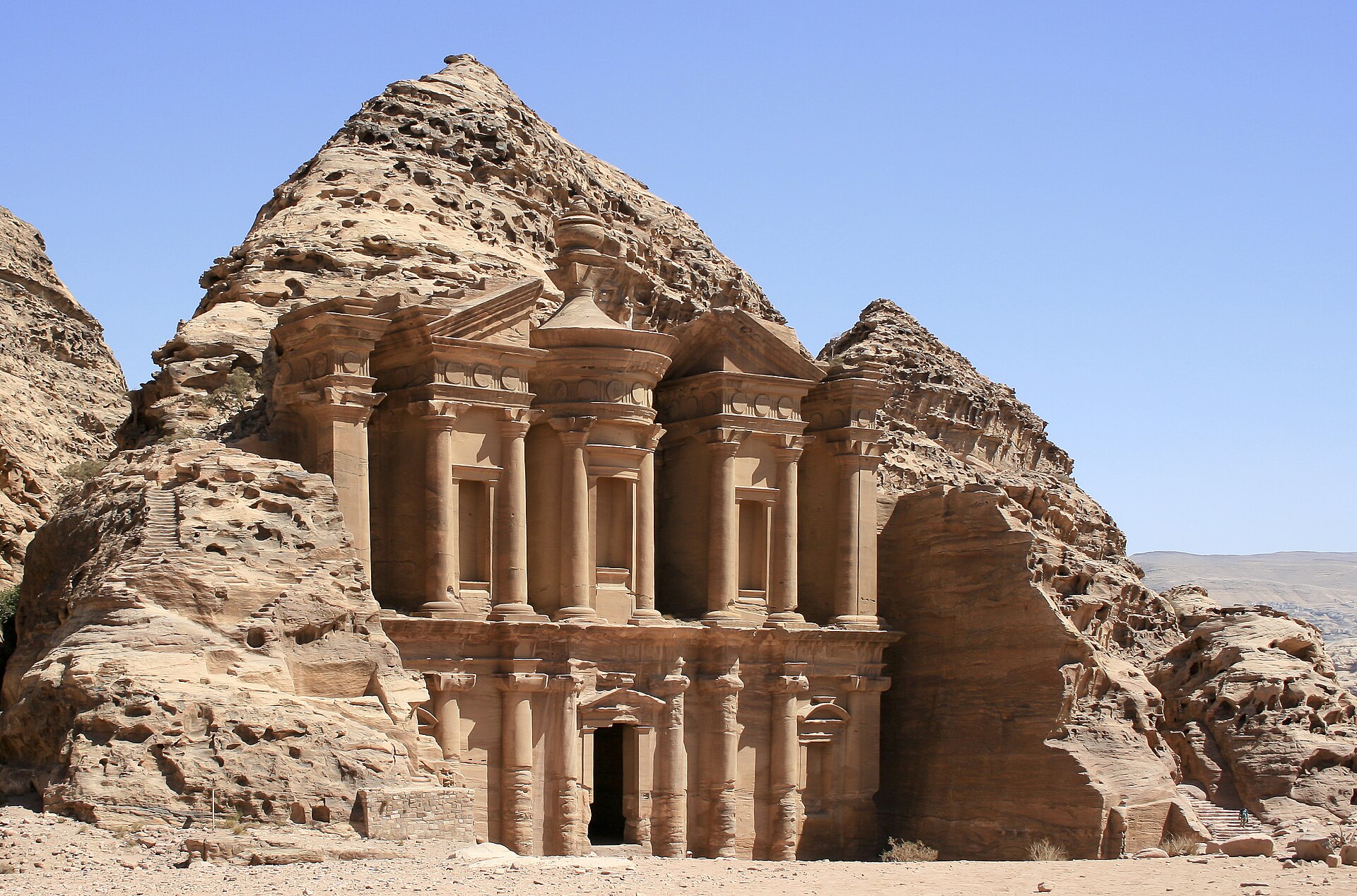
A long climb up hundreds of rock-cut steps leads to the Monastery, or Ad-Deir, an even larger facade than the Treasury, standing in splendid isolation high above the valley. Its plain, massive lines have a stark grandeur all their own.
Though called a monastery from later Christian use, it was probably a Nabataean temple or ceremonial hall. The effort of reaching it, and the wide desert views from its terrace, make it one of Petra’s most rewarding sights.
Roman Rule, Earthquakes, and Decline
In 106 AD Rome annexed the Nabataean kingdom, and Petra became part of the empire, gaining Roman-style buildings while its trade gradually shifted to other routes. As the caravans declined, so did the city’s wealth.
A series of severe earthquakes, especially one in the fourth century, damaged buildings and crippled the vital water system. Slowly Petra was abandoned to the local Bedouin and faded from the knowledge of the outside world.
Rediscovery and Petra Today
For centuries Petra was known only to the Bedouin who lived among its ruins. In 1812 the Swiss traveller Johann Ludwig Burckhardt, disguised as a pilgrim, persuaded a guide to lead him to the hidden city and revealed it once more to the wider world.
Petra was inscribed on the UNESCO World Heritage List in 1985 and later named one of the New Seven Wonders of the World. Today it is Jordan’s most treasured site, drawing travellers to walk the Siq just as merchants and pilgrims did two thousand years ago.
Nearby Places
- Carthage — another great trading civilisation of the ancient Mediterranean, grown rich, like Petra, on commerce.
- The Roman Forum and the Colosseum — the heart of the empire that eventually annexed the Nabataean kingdom of Petra.
- Thebes: The Egyptian City of a Hundred Gates — another civilisation that carved monumental tombs into stone for its dead.
Closing Thoughts
Petra is a city built for eternity by a people we still only partly understand. Its facades, cut with such confidence into the cliffs, speak of a civilisation that turned a desert canyon into one of the wonders of the ancient world.
To walk out of the shadowy Siq and see the Treasury blaze into view is to experience one of travel’s great moments. Rediscovered barely two centuries ago, Petra still keeps something of the mystery that once hid it from the world.
You May Like
Mafra, the Palace a King Built From a Vow


One thought on “Petra: The Rose-Red City the Nabataeans Carved Into the Cliffs of the Desert”