On a bend of the Irrawaddy River in central Myanmar lies one of the most extraordinary religious landscapes on earth. Across the dusty plain of Bagan stand thousands of Buddhist temples and pagodas, their spires rising from the scrub as far as the eye can see. At dawn, when mist and balloons drift among them, the scene is unforgettable.
Bagan was the capital of the first great kingdom to unite Myanmar, and during its golden age its kings and people built temples on a scale almost beyond belief. What survives is one of the richest concentrations of Buddhist architecture anywhere in the world.
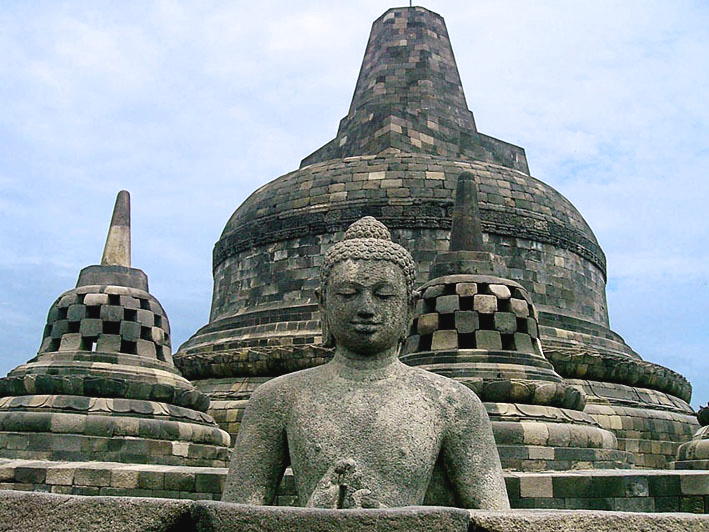
Table of Contents
- The Plain of a Thousand Temples
- The Kingdom of Pagan
- A Landscape of Pagodas
- The Ananda Temple
- The Massive Dhammayangyi
- Thatbyinnyu, the Tallest Temple
- Shwezigon and the Golden Stupas
- Temple Interiors: Buddhas and Murals
- Earthquakes and Restoration
- Balloons, UNESCO, and Bagan Today
- Getting There
- Nearby Places
- Closing Thoughts
The Plain of a Thousand Temples
Bagan covers a vast plain where, over the course of a few centuries, thousands of temples, stupas and monasteries were built. Of the many thousands raised in its heyday, well over two thousand still stand today.
Nowhere else is there such a dense and spectacular field of ancient religious monuments. From a high terrace or a balloon at sunrise, the sheer number of temples stretching to the horizon is breathtaking.

The Kingdom of Pagan
Bagan, historically called Pagan, was the capital of a powerful kingdom that flourished from the eleventh to the thirteenth centuries. Its kings unified much of what is now Myanmar and embraced Theravada Buddhism.
In this golden age, a fervour of religious devotion and royal patronage led to an explosion of temple building. To build a temple was an act of great merit, and kings, nobles and ordinary people all contributed to the astonishing result.
A Landscape of Pagodas
The monuments of Bagan range from small shrines to colossal temples, and from solid bell-shaped stupas to hollow temples that visitors can enter. Built mainly of brick, once often gilded or plastered, they cover the plain in every direction.
Watching the sun rise or set over this ocean of spires, often with hot-air balloons floating overhead, is one of the great travel experiences in the world. It is a landscape of devotion made visible.
The Ananda Temple
Among the most beautiful of all Bagan’s monuments is the Ananda Temple, a masterpiece of early Bagan architecture. Its gleaming white walls and golden spire rise in perfect symmetry, and inside stand four great gilded Buddha statues facing the cardinal directions.
Considered one of the finest temples in Bagan, the Ananda remains an active place of worship and pilgrimage. Its harmonious design has influenced Burmese architecture ever since.

The Massive Dhammayangyi
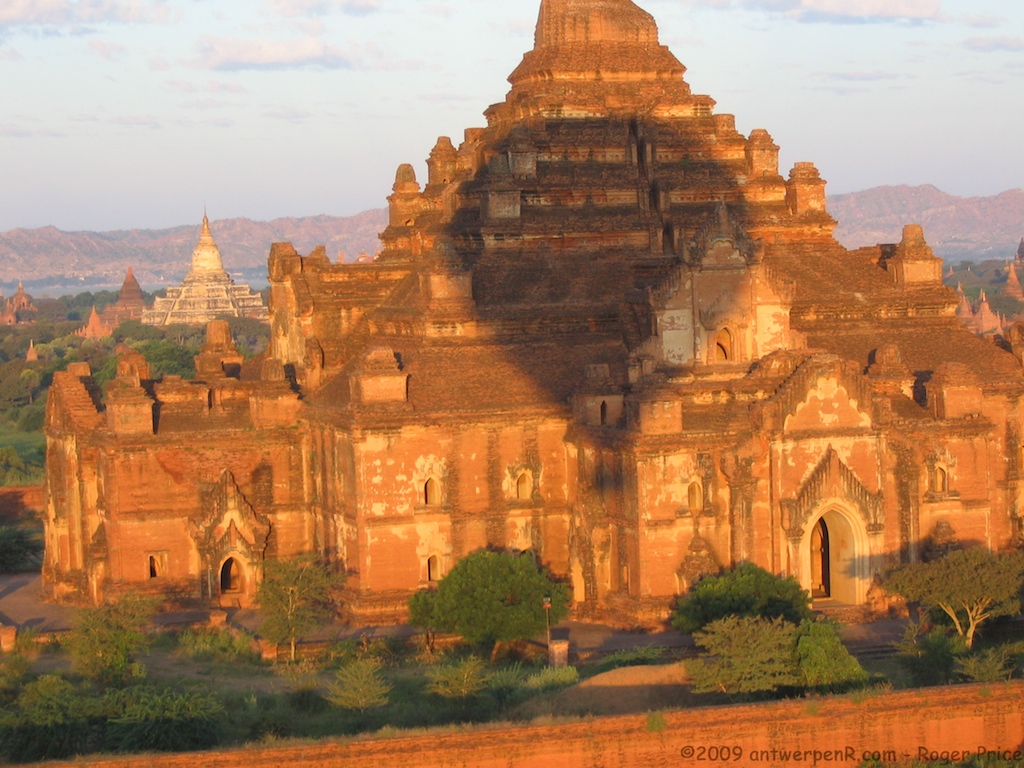
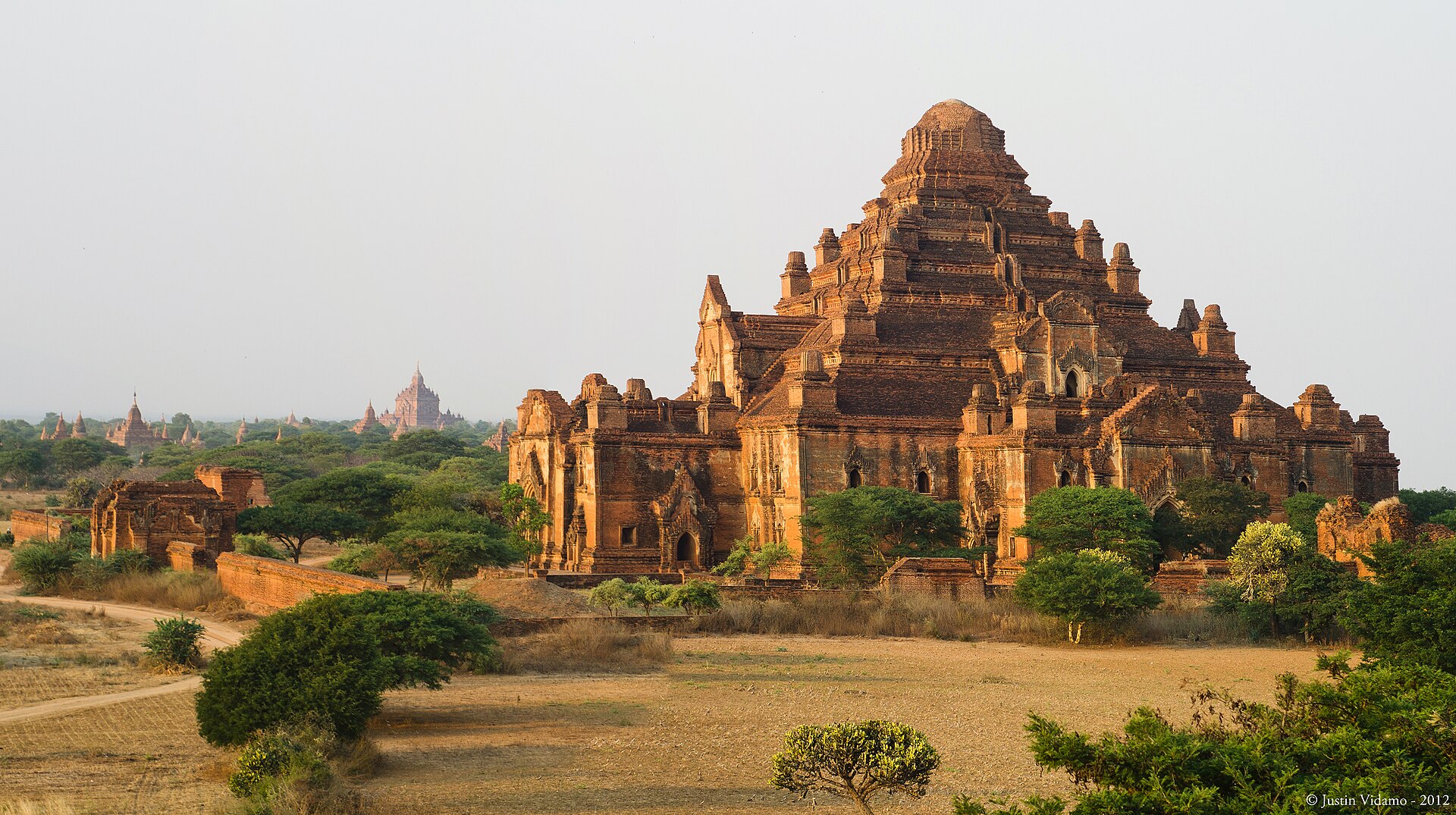
The largest temple at Bagan is the Dhammayangyi, a huge pyramid-like structure whose brickwork is famous for being so tightly fitted that a needle cannot be pushed between the bricks. It was built by a king with a fearsome reputation.
Its massive bulk dominates the surrounding plain. Some of its inner passages were mysteriously bricked up in antiquity, adding to the air of legend that surrounds this brooding monument.
Thatbyinnyu, the Tallest Temple
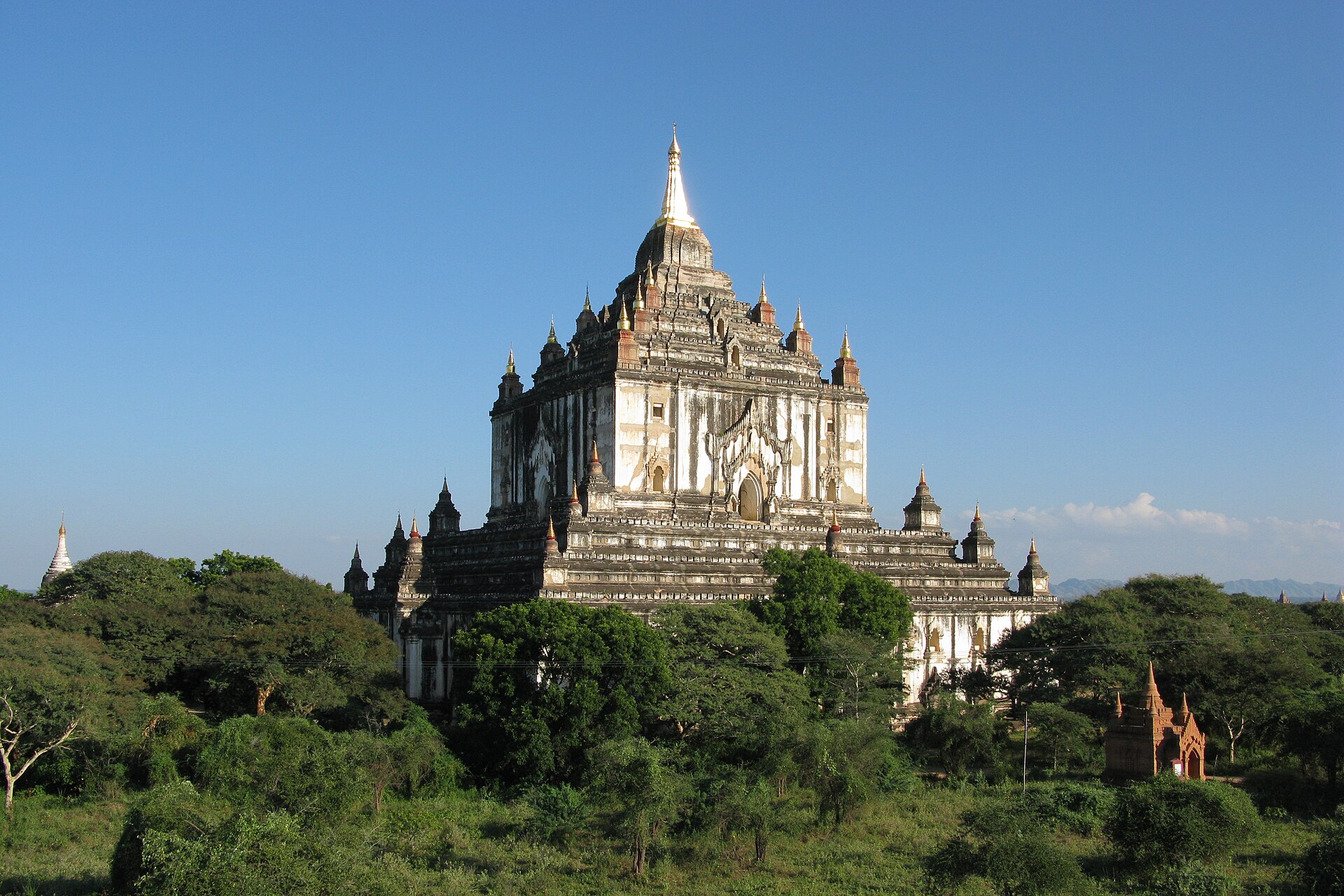
Rising higher than any other monument at Bagan is the Thatbyinnyu Temple, whose name means the omniscient. Its tall, tiered white form soars above the plain to a height of over sixty metres.
Built in the twelfth century, it marks a development in temple design toward greater height and lightness. Its pale mass is a landmark visible across the whole archaeological zone.
Shwezigon and the Golden Stupas
Not all of Bagan’s monuments are temples to enter; many are solid stupas built to enshrine relics. The most revered is the Shwezigon Pagoda, a great golden bell-shaped stupa that became a model for later Burmese pagodas.
Gleaming with gold and topped with a jewelled finial, the Shwezigon is one of the holiest sites in Myanmar. It shows the enduring power of the stupa form in Burmese Buddhism.
Temple Interiors: Buddhas and Murals
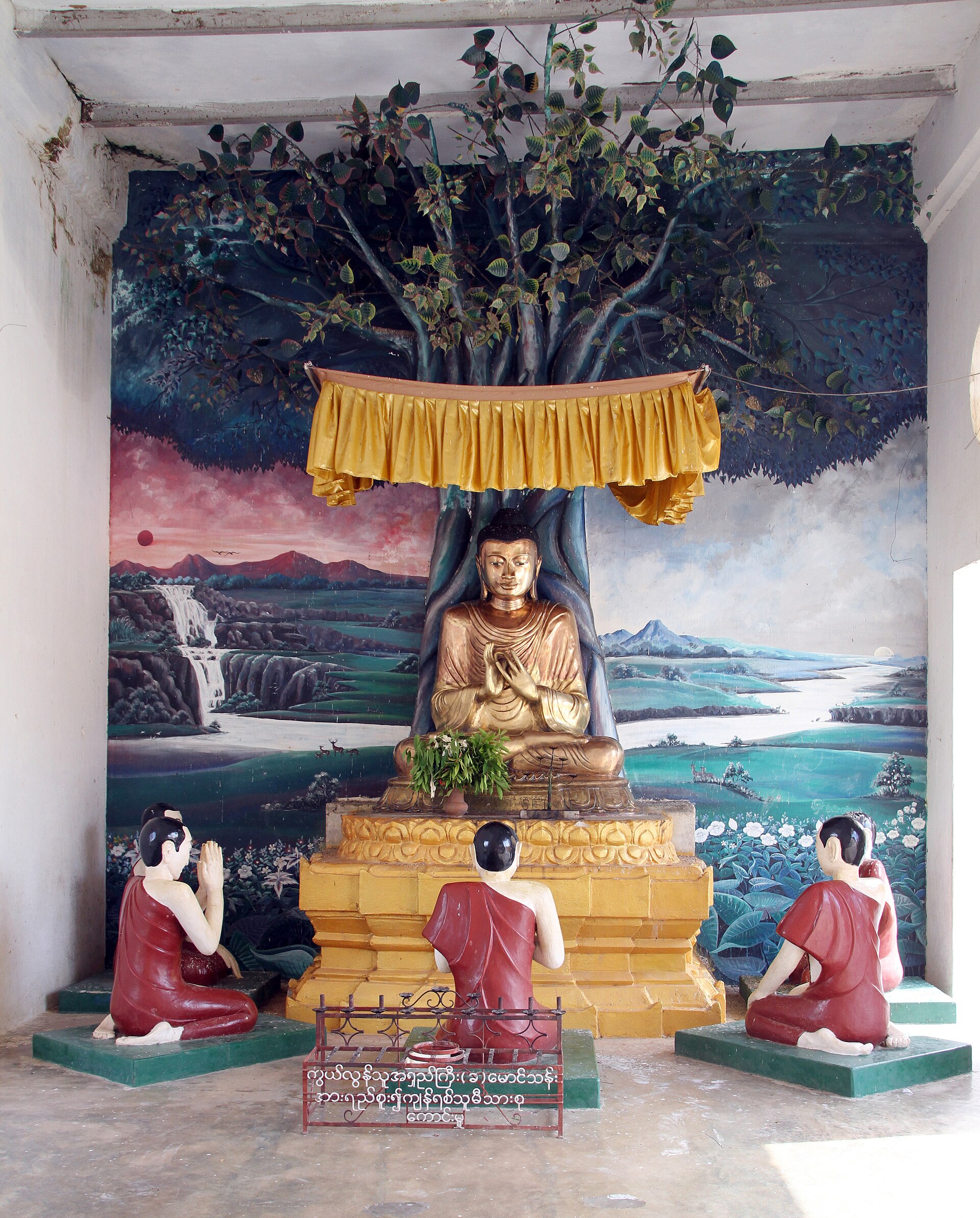
Inside Bagan’s hollow temples, cool corridors lead past great seated and standing Buddha images, some gilded, some of stone or brick. These statues were the focus of worship and merit-making.
Many temple walls are also covered with ancient murals, depicting the life of the Buddha, scenes of paradise and rows of seated figures. These paintings, though faded, are a precious record of the art and beliefs of medieval Myanmar.


Earthquakes and Restoration
Bagan lies in an earthquake zone, and over the centuries tremors have damaged many of its monuments, most recently a major quake in 2016 that harmed hundreds of temples. Restoration is a constant task.
Some earlier restoration work was criticised for being hasty or inaccurate, but efforts continue to conserve the monuments faithfully. Protecting so many fragile brick structures is an enormous undertaking.
Balloons, UNESCO, and Bagan Today
After years of debate, Bagan was inscribed on the UNESCO World Heritage List in 2019, finally giving international recognition to one of the world’s greatest religious landscapes.
Today it is the leading destination for visitors to Myanmar, famous for its sunrise balloon flights and its endless temples. Despite the challenges facing the country, Bagan endures as a place of devotion and wonder.
Getting There
Bagan lies in the Mandalay Region of central Myanmar, on the eastern bank of the Irrawaddy River. It has its own airport with domestic flights, and can also be reached by road or by river boat from Mandalay.
The temples are spread over a wide area, and visitors explore them by car, bicycle, electric scooter or horse cart. Travel to Myanmar depends on the current situation in the country, which should be checked carefully in advance.
Coordinates: 21.1717, 94.8585 — open Bagan in Google Maps.
Nearby Places
- Borobudur — the great Buddhist monument of Java, part of the same world of Southeast Asian Buddhist devotion.
- Angkor — the vast temple-city of the neighbouring Khmer Empire, Bagan’s great contemporary.
- Anuradhapura — the sacred Buddhist capital of Sri Lanka, another landscape of great stupas.
Closing Thoughts
Bagan is devotion turned into landscape: thousands of temples and pagodas spread across a plain, built in a few centuries of extraordinary faith and royal ambition.
From the graceful Ananda to the brooding Dhammayangyi, and from golden stupas to painted corridors, it holds one of the richest concentrations of Buddhist art on earth. Seen at dawn beneath drifting balloons, it is one of the most magical sights in all of Asia.
You May Like
Mafra, the Palace a King Built From a Vow


One thought on “Bagan: The Myanmar Plain Where Thousands of Buddhist Temples Rise From the Mist”