On an island where three rivers meet in central Thailand lie the ruins of Ayutthaya, once the glittering capital of the kingdom of Siam and one of the largest and richest cities in the world. For over four hundred years its temples, palaces and towering spires astonished visitors from across Asia and Europe, until it was destroyed in a single devastating war.
Today Ayutthaya is a haunting landscape of ruined temples, brick spires and rows of headless Buddha statues, presided over by the famous stone Buddha head held in the roots of a tree. Its melancholy beauty makes it one of the most evocative ancient sites in Southeast Asia.
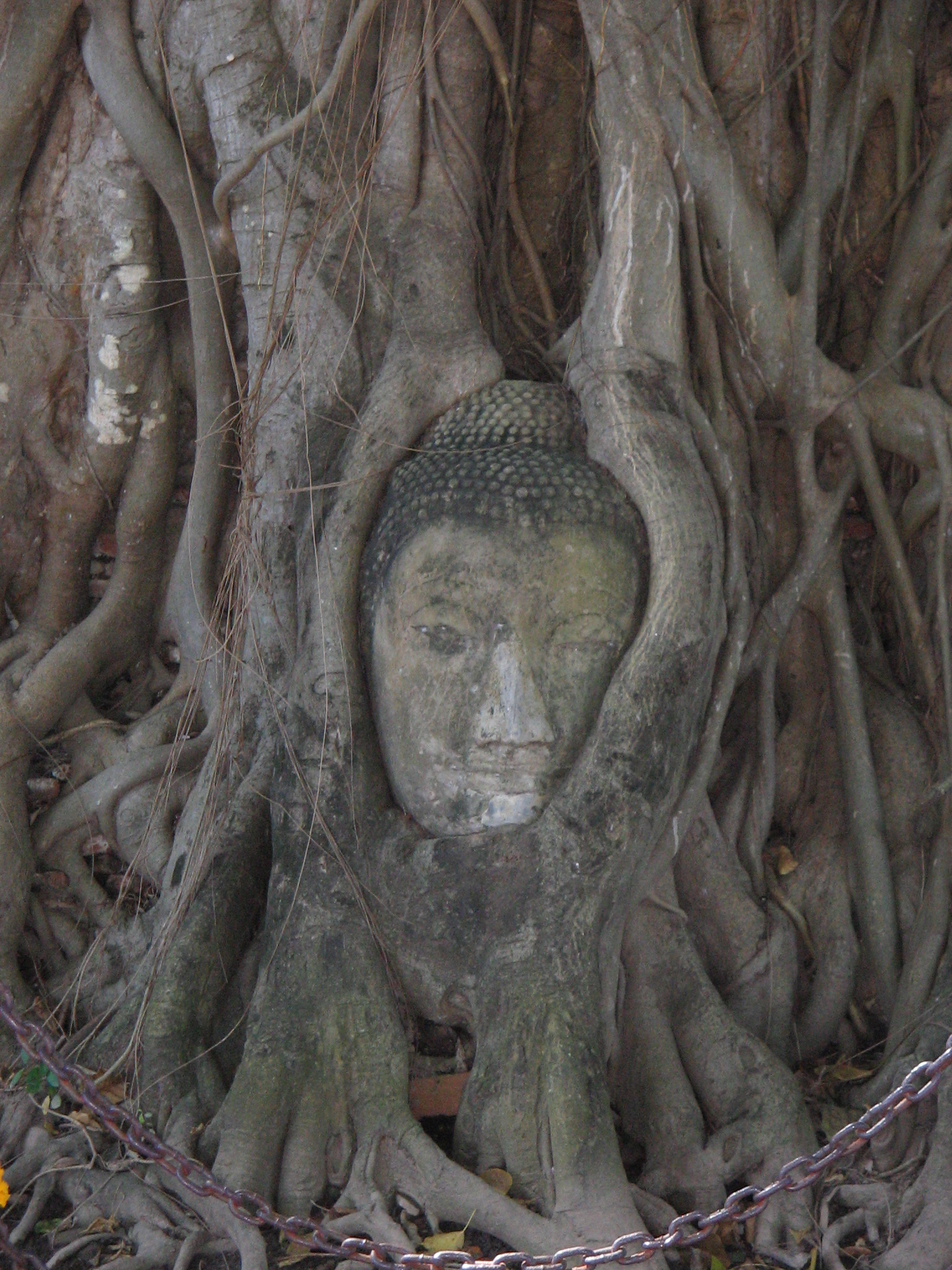
Table of Contents
- The Great Capital of Siam
- The Kingdom of Ayutthaya
- A Cosmopolitan Trading City
- Wat Mahathat and the Buddha in the Tree
- Wat Phra Si Sanphet
- Wat Chaiwatthanaram
- Prangs and Chedis
- The Buddha Images
- The Burmese Sack of 1767
- Rediscovery and UNESCO
- Getting There
- Nearby Places
- Closing Thoughts
The Great Capital of Siam
Ayutthaya was founded in 1351 and became the capital of the Thai kingdom of Siam. Built on an island ringed by rivers, it was protected by water and grew into a vast and wealthy city, home to hundreds of thousands of people.
At its height it was one of the greatest cities in the world, a centre of power, religion and trade. Its ruins today spread across the historic island, a memorial to that lost splendour.
The Kingdom of Ayutthaya
For more than four centuries the kingdom of Ayutthaya dominated much of what is now Thailand and beyond. Its kings ruled a powerful state, patronised Buddhism, and built the great temples whose ruins survive.
The kingdom developed a sophisticated culture, art and administration, laying many of the foundations of modern Thailand. Ayutthaya was the beating heart of this civilisation.
A Cosmopolitan Trading City
Ayutthaya was one of the great trading cities of the world, drawing merchants from China, Japan, India, Persia and Europe. Foreign communities lived in their own quarters around the city, and its markets overflowed with goods.
European visitors compared Ayutthaya to the greatest cities of their own continent, marvelling at its wealth, its canals and its glittering temples. It was a truly international metropolis of its age.
Wat Mahathat and the Buddha in the Tree
Among the most important temples was Wat Mahathat, at the heart of the old city. Though now largely ruined, it is famous for one unforgettable sight: a stone Buddha head cradled in the gnarled roots of a tree that has grown around it over the centuries.
This serene face, held gently in the embrace of the roots, has become the enduring image of Ayutthaya, a symbol of the way nature and history have intertwined among the ruins.
Wat Phra Si Sanphet
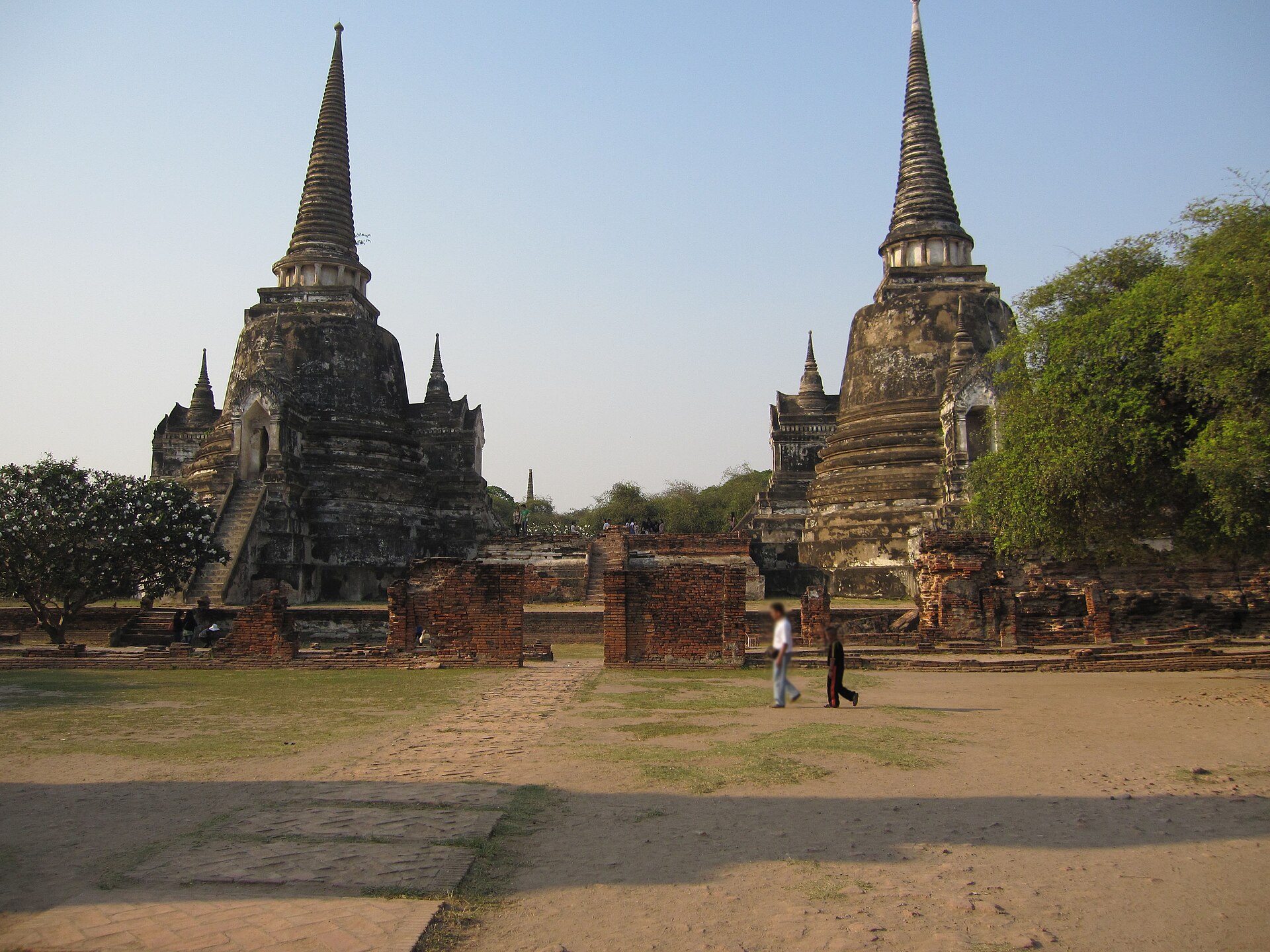
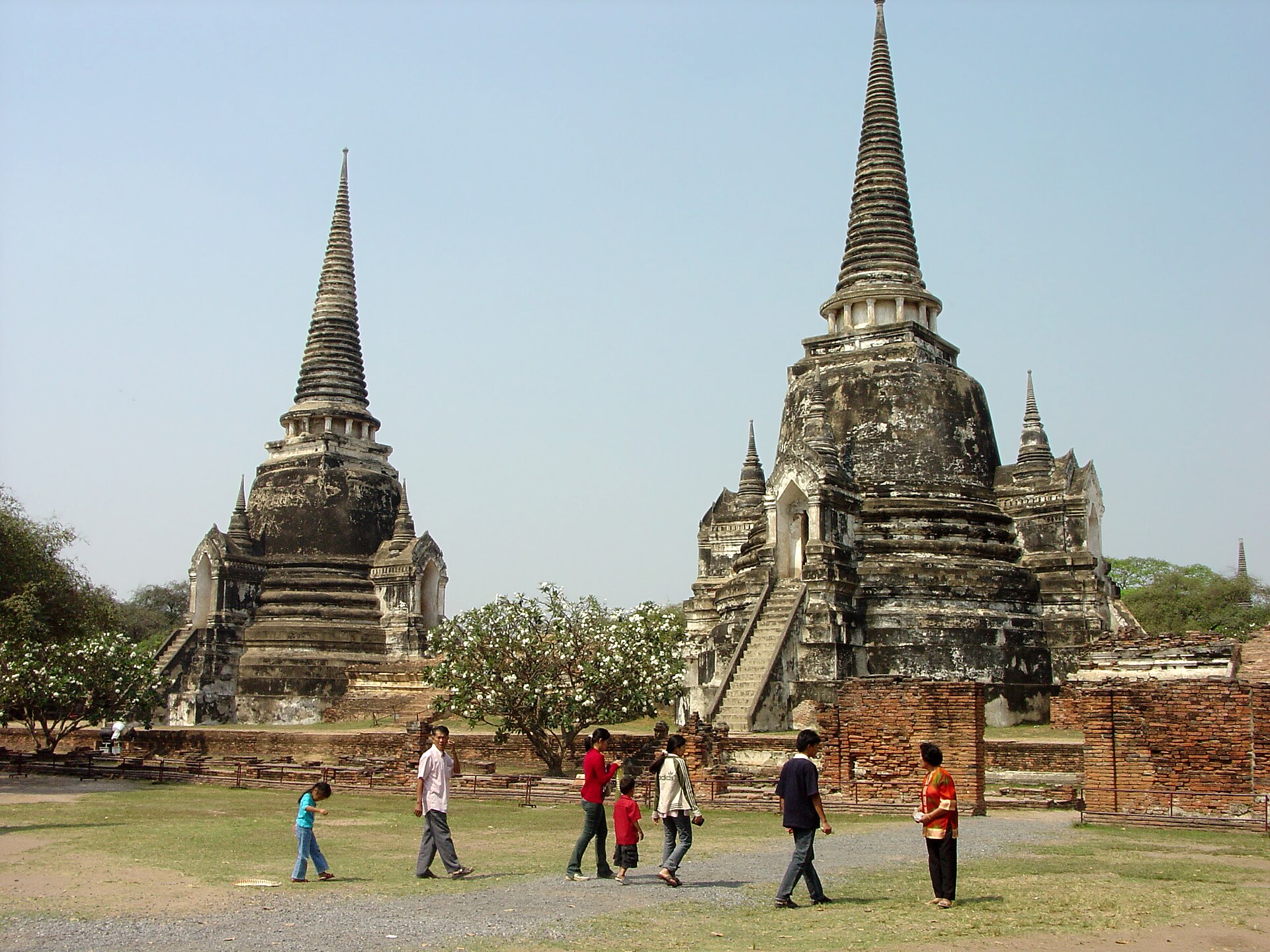
The grandest temple of all was Wat Phra Si Sanphet, the royal temple within the palace grounds, used for the most important state ceremonies. Its three great bell-shaped chedis, standing in a row, are among the most iconic sights of Ayutthaya.
These elegant stupas once held the ashes of kings and marked the spiritual centre of the kingdom. Their restored forms still dominate the skyline of the historic park.
Wat Chaiwatthanaram
On the bank of the river outside the island stands Wat Chaiwatthanaram, one of the most beautiful of all Ayutthaya’s temples. Built in the seventeenth century, it is arranged around a great central prang surrounded by smaller towers.
Its symmetrical design, inspired in part by the temples of Angkor, is especially striking when reflected in the river or lit at dusk. It is a favourite of visitors and photographers.

Prangs and Chedis
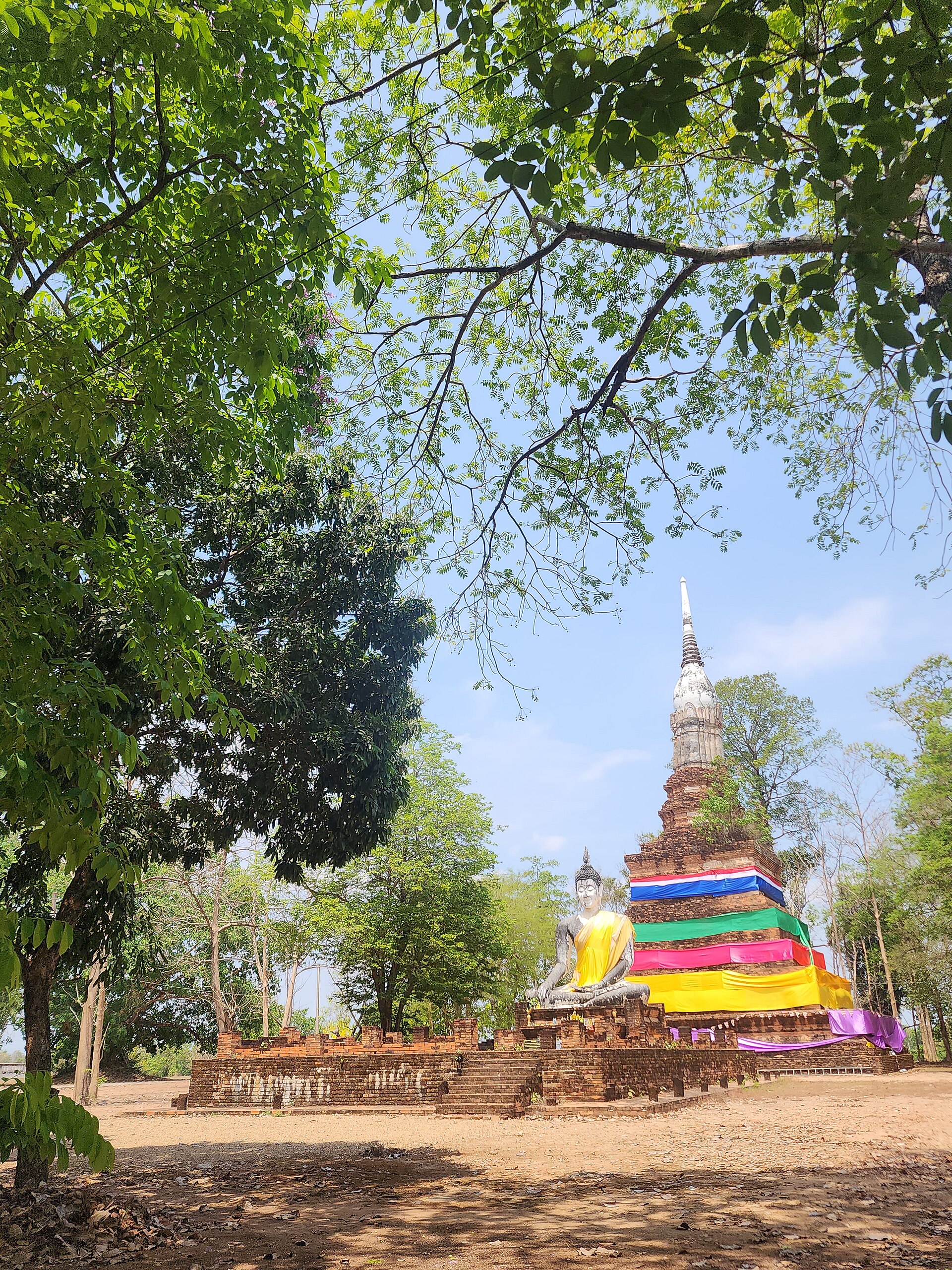
The skyline of Ayutthaya is defined by two kinds of monument: the tall, corn-cob-shaped prang, derived from Khmer architecture, and the rounded, bell-shaped chedi of the Thai Buddhist tradition. Both rise in great numbers among the ruins.
These towers once enshrined relics and marked sacred sites across the city. Even in ruin, their varied forms give Ayutthaya its distinctive and beautiful profile.

The Buddha Images
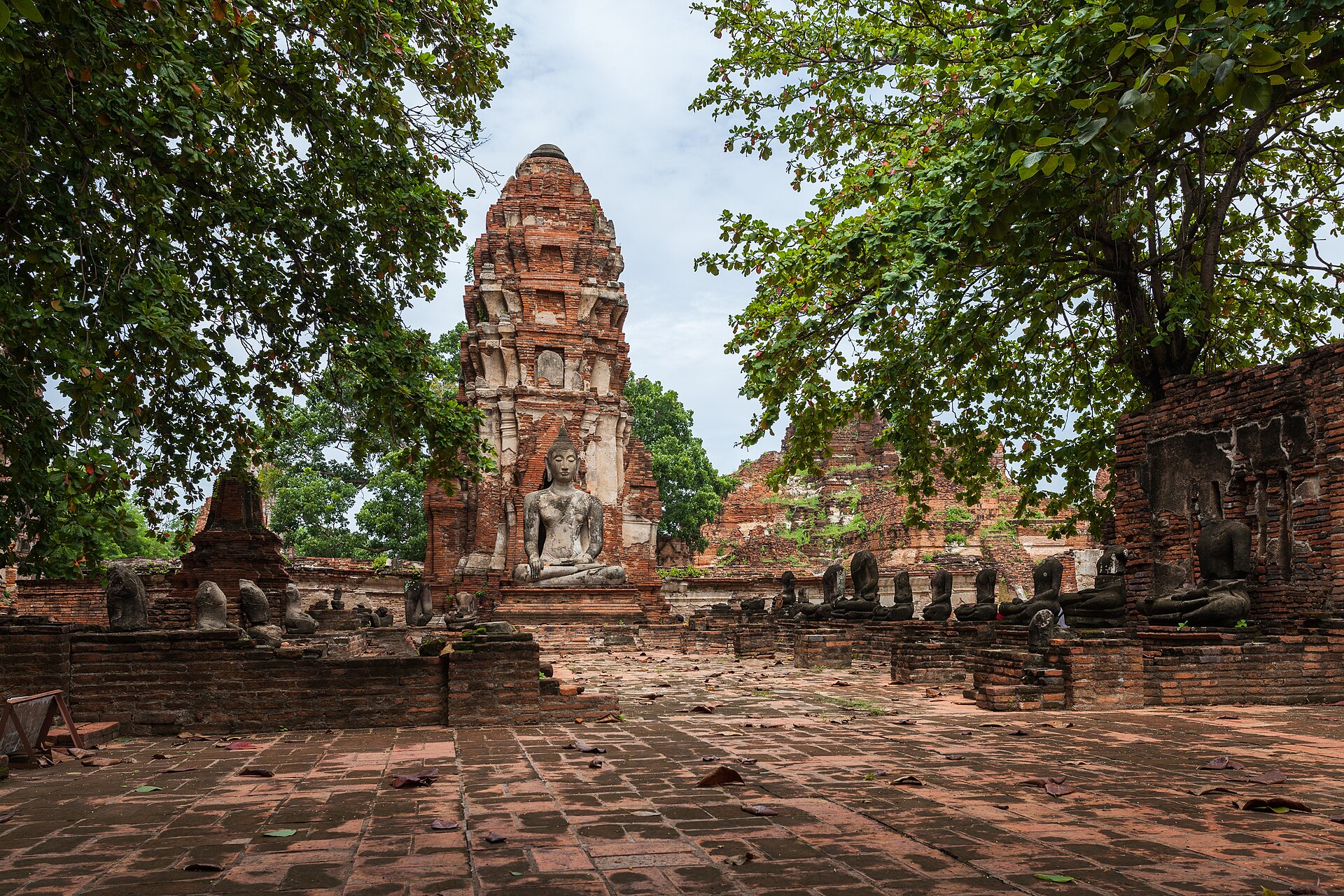
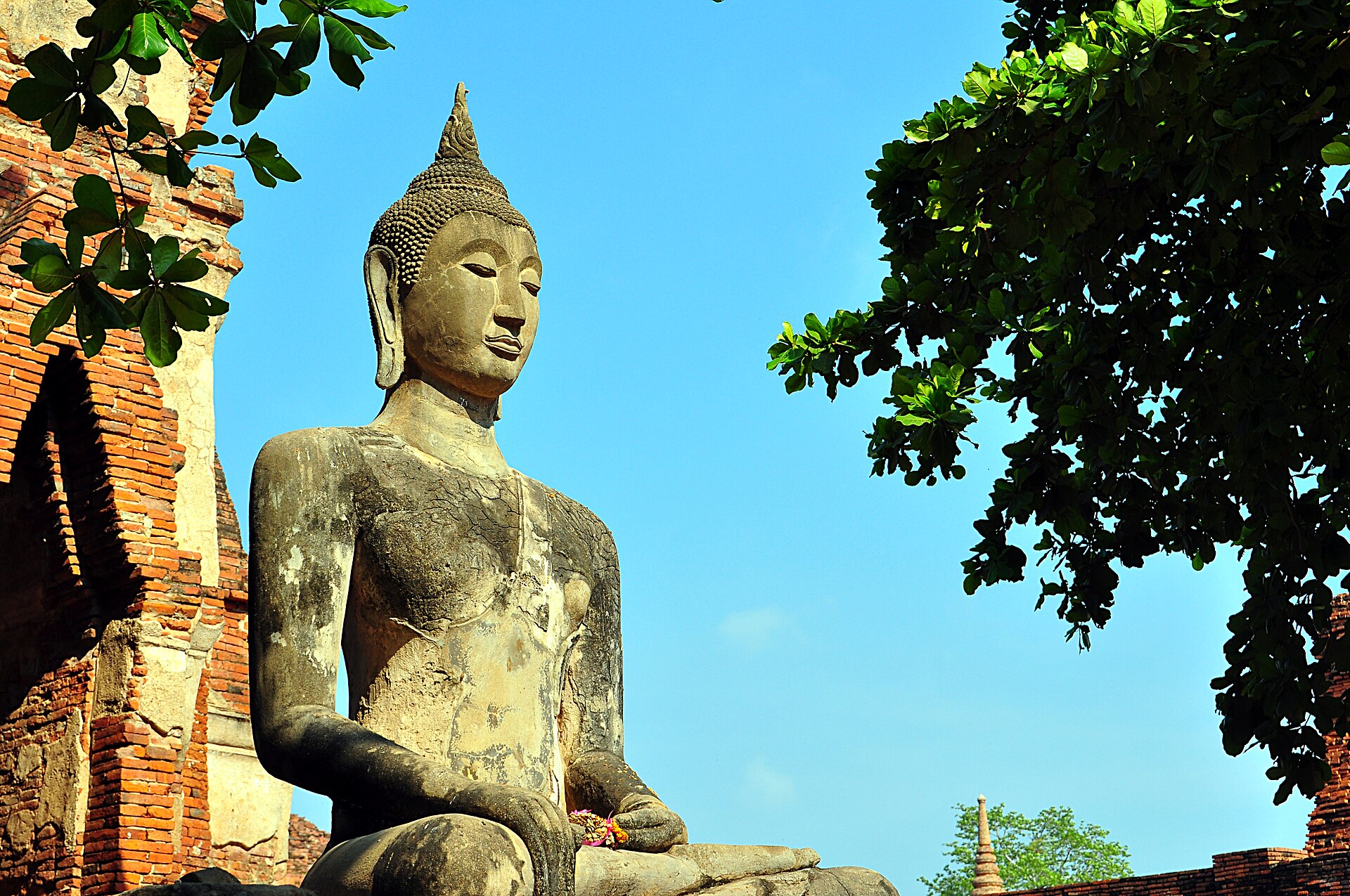
Ayutthaya was filled with Buddha images, from small statues to great reclining and seated figures. Rows of Buddhas once lined the temple galleries, and many still sit among the ruins, some restored, some headless.
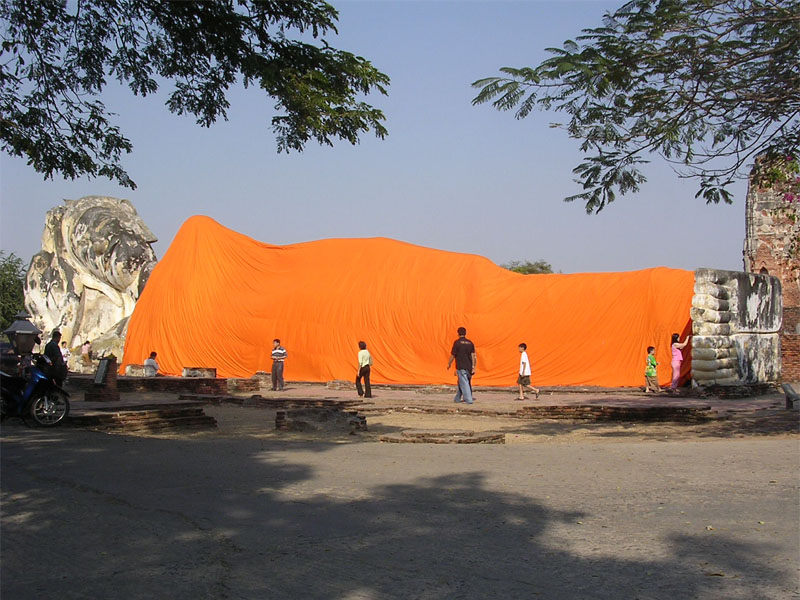
Great reclining Buddhas, depicting the moment of the Buddha’s passing into nirvana, are among the most impressive. These images were, and remain, the focus of devotion at the sacred sites.
The Burmese Sack of 1767
Ayutthaya’s glory ended in catastrophe. In 1767, after a long war, the armies of Burma captured the city and destroyed it, burning its temples, melting down its treasures and carrying off its people.
The devastation was so complete that the capital was abandoned, and a new capital was later founded downstream at what became Bangkok. The ruined temples of Ayutthaya stand as a poignant reminder of that terrible fall.
Rediscovery and UNESCO
After its destruction Ayutthaya was left in ruins, its monuments overgrown and crumbling. In time its historical importance was recognised, and efforts were made to clear, study and restore the great temples.
The historic city of Ayutthaya was inscribed on the UNESCO World Heritage List in 1991. Today it is a much-loved historical park and one of the most visited cultural sites in Thailand.
Getting There
Ayutthaya lies in central Thailand, about eighty kilometres north of Bangkok, on an island formed by the meeting of three rivers. It is easily reached from Bangkok by train, bus, car or river cruise.
The historic temples are spread across the island and its surroundings, and are explored by car, bicycle, tuk-tuk or boat. Many visitors come on a day trip from Bangkok, though the ruins reward a longer, unhurried visit.
Coordinates: 14.3550, 100.5680 — open Ayutthaya in Google Maps.
Nearby Places
- Bagan — the temple-covered plain of Myanmar, whose kingdom’s descendants later sacked Ayutthaya.
- Angkor — the great Khmer temple-city whose architecture influenced the prangs of Ayutthaya.
- Prambanan — another magnificent temple complex of Southeast Asia, from the Hindu tradition of Java.
Closing Thoughts
Ayutthaya is the lost splendour of Siam made visible: a great capital of temples, spires and Buddha images that once rivalled the finest cities in the world, now a landscape of evocative ruins.
From the three chedis of the royal temple to the serene Buddha head held in tree roots, its monuments blend beauty with the memory of a terrible fall. Ayutthaya remains one of the most moving and photogenic ancient cities in all of Asia.
You May Like
Mafra, the Palace a King Built From a Vow