Picture a castle that has been somebody’s home for nearly a thousand years, without a single break. Not a ruin, not a museum piece roped off behind glass, but a living, working royal palace where a monarch still sleeps, dinners are still cooked, and the guard still changes below the walls every day. That is Windsor. It is the oldest and largest occupied castle on the planet, and if its stones could talk they would give you the whole sweep of English history, from a Norman conqueror throwing up an earth mound in the eleventh century to the funeral of Queen Elizabeth II in the twenty-first.
What makes Windsor so easy to love is that it wears all of that history at once. You can stand in the shadow of a round tower that began as a wooden fort, walk past Gothic chapels where kings and queens are buried, peer into state rooms dripping with gold and old masters, and then look up to see a flag telling you whether the sovereign is at home right now. It has been besieged, remodelled by nearly every monarch who owned it, gutted by a terrible fire, and lovingly rebuilt. Let’s take our time and walk through the whole story.
A quick word on how to enjoy what follows. Windsor rewards slow attention, because its story is really the story of England itself told through one hilltop. So rather than rattle off a list of dates, we are going to wander through it the way you might on a good long visit: starting with why it is here at all, following it through war and fire and rebuilding, poking into its chapels and state rooms, listening for its ghosts, and finishing out in the great park where it all began. By the end you should feel you know the place, not just its facts.
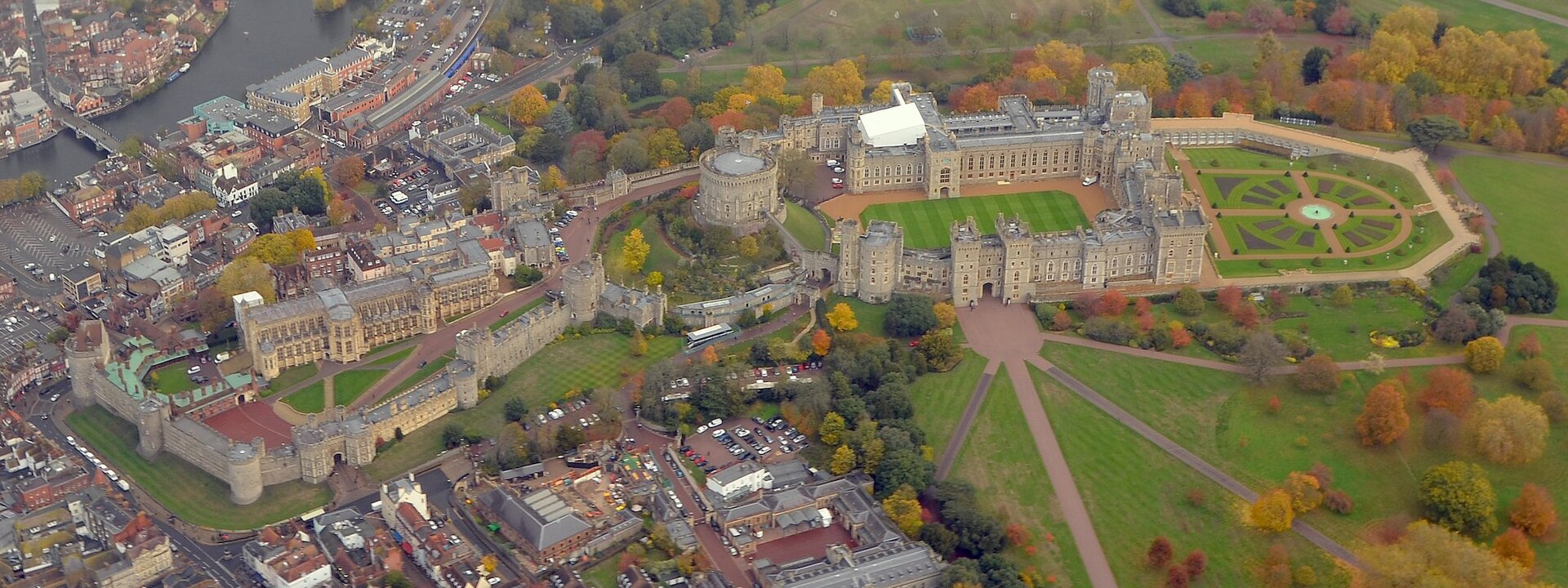
Table of Contents
- Why a Conqueror Built Here
- Turning Timber into Stone
- The Siege That Tested the Walls
- Knights, the Garter, and the Ghost of King Arthur
- A Chapel Fit for Kings
- Behind the Doors of the State Apartments
- The Night Windsor Almost Burned
- The Long Walk and the Great Park
- A Castle Still Doing Its Job
- How a Castle Gave a Dynasty Its Name
- The Ghosts Said to Walk the Corridors
- State Banquets, Royal Weddings, and the Wider World
- Planning Your Visit
- Nearby Castles
- Before You Go
Why a Conqueror Built Here
It all starts with William the Conqueror. Fresh from winning England at the Battle of Hastings in 1066, William found himself sitting on a hostile kingdom with a fairly small army of Normans, and he needed a way to hold it down fast. His answer was castles, dozens of them, planted at key points across the country and especially in a defensive ring around London. Windsor was one link in that ring, thrown up around 1070 on a chalk bluff about twenty miles west of the city, high above a bend in the River Thames.
The site was chosen with a hard military logic. It sat roughly a day’s march from the Tower of London, so the two could support each other. It commanded the Thames, the great highway into the heart of the kingdom. And it stood on the edge of a forest the Saxon kings had already used for hunting, which meant food, timber, and a ready-made royal playground. William, who loved the hunt almost as much as he loved conquest, could hardly have picked better.
The first Windsor was nothing like the stone giant you see today. It was a motte-and-bailey castle, the Normans’ signature quick-build design: a tall artificial mound of packed earth, called the motte, with a wooden tower perched on top, and two enclosed courtyards, or baileys, protected by timber palisades and ditches. You could raise one of these in a matter of weeks with enough forced labour, and they were brutally effective at dominating the surrounding countryside.
That humble earth mound is still there, buried under the stone Round Tower, and the stretched-out, two-courtyard shape the Normans scratched into the hilltop has quietly governed every rebuilding since. When you look at Windsor’s long, low silhouette running along its ridge, with a round tower rising in the middle and a ward at either end, you are really looking at an eleventh-century sketch that no later builder ever dared erase.
Turning Timber into Stone
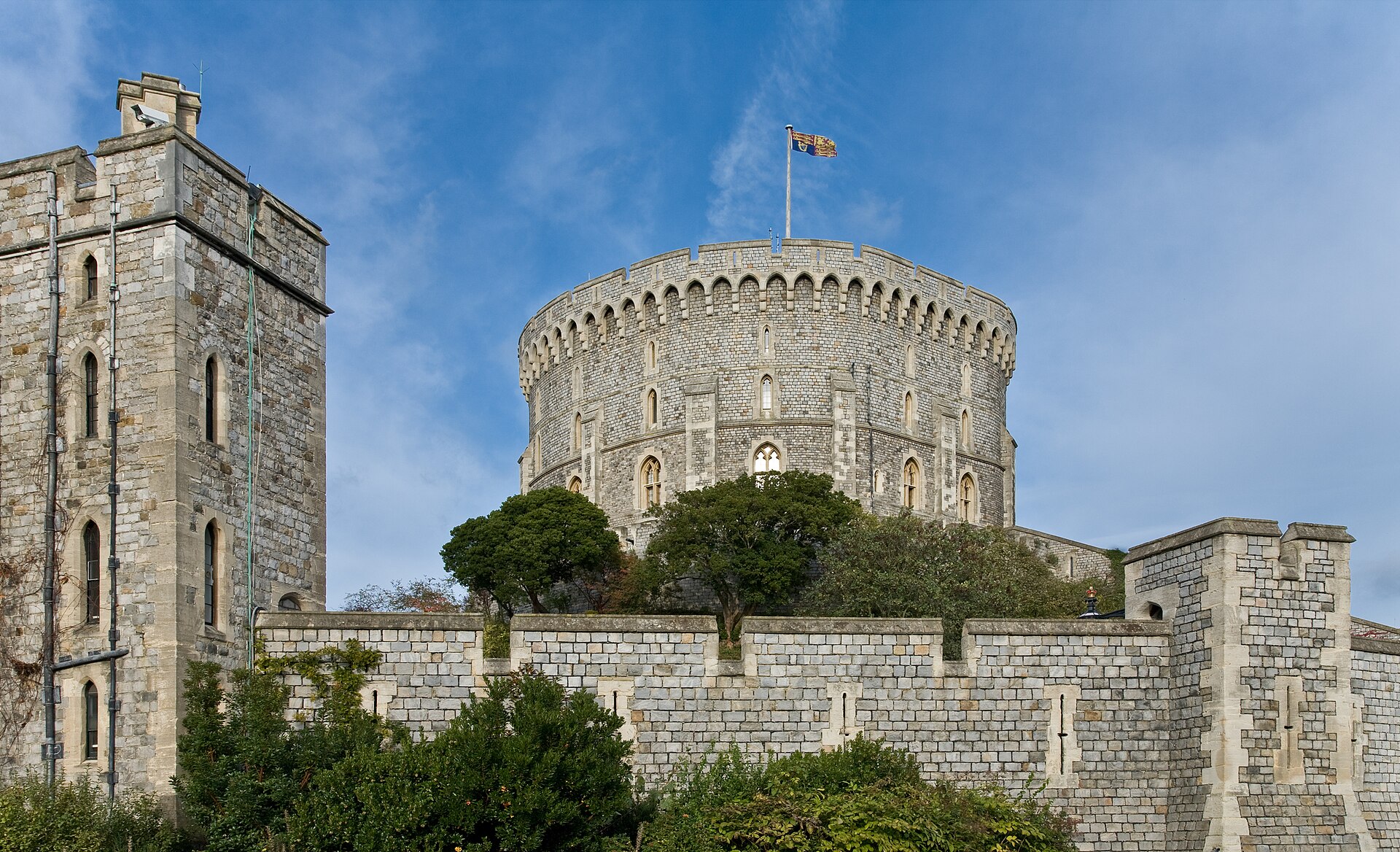
Wood rots and wood burns, and a wooden castle is only ever a temporary thing. So over the next couple of centuries Windsor’s timber was steadily replaced with stone, in a slow process of upgrading that turned a frontier fort into a proper royal fortress. The great builder of the age was Henry II, in the second half of the twelfth century. He raised the first stone shell keep on top of the old motte, the direct ancestor of today’s Round Tower, and began wrapping the whole castle in a stone curtain wall punctuated with square towers.
His grandson Henry III picked up the work in the thirteenth century and pushed it further, strengthening the defences of the lower ward, adding towers, and building comfortable royal apartments and a chapel. Henry loved his creature comforts, and under him Windsor started to become as much a residence as a stronghold. The medieval walls and towers you walk past in the Lower Ward today owe a great deal to his campaign of building.
That double identity, half fortress and half palace, is really the secret to understanding Windsor. Most medieval castles were single-minded machines of war. They were built to keep enemies out, and once gunpowder made their walls obsolete they were abandoned and left to fall down. Windsor escaped that fate because the people who owned it never stopped wanting to live in it. Instead of being written off, it was endlessly modernised, so that its medieval bones were kept alive under ever-changing layers of comfort and fashion.
You can read that layering everywhere. A Norman mound wears a medieval tower, which was given a taller, more romantic stone crown in the nineteenth century to make it look properly castle-like from a distance. Medieval walls back onto Baroque state rooms. Gothic chapels sit yards from Georgian and Victorian additions. Windsor is less a single building than a thousand-year conversation between everyone who ever held it.
The Siege That Tested the Walls
For all its later elegance, Windsor was built to fight, and more than once it had to. Its most dramatic military moment came during the vicious civil war between King John and his rebellious barons, the very crisis that produced Magna Carta in 1215, sealed just downstream at Runnymede within sight of the castle walls. When John went back on his word, the barons rose again and even invited a French prince, the future Louis VIII, to come and take the English throne.
In 1216 rebel and French forces laid siege to Windsor. The royal garrison inside was small, badly outnumbered, and cut off, but it had those freshly strengthened stone walls on its side. The defenders held out with grim determination through a long and difficult siege, and in the end the attackers simply could not crack the place. They gave up, lifted the siege, and marched away to try their luck elsewhere. Windsor had passed the test it was built for.
There was a second, very different ordeal during the English Civil War of the 1640s. This time Windsor was seized early by Parliament and turned into a military headquarters and prison, its royal comforts stripped out and its chapel plate melted down. In a grim twist, it became a holding place connected to the captivity of King Charles I, and after his execution in 1649 his body was brought quietly back and buried, almost secretly, in St George’s Chapel, without even a proper service.
So for a place we mostly picture as a genteel weekend home for royalty, Windsor has known real gunpowder, real hunger behind besieged walls, and real political violence. That edge of danger is easy to forget as you stroll its manicured wards today, but it is woven right through the stone.
Knights, the Garter, and the Ghost of King Arthur
In the middle of the fourteenth century Windsor took on the particular flavour it still carries, and the man responsible was Edward III. Edward was one of England’s great warrior kings, but he was also steeped in the romance of chivalry and utterly obsessed with the legends of King Arthur and the Knights of the Round Table. He dreamed of gathering the finest knights of his realm into a brotherhood modelled on Arthur’s, and he chose Windsor, his birthplace, as its home.
Out of that dream came the Most Noble Order of the Garter, founded around 1348 and still the senior order of knighthood in Britain today. Its strange little motto, in medieval French, roughly means shame on anyone who thinks ill of it, and legend says it came from a court dance where a lady’s garter slipped to the floor. As courtiers sniggered, the king gallantly picked it up and tied it round his own leg, silencing the mockery with that phrase. Whether or not it really happened, the story fixed the garter itself as the order’s emblem.
To give his knights a stage worthy of the fantasy, Edward poured an enormous fortune into Windsor, rebuilding great swathes of it and making it the grandest residence in the kingdom. He even started, though never finished, an actual round building meant to house a Round Table. The Garter is why Windsor and St George’s Chapel are so tightly laced together, since the chapel became the order’s spiritual home.
And the tradition is not dead history. Every June the surviving Garter knights still gather at Windsor, put on their deep blue velvet robes and black plumed hats, and process on foot through the castle to a service in St George’s Chapel, watched by crowds. It is one of those uncanny moments when the medieval past steps straight into the present and walks across the same ground Edward chose for it nearly seven centuries ago.

A Chapel Fit for Kings
If the Round Tower is Windsor’s muscle, St George’s Chapel is its soul. Begun by Edward IV in 1475 and finished under Henry VIII decades later, it is one of the crowning achievements of English Perpendicular Gothic, the last great flowering of the country’s own version of the Gothic style. From outside it is all vertical lines and huge windows. Inside, your eye is dragged helplessly upward to the fan vaulting, where the stone ceiling spreads out overhead like frozen lace, seeming to float without any visible means of support.
Down below, the choir is lined with the carved wooden stalls of the Garter knights, each topped with a helm, a crest, and a banner, so the whole space bristles with heraldry and colour. Brass plates recording centuries of knights cover the stall backs, a kind of chivalric roll-call in metal. Even for visitors who arrive knowing nothing about medieval orders, the effect is overwhelming.
St George’s is also, quietly, one of the great royal mausoleums of the world. Ten monarchs lie here. Henry VIII is buried in the choir alongside his third wife, Jane Seymour, the one who gave him a son. The executed Charles I lies near them. Georgian and Victorian royalty fill the vaults below. And in our own time the chapel received Queen Elizabeth II and Prince Philip, laid to rest beside her father, mother, and sister in a small side chapel.
It is a place of celebration as well as mourning. Royal weddings happen here, most famously that of Prince Harry and Meghan Markle in 2018, watched by an audience of many millions around the globe. Few buildings anywhere manage to be, all at once, a living church, a national shrine, a treasury of medieval art, and a stage for both the marriages and the funerals of a ruling house.

Behind the Doors of the State Apartments
The grandest interiors at Windsor are the State Apartments in the Upper Ward, and they are pure theatre. This is where the monarch receives presidents, kings, and ambassadors on state visits, and every surface is designed to send a message about the antiquity and wealth of the British crown. Charles II gave these rooms a lavish Baroque makeover in the seventeenth century, deliberately trying to rival Louis XIV’s dazzling new palace at Versailles, and later monarchs kept raising the stakes.
You move through a sequence of rooms with gilded ceilings and walls hung with one of the finest art collections on earth. Paintings by Rubens, Rembrandt, Van Dyck, Holbein, and Canaletto hang almost casually among the furniture. Corridors are lined with arms and armour, including the gear of kings, and cabinets glitter with porcelain and gold plate. It is designed to make a visiting head of state feel, politely, rather small.
The showstopper is St George’s Hall, a vast, long room used for state banquets, where a single table can be laid the entire length of the room for around a hundred and sixty guests beneath the painted shields of every Garter knight down the centuries. When it is dressed for a banquet, with gold plate gleaming and candlelight running the length of the table, it is one of the great sights of ceremonial Britain.
Windsor also hides some delightful oddities. Queen Mary’s Dolls’ House, built in the 1920s, is a perfect miniature mansion on a scale of one to twelve, complete with running water, working lifts and electric lights, tiny vintage wines in the cellar, and a library of little books specially written and illustrated by famous authors and artists of the day. It is a reminder that behind all the grandeur, Windsor is still, at heart, a family home, and families like to play.

The Night Windsor Almost Burned
On the morning of 20 November 1992 catastrophe struck. In the Private Chapel a powerful spotlight had been left pressed too close to a curtain, and the heat eventually set the fabric alight. The fire caught quickly and spread with frightening speed through the north-east corner of the castle, leaping between the old timber roofs and floors. It would burn for around fifteen hours and become one of the most serious fires in the castle’s long history.
What happened next was extraordinary. Firefighters poured in, but so did castle staff, soldiers, and members of the royal household, who formed human chains to carry priceless paintings, furniture, and treasures out of the path of the flames. Thanks to that frantic effort, and to the fact that many rooms had already been cleared for building work, almost the entire art collection was saved. The buildings, though, were devastated. St George’s Hall and several state rooms were left as blackened, roofless ruins open to the sky.
The date happened to fall in what the Queen later called her annus horribilis, a year of family scandals and public criticism, and the fire seemed to cap it. There was even a bruising national argument about who should pay for the repairs. The solution was to open Buckingham Palace to paying visitors for the first time, so that the public purse would not have to carry the whole cost.
The restoration itself became one of the great craft achievements of modern Britain. Over five years, teams of carpenters, stone carvers, plasterers, and gilders rebuilt what had been lost, much of it using traditional hand techniques, while a few areas were given a bold modern Gothic design. The rebuilt St George’s Hall gained a spectacular new green oak hammer-beam roof, the largest of its kind built in the twentieth century. The work was finished in 1997, unveiled on the very day of the Queen and Prince Philip’s golden wedding anniversary. Windsor had, quite literally, risen from its own ashes.
The Long Walk and the Great Park
Step out of the castle’s south side and you meet one of the most theatrical approaches to any building on earth. The Long Walk runs dead straight for nearly three miles from the castle gates deep into Windsor Great Park, lined the whole way with a double avenue of trees and closed at its far end by a colossal equestrian statue of George III on a hilltop, known locally as the Copper Horse. Charles II first laid the avenue out, and from either end, with the castle framed perfectly at the top of the rise, you grasp at once how landscape itself was used to magnify royal power.
The Great Park beyond is a direct survival of that ancient royal hunting forest which drew William the Conqueror to this spot in the first place. It rolls away for thousands of acres, a glorious patchwork of ancient oaks, some of them many centuries old, alongside deer herds, ornamental gardens, lakes, and long tree-lined rides. Much of it is open to walkers, and on a bright day it feels a world away from the ceremony of the castle above.
There are treasures scattered through it: the beautiful Savill Garden, the long lake called Virginia Water with its own artificial ruins and cascade, and even genuine ancient Roman columns brought from Libya and re-erected among the trees. Deer still graze where medieval kings once hunted, and the whole park is managed much as a great estate has been for centuries.
All of it underlines a point that is easy to miss. Windsor was never merely a building. It sits at the heart of an entire managed landscape of forest, farmland, and parkland that has been bound up with the English crown for the better part of a thousand years. The castle is the jewel, but the park is the setting that has always given it meaning.

A Castle Still Doing Its Job
What truly sets Windsor apart from almost every other great castle in the world is a simple, astonishing fact: it never stopped working. It is not a preserved ruin or a museum reconstructed for tourists. It is an official residence of the reigning British monarch, used for state visits, investitures, and Garter ceremonies, and for decades it was Queen Elizabeth II’s favourite retreat, where she spent most weekends and much of her later life, and where she finally chose to be buried.
That living quality shows itself in a hundred small daily rituals. A flag flies from the top of the Round Tower and tells the town exactly what is happening inside: the Royal Standard when the sovereign is actually in residence, the Union Flag when they are away. The guard changes to music down in the Lower Ward, sentries in scarlet tunics and tall bearskin caps patrol beats their predecessors have walked for generations, and the machinery of a real royal household hums along behind the visitor routes.
During the coronavirus pandemic the castle took on a new role as a genuine home base, with the Queen and Prince Philip settling into what the household nicknamed a protective bubble here, away from London. It was at Windsor that Prince Philip died in 2021, and his scaled-down funeral in St George’s Chapel, with the Queen sitting alone in her grief, became one of the defining images of that strange time.
So when you visit, remember that you are stepping into a functioning royal seat, not a stage set. The history here did not happen once and then stop. It is still, gently and grandly, going on, and you are simply passing through a very old story that has not yet reached its final chapter.

How a Castle Gave a Dynasty Its Name
Here is a piece of history that surprises a lot of people: the British royal family is named after this castle, and the reason is bound up with war. For much of the nineteenth and early twentieth centuries the ruling house went by a very German name, the House of Saxe-Coburg and Gotha, inherited from Queen Victoria’s husband Prince Albert. That was perfectly comfortable until Britain found itself fighting Germany in the First World War, when a German-sounding royal name suddenly became an embarrassment and even a liability.
In 1917, with anti-German feeling running high and German bombers actually appearing over England, King George V decided to cut the ties. He issued a proclamation changing the family’s name to something unmistakably, reassuringly English, and the name he reached for was Windsor, after the castle that more than any other stood for the antiquity and permanence of the English crown. At a stroke the House of Saxe-Coburg and Gotha became the House of Windsor.
The choice tells you just how much the castle means as a symbol. Of all the palaces and titles at the king’s disposal, Windsor was the one felt to carry the deepest sense of continuity and Englishness. Every British monarch since, right down to the present king, has belonged to the House of Windsor, and so this castle has literally given its name to a dynasty. When people around the world talk about the Windsors, they are, without always realising it, talking about a fortress a Norman conqueror founded on a hill above the Thames nearly a thousand years ago.
The Ghosts Said to Walk the Corridors
A castle this old could hardly fail to collect a few ghost stories, and Windsor has gathered some of the best in England. The most famous belongs to Herne the Hunter, a spectral figure with antlers growing from his head who is said to ride through the Great Park on stormy nights, leading a spectral hunt and heralding disaster for the realm. Herne turns up in Shakespeare’s play The Merry Wives of Windsor, which is set in the town, and the oak he supposedly haunted was pointed out to visitors for centuries.
Inside the castle the sightings get more regal. Henry VIII is said to be heard dragging his ulcerated leg along a gallery, groaning as he goes. Elizabeth I is reported to appear in the library, her heels tapping on the floorboards, and to have been seen by more than one credible witness over the years. Charles I, executed but buried here, is said to walk looking exactly as he does in his portraits, and even the young Prince Imperial of France and various sentries have their place in the castle’s ghostly cast.
You do not have to believe a word of it to enjoy it. Ghost stories are really a way that a community keeps its history alive and personal, turning long-dead monarchs into presences that still, somehow, share the building. At a place like Windsor, where so many powerful and tragic figures actually lived and died, it is no wonder the imagination fills the quiet corridors with their footsteps.
State Banquets, Royal Weddings, and the Wider World
Because Windsor is a working royal palace, it has been the backdrop to an astonishing number of the set-piece moments that define modern royal life. State visits are staged here in full pomp, with visiting presidents and monarchs driven up the Long Walk in horse-drawn carriages, inspected by guards of honour, and feasted in St George’s Hall beneath the banners of the Garter. Emperors, tsars, American presidents, and heads of state from every continent have all been received within these walls, making the castle a quiet but important instrument of British diplomacy.
It has also given the world some of its most-watched family occasions. Royal weddings in St George’s Chapel, christenings, and, more soberly, the funerals of Prince Philip and Queen Elizabeth II have drawn global television audiences numbering in the hundreds of millions. For many people who will never set foot in England, Windsor is the mental image that appears the moment anyone says the words British royalty.
The castle has seeped into the culture in gentler ways too. Shakespeare set a whole comedy in the town of Windsor, films and television dramas use the castle and its park as a ready-made stage for period stories, and the very name Windsor has become shorthand for monarchy itself. Few buildings anywhere carry that kind of symbolic weight, standing in the popular imagination for an entire institution and an entire idea of continuity.
Planning Your Visit
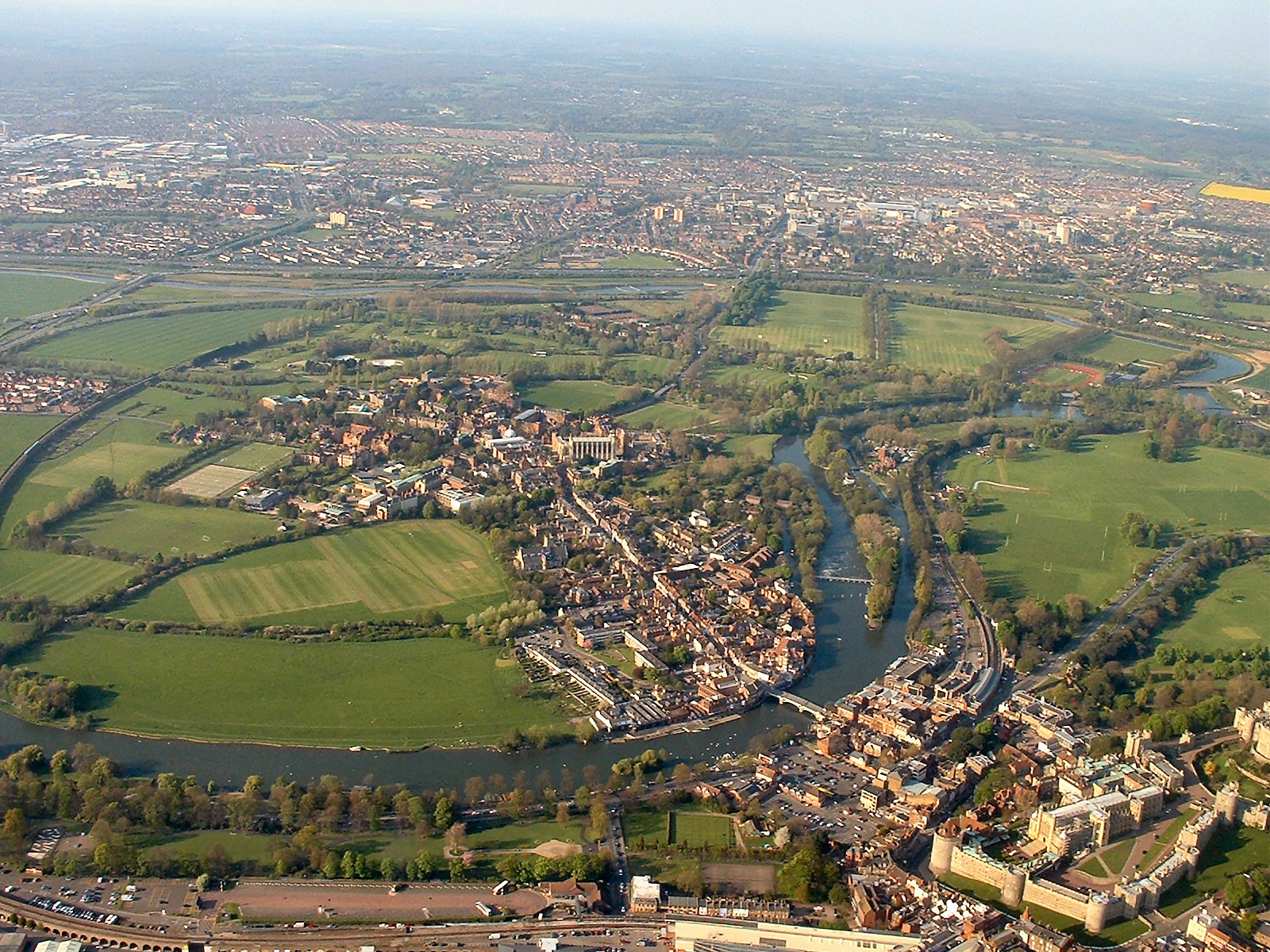
Windsor sits just west of London in the county of Berkshire, and reaching it could hardly be simpler. It is around an hour by train from central London, with two stations right in the town, and the castle rises so directly above the streets that you genuinely cannot miss it as you arrive. The pretty town below, with its cobbled lanes, riverside, and the famous Eton College just across the Thames, makes an easy and rewarding day out on its own.
Do give yourself most of a day for the castle itself, because there is far more to see than most first-time visitors expect. Between the State Apartments, St George’s Chapel, Queen Mary’s Dolls’ House, the changing of the guard, and simply wandering the wards and taking in the views, a couple of rushed hours will not do it justice. Book a timed ticket ahead in the busy summer months, check in advance whether St George’s Chapel is open, since it closes to visitors on Sundays for services, and keep an eye on the flag as you approach.
The castle sits at roughly 51.4839, -0.6044. Punch that into Google Maps and it will take you straight to Windsor Castle.
Nearby Castles
Why Windsor Stays With You
Windsor is the rare castle that refuses to become a fossil. For nearly a thousand years it has been knocked about, burned, rebuilt, and reinvented, and through all of it people have simply kept living in it. That unbroken thread is what gives the place its peculiar magic: the same walls that sheltered a Norman garrison now shelter a modern royal family, and the same chapel that crowned the Order of the Garter buried a queen in our own lifetimes.
So when you stand in the Upper Ward and look up at that flag on the Round Tower, remember that you are looking at the longest-running act in English history, still on stage. Windsor has outlived every siege, every fire, and every change of fashion thrown at it, and it is still, quietly and grandly, exactly what it was always meant to be: the home of a crown.
If you take one idea away from Windsor, let it be this. We tend to divide the past into neat, finished chapters, kings and battles safely behind glass. Windsor refuses that. It folds a Norman earth mound, a medieval order of knights, a Tudor tomb, a Baroque banqueting hall, a Victorian dynasty, and a modern funeral into a single living building that is still, right now, doing the job it was built for. Walk out through its gates and back down into the ordinary streets of the town, and you carry a little of that continuity with you, the odd and moving sense of having brushed against something that simply never stopped.
You May Like
Mafra, the Palace a King Built From a Vow


3 thoughts on “Windsor Castle: A Thousand Years of Kings, Sieges, and the Home of a Dynasty”