If you had to pick one castle to show someone who had never seen a real medieval fortress, you could do a lot worse than Warwick. Rising sheer above the River Avon in the green heart of England, it has everything the imagination demands: towering stone gate-towers, battlements you can walk, a great hall crammed with armour, dungeons, a mighty earthen mound, and a river reflecting the whole thing back at you on a still morning. It looks, in short, exactly like a castle is supposed to look, and that is no accident. Warwick has spent nearly a thousand years being one of the most powerful and carefully built strongholds in the country.
But Warwick is far more than a pretty silhouette. This was the seat of the earls of Warwick, among the mightiest nobles England ever produced, and one of them earned a nickname that tells you everything about the raw power once wielded from these walls: the Kingmaker, the man who could make and unmake kings almost at will. Warwick sat close to the centre of the Wars of the Roses, held royal prisoners, and shaped the fate of the English crown. Its stones have seen ambition, betrayal, and civil war on the grandest scale.
And then, in a very English twist, it grew old gracefully, softening from a fortress into a stately home and finally into one of the country’s best-loved visitor attractions, complete with jousting knights and birds of prey. Let’s walk through the whole long life of the place, from a conqueror’s earth mound to the crowds who fill its courtyard today.
We will take the scenic route through it all. Warwick rewards that kind of attention, because its thousand years fold together so neatly: a conqueror’s mound, a dynasty of castle-building earls, the most powerful subject in England, a civil war, a gentle slide into stately-home comfort, and finally a bustling modern life as one of Britain’s favourite days out. By the end you should see why so many people call it the country’s ultimate castle.
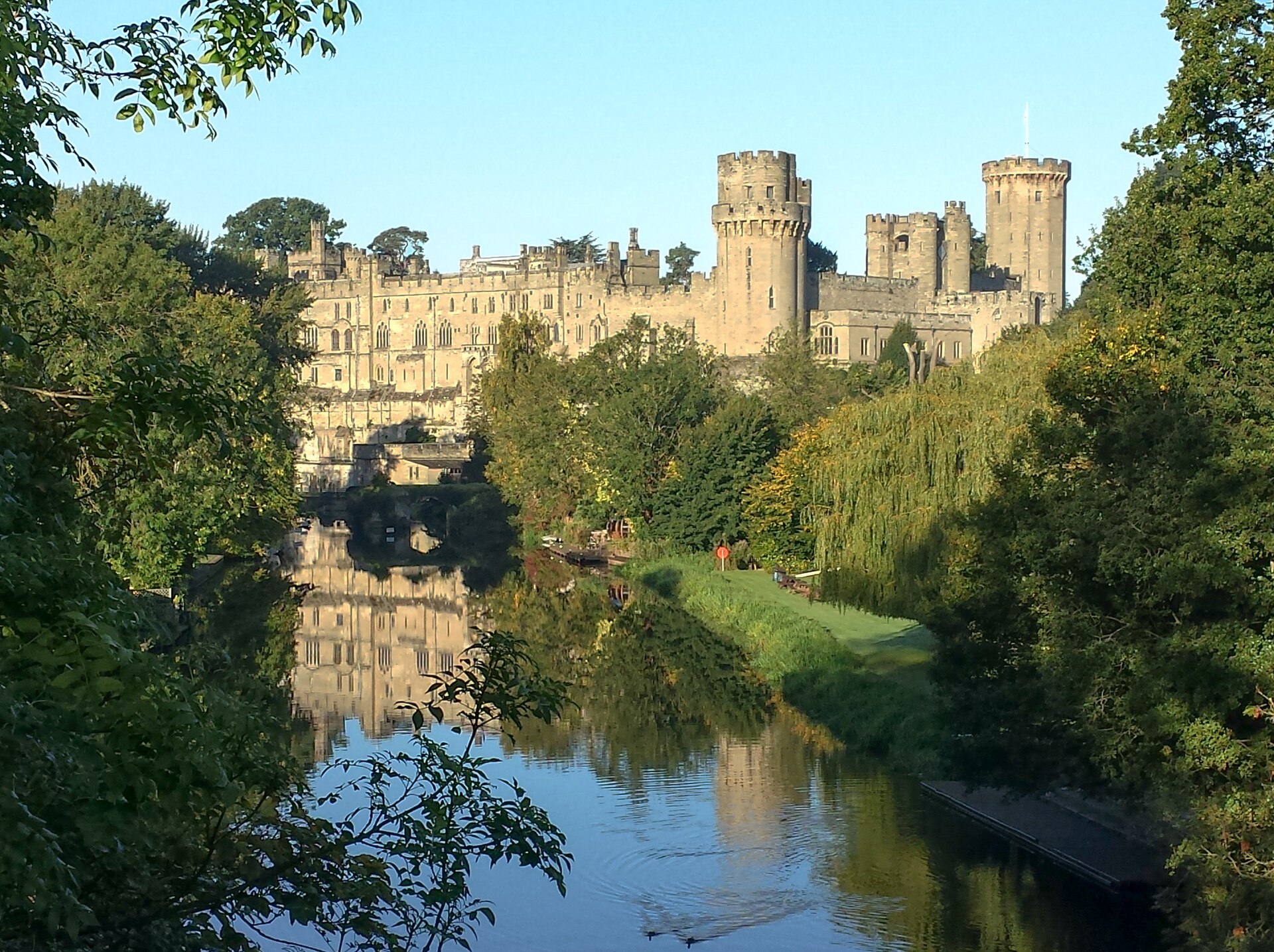
Table of Contents
- A Bend in the River, a Conqueror’s Mound
- The Earls Who Built in Stone
- The Man Who Made and Unmade Kings
- A Castle in the Wars of the Roses
- Sieges, Slighting, and the English Civil War
- Behind the Walls: Hall, Armour, and State Rooms
- The Mound, the Walls, and the View
- From Fortress to Stately Home
- Knights, Waxworks, and a Castle Reborn
- The Ghosts of Warwick
- Guy of Warwick and the Dun Cow
- Planning a Day at Warwick
- Nearby Castles
- Before You Go
A Bend in the River, a Conqueror’s Mound
Warwick’s story begins, like so many English castles, with William the Conqueror. In 1068, just two years after Hastings, William was making his way through the Midlands stamping his authority on the country, and he ordered a castle thrown up at Warwick. The spot was chosen for the oldest of reasons: a natural bluff on a bend of the River Avon, giving height, water defence on one side, and control of an important crossing and the roads that met there.
The first castle was the usual Norman motte-and-bailey, a great mound of piled earth topped with a wooden tower, with a courtyard below protected by a timber palisade and ditch. That original mound still survives within the grounds, now grassed over and crowned with later stonework, and you can climb it for a fine view. It is a tangible link back to the very first days of Norman England, when a handful of foreign knights were bolting the country down one earthwork at a time.
For its first couple of centuries Warwick was a working border-style fortress, gradually rebuilt in stone and handed to a succession of noble families. But its real greatness, and its transformation into the mighty stone castle we see today, would come later, in the hands of one of the most powerful noble dynasties in medieval England.
It is worth pausing on how quickly all this happened. Within a couple of years of a single battle, foreign lords were reshaping the English landscape, throwing up dozens of these earthworks to hold down a conquered people. Warwick was one node in that web of control, and the fact that its mound still stands is a quiet reminder of just how completely, and how fast, the Normans remade the country.

The Earls Who Built in Stone
The making of Warwick as a great fortress was largely the work of the Beauchamp family, earls of Warwick through the fourteenth and fifteenth centuries. They were fabulously rich and powerful, and they poured their wealth into rebuilding the castle in the most up-to-date and intimidating military style of the day. It is to them that Warwick owes its two most famous features, the towers that still dominate its northern face.
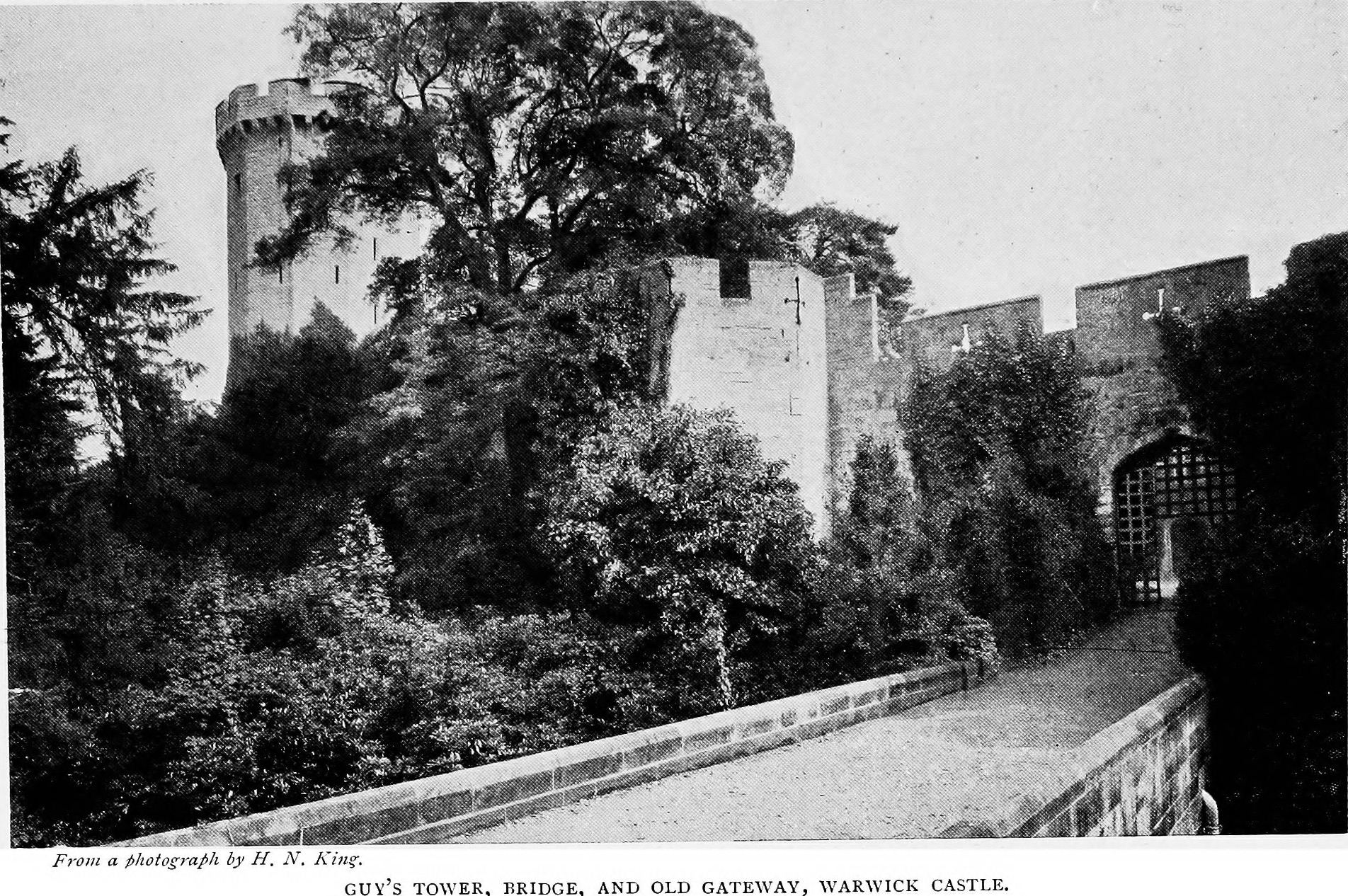
Caesar’s Tower and Guy’s Tower, raised in the second half of the fourteenth century, are among the finest surviving pieces of medieval military architecture in England. Caesar’s Tower is a strange and brilliant design, its base flaring out and its top crowned with a double parapet, rising well over forty metres. Guy’s Tower is a mighty twelve-sided drum. Between and around them runs a heavily defended gatehouse with a barbican, a machicolated projecting gallery for dropping unpleasant things on attackers, and layers of gates and portcullises.
The effect, especially from the town side, is deliberately overwhelming. This was architecture as a statement of aristocratic power, designed to make anyone approaching feel the strength and status of the earls of Warwick. Even today, walking up to that towering grey frontage, you feel exactly the awe its builders intended.
What is striking is that the Beauchamps built for show as much as for war. By the late fourteenth century the age of the classic siege was fading, and a castle like Warwick was partly a statement of dynastic pride, a way of announcing in stone that this family belonged at the very top of the kingdom. The towers had to work as defences, but they also had to impress, and they still do.

The Man Who Made and Unmade Kings
No account of Warwick can skip its most famous resident, and one of the most extraordinary figures in all English history: Richard Neville, Earl of Warwick, remembered simply as the Kingmaker. In the turbulent middle of the fifteenth century, during the dynastic civil wars we call the Wars of the Roses, Neville was quite possibly the most powerful man in England who was not himself a king, and for a time he effectively decided who would wear the crown.
His power came from a staggering combination of inherited lands, marriages, and military skill. Warwick backed the Yorkist claimant Edward, helped put him on the throne as Edward IV, and for years was the real force behind it. But when Edward slipped out of his control and married against his wishes, the Kingmaker did something almost unthinkable: he switched sides, drove Edward out of the country, and restored the rival Lancastrian king he had earlier helped depose. He had, quite literally, made one king and then unmade him to make another.
It could not last. Edward returned, the two former allies met in battle, and in 1471 the Kingmaker was killed at the Battle of Barnet, cut down as his cause collapsed. His death effectively ended the era of a single overmighty subject dictating to the crown. But the legend stuck, and Warwick has traded on its Kingmaker ever since. To stand in his castle is to stand at the heart of the bloodiest power struggle in medieval England.
It is hard to overstate how unusual the Kingmaker was. English history has plenty of powerful nobles, but very few who could genuinely treat the crown as something in their gift. For a brief, dizzying period Richard Neville came close to being the arbiter of the throne itself, and the fact that a single earl could reach that height tells you just how weak and contested the monarchy had become in the middle of the fifteenth century.

A Castle in the Wars of the Roses
Because of the Kingmaker, Warwick sat close to the centre of the Wars of the Roses, the long and vicious struggle between the houses of Lancaster and York for the English throne. The castle was not just a home but a power base and, at times, a prison. In one of the wars’ stranger episodes, the Kingmaker actually held the reigning king, Edward IV, as his captive for a while, keeping a crowned monarch under guard in his own fortress while he tried to rule in his name.
That detail sums up how upside-down English politics had become. A subject holding his own king prisoner in a private castle would have been unthinkable in calmer times, but in the chaos of the Roses, with noble armies marching up and down the land and the crown changing heads with brutal speed, Warwick became one of the pieces on a deadly national chessboard.
When the wars finally ended and the Tudors took the throne, the age of the overmighty earl was over. The crown made sure that no single noble family would ever again wield the kind of power the Kingmaker had enjoyed. Warwick remained grand, but its days of deciding the fate of kings were finished.
The Wars of the Roses were, at heart, a family feud fought with armies. Two branches of the royal house, Lancaster and York, both descended from Edward III, spent thirty years slaughtering each other for the throne, dragging the great noble families and their private armies into the bloodshed. Castles like Warwick were the strongholds from which these magnates operated, and control of them could shift the balance of a whole campaign. That is why Warwick, in the Kingmaker’s hands, mattered so much.
Sieges, Slighting, and the English Civil War
Warwick’s fighting days were not quite over after the Wars of the Roses. During the English Civil War of the 1640s, when the country tore itself apart between King and Parliament, the castle was held for Parliament, and in 1642 it was besieged by Royalist forces. The garrison held out behind those mighty medieval walls, and the attackers, lacking the heavy guns needed to crack such defences, eventually withdrew. Once again Warwick’s stone had proved its worth.
That episode had a happy side effect. Many English castles that resisted in the Civil War were afterwards deliberately wrecked, or slighted, by the victors so they could never be defended again, which is why so much of the country’s medieval heritage survives only as ruins. Warwick, on the winning side and useful to its owners, escaped that fate. Its walls and towers were left standing, which is a large part of why it survives today so wonderfully complete.
So the Civil War, which reduced so many great fortresses to picturesque rubble, actually helped preserve Warwick. It came through the last great age of castle warfare with its defences intact and its future as a lived-in home assured, a lucky escape that visitors benefit from every single day.
Behind the Walls: Hall, Armour, and State Rooms
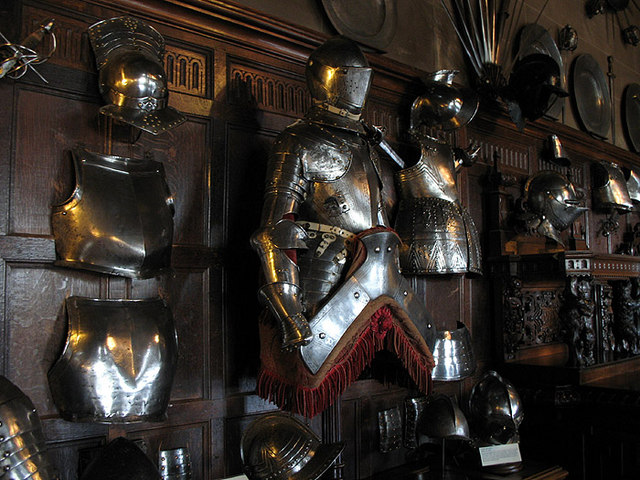
Step inside the walls and Warwick changes character. The residential ranges that line the courtyard, facing away from the river, were steadily turned over the centuries from medieval fortress-living into the comfortable apartments of a great noble house. The heart of it all is the Great Hall, a vast room that has been the social centre of the castle for centuries, now hung with arms, armour, and trophies, its walls a small forest of pikes, swords, and shields.
Beyond the hall runs a suite of state rooms, dressed over the years to receive important guests in appropriate splendour, with grand fireplaces, family portraits, and fine furniture. Warwick was, for a long stretch of its life, less a fortress than a stately home that happened to have enormous medieval towers attached, and these interiors reflect the tastes of the noble Greville family who held it for centuries after the Tudors.
There is a darker side below, too. Warwick has its dungeon and, famously, an oubliette, a horrible bottle-shaped pit into which a prisoner could be dropped and simply forgotten, the name coming from the French for to forget. Between the elegant staterooms above and the grim holes below, the castle contains the whole social range of medieval and later life, from the lord’s dining table to the prisoner’s living grave.
Wandering these rooms, you get a real sense of how a great castle actually functioned as a home. The lord and his family lived in considerable comfort and style, surrounded by servants, guests, and hangers-on, while the machinery of the estate hummed around them. The armour on the walls, so decorative now, was once the working kit of men who genuinely expected to fight, a reminder that comfort and violence lived side by side here.
The Mound, the Walls, and the View
For all its comfortable interiors, Warwick never stops being a serious fortress, and the best way to feel that is to get up onto the walls. A walk along the battlements and up the great towers rewards you with sweeping views over the town, the river, and the surrounding countryside, and lets you appreciate just how cleverly the whole thing was laid out to command its surroundings.
The old Norman motte, now called the Mound, still rises within the grounds, topped with later stonework, and from it you get one of the best overviews of the entire castle. Standing there, you can read the castle’s whole history in its shape: the ancient earthwork at your feet, the medieval towers and walls thrown up by the Beauchamps, and the softer domestic ranges of later centuries all laid out together.
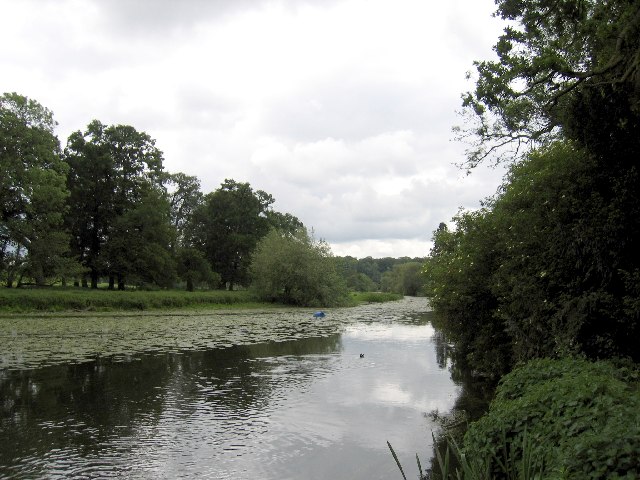
Down at river level, the Avon does its part too. It provided defence on the castle’s southern side, powered a watermill, and today gives Warwick its famous postcard view, that perfect mirror image of towers and battlements in the slow-moving water. Few castles anywhere are so beautifully married to their river.
There is a particular pleasure in climbing Guy’s Tower or Caesar’s Tower and coming out onto the top. The steps are tight and worn, spiralling up in the dark, and then suddenly you are out in the open air high above the courtyard with the whole county spread out around you. It is the kind of experience that makes the history feel real in your legs as well as your head, and it is not hard to imagine a medieval watchman up here scanning the roads for trouble.
From Fortress to Stately Home
After the Middle Ages, Warwick’s story became gentler. In the early seventeenth century it passed to the Greville family, who would hold it for over three hundred years and gradually transform it from a working fortress into a magnificent country house. They repaired and remodelled the residential side, laid out gardens, and filled the rooms with treasures, all while keeping the mighty medieval shell intact.
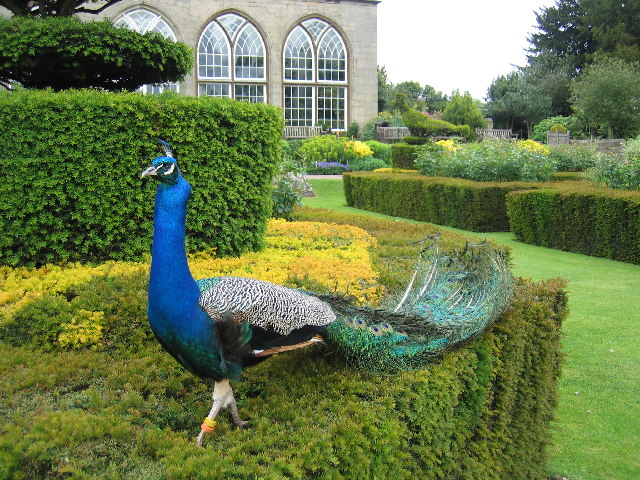
The famous landscape designer Capability Brown had a hand in shaping the grounds in the eighteenth century, softening the setting into the parkland and gardens visitors enjoy today, complete with strutting peacocks. Warwick became a place to be admired and shown off rather than defended, a symbol of aristocratic taste and lineage rather than raw military might. Yet unlike so many castles that were slighted, abandoned, or left to ruin, it stayed lived-in and loved, which is exactly why it survives so complete.
That unbroken care is Warwick’s good fortune. Where other great castles are now roofless shells, Warwick kept its roofs, its rooms, and its treasures, passing gently from fortress to home without ever falling out of use. It is one of the reasons the place feels so whole.
The peacocks are a lovely detail with a long pedigree. Ornamental birds like these were kept at grand houses for centuries as living decoration, symbols of luxury and status, and Warwick’s descendants still patrol the gardens today. They are a small, vivid link to the age when the castle had become less a stronghold than a showpiece of aristocratic good living.
Knights, Waxworks, and a Castle Reborn
Warwick’s most recent transformation came in 1978, when the Greville family sold the castle to the Tussauds Group, the company behind the famous waxworks. It was an inspired match. Tussauds used its theatrical skills to bring the castle’s history vividly to life, filling the rooms with startlingly realistic waxwork figures, staging a celebrated recreation of the Kingmaker preparing for battle, and turning Warwick into one of the leading historical attractions in Britain.
Today a visit is as much show as history. There is jousting and combat in the grounds in summer, birds of prey wheeling over the ramparts, a huge working trebuchet that hurls projectiles across the river meadow, and costumed characters bringing the medieval world to noisy life. Purists sometimes grumble that it leans towards theme park, but there is no denying it makes the past thrillingly accessible, especially for children who leave utterly hooked on castles.
Under all the spectacle, though, the real thing is still there: genuine medieval towers, real armour, a true Norman mound, and a thousand years of history in the stone. Warwick has simply found, in its old age, a new way to keep earning its keep and drawing the crowds, exactly as it once drew armies.
Warwick’s approach has quietly shaped how historic sites across Britain present themselves, proving that serious history and genuine entertainment need not be enemies. For every purist who wishes it were a little quieter, there are many families whose children caught the history bug right here, clambering over a real castle and watching a real trebuchet fling a blazing missile across the meadow.

The Ghosts of Warwick
A castle this old and this bloodstained naturally comes with its ghosts, and Warwick has a good collection. The most famous haunting is linked to Sir Fulke Greville, an early owner who was murdered by a servant in the seventeenth century and is said to walk still, sometimes appearing in the tower that bears his name. Visitors and staff over the years have reported cold spots, footsteps, and uneasy feelings in certain rooms.
The castle leans into this reputation, running ghost-themed events and playing up the eerier corners of its history, from the dungeon and the oubliette to the darker episodes of the Wars of the Roses. Whether or not you believe a word of it, wandering the older parts of the castle as the light fades, it is easy to feel why the stories took root.
Like all good castle ghost tales, Warwick’s are really its history refusing to lie quiet. A place that has seen murder, imprisonment, and civil war carries a certain weight, and the ghost stories are just one more way that the past keeps making itself felt among the living.
The dungeon and the oubliette do a lot of the atmospheric work on the tour, and rightly so. Descending into the cold, dark lower levels, where prisoners were once held in conditions we would find unbearable, is a sharp corrective to the romance of the state rooms above. Warwick, like every real castle, was a place of suffering as well as splendour, and it does not entirely hide that fact from its visitors.
Guy of Warwick and the Dun Cow
Warwick comes wrapped in legend as well as history, and the greatest of its myths is the tale of Guy of Warwick. According to the old romances, Guy was a humble but valiant knight who performed astonishing feats of arms to win the hand of the noble lady Felice, travelling far and wide, fighting giants and dragons, and eventually returning home to end his days as a hermit in a cave near the town. For centuries Guy was a genuine popular hero, his story told and retold across England.
His most famous foe was the Dun Cow, a monstrous wild beast said to have terrorised the countryside before Guy slew it, and enormous bones long displayed at the castle were shown to visitors as proof, though they almost certainly came from a whale or some other large animal. Giant relics supposedly linked to Guy, including a huge sword, armour, and cooking pot, were kept and shown off for generations, blurring the line between history and folklore in exactly the way a great castle invites.
None of it stands up as sober fact, of course. But the legend of Guy of Warwick tells you something true about the castle’s grip on the imagination. For ordinary people over the centuries, Warwick was not just the seat of powerful earls but the home of a national hero, a place where history and story wound together, and that romance is still part of what draws visitors up to its gates today.
Planning a Day at Warwick
Warwick sits in Warwickshire, right in the middle of England, and it is very easy to reach. The town has its own railway station a short walk from the castle, and it lies close to major motorways, making it a comfortable day trip from cities like Birmingham, Oxford, or even London. The pretty town of Warwick itself, with its old buildings and church, is well worth a wander while you are there.
Plan on a full day if you can, because Warwick is built to fill one. Between climbing the towers, walking the ramparts, exploring the state rooms and the Great Hall, watching the shows, and relaxing in the riverside gardens, there is a great deal to do, and it is very much geared towards families. Check the timings of the jousting, birds of prey, and trebuchet displays when you arrive so you can plan your day around them, and wear good shoes for all those tower steps.
The castle sits at roughly 52.2790, -1.5850. Punch that into Google Maps and it will take you straight to Warwick Castle.
Nearby Castles
Why Warwick Still Casts Its Spell
The Tower of London is the closest thing England has to a stone diary of its own power. Almost everything that a state can do to hold on to authority has happened within these walls: it has defended, imprisoned, tortured, executed, minted, armed, and dazzled. Kings raised it to frighten a city, and for centuries it worked. To walk through it is to walk through the hard machinery of a thousand years of rule.
And yet the thing that stays with you is not really the grandeur of the jewels or the strength of the walls. It is the human stories caught in the stone: a princess sitting down on the wet steps of Traitors’ Gate, two boys disappearing into the dark, a queen kneeling on the green, a prisoner scratching his name into a wall he would never leave. The Tower guards a crown, but what it really keeps is memory, and it keeps it very well indeed.
You May Like

Mafra, the Palace a King Built From a Vow


One thought on “Warwick Castle: The Kingmaker’s Fortress on the Avon”