Some castles are famous for a single thing. Kenilworth is famous for at least three, and any one of them would earn it a place in the history books. It sat through the longest siege in medieval English history, a grinding six-month ordeal that ended not with a storming but with starvation and disease. It became one of the grandest palaces in the land, home to John of Gaunt, one of the most powerful men England ever produced. And it was the setting for the most spectacular act of royal courtship in English history, when Robert Dudley threw a nineteen-day extravaganza here to win the heart of Queen Elizabeth I.
Today Kenilworth is a magnificent ruin, its warm red sandstone glowing in the Warwickshire sun, its great tower split open, its huge hall standing roofless against the sky. But even in ruin it is enormous and imposing, and if you know its stories the empty windows and broken walls fill up again with besieging armies, feasting lords, and a queen being wooed with fireworks over a vanished lake.
That lake is the key to a lot of Kenilworth’s history, and it is long gone now, drained away centuries ago. So part of the fun of visiting is learning to see what is no longer there. Let’s walk into these red ruins and put back the water, the roofs, and the people, and follow Kenilworth through its very full life.
We will follow it in roughly the order it grew, layer by layer, because at Kenilworth the history really does pile up in the stone. Start with the keep and the vanished lake, move through the great siege and the palace of John of Gaunt, and end with Robert Dudley’s doomed, glorious bid to win a queen. By the time we reach the recreated garden, the empty ruins should feel crowded with ghosts.
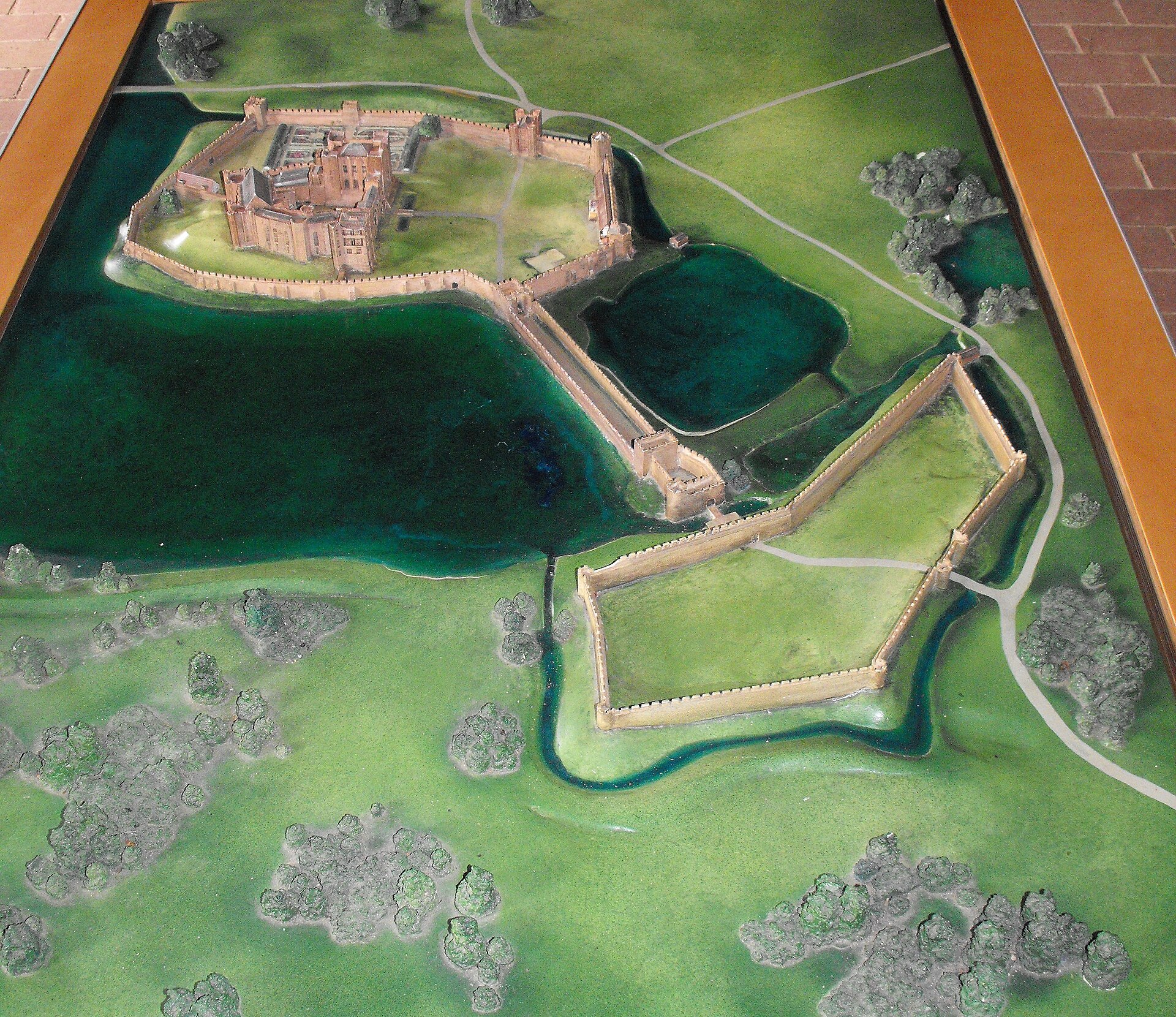
Table of Contents
- Red Stone in the Warwickshire Fields
- The Great Tower and the Water Defences
- The Longest Siege in English History
- John of Gaunt’s Palace of Feasts
- Robert Dudley and the Queen He Loved
- A Garden Fit for a Queen
- Reading the Ruins
- Slighted and Left to the Sky
- Seeing the Vanished Lake
- How Kenilworth Became a Legend
- Visiting Kenilworth Today
- Nearby Castles
- Before You Go
Red Stone in the Warwickshire Fields
Kenilworth stands in the gentle countryside of Warwickshire, in the middle of England, and the first thing that strikes you is the colour. The castle is built of a warm red sandstone that glows almost pink in the evening light, giving even its ruined walls a mellow, welcoming quality quite unlike the cold grey of many fortresses. It is a big, sprawling site, and its scale alone tells you that this was no ordinary castle but a place of the first importance.
The castle began in the early twelfth century, founded by a royal official, and for its first period it was a fairly standard Norman stronghold centred on a great stone keep. But its position had a special advantage that clever builders would soon exploit to the full: the surrounding low, wet ground could be flooded, turning Kenilworth into an island fortress protected by a vast artificial lake.
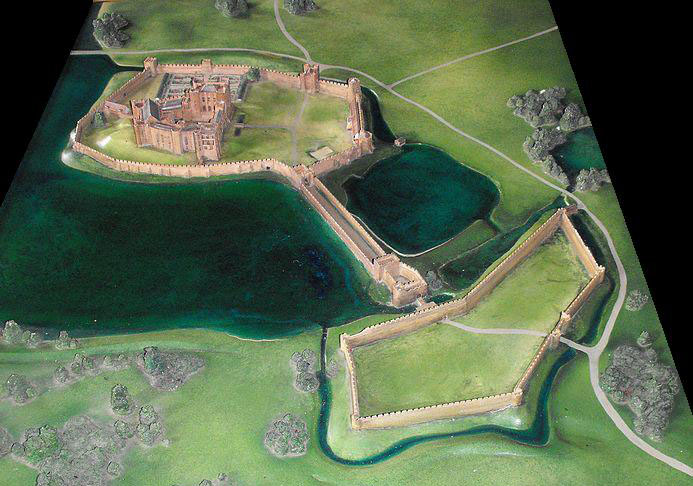
That lake, known as the Great Mere, would become Kenilworth’s secret weapon and the making of its reputation. By damming the local streams, its owners created a huge sheet of water that surrounded the castle on several sides, making it extraordinarily difficult to attack. For centuries the Mere defined Kenilworth, and though it is gone now, you cannot understand the castle without imagining it back into place.
That warm colour comes from the local sandstone the builders quarried nearby, and it gives Kenilworth a character quite its own. Where a granite fortress can look grim and forbidding, Kenilworth’s red walls feel almost human, softening with age into a colour that painters have loved for centuries. It is one of those small details that shapes how a place feels, and it is a large part of why the ruins are so photogenic in the low light of morning and evening.
The Great Tower and the Water Defences
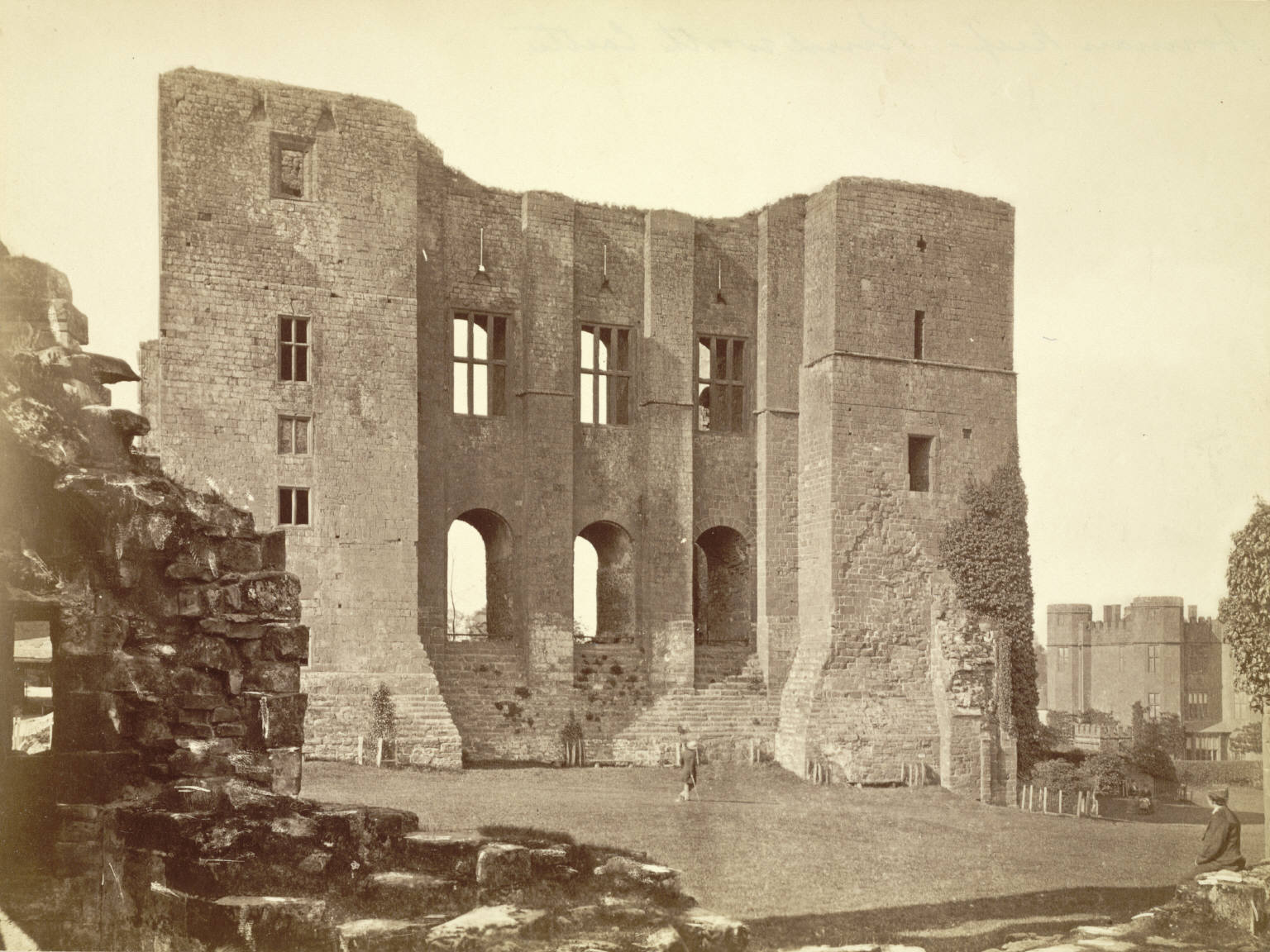
At the heart of Kenilworth stands its Norman keep, a massive square tower of red stone that is among the largest in England. Its walls are hugely thick, and though one side was later deliberately blown apart, enough survives to show just how formidable it once was. This was the strongpoint of last resort, the core around which everything else grew.
But it was the combination of the keep with the water that made Kenilworth so strong. The Great Mere and a series of pools and dams turned the approaches into a watery maze, so that any attacker had to cross causeways and dams under fire, with no way to bring siege engines close or to mine beneath the walls. Kenilworth was, in effect, a castle defended by a lake, and that made it one of the most secure fortresses in the country.
Over the following centuries the castle was expanded and strengthened by a succession of kings and great magnates, who added walls, towers, and buildings until it had grown from a compact Norman fort into a vast and complex stronghold. By the thirteenth century Kenilworth was strong enough, and important enough, to become the stage for one of the epic episodes of English history.
The Longest Siege in English History
In the 1260s England was torn apart by civil war between King Henry III and a group of rebellious barons led by Simon de Montfort, a struggle that helped shape the very idea of Parliament. Kenilworth was a stronghold of the rebel cause, and after Montfort was killed in battle, his supporters retreated behind its walls and its lake and refused to surrender. In 1266 the king brought his army to force them out, and there began the great siege of Kenilworth.
It was a monster of a siege, lasting around six months, the longest in medieval English history. The royal army threw everything at the castle: they built huge siege engines, brought up towers, even attempted a waterborne assault across the Mere using barges, and battered the walls with stones. The defenders held out with astonishing stubbornness, hurling missiles back and defying every attempt to break in. The water defences did their job, and the walls would not fall.
In the end it was not force but hunger and disease that decided the matter. Cut off and slowly starving, their ranks thinned by sickness within the crowded castle, the defenders finally agreed to terms. The settlement that ended the siege, known as the Dictum of Kenilworth, offered the rebels a way to buy back their lands and helped bring the civil war to a close. Kenilworth had endured the longest siege England had ever seen and had very nearly proved impregnable.
The siege is also remembered for a grim footnote of medieval warfare. Conditions inside the packed castle grew appalling as food ran short and disease spread, and the besiegers outside suffered too through the long months in their camps. It was a reminder that most sieges were won not by dramatic assaults but by the slow, brutal arithmetic of hunger, thirst, and sickness, a war of endurance in which the last side able to stand won.
John of Gaunt’s Palace of Feasts
In the fourteenth century Kenilworth passed to one of the most powerful figures in all English history: John of Gaunt, son of King Edward III, uncle of a king, and effectively the richest and mightiest nobleman in the land. Gaunt had the wealth of a prince and the ambitions to match, and he set about turning Kenilworth from a fortress into a palace fit for royalty.
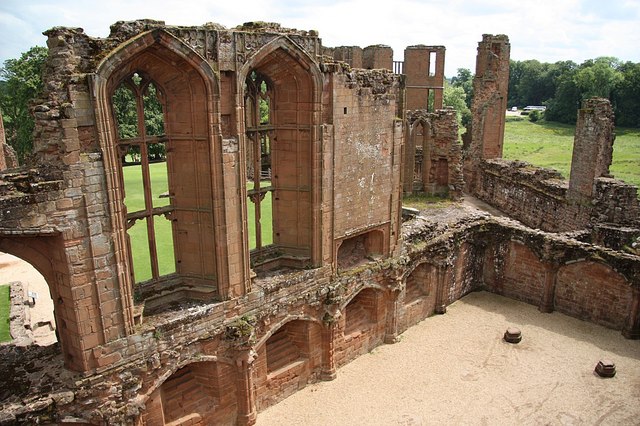
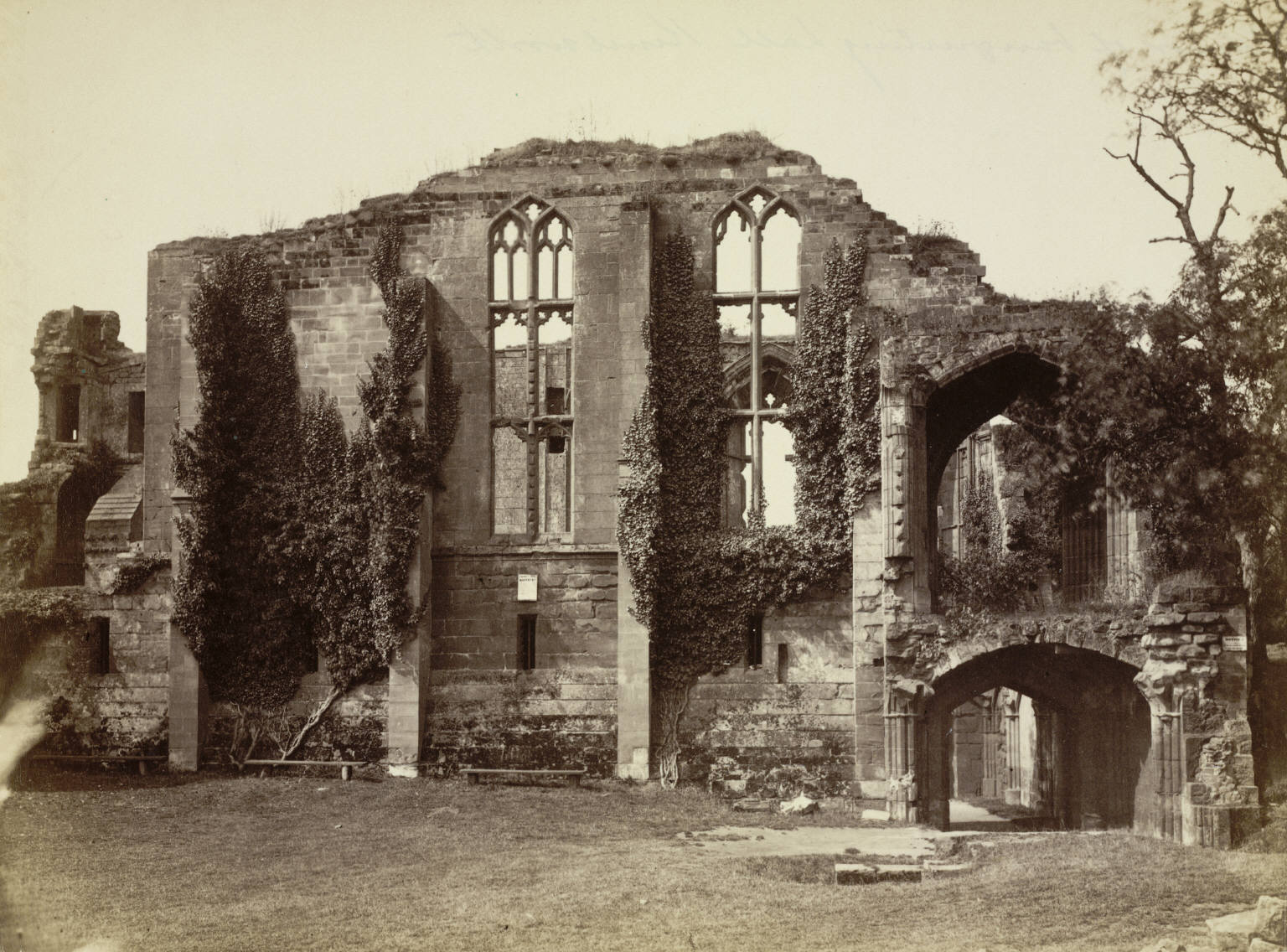
His greatest addition was a magnificent Great Hall, one of the finest domestic buildings of medieval England, with enormous windows and a soaring roof, built for feasting and ceremony on the grandest scale. Even in ruin, with its roof long gone and the sky showing through its great window frames, the hall is breathtaking, and it is easy to picture the blaze of a thousand candles and the roar of a great feast within it.
Gaunt also added comfortable private apartments and other lavish buildings, transforming Kenilworth into a residence of almost royal splendour. Under him it became not just a strong castle but a showpiece of aristocratic magnificence, a place designed to display the extraordinary power and wealth of its owner. That palatial character would make it the perfect stage for its next great moment, two centuries later.
It is worth remembering who John of Gaunt was. As a son of Edward III and father of the future Henry IV, he stood at the very centre of the royal family, and for years he effectively governed England on behalf of an ageing king and then a boy king. A man of that stature needed a setting to match, and the palace he raised at Kenilworth was a statement that here lived someone very nearly a king in all but name.
Robert Dudley and the Queen He Loved
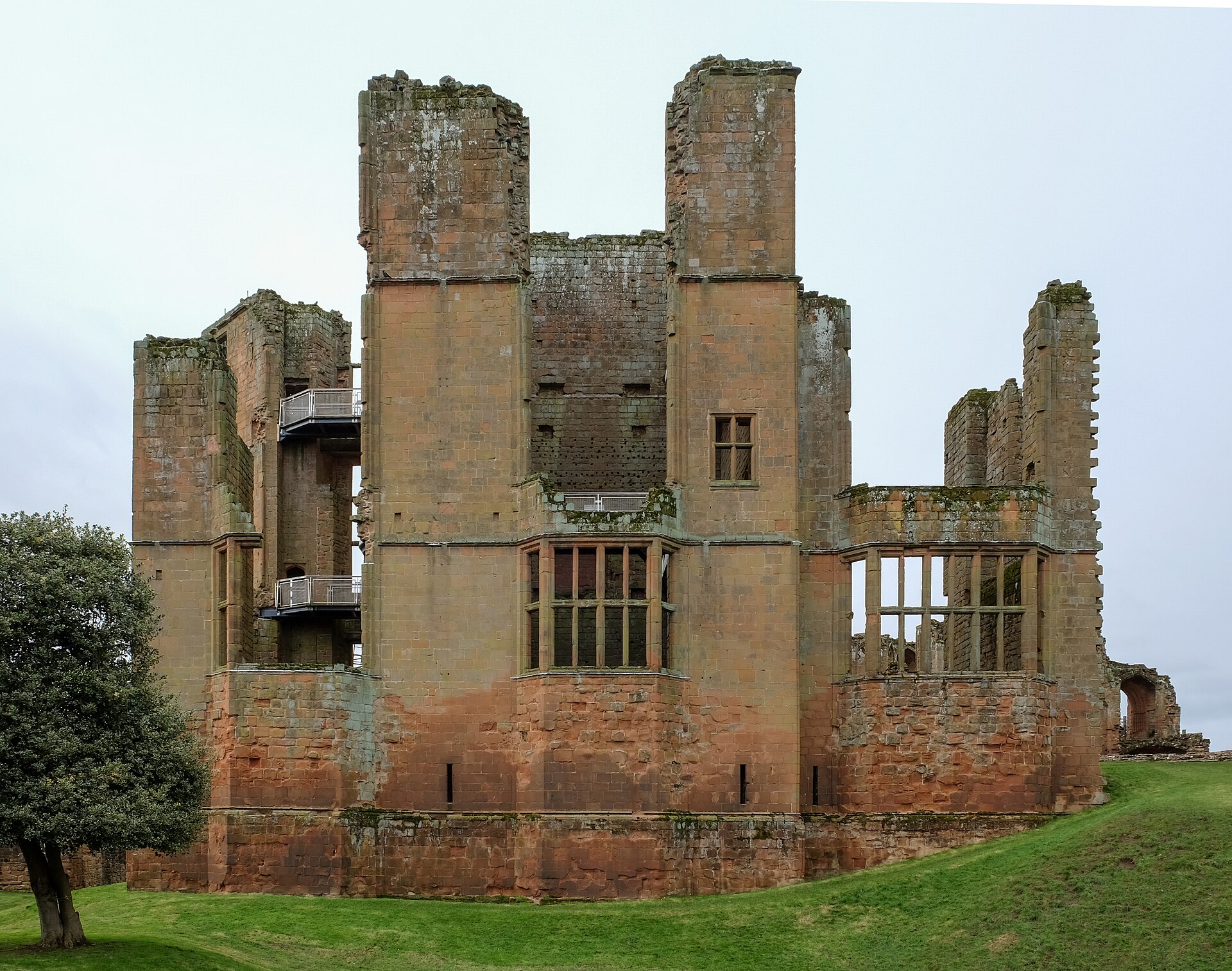
In the age of Elizabeth I, Kenilworth was given by the queen to her great favourite, Robert Dudley, Earl of Leicester. Dudley was widely believed to be the love of Elizabeth’s life, and many expected, or feared, that she might marry him. He lavished money on Kenilworth, remodelling and extending it to create a palace worthy of receiving his royal mistress, adding a grand new tower block of apartments and a splendid gatehouse.
His purpose was clear: to woo the queen. In 1575 Dudley staged at Kenilworth what may be the most spectacular act of courtship in English history, a royal visit lasting nineteen days, filled with feasting, hunting, plays, music, and elaborate pageants. There were fireworks over the Great Mere, water spectacles with figures floating on the lake, and entertainments devised to flatter and delight the queen at every turn, all designed to persuade her, at last, to marry him.
It did not work. Elizabeth enjoyed the show but never gave Dudley the answer he wanted, and she never married at all. But the great entertainment of 1575 became legendary, remembered for generations as the height of Elizabethan splendour. It even, some say, planted images in the mind of a young William Shakespeare, who grew up not far away, and it inspired, centuries later, a famous novel by Sir Walter Scott that fixed Kenilworth forever in the romantic imagination.
The relationship between Elizabeth and Dudley is one of the great might-have-beens of English history. They had known each other since childhood, and she plainly loved him, yet the political dangers of marrying a subject, and the scandal surrounding the mysterious death of Dudley’s first wife, always stood between them. Kenilworth in 1575 was, in a sense, his last and grandest throw of the dice, and the fact that it failed only adds to the poignancy of these beautiful ruins.
A Garden Fit for a Queen
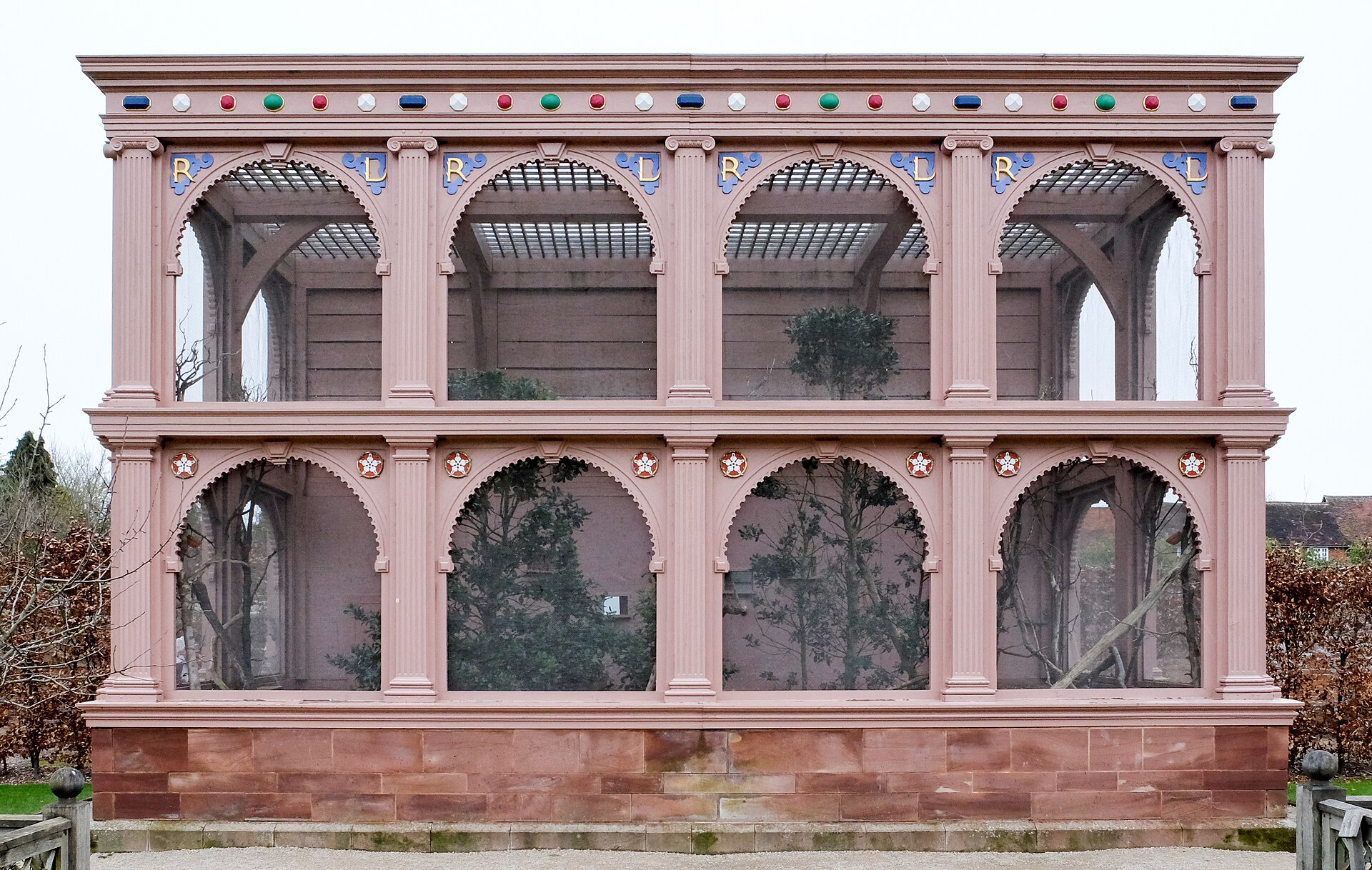
One of the most charming parts of Dudley’s grand gesture was a garden, and it has recently been brought spectacularly back to life. To delight Elizabeth during her visit, Dudley laid out an elaborate Elizabethan pleasure garden beside the castle, filled with fragrant flowers, fruit trees, arbours, an aviary of exotic birds, and a great ornamental fountain, a private paradise designed for a queen to stroll in.
For centuries the garden was lost, known only from a vivid written description left by one of Dudley’s servants. Then, using that description, English Heritage recreated the garden in painstaking detail, rebuilding the fountain, the arbours, the aviary, and the beds, so that visitors today can walk in a garden laid out exactly as it was for Elizabeth’s visit in 1575. It is one of the most successful historical recreations anywhere in the country.
Standing in that garden, with the great ruined tower rising beyond the flowers, you get an unusually direct sense of the Elizabethan world, of a courtier straining every nerve and spending every penny to win a queen. It brings the human drama of Kenilworth vividly to life in a way that bare stone alone never could.
The recreated fountain at the garden’s centre is a marvel in its own right, a tall ornamental structure carved with sea-gods and topped with Dudley’s emblem, splashing exactly as it did when Elizabeth walked here. Details like this turn an abstract history lesson into something you can see, hear, and almost smell, and they make the garden one of the most evocative corners of the whole site.
Reading the Ruins
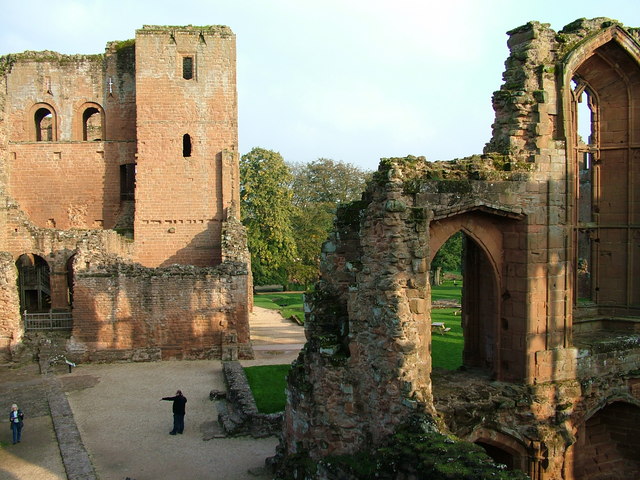
Part of the pleasure of Kenilworth is that its long, layered history is written plainly in its stones for anyone willing to look. The oldest heart is the great Norman keep, square and massive. Around and beyond it you can trace the additions of later centuries: the soaring windows of John of Gaunt’s fourteenth-century Great Hall, and the taller, more regular lines of Robert Dudley’s Elizabethan buildings, designed for comfort and show rather than defence.
Each phase speaks of a different age and a different purpose. The keep is about raw strength; the hall is about medieval magnificence; Dudley’s range is about Renaissance elegance and the desire to impress a queen. Walking from one to another, you move through several centuries of English history and changing ideas about what a great house should be, all on a single site.
That is why Kenilworth rewards a slow, curious visit. It is not a single frozen moment but a stone diary of five hundred years, and once you learn to read it, the ruins stop being a random jumble and become a clear, moving record of the rise and fall of one of England’s greatest castles.
Slighted and Left to the Sky
Kenilworth’s grandeur did not survive the upheavals of the seventeenth century. During and after the English Civil War, the castle, like so many others, was slighted, deliberately wrecked so it could never again be defended. One side of the great keep was blown apart, walls were breached, and, most drastically of all, the dam holding back the Great Mere was broken, draining away the vast lake that had defended and beautified the castle for so long.
With its lake gone, its defences broken, and its buildings stripped of their roofs and materials, Kenilworth ceased to be a home and slid into picturesque decay. The great palace of John of Gaunt and Robert Dudley became a shell, its halls open to the weather, its towers slowly crumbling, home only to jackdaws and ivy.
Yet the ruin that remained was so vast and so romantic that it became an attraction in its own right, drawing artists, poets, and sightseers who came to marvel at the fallen splendour. In time it passed into public care, and today English Heritage looks after it, presenting one of the most impressive castle ruins in the whole of England.
The draining of the Great Mere was, in its way, as significant as the blowing-up of the keep. In a single act the castle lost the feature that had defined it for five hundred years, the very thing that had defeated a royal army in 1266 and dazzled a queen in 1575. Kenilworth without its lake was a different place entirely, and the dry fields around the ruins today are the quiet legacy of that deliberate destruction.
Seeing the Vanished Lake
The hardest and most rewarding thing about visiting Kenilworth is learning to see what is missing. The Great Mere, which for five centuries surrounded the castle and defined its whole character, is now dry farmland, so the fortress that was once an island in a lake sits today in ordinary fields. To understand Kenilworth, you have to flood the landscape again in your imagination.
Once you do, everything falls into place. The long causeway approach makes sense as a defended dam across water. The siege of 1266, with its barges and waterborne assault, comes alive. And the fireworks of 1575, bursting over the Mere and reflected in its surface as the queen watched, become one of the great set-pieces of Elizabethan England. The lake is the ghost that haunts the whole site.
English Heritage helps with all of this, using displays and reconstructions to put back the water, the roofs, and the gardens in the visitor’s mind. Climbing what remains of the buildings for a view over the grounds, you can trace where the Mere once lay and picture the shining lake that made Kenilworth both nearly impregnable and utterly magical.
How Kenilworth Became a Legend
The great entertainment of 1575 did something few parties ever manage: it echoed down the centuries. So dazzling was the spectacle that accounts of it were written and circulated at the time, and its memory lingered in the national imagination long after the fireworks had faded. Some scholars have suggested that the young William Shakespeare, growing up in nearby Stratford, may even have witnessed or heard of the water pageants, and that their imagery surfaced later in his plays.
Kenilworth’s fame was sealed for good in the nineteenth century when Sir Walter Scott, then the most popular novelist in the world, published a historical romance simply called Kenilworth. Woven around Dudley, Elizabeth, and the tragic fate of Dudley’s wife, the novel was a sensation, and it fixed the castle in the public mind as a place of doomed love and Elizabethan splendour. Tourists began flocking to the ruins to see the setting of the story.
In this way a real royal courtship became a national myth, and the ruined castle became a shrine to it. Few buildings have been so thoroughly transformed by literature, and part of what visitors come to feel at Kenilworth today is not just its documented history but the romance that Scott and others spun around it.
Visiting Kenilworth Today
Kenilworth sits in Warwickshire in the heart of England, close to the towns of Warwick and Coventry and easily reached by car, with railway stations nearby. It makes a natural pairing with a visit to Warwick Castle just down the road, letting you see two very different sides of the medieval world in a single day, one a complete and lived-in fortress, the other a magnificent romantic ruin.
Give yourself a good half day at least. Explore the shattered keep and the soaring Great Hall, walk through Leicester’s grand buildings and gatehouse, and do not miss the recreated Elizabethan garden, which is one of the highlights. Climb where you can for the views, use the displays to picture the vanished lake, and let the warm red stone and the extraordinary stories, from the longest siege in English history to a queen wooed with fireworks, work their spell.
The castle sits at roughly 52.3488, -1.5860. Punch that into Google Maps and it will take you straight to Kenilworth Castle.
Nearby Castles
A Ruin With a Very Full Life
Kenilworth is a ruin that lived. Most great castles are remembered for one age; Kenilworth blazed through several, a Norman fortress that became a lake-girt stronghold, endured the longest siege in English history, rose again as the palace of a near-king, and finally became the theatre for the greatest royal love story England never quite had. Even shattered and roofless, it carries the weight of all of it.
So do not be fooled by the empty windows and the broken tower. Fill them back in with candlelight and fireworks, flood the fields around with the vanished Mere, and Kenilworth becomes what it always was: one of the grandest and most dramatic castles in England, a place where sieges were survived, feasts were thrown, and a queen was courted beneath the summer sky.
You May Like

Mafra, the Palace a King Built From a Vow