Some castles are about beauty. The Tower of London is about power, and it never lets you forget it. For very nearly a thousand years this grim, grey fortress by the Thames has sat at the edge of the City of London doing whatever the crown needed doing: guarding it, arming it, minting its money, storing its treasures, and, when necessary, imprisoning, torturing, and executing its enemies. It is a castle, a palace, a prison, an armoury, a treasure house, and a place of death all at once, and that tangle of roles is exactly what makes it one of the most gripping historic sites on earth.
Most people come for the Crown Jewels and the ravens and the guards in their funny hats, and those are all wonderful. But underneath the tourist polish is one of the darkest and most dramatic stretches of English history. Queens were beheaded on this spot. Princes vanished here and were never seen again. Rebels, traitors, spies, and inconvenient royals were locked in its towers, and many left only for the scaffold. If you want to understand how England was actually ruled, feared, and fought over, this is the place to stand.
So let’s walk through the whole thing properly, from the moment a nervous conqueror decided to plant a stone tower to overawe a newly conquered city, right down to the ravens and Beefeaters who keep its legends alive today. Take your time. The Tower has a lot of ghosts, and every one of them has a story.
Table of Contents
- A Fortress Built to Frighten a City
- The White Tower, Where It All Began
- Rings of Stone: How the Castle Grew
- The River Gate the Condemned Dreaded
- Executions, Two Queens, and the Scaffold
- The Princes Who Vanished
- The Most Haunted Building in Britain?
- Names Carved by the Doomed
- The Crown Jewels and the Nation’s Treasure
- An Arsenal, a Mint, and a Menagerie
- The Beefeaters and the Ceremony of the Keys
- The Ravens and the Legend That Keeps Them
- From Dread to Day Out
- Making the Most of a Visit
- Nearby Castles
- Before You Go
A Fortress Built to Frighten a City
The Tower was born out of nervousness. When William the Conqueror took England in 1066, London was the richest and most powerful city in the kingdom, and it had not exactly welcomed him with open arms. William needed to make it absolutely clear who was now in charge, and he did it the Norman way, with stone. In the years after the conquest he began building a massive tower in the south-east corner of the old Roman city walls, right on the river, where it could both guard London from outside attack and, just as importantly, remind Londoners themselves not to get any ideas.
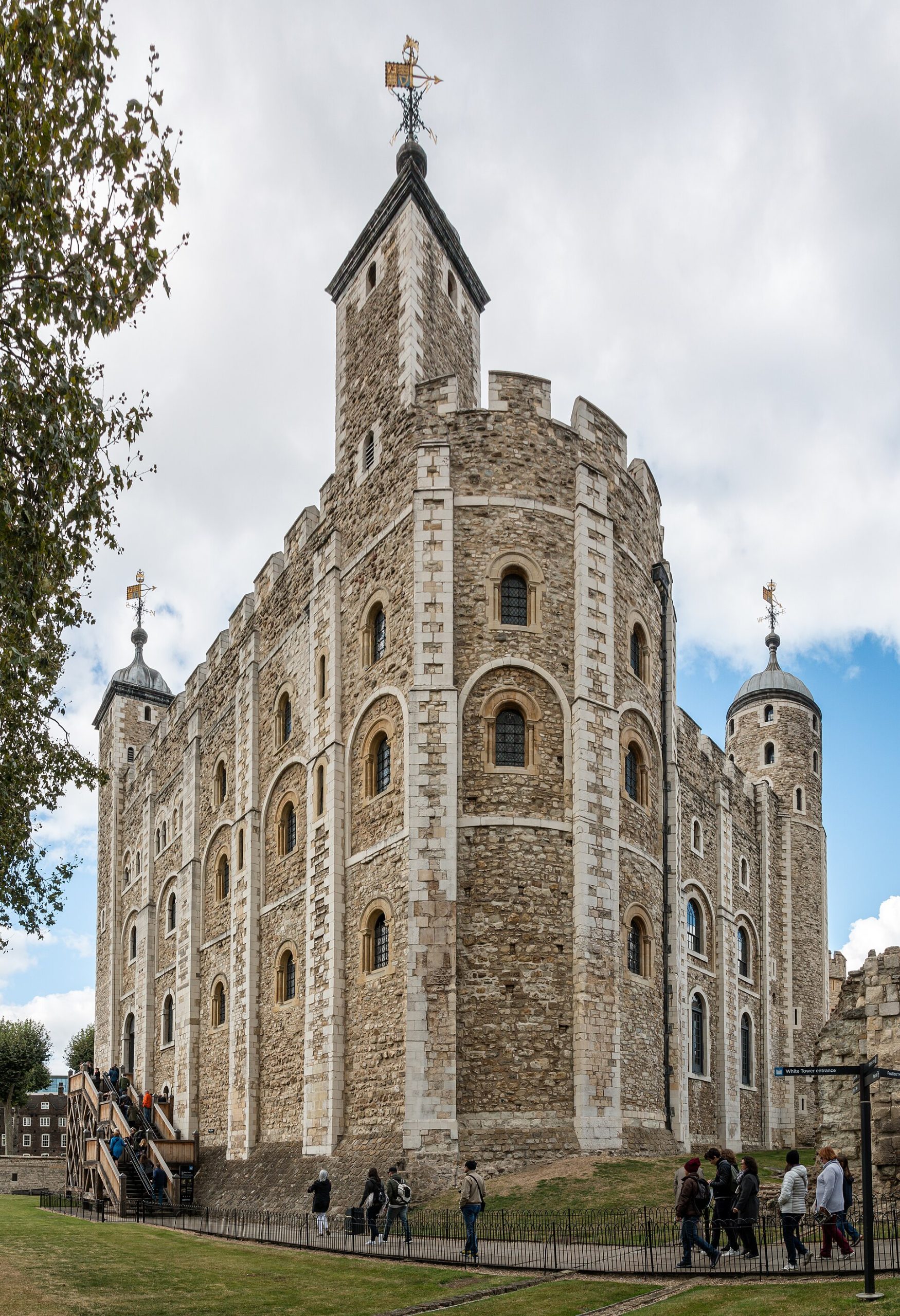
That original building is the White Tower, the great square keep that still stands at the centre of the whole complex and gives it its name. It was finished around 1100, and for its time it was staggering, one of the largest and strongest buildings in the country, its walls in places over four metres thick. To ordinary Londoners, used to timber houses, this pale stone giant looming over their rooftops would have looked almost otherworldly. That was entirely the point.
Right from the start, then, the Tower was a psychological weapon as much as a military one. It said, in stone that everyone could see, that the Normans were here to stay and that resistance was pointless. Nearly a thousand years later it still radiates a bit of that menace, and standing beneath the White Tower you can still feel the intimidation its builders intended.
It is worth remembering just how alien this building would have felt. England before the conquest built mostly in wood, and even its churches were modest by continental standards. The sudden appearance of a vast, sheer-sided stone tower, put up by foreign soldiers speaking a foreign tongue, was a shock deliberately engineered to reshape how Londoners saw their new rulers. The Tower was propaganda you could see from the river, and it worked.
The White Tower, Where It All Began
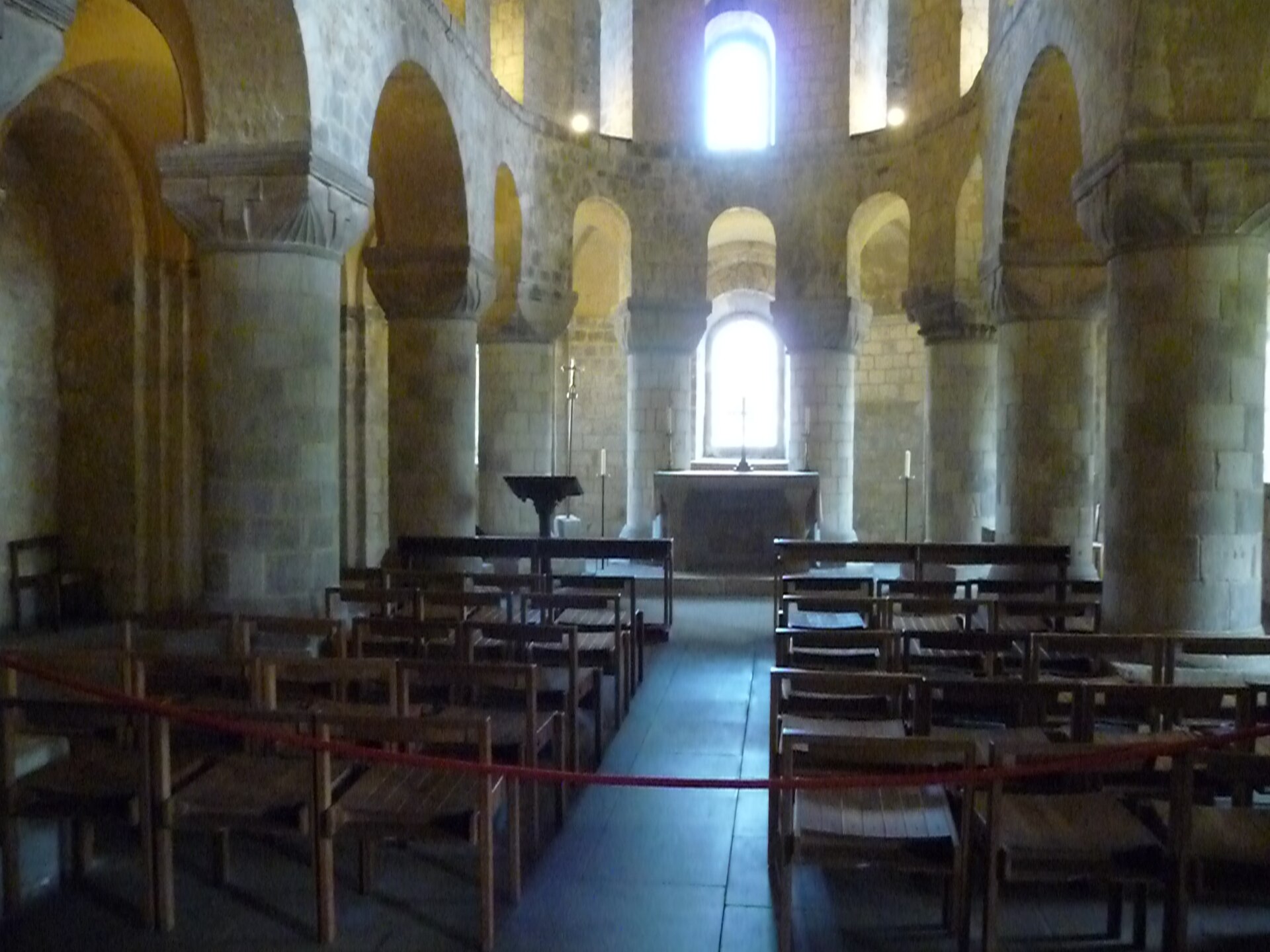
The White Tower deserves a close look, because it is the seed from which everything else grew. It got its name in the thirteenth century when Henry III had it whitewashed, and the name stuck. Inside, it originally held everything a Norman power centre needed: grand halls for ceremony, chambers for the king, storage for arms and supplies, and, tucked into one corner, a chapel.
That chapel, the Chapel of St John the Evangelist, is one of the finest and best-preserved pieces of early Norman architecture anywhere in England. It is beautifully simple, all rounded arches and heavy stone columns, with a calm, solemn atmosphere that has barely changed in nine hundred years. In a fortress soaked in stories of blood and betrayal, it is an unexpected pocket of peace.
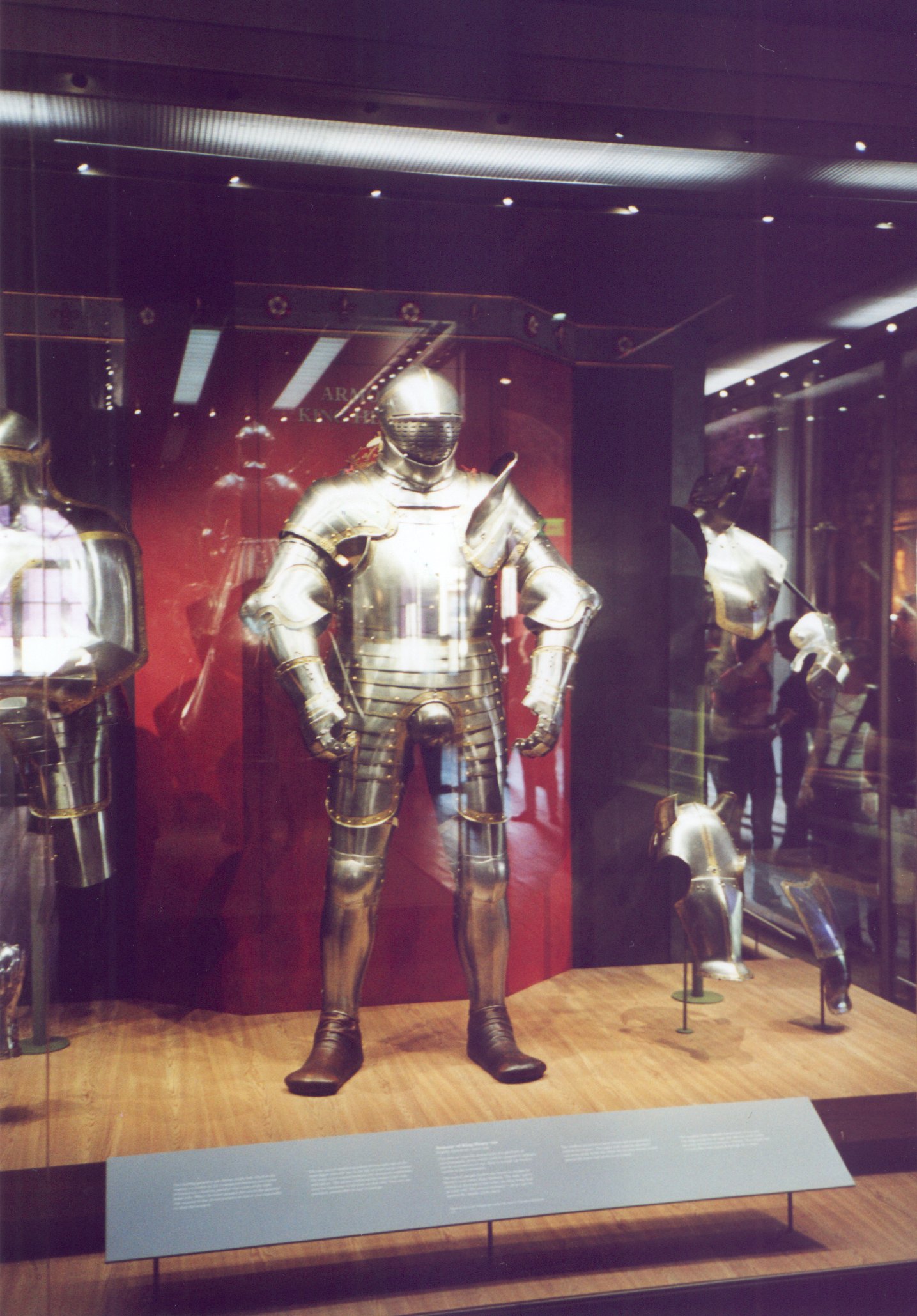
Over the centuries the White Tower has been many things: royal residence, records office, gunpowder store, and armoury. Today it houses displays from the Royal Armouries, including the famous, and famously portly, armour made for Henry VIII, so you can walk through the very rooms where medieval kings held court and see the shining steel their successors wore.
Rings of Stone: How the Castle Grew
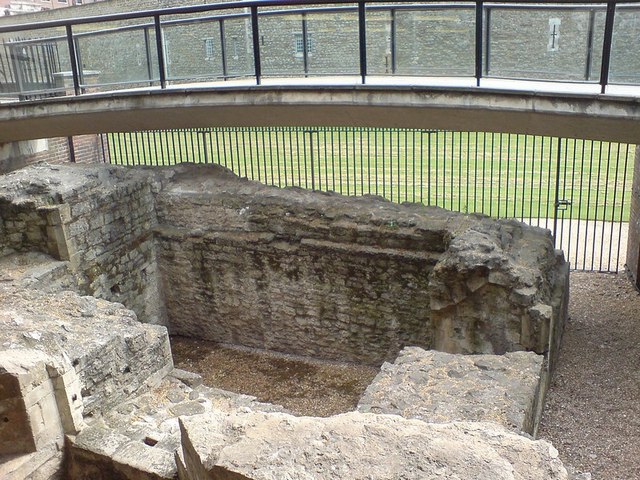
A single keep, however mighty, is not a complete castle, and over the medieval centuries the Tower grew outward in rings. The great builders were Henry III in the thirteenth century and his son Edward I, who between them wrapped the White Tower in not one but two circuits of defensive walls studded with towers, and dug a broad moat around the whole thing. The result was a concentric castle, one of the most sophisticated defensive designs of the age, where an attacker who breached the outer wall found himself trapped and exposed before the inner one.
Each of those towers along the walls has its own name and often its own dark story: the Bloody Tower, the Beauchamp Tower, the Salt Tower, and more. Prisoners were held in many of them, and the walls of some are still scratched with the carved inscriptions those captives left behind, initials, prayers, coats of arms, and dates, a heartbreaking graffiti of the doomed and the desperate.
Edward I also moved the royal mint and the crown’s records into the Tower and strengthened its role as a storehouse of power. By the end of the thirteenth century the shape you see today was essentially fixed: a formidable, many-layered stronghold that was simultaneously the safest and the most feared address in England.
The moat, fed from the Thames, was the final touch. For centuries it ringed the castle in water, adding one more obstacle for any attacker and one more reason the Tower was considered all but impregnable. It was eventually drained in the nineteenth century after it became an unhealthy, stagnant health hazard, and today it is a dry grassy ditch, in recent years famously filled with ceramic poppies and blazing torches to mark the two world wars.
The River Gate the Condemned Dreaded
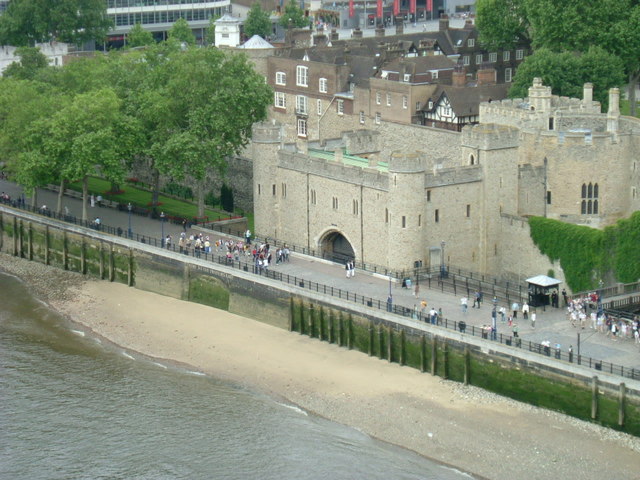
Of all the entrances to the Tower, one carries a special weight of dread: Traitors’ Gate. This wide, watery archway opens directly onto the Thames, and in the days when the river was London’s main highway it was through here that many prisoners were brought by boat, gliding under the city and in through the gate to face imprisonment, interrogation, or death. To be rowed through Traitors’ Gate was, for many, to enter a place they would never leave alive.
The list of those who passed through it reads like a roll-call of English tragedy. Anne Boleyn, the second wife of Henry VIII, is traditionally said to have entered this way before her execution. So, as a frightened young princess suspected of plotting against her sister, did the future Elizabeth I, who is said to have sat down on the wet steps and refused to go in, protesting her innocence. She, at least, walked back out again and went on to become one of England’s greatest monarchs. Many others were not so lucky.
Standing before Traitors’ Gate today, with the dark water lapping at its steps, is one of the most atmospheric moments of any visit. It is easy, here, to feel the cold fear that gripped the men and women who arrived at this threshold knowing what usually waited on the other side.
Executions, Two Queens, and the Scaffold
The Tower’s reputation for death is thoroughly earned. Over the centuries it saw a long line of executions, some public on the nearby Tower Hill before huge crowds, and a small number, reserved for the most sensitive cases, carried out privately within the walls to avoid a spectacle. It is those private executions, on the green beside the chapel, that are the most chilling.
Two of Henry VIII’s wives died here. Anne Boleyn was beheaded in 1536, executed with a sword brought specially from France in a grim gesture of mercy, and Catherine Howard followed a few years later. Lady Jane Grey, the tragic teenager who was queen for just nine days, was executed on the same spot in 1554. These were not anonymous criminals but queens and royals, and their deaths inside this fortress shocked the country.
There was torture, too. The Tower held a rack and other instruments, and prisoners suspected of treason or heresy could be brutally questioned in its cellars. Not everyone who suffered here was guilty, and not every story ends in death, but the sheer concentration of fear, pain, and political violence within these walls is part of what gives the Tower its uniquely heavy atmosphere. It is beautiful, but it is never quite comfortable.
What made these deaths so shocking was their intimacy. This was not distant, faceless justice but the killing of people the whole court knew, often on the flimsiest or most political of charges. A queen crowned in glory could, within a few short years, kneel on the grass a few steps from her old apartments and lose her head to please a husband who had tired of her. Nowhere else captures quite so sharply how deadly it could be to stand close to the English throne.
The Princes Who Vanished
No Tower story is more haunting than that of the Princes in the Tower. In 1483, after the death of King Edward IV, his two young sons, the boy-king Edward V and his little brother Richard, were lodged in the Tower, supposedly for their protection ahead of the elder boy’s coronation. Their uncle, Richard, Duke of Gloucester, then had them declared illegitimate and took the throne himself as Richard III. The two boys were seen playing in the Tower grounds for a while, and then, quietly, they were never seen again.
What happened to them has been argued over for more than five centuries and has never been settled. The most common belief is that they were murdered on their uncle’s orders to remove any threat to his crown, and Shakespeare cemented that version in the popular imagination. Others have tried to clear Richard’s name or pin the blame elsewhere. In the seventeenth century, workmen digging near the White Tower found a box of children’s bones, which many took to be the princes, though the mystery has never truly been closed.
True crime, royal tragedy, and unsolved mystery all in one, the tale of the vanished princes is the Tower at its most gripping. It is a reminder that behind the grand architecture, this was a place where real children could disappear into the dark and the most powerful people in the land could get away with it.
The Most Haunted Building in Britain?
With a history this bloody, it is no surprise the Tower is often called the most haunted place in Britain, and its ghost stories are among the most famous in the country. The most frequently reported spectre is Anne Boleyn herself, said to walk near the chapel where she is buried, sometimes described as carrying her own head. Sentries over the centuries have sworn they saw her, and at least one is said to have fainted at his post.
Other apparitions crowd the roll-call. The two little princes are said to appear in the Bloody Tower, hand in hand in their nightgowns, before fading into the wall. A strange, shapeless white form, a phantom bear, and the ghost of the elderly Countess of Salisbury, said to have been chased around the scaffold by her executioner, all feature in the Tower’s collection of tales. Guards on night duty have long traded stories of cold spots, footsteps, and figures glimpsed and then gone.
You can take all of this with as much salt as you like. But ghost stories are really the way a place digests its own trauma, turning centuries of real fear and real death into something that can be told, and retold, around the walls at night. Given what actually happened here, it would be stranger if the Tower were not haunted, at least in the imagination.
Names Carved by the Doomed
Some of the most moving things in the whole Tower are the smallest. In the wall towers where prisoners were held, the stone is covered in inscriptions carved by the captives themselves, patiently scratched into the walls over long months and years of imprisonment. In the Beauchamp Tower especially, you can still read initials, dates, prayers, elaborate coats of arms, and messages left by men and women who had nothing to do but wait and wonder whether they would ever be free.
Some are simple names. Others are careful, beautiful pieces of work, heraldic designs cut by educated prisoners with time on their hands and fear in their hearts. One famous carving simply reads the single word Jane, thought by some to be a quiet tribute to Lady Jane Grey by one of the men executed alongside her family. Whether or not that is true, the effect is the same: a jolt of direct, human contact across the centuries.
These carvings do something the grand architecture cannot. They put you face to face not with kings and queens but with ordinary prisoners, frightened and bored and clinging to hope or resignation, leaving a mark to prove they had been there at all. Of everything in the Tower, it is often these scratched names that visitors remember longest.
The Crown Jewels and the Nation’s Treasure
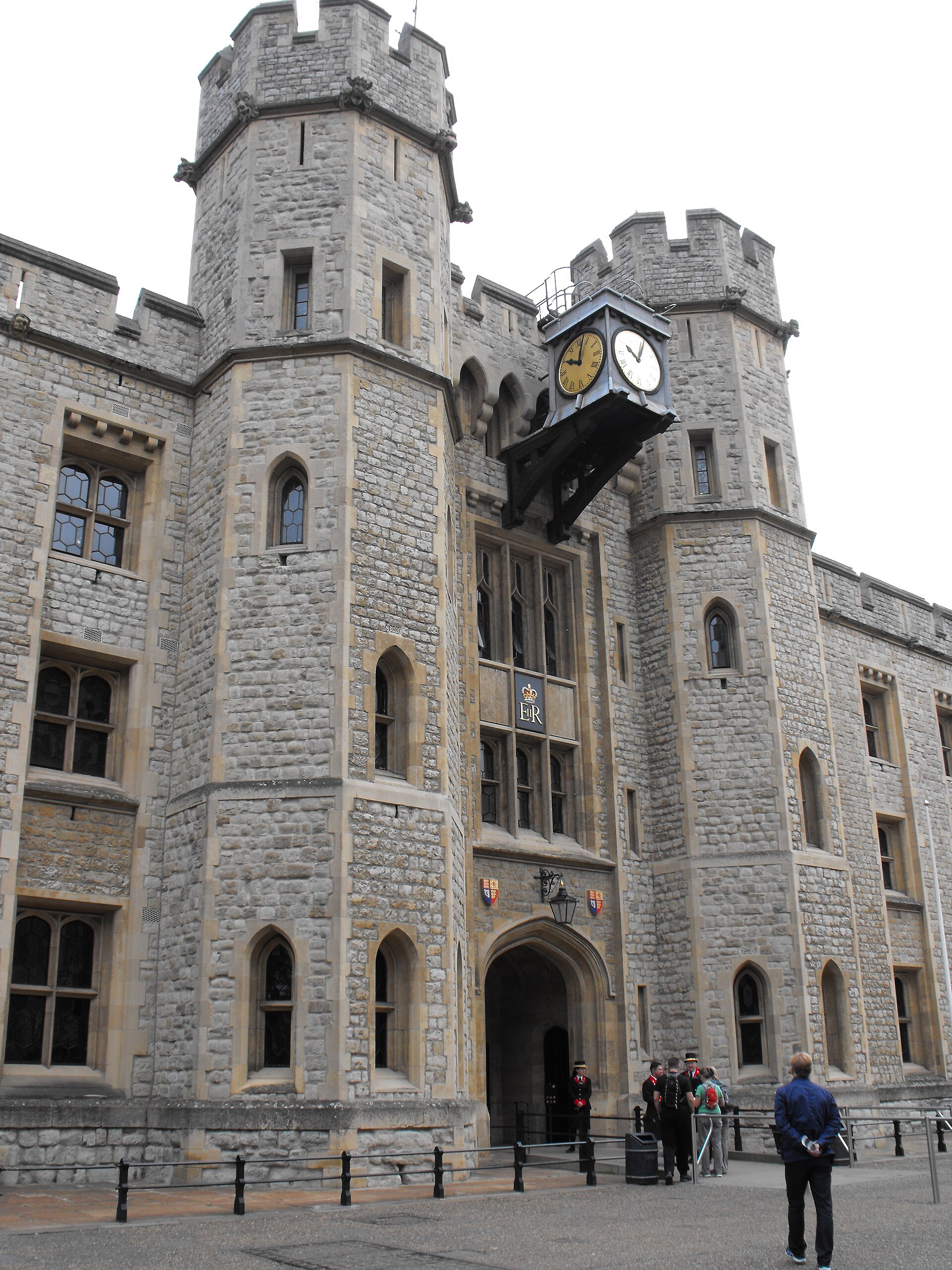
For all its darkness, the Tower is also a treasure house, and it guards the most dazzling collection of objects in the country: the Crown Jewels. These are not museum replicas but the genuine, working regalia of the British monarchy, still used in coronations and other great state occasions. Kept behind serious security in the Jewel House, they include crowns dripping with famous gemstones, jewelled swords, orbs, sceptres, and centuries of golden ceremonial plate.
Among them are some of the most storied stones in the world, including the enormous Cullinan diamonds, cut from the largest gem-quality diamond ever found, and the controversial Koh-i-Noor, whose ownership is still disputed by more than one country. Moving past them on the slow travelators that carry visitors by, you get a few seconds face to face with jewels that have crowned kings and queens for generations.
The reason the jewels are here at all goes back to the Tower’s oldest job: keeping the crown’s most precious things safe behind the strongest walls in the kingdom. There was one audacious attempt to steal them, in 1671, when a rogue named Colonel Blood very nearly made off with the crown itself, flattening it with a mallet to hide it under his coat. He was caught at the gate, and, in a very strange twist, was later pardoned and even rewarded by the king.
It is easy to forget, gliding past them, that these are not relics of a dead past. The very crown used at the most recent coronation came from this collection, carried out of the Tower under guard and then returned. The jewels are, in a real sense, still on active duty, which is exactly why they are kept behind the strongest doors in the country rather than in an ordinary museum.
An Arsenal, a Mint, and a Menagerie
The Tower was never only about prisoners and jewels. For centuries it was one of the busiest working institutions in the country, a place where the machinery of the state actually ran. The Royal Mint made the nation’s coins here for hundreds of years. The crown’s records were stored here. And the Royal Armouries filled its buildings with weapons and armour, both as a working arsenal and, increasingly, as a showpiece to impress visitors with the might of the monarchy.
Strangest of all was the Royal Menagerie. From the medieval period the Tower kept a collection of exotic animals, gifts from foreign rulers to English kings, including lions, a polar bear that was let out on a chain to fish in the Thames, and an elephant. For centuries Londoners could come and gawp at beasts they had never imagined, and the menagerie was in effect one of the world’s first zoos. It was finally closed in the nineteenth century and its animals moved to found London Zoo.
All of this reminds you that the Tower was a living, bustling place, not just a grim prison. Soldiers, clerks, mint-workers, armourers, keepers, and their families lived and worked inside the walls, and a whole little world went about its business in the shadow of the White Tower.
The Beefeaters and the Ceremony of the Keys
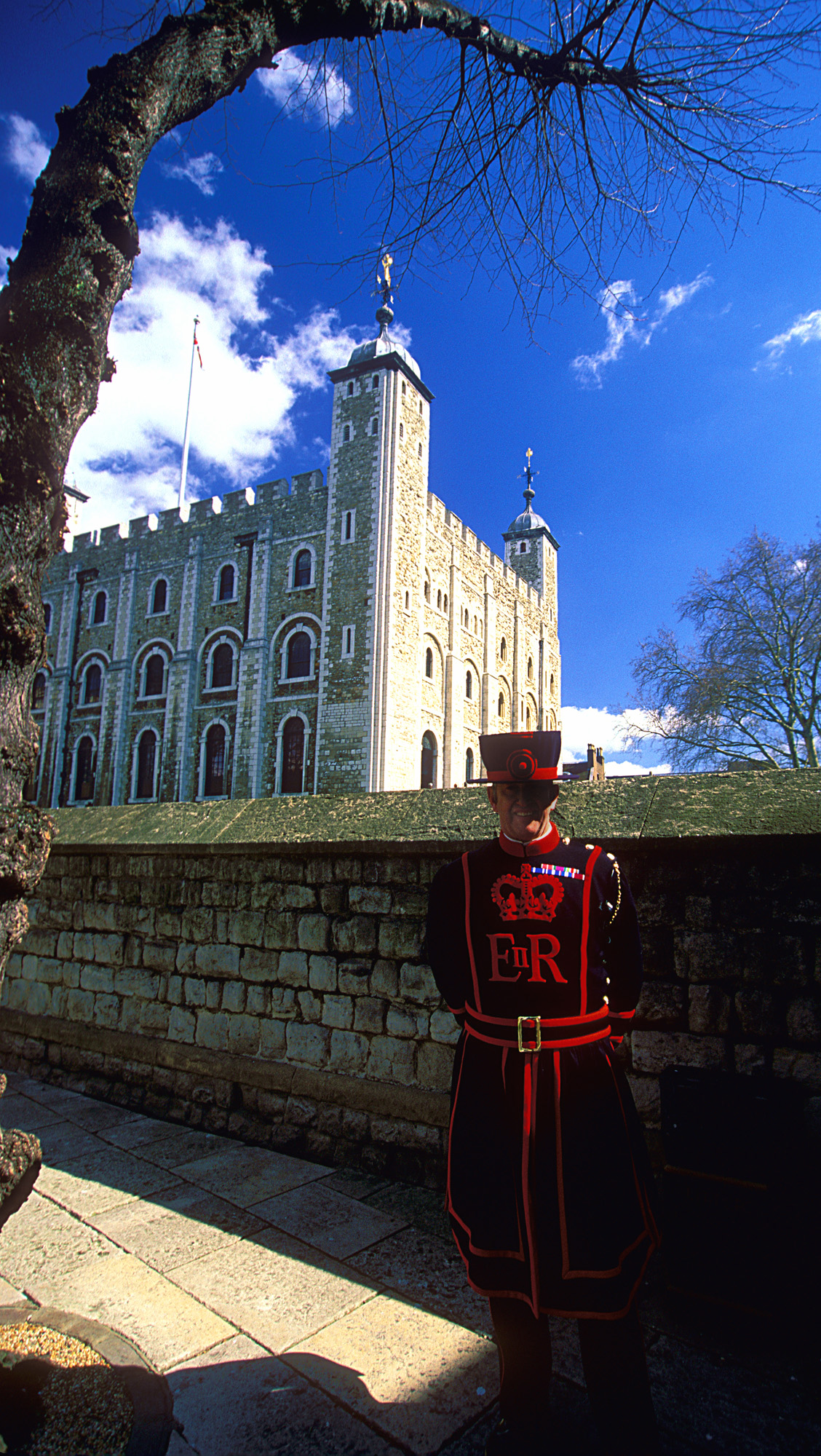
The Tower is still guarded, and its guardians are one of its great attractions. The Yeoman Warders, universally known as Beefeaters, have looked after the Tower since the late fifteenth century. In their distinctive dark blue and red uniforms, or the even grander scarlet and gold for state occasions, they are far more than costumed guides. They are former senior members of the armed forces, and, remarkably, they and their families actually live inside the Tower walls, making it a strange little inhabited village with its own pub, chaplain, and doctor.
Every single night, without fail, the Tower is locked up in a ritual called the Ceremony of the Keys, which has been performed in essentially the same form for around seven hundred years. A Yeoman Warder secures the great gates while an armed escort accompanies him, a sentry challenges them in the darkness, and the keys are formally handed over for safekeeping. It is said to be one of the oldest continuously performed ceremonies in the world, carried out even during the Blitz, when a bomb once knocked the party off their feet mid-ritual and they simply picked themselves up and finished it.
These living traditions are a big part of why the Tower feels so alive. It is not a dead monument staffed by ticket-takers but a place with its own community, its own nightly rhythm, and a chain of duty stretching back, unbroken, for centuries.
The Ravens and the Legend That Keeps Them
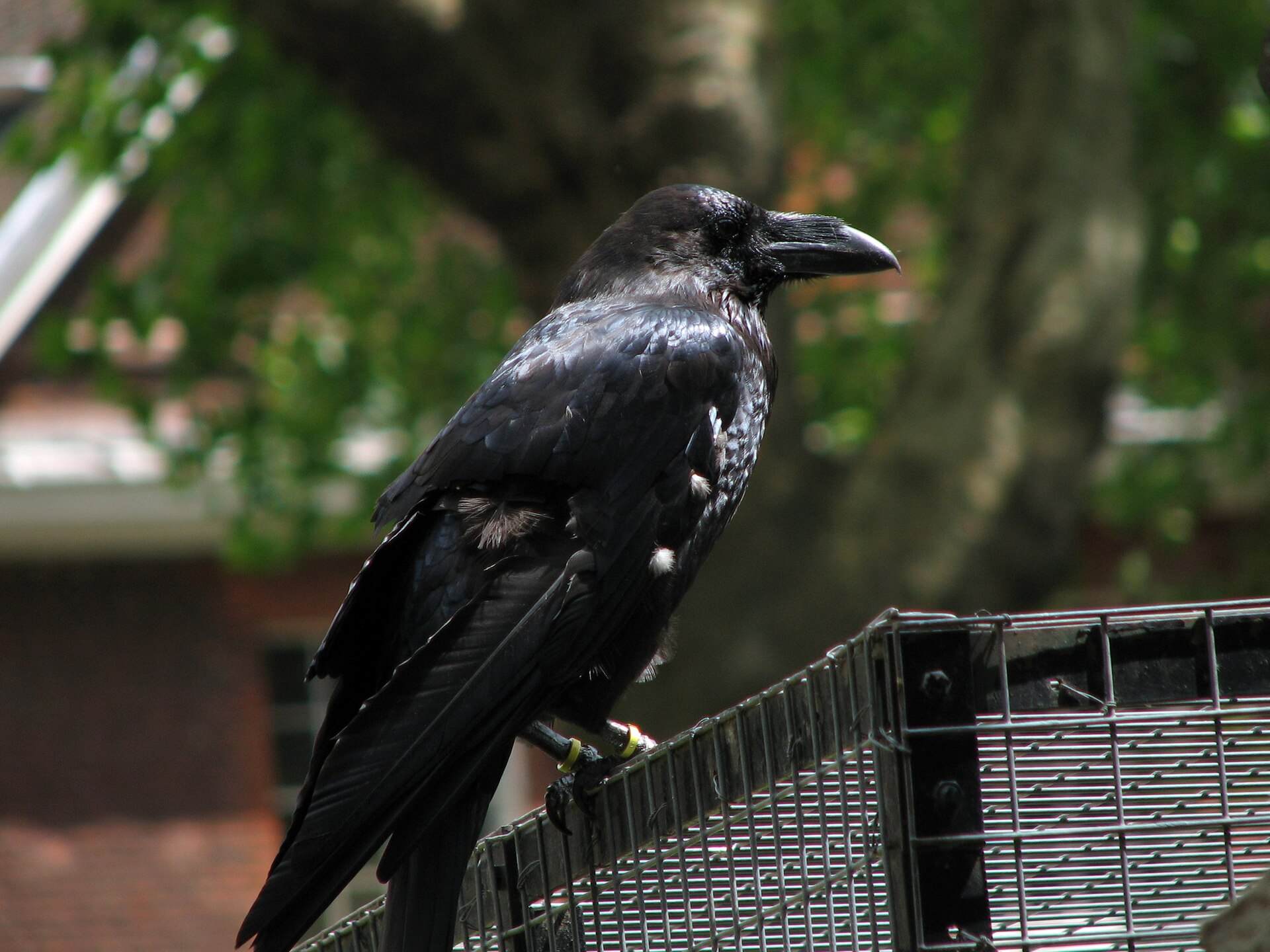
If you visit the Tower, you will meet its most famous residents: the ravens. Several of these big, glossy black birds live within the walls, cared for by a dedicated Ravenmaster, and they are protected by one of the best-loved legends in Britain. The story goes that if the ravens ever leave the Tower, the White Tower will crumble and a great disaster will befall the kingdom. To be safe, their wing feathers are gently trimmed so they cannot fly far, and a few spare birds are always kept just in case.
The legend is often traced back to the reign of Charles II in the seventeenth century, and whether or not it is truly that old, the crown has taken it seriously enough to keep the ravens ever since. During the Second World War the raven population dropped alarmingly, and there is a tale that Winston Churchill himself insisted the birds be replenished to keep national morale, and the prophecy, safe.
Superstition or not, the ravens have become one of the enduring symbols of the Tower and of Britain itself. Watching them strut around the green, cocking their heads at the tourists, it is easy to feel the pull of the old story, and to be quietly glad that someone is still making sure the birds never all fly away.
From Dread to Day Out
By the nineteenth century the Tower had largely finished with its grimmest work. Executions ended, the menagerie left, the mint moved out, and the fortress that had terrified Londoners for so long began a new life as a place to visit. The Victorians, fascinated by their own history, opened it up, restored parts of it in a suitably medieval style, and turned it into one of the first great tourist attractions in the world.
There was one last flicker of its old role in the twentieth century. During both world wars the Tower was pressed back into service, and a handful of German spies were held and executed here, the last people ever put to death within its walls, in the 1940s. After that, its violent history was truly over, and it settled fully into its modern character as a guardian of the nation’s memory rather than an instrument of its fear.
Today the Tower of London is a UNESCO World Heritage Site and one of the most visited historic buildings on the planet, drawing millions of people a year. They come for the jewels and the ravens and the Beefeaters’ jokes, and they leave, whether they realise it or not, having walked through a thousand years of English power, cruelty, ceremony, and survival.
Making the Most of a Visit
The Tower stands right in the heart of London, on the north bank of the Thames next to the famous Tower Bridge, and it could hardly be easier to reach. Tower Hill Underground station is a couple of minutes’ walk away, and river boats stop nearby too, so you can arrive by water much as the prisoners once did, though under considerably happier circumstances. It is an easy pairing with a walk across Tower Bridge or along the river.
Give yourself at least half a day, and more if you can. A free tour led by one of the Yeoman Warders is the best possible introduction, blending real history with gallows humour, and the queue for the Crown Jewels moves fastest either early in the morning or late in the afternoon. Do not rush the White Tower, seek out the prisoners’ carved inscriptions in the wall towers, and leave a little time simply to stand by the river and let the sheer weight of the place settle on you.
The castle sits at roughly 51.5081, -0.0759. Punch that into Google Maps and it will take you straight to the Tower of London.
Nearby Castles
What the Tower Really Guards
The Tower of London is the closest thing England has to a stone diary of its own power. Almost everything that a state can do to hold on to authority has happened within these walls: it has defended, imprisoned, tortured, executed, minted, armed, and dazzled. Kings raised it to frighten a city, and for centuries it worked. To walk through it is to walk through the hard machinery of a thousand years of rule.
And yet the thing that stays with you is not really the grandeur of the jewels or the strength of the walls. It is the human stories caught in the stone: a princess sitting down on the wet steps of Traitors’ Gate, two boys disappearing into the dark, a queen kneeling on the green, a prisoner scratching his name into a wall he would never leave. The Tower guards a crown, but what it really keeps is memory, and it keeps it very well indeed.
You May Like
Mafra, the Palace a King Built From a Vow


One thought on “The Tower of London: Fortress, Prison, and Treasure House on the Thames”