On the fertile plains of central Java, ringed by volcanoes, rises the largest Buddhist monument in the world. Borobudur is not a temple with rooms and halls but a vast stone mountain of terraces, staircases and stupas, built as a three-dimensional map of the Buddhist path to enlightenment.
Constructed more than twelve hundred years ago, then abandoned and buried for centuries, Borobudur was brought back to light in the modern era and painstakingly restored. Today it stands as one of the supreme achievements of Buddhist art and architecture.
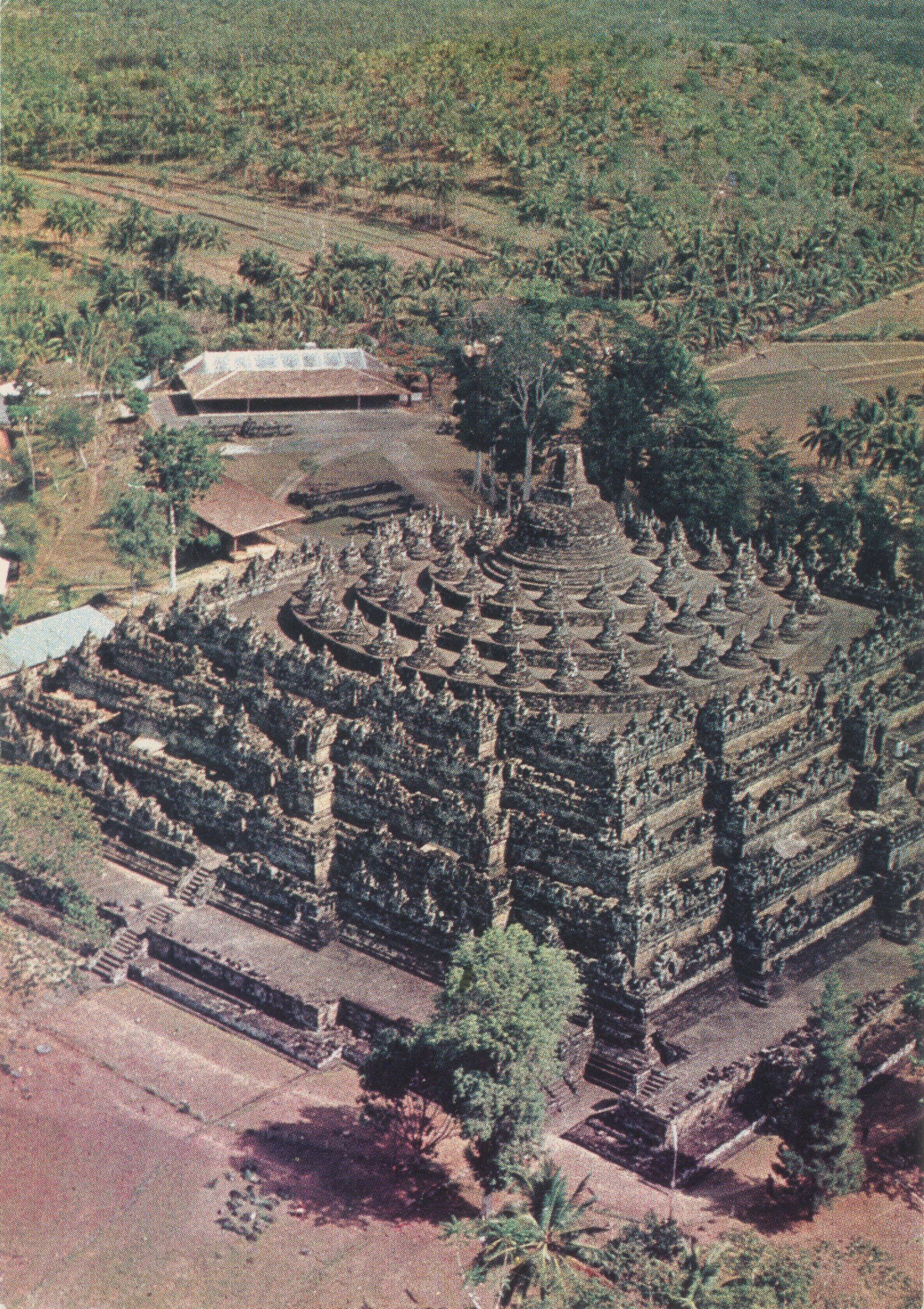
Table of Contents
- The Great Buddhist Monument of Java
- A Mountain of Terraces and Stupas
- The Sailendra Dynasty and Mahayana Buddhism
- A Journey to Enlightenment in Stone
- The Narrative Reliefs
- The Buddha Statues
- The Summit and Its Perforated Stupas
- A Sacred Landscape: Mendut and Pawon
- Abandonment and Burial
- Raffles, Restoration, and UNESCO
- Nearby Places
- Closing Thoughts
The Great Buddhist Monument of Java
Borobudur was built around the ninth century AD, during a golden age of Buddhist culture on Java. It takes the form of a stepped pyramid, built from around two million blocks of volcanic stone, without the use of mortar.
Rather than sheltering worshippers inside, the monument is meant to be climbed and walked around. Pilgrims process along its galleries and up its terraces in a physical journey that mirrors a spiritual one.

A Mountain of Terraces and Stupas
The structure rises through a series of square terraces to three circular platforms crowned by a single great central stupa. In plan it forms a giant mandala, a sacred diagram of the cosmos used in Buddhist meditation.
Its many levels are connected by steep stairways at the centre of each side, drawing the pilgrim ever upward. The whole monument is designed to be experienced through movement, not merely viewed from afar.

The Sailendra Dynasty and Mahayana Buddhism
Borobudur was the work of the Sailendra dynasty, powerful rulers of central Java who were patrons of Mahayana Buddhism. Its construction required immense resources and a large, well-organised society.
The monument reflects a sophisticated blend of Indian Buddhist ideas with local Javanese art and craftsmanship. It stands as evidence of the rich cultural exchange that linked Java to the wider Buddhist world of Asia.
A Journey to Enlightenment in Stone
Borobudur is designed as a path through the stages of Buddhist understanding. Its levels are traditionally read as representing the world of desire at the base, the world of forms in the middle, and the formless world of enlightenment at the summit.
As pilgrims climb, the richly decorated lower galleries give way to the plain, open terraces above, symbolising the movement from the distractions of the material world toward spiritual liberation.

The Narrative Reliefs
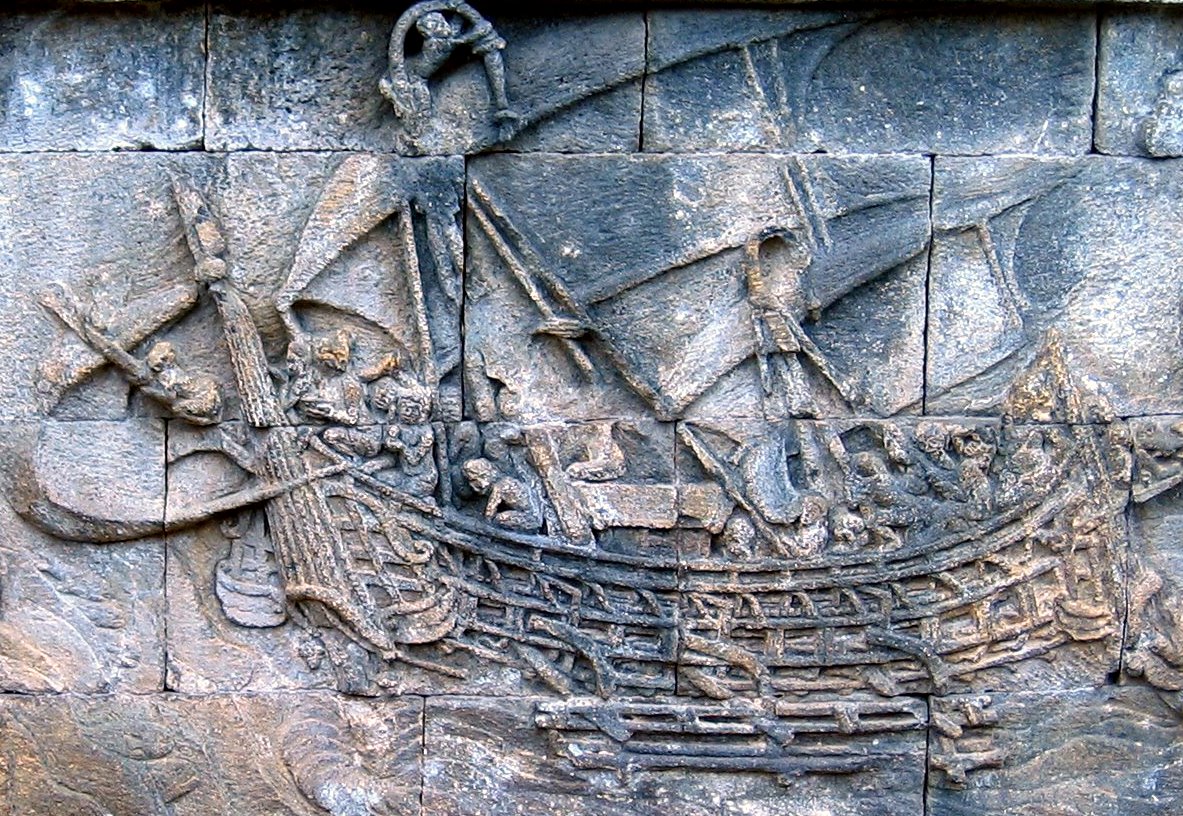
The hidden treasure of Borobudur lies along its galleries, where kilometres of carved relief panels tell stories from the life of the Buddha and from Buddhist teaching. Walking the corridors, a pilgrim reads these scenes in sequence like the pages of a stone book.
The reliefs are astonishing not only for their number but for their liveliness, depicting ships, palaces, animals and everyday life in ninth-century Java. They are among the most complete and beautiful Buddhist narrative carvings anywhere.
The Buddha Statues
Borobudur is home to more than five hundred statues of the Buddha, seated in meditation in niches around the square terraces and within the stupas above. Each displays a particular hand gesture, or mudra, carrying its own meaning.
Serene and near-identical, these figures create a powerful sense of calm and repetition as the pilgrim climbs. Together they turn the entire monument into an assembly of the enlightened.

The Summit and Its Perforated Stupas
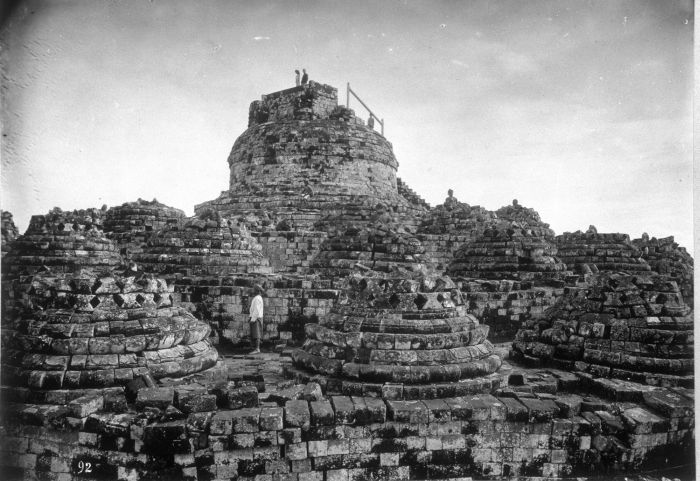
On the upper circular terraces stand dozens of bell-shaped stupas pierced with openings, each containing a statue of the Buddha half-hidden within. Reaching through the stone lattice to touch the figures inside is a cherished ritual for many visitors.
At the very centre and highest point rises the great main stupa, empty and sealed, symbolising the formless ultimate reality beyond images. The open summit, with its ring of stupas, is the goal of the whole ascent.

A Sacred Landscape: Mendut and Pawon
Borobudur does not stand alone. Two smaller temples, Mendut and Pawon, lie in a straight line to the east, and the three were probably linked in a single pilgrimage route across the plain.
Mendut in particular houses a magnificent seated Buddha flanked by two attendants, carved from stone. Together these monuments form part of a wider sacred landscape shaped by the Buddhist kings of Java.

Abandonment and Burial
Within a few centuries of its completion, Borobudur was abandoned, as power shifted eastward on Java and much of the population turned to Islam. The monument was left to the elements.
Volcanic ash and thick jungle gradually covered the great structure, hiding it from view for hundreds of years. Local people knew of the buried hill but its full grandeur was lost from memory.
Raffles, Restoration, and UNESCO
In the early nineteenth century the site was brought to wider attention during the British administration of Java under Stamford Raffles, who ordered it uncovered. Clearing and study of the vast monument then began.
In the twentieth century a major international campaign, backed by UNESCO, dismantled and rebuilt much of Borobudur to save it from collapse. It was inscribed on the World Heritage List in 1991 and remains a place of pilgrimage and wonder.
Nearby Places
- Angkor — the great Khmer temple-city of Southeast Asia, another monumental vision of the cosmos in stone.
- Sigiriya — a Sri Lankan marvel of sacred art and design, later home to Buddhist monks.
- Thebes — an ancient sacred landscape whose temples, like Borobudur, were covered with narrative carving.
Closing Thoughts
Borobudur is a monument to be walked as much as seen, a stone journey that leads the pilgrim from the crowded world of the senses to the open serenity of the summit. Few buildings so perfectly turn a religious idea into physical form.
Buried for centuries and saved by a great act of international cooperation, Borobudur endures as the largest and one of the most beautiful Buddhist monuments on earth, rising each dawn from the mists of Java.
You May Like
Mafra, the Palace a King Built From a Vow


3 thoughts on “Borobudur: The Stone Mountain That Maps the Buddhist Path to Enlightenment”