In 1974, farmers digging a well near the city of Xi’an in China struck fragments of clay that led to one of the greatest archaeological discoveries ever made. Beneath the fields lay an entire army of life-sized terracotta soldiers, buried for more than two thousand years to guard the tomb of China’s first emperor.
The Terracotta Army numbers in the thousands, each warrior individually modelled, drawn up in battle formation in vast underground pits. It is a staggering monument to the ambition of a single ruler, and a unique window onto the world of ancient China.

Table of Contents
- An Army of Clay Beneath the Earth
- Qin Shi Huang, the First Emperor of China
- The Discovery of 1974
- Ranks of Warriors in the Great Pits
- Every Face Different
- Horses, Chariots, and Weapons
- The Kneeling Archer and the Craft
- Once Painted in Brilliant Colour
- The Bronze Chariots and the Unopened Tomb
- Preservation, Mysteries, and UNESCO
- Nearby Places
- Closing Thoughts
An Army of Clay Beneath the Earth
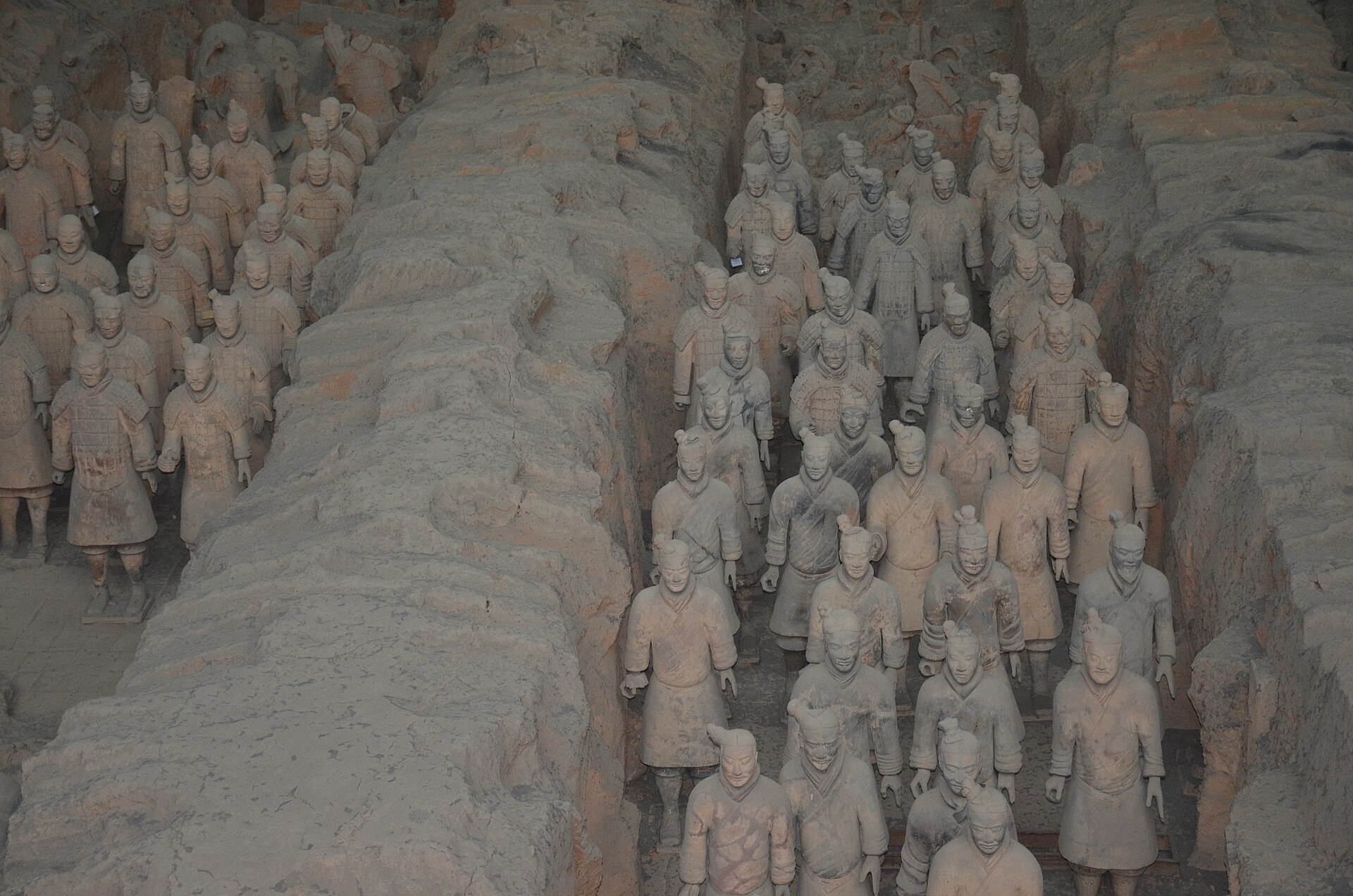
The Terracotta Army is a collection of thousands of life-sized figures of soldiers, along with horses and chariots, buried in great pits near the tomb of the First Emperor. They were made to accompany and protect him in the afterlife.
Arranged in military formation and once equipped with real bronze weapons, the figures form a silent, motionless army facing east, ready to defend their ruler for eternity. The scale of the undertaking is almost beyond belief.
Qin Shi Huang, the First Emperor of China
The army was built for Qin Shi Huang, who in 221 BC became the first ruler to unite the warring states of China into a single empire. He standardised writing, weights, coinage and roads, and began building early sections of the Great Wall.
A ruler of immense power and ambition, he was also obsessed with immortality. His enormous tomb complex, of which the Terracotta Army is only a part, was meant to recreate his empire and his court beneath the ground.
The Discovery of 1974
For over two thousand years the buried army lay forgotten. Its rediscovery in 1974 by well-digging farmers stunned the world and launched one of the largest archaeological projects in history.
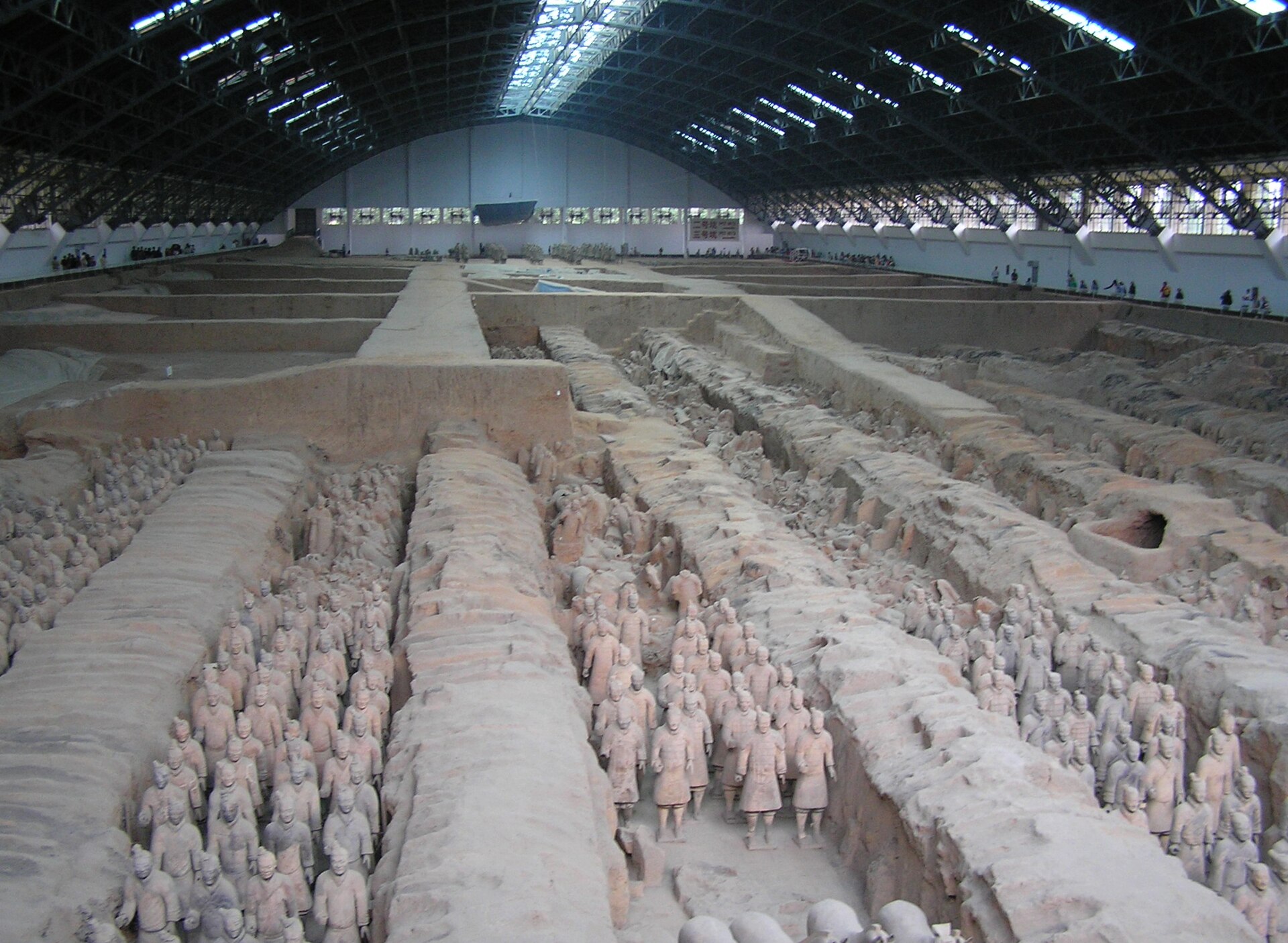
Excavation revealed several great pits containing thousands of figures, and work continues to this day. A vast museum has been built over the site, allowing visitors to look down on the warriors where they were found.
Ranks of Warriors in the Great Pits
The largest pit contains thousands of infantry drawn up in long columns, a whole battle array frozen in clay. Other pits hold command units and cavalry, together forming a complete army with its officers and support.
The figures were originally arranged in a timber-roofed underground structure, since collapsed, and armed with real weapons. Standing among the reconstructed ranks, one senses the overwhelming military power the emperor commanded.
Every Face Different
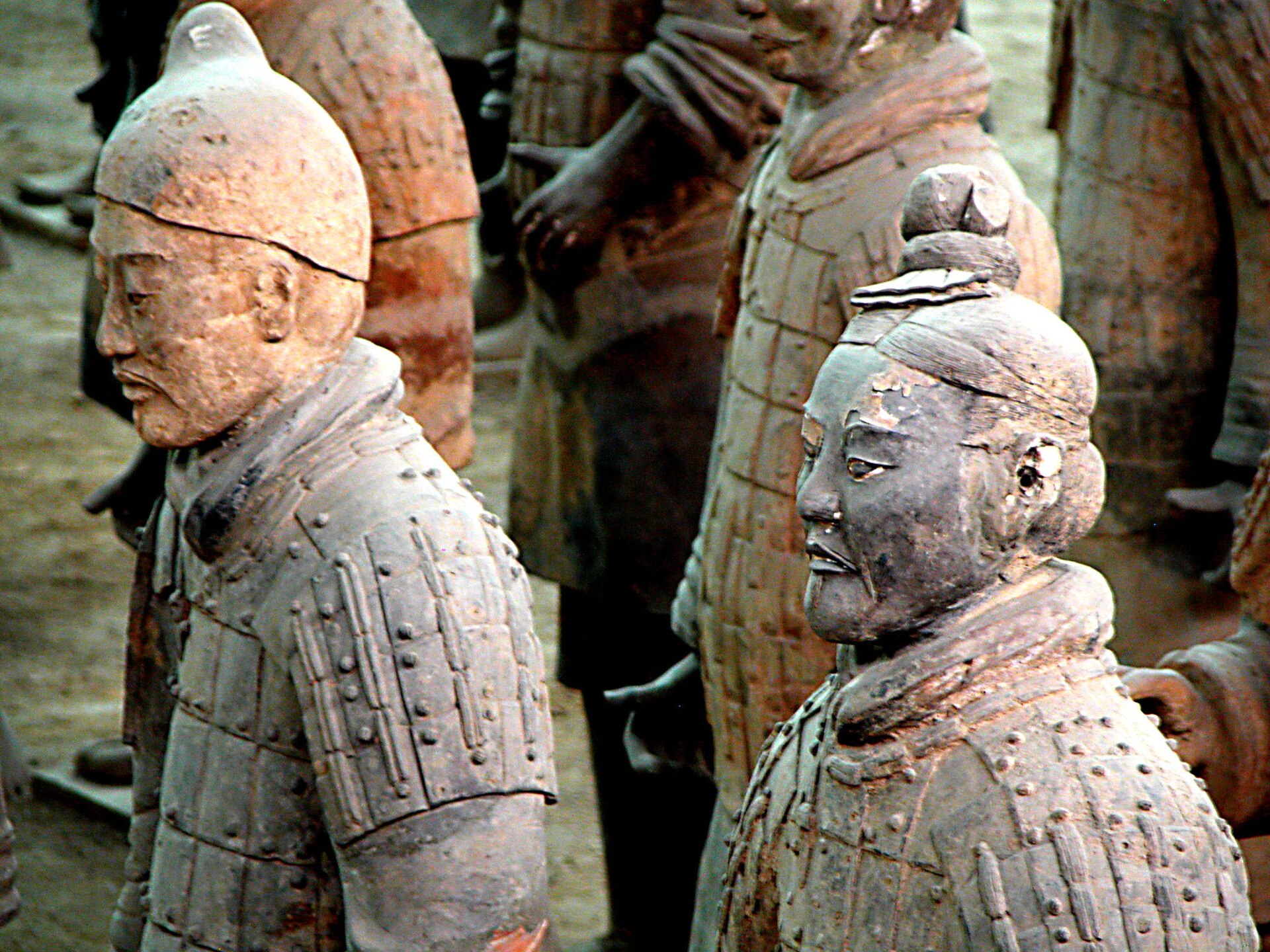
One of the most remarkable features of the army is that no two warriors are exactly alike. Each has individually modelled features, hairstyle and expression, so that the figures seem like portraits of real men.
Rank is shown through armour, dress and headgear, from ordinary soldiers to officers and generals. This astonishing variety, produced on an industrial scale, is one of the great puzzles and marvels of the site.

Horses, Chariots, and Weapons
Alongside the soldiers stand hundreds of terracotta horses, arranged to draw chariots or to carry cavalry. Modelled with great care, they capture the animals’ strength and alertness.
The army was equipped with tens of thousands of real bronze weapons, many remarkably well preserved. Some blades kept their sharpness for millennia, a testament to the metallurgical skill of the Qin craftsmen.

The Kneeling Archer and the Craft
Among the finest individual figures is the kneeling archer, so well preserved that traces of its original paint have survived. Its natural pose and precise detail, down to the tread on the soles of its shoes, reveal the artistry of the makers.
The figures were produced using a combination of moulds for the basic forms and hand-finishing for the details, an early kind of assembly-line production married to individual craftsmanship.
Once Painted in Brilliant Colour
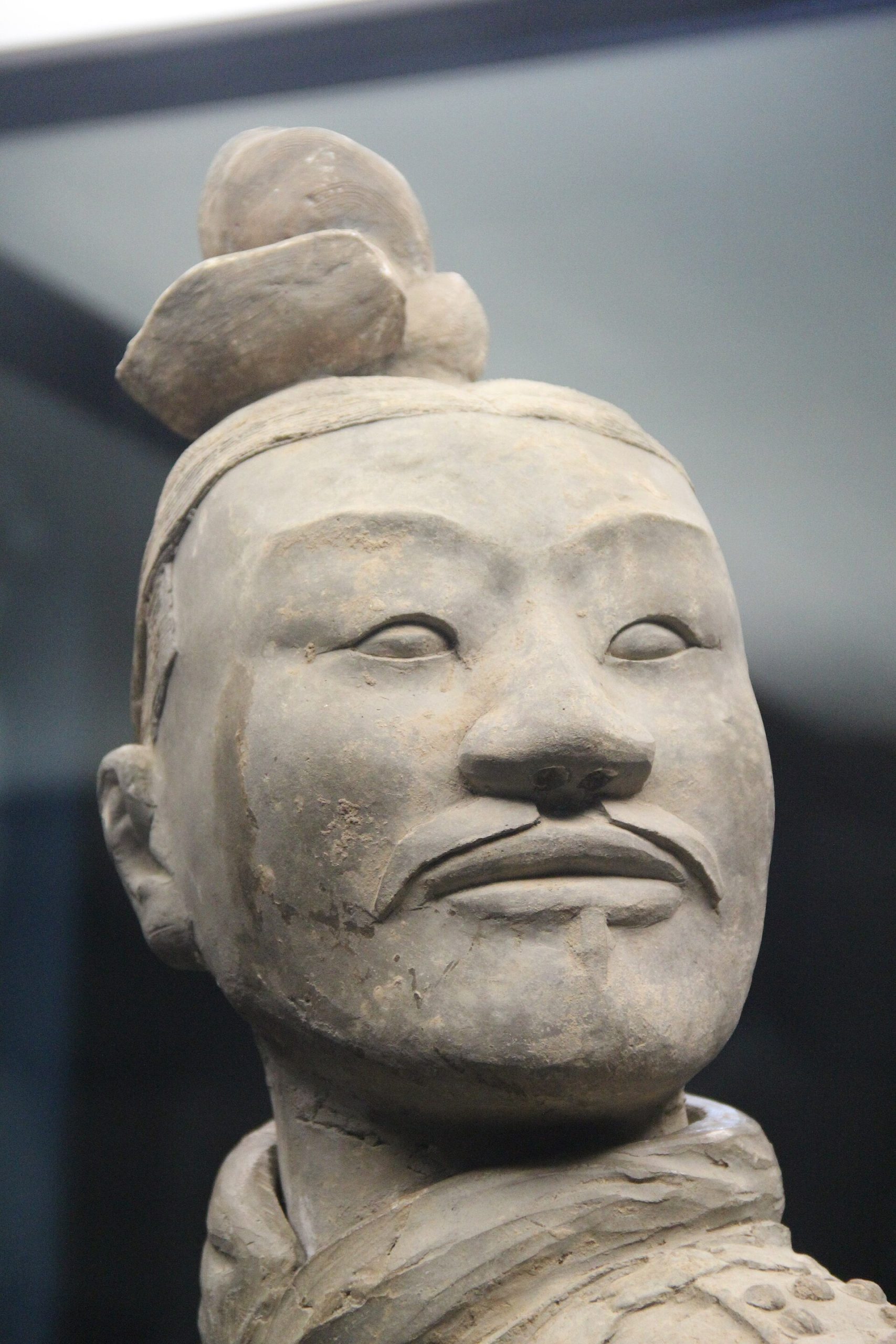
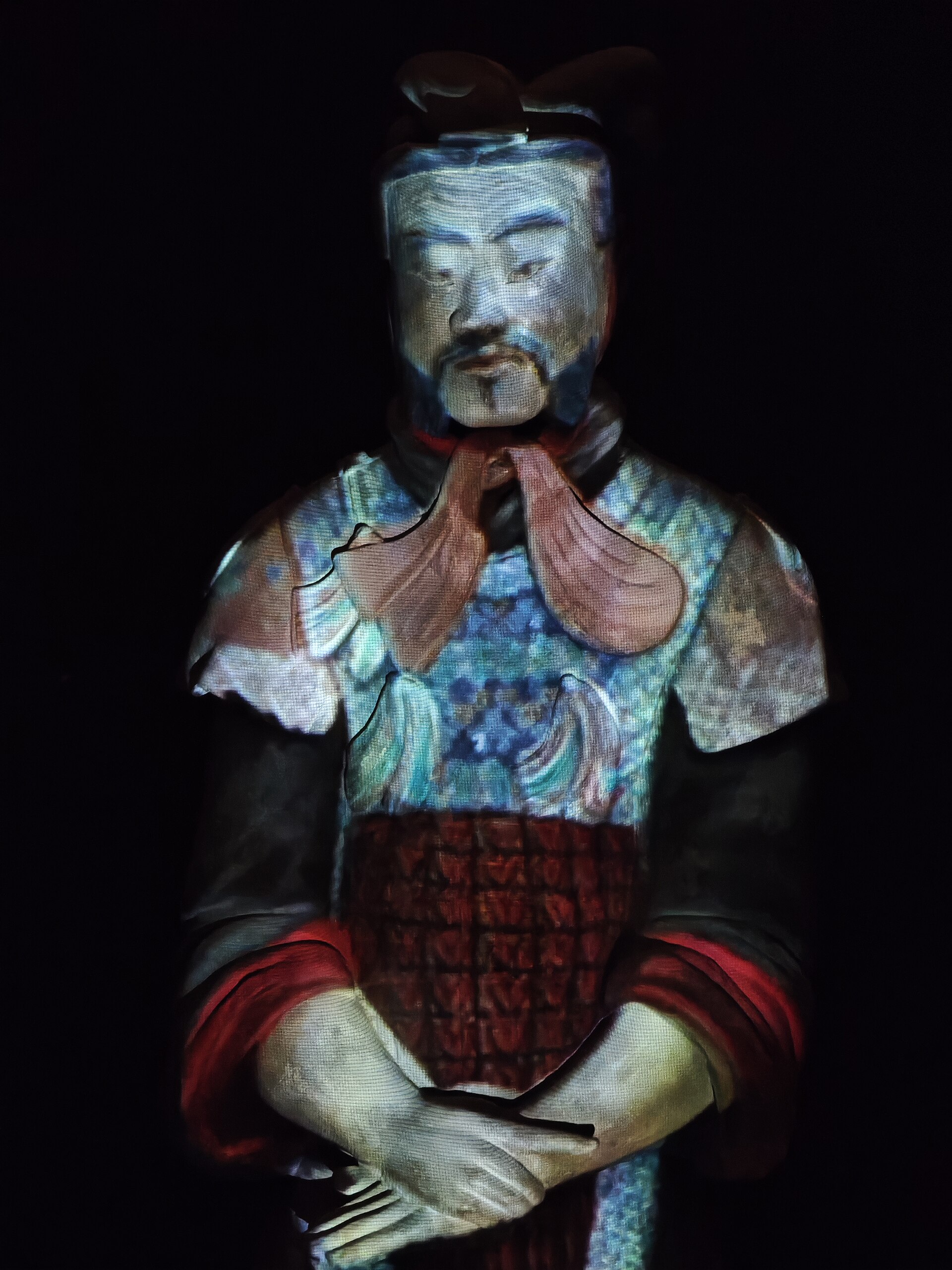
Today the warriors appear in the grey of bare terracotta, but they were originally painted in vivid colours, with red, green, blue and other pigments covering faces, clothing and armour. The buried army would once have blazed with colour.
Sadly much of the paint flakes away soon after excavation, as the figures dry out. Preserving these fragile colours is one of the great challenges facing the archaeologists who continue to uncover the site.
The Bronze Chariots and the Unopened Tomb
Near the pits, archaeologists found two exquisite half-sized bronze chariots, complete with horses and drivers, among the most sophisticated bronze objects to survive from the ancient world.
Yet the greatest prize, the emperor’s own burial mound, has never been excavated. Ancient accounts describe a vast underground palace with rivers of mercury, and modern surveys have detected unusually high mercury levels, but the tomb itself remains sealed and unexplored.

Preservation, Mysteries, and UNESCO
The tomb of the First Emperor, together with the Terracotta Army, was among the first sites in China to be inscribed on the UNESCO World Heritage List, in 1987. It is now one of the most visited archaeological sites in the world.
Many questions remain, from the exact number of figures still buried to the secrets of the unopened tomb. For now the clay warriors stand guard, as they have for over two thousand years, keeping the mysteries of their emperor.
Nearby Places
- Borobudur — another monumental Asian achievement, buried and rediscovered like the buried army of Xi’an.
- Nineveh — the capital of another mighty empire whose kings, like the First Emperor, immortalised their armies in art.
- Thebes — where Egypt’s pharaohs, like China’s First Emperor, filled their tombs with treasures for the afterlife.
Closing Thoughts
The Terracotta Army is a monument to one man’s refusal to accept the limits of death, and to the extraordinary skill of the craftsmen who served him. Each individual face turns an act of imperial power into something deeply human.
With the emperor’s own tomb still sealed beneath its mound, the greatest chapter of the story may yet lie underground. For now, the silent ranks of clay soldiers remain one of the most astonishing sights the ancient world has left us.
You May Like
Mafra, the Palace a King Built From a Vow


3 thoughts on “The Terracotta Army: The Buried Clay Legions Guarding China’s First Emperor”