Near the city of Anyang in northern China lie the ruins of Yinxu, the last capital of the Shang dynasty and the place where the recorded history of China effectively begins. Here, more than three thousand years ago, kings ruled, cast magnificent bronzes and asked questions of the gods by writing on bone.
It was at Yinxu that the earliest known form of Chinese writing was discovered, along with royal tombs, palaces and workshops. The site transformed a half-legendary dynasty into solid history and revealed the sophistication of Bronze Age China.

Table of Contents
- The Birthplace of Recorded Chinese History
- The Shang Dynasty and Its Last Capital
- Oracle Bones and the Origins of Chinese Writing
- The Royal Tombs of Yinxu
- Lady Fu Hao: Queen and General
- Masterpieces of Shang Bronze
- Ritual Vessels and Ancestral Worship
- Chariots and the Shang Army
- Jade and the Craft of the Shang
- Rediscovery and UNESCO
- Nearby Places
- Closing Thoughts
The Birthplace of Recorded Chinese History
For a long time the Shang dynasty was known mainly from later texts, and some doubted it had really existed. The excavations at Yinxu proved beyond question that it had, giving China its first archaeologically confirmed dynasty.
The site preserves the foundations of palaces and temples, royal tombs, workshops and thousands of inscribed bones, together forming a detailed picture of a powerful early state. Yinxu is rightly regarded as one of the cradles of Chinese civilisation.
The Shang Dynasty and Its Last Capital
The Shang ruled the Yellow River region of northern China for several centuries in the second millennium BC. Anyang became their capital in the dynasty’s later period, and it was from here that the last Shang kings governed.
Theirs was a highly organised society, with a powerful king, a ruling elite, skilled craftsmen and large numbers of labourers and soldiers. Its wealth and power are visible in the scale of its tombs and the quality of its bronzes.
Oracle Bones and the Origins of Chinese Writing
The most famous discovery at Yinxu is the oracle bones. Shang diviners inscribed questions onto turtle shells and ox bones, then applied heat until the bone cracked, and read the future in the pattern of the cracks.
The characters carved on these bones are the earliest well-developed Chinese writing known, and are the direct ancestors of the script still used today. Tens of thousands of them record royal concerns about war, harvests, weather and the ancestors.

The Royal Tombs of Yinxu
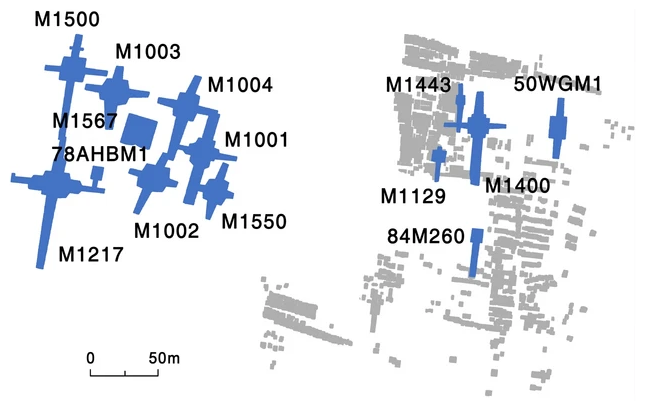
At Yinxu the Shang kings were buried in enormous cross-shaped pits, reached by long ramps and sunk deep into the earth. These royal tombs were filled with bronzes, jades and other treasures for the ruler’s use in the afterlife.
The burials also reveal a darker side of Shang religion, for they were accompanied by human sacrifices, sometimes of many people. The tombs give a vivid, and sometimes grim, sense of the beliefs and power of the Shang court.
Lady Fu Hao: Queen and General
One of the most extraordinary finds at Yinxu was the tomb of Lady Fu Hao, a consort of a Shang king. Unusually, it was found intact, undisturbed by robbers, and packed with hundreds of bronzes, jades and other precious objects.
The oracle bones reveal that Fu Hao was no ordinary queen but also a general who led armies into battle and presided over important rituals. Her tomb offers a rare and detailed portrait of a powerful woman in ancient China.
Masterpieces of Shang Bronze
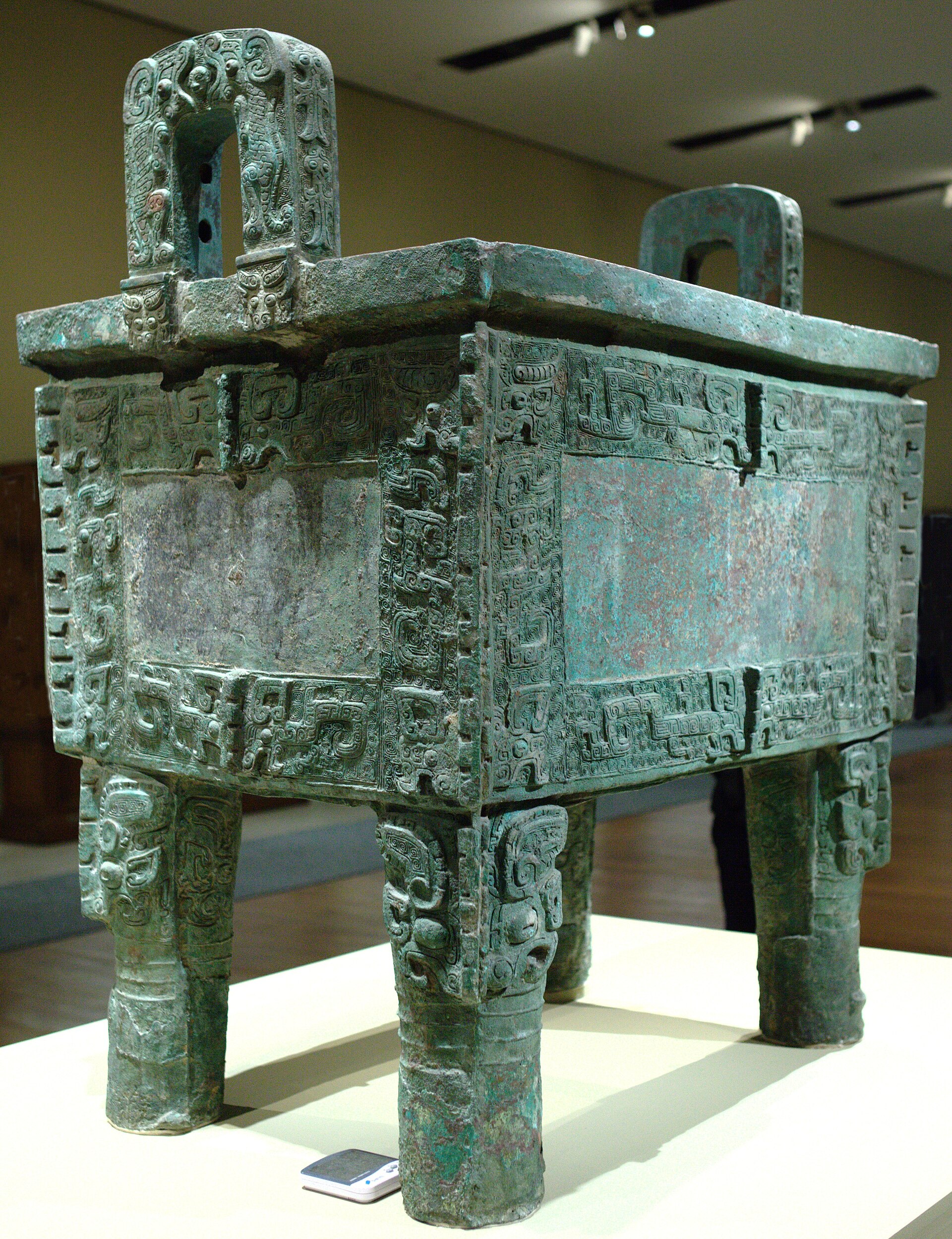
The Shang were among the greatest bronze-casters in history. Using sophisticated piece-mould techniques, they produced ritual vessels of remarkable size and complexity, covered in intricate decoration.
The largest known ancient Chinese bronze, a massive ritual cauldron weighing hundreds of kilograms, comes from this period. Such vessels required enormous resources and skill, and were powerful symbols of royal authority.
Ritual Vessels and Ancestral Worship
Shang bronzes were not merely decorative but central to religion. They were used to offer food and wine to the royal ancestors, whose favour was thought essential to the fortunes of the living king and his people.
Their surfaces are covered with mysterious animal-like designs, including the famous taotie mask, whose exact meaning is still debated. These vessels are among the supreme achievements of the world’s Bronze Age.

Chariots and the Shang Army
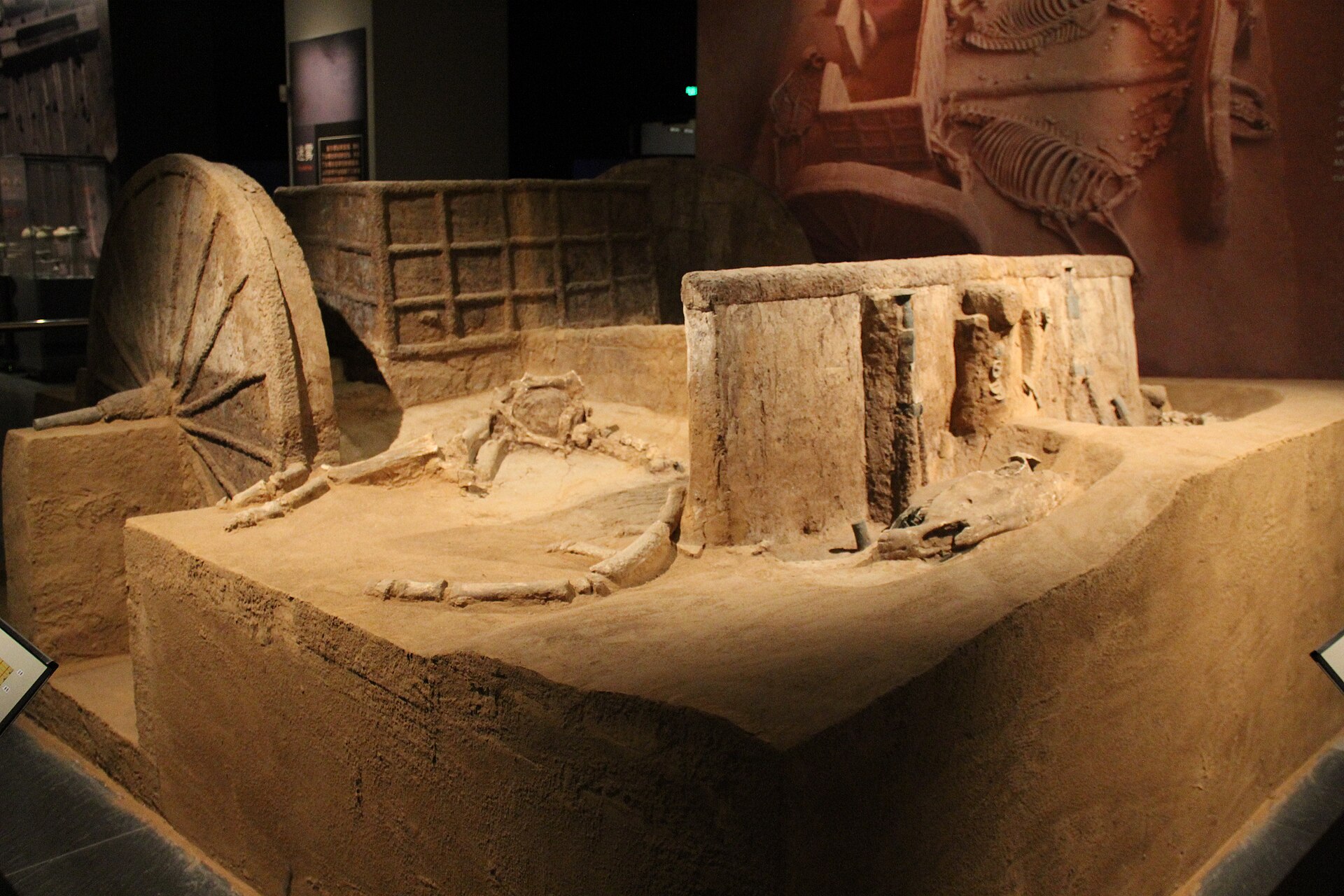
Excavations at Yinxu have uncovered chariot burials, in which the vehicles were interred complete with their horses and sometimes their drivers. The chariot was a prestigious weapon and a symbol of elite status.
These finds, together with bronze weapons and the evidence of the oracle bones, show that the Shang kings commanded organised armies and waged frequent war on their neighbours to expand and defend their realm.

Jade and the Craft of the Shang
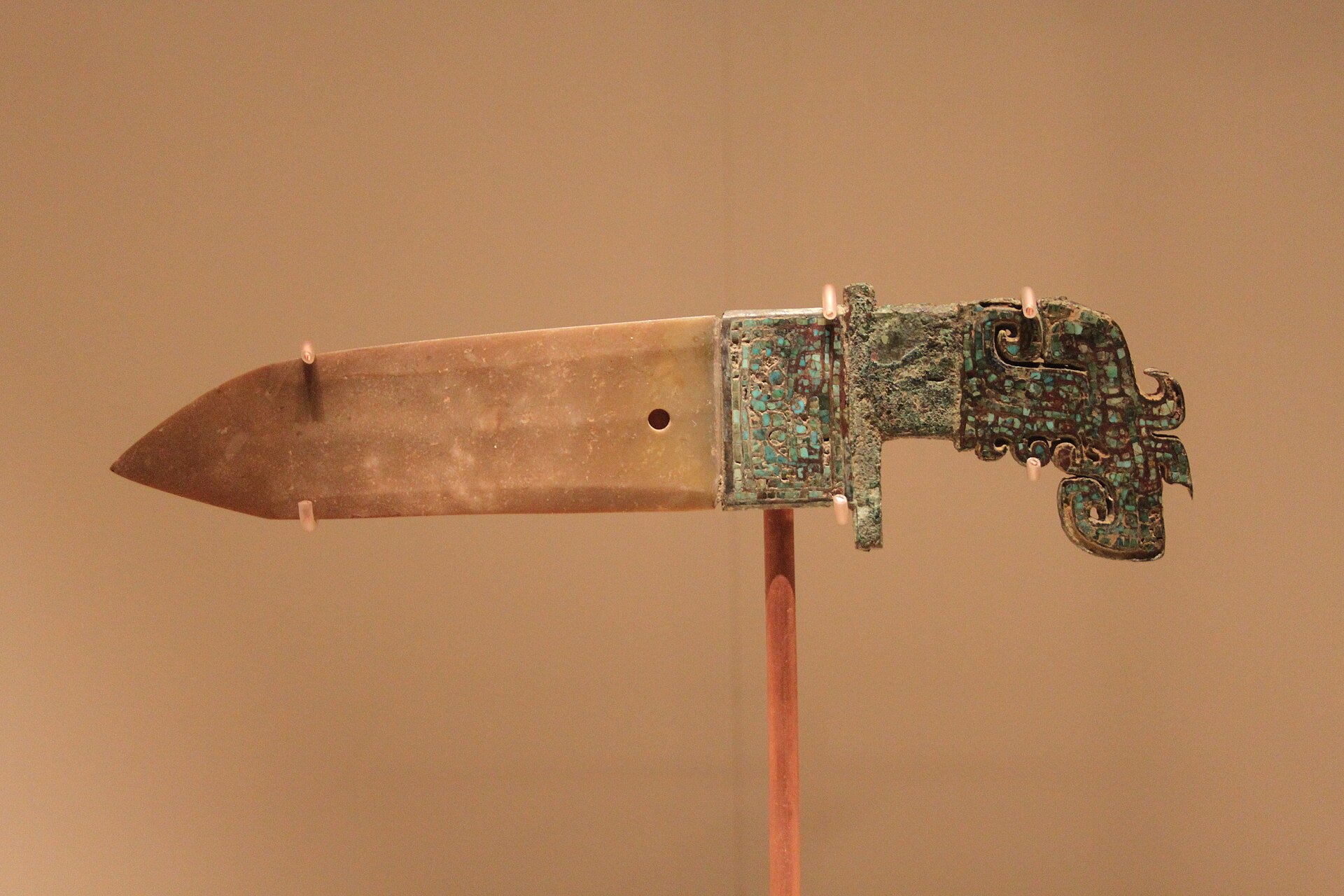
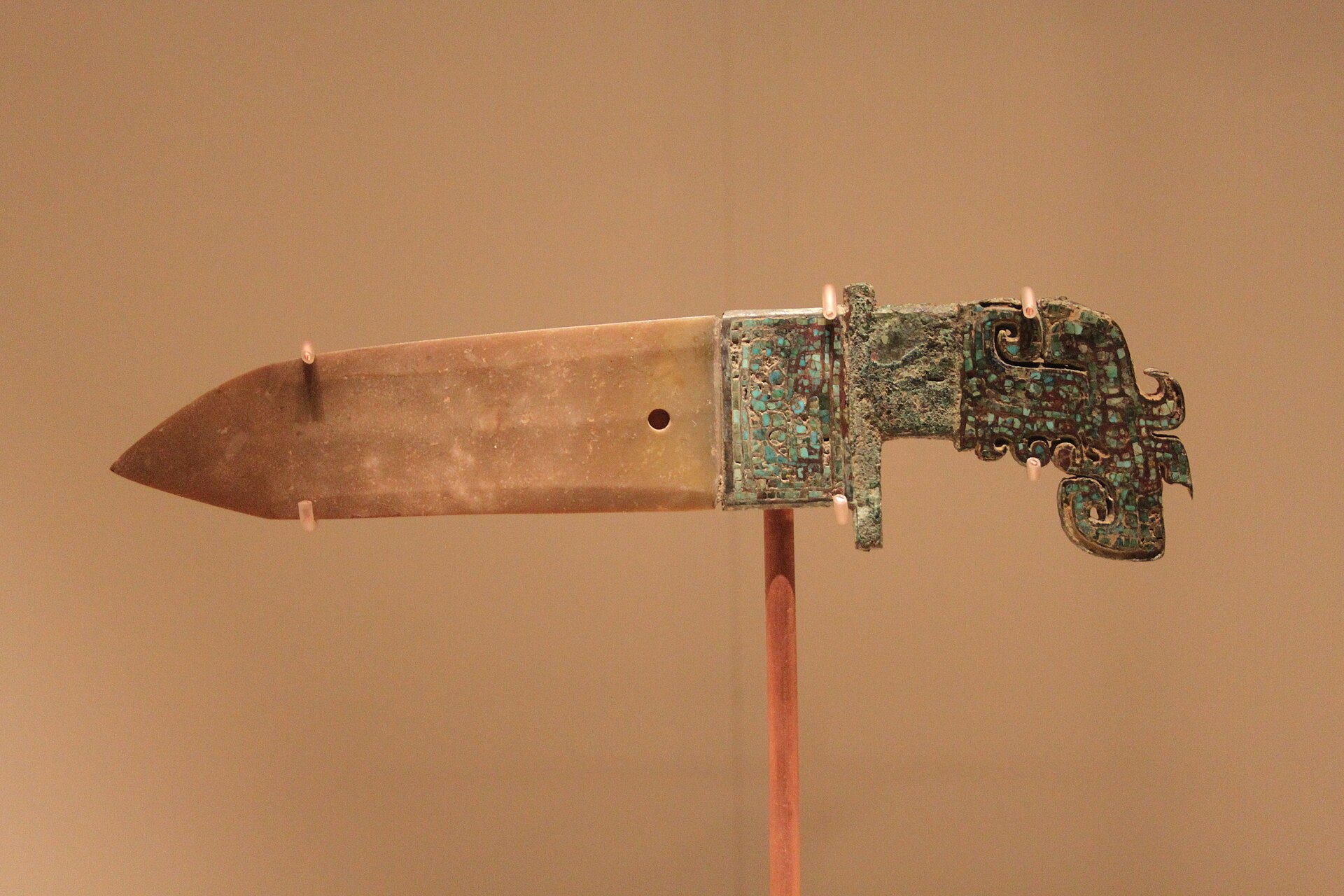
Alongside bronze, the Shang prized jade, which they carved into ornaments, ritual objects and figures of animals and people. The tomb of Fu Hao alone contained hundreds of jade items of exquisite workmanship.
Jade was believed to have protective and spiritual qualities, and its careful working reflects both the wealth of the court and the extraordinary skill of Shang artisans across many materials.
Rediscovery and UNESCO
Yinxu came to light in the early twentieth century when scholars traced inscribed oracle bones, then being sold as dragon bones for medicine, back to the fields around Anyang. Systematic excavation soon revealed the lost capital.
The work at Yinxu helped found the discipline of Chinese archaeology, and the site was inscribed on the UNESCO World Heritage List in 2006. It remains a place of pilgrimage for anyone seeking the origins of Chinese civilisation.
Nearby Places
- The Terracotta Army — the buried guardians of a later Chinese emperor, heir to the traditions the Shang began.
- Nineveh — a contemporary Near Eastern capital whose clay tablets, like the oracle bones, preserve an ancient written record.
- Babylon — another great Bronze and Iron Age capital, rich in ritual, kingship and monumental art.
Closing Thoughts
Yinxu is where China steps out of legend and into history. Its oracle bones gave us the ancestor of Chinese writing, its tombs a powerful queen who led armies, and its bronzes some of the finest work of any Bronze Age culture.
Quiet fields near Anyang hold the memory of a dynasty once doubted and now firmly known. In the cracked bones and gleaming bronzes of the Shang lie the deepest documented roots of one of the world’s longest continuous civilisations.
You May Like
Mafra, the Palace a King Built From a Vow