Along a basalt cliff in western India stretches one of the most astonishing achievements of human labour and faith: the Ellora caves. Cut into the living rock over several centuries, its thirty-four monasteries and temples belong to three different religions, Buddhism, Hinduism and Jainism, standing peacefully side by side.
The greatest of them all is the Kailasa Temple, a full-sized temple carved downward out of a single mass of rock, the largest monolithic structure in the world. Ellora is a monument not only to extraordinary craftsmanship but to the religious tolerance of ancient India.

Table of Contents
- Rock-Cut Temples of Three Faiths
- Thirty-Four Caves in a Cliff
- The Kailasa Temple: Carved from a Single Rock
- Excavated From the Top Down
- The Buddhist Caves
- The Hindu Caves and Their Reliefs
- The Jain Caves
- Sculpture and Pillars
- A Meeting of Religions
- Rediscovery and UNESCO
- Getting There
- Nearby Places
- Closing Thoughts
Rock-Cut Temples of Three Faiths
Ellora is a complex of caves and temples hewn into a long cliff between roughly the sixth and tenth centuries AD. What makes it unique is that it contains monuments of three great Indian religions in one place.
Buddhist, Hindu and Jain shrines were carved here over the centuries, reflecting the changing faiths of the region. Their peaceful coexistence at Ellora is a powerful symbol of the religious harmony of the age.

Thirty-Four Caves in a Cliff
There are thirty-four major caves at Ellora, numbered along the cliff. The earliest are Buddhist, followed by a great group of Hindu caves, and finally the Jain caves at the northern end.
Each was cut into the rock by hand, hollowing out halls, shrines, pillars and sculpture from the solid stone. Together they form one of the largest rock-cut cave complexes in the world.
The Kailasa Temple: Carved from a Single Rock
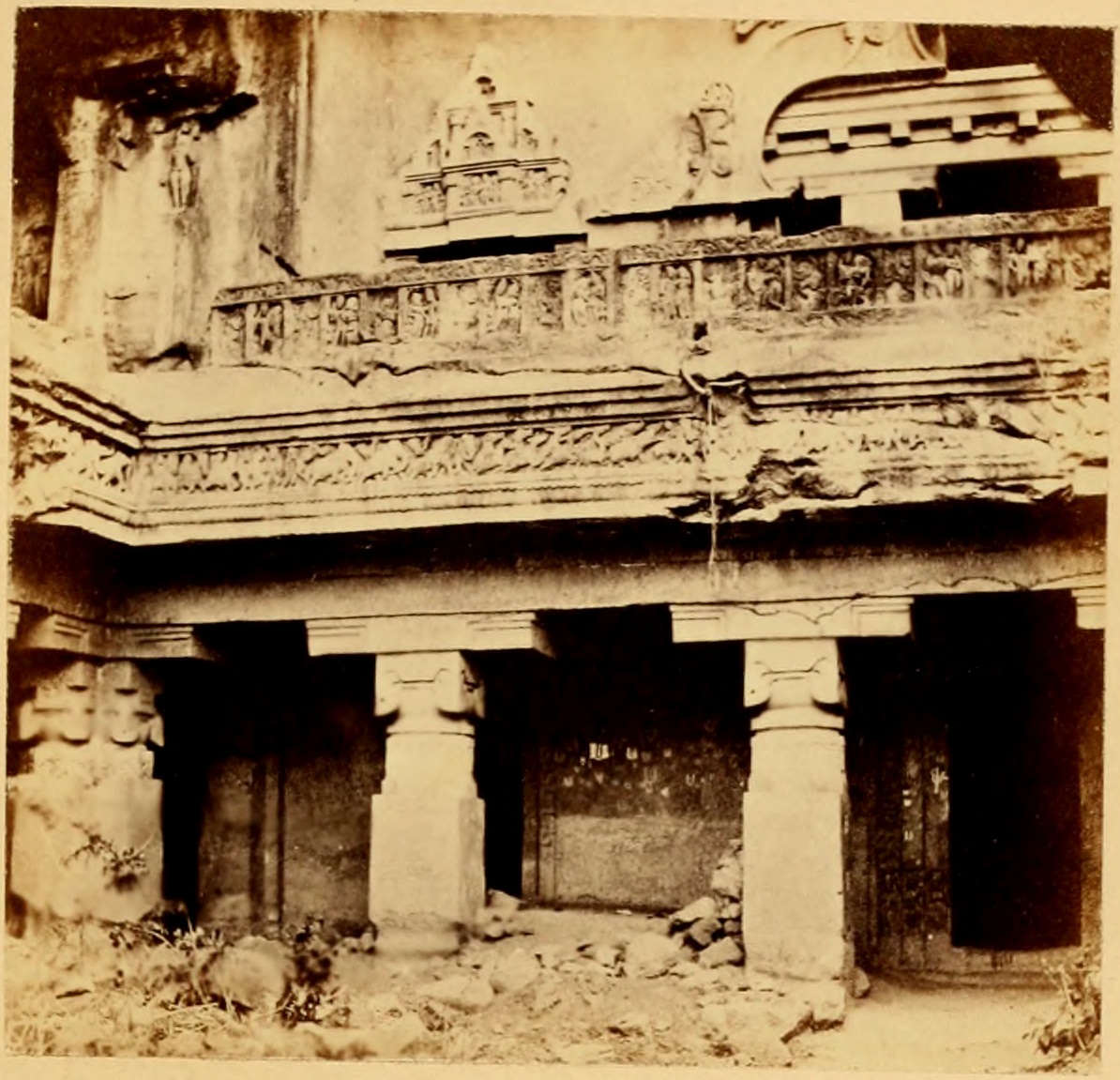
The crowning glory of Ellora is the Kailasa Temple, cave sixteen, which is not really a cave at all but a complete temple carved from the top down out of a single rock. It represents Mount Kailash, the sacred mountain home of the god Shiva.
Vast in scale, with courtyards, towers, halls and free-standing shrines, it is the largest monolithic monument on earth. That it was created entirely by removing rock, with no possibility of adding material, makes it one of the wonders of the ancient world.
Excavated From the Top Down
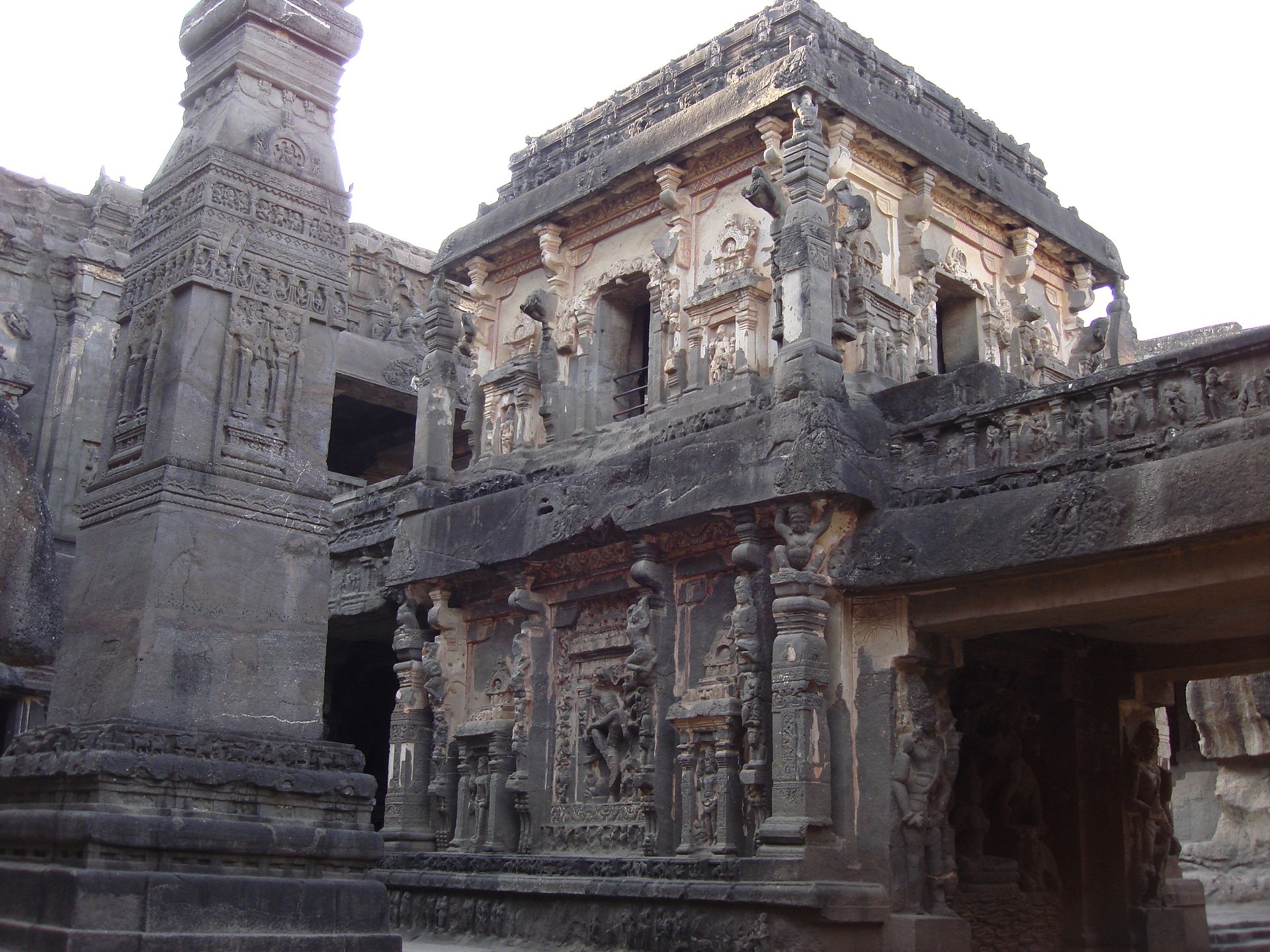
The Kailasa Temple was created by cutting down into the hillside from above, carving the temple out of the rock that was left standing while removing everything around it. An estimated hundreds of thousands of tonnes of stone were cut away.
The base of the temple is carved with rows of great stone elephants that appear to carry the whole structure on their backs. The daring and precision of the whole conception remain astonishing.

The Buddhist Caves
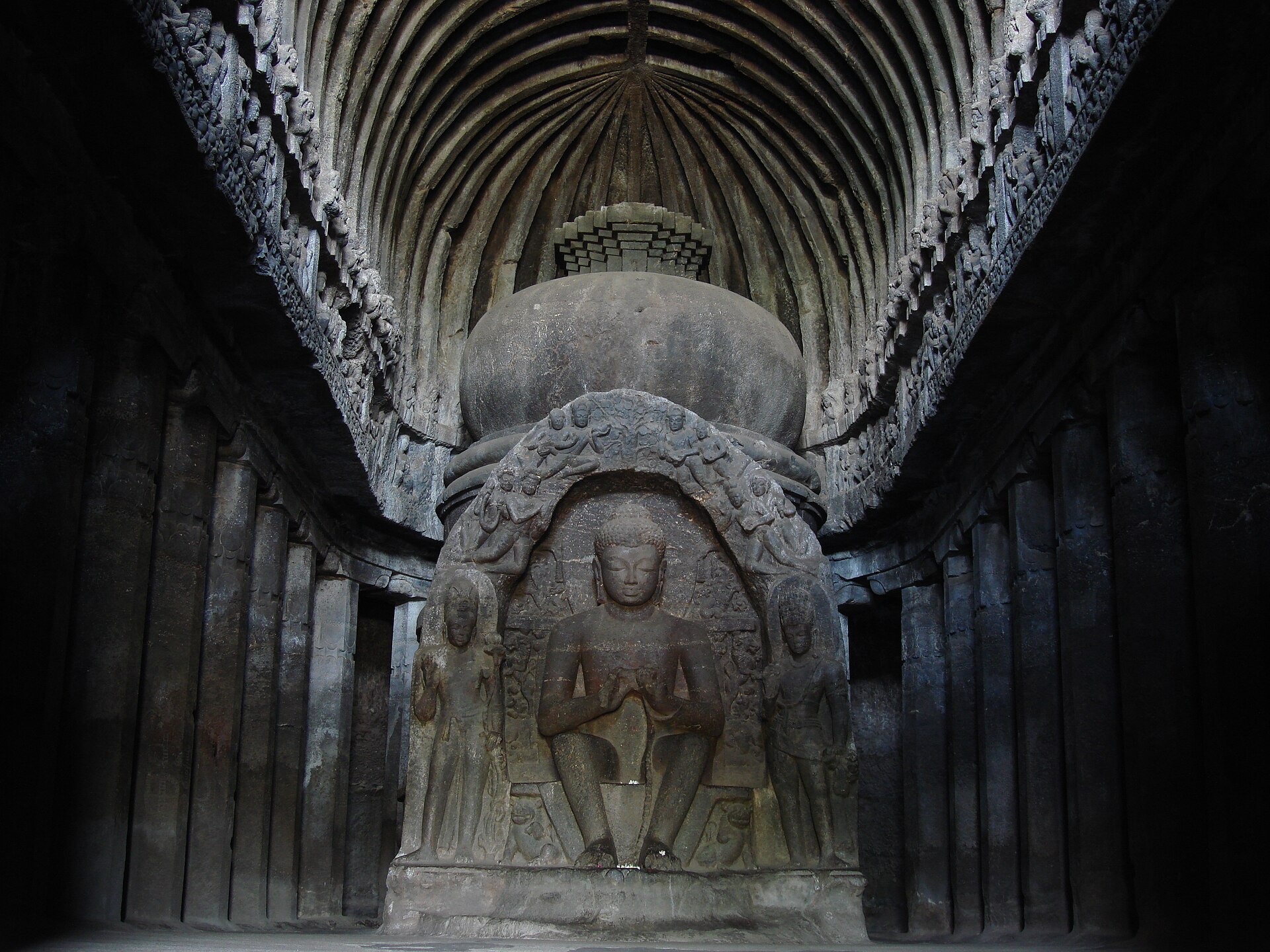
The earliest caves at Ellora are Buddhist monasteries and halls of worship, carved between roughly the sixth and eighth centuries. They contain shrines with great images of the Buddha, seated in serene meditation.
Some are multi-storeyed and elaborately decorated, showing the wealth and devotion of the Buddhist community. They preserve a fine record of the art of Indian Buddhism in its later flowering.
The Hindu Caves and Their Reliefs
The Hindu caves, including the great Kailasa Temple, are the most numerous and elaborate at Ellora. Their walls are covered with dramatic relief carvings depicting the gods and their myths.
Famous panels show scenes such as the demon Ravana shaking Mount Kailash, and the gods Shiva and Vishnu in various forms. These sculptures are among the finest achievements of Indian rock-cut art.
The Jain Caves
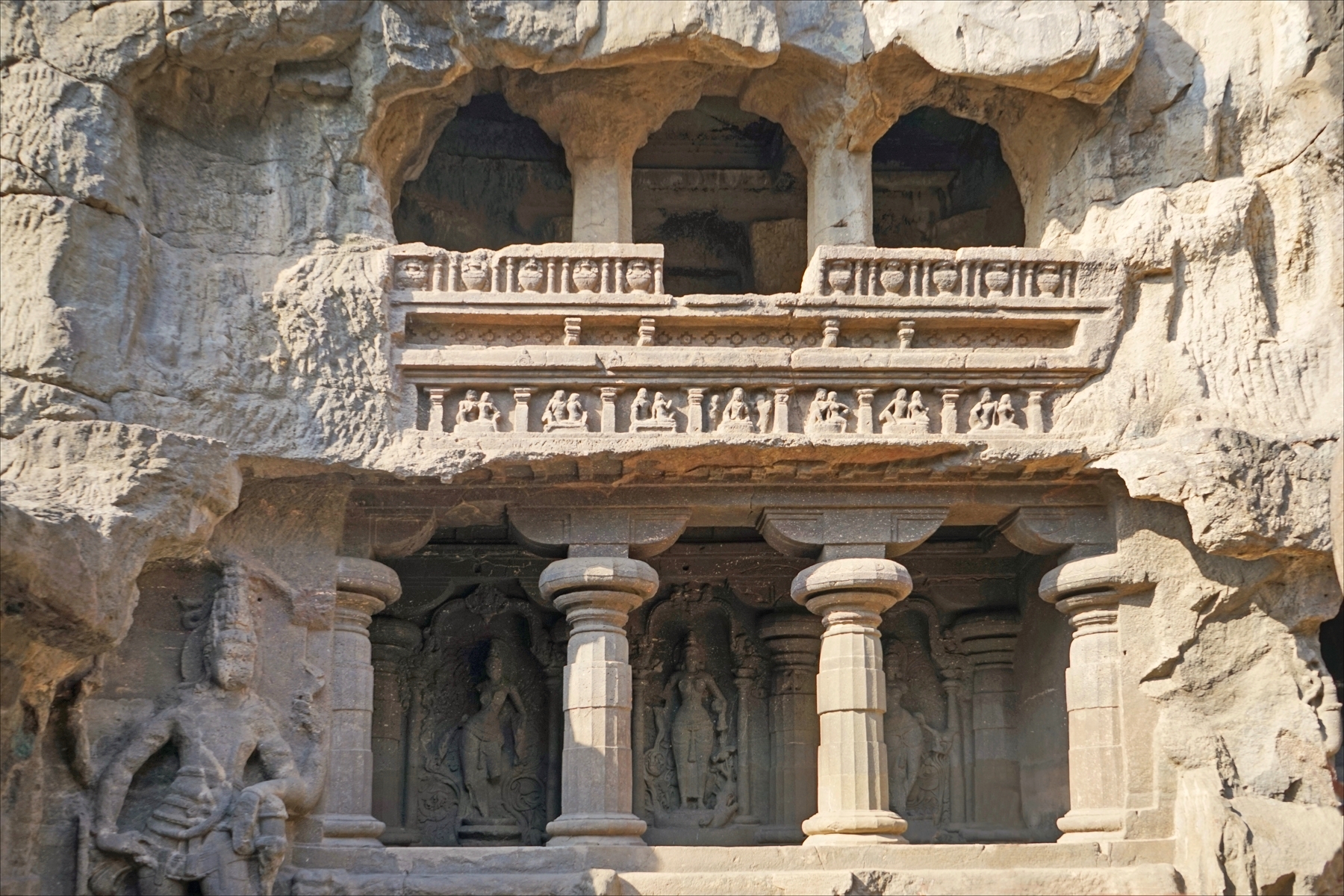
At the northern end of the cliff lie the Jain caves, the latest group at Ellora, carved around the ninth and tenth centuries. Though smaller than the Hindu monuments, they are exquisitely detailed.
Their ceilings and pillars are covered with fine, delicate carving, and they contain images of the Jain teachers, the tirthankaras. They complete Ellora’s remarkable record of three faiths in stone.
Sculpture and Pillars
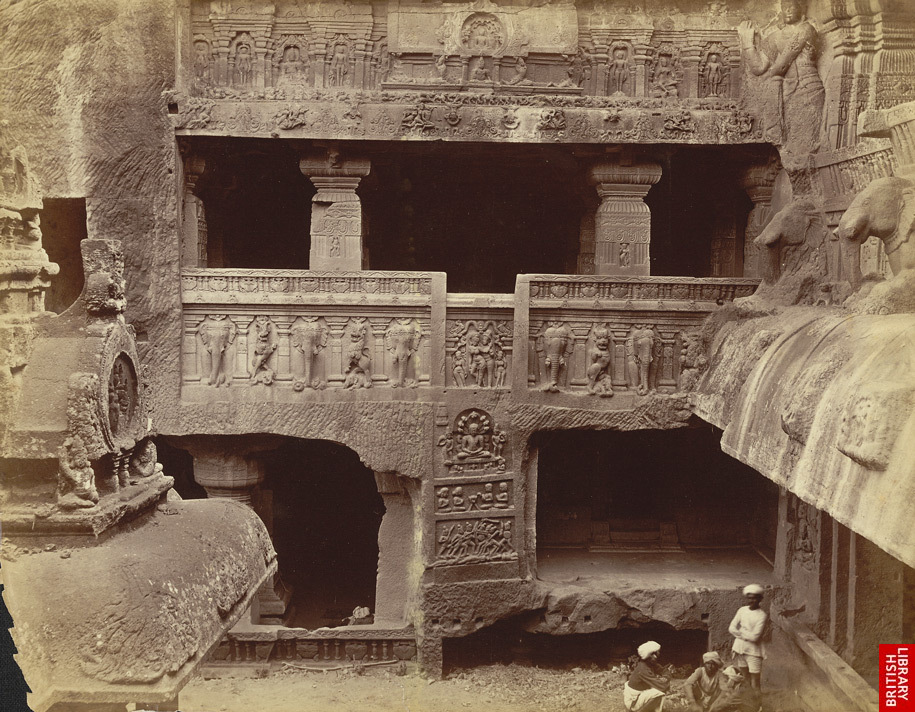
Throughout Ellora, the rock has been shaped into columns, brackets, ceilings and countless figures of gods, goddesses, guardians and mythical beasts. The carving ranges from bold and monumental to fine and intricate.
The pillared halls, cut entirely from the rock, create cool, shadowy spaces for worship and meditation. The sheer quantity and quality of the sculpture make Ellora a treasure house of Indian art.

A Meeting of Religions
Perhaps the most remarkable thing about Ellora is what it represents: the peaceful coexistence of Buddhism, Hinduism and Jainism in a single sacred place over several centuries.
Pilgrims and patrons of different faiths worked and worshipped along the same cliff, leaving a monument to the tolerance and religious richness of early medieval India. Ellora stands as a symbol of unity in diversity.
Rediscovery and UNESCO
Ellora has never been entirely forgotten, and it has attracted travellers and pilgrims for centuries. Its monuments have been studied, conserved and admired by visitors from around the world.
The Ellora caves were inscribed on the UNESCO World Heritage List in 1983. Today they are among the most visited and revered ancient sites in India, celebrated for both their artistry and their spirit of tolerance.
Getting There
Ellora lies in the state of Maharashtra in western India, about thirty kilometres from the city of Aurangabad, now also known as Chhatrapati Sambhaji Nagar. The city has an airport and good rail connections.
From the city the caves are an easy day trip by road, often combined with the nearby painted Ajanta caves. The site is spread along the cliff, so comfortable shoes and time are needed to explore it fully.
Coordinates: 20.0268, 75.1779 — open the Ellora Caves in Google Maps.
Nearby Places
- Hampi — another great monument of southern India, famed for its rock-cut sculpture and temples.
- Borobudur — the great Buddhist monument of Java, part of the same Asian world of carved sacred art.
- Petra — a very different city, but one that also astonishes by carving whole monuments from solid rock.
Closing Thoughts
Ellora is one of the supreme achievements of human hands and faith: a cliff carved over centuries into temples of three religions, crowned by a full temple hewn from a single rock.
That the Kailasa Temple was made entirely by cutting away stone, and that Buddhists, Hindus and Jains created their shrines peacefully side by side, makes Ellora a monument to both extraordinary craftsmanship and human tolerance. It remains one of the wonders of India.
You May Like

Buda Castle: The Crown of Budapest Above the Danube


