Where the flat plains of the Gulf coast meet the first forested hills of Chiapas in southern Mexico, the Maya city of Palenque nestles against a green mountainside, its white temples framed by jungle and threaded by clear streams. Smaller than giants like Tikal, Palenque is prized instead for its exquisite refinement: the elegance of its architecture, the delicacy of its stucco sculpture, and the beauty of its hieroglyphic inscriptions, which are among the finest the Maya ever produced.
Palenque is also inseparable from one man. In 1952 an archaeologist discovered, deep inside the Temple of the Inscriptions, a hidden stairway leading down to the intact tomb of King Pakal the Great, his face covered by a mask of jade. It was one of the most spectacular finds in the history of Maya archaeology, and it made Palenque and its long-lived king famous around the world. The city Pakal and his successors built remains one of the most graceful achievements of the ancient Americas.
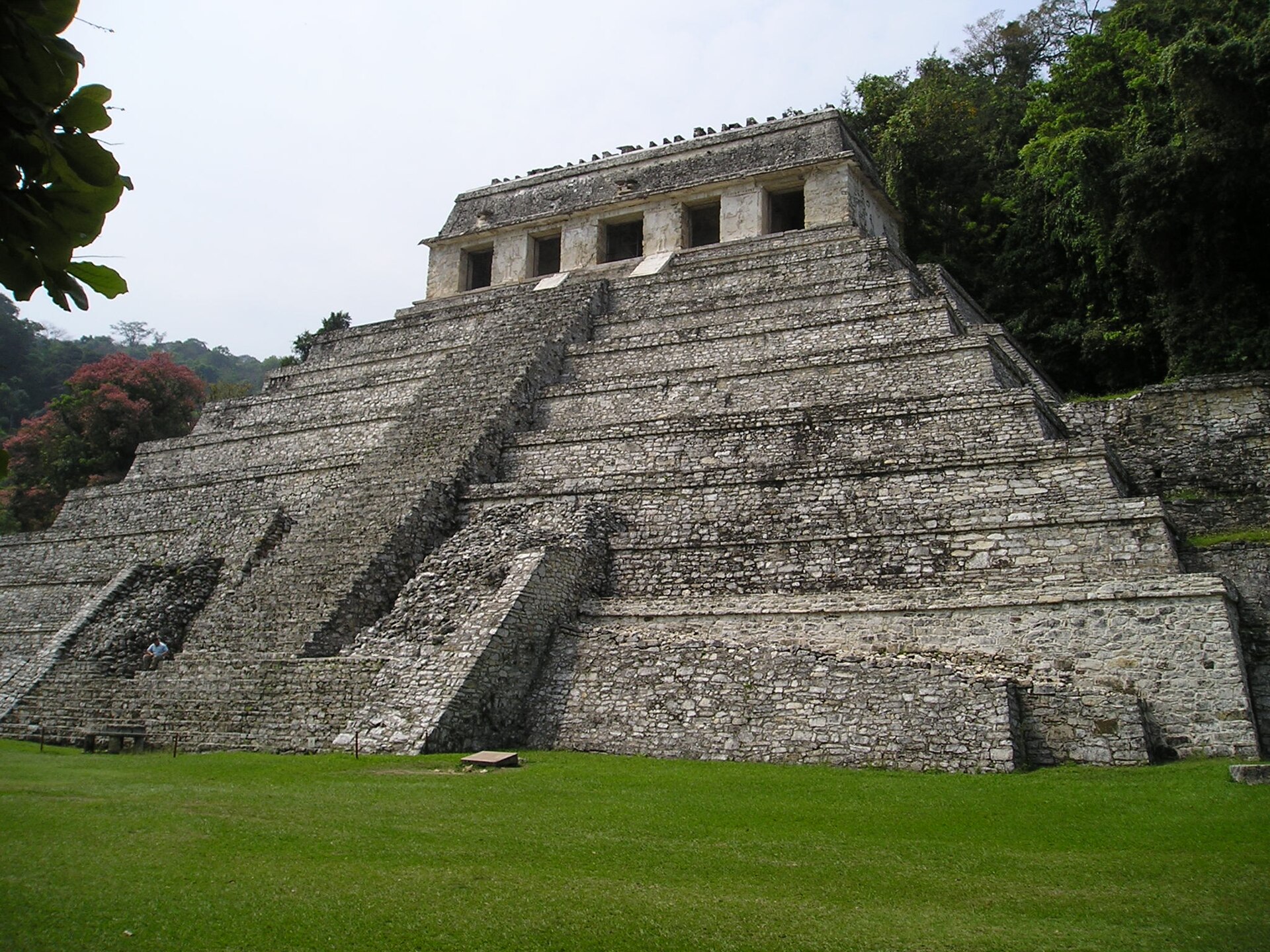
Table of Contents
- A Jewel of the Western Maya
- Pakal the Great
- The Temple of the Inscriptions
- The Tomb of Pakal
- The Palace
- The Tower
- The Group of the Cross
- Sculpture and Writing
- Water and the Forest
- Getting There
- Nearby Places
- Closing Thoughts
A Jewel of the Western Maya
Palenque, known to its own people by a name usually read as Lakamha, flourished during the Classic period and reached its height in the seventh and eighth centuries. It was the dominant power of the western Maya lowlands, controlling a region between the highlands and the Gulf coast plains.
Though never as large as the greatest lowland cities, Palenque compensated with the quality of its art and architecture. Its buildings are lighter and more graceful than the massive piles of Tikal, with delicate roof-combs and finely modelled decoration.

Pakal the Great
The city’s golden age is bound up with K’inich Janaab Pakal, known as Pakal the Great, who came to the throne as a boy and ruled for an extraordinary sixty-eight years in the seventh century. Under him and his successors, Palenque was transformed with a great program of building and monument-making.
Pakal’s reign brought stability and prosperity, and his court produced inscriptions that wove his dynasty into the deep mythological past. He remains the most famous of all Maya kings, in large part because of the tomb he prepared for himself.
The Temple of the Inscriptions
Pakal’s funerary monument is the Temple of the Inscriptions, a stepped pyramid crowned by a temple whose walls bear one of the longest Maya hieroglyphic texts known, recounting the history of the dynasty. For centuries it was admired without anyone suspecting what lay within.
In 1949 the archaeologist Alberto Ruz noticed a sealed slab in the temple floor. Years of clearing a rubble-filled stairway led, in 1952, into a hidden vaulted chamber at the pyramid’s base, the burial place of the king.
The Tomb of Pakal
Within the chamber lay a great carved sarcophagus. Its lid, one of the masterpieces of Maya art, shows Pakal at the moment of death, poised between the worlds, descending into the underworld with the world-tree rising above him. Inside, the king’s body wore a mask and ornaments of jade.
The discovery of an undisturbed royal tomb inside a Maya pyramid was without precedent and revolutionized understanding of the Maya. It showed that their pyramids could serve, like those of Egypt, as monumental tombs for divine kings.

The Palace
At the centre of Palenque sprawls the Palace, a complex of buildings, courtyards, and galleries raised on a broad platform. It served as the royal residence and administrative heart of the city, and its walls preserve carved and stucco decoration depicting rulers and captives.
The Palace is remarkable for its architectural sophistication, with corbelled vaults, ornamented piers, and interior spaces of unusual complexity. It reflects the wealth and refinement of Palenque’s court at its peak.

The Tower
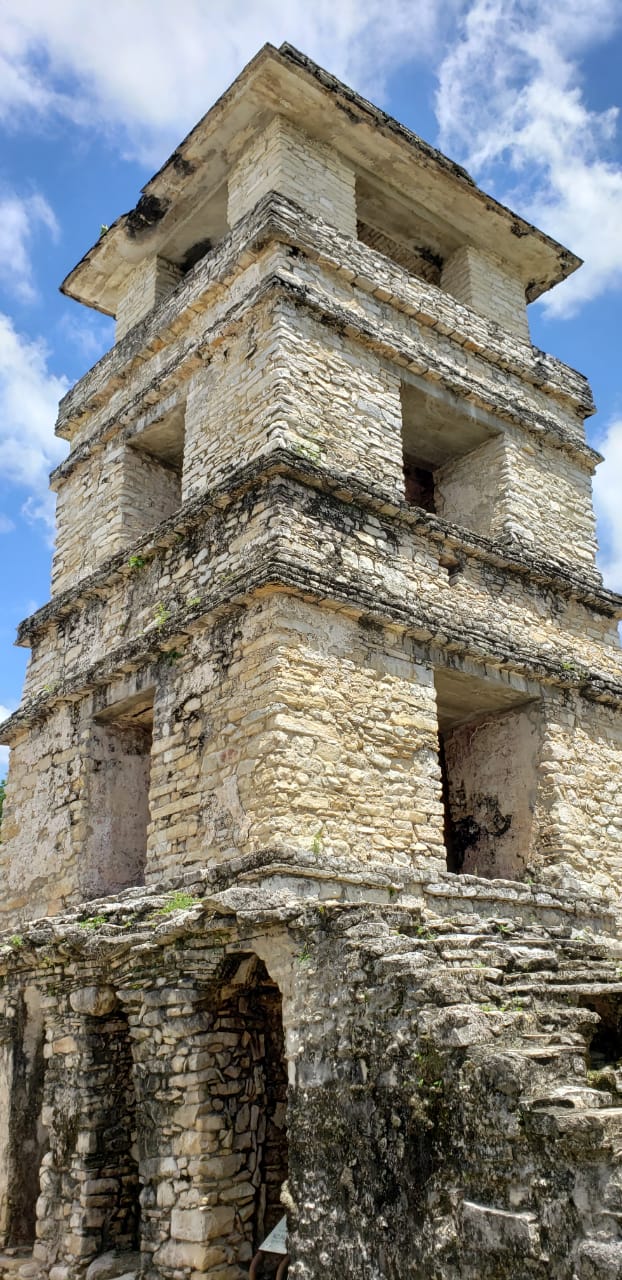
Rising from the Palace is a feature unique in Maya architecture: a four-storey square tower. Its precise purpose is uncertain, but it may have served as an observatory or a lookout, and its lines of sight appear to relate to astronomical events such as the winter solstice sunset.
The tower gives Palenque an unmistakable silhouette and speaks to the Maya interest in the heavens. Whatever its exact function, it is a striking and original piece of design.
The Group of the Cross
On the eastern side of the site stands the Group of the Cross, three temples raised by Pakal’s son and successor. Each contains a beautifully carved tablet depicting the king before a sacred image, the temples together forming a shrine to the patron gods of Palenque.
The inscriptions here set out an elaborate mythology connecting the royal dynasty to the gods and the creation of the world. They are among the most important texts for understanding Maya religion and kingship.

Sculpture and Writing
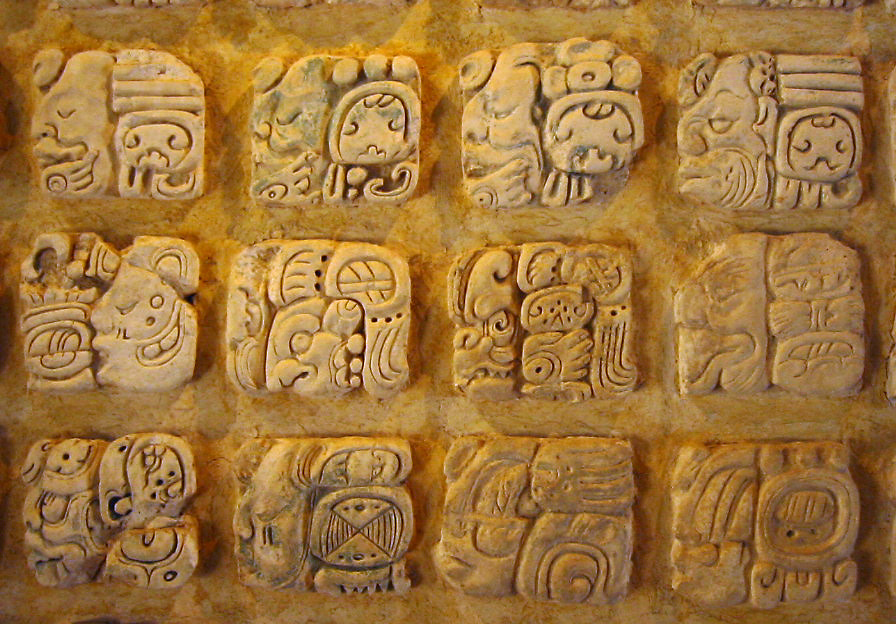
Palenque is celebrated above all for the quality of its art. Its sculptors worked in stucco and limestone with a naturalism and grace unmatched elsewhere in the Maya world, producing lifelike portraits and flowing figural scenes. Its scribes carved hieroglyphs of exceptional beauty.
These inscriptions have been central to the decipherment of Maya writing, allowing scholars to read the names, dates, and deeds of Palenque’s kings. The city has thus been doubly important, as a treasury of art and as a key to Maya history.
Water and the Forest
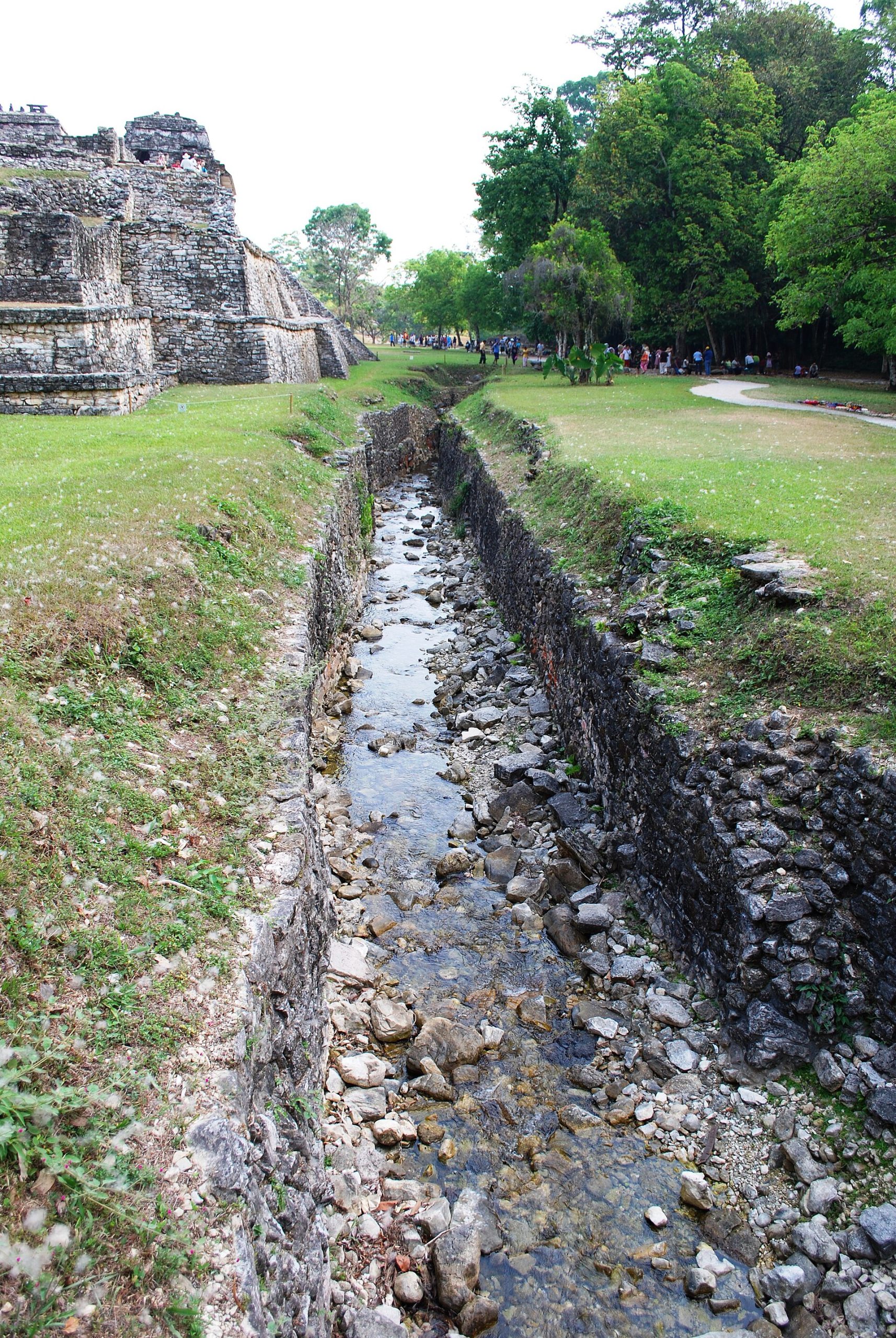
Palenque’s builders worked in harmony with a well-watered landscape. Streams flow through the site, and the Maya engineered aqueducts and channels to manage them, including a remarkable vaulted conduit that carried a stream beneath the plaza. Springs and waterfalls surround the ruins.
After the city was abandoned in the ninth or tenth century, this same abundant forest reclaimed it. Palenque’s setting, among green hills alive with birds and howler monkeys, is inseparable from its beauty and its fame.
Getting There
Palenque lies in the state of Chiapas in southern Mexico, near the modern town of the same name, which has an airport and road connections to cities such as Villahermosa and San Cristóbal de las Casas. The ruins sit within a national park of tropical forest, and early visits reward travellers with mist rising among the temples.
The site stands at approximately 17.4839, -92.0464. You can open the exact location on Google Maps for directions to the ruins of Palenque.
Nearby Places
Closing Thoughts
Palenque proves that Maya greatness was measured not only in size but in artistry. In its graceful temples, its flowing stucco portraits, and its beautiful inscriptions, the city achieved a refinement rarely equalled in the ancient Americas.
And in the jade-masked tomb of Pakal, hidden for thirteen centuries within his pyramid, it left one of archaeology’s most breathtaking discoveries. Palenque remains a place where art, history, and forest meet in near-perfect harmony.
You May Like
Mafra, the Palace a King Built From a Vow


One thought on “Palenque: The Jade-Masked Tomb of Pakal and the Maya’s Most Graceful City”