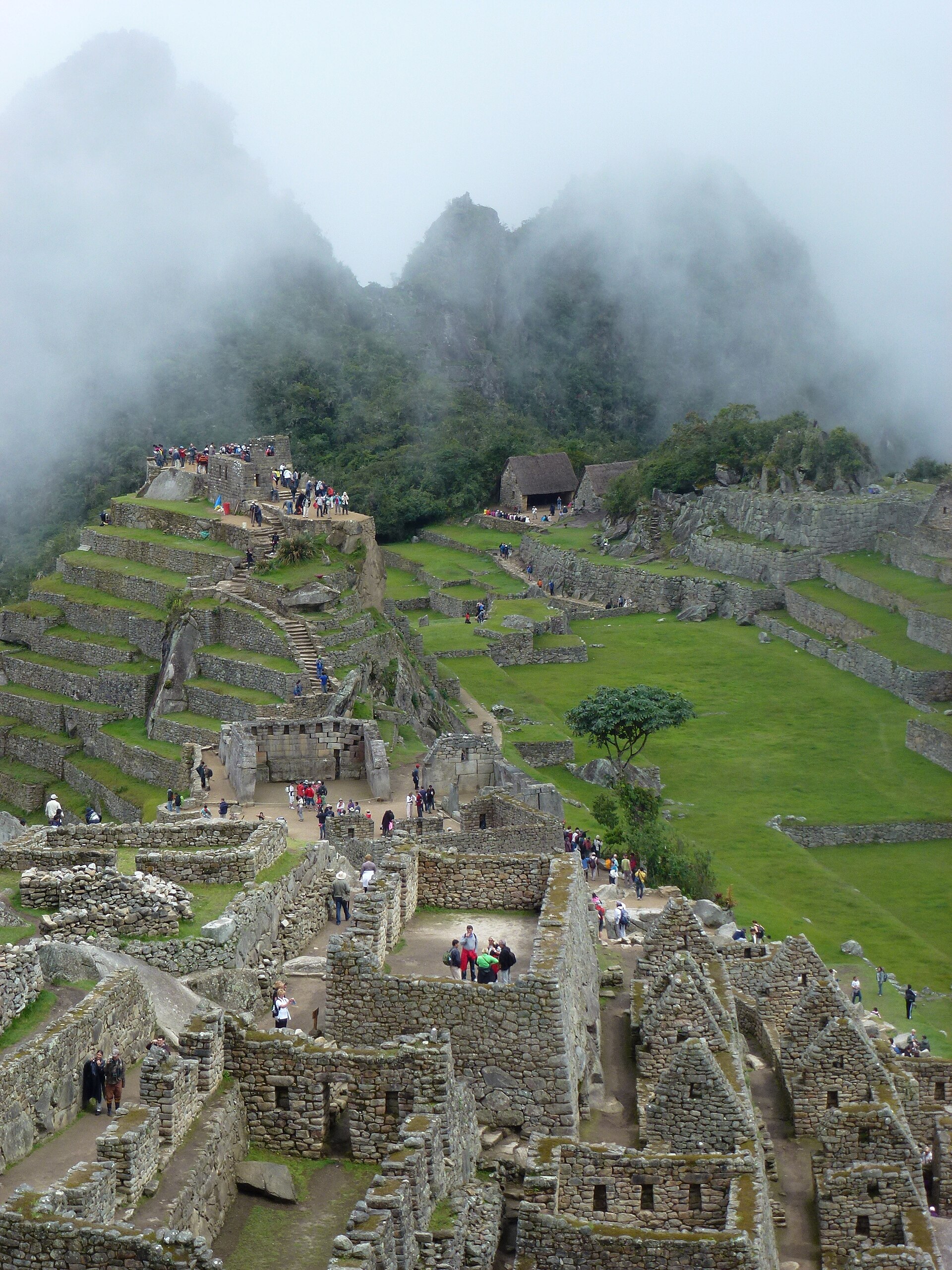
High on a narrow ridge between two Andean peaks, wrapped in cloud and ringed by plunging green gorges, stands the most famous ruin in the Americas. Machu Picchu, built by the Inca in the fifteenth century, was raised at nearly two and a half thousand metres above sea level in a setting of almost unreal drama. Its terraces, temples, and houses of finely fitted stone cling to the mountainside above the roaring Urubamba river, a masterpiece of engineering and a place of extraordinary beauty.
Remarkably, Machu Picchu was never found or destroyed by the Spanish conquerors, and it slipped from wider memory until it was brought to world attention in 1911. Precisely what it was, a royal estate, a religious sanctuary, a retreat for the Inca emperor, is still debated, but its perfection is not. More than any other site, Machu Picchu embodies the genius of the Inca, a civilization that built an empire spanning the length of the Andes and shaped the very mountains to its will.

Table of Contents
- The Inca Empire
- A Royal Estate in the Clouds
- Building on the Mountain
- The Art of Inca Stone
- The Temple of the Sun
- The Intihuatana
- A City of Districts
- Terraces and the Land
- Abandonment and Rediscovery
- Getting There
- Nearby Places
- Closing Thoughts
The Inca Empire
Machu Picchu was a creation of the Inca, whose empire, known as Tawantinsuyu, was the largest state ever to arise in the pre-Columbian Americas. From their capital at Cusco, the Inca extended their rule in little more than a century over a vast territory stretching down the Andes from present-day Colombia to Chile and Argentina.
They bound this empire together with a remarkable road network, a system of storehouses, and a genius for administration, all without writing or the wheel. Machu Picchu, built at the height of Inca power, is one of the supreme expressions of their civilization.
A Royal Estate in the Clouds
Machu Picchu is generally thought to have been built in the mid-fifteenth century, most likely as a royal estate for the emperor Pachacuti, the ruler who transformed the Inca kingdom into an empire. It would have served as a retreat and a religious centre, home to a modest resident population and to visiting nobility.
Its position, remote yet linked by Inca roads to Cusco, suited such a role. Far from being a lost city stumbled upon by its builders, it was a carefully planned settlement in a spectacular and sacred landscape.
Building on the Mountain
To construct a town on so steep a ridge was a feat of engineering. The Inca first shaped the mountain itself, building extensive retaining walls and terraces to create stable, level ground and to prevent the whole site from sliding away in the heavy Andean rains. Much of Machu Picchu’s genius lies unseen, in its foundations and drainage.
Sophisticated systems channelled water from a spring through the site in a series of fountains, and buried drains kept the terraces from becoming waterlogged. The city was engineered as a whole, from bedrock to rooftop.

The Art of Inca Stone
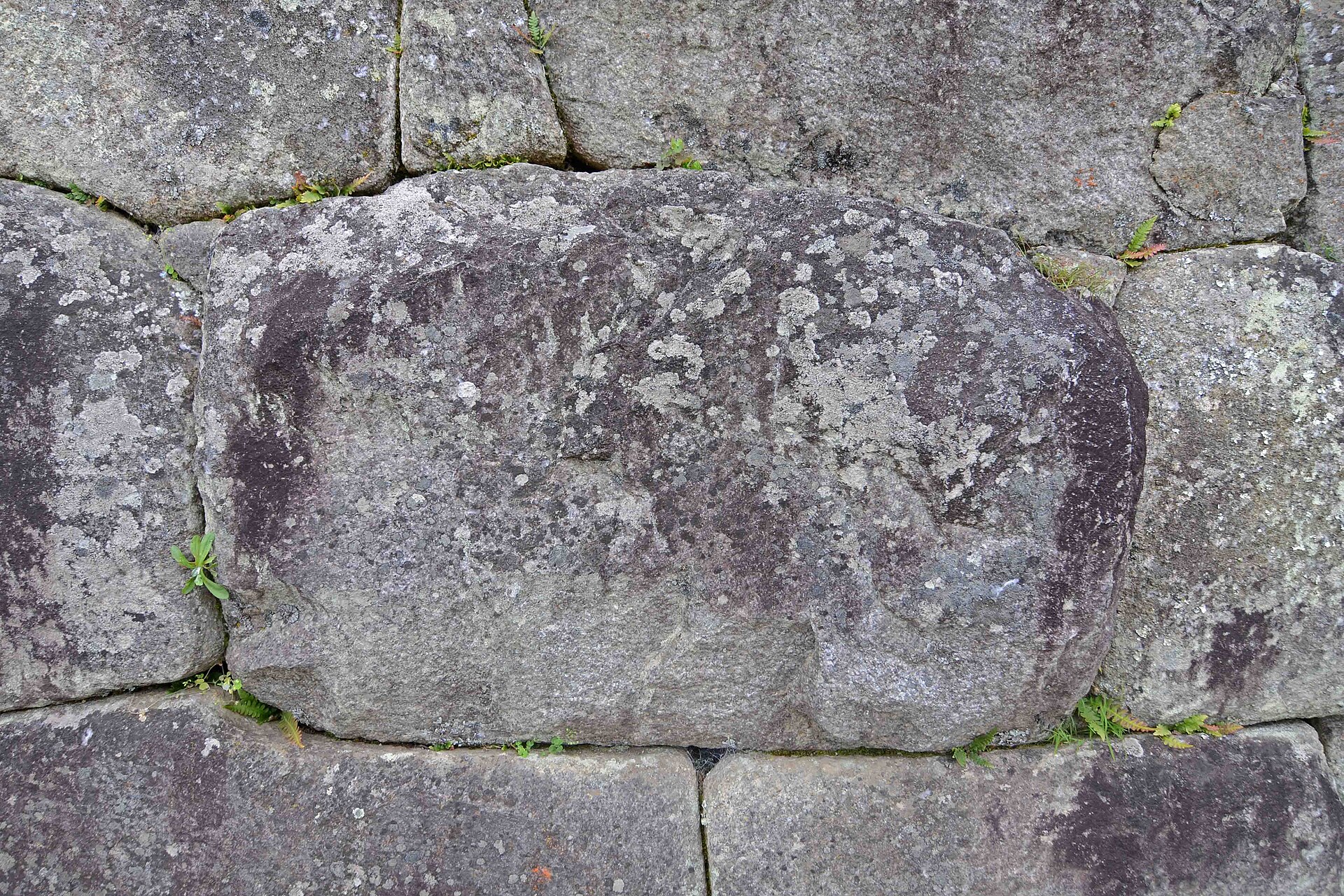
The finest Inca buildings at Machu Picchu are made of stone blocks cut and fitted together so precisely that no mortar was needed and a knife blade cannot be slipped between them. This ashlar masonry, used for the most sacred structures, is among the most admired stonework in the world.
The Inca shaped hard granite using stone tools and immense patience, working each block to fit its neighbours exactly. Such walls have withstood centuries of earthquakes, flexing and settling back into place, a testament to the builders’ skill.
The Temple of the Sun
Among the most sacred structures is the Temple of the Sun, a graceful curved building raised over a great natural boulder. Its windows are aligned so that at the solstices the rising sun strikes the rock within, marking key moments in the Inca calendar and religion.
The sun, worshipped as Inti, was central to Inca belief and to the legitimacy of the emperor, who claimed descent from it. The temple shows how astronomy, religion, and architecture were fused in Inca thought.

The Intihuatana
On a high point of the site stands the Intihuatana, a carved outcrop of rock whose name is often translated as the hitching post of the sun. Its faces and angles appear to relate to the movements of the sun, and it likely served ritual and astronomical purposes.
Such carved stones were destroyed by the Spanish at other Inca sites as objects of idolatry, but Machu Picchu escaped this fate. The Intihuatana survives as one of the most evocative of all Inca sacred objects.

A City of Districts
Machu Picchu was carefully organized into distinct zones. Agricultural terraces occupied the outer slopes, while the urban core was divided into sectors for religious, residential, and perhaps industrial functions, linked by stairways and separated from the farmland by a dry moat.
Temples and elite residences cluster in the more sacred areas, humbler dwellings elsewhere. The whole plan reflects the Inca sense of order and hierarchy, imposed even on this vertiginous mountain site.
Terraces and the Land
The terraces that ring Machu Picchu were more than farmland; they were part of the engineering that held the site together, and they may also have had ceremonial importance. Built up with layers of stone, gravel, and soil, they created cultivable land and controlled erosion on the steep slopes.
On these terraces the Inca could grow crops such as maize and potatoes, though the estate likely depended too on food brought from elsewhere. Today llamas graze among them, echoing the herds the Inca once kept.

Abandonment and Rediscovery
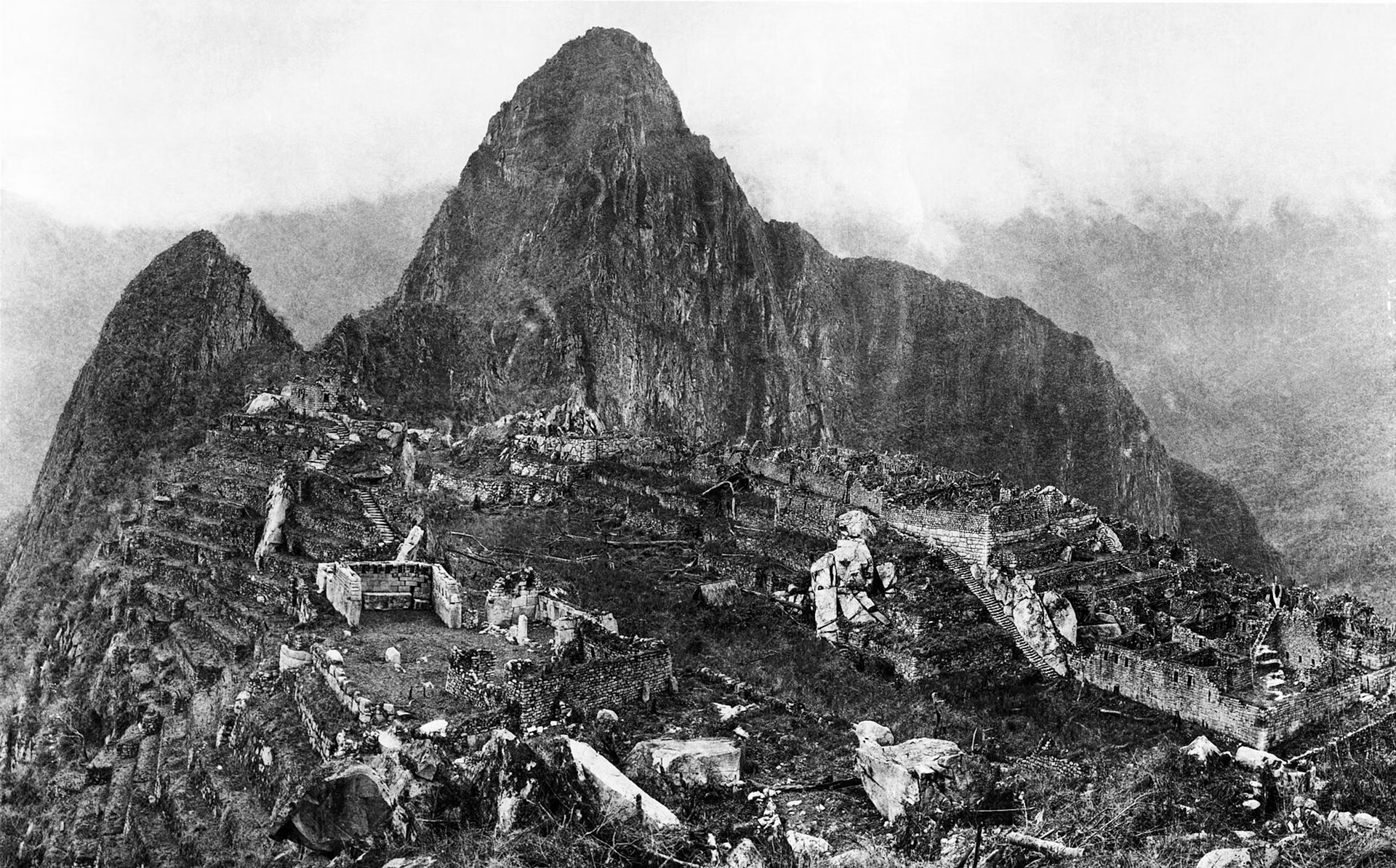
Machu Picchu was abandoned around the time of the Spanish conquest in the sixteenth century, probably as the Inca world was thrown into turmoil. Never located by the Spanish, it remained known only to local people until the American explorer Hiram Bingham was led to it in 1911 and brought it to international attention.
Cleared, studied, and eventually protected, Machu Picchu has become a symbol of Peru and one of the most visited sites on earth. Its fame now brings challenges of conservation, as authorities work to protect the fragile ruins from the pressure of visitors.

Getting There
Machu Picchu lies in the Andes of southern Peru, reached from the city of Cusco. Most visitors travel by train through the Urubamba valley to the town of Aguas Calientes below the ruins, then ascend by bus or on foot; others arrive along the famous multi-day Inca Trail. Entry is by timed ticket, and altitude should be respected.
The site stands at approximately -13.1631, -72.5450. You can open the exact location on Google Maps for directions to Machu Picchu.
Nearby Places
Closing Thoughts
Machu Picchu is more than a beautiful ruin; it is the Inca vision made stone. In its fitted walls, its terraces, and its temples aligned to the sun, one reads a civilization that understood its mountains intimately and built in harmony with them.
That it survived the conquest untouched, to be revealed to the world centuries later, has given it an aura of mystery it has never lost. Suspended between earth and sky in the heart of the Andes, Machu Picchu remains one of the most sublime achievements of humankind.
You May Like
Mafra, the Palace a King Built From a Vow


2 thoughts on “Machu Picchu: The Inca City in the Clouds”