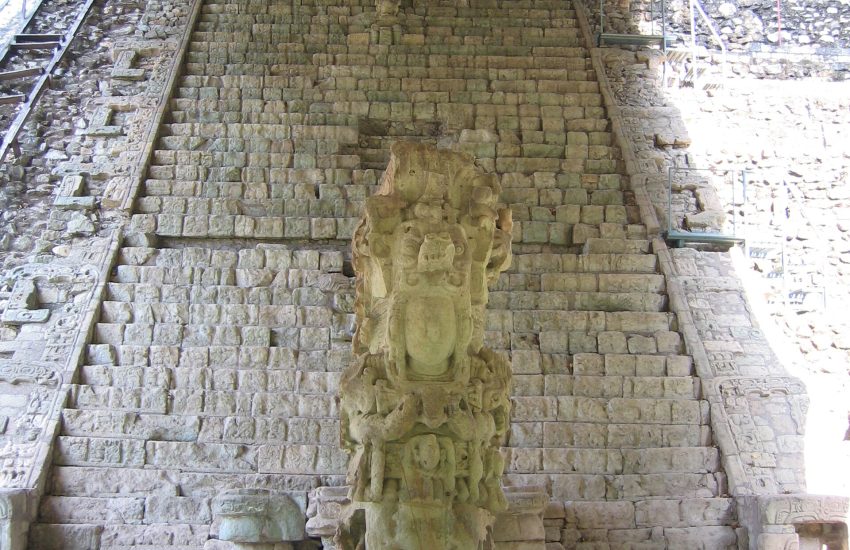
On the windswept high plain of Bolivia, nearly four thousand metres above sea level and close to the shore of Lake Titicaca, stand the ruins of Tiwanaku. Here, in one of the harshest inhabited environments on earth, a great civilization arose that dominated the southern Andes for centuries before the Inca. Its monumental gateways, sunken temples, standing stone figures, and precisely cut blocks are the legacy of a culture that mastered life at extreme altitude and built a religious capital that drew pilgrims from across the region.
Tiwanaku reached its height in the second half of the first millennium, spreading its influence and colonies over a wide swathe of the Andes. Its art and its gods, above all the staff-bearing deity carved on the famous Gate of the Sun, would echo through later Andean civilizations, including the Inca, who revered its ruins and wove them into their own creation myths. Silent and roofless on the empty altiplano, Tiwanaku remains one of the most impressive and enigmatic of all pre-Columbian cities.
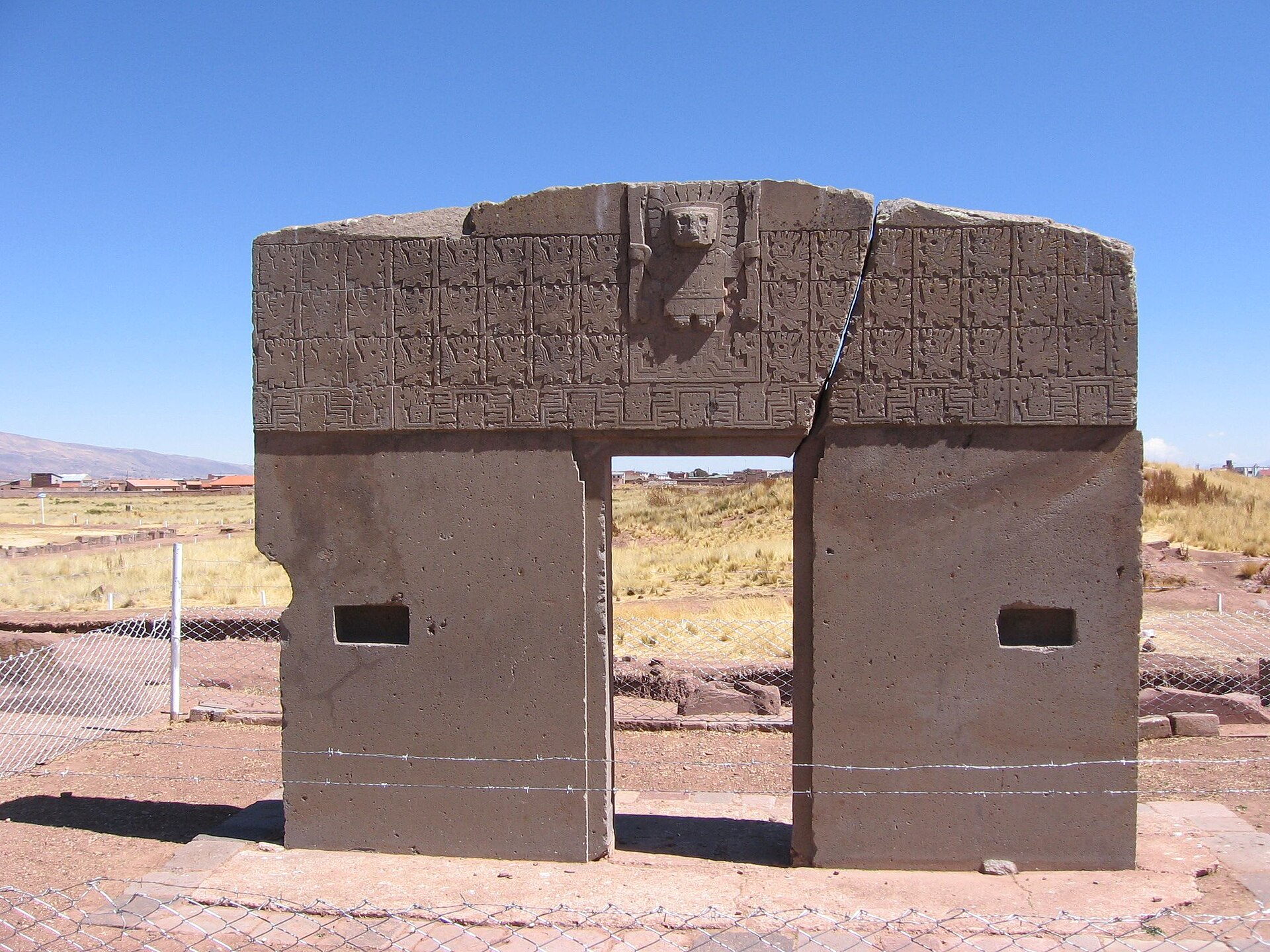
Table of Contents
- A Civilization on the Altiplano
- The Rise of a Capital
- The Akapana
- The Kalasasaya
- The Gate of the Sun
- The Staff God
- The Sunken Temple
- Pumapunku
- Collapse and Inca Memory
- Getting There
- Nearby Places
- Closing Thoughts
A Civilization on the Altiplano
Tiwanaku lies on the altiplano, the high plateau of the central Andes, in a landscape of thin air, cold nights, and sweeping horizons near Lake Titicaca. That a major civilization could flourish here is a testament to human ingenuity, for the environment is inhospitable to conventional agriculture.
The people of Tiwanaku overcame this through sophisticated farming techniques, above all raised fields separated by canals of water, which moderated temperature and guarded against frost. This productive system supported a large population and underwrote the rise of the city.

The Rise of a Capital
Tiwanaku grew from a modest settlement into a major ceremonial and political centre over the first several centuries CE, reaching its apogee between roughly 500 and 1000. At its height it was the capital of a state or influence-sphere extending across parts of present-day Bolivia, Peru, and Chile.
Rather than ruling through outright military conquest alone, Tiwanaku seems to have spread largely through religion, trade, and the prestige of its cult, establishing colonies and drawing distant peoples into its orbit. It was as much a holy city as an imperial capital.

The Akapana
The largest structure at Tiwanaku is the Akapana, a great stepped platform mound that once dominated the site. Built of earth faced with stone, it rose in terraces and was topped by structures now largely lost, and it incorporated a sophisticated internal drainage system channelling water through the mound.
The Akapana may have been conceived as a sacred mountain, a man-made peak in a landscape where mountains were holy. Though much of its stone was later robbed, its bulk still conveys the monumental ambition of Tiwanaku’s builders.

The Kalasasaya
Beside the Akapana lies the Kalasasaya, a large rectangular enclosure defined by massive upright stones and entered by a monumental stairway. Within this ceremonial court stand carved monoliths, and its walls are aligned to mark the movements of the sun through the year.
The Kalasasaya functioned as a great open temple, a stage for the rituals at the heart of Tiwanaku religion. Its precise alignments show the close link between astronomy, calendar, and ceremony in Andean thought.
The Gate of the Sun
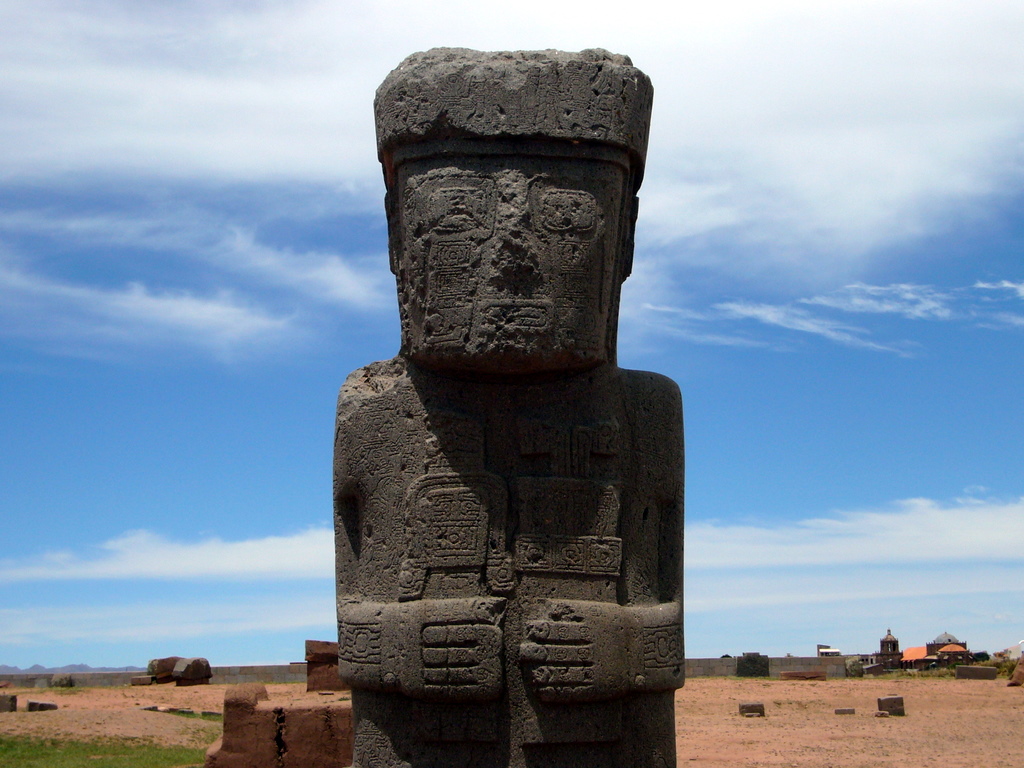
Tiwanaku’s most famous monument is the Gate of the Sun, a doorway carved from a single great block of stone. Across its lintel runs a frieze centred on a front-facing deity holding two staffs, flanked by rows of winged attendants, often called the Staff God.
This figure is one of the most important images in Andean art, and versions of it recur across the region and across the centuries, including in later Inca religion. The Gate of the Sun encapsulates the theology that Tiwanaku projected across the Andes.
The Staff God
The central figure of the Gate of the Sun, weeping or radiating power and grasping staffs, is generally identified with a creator or sky deity, sometimes linked to the later Inca god Viracocha. The image expresses the cosmic authority claimed by Tiwanaku’s cult.
Its wide diffusion, appearing on textiles, pottery, and stone far beyond Tiwanaku itself, is one of the clearest signs of the reach of its religion. The Staff God was a symbol around which a whole Andean world was, for a time, oriented.
The Sunken Temple
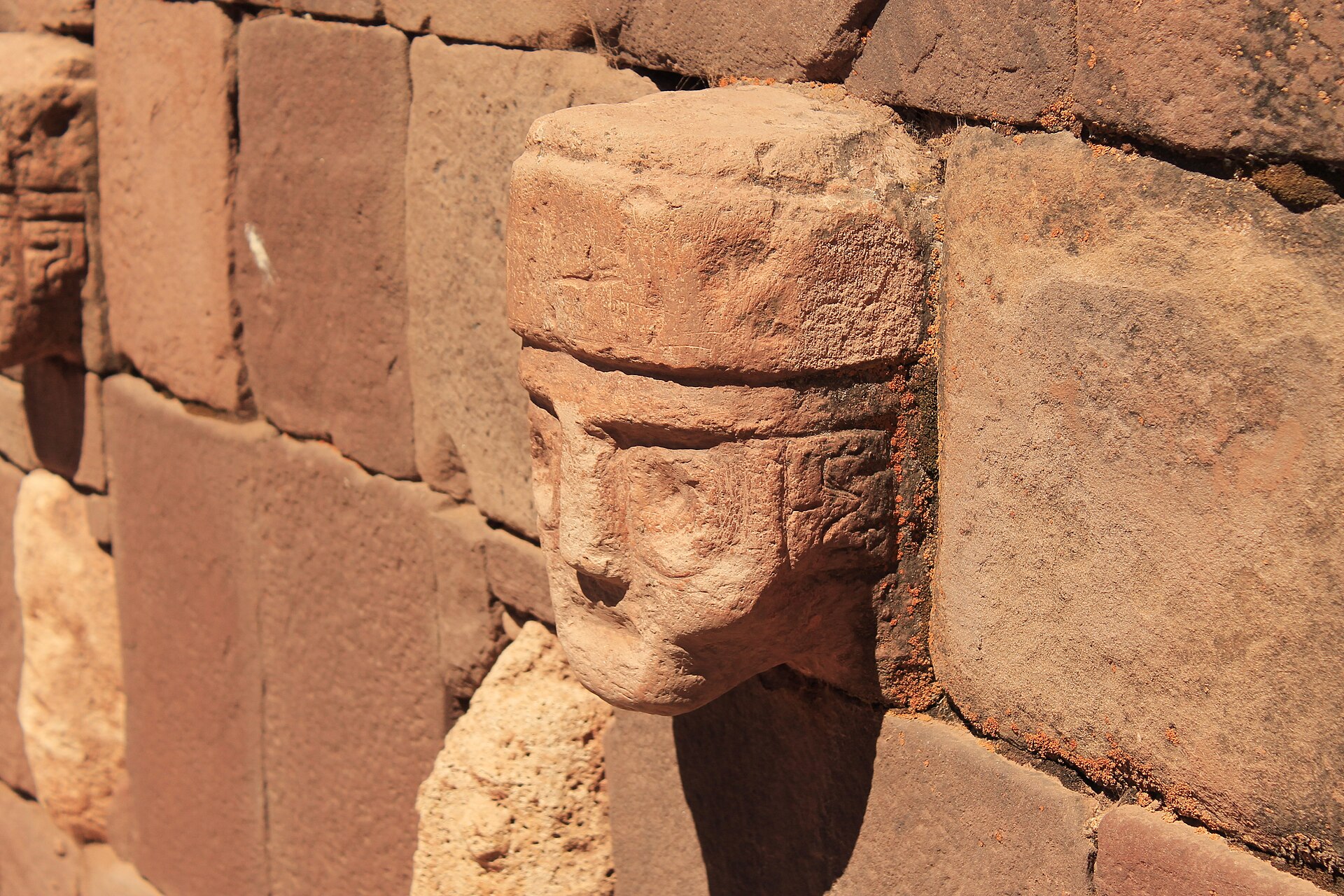
Near the Kalasasaya lies the semi-subterranean temple, a rectangular court sunk below ground level and reached by a stairway. Its most striking feature is the array of carved stone heads projecting from its walls, dozens of faces in varied styles gazing out over the space.
These tenoned heads may represent different peoples, ancestors, or trophy heads, and their diversity has prompted much speculation. The sunken temple is among the most atmospheric and intriguing structures at Tiwanaku.
Pumapunku
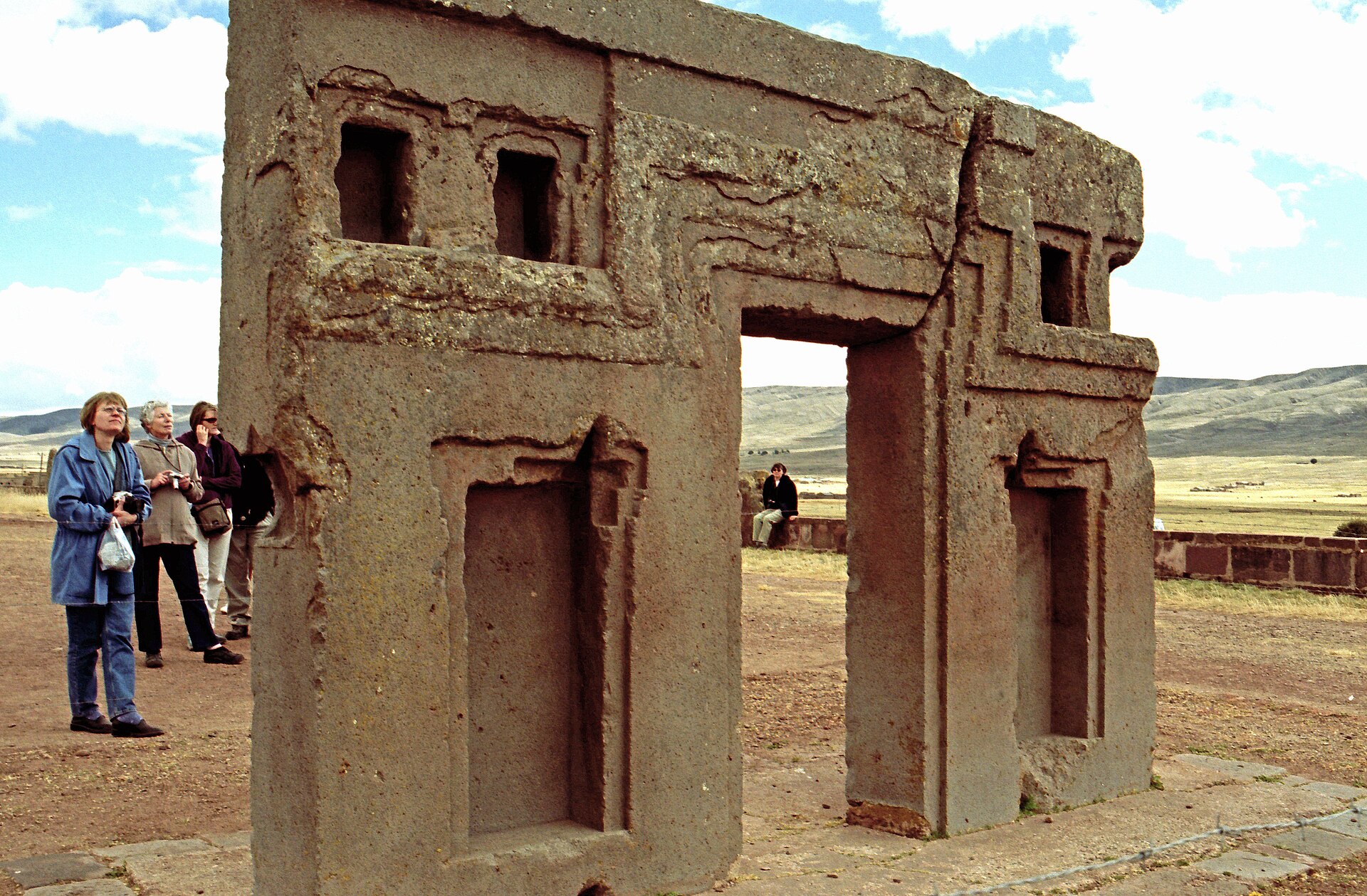
A short distance away stands Pumapunku, another great temple platform, famous for the extraordinary precision of its stonework. Here enormous blocks of andesite and sandstone were cut with flat faces, sharp right angles, and fine grooves, then fitted together with remarkable exactness.
The sophistication of Pumapunku’s masonry, achieved with stone and bronze tools, has amazed observers and, unfortunately, inspired baseless fringe theories. In reality it reflects the genuine and hard-won skill of Tiwanaku’s craftsmen, working stone at the limits of pre-industrial technique.

Collapse and Inca Memory
Around 1000 to 1100, Tiwanaku declined and its state disintegrated, most likely as a prolonged drought undermined the agricultural system on which it depended. The raised fields were abandoned, the city emptied, and its monuments fell silent.
Yet Tiwanaku was never forgotten. When the Inca rose centuries later, they revered its ruins as the place where their creator god had made the sun, moon, and first people. Tiwanaku thus became woven into the mythology of the greatest of all Andean empires.

Getting There
Tiwanaku lies on the Bolivian altiplano, roughly seventy kilometres west of the city of La Paz and not far from Lake Titicaca, reached by road in a couple of hours. The site sits at very high altitude, so visitors should be acclimatized and prepared for strong sun, cold wind, and thin air. Two museums on site display many of its finest monuments.
The site stands at approximately -16.5547, -68.6733. You can open the exact location on Google Maps for directions to the ruins of Tiwanaku.
Nearby Places
Closing Thoughts
Tiwanaku is proof that the high, cold altiplano could cradle one of the great civilizations of the ancient Americas. Its raised fields fed a city of temples and monoliths, and its Staff God spread a religion across the southern Andes centuries before the Inca.
That the Inca themselves looked to its ruins as the birthplace of the sun is the surest measure of its stature. Roofless beneath the vast Andean sky, Tiwanaku endures as a monument to human achievement at the very edge of the habitable world.
You May Like