In a lush green valley in the far west of Honduras, near the border with Guatemala, lie the ruins of a Maya city renowned above all for the beauty of its art. Copán was one of the great capitals of the Classic Maya world, and though smaller than Tikal, it surpassed nearly every rival in the quality of its sculpture. Its stelae bear portraits of kings carved almost fully in the round, and a great stairway rises covered from top to bottom in hieroglyphs, the longest known text of the ancient Americas.
For four centuries Copán was ruled by a single dynasty of sixteen kings, whose deeds are recorded on its monuments in remarkable detail. Standing at the southeastern edge of the Maya region, Copán was a frontier capital where Maya civilization met other cultures, and its history, of rise, glory, crisis, and decline, has been reconstructed by archaeologists in extraordinary depth. Its carved kings and its stairway of history make it one of the most eloquent of all Maya cities.

Table of Contents
- A Maya Capital on the Frontier
- The Dynasty of Sixteen Kings
- Altar Q
- The Sculptors’ Masterpieces
- Eighteen Rabbit
- The Hieroglyphic Stairway
- The Ball Court
- The Acropolis
- Crisis and Decline
- Getting There
- Nearby Places
- Closing Thoughts
A Maya Capital on the Frontier
Copán lay at the southeastern edge of the Maya world, in a fertile valley that had been settled long before the Classic period. Its location on the frontier, where Maya civilization met the peoples of Central America beyond, gave it a distinctive character and a role as a gateway city.
During the Classic period Copán grew into a powerful kingdom controlling its valley and surrounding region. At its height it was a densely populated centre with a large rural hinterland, one of the principal capitals of the southern Maya lowlands.

The Dynasty of Sixteen Kings
Copán’s history is dominated by a single royal line, founded in 426 CE by a king named K’inich Yax K’uk’ Mo’, who arrived from elsewhere in the Maya world and established a dynasty that would rule for four hundred years. Sixteen kings in all sat on the throne of Copán.
Their reigns are recorded in unusual detail on the city’s monuments, allowing archaeologists to trace the dynasty’s fortunes reign by reign. Few Maya kingdoms have left so complete a dynastic record, making Copán a key to understanding Maya kingship.

Altar Q
The most famous single monument of the dynasty is Altar Q, a square stone block carved on all four sides with the sixteen kings of Copán seated in succession. The founder is shown handing the emblem of power to the sixteenth king, who commissioned the altar, binding the whole dynasty into a single image of legitimate succession.
Altar Q is one of the great documents of Maya history in stone, a royal genealogy made visible. It captures the Maya preoccupation with dynasty, ancestry, and the unbroken transmission of divine kingship.

The Sculptors’ Masterpieces
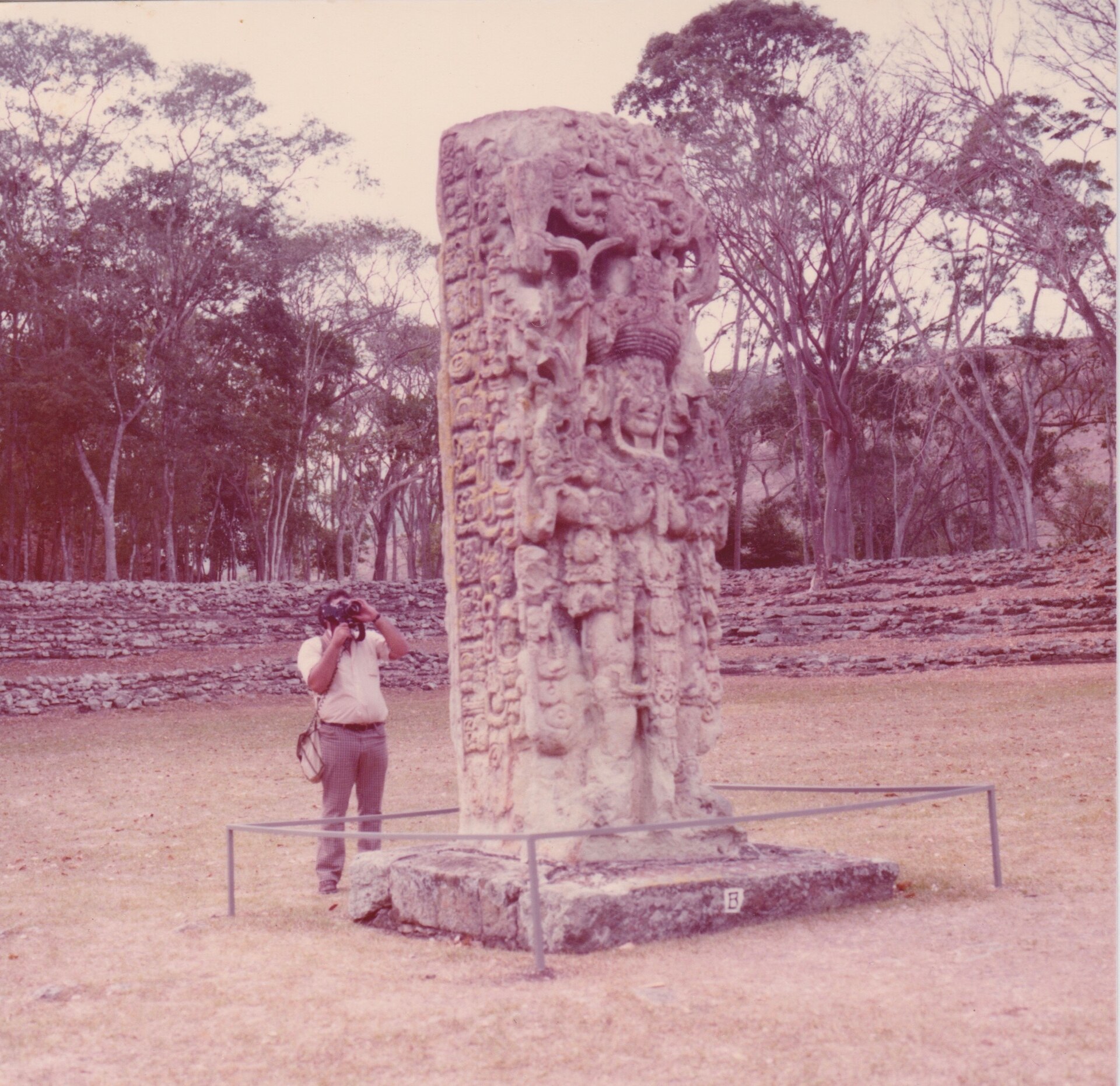
Copán is celebrated above all for its sculpture. Its artists carved stelae in a uniquely deep, almost three-dimensional style, so that the portraits of kings stand out dramatically from the stone, wreathed in elaborate headdresses, costumes, and glyphs. No other Maya city carved quite like Copán.
These monuments, many raised by the ambitious king known as Eighteen Rabbit, fill the Great Plaza. They represent a high point of Maya art, combining royal portraiture, religious symbolism, and hieroglyphic text in works of great richness and skill.
Eighteen Rabbit
The thirteenth king, whose name is often rendered Eighteen Rabbit, presided over Copán’s artistic golden age in the early eighth century, commissioning many of its finest stelae and buildings. Under him the city reached a peak of cultural brilliance.
His reign ended in disaster: he was captured and beheaded by the ruler of the nearby subordinate city of Quiriguá, a stunning reversal that shook Copán. The event shows how quickly fortunes could change in the competitive world of Maya politics.

The Hieroglyphic Stairway
Copán’s most extraordinary monument is the Hieroglyphic Stairway, a broad flight of stone steps ascending a temple, each riser carved with hieroglyphs. Together its steps carry the longest known Maya text, several thousand glyphs recounting the history of the dynasty.
Commissioned in part as an assertion of dynastic pride after the humiliation of Eighteen Rabbit’s death, the stairway is a monument of history and propaganda combined. Though the steps were disordered in antiquity and in early excavation, it remains an unparalleled treasure of Maya writing.
The Ball Court
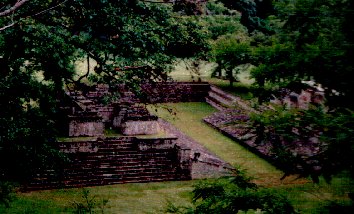
Copán possesses one of the most beautiful ball courts in the Maya world, its sloping playing surfaces flanked by buildings and once adorned with sculptures of macaws. Rebuilt several times, it was a central feature of the ceremonial core of the city.
As elsewhere, the ball game at Copán was bound up with religion and cosmic symbolism. The elegance of the court reflects the artistic sensibility that pervades the whole site.
The Acropolis
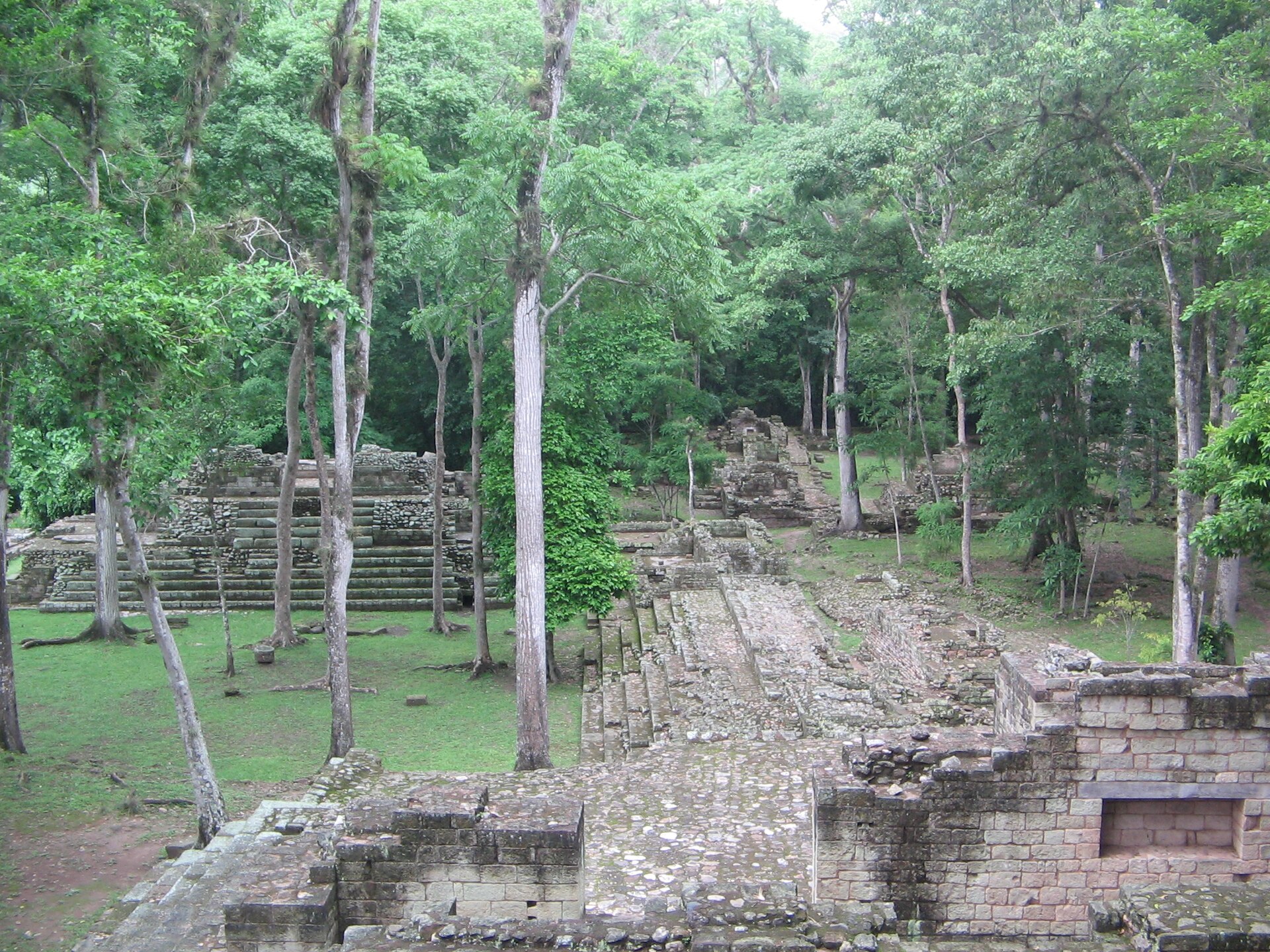
Rising above the plazas is the Acropolis, a great raised complex of temples, courtyards, and royal buildings accumulated over centuries. Beneath its later structures, archaeologists tunnelling into the mass discovered earlier buildings, including a beautifully preserved temple painted red, known as Rosalila.
Within the Acropolis were also royal tombs, including one believed to be that of the dynastic founder. This layered structure, like a smaller version of Tikal’s acropolis, is effectively a stratified record of Copán’s ruling house.
Crisis and Decline
In the later eighth and ninth centuries Copán entered a period of crisis. The population had grown large, and evidence suggests deforestation, soil exhaustion, and strain on resources in the valley. The last monuments were raised, and then the dynasty and the city’s political order collapsed.
Study of the valley has made Copán a key case in understanding the wider Classic Maya collapse, showing how environmental pressures and political failure could combine. The city was gradually abandoned and reclaimed by the forest.

Getting There
Copán lies in western Honduras, close to the town of Copán Ruinas, near the Guatemalan border. It is often visited from Guatemala, a few hours by road from Guatemala City or Antigua, and there is a small airport and good bus connections. The site includes an excellent sculpture museum housing many original monuments.
The site stands at approximately 14.8380, -89.1420. You can open the exact location on Google Maps for directions to the ruins of Copán.
Nearby Places
Closing Thoughts
Copán is the Maya as historians and artists: a city that recorded its kings in the longest of all their inscriptions and portrayed them in the most vivid of their sculptures. Its stairway and stelae make the deeds of a four-hundred-year dynasty legible in stone.
And in the crisis that overtook its crowded valley, Copán offers a window onto the collapse that ended the Classic Maya world. Both in its glory and in its decline, it remains one of the most instructive and beautiful of all Maya cities.
You May Like
Tiwanaku: The High Andean Capital of the Gate of the Sun


