Above the city of Oaxaca in southern Mexico, on a mountain ridge that was artificially levelled to make room for it, spreads the ancient capital of the Zapotec people. Monte Albán commands a breathtaking view over three converging valleys, and for well over a thousand years it was the political and religious heart of one of Mesoamerica’s most important civilizations. Its Grand Plaza, temples, ball court, and carved monuments make it one of the most impressive archaeological sites in the Americas.
Founded around 500 BCE, Monte Albán rose to dominate the Valley of Oaxaca and beyond, developing one of the earliest writing and calendar systems in Mesoamerica. Its mysterious carved Danzantes, its arrow-shaped observatory, and its richly furnished tombs testify to a sophisticated society with its own distinctive art and script. Long after the Zapotec capital declined, the site was reused by the Mixtec, who left in one of its tombs a treasure of gold that ranks among the greatest finds in Mexican archaeology.
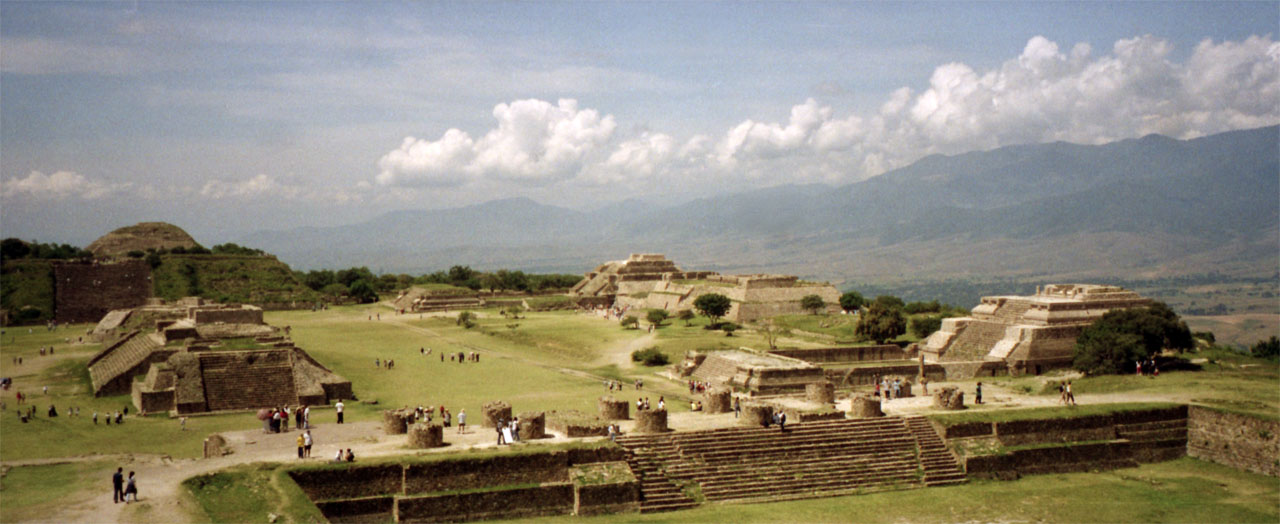
Table of Contents
- The Zapotec Capital
- Levelling a Mountain
- The Danzantes
- Writing and the Calendar
- Building J and the Sky
- The Ball Court
- Temples and Palaces
- The Treasure of Tomb 7
- Decline and Legacy
- Getting There
- Nearby Places
- Closing Thoughts
The Zapotec Capital
Monte Albán was founded around 500 BCE by the Zapotec, apparently as a deliberate act of political union among communities of the Valley of Oaxaca. Its position on a defensible height at the meeting point of the valley’s three arms gave it a commanding, neutral location from which to rule.
Over the following centuries it grew into a true city, its population reaching into the tens of thousands. From this mountaintop the Zapotec state extended its influence over much of Oaxaca, making Monte Albán one of the great capitals of ancient Mesoamerica.
Levelling a Mountain
To build their capital, the Zapotec undertook a staggering feat of terraforming. They flattened the top of the ridge, cutting into bedrock and building up terraces to create the vast level expanse of the Grand Plaza and the platforms around it. The mountain itself was reshaped into a monumental stage.
This artificial plaza, hundreds of metres long, is bordered by pyramids, palaces, and temples arranged with careful symmetry. Standing in it, ringed by monuments and open sky, one senses the ambition of the people who moved a mountaintop to build it.

The Danzantes
Among the oldest and most enigmatic monuments at Monte Albán are the Danzantes, or dancers, a series of stone slabs carved with figures in strange, contorted postures. Once thought to represent dancers, they are now generally interpreted as slain or sacrificed captives, some shown with closed eyes and signs of mutilation.
Accompanied by early glyphs, the Danzantes are among the first monumental sculptures and inscriptions in Mesoamerica. They proclaimed the martial power of the young Zapotec state, celebrating its dominance over defeated enemies.

Writing and the Calendar
Monte Albán was a centre of one of the earliest writing systems in the Americas. Its monuments bear glyphs recording names, dates, and events in a Zapotec script, tied to a calendar system shared in various forms across Mesoamerica.
Though this early script is only partly understood, it places the Zapotec among the pioneers of Mesoamerican literacy. The ability to record dates and conquests in stone was a powerful tool of statecraft, used to assert the legitimacy and reach of Monte Albán’s rulers.

Building J and the Sky
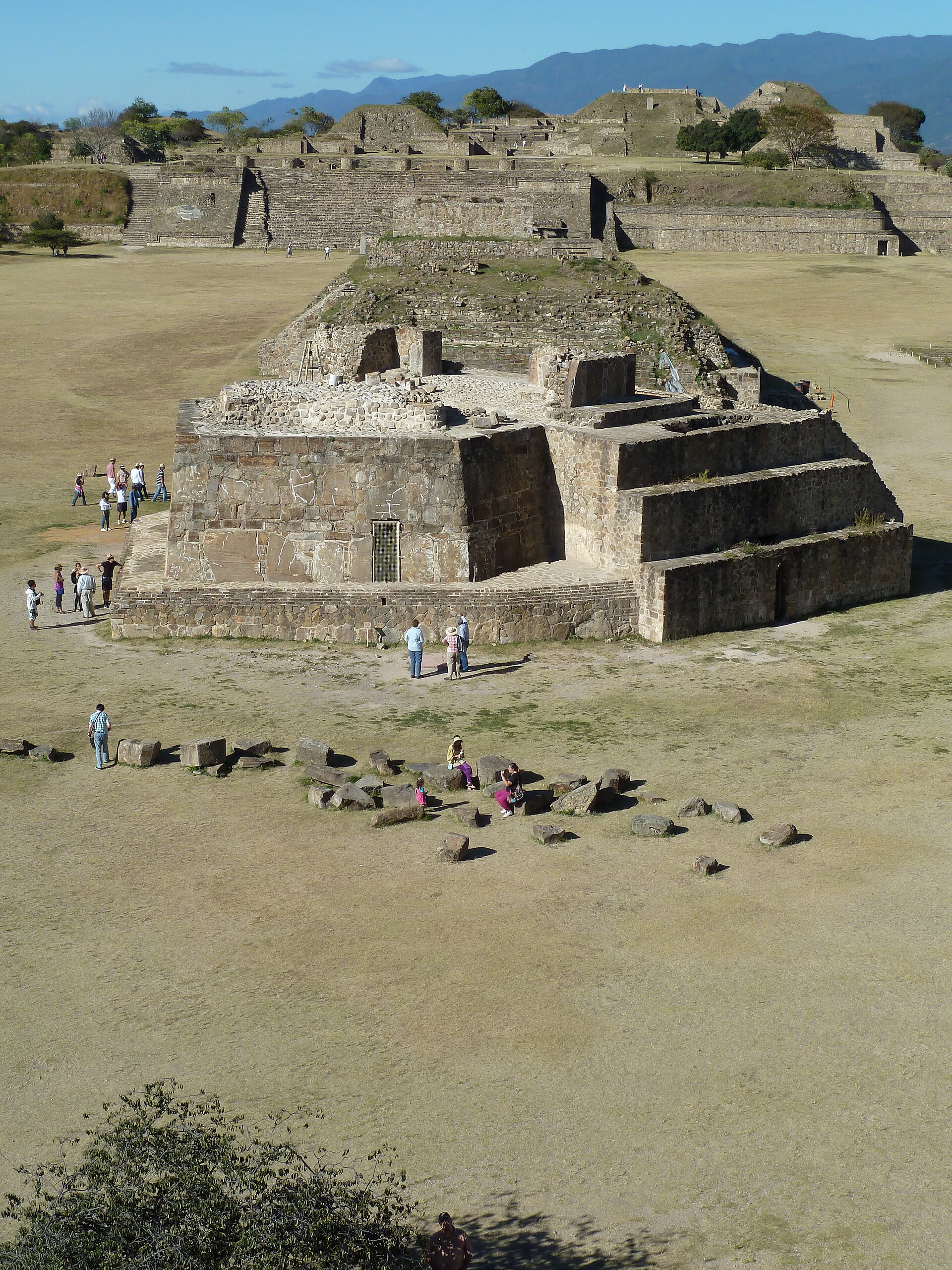
In the Grand Plaza stands one of the most unusual structures in Mesoamerica: Building J, an arrowhead-shaped edifice set at an odd angle to everything around it and honeycombed with narrow passages. Its orientation is thought to relate to astronomical observation, and it is often called the observatory.
Carved slabs on the building appear to list conquered places, combining astronomy with propaganda. Building J reflects the Zapotec fascination with the heavens and their integration of celestial knowledge into the design of their sacred city.
The Ball Court
Like other Mesoamerican centres, Monte Albán has a ball court, set just off the Grand Plaza. Its I-shaped playing area, flanked by sloping stone surfaces rather than vertical walls, is a fine example of the Oaxacan form of the ubiquitous Mesoamerican ball game.
The game held ritual as well as recreational meaning throughout the region, linked to cosmic and religious ideas. At Monte Albán it was one element of the ceremonial life that unfolded across the mountaintop capital.

Temples and Palaces
Around the Grand Plaza rise numerous temple platforms and residential complexes, including elite palaces where the rulers and nobility of Monte Albán lived. The arrangement of these structures reflects a carefully planned sacred and political landscape.
Beneath and among them, the Zapotec built elaborate tombs for their dead, decorated with murals and furnished with offerings. The city was a place for the living, the ruling, and the ancestors alike, all present on the levelled summit.

The Treasure of Tomb 7
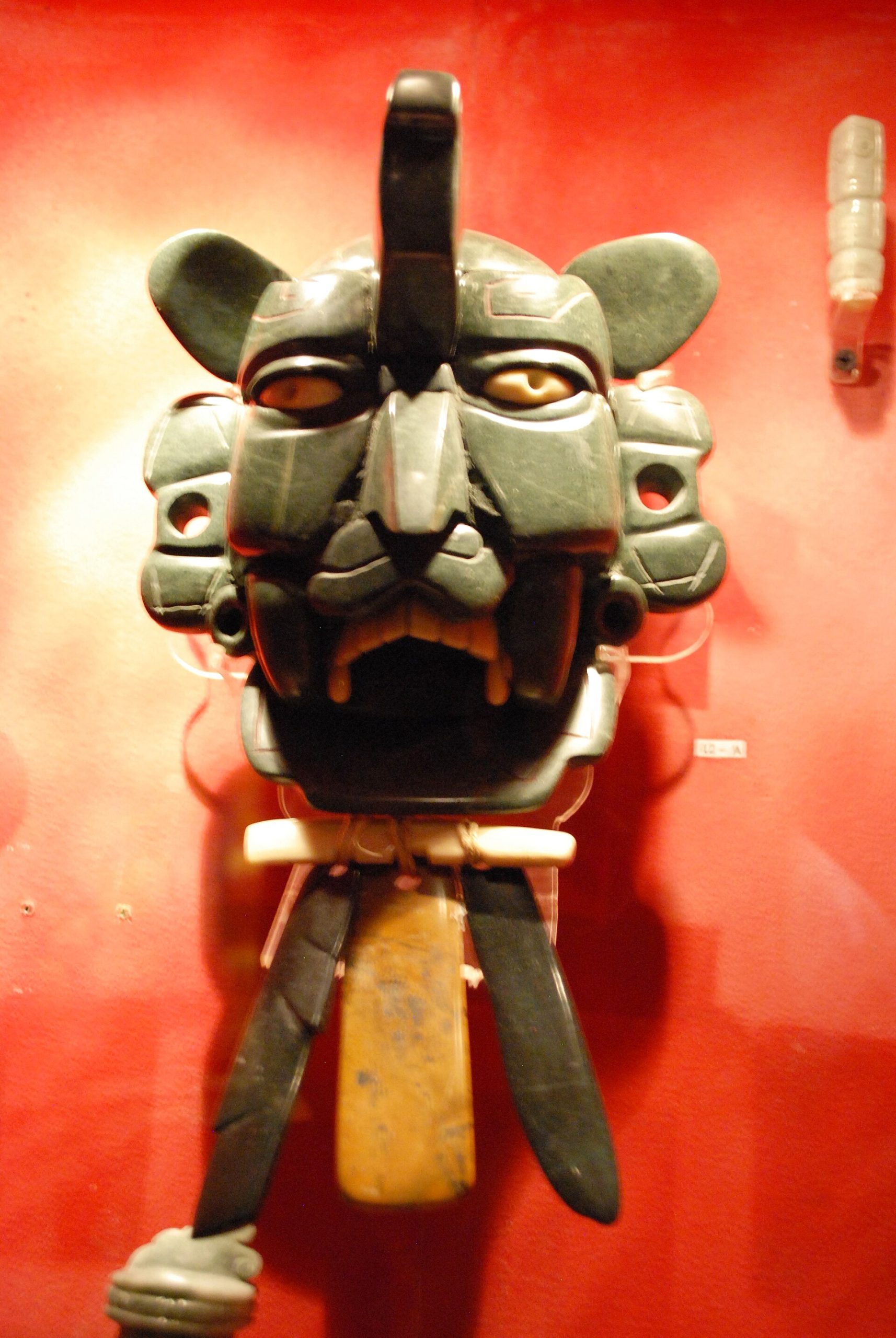
Centuries after the Zapotec capital declined, the Mixtec people reused some of Monte Albán’s tombs. In one, known as Tomb 7, archaeologists in 1932 discovered an astonishing hoard: hundreds of objects of gold, silver, jade, turquoise, and carved bone, placed with a group of burials.
The treasure of Tomb 7 is among the richest ever found in the Americas, a dazzling display of Mixtec craftsmanship in precious metals. Its discovery underlined how Monte Albán remained a sacred and prestigious place long after its Zapotec heyday.
Decline and Legacy
Around 700 to 800 CE, Monte Albán’s power waned. The great city was largely abandoned as a political capital, and the Zapotec population dispersed among smaller centres in the valley below, even as Zapotec culture continued to flourish there.
The mountaintop, however, was never wholly forgotten, remaining a place of burial and reverence. Today it is a World Heritage Site alongside the historic city of Oaxaca, and one of the most visited ancient sites in Mexico.

Getting There
Monte Albán sits on a hilltop just a few kilometres from the centre of the city of Oaxaca in southern Mexico, reached by a short drive or bus ride up a winding road. Oaxaca itself is served by an airport and by roads from Mexico City. The exposed hilltop offers little shade, so a hat, water, and an early start are wise.
The site stands at approximately 17.0439, -96.7678. You can open the exact location on Google Maps for directions to the ruins of Monte Albán.
Nearby Places
Closing Thoughts
Monte Albán is the Zapotec achievement made monumental: a whole mountaintop reshaped into a capital, crowned with temples and inscribed with one of the earliest scripts of the Americas. For a thousand years it ruled the valleys of Oaxaca from its commanding height.
With its carved Danzantes, its arrow-shaped observatory, and the golden treasure of its later tombs, it gathers the long history of Oaxaca into a single spectacular site. Monte Albán remains one of the great capitals of the ancient Mesoamerican world.
You May Like