On a high, dry plateau on the southern coast of Peru, one of the most enigmatic works of the ancient world lies etched into the desert floor. Across kilometres of stony pampa, the Nazca people traced hundreds of enormous figures and thousands of lines: a hummingbird, a monkey with a curling tail, a spider, birds with impossible necks, alongside dead-straight lines and geometric shapes running for miles. So vast are these designs that their forms are only fully legible from the air, which is part of what has made them so famous and so mysterious.
The Nazca Lines were created over centuries, roughly two thousand years ago, by a culture that flourished in one of the driest places on earth. The astonishing preservation of the drawings is a gift of that aridity: with almost no rain or wind to disturb them, marks scratched into the desert have survived for millennia. Why the Nazca made them, and how a people without flight designed images meant to be seen from above, are questions that continue to fascinate the world.

Table of Contents
- The Nazca Culture
- Drawings on the Desert
- The Great Animal Figures
- Monkey, Spider, and Condor
- Lines and Geometry
- Why Were They Made?
- Seen from Above
- Rediscovery and Study
- A Fragile Wonder
- Getting There
- Nearby Places
- Closing Thoughts
The Nazca Culture
The lines are the work of the Nazca, a people who flourished on the southern coast of Peru from around 100 BCE to 800 CE, before the rise of the Inca. In their harsh desert environment they developed sophisticated irrigation, including underground aqueducts that still function, and produced brilliantly painted pottery and fine textiles.
The Nazca were a complex society with important ceremonial centres, the greatest of them at Cahuachi. It was within this cultural world, with its distinctive art and religion, that the great desert drawings were made.

Drawings on the Desert
The geoglyphs were made using a simple but effective technique. The desert surface is covered with dark, iron-stained pebbles, beneath which lies lighter soil. By removing the dark stones and piling them along the edges, the Nazca exposed the pale ground below, creating lines that contrast sharply with the surrounding pampa.
Because the desert is so still and dry, these shallow marks have endured for two thousand years. The same conditions that make the region nearly lifeless have preserved one of humanity’s most remarkable artistic achievements.
The Great Animal Figures
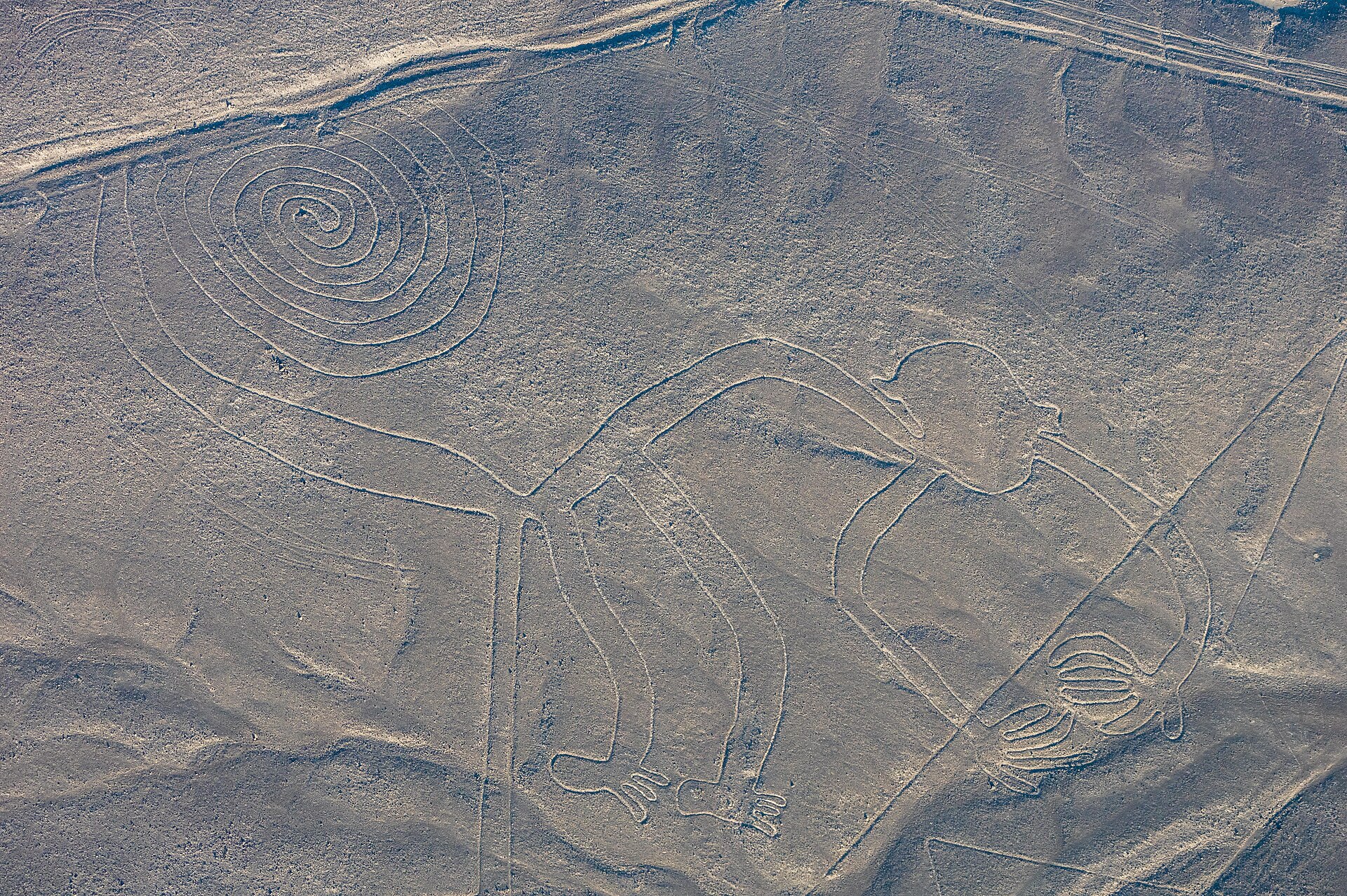
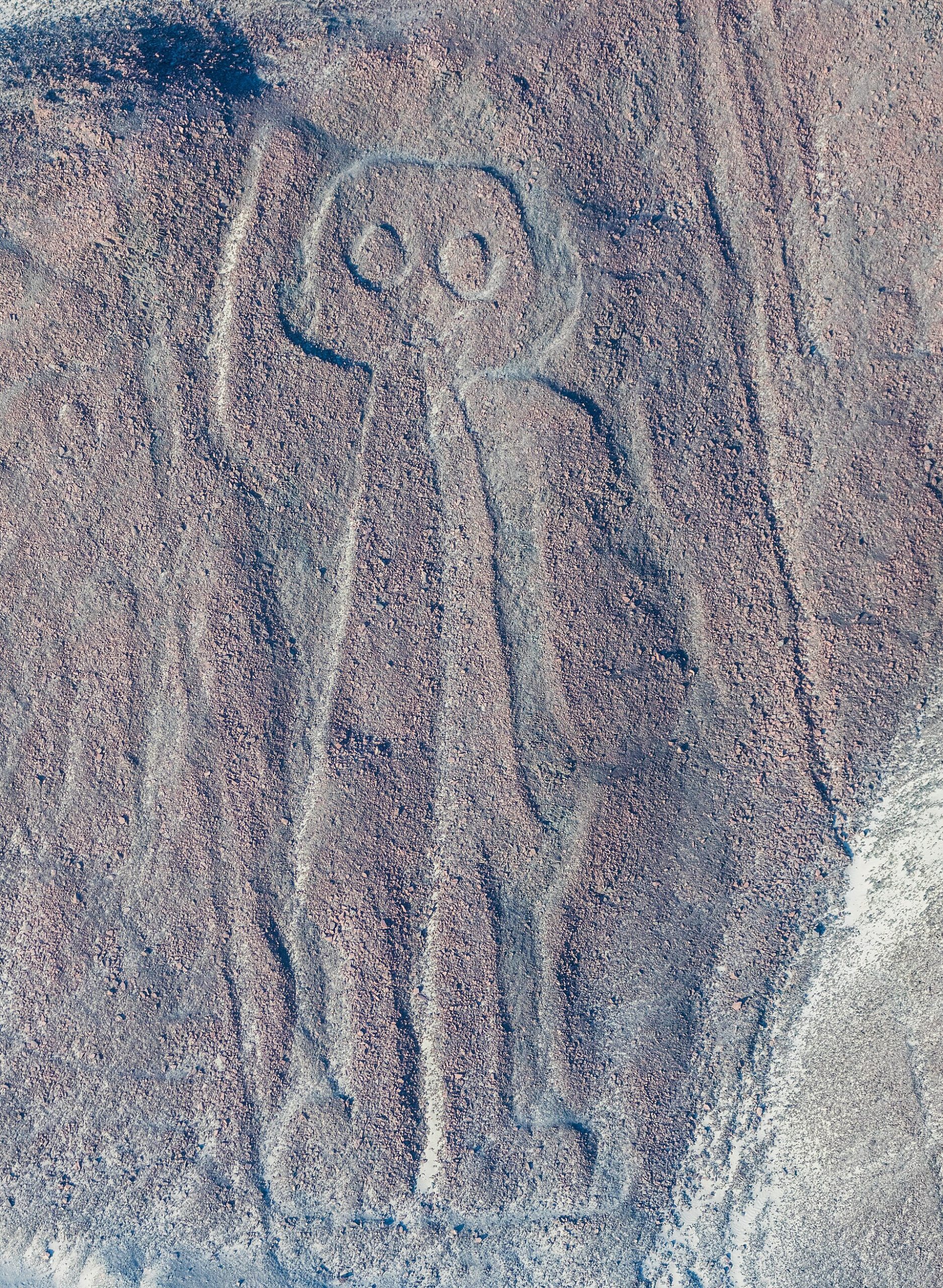
The most celebrated of the geoglyphs are the biomorphs, the giant figures of living things. Among them is the hummingbird, its wings outstretched, drawn in a single continuous line, a bird of great importance in Andean belief and a marvel of design at enormous scale.
Each figure was laid out with striking accuracy across distances far too great to oversee from the ground. That the Nazca could achieve such precision, keeping proportion over hundreds of metres, speaks to careful planning and a sophisticated command of measurement.
Monkey, Spider, and Condor
Alongside the hummingbird are many other creatures. A monkey with a spiral tail, a spider, a great condor or bird with an immense wingspan, a whale, and others populate the desert, each rendered in the same continuous-line style, some incorporating features that may relate to Nazca myth and ritual.
Several of these animals were not native to the coast but to distant regions such as the Amazon or the sea, suggesting the figures carried symbolic rather than merely local meaning. They may have been tied to water, fertility, and the forces the Nazca most needed to invoke.

Lines and Geometry
Beyond the animals, the pampa is covered with a dense network of dead-straight lines, triangles, and trapezoids, some stretching for kilometres with astonishing straightness. Many radiate from central points, and some of the great trapezoids resemble cleared plazas or pathways.
These geometric works are in fact far more numerous than the famous figures. Their arrangement, converging and crossing over the desert, hints at ritual pathways walked in procession, part of ceremonies whose nature can now only be guessed.

Why Were They Made?
The purpose of the Nazca Lines has been debated for decades. An early theory held that they formed a giant astronomical calendar, with lines pointing to the rising and setting of stars and the sun, though later study found only limited support for this.
Today many scholars favour explanations tied to water and fertility, the desert’s most precious concerns. The lines and figures may have been walked in rituals to petition the gods for water, the animals themselves symbols of the life that rain would bring.

Seen from Above
Part of the mystique of Nazca is that the figures are best appreciated from the air, yet the Nazca had no means of flight. This has fuelled sensational and baseless theories about extraterrestrial involvement, which serve mainly to deny the ingenuity of the Nazca themselves.
In reality the figures could be laid out from the ground using stakes, cords, and careful surveying, and they were probably meant to be experienced by walking their lines and by the gods above, not viewed as a whole by human eyes. Their power lay in their making and their meaning, not in a bird’s-eye view.
Rediscovery and Study
Though known to local people and noted by a few early travellers, the lines drew serious attention only in the twentieth century, especially once aircraft made their forms visible. The German-born researcher Maria Reiche devoted her life to studying and protecting them, becoming their tireless guardian.
Modern techniques, including aerial and satellite imaging, continue to reveal previously unknown figures. Each discovery adds to the catalogue of Nazca art and deepens the picture of this extraordinary desert canvas.

A Fragile Wonder
For all their endurance, the Nazca Lines are fragile. The very shallowness that let them survive makes them vulnerable to careless footsteps, vehicles, and modern development, and a single set of tracks across the pampa can scar the desert for centuries.
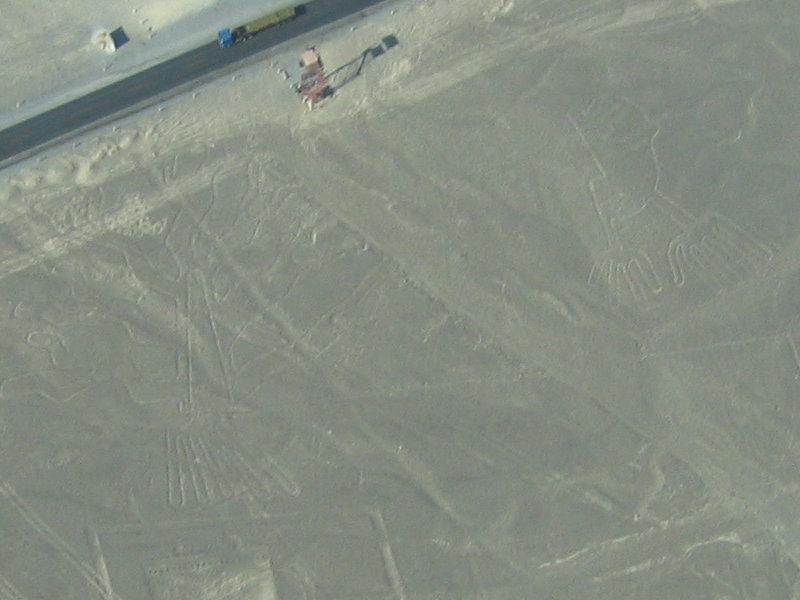
Recognized as a World Heritage Site, the lines are now protected, and access is carefully controlled, with most visitors viewing them from the air or from observation towers. Preserving them is a responsibility to one of the ancient world’s most singular creations.
Getting There
The Nazca Lines lie in the desert near the town of Nazca in southern Peru, several hours by road south of Lima along the coast. The best way to appreciate the figures is on a light-aircraft flight from the local aerodrome, though a roadside observation tower also offers views of a few of them.
The site stands at approximately -14.7390, -75.1300. You can open the exact location on Google Maps for directions to the Nazca Lines.
Nearby Places
Closing Thoughts
The Nazca Lines endure as one of archaeology’s great puzzles, but their true wonder lies not in manufactured mysteries about who could have made them. It lies in the achievement of the Nazca people themselves, who turned a lifeless desert into an immense sacred canvas.
Traced with patience and precision two thousand years ago and preserved by the stillness of the driest of lands, the figures speak of a culture reaching out to the forces of water and life. They remain a haunting testament to human imagination written across the earth.
You May Like


One thought on “The Nazca Lines: Giant Drawings on Peru’s Desert Floor”