In a dry valley a little inland from the Peruvian coast stand the eroded remains of what may be the oldest city in all the Americas. Caral, in the Supe valley, was a thriving urban and ceremonial centre around 2600 BCE, at the same time the Egyptians were building their first pyramids and long before the Olmec, the Maya, or the Inca. Its great platform mounds, sunken circular plazas, and residential quarters make it the flagship of the earliest known civilization in the Western Hemisphere.
The discovery of Caral’s antiquity revolutionized the story of the ancient Americas. Here was monumental architecture and complex society emerging astonishingly early, and, remarkably, without pottery and seemingly without warfare. Caral suggests that civilization in the Americas arose independently, on its own timeline, as one of a handful of places on earth where humans first built cities. Its quiet ruins hold the beginning of a story that would culminate, thousands of years later, in the great empires of the Andes.
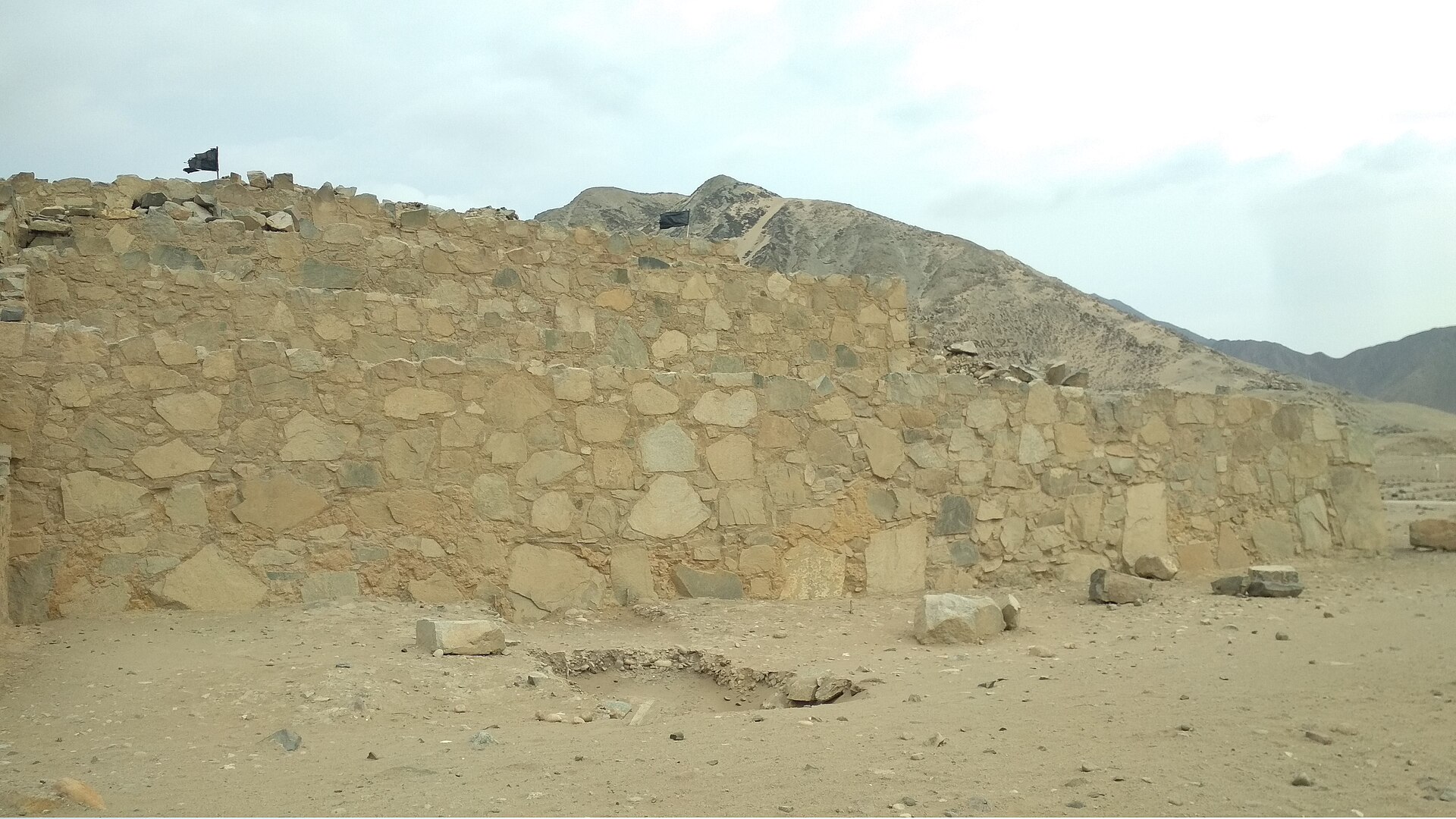
Table of Contents
- The Oldest City in the Americas
- A City Without Pottery
- The Pyramids of Caral
- Sunken Circular Plazas
- Building for the Ages
- Trade and the Sea
- Music and Ritual
- Rediscovery
- The Cradle of the Andes
- Getting There
- Nearby Places
- Closing Thoughts
The Oldest City in the Americas
Caral belongs to what archaeologists call the Norte Chico or Caral-Supe civilization, which flourished on the north-central coast of Peru from around 3000 to 1800 BCE. Radiocarbon dating placed the monumental construction at Caral around 2600 BCE, making it the oldest known urban centre in the Americas by a wide margin.
This early date stunned scholars. It showed that complex, city-building society in the Americas was roughly contemporary with the first civilizations of Mesopotamia and Egypt, arising entirely independently on the far side of the world.
A City Without Pottery
One of the most surprising features of Caral is what it lacks. Its people built monumental architecture, organized labour on a large scale, and sustained a sizeable population, yet they did so without ceramic pottery, which had not yet appeared in the region. They stored and prepared food using gourds and other means.
Nor is there evidence of the fortifications, weapons, or signs of violent destruction that mark so many early cities elsewhere. This has led some to describe Caral as a society that achieved complexity through cooperation and shared ritual rather than warfare.
The Pyramids of Caral
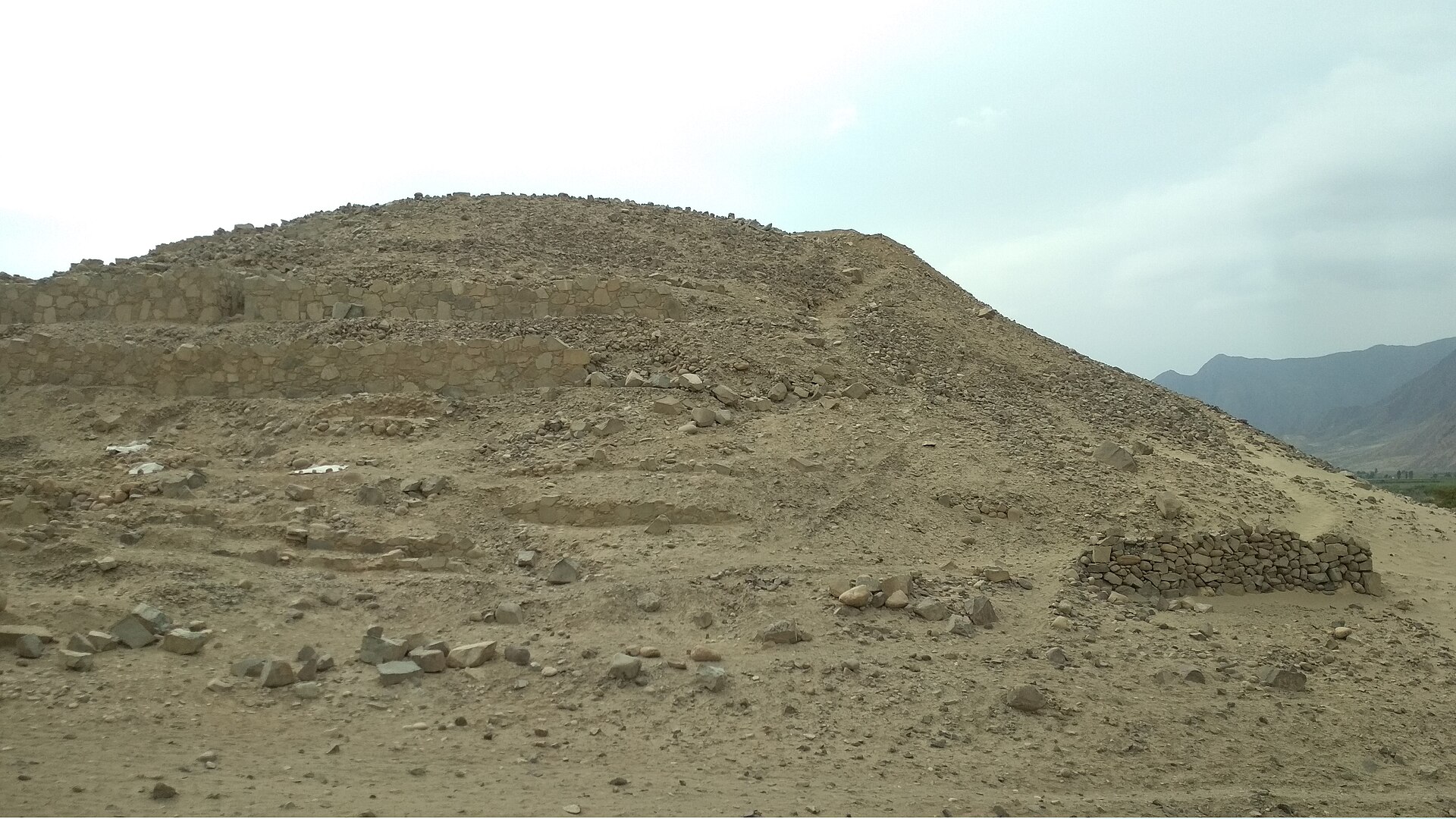
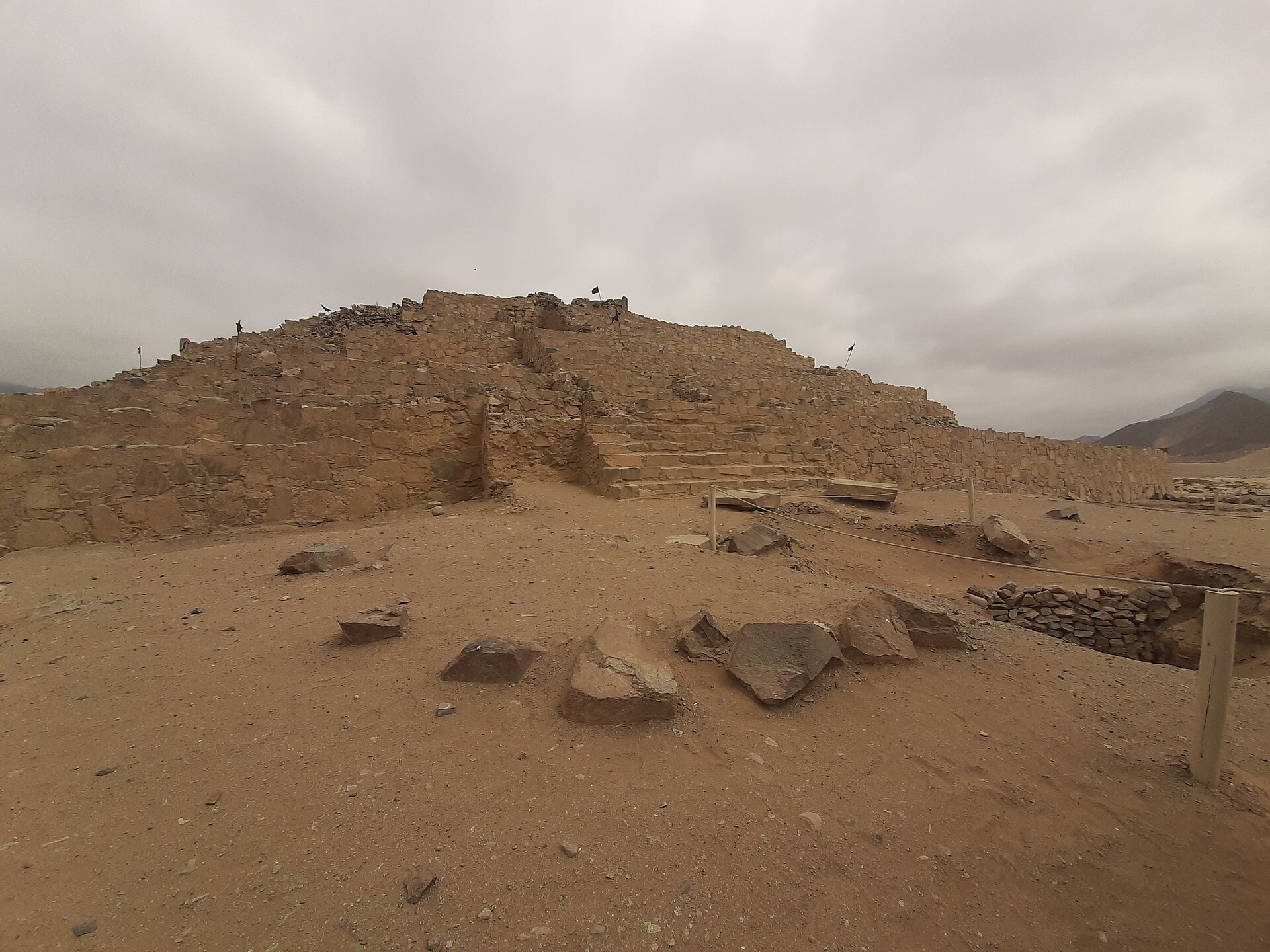
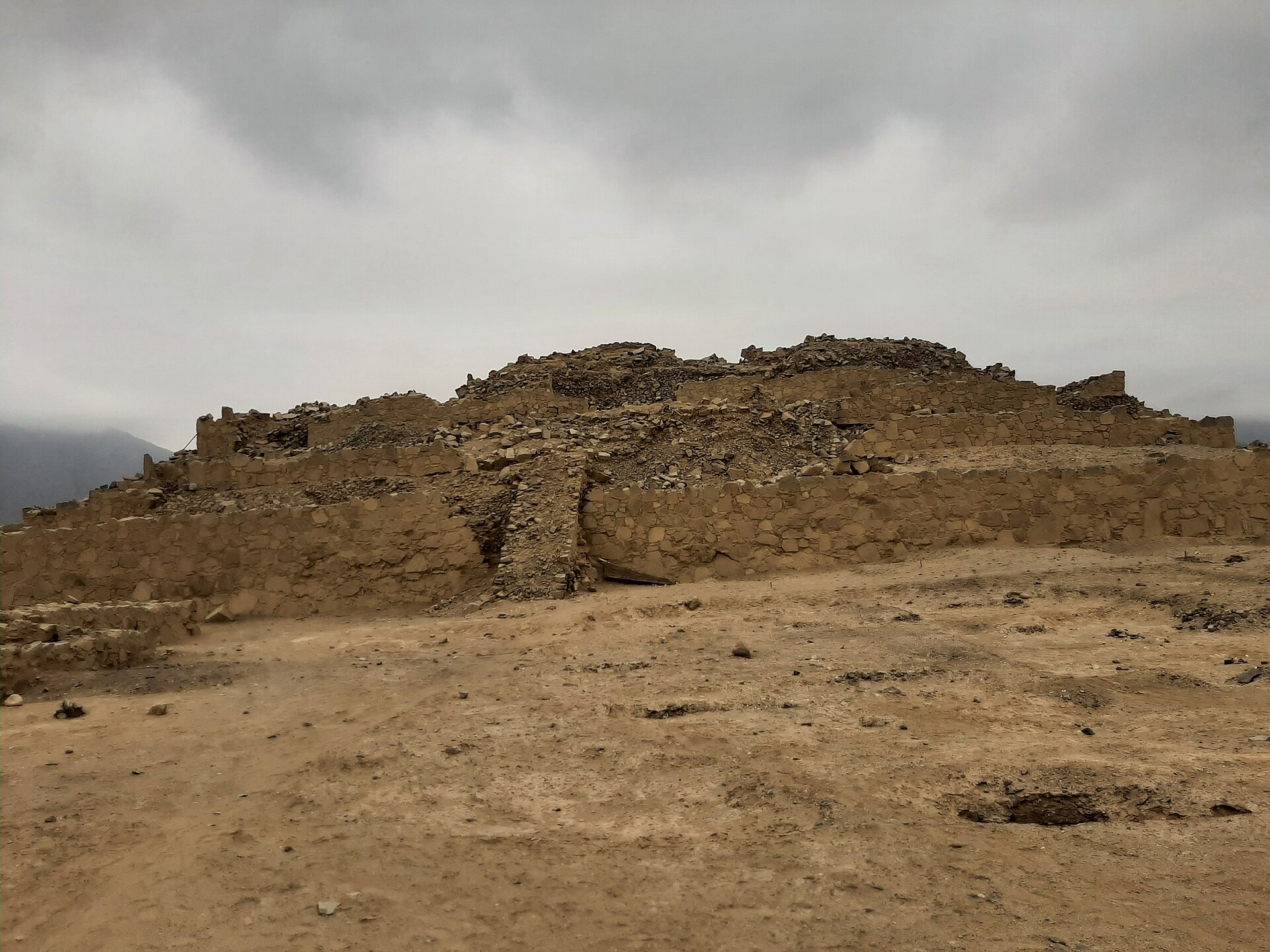
Dominating the site are several large platform mounds, the largest rising to around eighteen metres and covering an area comparable to several football fields. Built of stone, earth, and quarried fill carried in woven bags, they were faced with retaining walls and topped by structures reached via central staircases.
These were not tombs but ceremonial platforms, stages for the rituals that bound the community together. Their scale demanded the coordinated effort of a large and organized population, evidence of a society with leadership and shared purpose.
Sunken Circular Plazas
In front of some of the great mounds lie sunken circular plazas, round depressions ringed by low walls and reached by steps. These distinctive spaces were places of gathering and ceremony, and the form would echo through Andean architecture for thousands of years afterward.
The pairing of towering platform and sunken plaza created a ceremonial landscape of ascent and descent, of raised and lowered space. It reflects a sophisticated sense of ritual design at the very dawn of Andean civilization.

Building for the Ages
The builders of Caral used an ingenious technique to give their mounds stability in an earthquake-prone land. They filled retaining structures with stones placed in woven fibre bags known as shicras, which allowed the fill to shift slightly during tremors without collapsing, a form of ancient seismic engineering.
That the mounds still stand after more than four thousand years is testament to the effectiveness of these methods. Caral’s builders understood their environment and worked with, rather than against, the restless earth beneath them.

Trade and the Sea
Caral lay inland, but it was closely tied to the coast. Its people cultivated cotton in the irrigated valley, which coastal fishing communities used to make nets, and in return the fishers supplied Caral with anchovies and other seafood. This exchange of cotton for fish underpinned the whole economy.
Goods from farther afield, including items from the Amazon and the highlands, also reached Caral, showing that it sat within a wider web of exchange. Its wealth and its monuments grew from this network of trade and shared subsistence.

Music and Ritual
Excavations at Caral have recovered evocative traces of its ceremonial life, including flutes made from condor and pelican bones and cornets of deer and llama bone, finely decorated. These instruments point to music as an important part of the rituals performed on the platforms and in the plazas.
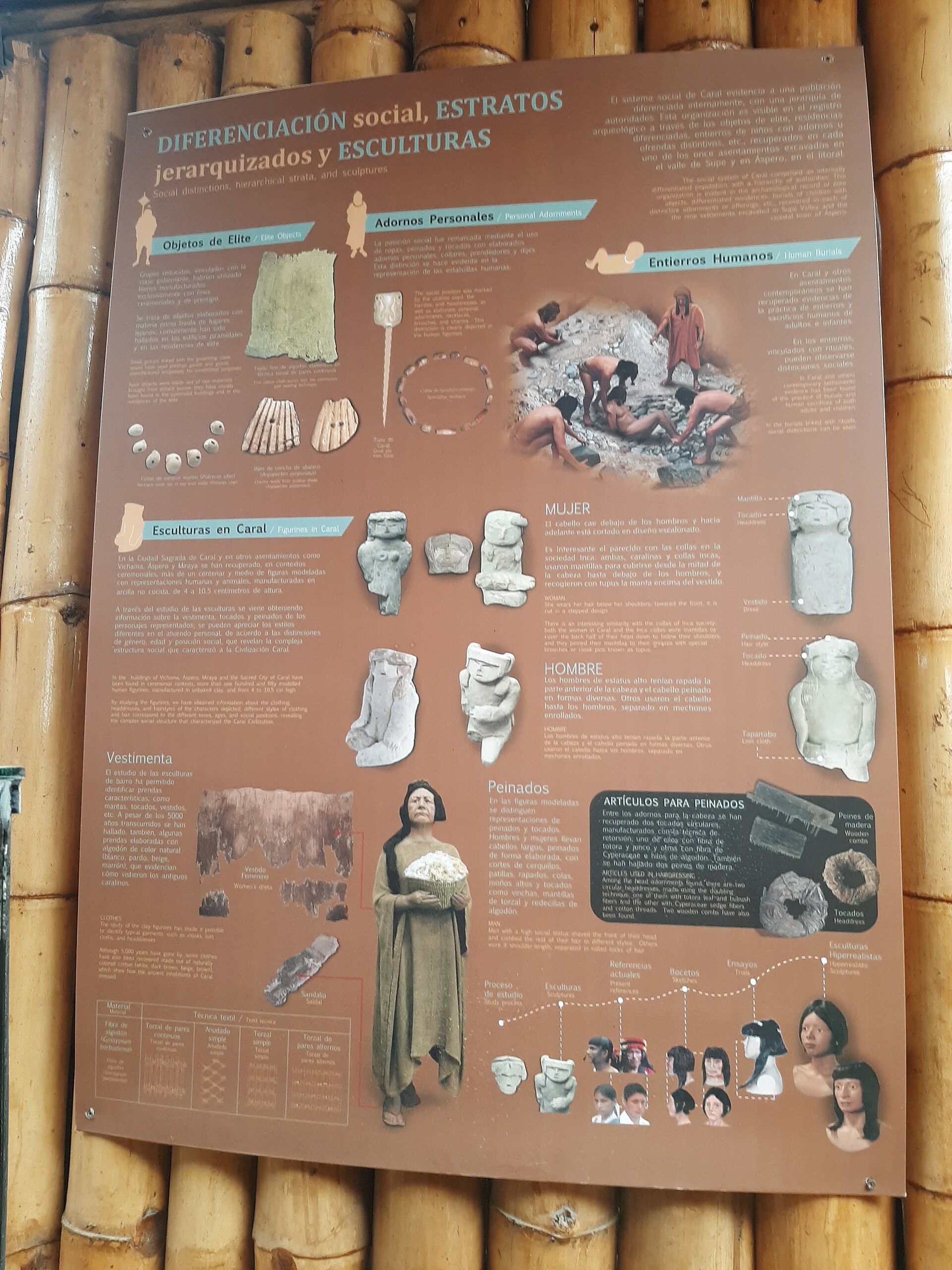
Other finds, from figurines to offerings, add to the picture of a society with a rich ceremonial and symbolic life. Caral was not merely a place of labour and trade but a centre of religion and celebration.

Rediscovery
Though the mounds of Caral had long been visible, they were mistaken for natural hills or dismissed as unremarkable because the site lacked the pottery and gold that usually signalled importance. It was only from the 1990s, through the work of the Peruvian archaeologist Ruth Shady and her team, that Caral’s true age and significance were established.
The radiocarbon dates that emerged rewrote the prehistory of the Americas. Caral was recognized as a World Heritage Site, and it has become a source of enormous pride in Peru as the cradle of Andean civilization.
The Cradle of the Andes
Caral stands at the head of a tradition that would run for four and a half thousand years. The platform mounds, sunken plazas, and ritual practices born here influenced the many cultures that followed along the Andes, down to the Inca themselves.
To visit Caral is to stand at a true beginning, one of the rare points on earth where human beings first came together to build cities. Its weathered pyramids mark the origin of a civilization that would go on to shape a continent.
Getting There
Caral lies in the Supe valley in the Barranca region of Peru, roughly two hundred kilometres north of Lima and some distance inland from the coastal town of Supe. It is reached by road and is usually visited on a day trip or tour, with a site museum and guided paths among the mounds.
The site stands at approximately -10.8933, -77.5206. You can open the exact location on Google Maps for directions to the Sacred City of Caral.
Nearby Places
Closing Thoughts
Caral overturns the idea that civilization in the Americas was a late or borrowed development. Here, five thousand years ago, people raised pyramids, laid out plazas, made music, and organized a complex society, entirely on their own.
That they did so apparently without war, and without even pottery, makes Caral all the more remarkable. As the oldest city of the Americas and the cradle of Andean civilization, it deserves a place among the great firsts of the human story.
You May Like