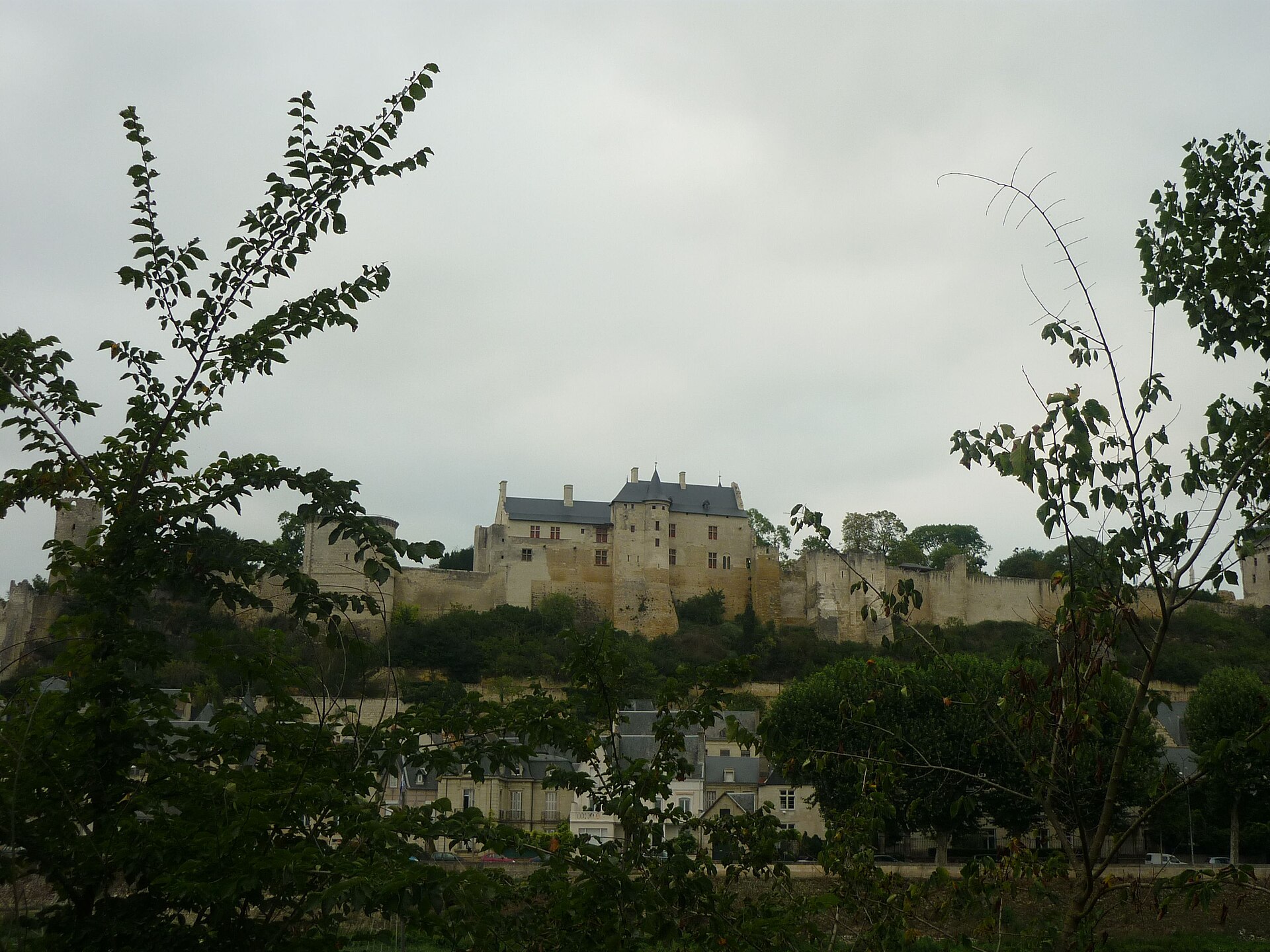
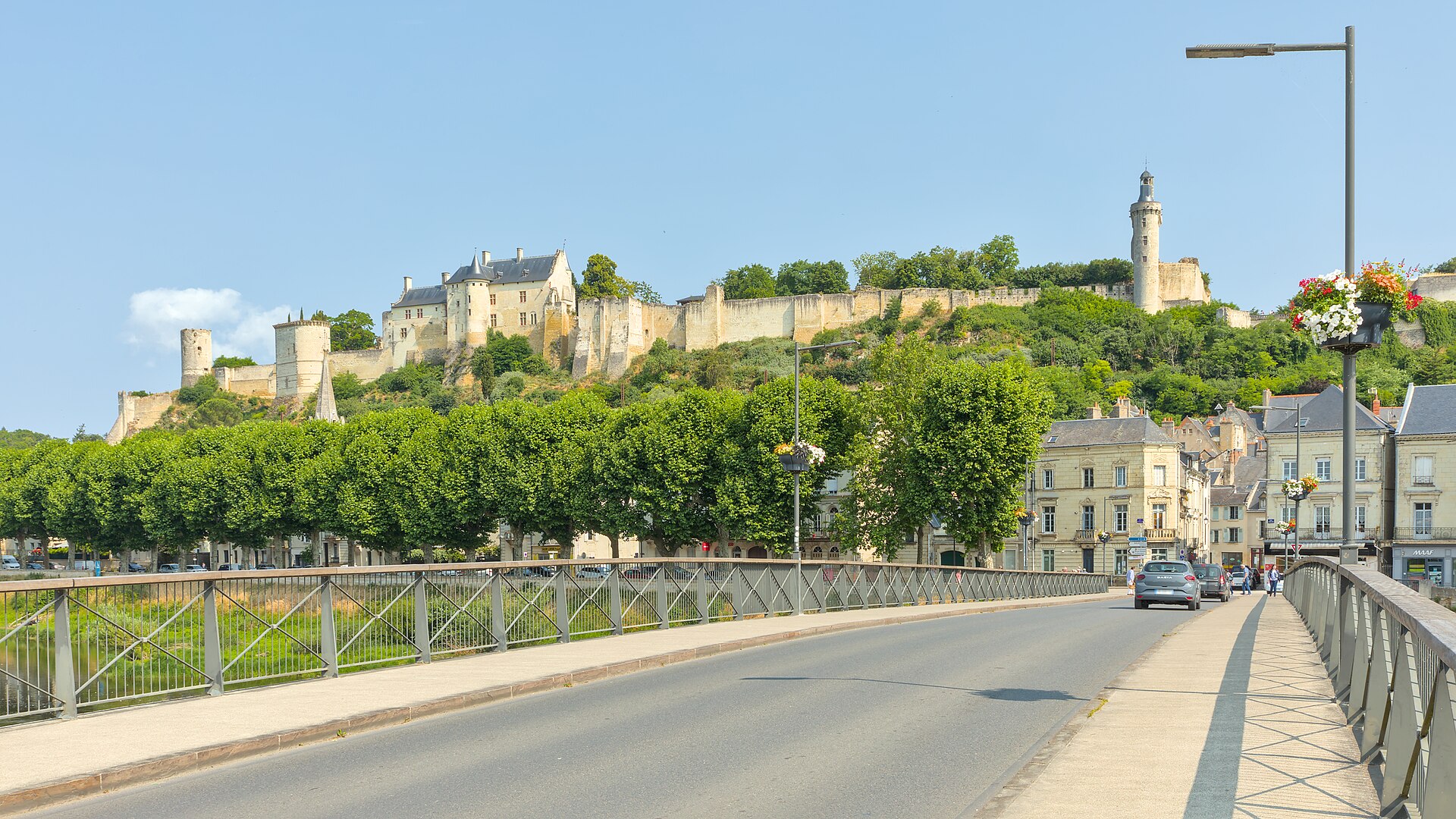
Strung out along a high limestone ridge above the River Vienne, the Royal Fortress of Chinon is one of the most storied castles in all of France. It is not a single building but a whole line of fortifications, nearly half a kilometre long, a succession of walls, towers and gateways that once made this one of the strongest and most important strongholds in the kingdom. Even in its partly ruined state, it commands the river and the little town below with an air of tremendous authority.
Few castles have witnessed so many turning points of history. Here the great Plantagenet king Henry II built and ruled, and here he died; here his son Richard the Lionheart lay in state, and here his queen, the legendary Eleanor of Aquitaine, ended her extraordinary life. Here, too, imprisoned Templar knights scratched their despair into the stone of a tower, and here, in the most famous moment of all, a teenage peasant girl named Joan of Arc walked into a crowded hall and changed the course of a war.
Chinon is a place where the whole drama of the Middle Ages seems to gather. Plantagenet power, the fall of the Templars, the Hundred Years War and the rise of Joan of Arc all left their mark on this long grey fortress above the Vienne. Let’s walk its ridge and uncover the many extraordinary stories written into the stones of Chinon.
In This Article
- A Fortress in Three Parts
- The River and the Ridge
- Henry II and the Plantagenet Kings
- Eleanor of Aquitaine’s Last Years
- The King of France Takes the Castle
- The Tragedy of the Templars
- Joan of Arc Comes to Chinon
- The Girl Who Knew the King
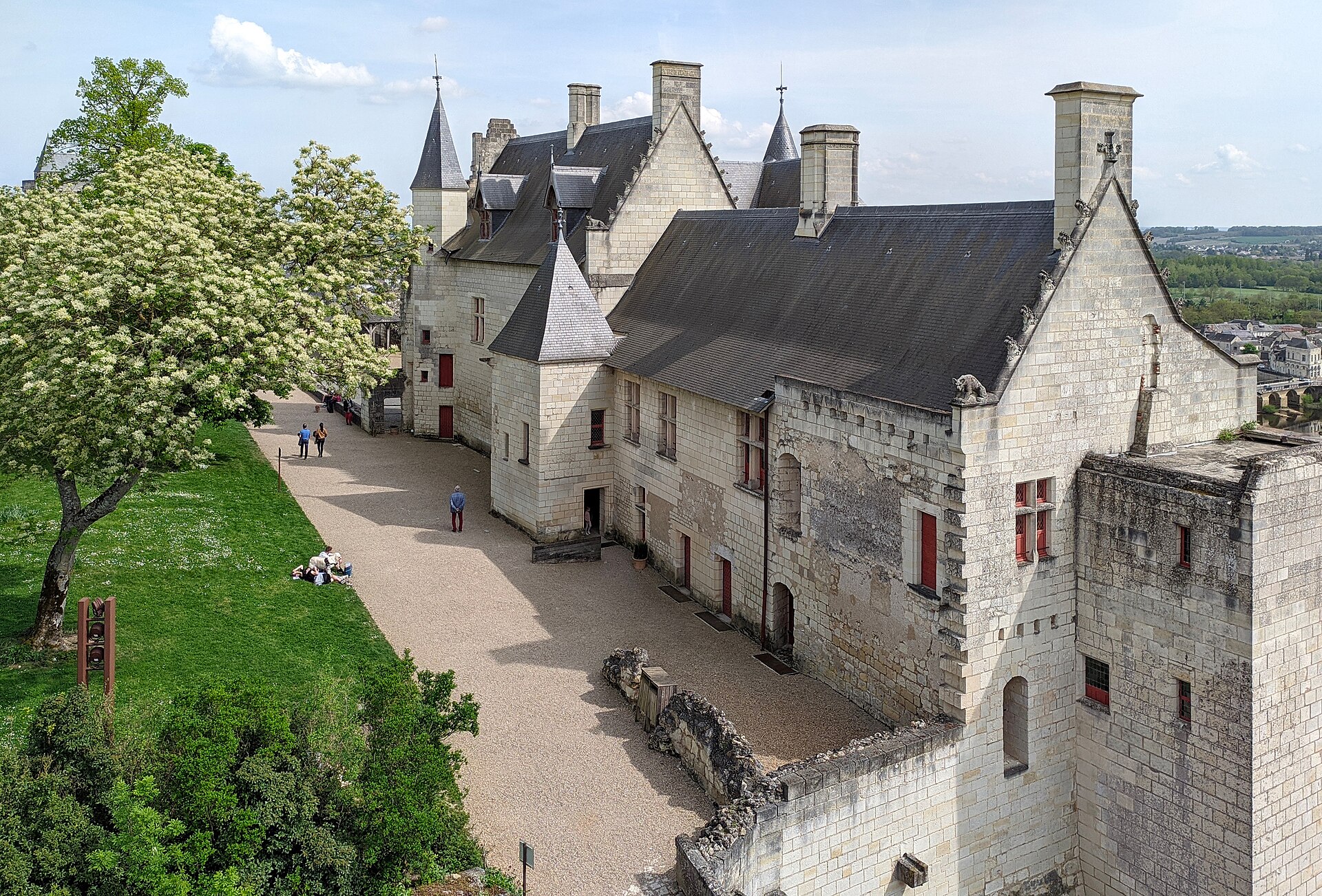
- The Great Hall and the Royal Lodgings
- The Clock Tower and the Way In
- Decline and Rediscovery
- Chinon and Its River Town
- Visiting the Fortress of Chinon
A Fortress in Three Parts
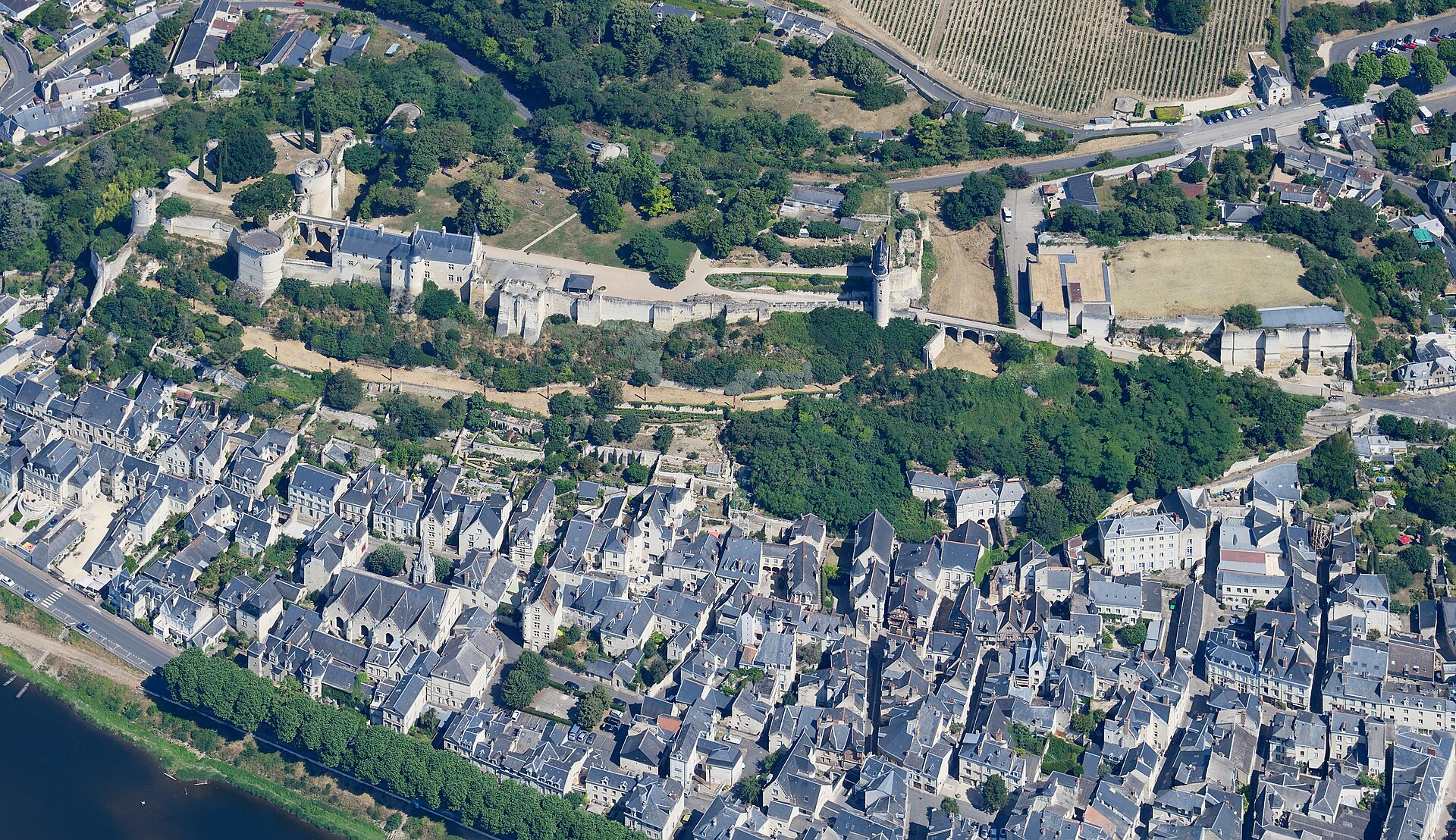
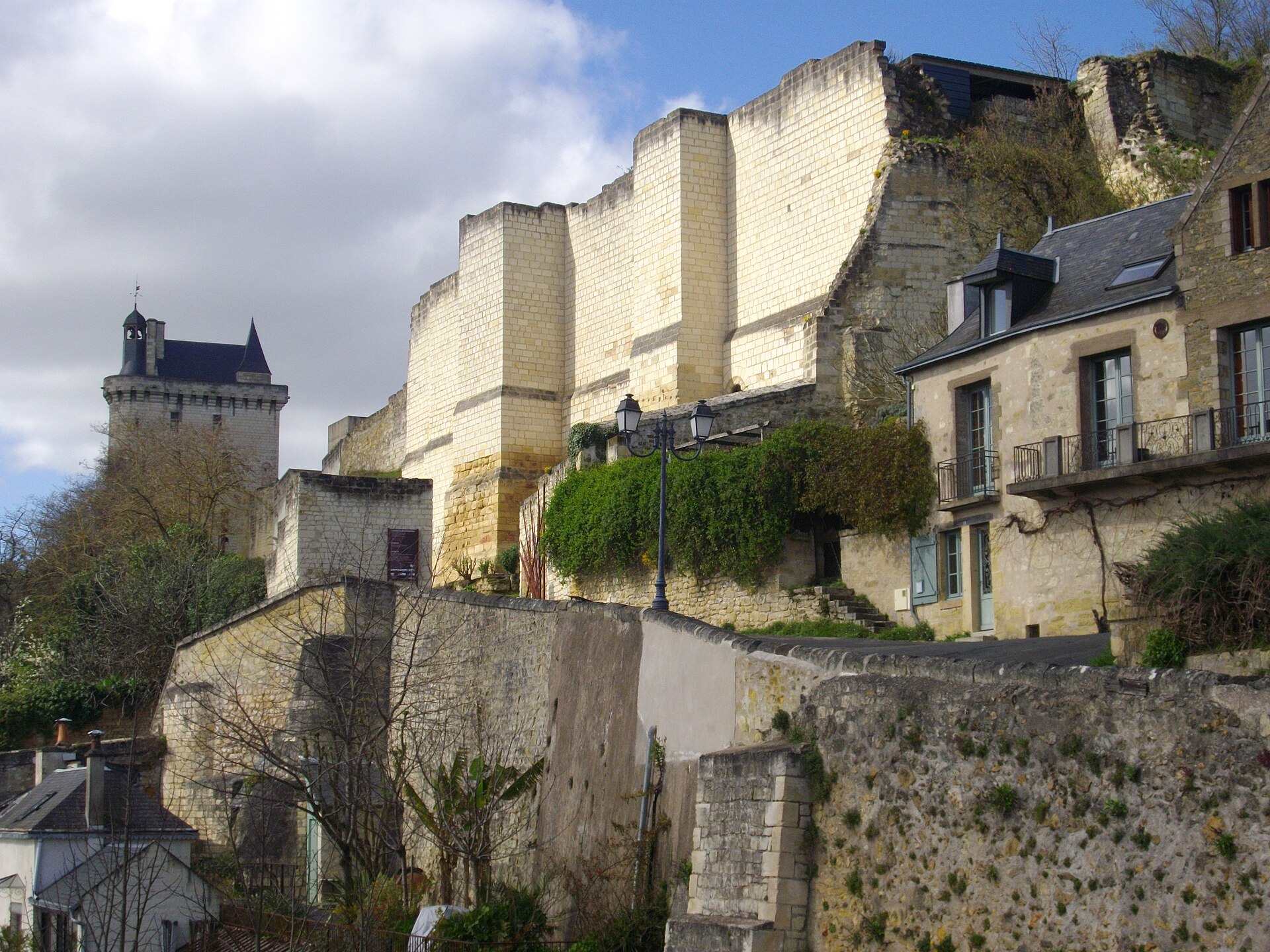
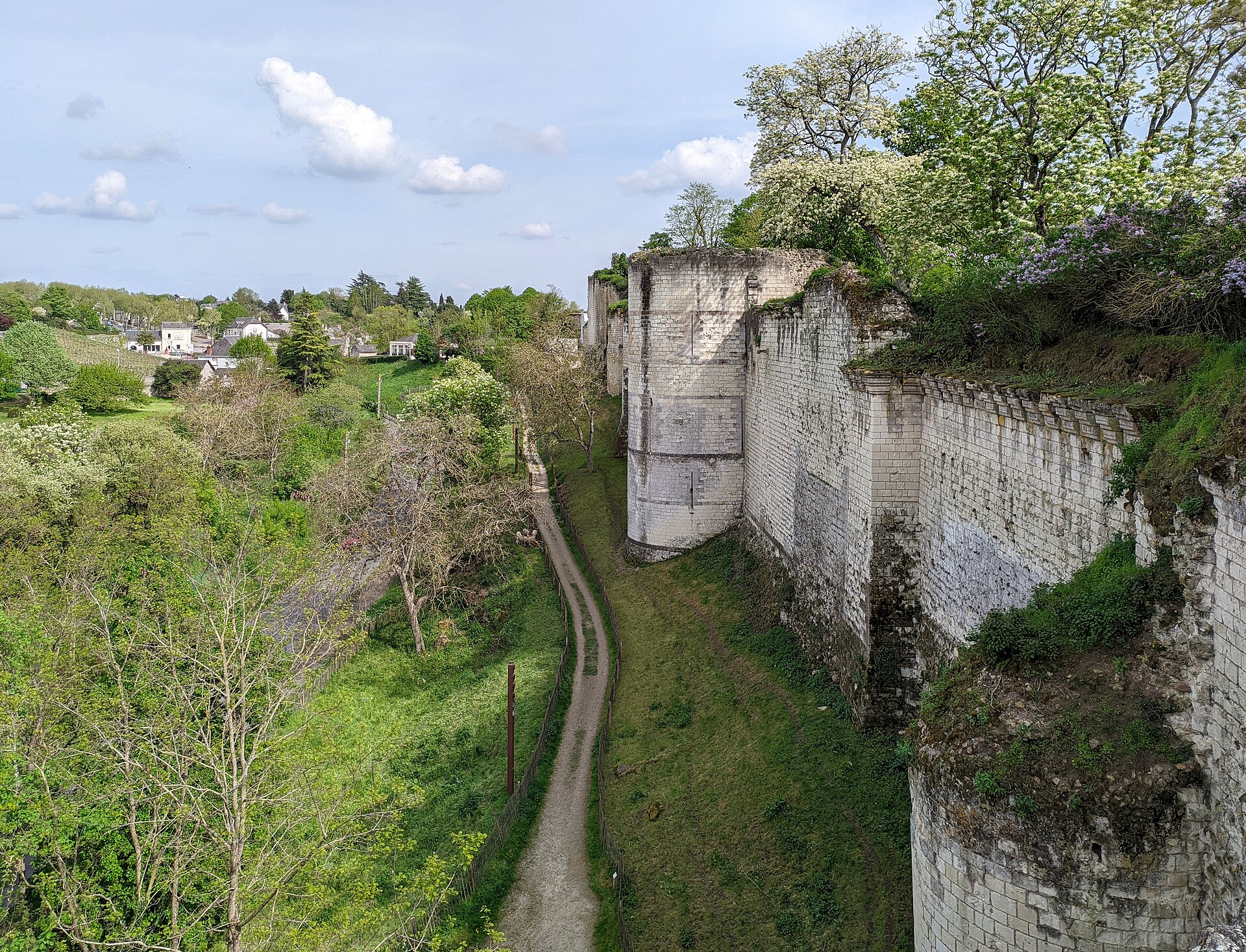
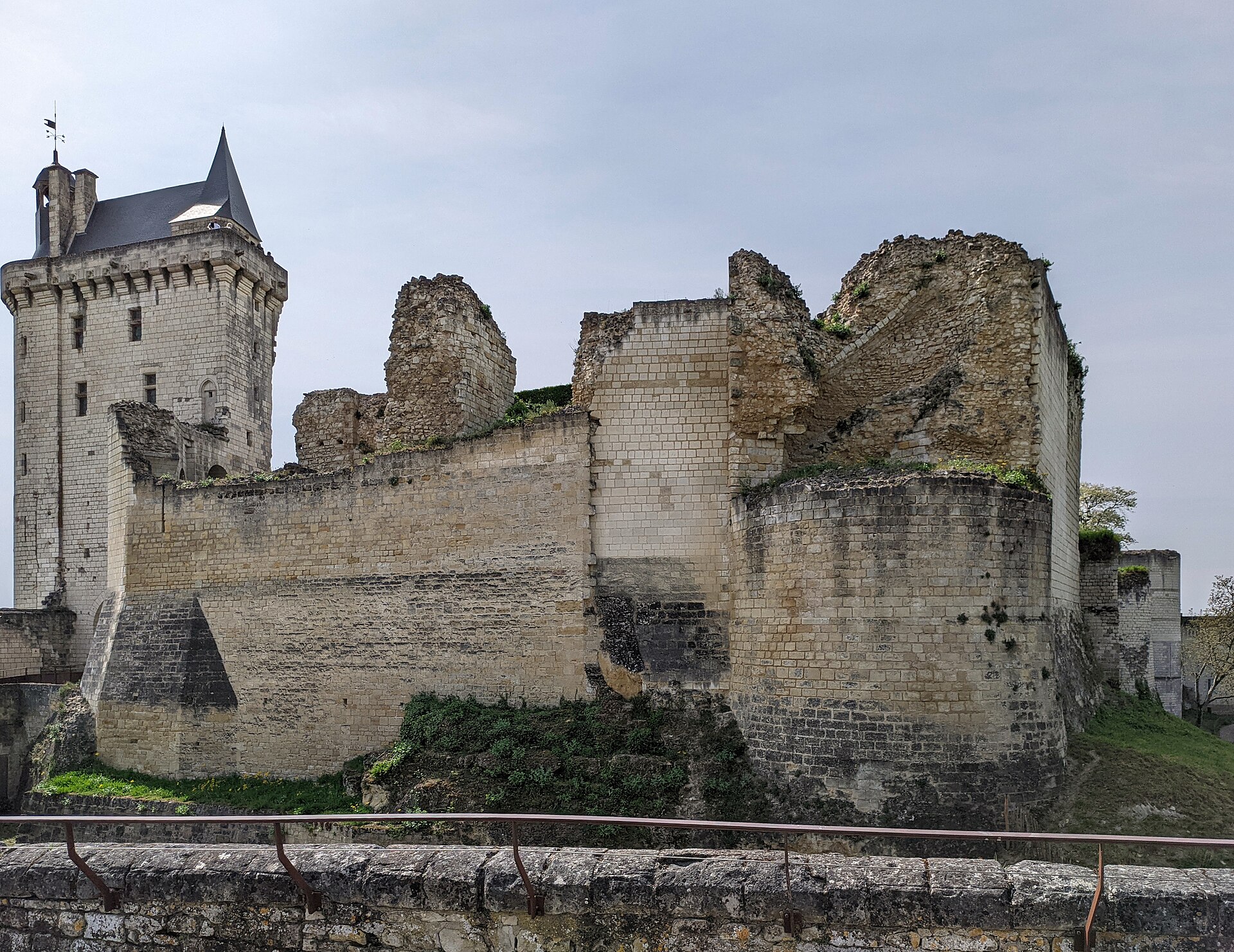
The first thing to understand about Chinon is that it is really three castles in one, strung end to end along the ridge. At the eastern end stands the Fort Saint-Georges, the first line of defence, now largely ruined. In the centre lies the Château du Milieu, the middle castle, the heart of the royal residence, entered through a tall clock-tower gateway. And at the western tip rises the Fort du Coudray, a strong point crowned by its own great tower.
Each of these parts was separated from the others by ditches and walls, so that even if an enemy managed to storm one section, he would find himself facing fresh defences before he could take the next. The whole complex stretched for some four hundred metres along the crest of the ridge, a formidable barrier of stone that dominated the river crossing and the roads below. It was, in its prime, one of the mightiest fortresses in France.
This three-part design gave Chinon both strength and flexibility. It could house a great royal court in comfort within the middle castle while remaining a serious military stronghold, its separate forts able to hold out independently. Walking the length of the ridge today, from one fort to the next, you get a vivid sense of the sheer scale and sophistication of medieval fortress-building at its height.
The building of Chinon spanned many centuries and many rulers, each of whom added to or strengthened the defences according to the needs and fashions of the day. The counts of Blois and Anjou, the Plantagenet kings, and the kings of France all left their mark, so that the fortress as a whole is a kind of textbook of medieval military architecture, its different sections reflecting the evolving art of fortification across three hundred years and more.
Approaching along the ridge, you can still read this layered design in the landscape: the outer defences giving way to the great gate, the gate to the residential heart, and finally the strong point at the far end. It is a sequence that speaks of careful military thinking, each stage buying time and imposing cost on any attacker, and it helps explain why Chinon was for so long considered one of the strongest places in the kingdom.
The River and the Ridge
Chinon owes its existence to its position. The long ridge on which it stands rises steeply above the River Vienne, a major tributary of the Loire, giving the fortress a commanding view over the water and the surrounding countryside for miles in every direction. Anyone controlling this height controlled the river crossing and the roads that met here, and so the site was fortified from very early times.
The River Vienne was a highway and a boundary, and the town of Chinon grew up along its bank at the foot of the castle rock, sheltering beneath the great walls above. From the ramparts, defenders could watch the river and the bridge, ready to challenge anyone who approached, while the townspeople below went about their business under the protection, and the watchful eye, of the fortress.
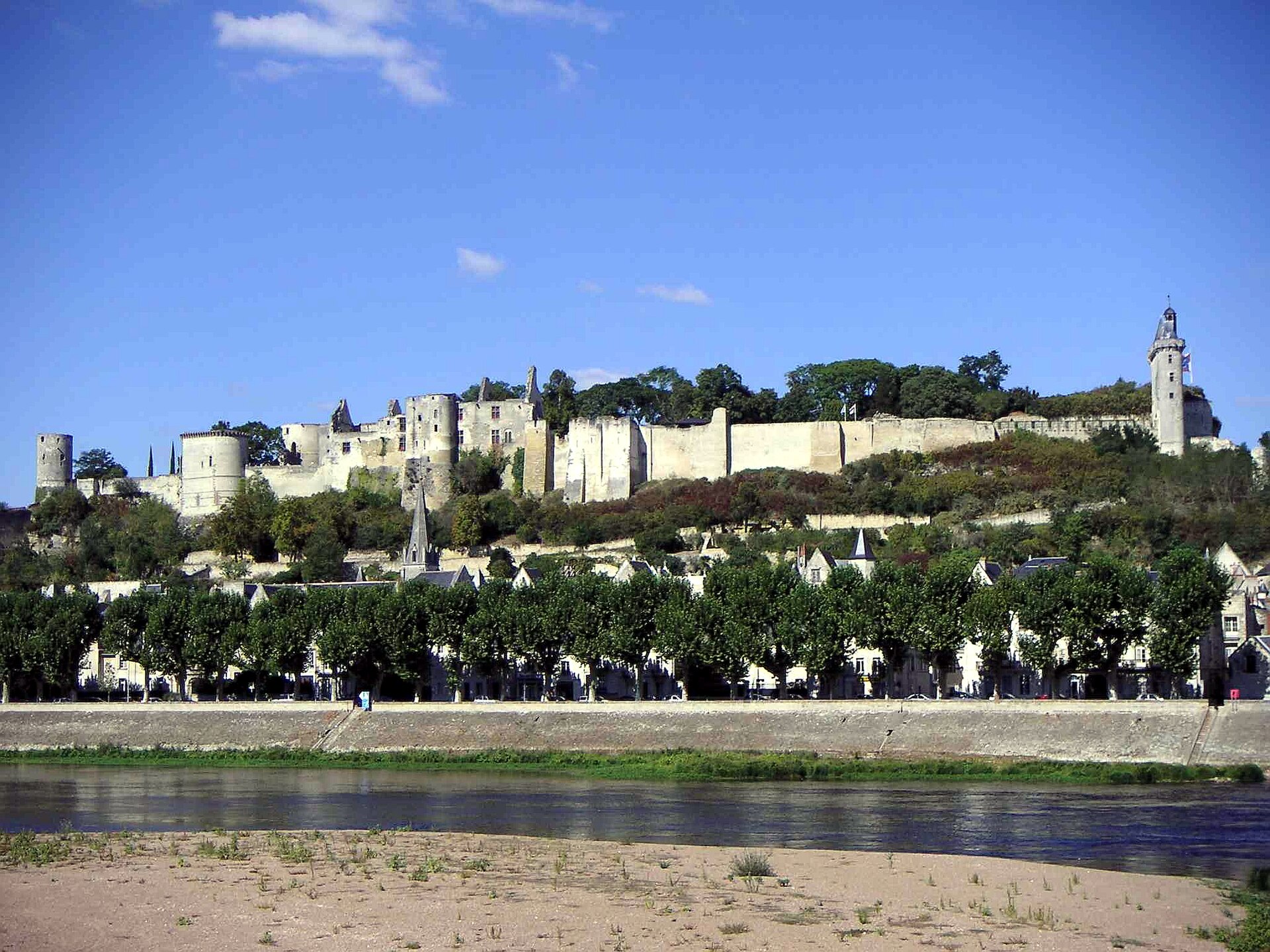
To see Chinon from across the Vienne, its long grey line of walls and towers riding the ridge above the red roofs of the town, is to understand at once why this place mattered so much. It is a classic image of the medieval world: the river, the town, and the great fortress standing guard above them both, a relationship of power and protection written into the very landscape.
The limestone of the ridge was itself part of the castle’s strength and its story. Soft enough to be cut and quarried, it provided both the stone from which the fortress was built and, in places, cellars and chambers hollowed directly out of the rock. The same stone underlies the whole region, and beneath the town of Chinon runs a warren of caves and cellars, many now used to store the famous wines of the area, a hidden world beneath the historic streets.
In an age when armies moved slowly and rivers were both routes and obstacles, a fortress that commanded a major crossing like this held real strategic weight. Whoever ruled Chinon could threaten or protect the movement of men and goods across a wide region, and this is why kings of two nations fought so hard to possess it. The ridge above the Vienne was, quite simply, one of the keys to the western approaches of the kingdom.
Henry II and the Plantagenet Kings
Chinon reached the first of its many heights of importance under the Plantagenets, the great dynasty that ruled both England and vast territories in France. King Henry II, one of the most powerful monarchs of the twelfth century, was especially fond of Chinon and did much to build and strengthen it, making it one of the key strongholds and treasuries of his sprawling empire.
It was here, in 1189, that Henry II died, a broken and defeated man, having been forced into humiliating terms by his own rebellious sons, including the future Richard the Lionheart, in alliance with the king of France. The great king who had ruled from the border of Scotland to the Pyrenees breathed his last within these walls, and the story of his sad end is one of the most poignant associated with the fortress.
Chinon remained bound up with the fortunes of the Plantagenets in the years that followed. When Richard the Lionheart died in 1199, his body is said to have rested at Chinon, and the family’s connection to the fortress ran deep. For a time this castle above the Vienne stood close to the very centre of one of the greatest empires of the medieval world.
Henry II was one of the most energetic and effective rulers of the whole Middle Ages, a restless, brilliant man who was constantly on the move across his enormous territories, dispensing justice, waging war and reforming the machinery of government. Chinon, well placed at the heart of his continental lands, served him as an administrative centre and treasury as well as a residence, one of the hubs from which he ran his empire.
The bitter family conflicts that darkened Henry’s final years are among the most dramatic stories of the age. His sons, encouraged by their mother Eleanor and by the king of France, rose against him repeatedly, and the old king’s death at Chinon came at the end of a lifetime of struggle against those closest to him. It was a tragic end for a great ruler, and it fixed Chinon forever in the story of the Plantagenet family’s rise and fall.
Eleanor of Aquitaine’s Last Years
No figure connected with Chinon is more remarkable than Eleanor of Aquitaine, one of the most powerful and fascinating women of the entire Middle Ages. Queen first of France and then of England, mother of kings, a crusader, a patron of poets and a political force in her own right, Eleanor lived one of the most extraordinary lives of her age, and Chinon was among the places most closely associated with her later years.
After a life of astonishing drama, including years spent imprisoned by her own husband, Henry II, Eleanor emerged in old age as a shrewd and formidable ruler, working tirelessly to protect the interests of her sons. She was closely connected to Chinon, using it as a base for her activities, and it was near here, at the abbey of Fontevraud just a short distance away, that she eventually died in 1204, at the truly remarkable age of around eighty.
That a woman of such power and longevity should be linked so closely to Chinon adds another layer to the fortress’s rich history. Eleanor, Henry and Richard, three of the most famous names of the medieval world, all belong to the story of this castle, and their presence still seems to haunt its walls. Chinon was, for a time, one of the great stages on which the drama of the Plantagenet family was played out.
Eleanor’s influence on the history of Europe is hard to overstate. As duchess of Aquitaine in her own right, she controlled vast lands in the south of France; as queen of France and then of England, she stood at the centre of power for decades; and as the mother of Richard the Lionheart and King John, she shaped the destiny of the English crown. That so much of her later life was connected with Chinon and its region only deepens the fortress’s claim to a central place in the history of the age.
The King of France Takes the Castle
The Plantagenet hold on Chinon did not last. In the early thirteenth century, the able and ambitious King Philip Augustus of France set out to break the power of the Plantagenets in France, and one by one their great strongholds fell to him. Chinon, for all its strength, was among his prizes, taken after a determined siege that ended the castle’s days as an English royal fortress.
The capture of Chinon was part of a wider collapse of the Plantagenet position in France under King John, Richard the Lionheart’s less capable brother. As castle after castle was lost, the vast Angevin empire that Henry II had built began to crumble, and Chinon passed permanently into the hands of the kings of France. From now on its story would be a French one.
Under its new masters, Chinon was strengthened and adapted, and it remained an important royal fortress. Its position and its formidable defences ensured that it kept its value, and in time it would become not just a stronghold but a refuge and a residence for the kings of France, playing a central role in one of the darkest and most decisive periods of the nation’s history.
The fall of the great Plantagenet fortresses to Philip Augustus marked one of the decisive shifts in medieval European history, the moment when the balance of power in France tilted decisively toward the French crown. Chinon’s capture was part of that larger story, and it transformed the castle from a stronghold of the English kings into a bastion of their French rivals, a change of allegiance that would set the stage for its later, even more famous, role in the wars between the two kingdoms.
The Tragedy of the Templars
One of the most haunting chapters in Chinon’s history belongs to the Knights Templar. This famous order of warrior-monks, immensely rich and powerful, was suddenly and brutally suppressed by King Philip IV of France in the early fourteenth century, its members arrested, accused of heresy and other crimes, and subjected to torture and trial in one of the great scandals of the Middle Ages.
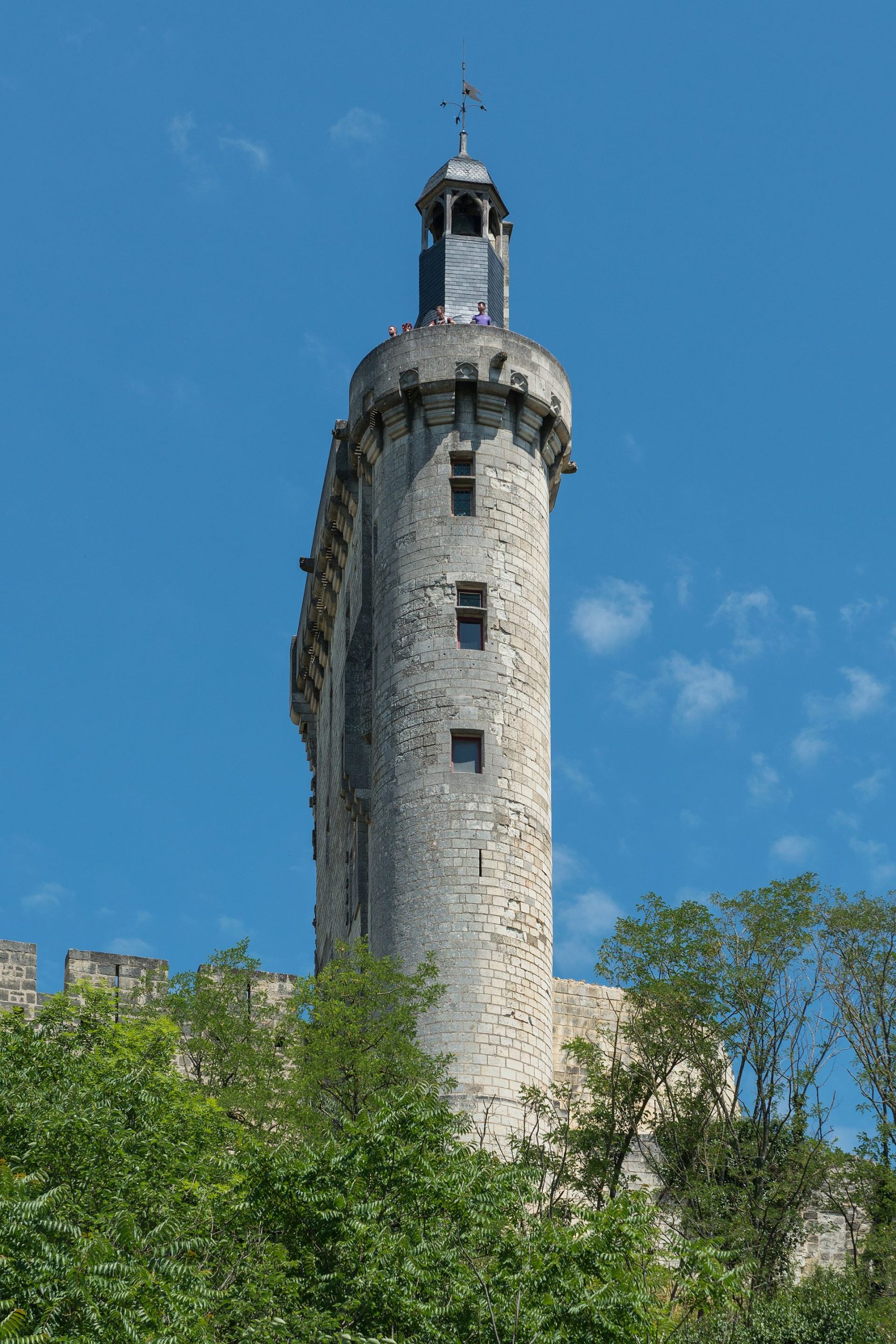
In 1308, a number of the order’s leaders were imprisoned at Chinon, held in the great tower of the Fort du Coudray while their fate was decided. Shut up in the cold stone of the tower, awaiting judgement, some of these captive knights carved graffiti into the walls, crosses, symbols and figures that can still be seen today, a silent and moving testimony to their suffering and their faith.
To stand in the Coudray tower and look at those marks, scratched by the hands of doomed men more than seven hundred years ago, is one of the most affecting experiences Chinon offers. The suppression of the Templars was a tragedy of greed and cruelty, and here, in these carvings, we have a direct and personal connection to the men who were caught up in it. Few places bring the story so close.
The Templars had been founded two centuries earlier to protect pilgrims in the Holy Land, and over time they had grown into one of the wealthiest and most powerful organisations in Christendom, with lands and treasure across Europe. It was precisely this wealth that helped to doom them, for the king of France, deep in debt and eager to seize their riches, moved against them with sudden and ruthless efficiency.
The charges levelled against the Templars, of heresy, blasphemy and secret rites, were largely extracted under torture and are now generally regarded as trumped up. At Chinon, the imprisoned leaders of the order were even examined by representatives of the Pope, in proceedings whose records survive. The graffiti in the Coudray tower brings this vast historical tragedy down to the scale of individual human beings, waiting in the dark for a judgement they could not escape.
The Chinon parchment, a document recording the papal examination of the Templar leaders held here, was rediscovered in the Vatican archives only in recent times, throwing fresh light on this dark episode and on the role Chinon played in it. It is a reminder that the fortress was not merely a backdrop to great events but a genuine centre of power and decision, a place where the fate of one of the most famous organisations in medieval Europe was gravely debated.
Joan of Arc Comes to Chinon
The most famous moment in the history of Chinon, and one of the most famous in the history of France, came in the year 1429. France was in a desperate state, much of the country occupied by the English in the long agony of the Hundred Years War, and the young Dauphin, the uncrowned Charles VII, had taken refuge at Chinon, unsure and uncrowned, his cause seemingly close to collapse.
Into this gloom came an astonishing figure: a teenage peasant girl from the far east of France named Joan of Arc, who claimed that God had sent her to drive out the English and see the Dauphin crowned king. Against all odds, she had made her way across war-torn France to Chinon, and she asked to be admitted to the presence of the Dauphin, declaring that she carried a message from the King of Heaven himself.
That a simple country girl should be granted an audience with the heir to the throne was extraordinary in itself, and it says much about the desperation of Charles’s situation that she was received at all. But what happened in the great hall of Chinon, when Joan was finally brought before the court, would pass into legend and help to turn the tide of the war.
The France to which Joan came in 1429 was a kingdom on its knees. The English and their Burgundian allies controlled Paris and much of the north, the Dauphin’s authority was shrinking, and the great city of Orleans was under siege, its fall likely to open the road to the total collapse of the French cause. It was into this atmosphere of near despair that the young girl arrived with her astonishing claims of a divine mission.
Joan’s journey to Chinon had itself been remarkable, a ride of many days across dangerous, war-torn country, disguised and escorted by a small band of companions. That she reached the fortress at all, and then persuaded the Dauphin’s suspicious court to grant her an audience, was a testament to the extraordinary force of personality that would soon make her the most famous woman in Europe.
For the people of France, then and ever since, there was something almost miraculous in the timing of Joan’s arrival, a sign of hope appearing at the very moment when all seemed lost. Whatever one makes of her visions, her effect on the morale of the French cause was electric and undeniable, and it began here, at Chinon, with a girl asking to be admitted to the presence of an uncrowned and despairing prince.
The Girl Who Knew the King
The story of Joan’s meeting with the Dauphin at Chinon has been told and retold for centuries. According to the famous tradition, Charles, wishing to test the girl, disguised himself among his courtiers, dressing plainly and placing another man on his seat, to see whether Joan could really tell true royalty from false. It was a trap designed to expose an impostor.
Joan, so the story goes, was not fooled for a moment. Walking through the crowded hall, she passed by the man on the throne and went straight to Charles himself, hidden among the courtiers, and knelt before him, greeting him as the true Dauphin. Whether or not every detail is true, the tale captured the imagination of France, seeming to prove that Joan really was guided by a power beyond the ordinary.
Convinced, or at least persuaded to take the risk, Charles gave Joan his support. She was examined by clergy, provided with armour and a place in his army, and sent to the relief of the besieged city of Orleans. Her victories there and afterwards would lead, just as she had promised at Chinon, to the coronation of Charles VII, and would change the course of the Hundred Years War. It all began in the great hall of this fortress above the Vienne.
The examination Joan underwent at Chinon was thorough, for the stakes could hardly have been higher. Churchmen and counsellors questioned her closely, anxious to determine whether her mission truly came from God or from some darker source, for in that age the line between saint and heretic was perilously thin. That she satisfied them, and won the support of the Dauphin, was the crucial first step on the road that would lead to the relief of Orleans and, ultimately, to the coronation at Reims.
The Great Hall and the Royal Lodgings
The setting of Joan’s famous meeting was the great hall of the royal lodgings, the Logis Royal, at the heart of the middle castle. In the fifteenth century this was a place of real magnificence, where the Dauphin held what remained of his court in the anxious years before Joan’s arrival transformed his fortunes. It was here that the destiny of France seemed, for a moment, to hang in the balance.
Much of the original great hall was lost over the centuries, but archaeologists and restorers have worked to recover its plan and something of its former appearance, so that visitors can once again stand in the space where Joan is said to have knelt before her king. Standing there, it is impossible not to feel the weight of the moment, the meeting of the desperate prince and the visionary girl that would echo through the centuries.
The royal lodgings as a whole give a sense of the more comfortable, residential side of Chinon, the face it turned toward the court rather than the enemy. Between its stints as a fortress of war, Chinon was also a royal home, and the lodgings were where the business of kingship, the councils and audiences and ceremonies, was carried on. It was the perfect setting for the drama of 1429.
It is one of the poignant ironies of Joan’s story that the king she did so much to make would later do little to save her when she fell into enemy hands and was burned at the stake. Yet nothing can diminish the significance of what began at Chinon. The meeting in the great hall set in motion a chain of events that lifted the siege of Orleans, saw Charles crowned, and turned the long tide of the Hundred Years War at last in France’s favour.
The Clock Tower and the Way In
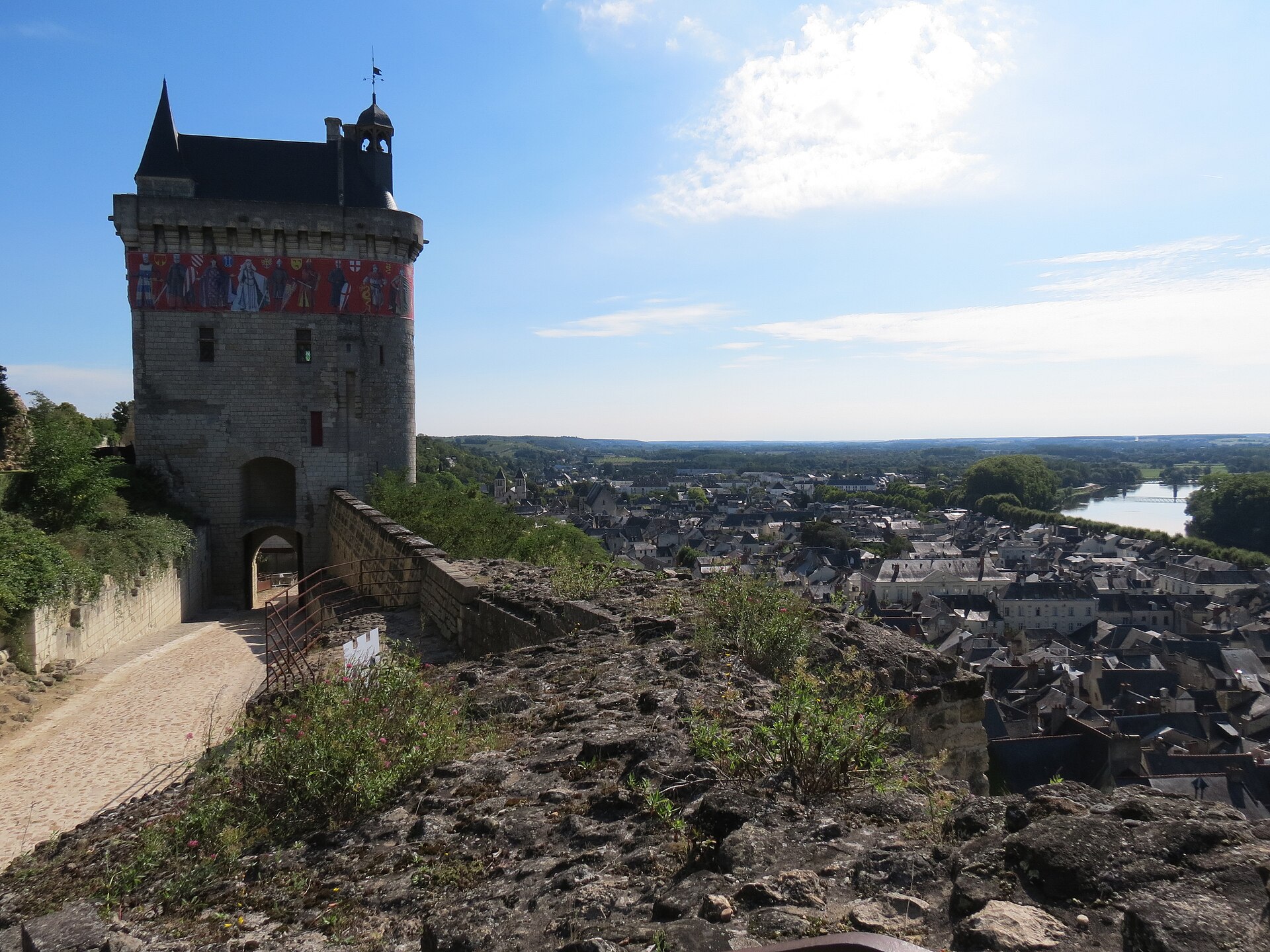
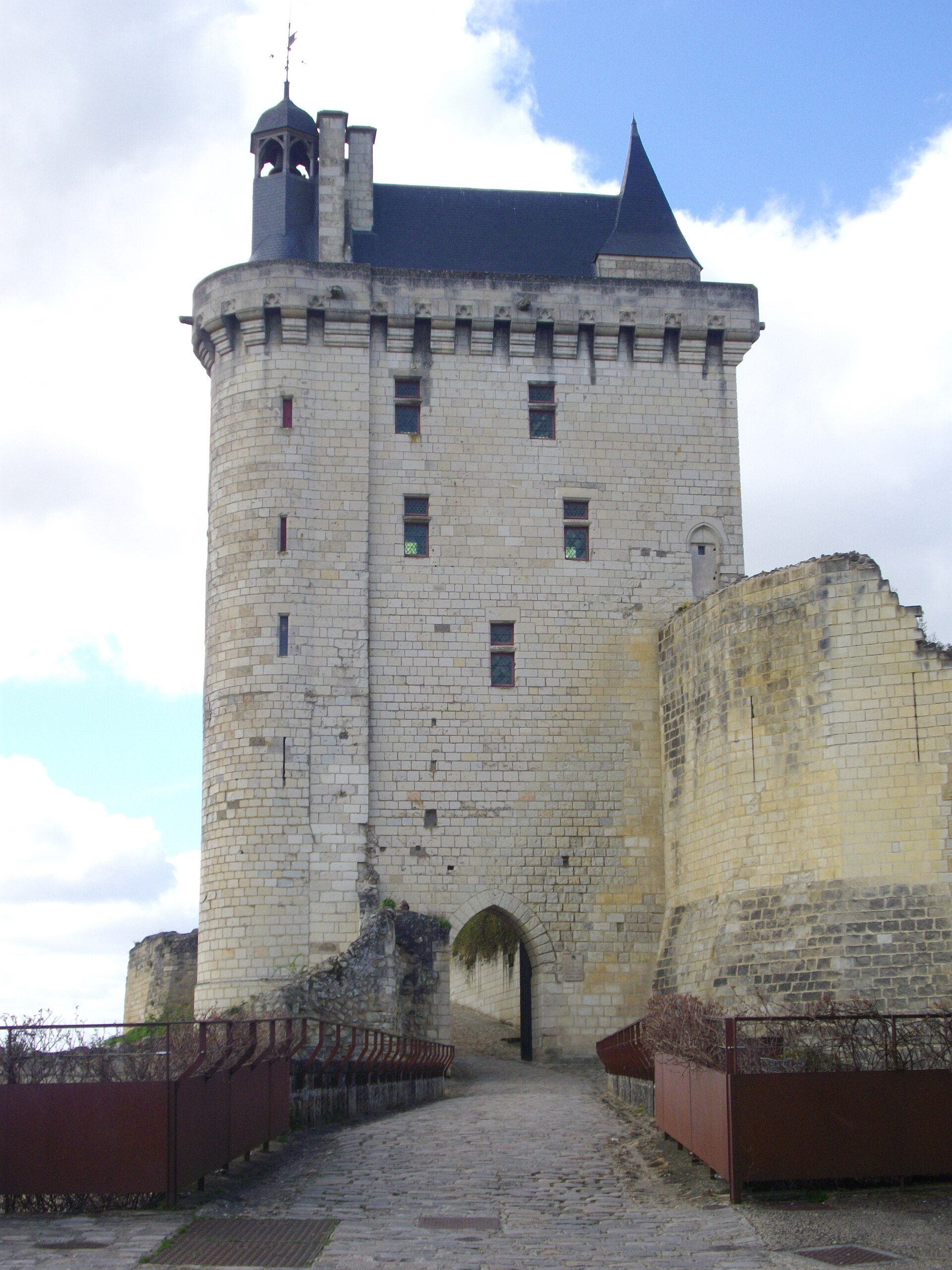
The grand entrance to the middle castle is through the Tour de l’Horloge, the Clock Tower, one of the most striking features of Chinon. Tall, narrow and elegant, quite unlike the squat military towers elsewhere on the ridge, it rises high above the walls and is pierced by a passage through which visitors pass into the heart of the fortress. Its very shape, slender and refined, marks it out as something special.
The tower takes its name from the great bell it houses, a bell that has rung out over Chinon for centuries and still sounds today. High in the tower, a clock marks the passing hours, and the whole structure serves as both a gateway and a landmark, visible from far across the town and river. It is a fitting portal to a fortress so rich in history, combining defence, ceremony and the marking of time.
Today the Clock Tower houses a museum devoted to Joan of Arc, whose story is so bound up with Chinon, making it a fitting place to reflect on the events of 1429 as you pass through. To walk in beneath its arch, as generations of kings, soldiers and pilgrims have done, is to step across the threshold into one of the great theatres of French history.
The slender profile of the Clock Tower, so different from the massive round towers of the fortress, reflects its later date and its partly ceremonial purpose. By the time it was built, the pressing need for sheer defensive bulk had eased somewhat, and there was room for a gateway that impressed as much by its elegance as by its strength. It remains the defining silhouette of Chinon, the shape most visitors picture when they think of the fortress.
Decline and Rediscovery
After its great days in the fifteenth century, Chinon slowly declined in importance. The kings of France came to prefer the elegant new chateaux rising elsewhere in the Loire valley, places built for pleasure rather than war, and the old fortress on its ridge was gradually left behind. Without a resident court to maintain it, Chinon fell into a long slow decay.
The upheavals of later centuries, and above all the French Revolution, took their toll, and much of the once-mighty fortress was reduced to ruin, its buildings unroofed and crumbling, its walls robbed of stone. For a long time Chinon was little more than a romantic ruin above the Vienne, its great history remembered but its fabric decaying, a shadow of the stronghold that had witnessed so much.
In modern times, however, Chinon has been rescued and given new life. Extensive restoration has repaired the walls and towers, recovered the plan of the royal lodgings, and turned the fortress into one of the most rewarding historic sites in the Loire valley. The long grey line of Chinon rides its ridge once more with something of its old authority, ready to tell its extraordinary stories to all who come.
The romantic ruin that Chinon became in the eighteenth and nineteenth centuries had its own admirers, for this was the age when writers and artists first began to prize the melancholy beauty of medieval remains. The novelist Rabelais, born nearby, had already made the region famous in literature, and Chinon’s crumbling walls above the Vienne drew travellers in search of the past long before the careful restorations of modern times gave the fortress back something of its former dignity.
The modern restoration of Chinon has been careful to respect the layered history of the site rather than to impose a single false vision of the past. Ruined sections have been stabilised and left legible, while key buildings such as the royal lodgings have been recovered enough to be understood and enjoyed. The result is a fortress that tells its story honestly, neither a bare ruin nor a fanciful reconstruction, but a living monument to a thousand years of history.
Chinon and Its River Town
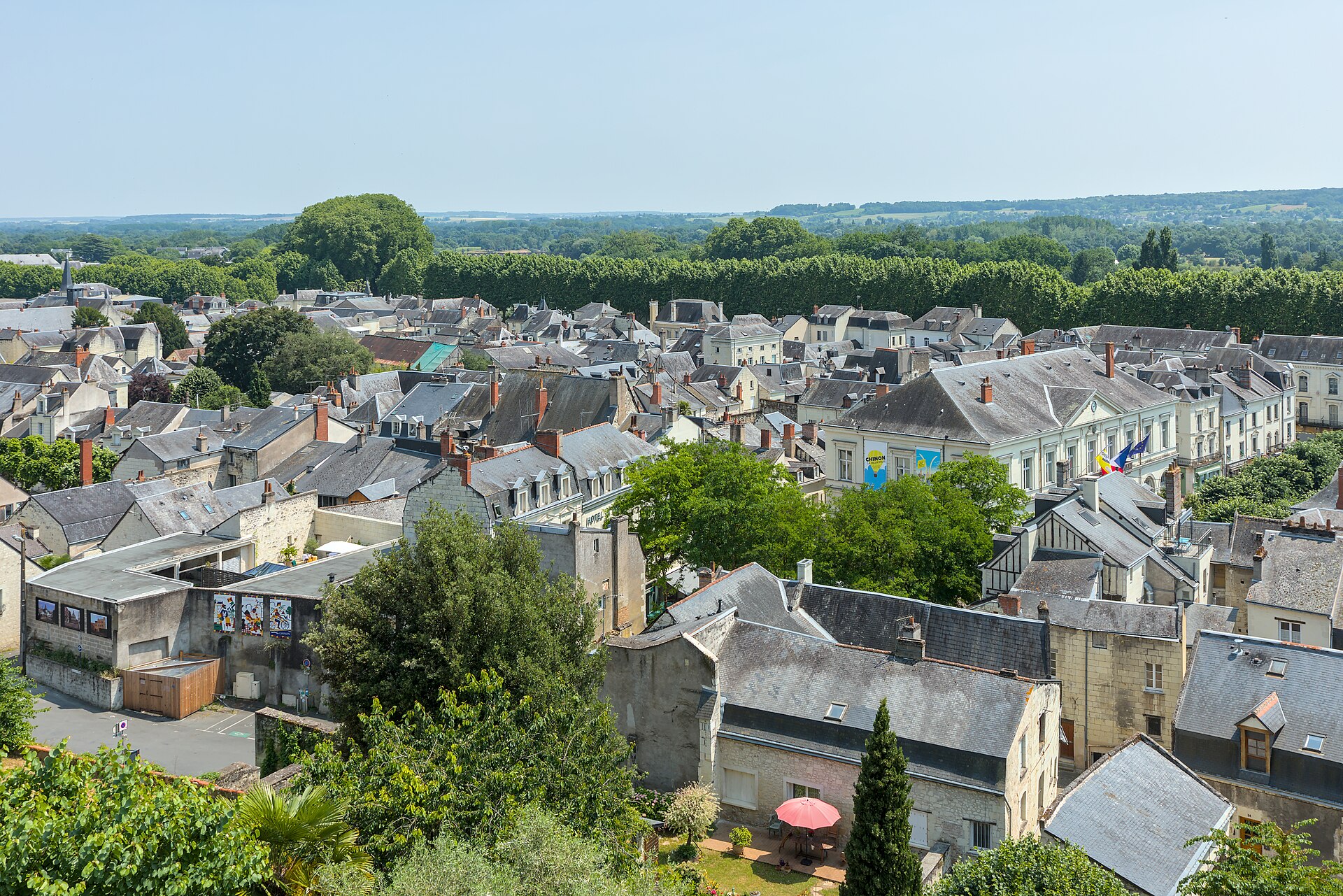
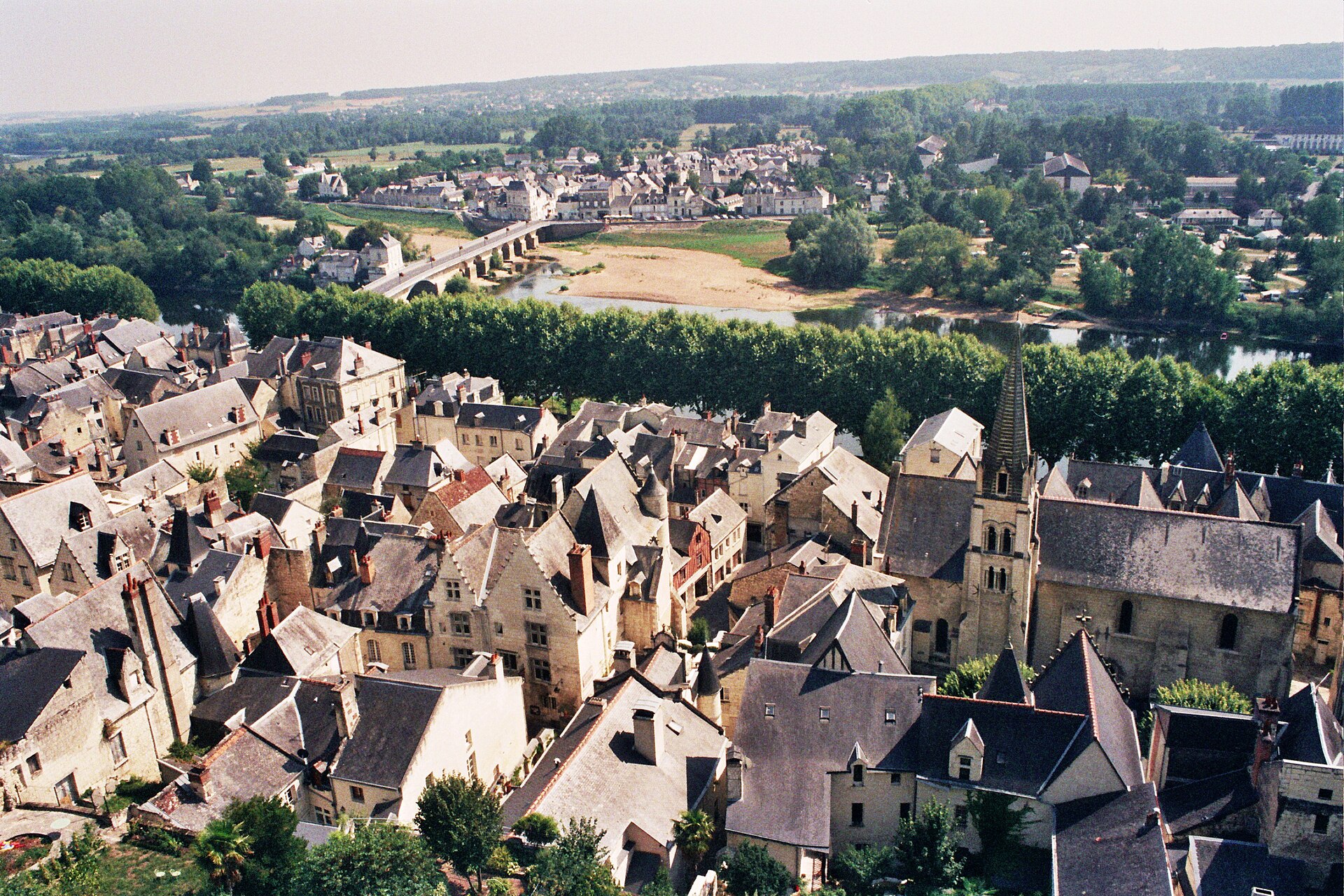
Part of the pleasure of visiting Chinon is the relationship between the great fortress above and the charming old town below. The medieval streets of Chinon huddle along the bank of the Vienne beneath the castle rock, a delightful tangle of old houses, narrow lanes and riverside walks, all overlooked by the long grey walls on the ridge. Fortress and town belong together, two halves of a single historic whole.
From the ramparts, the view over the town, the river and the surrounding vineyards is superb, taking in a landscape that has changed remarkably little in its essentials since the Middle Ages. The Vienne still flows, the bridge still carries traffic across it, and the town still nestles at the foot of the rock, just as it did when Henry II ruled here and when Joan of Arc came to find her king.
This is wine country too, and the vineyards that surround Chinon produce some of the most famous reds of the Loire, adding another dimension to a visit. To explore the fortress in the morning and wander the old town and taste its wine in the afternoon is to experience the full richness of this remarkable place, where history, landscape and living tradition come together above the Vienne.
The town of Chinon has its own claim to fame as the birthplace of the great Renaissance writer Francois Rabelais, whose bawdy, brilliant works are steeped in the landscape and spirit of this corner of France. Between the fortress on its ridge, the medieval streets below and the vineyards all around, Chinon offers a remarkably complete picture of a historic French town, where the great events of the past and the pleasures of the present sit comfortably side by side.
Visiting the Fortress of Chinon
Today the Royal Fortress of Chinon is one of the most rewarding castles to visit in the whole Loire valley, precisely because so much history is packed into its long ridge. You can walk from the ruined Fort Saint-Georges through the Clock Tower into the middle castle, explore the restored royal lodgings where Joan of Arc met the Dauphin, and climb the great tower of the Coudray to see the poignant graffiti of the imprisoned Templars.
The views alone are worth the visit, sweeping out over the Vienne, the old town and the surrounding vineyards from the height of the ramparts. Exhibitions and reconstructions throughout the fortress bring its many stories to life, from the Plantagenet kings to the fall of the Templars and the drama of Joan of Arc, so that a visit is as much a journey through French history as a tour of a castle.
You will find Chinon in the Indre-et-Loire department, in the western Loire valley, easily combined with visits to the great chateaux further east. For exact directions, here is a map link to guide you there: 47.1678, 0.2347. Cross the Vienne, look up at the long grey line of walls riding the ridge, and prepare to walk into one of the richest stories in all of France.
Castles Nearby
The Fortress of Kings and a Maid
Chinon is a fortress where history seems to press in from every side. Along its long grey ridge above the Vienne, the greatest names of the Middle Ages left their mark: the Plantagenet kings who built and died here, the great Eleanor of Aquitaine, the doomed knights of the Temple, and above all Joan of Arc, the peasant girl who walked into its hall and helped to save France.
Much of the mighty fortress is ruined now, but enough survives, and enough has been restored, to make Chinon one of the most moving and evocative castles in France. To walk its walls is to walk through eight centuries of drama, and to stand in the great hall where a king and a visionary once met is to touch one of the turning points of history. Chinon is not just a castle; it is a place where the fate of a nation was decided.
You May Like
Castello di Miramare: The White Castle of a Doomed Prince