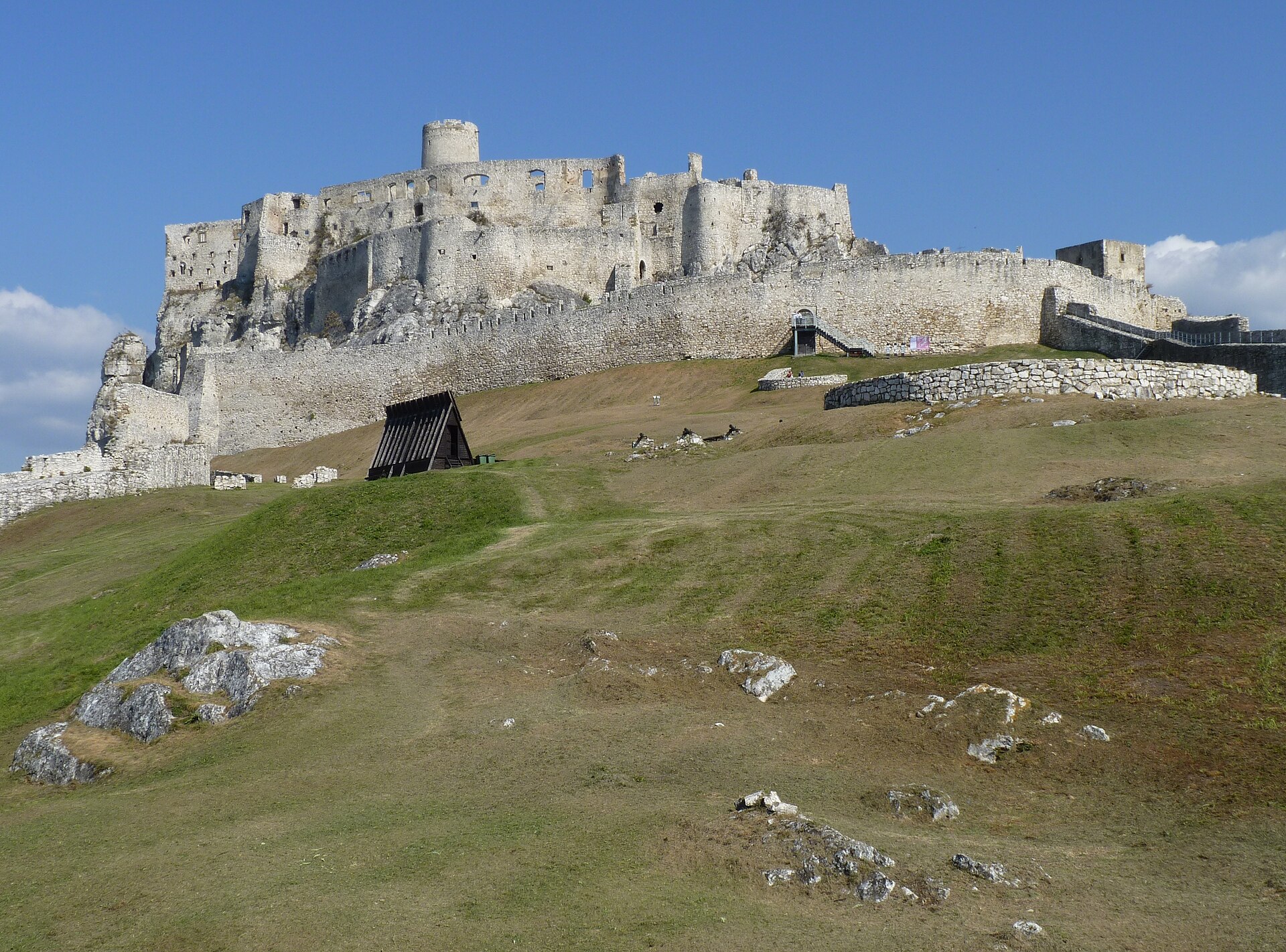
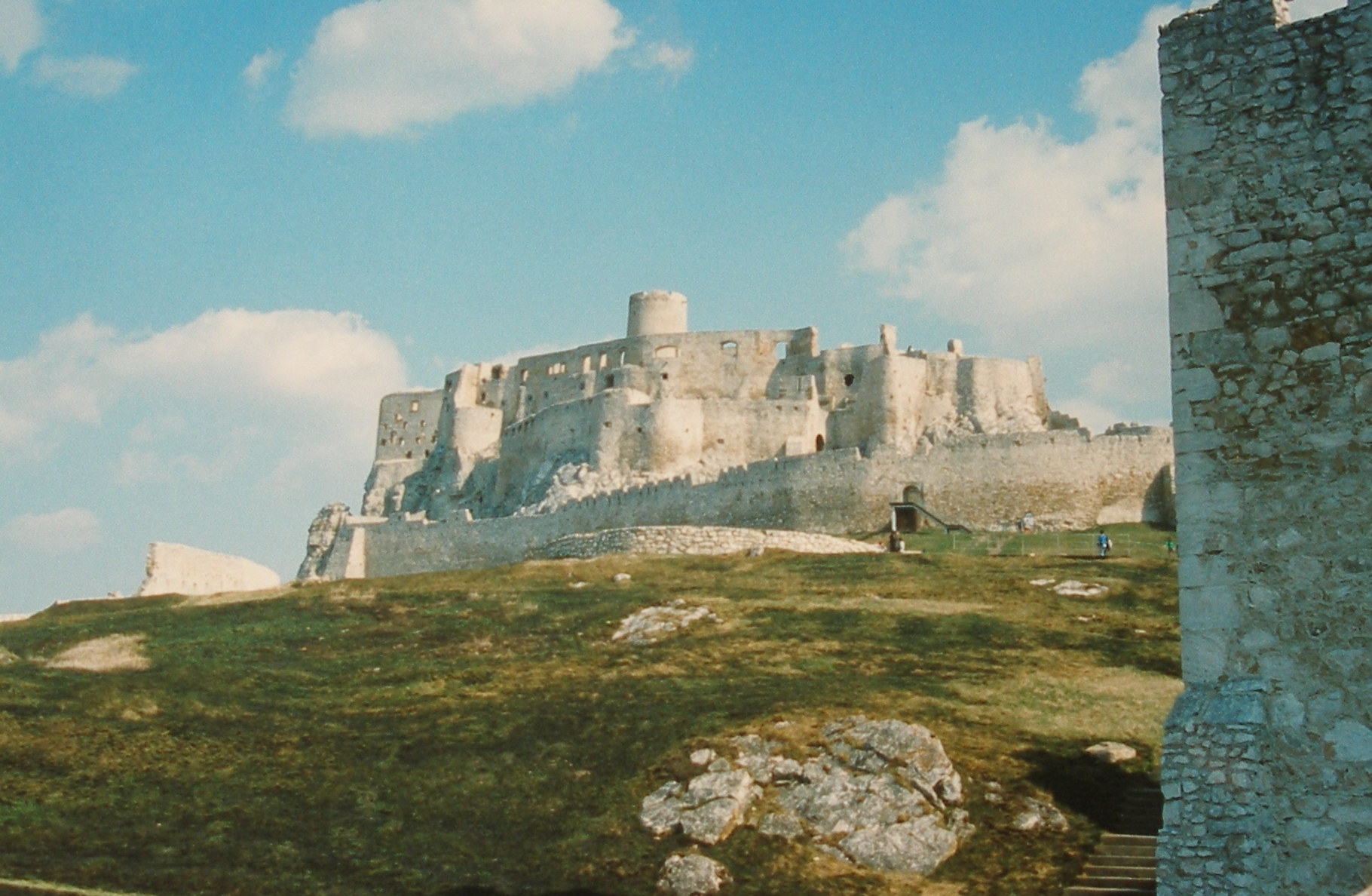
Come over a rise in the road in the Spiš region of eastern Slovakia and the sight stops you cold: an immense sprawl of pale stone walls and towers riding a long grassy hill, so large it seems less like a castle than like a whole ruined city crowning the landscape. This is Spiš Castle, one of the biggest castle complexes in all of Central Europe, and even as a ruin it dominates the countryside for miles around exactly as it was built to do.
There is something about Spiš that no photograph quite prepares you for, and it is the sheer scale. Where most castles are a keep and a wall you can take in at a glance, Spiš unfolds across some four hectares of hilltop, ward after ward, court after court, its white walls following the crest of the ridge in a great ragged crown. It has stood here, in one form or another, for over eight hundred years, and it wears every one of them.
Today it is a magnificent ruin, roofless and open to the sky, a UNESCO World Heritage Site walked by visitors rather than defended by soldiers, and that openness is part of its power. You can wander freely through the bones of a great medieval fortress, from its Romanesque heart to its outer bastions, with the wind moving over the grass and the plain spread out far below. Come with me up the hill, and let us explore the enormous white ruin that has watched over Spiš for eight centuries.
In This Article
- The Largest Castle in the Country
- A Hill Made for a Fortress
- Built to Stop the Mongols
- The Great Round Keep
- Inside the Upper Castle
- The Great Families of Spis
- The Vast Lower Courtyard
- Walls Against Every Enemy
- Weapons, Dungeons and Medieval Life
- The Whole Colossus From Above
- A Whole World Heritage Landscape
- The Fire and the Long Silence
- A Ruin That Found a Second Fame
The Largest Castle in the Country
Let us begin with the numbers, because at Spiš the numbers are the story. The castle covers roughly four hectares, some forty thousand square meters, which makes it one of the largest castle complexes not just in Slovakia but in the whole of Central Europe. It is so big that first-time visitors often mistake it, from a distance, for a fortified town rather than a single castle, and in a sense they are not wrong.
That vastness is why Spiš feels so different from a compact keep-and-bailey castle. It is a layered, sprawling organism of courtyards, palaces, towers and walls, spread along the crest of a long hill, and simply walking from the outer gate to the highest tower takes you through a whole sequence of distinct fortified spaces, each with its own character and history. You do not tour Spiš so much as explore it.
Its importance has been formally recognized. In 1993 Spiš Castle, together with the nearby ecclesiastical town of Spišská Kapitula, the old town of Levoča and other associated monuments, was inscribed as a UNESCO World Heritage Site, honoring not just the castle itself but the entire remarkable cultural landscape of the Spiš region around it. Few ruins carry such a weight of recognition.
If you want to locate this giant on the map before you go, here are the coordinates for the hilltop in eastern Slovakia. Drop a pin and zoom out, and you will see how the castle sits at the heart of a whole historic region, the anchor around which the medieval life of Spiš was organized.

To put the scale in perspective, Spiš is regularly listed among the very largest castle sites in Central Europe, rivalling or exceeding far more famous fortresses in sheer footprint. It is the kind of statistic that sounds like an exaggeration until you stand on the hill and find that, if anything, it undersells the overwhelming impression the place makes in person.
A Hill Made for a Fortress
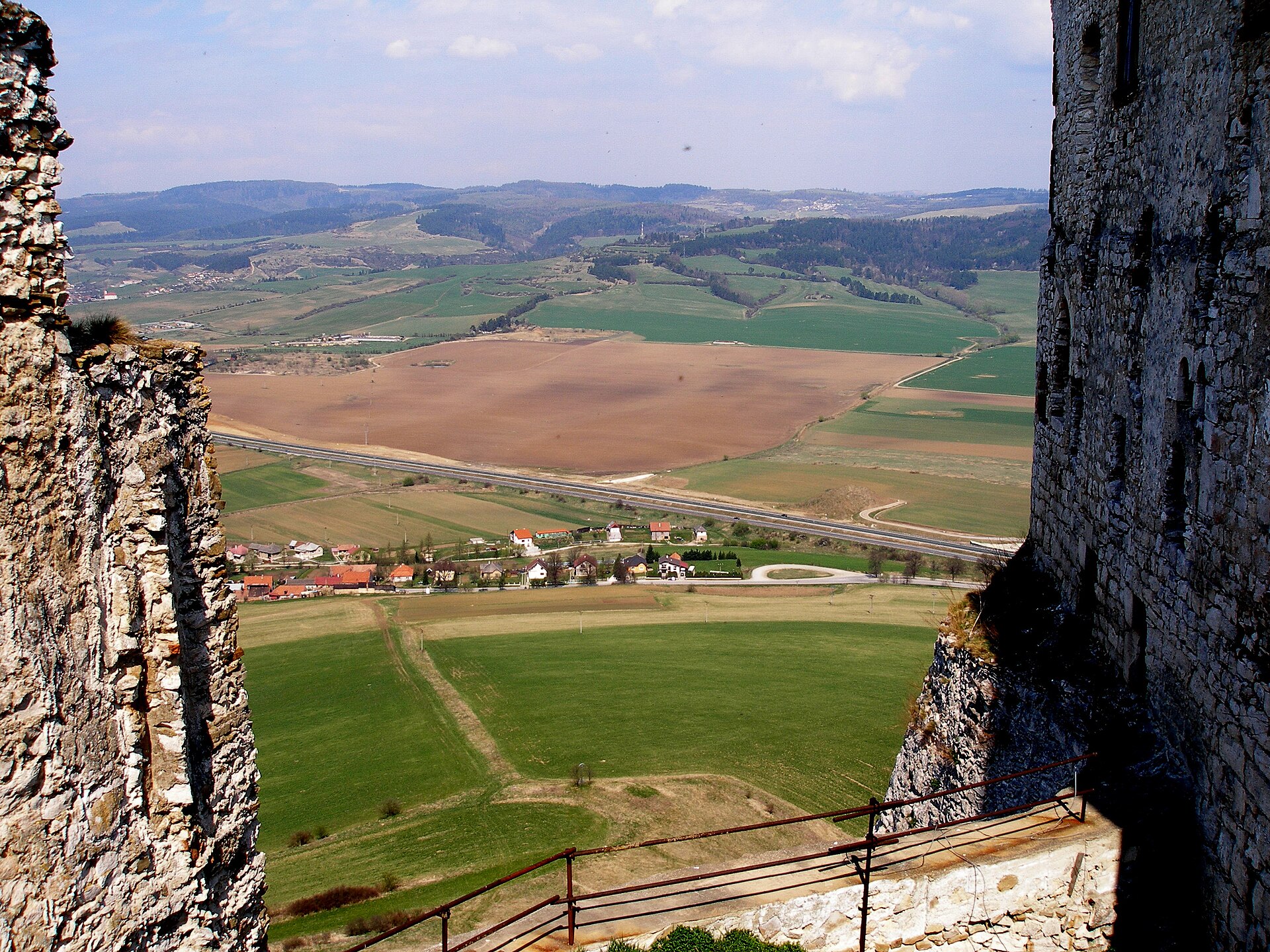
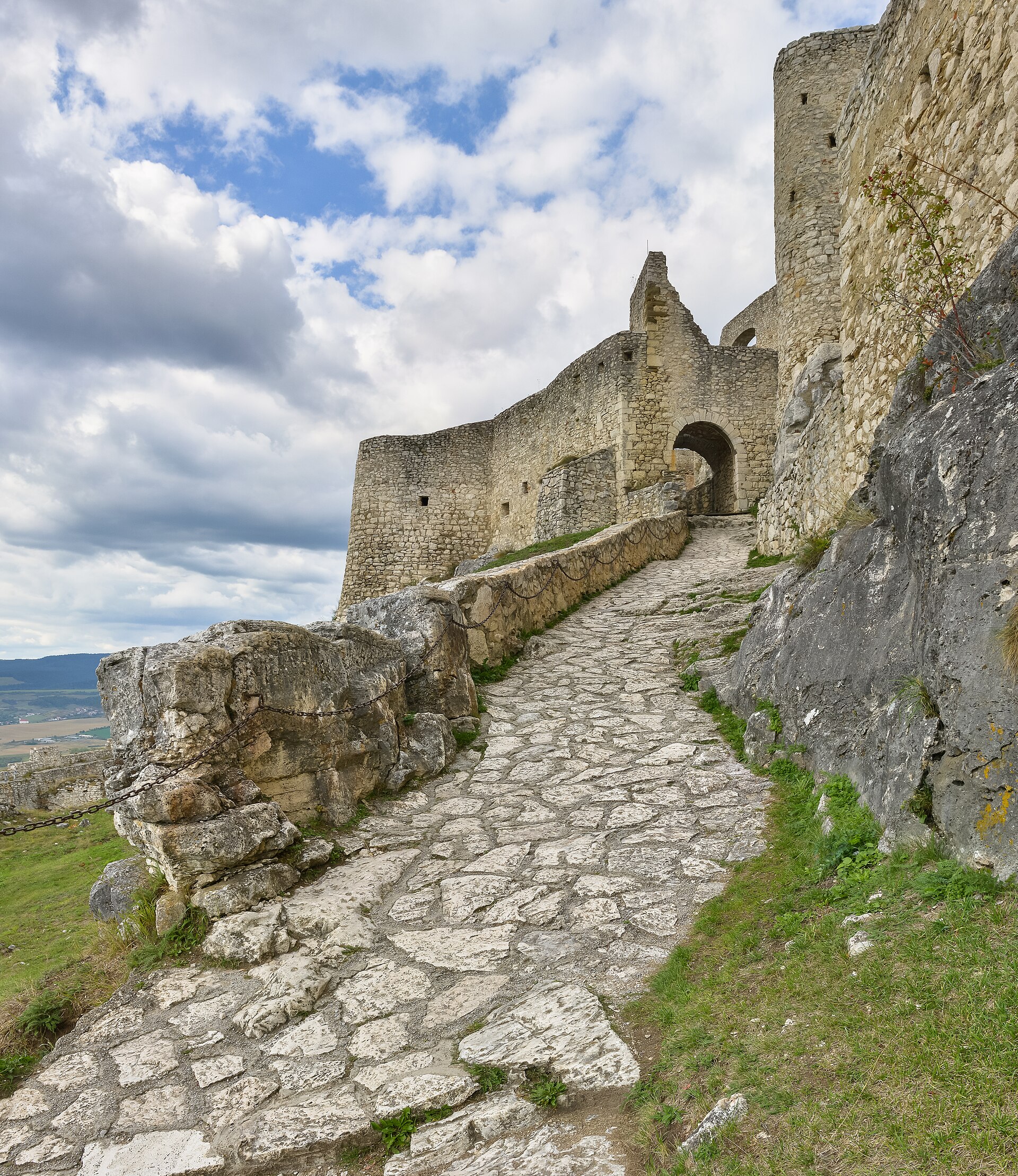
The castle owes its existence to the hill it stands on, a steep bluff of travertine rock that rises abruptly some two hundred meters above the surrounding plain of the Spiš region. Like so many great strongholds, Spiš was placed exactly where nature had already done half the defensive work, giving its builders a commanding height with difficult approaches and long sightlines over the countryside.
The Spiš region itself was, in the Middle Ages, a prosperous and strategically important corner of the Kingdom of Hungary, settled in part by German colonists and dotted with wealthy towns grown rich on trade and mining. A land like that needed a center of royal power and protection, and the great hill above the plain was the natural place to put it, a fortress to watch over and defend the whole region.
From the walls today, that logic is instantly clear. The land falls away on every side, and the eye travels for miles across fields, villages and distant hills. Anyone approaching could be seen long before they arrived, and the castle’s guns and garrison commanded the roads and the countryside utterly. It was the fixed military anchor of the entire Spiš, visible from everywhere and overlooking everything.
There is a pleasing honesty to a castle so completely shaped by its site. Spiš was not dropped onto the landscape but grew out of it, its walls following the contours of the travertine crag, its whole vast plan dictated by the shape of the hill. To understand the castle you have first to understand the rock, and to stand on that rock is to understand at once why a fortress was always going to rise here.
Built to Stop the Mongols
The origins of Spiš Castle reach back into the twelfth century, but its early greatness is bound up with one of the most terrifying events in medieval European history: the Mongol invasion. In 1241 the Mongol armies swept across the Kingdom of Hungary, crushing its forces and devastating the land, and the shock of that catastrophe transformed how the kingdom thought about defense.
In the wake of the Mongol storm, the Hungarian crown and its nobles embarked on a great programme of stone castle-building, determined that next time there would be strongholds capable of withstanding such an assault. Spiš was among the fortresses strengthened and expanded in this period, its early stone defenses raised precisely in response to the Mongol threat, and the great round keep from these years still anchors the upper castle today.
There is a tradition that the castle’s defenses proved their worth, that Spiš held out where so much else had fallen, and whether or not every detail is certain, the broader truth is clear: this was a fortress born of a real and recent terror, built by people who had seen or heard what happened to those who could not defend themselves. That urgency is written into its massive early stonework.
To stand among the oldest parts of Spiš is therefore to stand in the physical memory of the Mongol invasions, a disaster that reshaped the military architecture of an entire kingdom. The castle grew and changed enormously over the following centuries, but its hard early core was laid down by a society bracing itself against the possibility that the horsemen from the east might one day return.
The lesson the kingdom drew from 1241 was permanent and expensive: only stone could stop such an enemy, and only height and mass could make stone tell. Spiš embodies that hard-won conclusion, its early builders determined that this hill, at least, would never fall to horsemen from the steppe as so much of Hungary had.
The Great Round Keep
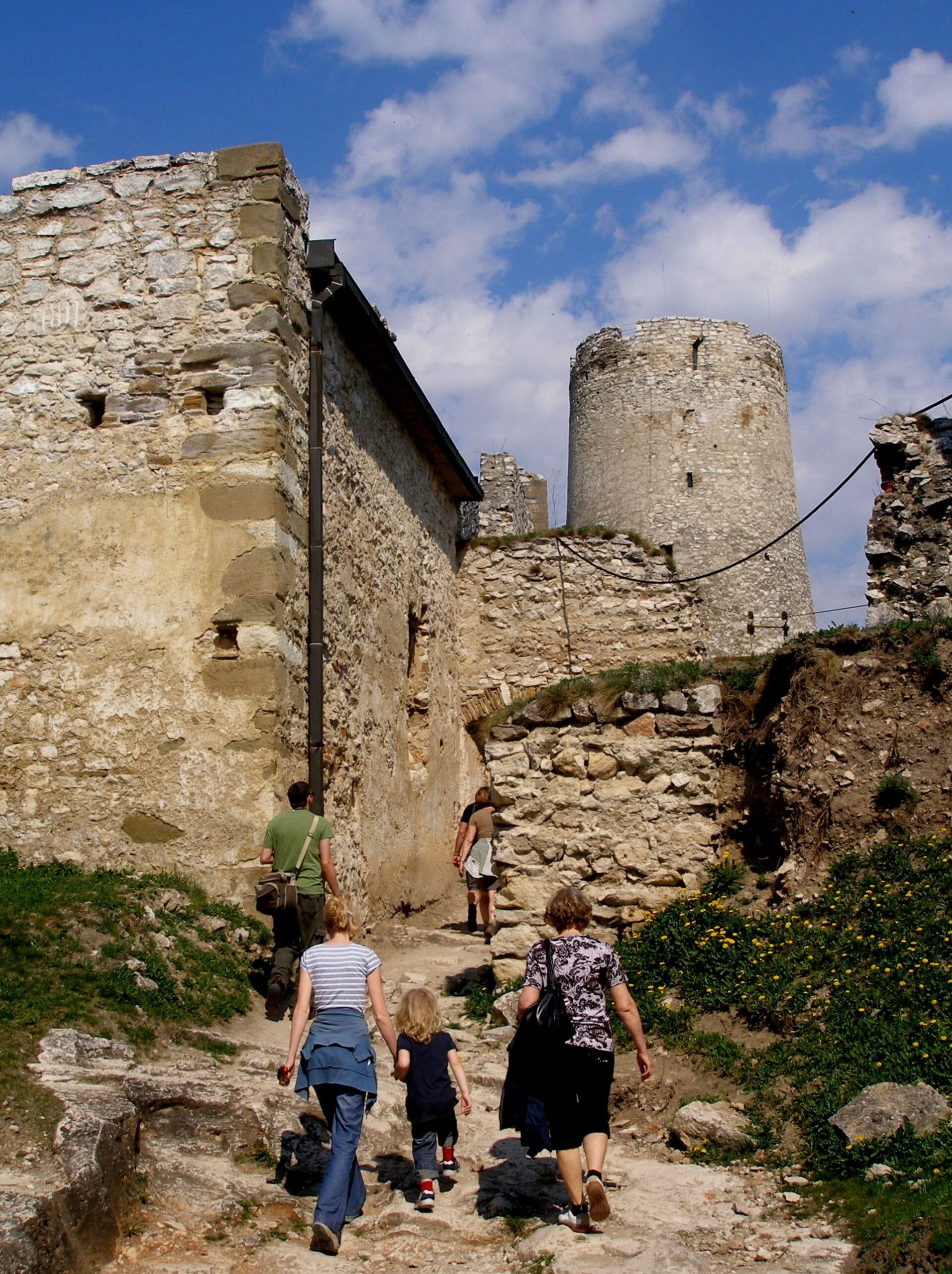
At the highest point of the castle stands its oldest and most iconic structure, the great cylindrical keep, a massive round tower that was the strongpoint and last refuge of the early fortress. Round keeps like this were a hallmark of the most advanced military architecture of their day, their curved walls better able to deflect missiles and resist undermining than the corners of a square tower.
This was the heart of the castle in every sense, the tower to which the defenders would retreat if the outer defenses fell, and the symbol of lordly power over the region. Climbing it today, up the interior stair, rewards you with the finest possible view of the whole complex laid out below, and of the vast sweep of the Spiš countryside beyond, the same commanding prospect its medieval defenders relied upon.
Around this Romanesque core the rest of the castle gradually accumulated over the centuries, ward by ward and court by court, but the round keep remained the fixed anchor of it all, the ancient nucleus that everything else was built to protect and extend. It is the oldest witness on the hill, the tower that has watched the whole long story of Spiš unfold beneath it.
There is something elemental about a great round tower on a high hill. Stripped now of its roof and floors, open to the sky, the keep of Spiš has a raw, monumental presence, a plain statement of strength that needs no ornament. It is the kind of structure that makes the abstract idea of medieval power suddenly concrete, a single mighty cylinder of stone raised to say, quite simply, that here was a place that could not be taken.
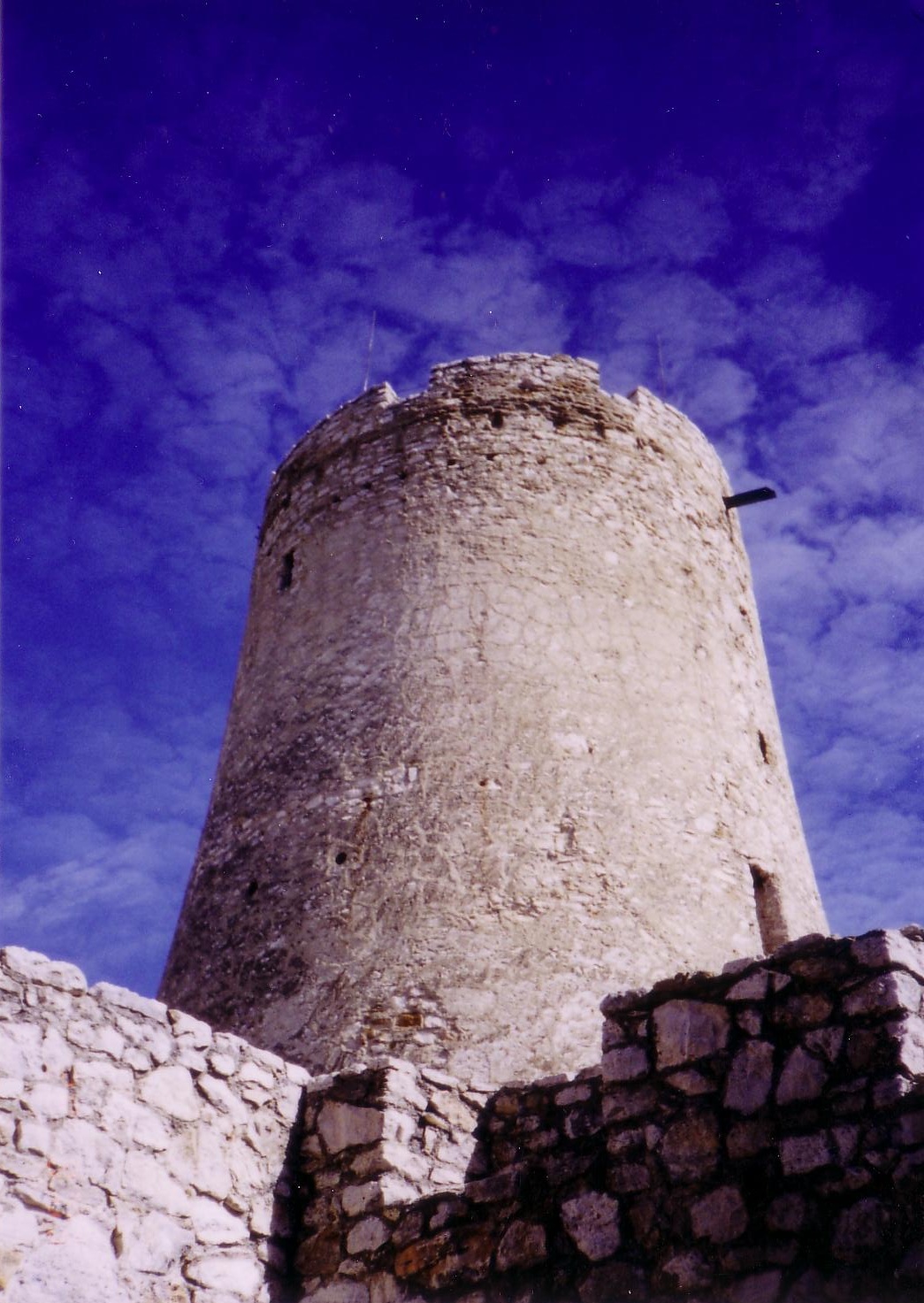
Its walls are staggeringly thick at the base, tapering as they rise, a profile calculated to shrug off both missiles and the slow work of sappers trying to undermine it. Standing at its foot and craning upward, you understand at once that this was never meant to be taken, only endured until an attacker gave up and went home.
Inside the Upper Castle
The upper castle, clustered around the great keep at the summit, was the oldest inhabited part of Spiš and its residential heart. Here stood the Romanesque palace, the hall and chambers where the lords of the castle lived and ruled, and though roofless now, enough survives to give a strong sense of the dignified early medieval architecture that once graced the hilltop.
Over the centuries this core was rebuilt and embellished in the Gothic style and beyond, as successive owners updated their accommodation to match changing tastes and rising ambitions. Windows were enlarged, chapels added, comforts improved, so that the upper castle became a layered record of medieval domestic architecture, each generation leaving its mark on the rooms at the top of the hill.
It is worth remembering, amid the martial grandeur, that Spiš was always a home as well as a fortress. Real families lived here across the generations, with all the ordinary business of eating, sleeping, worshipping and governing, and the upper castle is where that human life was concentrated, in the relative comfort and security of the highest, best-defended part of the complex.
Wandering these upper rooms today, with the sky where the roof once was and grass growing where floors once lay, you feel both the grandeur and the poignancy of the place. This was the center of a great lordship, the seat from which a whole region was ruled, and now it is a beautiful ruin open to the weather, its halls silent, its power long since passed into memory and stone.
The Great Families of Spis
For much of its history Spiš was a royal castle, a stronghold of the kings of Hungary and the administrative center of the surrounding county, but over time it passed into the hands of a succession of powerful noble families who left their mark on its stones and its story. The most prominent among them shaped the castle we see today.
In the fifteenth century the castle came to the Zápolya family, one of the mightiest noble houses in the Kingdom of Hungary, who greatly expanded and modernized it. From this family came John Zápolya, who would become King of Hungary in the turbulent aftermath of the catastrophic Battle of Mohács in 1526, when the Ottoman victory shattered the old kingdom. For a time, then, Spiš was the family seat of a line that reached the very throne.
Later the castle passed to the Thurzó family, wealthy magnates and entrepreneurs, and then, from the seventeenth century, to the Csáky family, who would hold it for generations. Each of these houses adapted the fortress to their needs and the demands of their age, adding fortifications against the Ottoman threat, improving the residential quarters, and governing the region from the great hill.
The story of Spiš is thus also the story of the high aristocracy of old Hungary, the powerful families who rose and fell in the service and rivalry of kings. The castle was their power made visible, a vast statement in stone of their standing, and the different phases of its building are like the chapters of a dynastic saga written across a hilltop in eastern Slovakia.
The rivalries of these families were bound up with the great dramas of Hungarian history, from the succession struggles after Mohács to the long wars against the Ottomans, and Spiš was both a prize and a power base in those contests. To own such a castle was to command a region, and the families who held it were players on the largest stage the kingdom offered.
The Vast Lower Courtyard
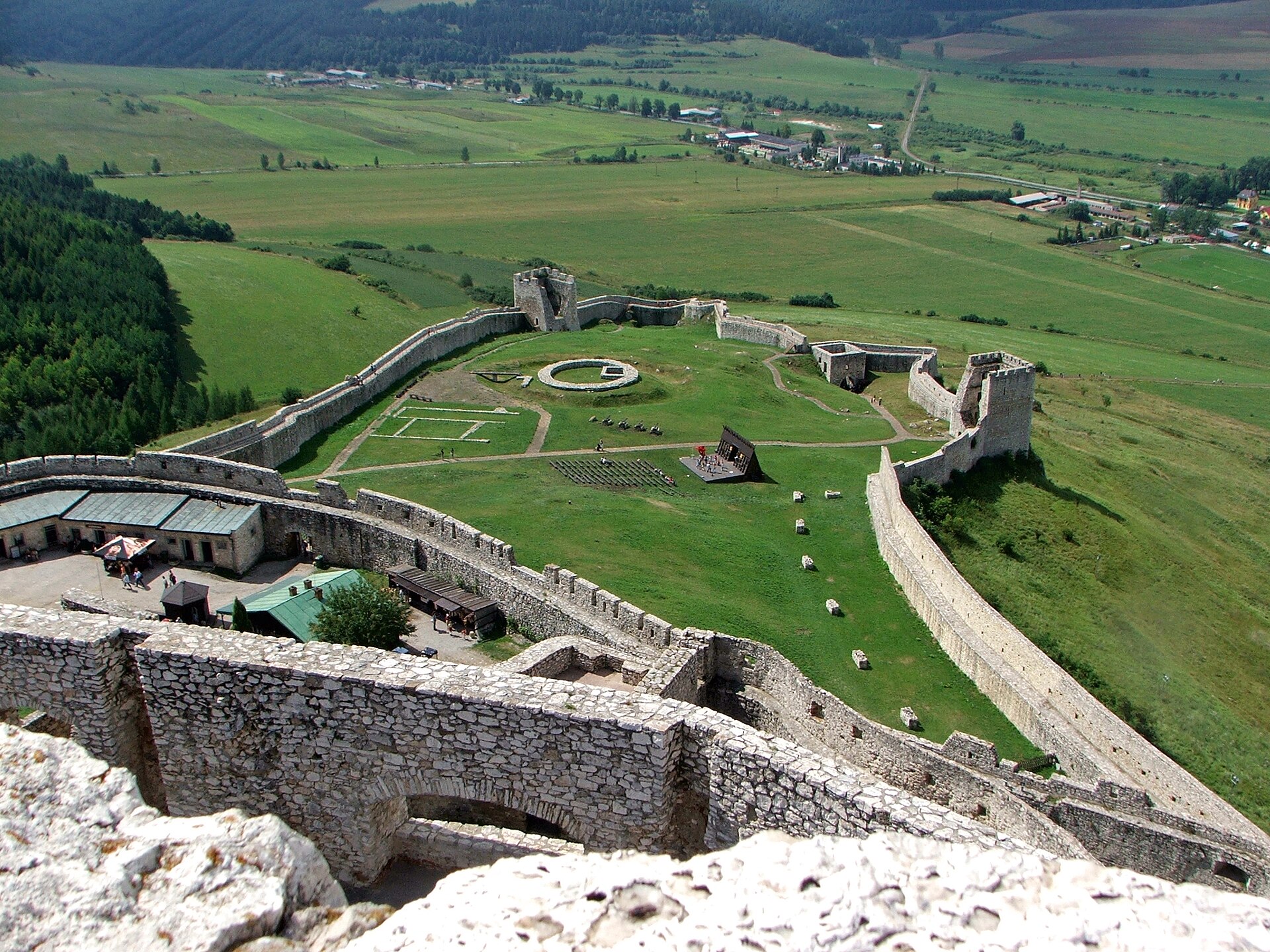
Much of what makes Spiš so astonishingly large is its lower courtyard, an enormous walled enclosure added to the castle in the later medieval centuries that dramatically expanded its footprint. Where the original fortress was concentrated on the summit, this great outer ward extended the defenses far down the hill, wrapping a huge area of ground within the castle walls.
This lower court served practical purposes that the tight upper castle could not. It provided space for the large garrison, for stables, stores and workshops, and, crucially, for the local population and their livestock to take refuge within the walls in times of danger. In an age of raids and invasions, a fortress that could shelter not just its lord but the surrounding community was enormously valuable.
The scale of this enclosure is what gives visitors their first, overwhelming impression of the castle’s size. Walking across the lower courtyard, with the walls stretching away on every side and the upper castle rising beyond, you grasp just how much more than a keep Spiš really was. It was a fortified refuge for an entire region, a walled world unto itself.
That combination, an ancient defensible core plus a vast later enclosure, is exactly what makes Spiš one of the biggest castles in Central Europe. It grew not by building ever higher but by reaching ever outward, embracing more and more of the hill within its defenses, until it became less a castle in the usual sense than a whole fortified landscape crowning the Spiš plain.

In peacetime this great space would have bustled with the ordinary business of a fortress community, soldiers and servants, animals and wagons, smiths and cooks, an entire working settlement enclosed by walls. The emptiness of the courtyard today makes that vanished life feel all the more vivid to the imagination.
Walls Against Every Enemy
The defenses of Spiš were tested and strengthened against a long parade of enemies over the centuries, and its walls tell that story. Raised first against the memory of the Mongols, they were reinforced again and again as new dangers arose, so that the fortifications you walk today are a composite of several ages of military need, each layer added in response to a fresh threat.
In the fifteenth century the castle had to reckon with the Hussite wars that spilled out of neighboring Bohemia, as armies and raiders moved through the region, and later, most pressingly, with the long shadow of the Ottoman advance after the disaster of Mohács in 1526. With Ottoman power pressing into Hungary, castles like Spiš were modernized with gun bastions and thicker walls designed for the age of artillery.
Through all of this, the castle’s essential strength held. Its combination of height, massive walls and layered wards made it a genuinely formidable proposition, and it was never taken by storm by any of the enemies who threatened the region. Like the greatest fortresses, its reputation for impregnability was itself a kind of defense, discouraging assaults that were unlikely to succeed.
Walking the circuit of the walls, you can read this long defensive evolution in the stonework, from the rounded forms of the early medieval fortress to the angled, cannon-resistant bastions of the early modern age. Spiš was never a static monument but a living fortress, constantly adapting to survive, and its walls are the record of eight centuries of a region learning, over and over, how to defend itself.
Weapons, Dungeons and Medieval Life
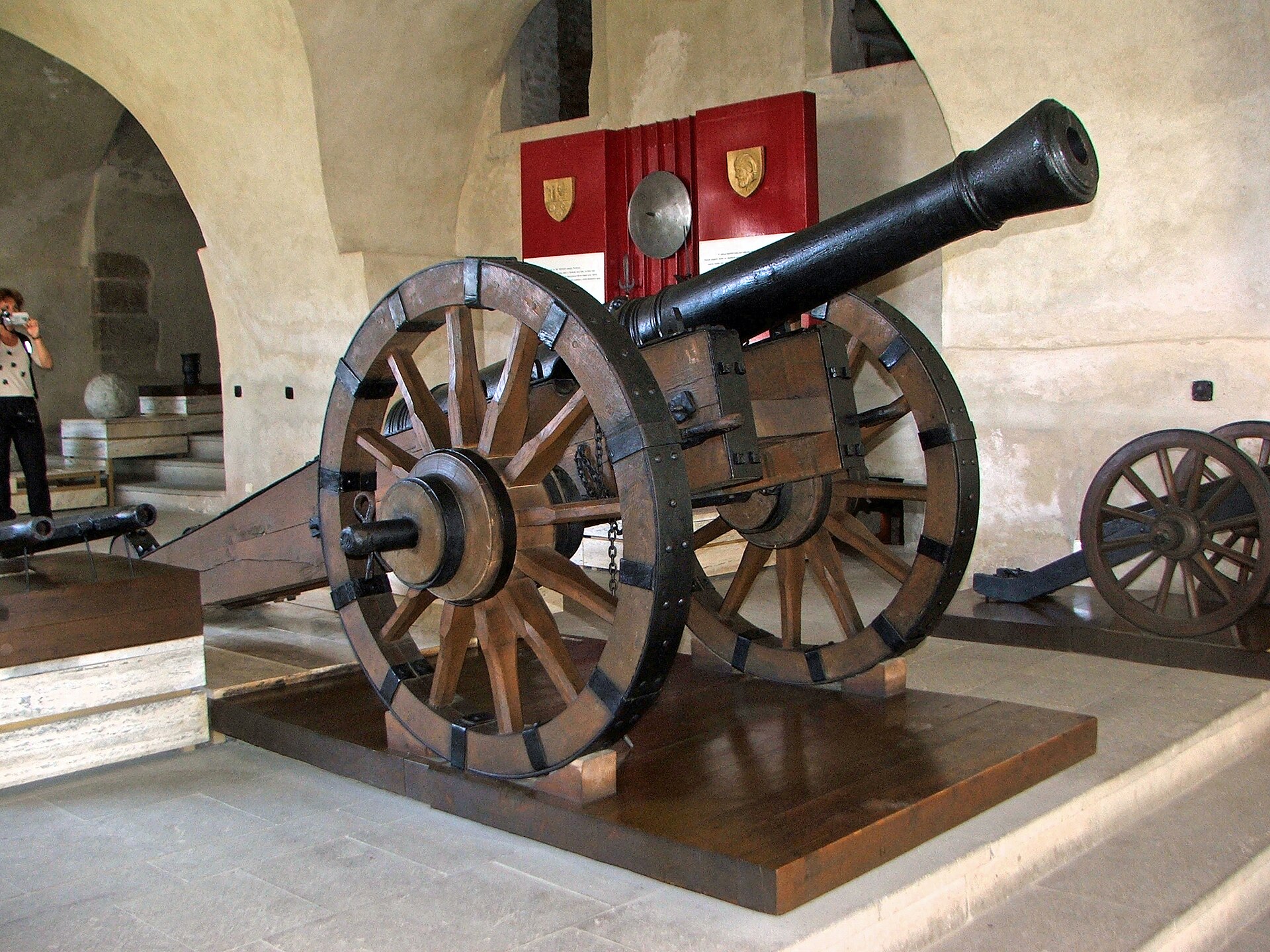
Although Spiš is a ruin, it is far from empty, for parts of it house a museum that brings the medieval fortress vividly back to life. Here you can see collections of weapons and armor, the tools of the warfare the castle was built to wage, along with exhibits that reconstruct the daily life of the people who lived and worked within these walls across the centuries.
Among the more chilling displays is the castle’s torture chamber, a reminder that a great fortress was also a center of justice and punishment in an age when both could be brutal. The lord of Spiš held power over the surrounding region, and that power included the grim apparatus of medieval law, dungeons and instruments that make the modern visitor grateful to be looking rather than experiencing.
These exhibits do important work, because it is easy, faced with so much romantic ruined stone, to forget that castles were places of real and often harsh human life. Spiš was a working center of power, where soldiers drilled, servants labored, prisoners suffered and lords ruled, and the museum restores that human dimension to the empty halls, peopling the ruin in the imagination.
There are also demonstrations and events that many visitors love, from displays of medieval crafts to birds of prey flown from the walls, all of which help conjure the living fortress out of the silent stones. Spiš rewards the visitor who lingers, reads the exhibits and imagines the vanished life, transforming a walk among ruins into a real encounter with the Middle Ages.
Children in particular tend to leave Spiš enchanted, having climbed real towers, peered into real dungeons and watched real demonstrations of medieval arms, and that ability to make history tangible is one of the ruin’s quiet triumphs. It teaches without a textbook, simply by letting you walk where the Middle Ages happened.
The Whole Colossus From Above
It is only from above that you can truly take in the scale of Spiš, and the aerial view is genuinely breathtaking. The white walls sprawl across the entire crest of the hill, ward opening onto ward, the round keep at one end and the great lower courtyard stretching away below, the whole vast complex following the shape of the ridge like a stone crown fitted to the land.
From this height the logic of the place becomes clear. You can trace how the castle grew, the tight ancient core at the summit and the successive enclosures reaching down and out, each expansion adding to the defended area until the fortress reached its enormous final extent. The plan is the castle’s whole history laid out at a glance, growth ring upon growth ring of stone.
The setting, too, is best appreciated from above, the isolated hill rising from the plain, the town of Spišské Podhradie huddled at its foot, the roads and fields of the Spiš region spreading away in every direction. You see instantly why this hill was chosen and why the castle mattered, its command over the surrounding country total and obvious.
For those of us who cannot take to the air, the next best thing is to watch the castle filmed from above and walked through on the ground, and this tour does exactly that, sweeping over the walls and courts to reveal the sheer size of the place. No description on a page can quite match the moment when you see, all at once, just how enormous this ruined fortress really is.
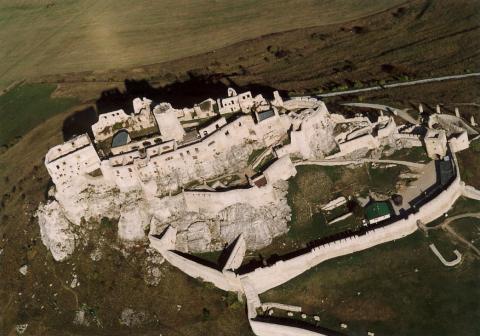
Photographers and drone pilots have made the aerial view of Spiš one of the iconic images of Slovakia, and it is not hard to see why: few sights anywhere combine such scale, such setting and such evident age in a single frame. It is the picture that launches a thousand journeys to this quiet corner of eastern Europe.
A Whole World Heritage Landscape
Spiš Castle does not stand alone, and part of what makes it so special is the extraordinary historic landscape it presides over. At the foot of the castle hill lies the little town of Spišské Podhradie, and just across the way sits Spišská Kapitula, a remarkable walled ecclesiastical town, sometimes called the Slovak Vatican, that was for centuries the religious center of the region, complete with its own fine Romanesque cathedral.
A little further off lies Levoča, one of the best-preserved medieval towns in Slovakia, famous for its great church containing the tallest Gothic wooden altar in the world, a masterpiece by the medieval carver Master Paul. Together the castle, the ecclesiastical town, the burgher town and their associated monuments form a single, astonishingly complete picture of medieval life in all its dimensions, secular and sacred.
It was this whole ensemble, not just the castle, that UNESCO recognized as a World Heritage Site, and rightly so. Here you can see, within a few miles of one another, the fortress of the lords, the seat of the church, the town of the merchants and the works of the artists, all surviving together in a way that is genuinely rare. The region is a kind of medieval world in miniature.
To visit Spiš properly, then, is to visit not just a castle but a landscape, to look out from the ruined walls at the ecclesiastical town nearby and understand that you are seeing an entire medieval society preserved in stone. The castle is the crown of it, the greatest and most dominant monument, but it is one jewel in a setting of many, and the whole is greater even than its magnificent parts.
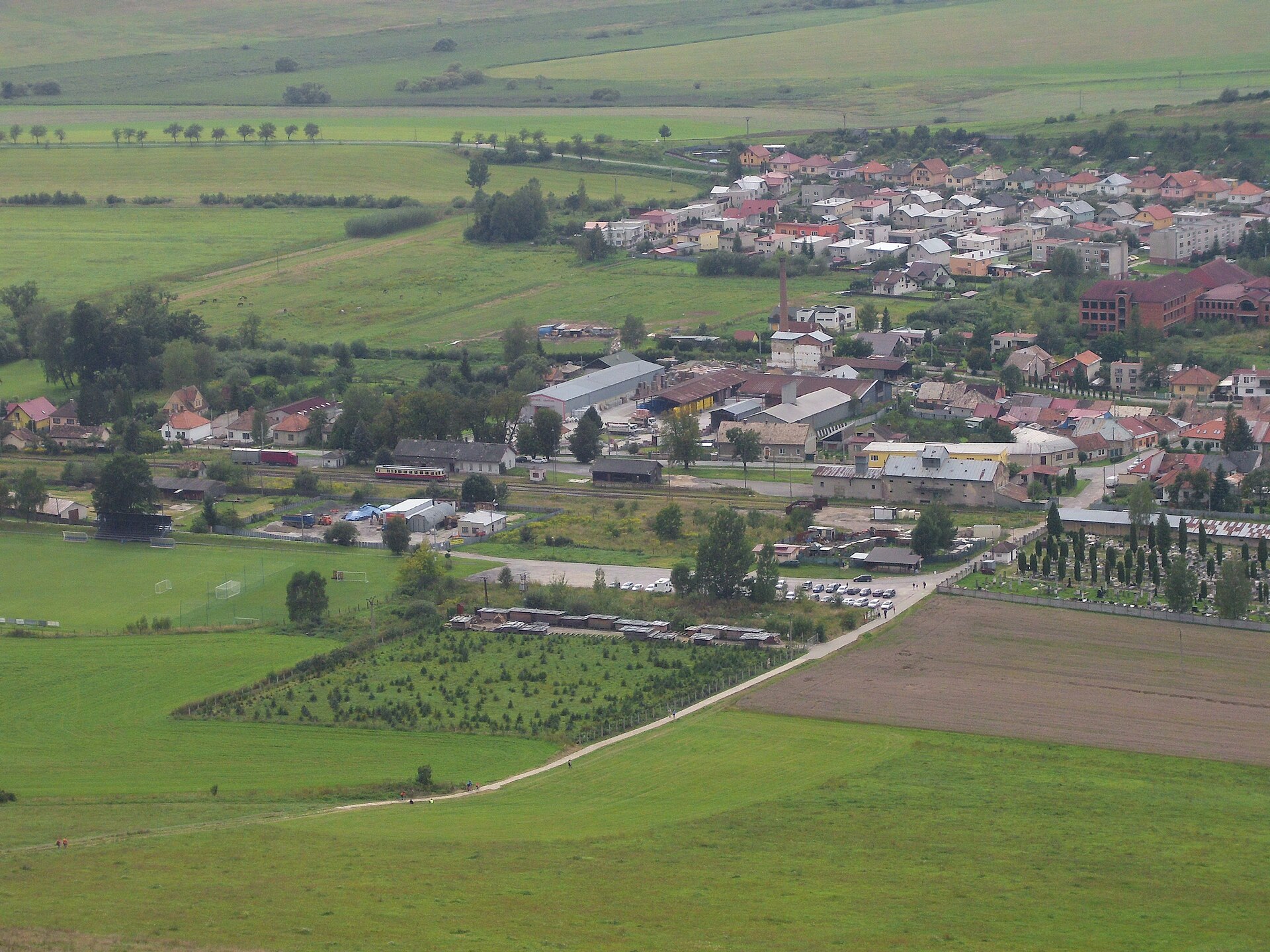
This clustering of monuments was no accident of geography but the natural result of a rich, well-organized medieval society, in which castle, church and town each had its place and all lay within sight of one another. The UNESCO listing simply formalized what the landscape itself makes obvious, that here the Middle Ages survive not as a single relic but as a whole living pattern.
The Fire and the Long Silence
For all its strength against human enemies, Spiš Castle was undone in the end by fire. In 1780 a catastrophic blaze swept through the complex, and the great fortress, by then no longer militarily vital and used more as a storehouse and residence, was gutted. The roofs and interiors were destroyed, and the castle was never rebuilt, beginning its long slow decline into the ruin we know today.
There are various stories about how the fire started, from lightning to careless soldiers, but the result was the same: the abandonment of one of the largest castles in Central Europe. Its owners moved to more comfortable residences elsewhere, and the vast complex was left to the weather and the centuries, its walls slowly crumbling on the lonely hill above the plain.
Yet there is a strange gift in this ruin. Because the castle was gutted and abandoned rather than modernized or demolished, it was frozen, in a sense, as a great medieval and Renaissance shell, never overwritten by later rebuilding. What we see is the raw architecture of the fortress itself, stripped of later clutter, its bones laid bare against the sky, and there is a stark beauty in that openness.
In the twentieth century, and especially in recent decades, extensive work has gone into stabilizing and partly restoring the ruins, making them safe for the many visitors who now come, and housing the museum within them. The castle will never again be the roofed, living fortress it once was, but it has found a new life as a magnificent monument, its long silence after the fire giving way at last to the footsteps of visitors from around the world.
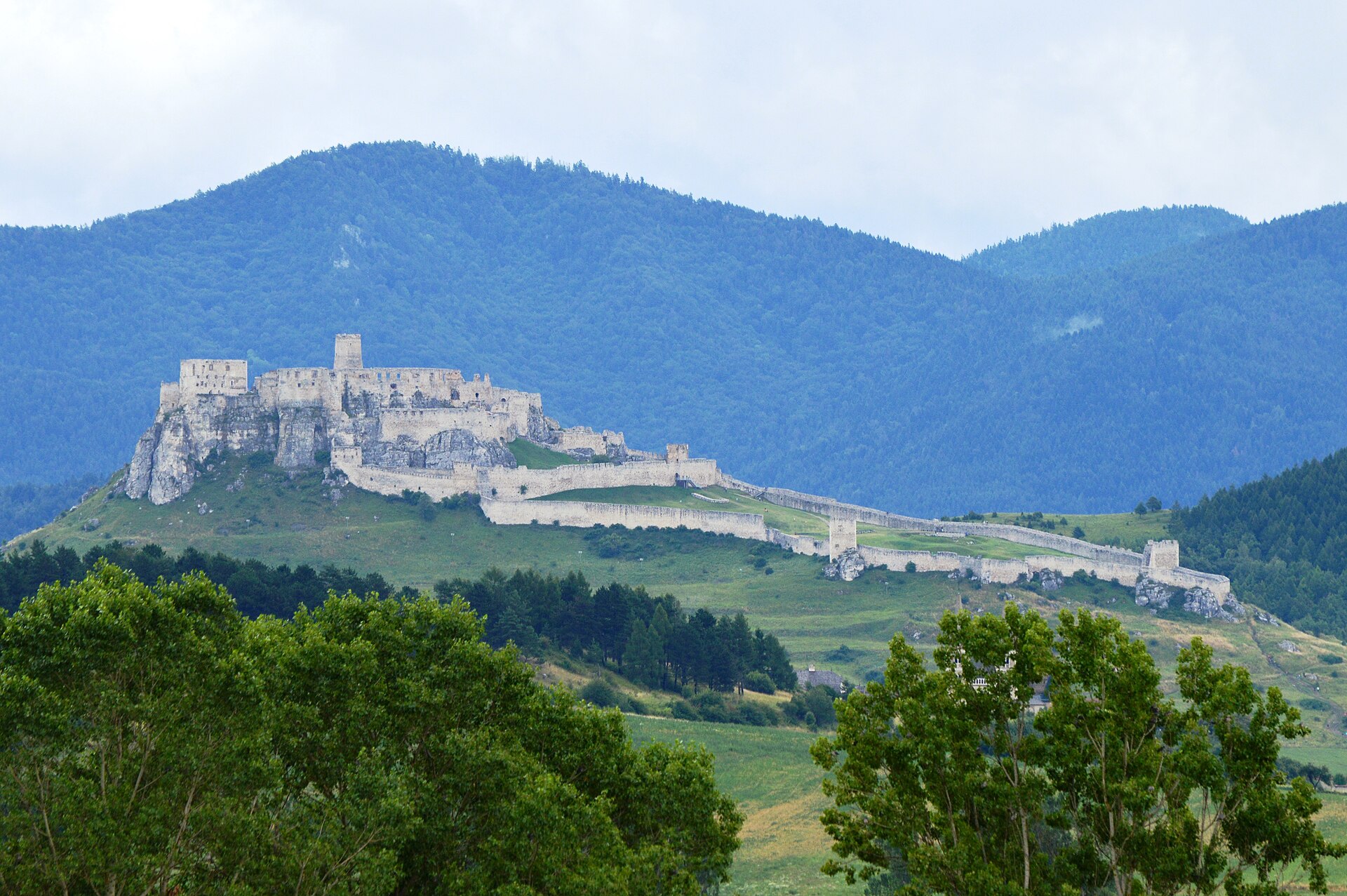
Visitors sometimes feel a pang at the thought of so much grandeur lost to a single night’s blaze, but the ruin has its own eloquence. There is a truthfulness to a castle that shows its age honestly, neither faked nor over-restored, and Spiš wears its centuries and its scars with a dignity that a too-perfect reconstruction could never match.
A Ruin That Found a Second Fame
In its afterlife as a ruin, Spiš has found an unexpected new kind of fame, for its dramatic silhouette and vast, authentic medieval spaces have made it a favorite location for filmmakers. Its walls and courtyards have stood in for castles and fortresses in a number of historical and fantasy films, so that many people have seen Spiš on screen without ever knowing its name.
It is easy to see the appeal for a director. Few places offer such an enormous, genuine medieval fortress, open and walkable, with no modern intrusions to spoil the illusion. Spiš can play almost any great castle of the imagination, and its ruined grandeur lends an instant authenticity that no film set could match, a real weight of centuries behind every shot.
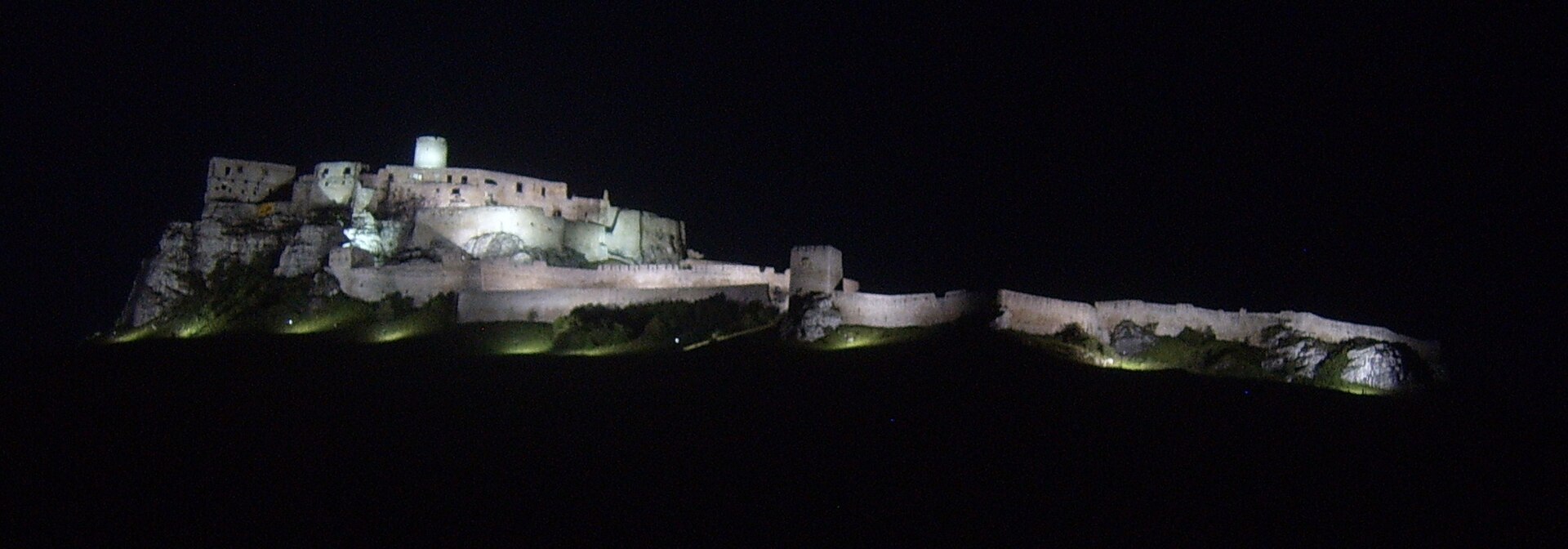
For the ordinary visitor, too, the castle is at its most magical in certain lights, floodlit against the night sky or catching the low sun of early morning and evening, when the white walls glow and the great keep stands sharp against the horizon. At such moments the ruin seems to shrug off its centuries and loom over the plain with all its old commanding power restored.
That a gutted, abandoned ruin should enjoy such a vivid second life says something about the enduring power of the place. Spiš was built to dominate its landscape and impress all who saw it, and it still does exactly that, whether on a cinema screen or from the road across the plain. Eight hundred years on, the great white castle on the hill has lost none of its ability to stop you in your tracks.
Castles Nearby
- Hochosterwitz Castle: The Fortress of Fourteen Gates
- Hohensalzburg Fortress: The Great White Stronghold That Never Fell
Why These Vast White Ruins Still Command the Plain
Spiš Castle is a lesson in the grandeur of ruins. Whole and roofed, it would have been an impressive fortress; gutted and open to the sky, it has become something almost more powerful, a vast skeleton of medieval ambition sprawled across a hilltop, its scale laid bare for anyone to walk through and wonder at. Few places let you feel the reach of medieval power so directly.
What stays with you is the size, always the size. This was not a castle but a fortified world, a hill wrapped in walls, big enough to shelter a garrison and a region, ruled by kings and by the greatest families of old Hungary. To stand in its lower courtyard and look up at the keep on the summit is to grasp, as no book can teach you, just how monumental the strongholds of the Middle Ages could be.
So when you travel through eastern Slovakia, make the climb to the great white ruin on its hill. Walk its courts, climb its keep, look out over the Spiš landscape with its churches and towns, and let the sheer scale of the place work on you. Spiš Castle has watched over this plain for eight hundred years, and even as a ruin it remains one of the most unforgettable fortresses in all of Central Europe.
You May Like
Mafra, the Palace a King Built From a Vow


2 thoughts on “Spis Castle: The Vast White Ruin That Crowns a Slovak Hill”