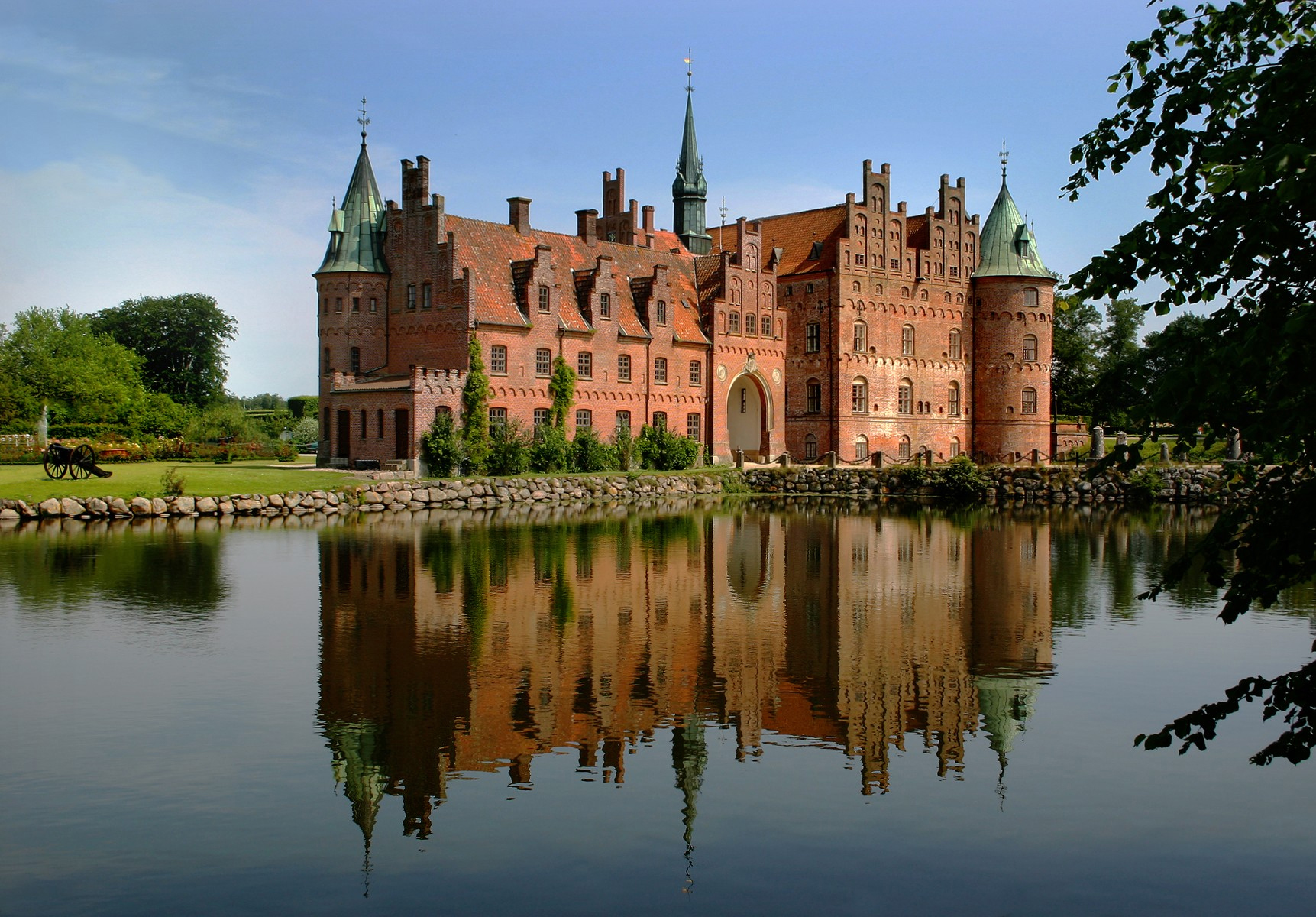
On the Danish island of Funen there stands a castle so perfect that it seems almost unreal, a Renaissance stronghold of red brick rising sheer from the waters of its own lake, its twin towers and stepped gables doubled flawlessly in the mirror below. This is Egeskov, and it holds a remarkable distinction: it is the best-preserved moated Renaissance castle in all of Europe, a fortress-palace that has survived, essentially intact, for nearly five hundred years.
Egeskov was built in an age of danger and civil war, a fortified island refuge designed to keep its owners safe amid the turbulence of sixteenth-century Denmark, and yet it is also a place of beauty and legend, surrounded now by some of the finest gardens in the country and haunted by one of Denmark’s strangest folk tales. It is at once a serious fortress and an enchanted fairy-tale castle rising from the water.
So come with me to the green island of Funen, in the heart of Denmark, and let us explore the floating fortress of Egeskov. We will discover how it was built on a forest of oak piles driven into a lake, walk its towers and halls, wander its famous gardens and mazes, and meet the little wooden man in the attic whose legend, they say, holds the fate of the whole castle in his tiny hands. Egeskov is one of the wonders of Denmark, and one of the loveliest castles in Europe.
In This Article
- Europe’s Best-Preserved Water Castle
- Built on a Forest of Oak
- A Fortress Disguised as a Palace
- Twin Towers and Stepped Gables
- Inside the Living Castle
- Treasures and a Fairy Palace
- Five Centuries of One Family’s Care
- The Little Wooden Man in the Attic
- The Whole Estate From Above
- Famous Gardens and Living Mazes
- Garden Rooms and Flowering Terraces
- Museums of Wheels and Wings
- A Living Fairy Tale
Europe’s Best-Preserved Water Castle
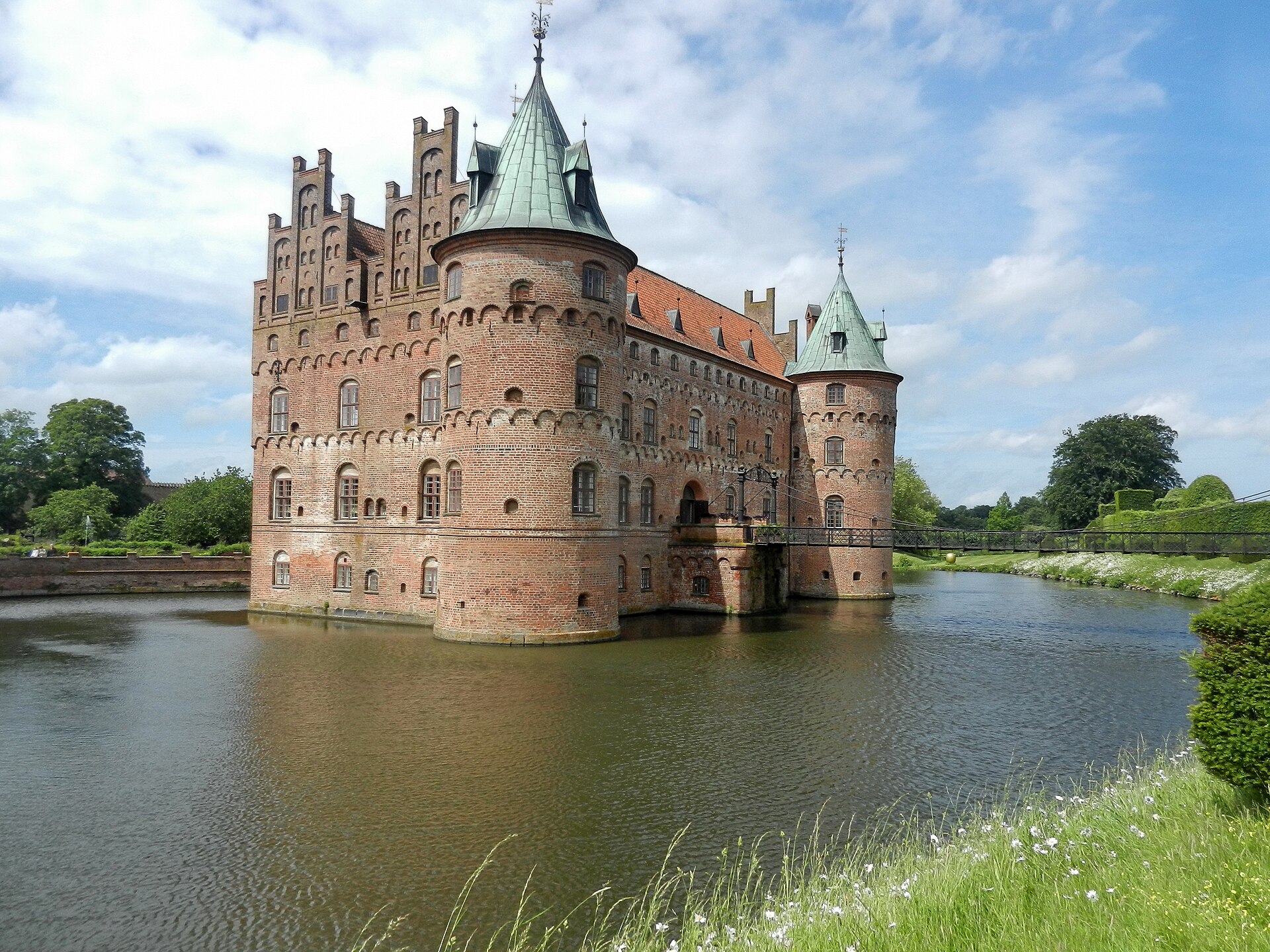
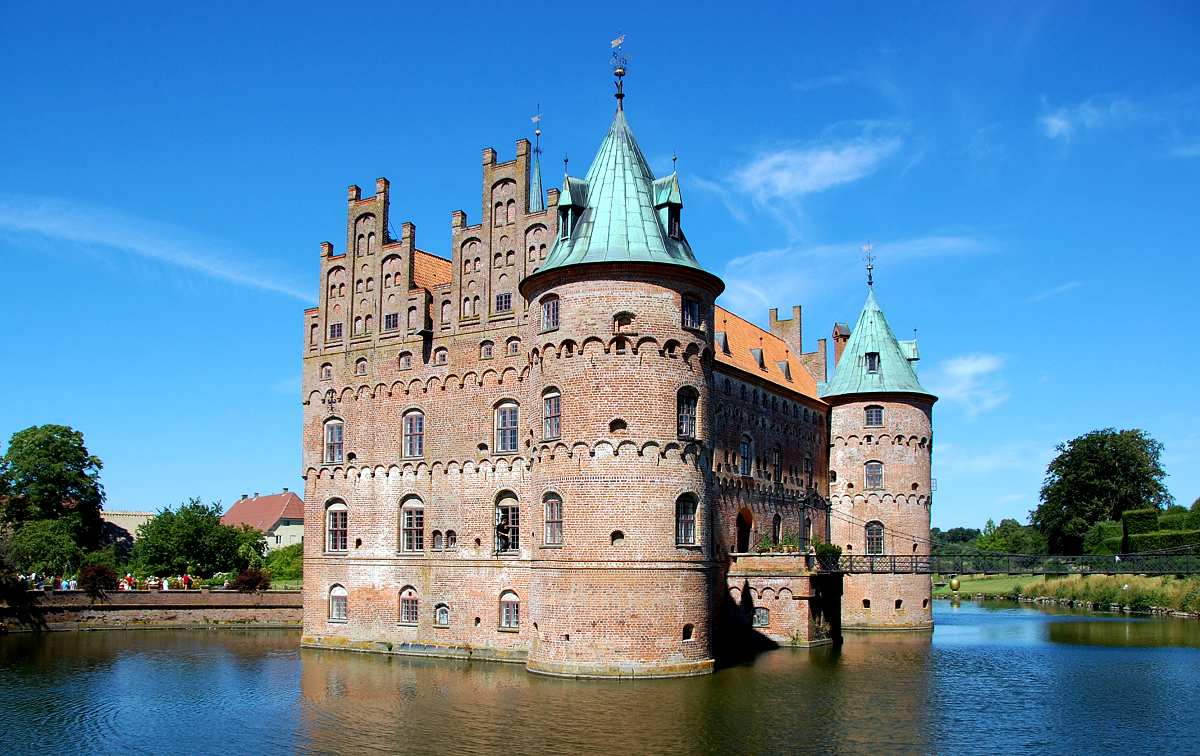
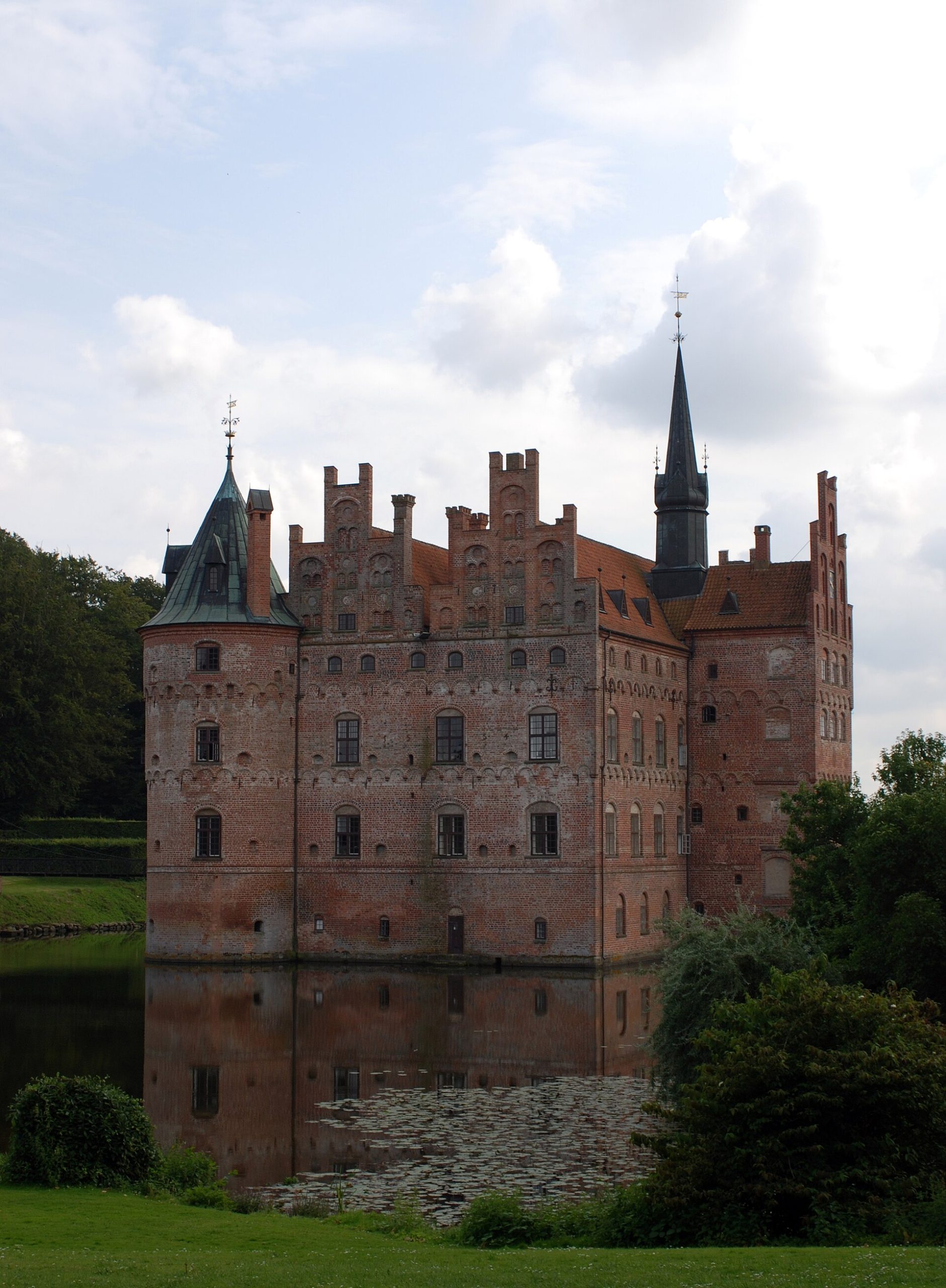
Egeskov holds a title it wears with quiet pride: it is the best-preserved moated Renaissance castle in Europe. Standing on the island of Funen, in the green heart of Denmark, it rises directly from the waters of a small lake, its red-brick walls, twin round towers and stepped gables reflected with mirror-like perfection in the surface below. It is one of the most beautiful and complete castles of its kind anywhere in the world.
What makes Egeskov so special is precisely its completeness. Where so many castles have been ruined, rebuilt or altered beyond recognition, Egeskov survives essentially as it was built in the mid-sixteenth century, a genuine and intact example of the Renaissance water castle, a type of fortress that combined the defensive strength of a moat with the elegance of the new Renaissance style. To visit it is to see the real thing, not a reconstruction.
The setting is everything. Surrounded entirely by water, the castle seems to float upon its lake, and the reflection doubles its beauty, so that from the right angle the whole structure and its mirror image form a single, symmetrical vision of towers and gables. This watery isolation was both defensive and beautiful, protecting the castle in dangerous times while creating one of the most enchanting sights in Denmark.
If you want to find this floating jewel before you visit, here are the coordinates for the castle on Funen. Zoom in and you will see it sitting in its lake amid the gardens and parkland, the twin-towered fortress rising from the water in the gentle landscape of the Danish island, a Renaissance dream preserved almost unchanged for nearly five centuries.
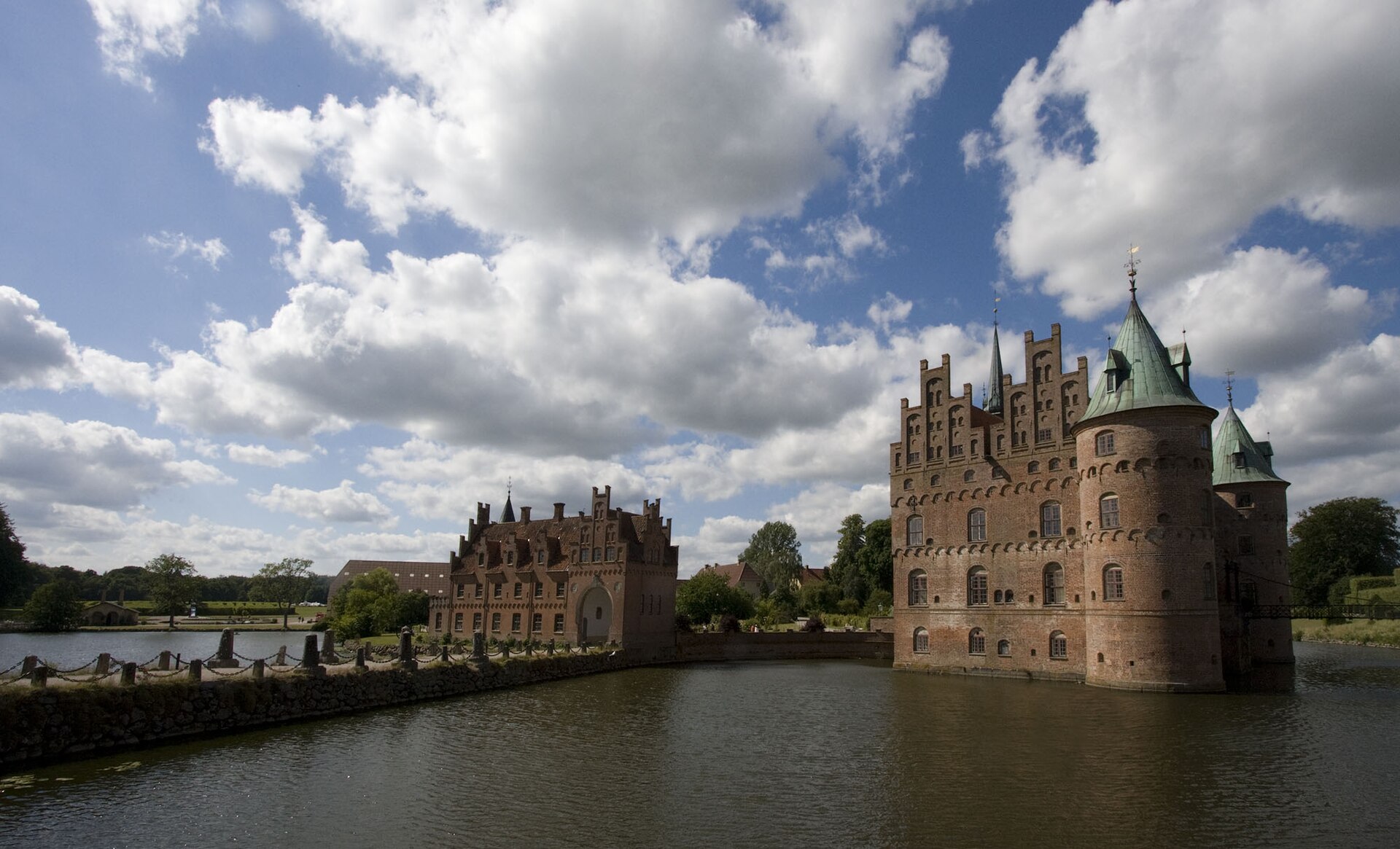
The very stillness of the lake around Egeskov contributes to its preservation as an image, for the calm water holds the reflection so perfectly that photographers and painters return again and again to capture the doubled castle, and the mirrored towers have become one of the most recognizable sights in all of Denmark.
Built on a Forest of Oak
The castle was built in 1554 by a Danish nobleman named Frands Brockenhuus, in an age of danger and instability. Denmark had recently been torn by a brutal civil war and peasant uprising, and the nobility, fearful for their safety, built strongholds that could protect them from both foreign enemies and their own restless countrymen. Egeskov was one such fortified refuge, an island fortress in a lake.
The building of Egeskov on the soft bed of a lake was a considerable feat of engineering, and it gave rise to the castle’s most famous piece of folklore. The name Egeskov means oak forest, and legend holds that the castle stands on a foundation of oak piles so numerous that an entire forest of oak trees had to be felled to provide them, driven deep into the lakebed to support the weight of the great brick fortress.
Whether or not a whole forest was really consumed, the castle does indeed rest on a foundation of timber piles sunk into the bed of the lake, a technique that allowed a massive stone building to be raised on soft, waterlogged ground. It was expensive and laborious, but it created something invaluable: a fortress surrounded on every side by water, accessible only across a drawbridge, and thus supremely defensible.
The choice to build on the water was the choice of a man who feared attack, and it shaped everything about Egeskov. This was not a comfortable country house but a serious island stronghold, designed to keep its owners safe behind their moat in an age when a nobleman could not be sure of the loyalty of his neighbours or the peace of his land. The forest of oak beneath the water is the hidden foundation of its five centuries of survival.
The technique of building on timber piles driven into waterlogged ground was well understood in the age, being the same principle that underlies great cities like Venice and Amsterdam, and its use at Egeskov shows the ingenuity and resources that a determined Renaissance nobleman could bring to bear on the problem of raising a fortress in a lake.
A Fortress Disguised as a Palace
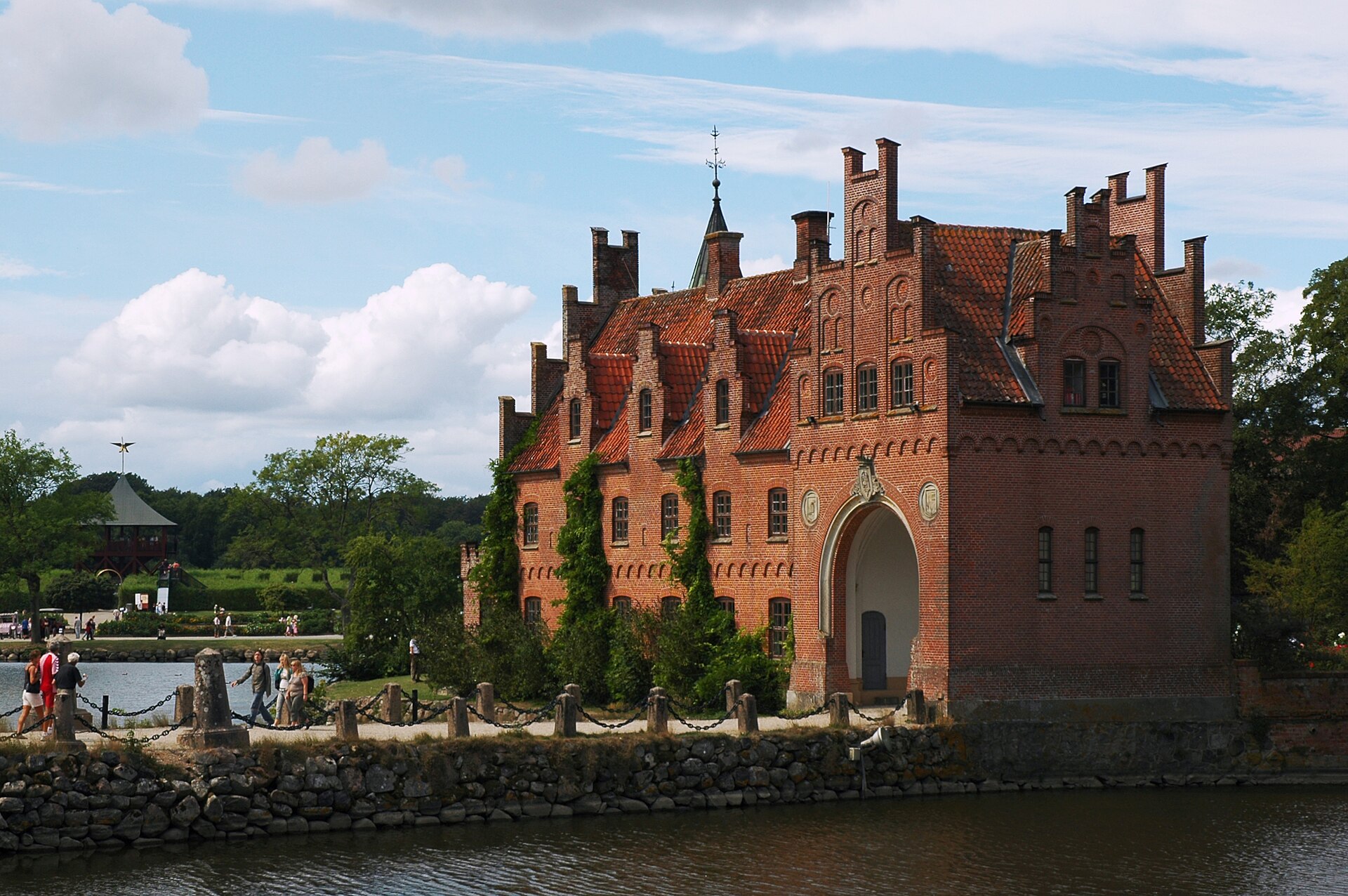
For all its beauty, Egeskov was built above all for defence, and its elegant Renaissance appearance disguises a formidable fortress. The castle actually consists of two long buildings set close together and joined, a double-house design that provided mutual defence, so that if one part were taken, the defenders could hold out in the other. It was, in effect, two castles in one, doubling its strength.
The walls are immensely thick, and the castle bristled with the defensive features of its violent age. There were arrow slits and gun loops for firing on attackers, and, according to tradition, the connecting parts of the double-house contained hidden passages and defensive positions, allowing the defenders to move and fight throughout the structure. The whole building was a machine for defence dressed in Renaissance clothes.
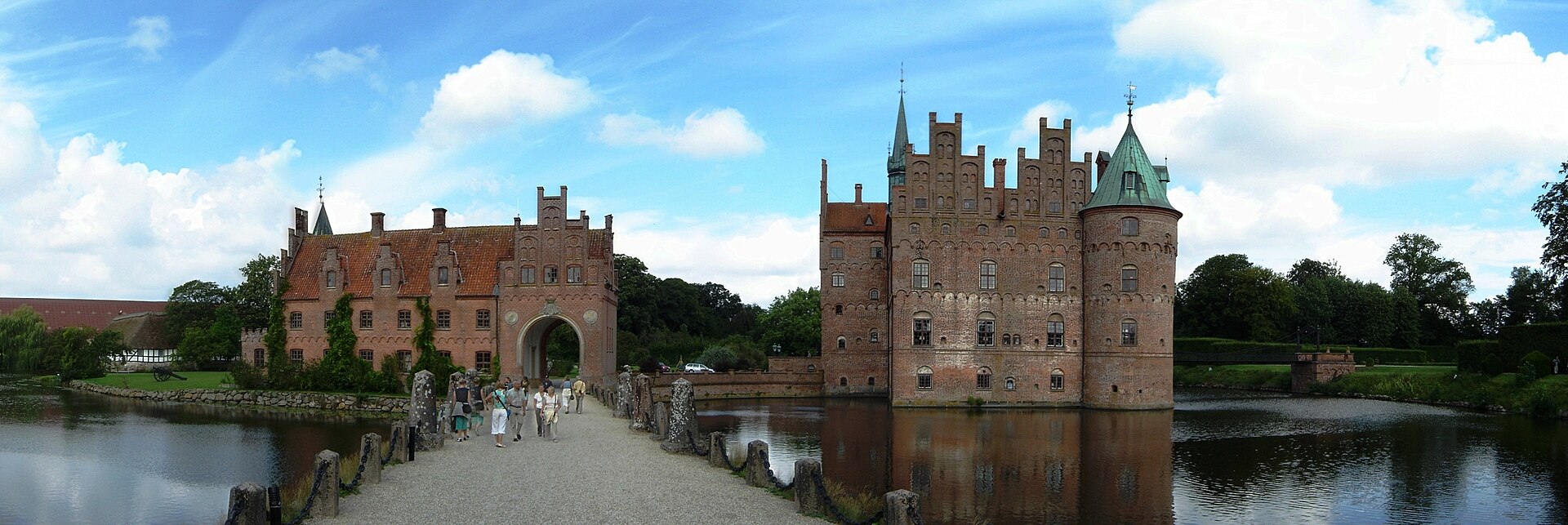
The moat was the outermost and most important defence, surrounding the castle completely and crossed only by a drawbridge that could be raised to seal the fortress off entirely. In an age before heavy artillery was widespread, a stout stone castle on an island in a lake, its bridge raised, was an exceedingly difficult target, and Egeskov was designed to be exactly that, a refuge that could hold out against any likely threat.
This combination of beauty and strength is the essence of the Renaissance water castle, and Egeskov is its finest surviving example. It shows how, in a dangerous transitional age, the nobility sought both the security of the medieval fortress and the elegance of the new Renaissance style, and fused them into buildings that were at once strongholds and palaces, as lovely to look at as they were hard to attack.
One tradition holds that the two halves of the double-house belonged, or could belong, to different owners or branches of a family, a practical arrangement in an age of shifting alliances, so that the very structure of the castle reflected the wary, divided world of the sixteenth-century nobility for whom it was built.
Twin Towers and Stepped Gables
The silhouette of Egeskov is unmistakable, dominated by its two great round towers rising at the corners, crowned with spires, and by the stepped gables so characteristic of the Danish Renaissance. This distinctive profile, reflected in the lake, is one of the iconic images of Danish architecture, a composition of towers and gables and copper roofs of perfect, storybook balance.
The round towers were both defensive and decorative, their curved walls better at deflecting fire while their spires added elegance to the skyline. The stepped gables, rising in a series of steps to a point, were a hallmark of the brick architecture of the region, a practical and beautiful way of finishing a gable end that gives the Danish Renaissance its particular character.
Set into the design are the details that make Egeskov so rewarding to explore, from the fine brickwork and sandstone dressings to the small windows and doorways that speak of the building’s defensive origins. Every element serves the dual purpose of the castle, contributing to both its strength and its beauty, so that the fortress and the palace are inseparably fused in a single design.
The overall effect is of a building perfectly of its moment, capturing the transition in sixteenth-century architecture from the medieval to the modern, from the fortress to the residence. Egeskov is the Danish Renaissance water castle at its most complete and most beautiful, its twin towers and stepped gables rising from the lake in a silhouette that has enchanted visitors for centuries.
Inside the Living Castle
Unlike many historic castles that have become empty museums, Egeskov remains a living home, still owned and partly inhabited by the noble family who have held it for generations, and this gives its interiors a warmth and richness that a mere museum can rarely match. The rooms are filled with furniture, paintings, hunting trophies, family portraits and the accumulated treasures of centuries of continuous habitation.
Wandering the halls and chambers, the visitor moves through rooms that have been lived in and loved across the ages, each layered with the possessions and memories of the families who called Egeskov home. There are grand halls hung with paintings and antlers, comfortable living rooms, and a wealth of curiosities gathered by generations of aristocratic collectors, giving the interior a lived-in, personal character.
This sense of a living home is one of the great charms of Egeskov. You are not walking through a reconstruction or a sterile display but through the real, inhabited castle of a Danish noble family, with all the intimacy and idiosyncrasy that implies. The rooms tell the story not just of a building but of the people who have made it their home for nearly five hundred years.
The combination of a genuine historic fortress and a living family home makes Egeskov unusually engaging, for the visitor feels the continuity of life within its walls. Amid the grand architecture and the defensive features of the sixteenth century, the ordinary and extraordinary business of family life has gone on unbroken, and the castle’s interiors bear the warm imprint of that long, continuous habitation.
Because the family still lives at Egeskov, only part of the castle is open to visitors, and this too adds to its charm, for one senses that the rooms one walks through are genuinely part of a home, with private life continuing just beyond, rather than a building given over entirely to display.
Treasures and a Fairy Palace
Among the many treasures held within Egeskov is one of the most extraordinary of all, Titania’s Palace, a fabulously elaborate dollhouse, or rather a miniature palace, that ranks among the most famous in the world. Created in the early twentieth century over many years and filled with thousands of tiny, exquisitely crafted objects, it is a work of art in miniature and a highlight of any visit to the castle.
Titania’s Palace was conceived as a home for the fairy queen Titania, from Shakespeare’s A Midsummer Night’s Dream, and it is a marvel of craftsmanship, its many rooms furnished with minuscule paintings, silver, furniture and treasures made by skilled artisans. It found its way to Egeskov, where it is now displayed, delighting visitors young and old with its intricate, jewel-like perfection.
The presence of such a treasure speaks to the character of Egeskov as a place of wonder and collection as well as a historic fortress. Over the centuries, and especially in more recent times, the castle has become a repository of remarkable objects, from fine art to curiosities, gathered and displayed for the pleasure of its owners and, now, its many visitors.
That a grim island fortress should also house a fairy queen’s palace captures perfectly the double nature of Egeskov, at once a serious stronghold and a place of enchantment and delight. Between its defensive walls and its whimsical treasures, its warlike origins and its fairy-tale beauty, the castle holds together the practical and the magical in a way that few places can match.
Titania’s Palace travelled the world for many years, exhibited to raise money for children’s charities, before finding its permanent home at Egeskov, and its journey from a labour of love to a celebrated museum piece mirrors, in miniature, the way the castle itself has been shared with an ever wider public.
Five Centuries of One Family’s Care
Part of what has preserved Egeskov so perfectly is the continuity of its ownership. Built by Frands Brockenhuus in the sixteenth century, the castle has passed down through a succession of Danish noble families over the centuries, cared for and maintained by owners who valued their inheritance, and it remains privately owned to this day, held by the family that has run it for generations.
This unbroken private ownership is unusual and precious. Where so many great castles fell to the state, to ruin, or to institutional ownership, Egeskov has remained a family seat, passed from generation to generation, its owners taking personal responsibility for its upkeep and its future. That continuity has spared it the neglect and drastic alteration that befell so many other historic castles.
The families who have held Egeskov have not merely preserved it but enriched it, each generation adding to its collections, developing its gardens, and adapting it to changing times while respecting its historic character. The castle we see today is the fruit of nearly five centuries of continuous, loving stewardship, a rare example of a great house kept whole by the devotion of its owners.
In recent times, the family has opened Egeskov and its grounds to the public, sharing their remarkable inheritance with the world while continuing to live in and care for the castle. This blend of private ownership and public access has made Egeskov both a living family home and one of Denmark’s most popular attractions, its long survival ensured by the same continuity of care that preserved it through the centuries.
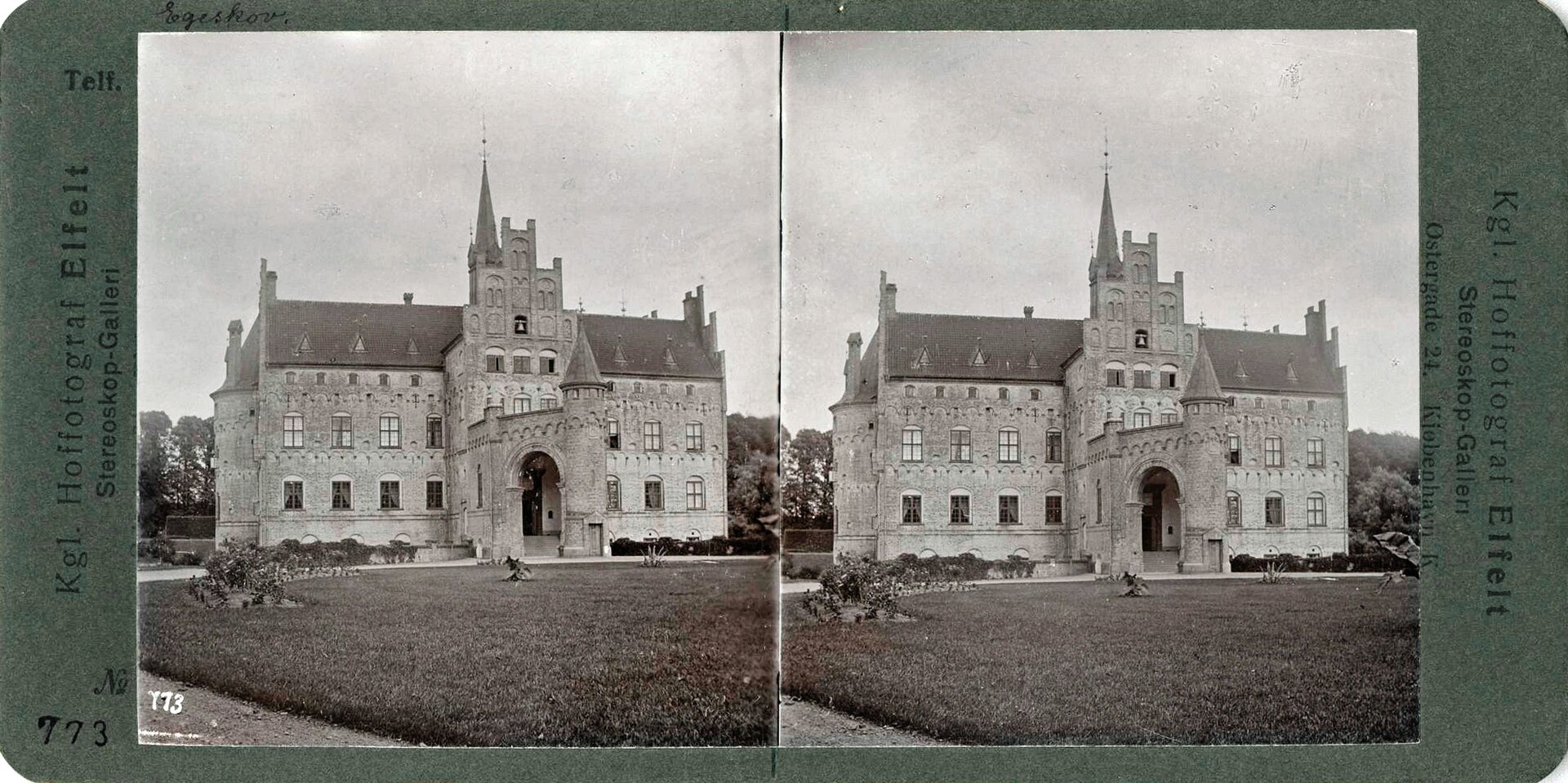
The Danish tradition of the entailed estate, which kept great properties intact within a family across generations rather than dividing them among heirs, played an important part in preserving Egeskov whole, ensuring that the castle and its lands passed down undivided and thus escaped the fragmentation that ruined many other historic seats.
The Little Wooden Man in the Attic
No account of Egeskov is complete without its most famous legend, the tale of the little wooden man who lies in the attic beneath the castle’s great tower. According to the story, this small carved wooden figure must never be moved, for a curse or prophecy holds that if it is ever disturbed, the entire castle will sink into the lake on Christmas Eve, drowning in the waters that have supported it for so long.
The legend has been taken seriously enough that the little wooden man is said to have lain undisturbed in the attic for generations, a strange and potent guardian of the castle’s fate. Whether anyone truly believes the prophecy or not, the figure remains where tradition demands, and the story adds a delicious frisson of folklore and superstition to the already magical atmosphere of the water castle.
Tales like this cling to old castles, and they express something real about the way places accumulate meaning and mystery over the centuries. The little wooden man of Egeskov, guarding the castle from destruction, is a perfect example, a piece of homely folklore that has become inseparable from the identity of the place, whispered to every visitor and cherished as part of the castle’s lore.
There is something fitting about a castle built on a hidden forest of oak beneath the water also harbouring a wooden guardian in its heights, as if the whole structure were bound to timber and to legend from its foundations to its attic. The little wooden man watches over Egeskov still, and as long as he lies undisturbed, the great water castle, they say, will float upon its lake.
Similar legends of guardian figures and sinking castles are found elsewhere in Scandinavian and European folklore, but few are so specifically and enduringly attached to a real, surviving building as the wooden man of Egeskov, whose story is told to this day as an inseparable part of the castle’s identity.
The Whole Estate From Above
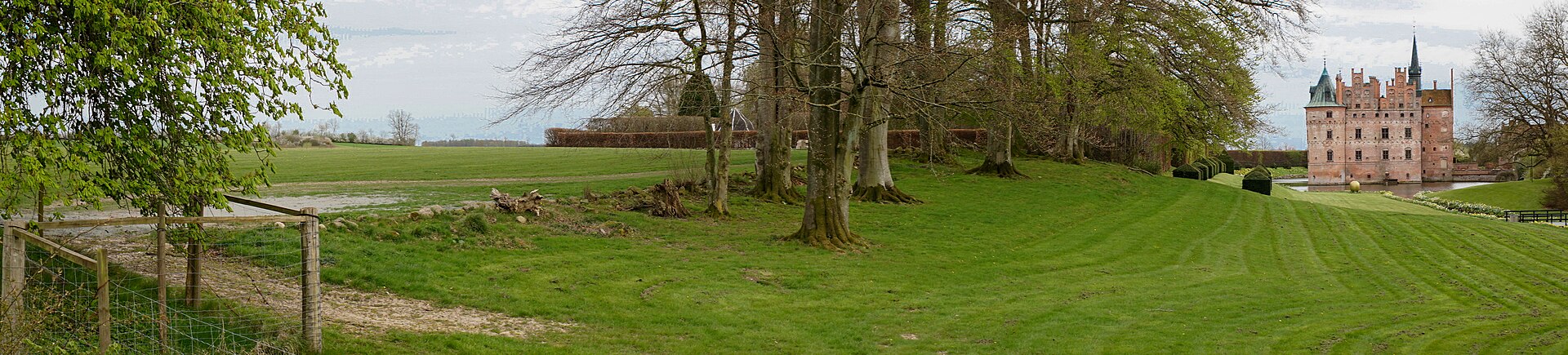
Seen from above, Egeskov reveals itself as the centre of a much larger designed landscape. The twin-towered castle on its island in the lake is the jewel, but it sits within a vast estate of gardens, parkland, woods and avenues, all composed around the water castle at their heart. The aerial view shows how completely the whole landscape was arranged to set off and celebrate the fortress on the water.
The relationship between the castle and its surroundings is carefully considered, with formal gardens, tree-lined avenues and open lawns creating a series of settings and vistas that frame the castle from different angles. This is landscape design on a grand scale, turning the whole estate into an extended stage for the beautiful fortress at its centre, a composition to rival any in Denmark.
From the air, too, the defensive logic of the water castle becomes clear, the moat encircling the island, the drawbridge providing the single controlled access, the whole fortress set apart on its island in the lake. The beauty and the defence are revealed as two aspects of the same design, the water that makes the castle so lovely being the very thing that once made it so secure.
The scale of the estate reminds us that Egeskov was the seat of a wealthy and powerful noble family, the centre of a great landed domain, and that the castle, for all its compact perfection, was the heart of a much larger world of land, farms and dependents. The aerial view gathers all of this into a single magnificent composition, the water castle and its estate laid out across the green island of Funen.
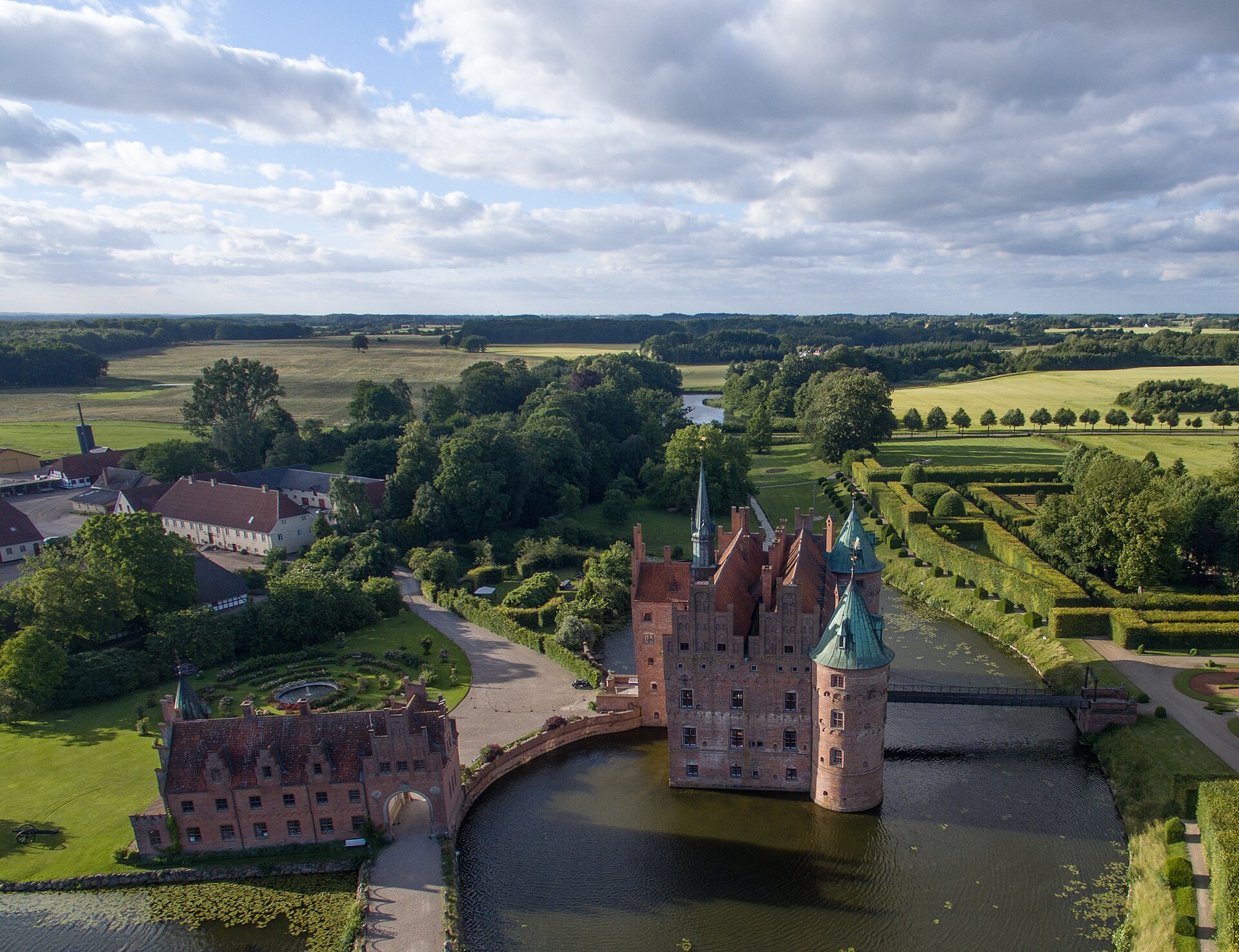
Avenues of ancient trees radiate from the castle across the estate, some planted centuries ago, and these grand approaches, lined with mature trees, add to the sense of arriving at a place of importance, drawing the visitor through the designed landscape toward the water castle at its heart.
Famous Gardens and Living Mazes
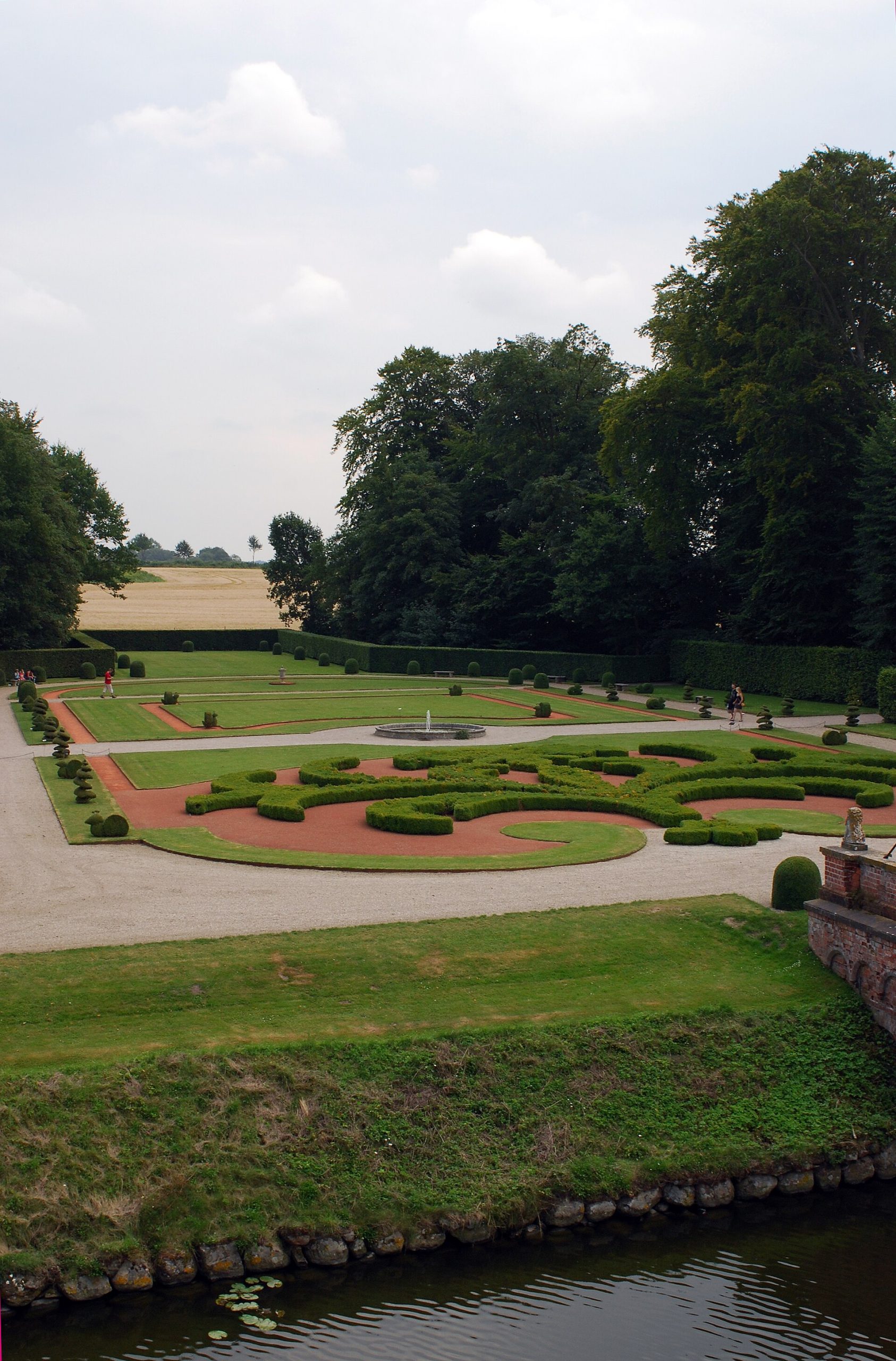
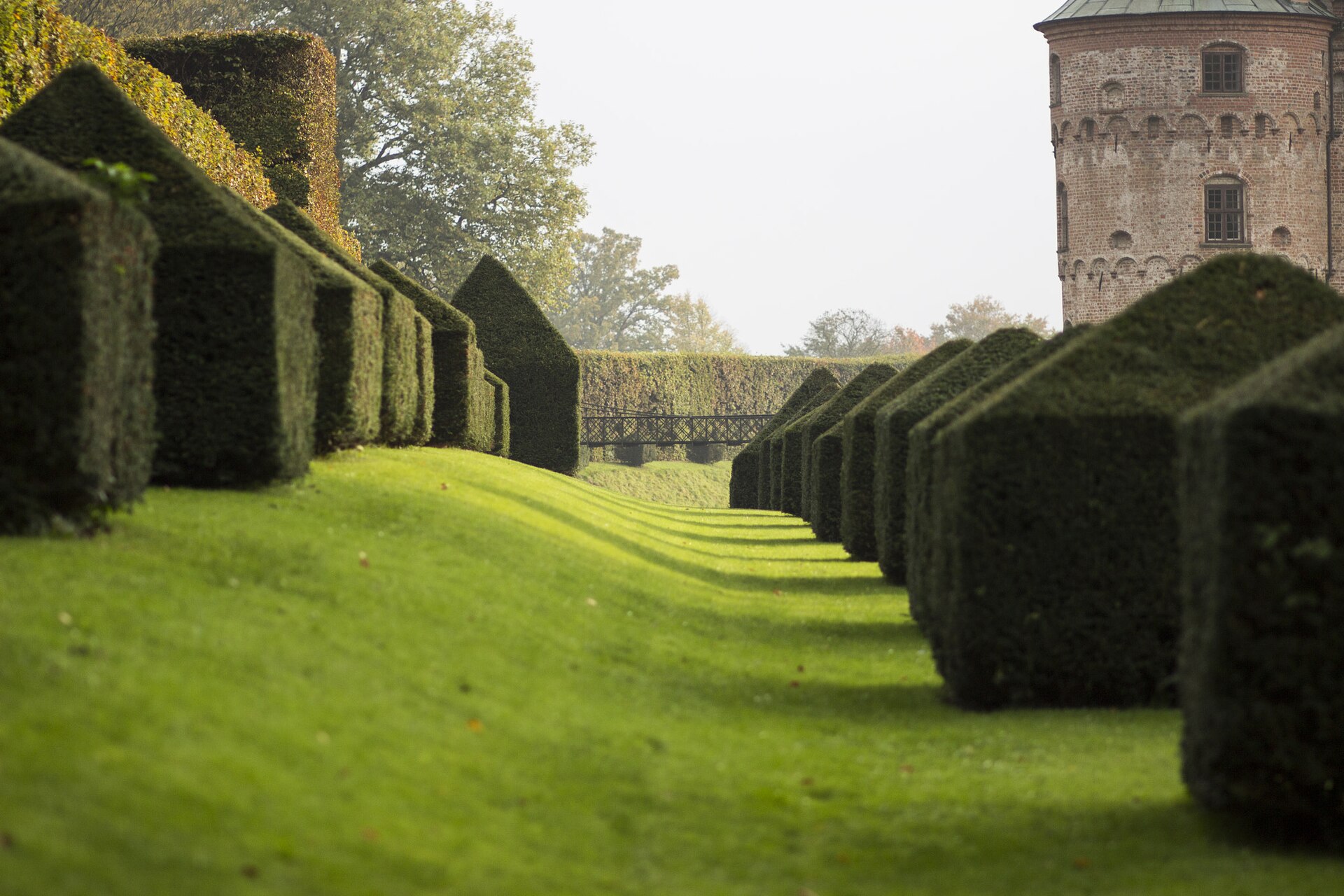
The gardens of Egeskov are as celebrated as the castle itself, ranking among the finest in Denmark and indeed in Europe. Spread across the estate around the water castle, they form a series of distinct garden rooms and landscapes, from formal Renaissance and Baroque parterres to romantic plantings, all maintained to the highest standard and drawing garden-lovers from around the world.
Among the most famous features are the mazes, for Egeskov is renowned for its labyrinths. There is a historic hedge maze, and a spectacular modern bamboo maze, one of the largest of its kind, designed to challenge and delight visitors who wander their winding paths in search of the centre and the way out. Getting lost in the mazes is one of the great pleasures of a visit to Egeskov.
The gardens also hold notable collections of plants, including a celebrated collection of fuchsias, and a variety of themed gardens that reward the keen horticulturalist as much as the casual stroller. Across the seasons the gardens offer an ever-changing display of colour and form, from spring bulbs to summer borders to autumn foliage, complementing the timeless beauty of the castle.
To wander the gardens and mazes of Egeskov, with the water castle rising beyond, is one of the loveliest experiences Denmark has to offer, uniting architecture, horticulture and landscape in a single enchanting whole. This short tour lets you explore the castle and its famous gardens, and see how beautifully the floating fortress sits at the heart of its green and flowering estate.
The head gardeners of Egeskov have long enjoyed a reputation among horticulturalists, and the estate has been at the forefront of garden design and plant collecting in Denmark, so that a visit rewards the serious gardener with much to study as well as the casual visitor with much to enjoy.
Garden Rooms and Flowering Terraces
The garden landscape of Egeskov is not a single space but a rich sequence of distinct areas, each with its own character, so that a walk through the grounds becomes a journey through a series of different worlds. There are formal geometric parterres with clipped hedges and gravel paths, flowering terraces bright with seasonal colour, and quieter, more romantic corners tucked away among the trees.
This variety is part of the gardens’ fame. Rather than imposing a single style, the designers over the centuries have created a collection of garden rooms, from the strict formality of the Renaissance and Baroque to the looser plantings of later ages, so that the visitor moves from one atmosphere to another, always with the castle glimpsed beyond as the unifying presence at the heart of it all.
The care lavished on the gardens is evident everywhere, in the immaculate hedges, the abundant borders and the thoughtful design that links the different areas into a coherent whole. Egeskov’s gardens have won recognition as among the very best in Europe, and they are maintained with a dedication that matches the family’s long stewardship of the castle itself.
For many visitors, the gardens are as memorable as the castle, and the two are inseparable, the flowering terraces and formal parterres providing the perfect setting for the water fortress at their centre. Together they create one of the most complete and beautiful castle landscapes in Denmark, a place where the art of architecture and the art of the garden meet and enhance each other.
Museums of Wheels and Wings
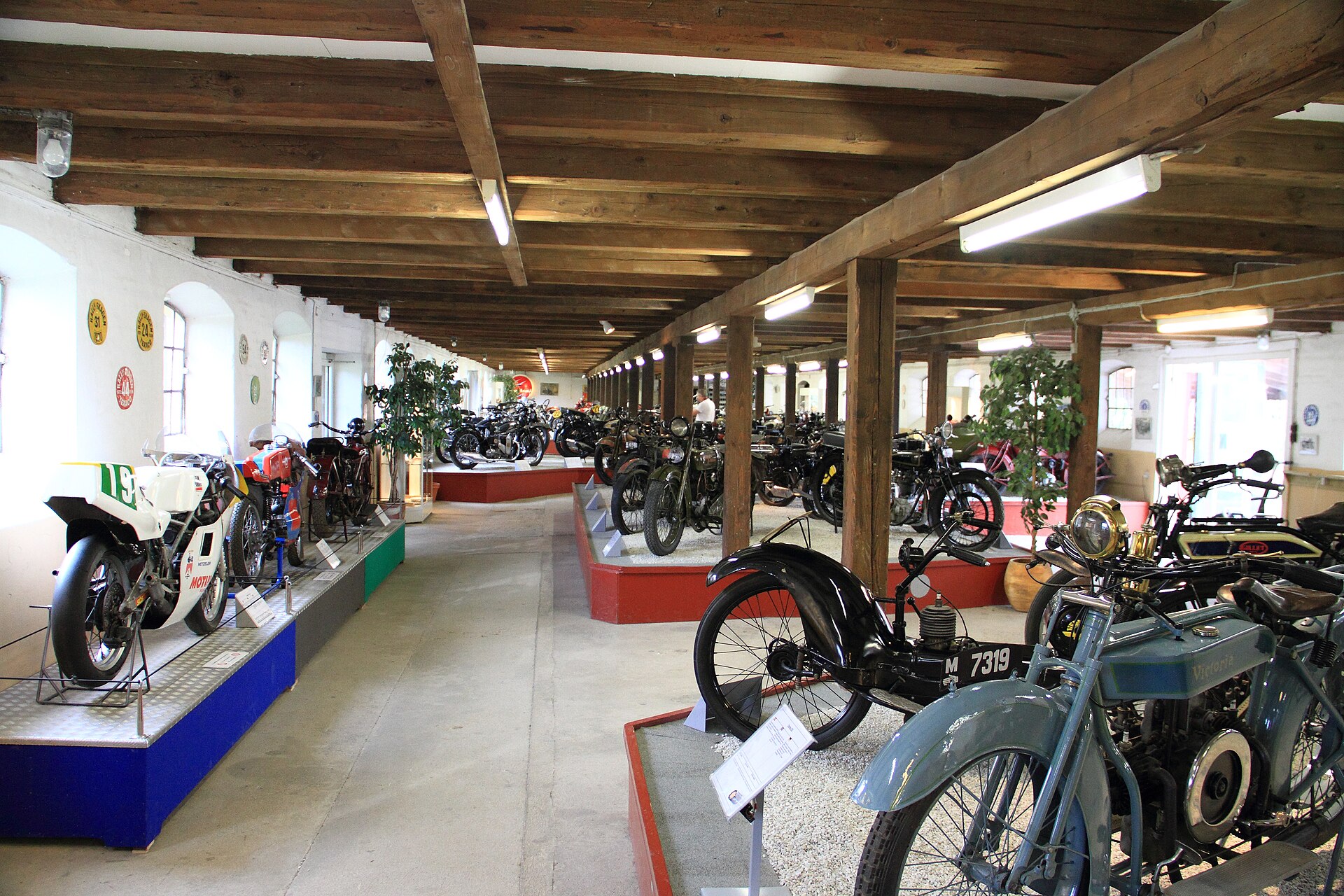
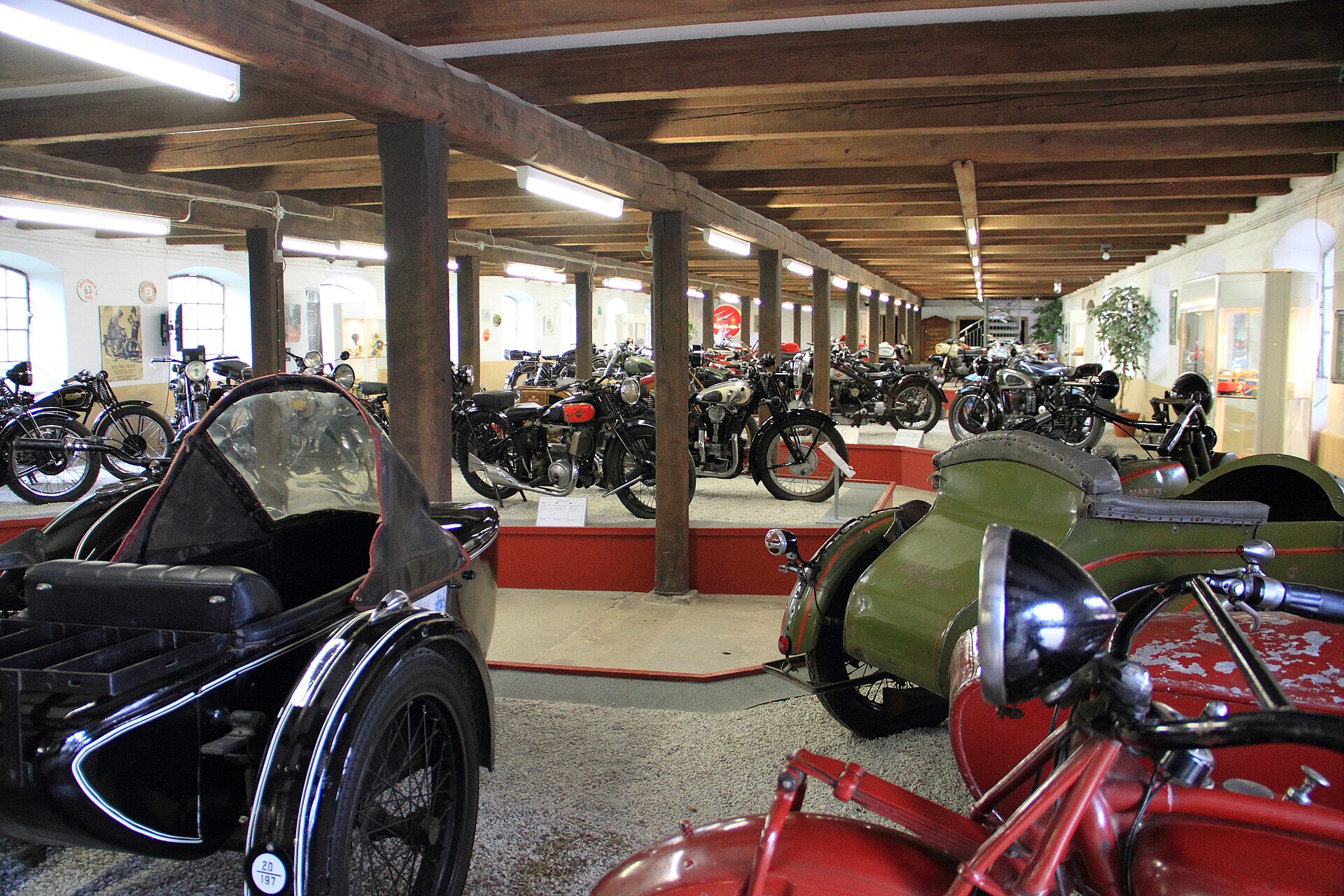
Egeskov is far more than a castle and gardens, for the estate has developed into one of Denmark’s most popular family destinations, with a remarkable array of attractions gathered around the historic core. Chief among these are its museums, most famously a large collection of veteran cars, along with aircraft, motorcycles and other vehicles, gathered in the estate’s buildings and delighting enthusiasts of all ages.
These collections may seem a surprising thing to find at a Renaissance water castle, but they reflect the way Egeskov has been kept alive and relevant by its owners, who have added new attractions to draw visitors while maintaining the historic heart. The result is an estate that offers something for everyone, from lovers of history and gardens to families and vintage vehicle enthusiasts.
Alongside the vehicle museums, the estate offers treetop walks, playgrounds, and a host of activities that make it a full day out, especially for families with children. This blending of the historic and the recreational has made Egeskov one of the most visited attractions in Denmark, its castle and gardens complemented by a wealth of modern amusements.
Some purists might raise an eyebrow at veteran cars beside a Renaissance castle, but there is a real wisdom in the approach. By making Egeskov a lively, welcoming destination for all kinds of visitors, its owners have ensured its continued popularity and, with it, the resources to preserve the historic castle and gardens at the heart of the estate. The old fortress and the vintage cars, together, keep Egeskov thriving.
A Living Fairy Tale
Egeskov today stands as one of the great treasures of Denmark, a castle that has managed the rare feat of remaining, all at once, a genuine historic fortress, a living family home, and a thriving public attraction. Preserved almost unchanged since the sixteenth century, inhabited and cared for across five centuries, it offers a completeness and continuity that few castles anywhere can match.
Its combination of qualities is unusual and precious. It is a serious fortress, built for defence in a dangerous age, and yet it is also a place of pure enchantment, its towers reflected in the lake, its gardens famous across Europe, its attics home to a fairy queen’s palace and a legendary wooden guardian. It holds the practical and the magical together as few places can.
Above all, Egeskov is alive. It is not a ruin or an empty museum but a working home and a beloved destination, still owned by the family who have tended it for generations, still opening its gates to visitors from around the world. That living continuity is the secret of its extraordinary preservation, and it gives the castle a warmth that no mere monument can offer.
So make your way to the green island of Funen and let Egeskov work its spell. Walk its towers and halls, wander its mazes and gardens, gaze at its perfect reflection in the lake, and remember the little wooden man watching over it all from the attic. Egeskov is the best-preserved water castle in Europe and a living fairy tale, and it remains, after nearly five hundred years, one of the most enchanting castles in the world.
Castles Nearby
- Frederiksborg Castle: Denmark’s Floating Renaissance Palace
- Kronborg Castle: Hamlet’s Fortress on the Danish Sound
Why Egeskov Still Floats After Five Centuries
Egeskov is the quiet masterpiece among Denmark’s castles. It lacks the literary fame of Kronborg and the sheer grandeur of Frederiksborg, but it possesses something rarer than either: a completeness and continuity that make it the best-preserved water castle in Europe, a genuine sixteenth-century fortress carried almost unchanged into the present day.
What lingers is the perfection of it, the twin towers doubled in the still lake, the forest of oak hidden beneath the water, the little wooden man in the attic, the famous gardens spreading around the moat. Egeskov holds all of this in a single, flawless composition, at once a serious fortress and a living fairy tale, preserved by five centuries of one family’s care.
So end your tour of Denmark’s castles here, on the green island of Funen, before the floating fortress of Egeskov. Cross its bridge, walk its living halls, lose yourself in its mazes, and marvel at its reflection in the lake. Egeskov is proof that a castle can survive not by being grand or famous but simply by being loved, and it remains one of the most enchanting and complete castles in all of Europe.
You May Like
Chittorgarh Fort: The Largest Fort in India and the Legend of the Jauhar