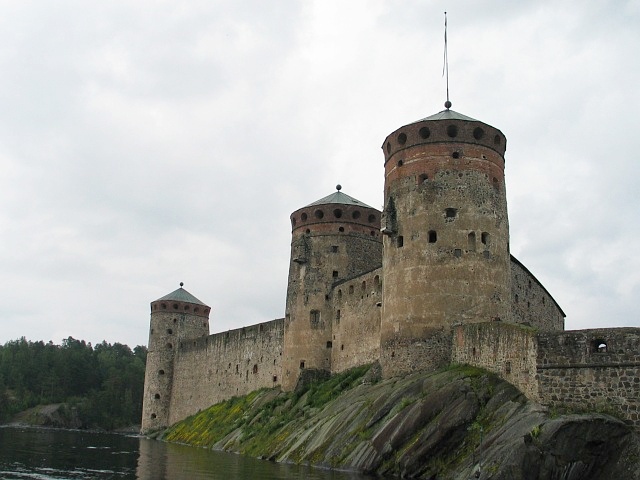
There is a castle in the far east of Finland that looks as though it were dreamed up for a fairy tale and then somehow built in solid grey stone. Olavinlinna rises straight from a fast-running strait between two great lakes, its round towers doubled in the still water below, and it has stood guard over this remote frontier for more than five centuries. It is the best-preserved medieval castle in the whole of the Nordic countries, and it may also be the most dramatically sited, a fortress that seems to grow out of the lake itself.
But Olavinlinna is far more than a pretty silhouette. This was the sharp eastern edge of the Swedish realm, a stronghold pushed as close to the Russian border as its builders dared, and its long life has been shaped by war, siege, surrender, fire, and finally a remarkable rebirth as one of the world’s great opera stages. In this article you will trace the whole of that story, from a Danish knight’s bold decision in 1475 to the crowds who gather in the courtyard every summer today. Come and meet the great grey fortress of the Finnish lakes.
In This Article
- A Fortress That Seems to Float on the Water
- Why a Danish Knight Chose This Particular Rock
- Building for the Age of Gunpowder
- The Round Towers and What They Were Meant to Do
- Life on the Edge of Two Empires
- When the Russians First Came Knocking
- The Long Tug-of-War for Finland’s Eastern Border
- Surrender, and Then Surrender Again
- Suvorov and the Century of Slow Neglect
- Fire, Ruin, and a Slow Rescue
- How an Opera Festival Gave the Castle a Second Life
- Walking the Castle Today
- Finding Olavinlinna in the Finnish Lakeland
- Castles Nearby
A Fortress That Seems to Float on the Water
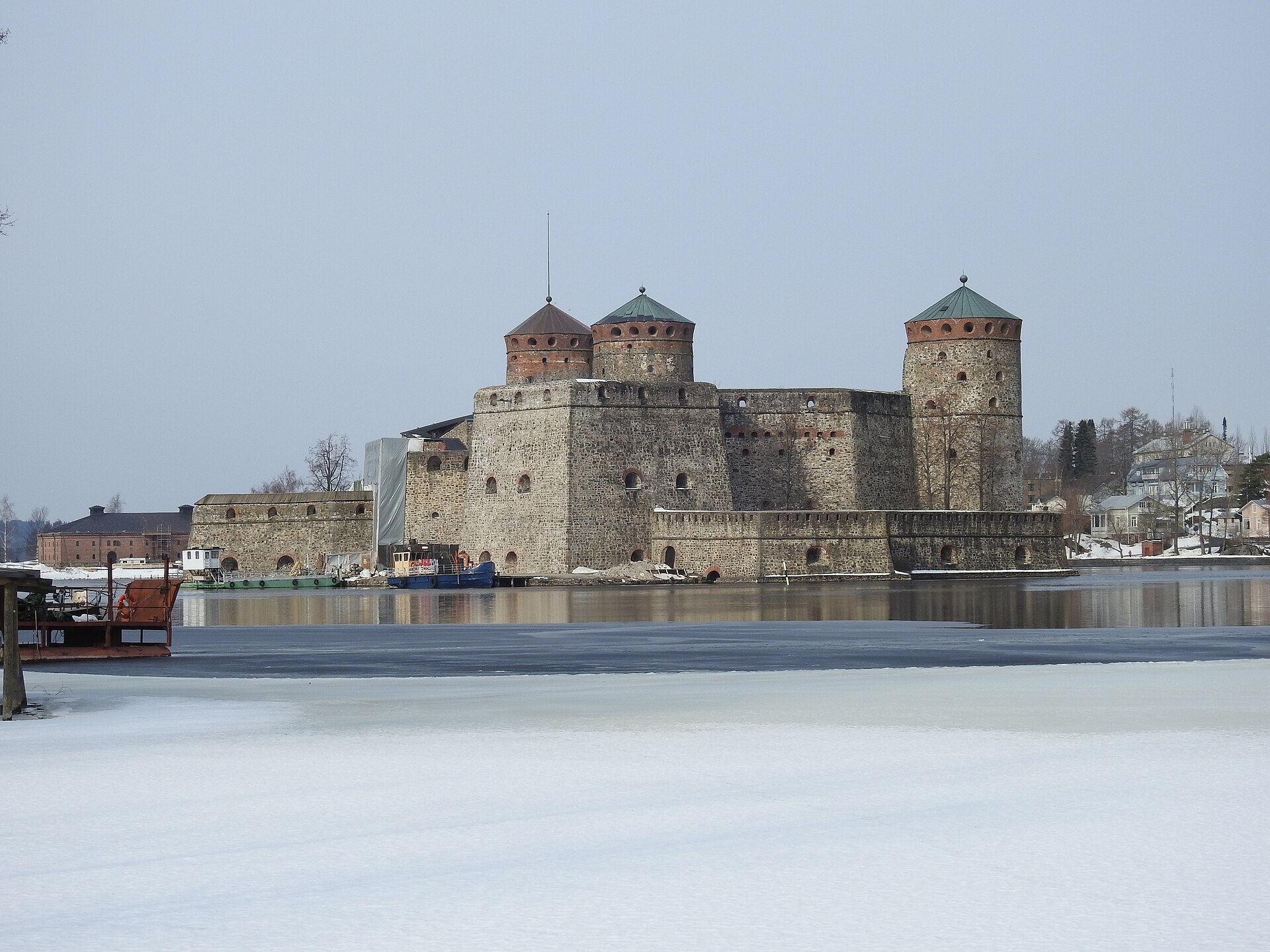
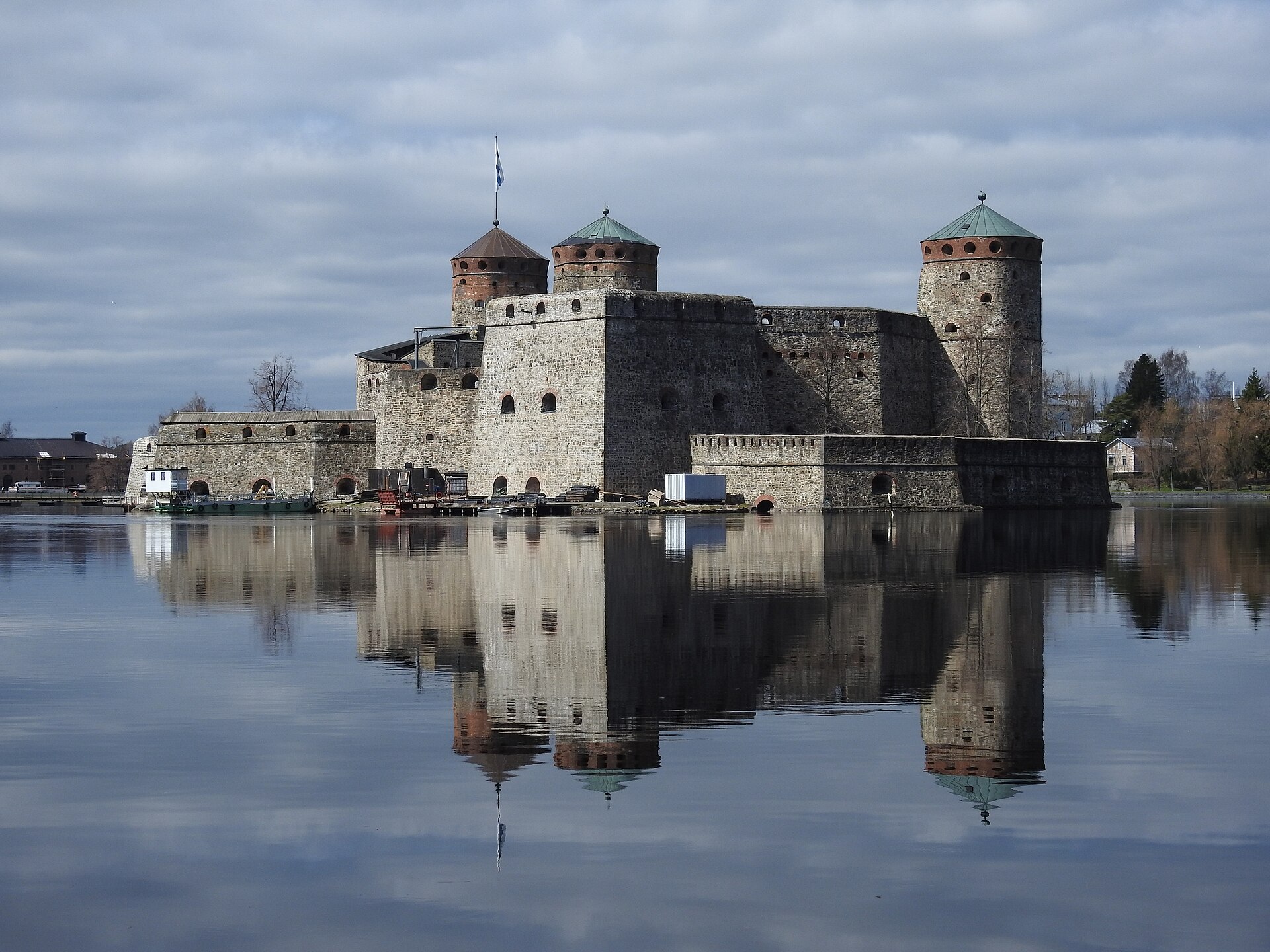
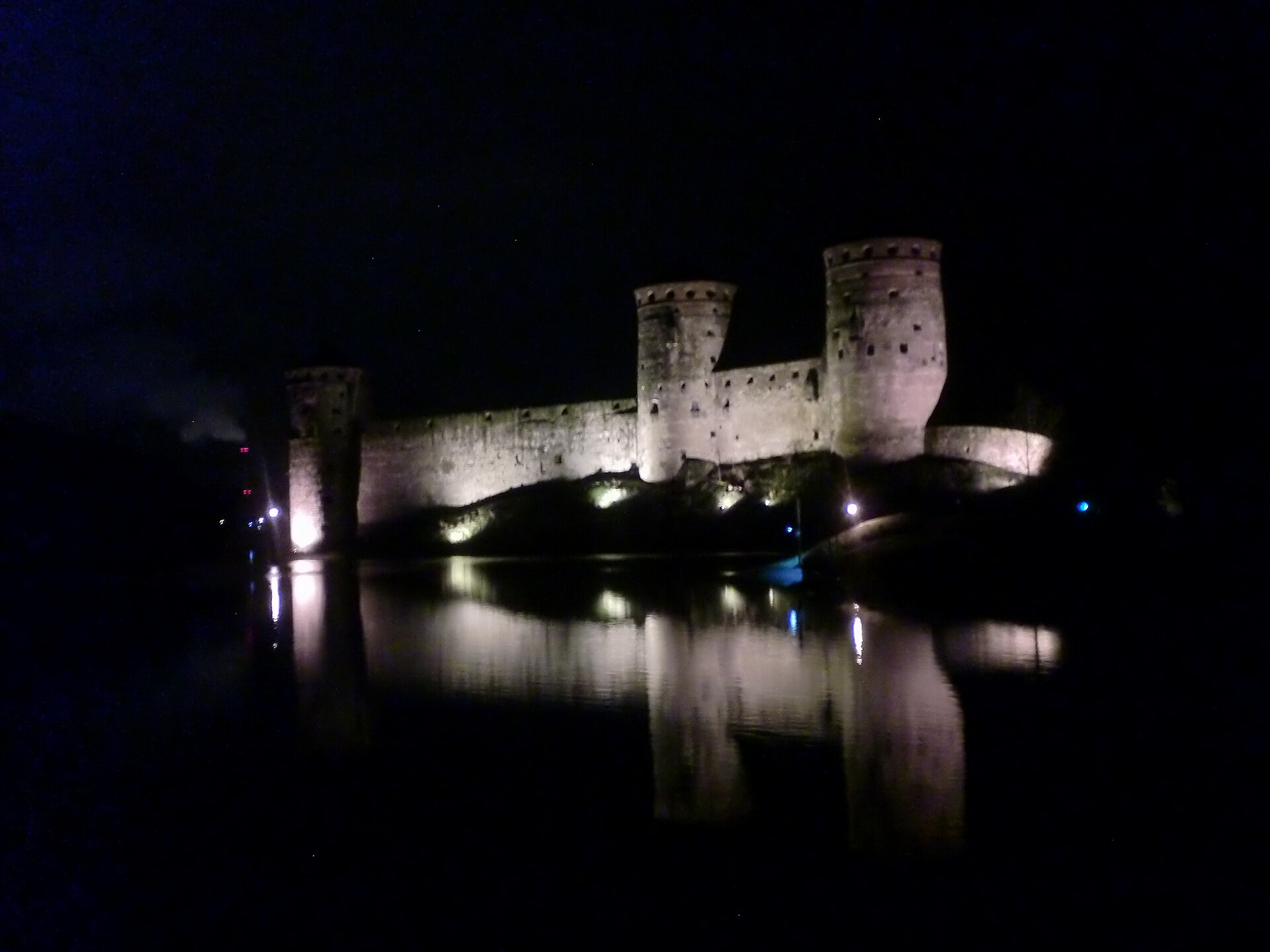
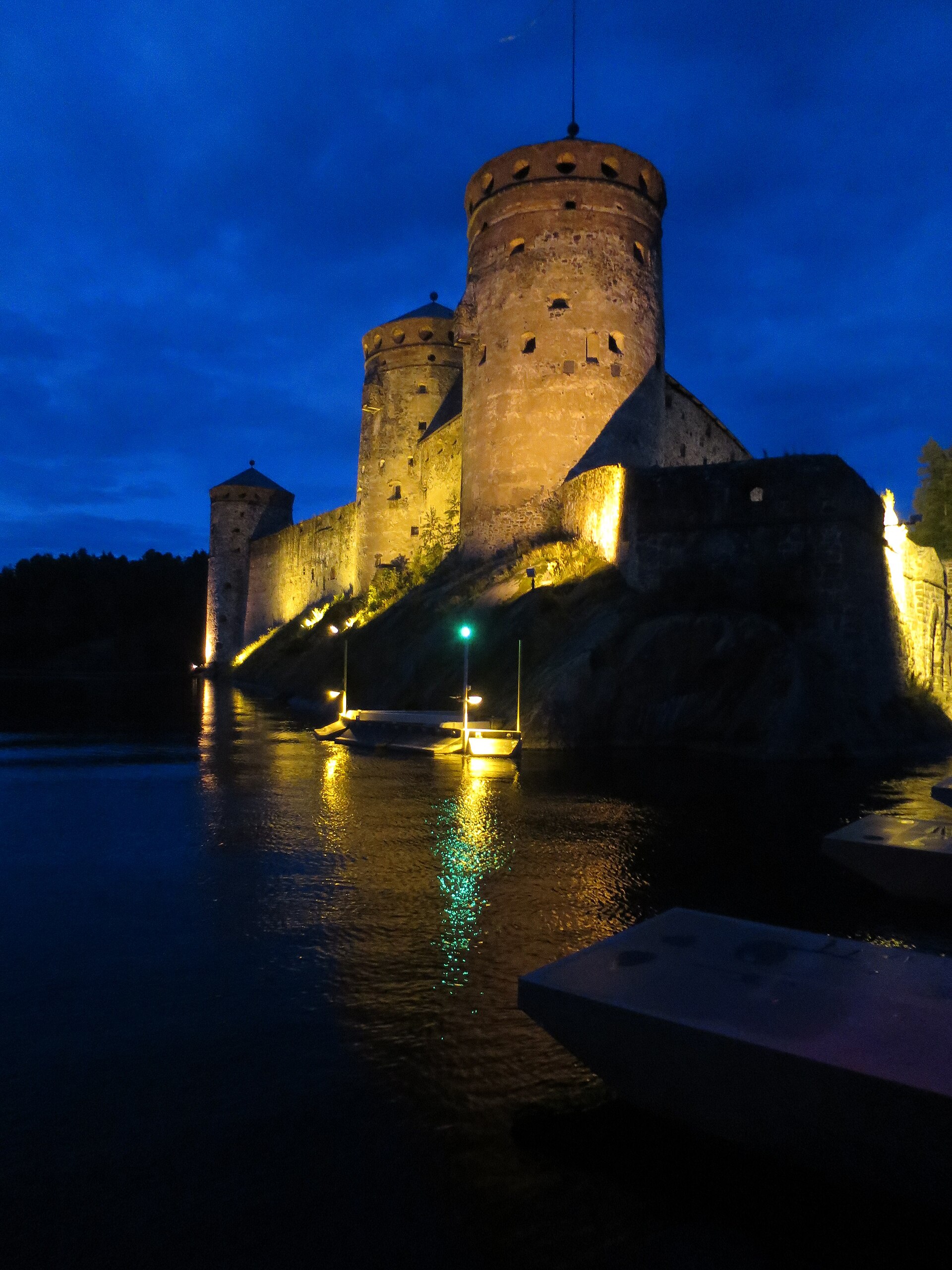
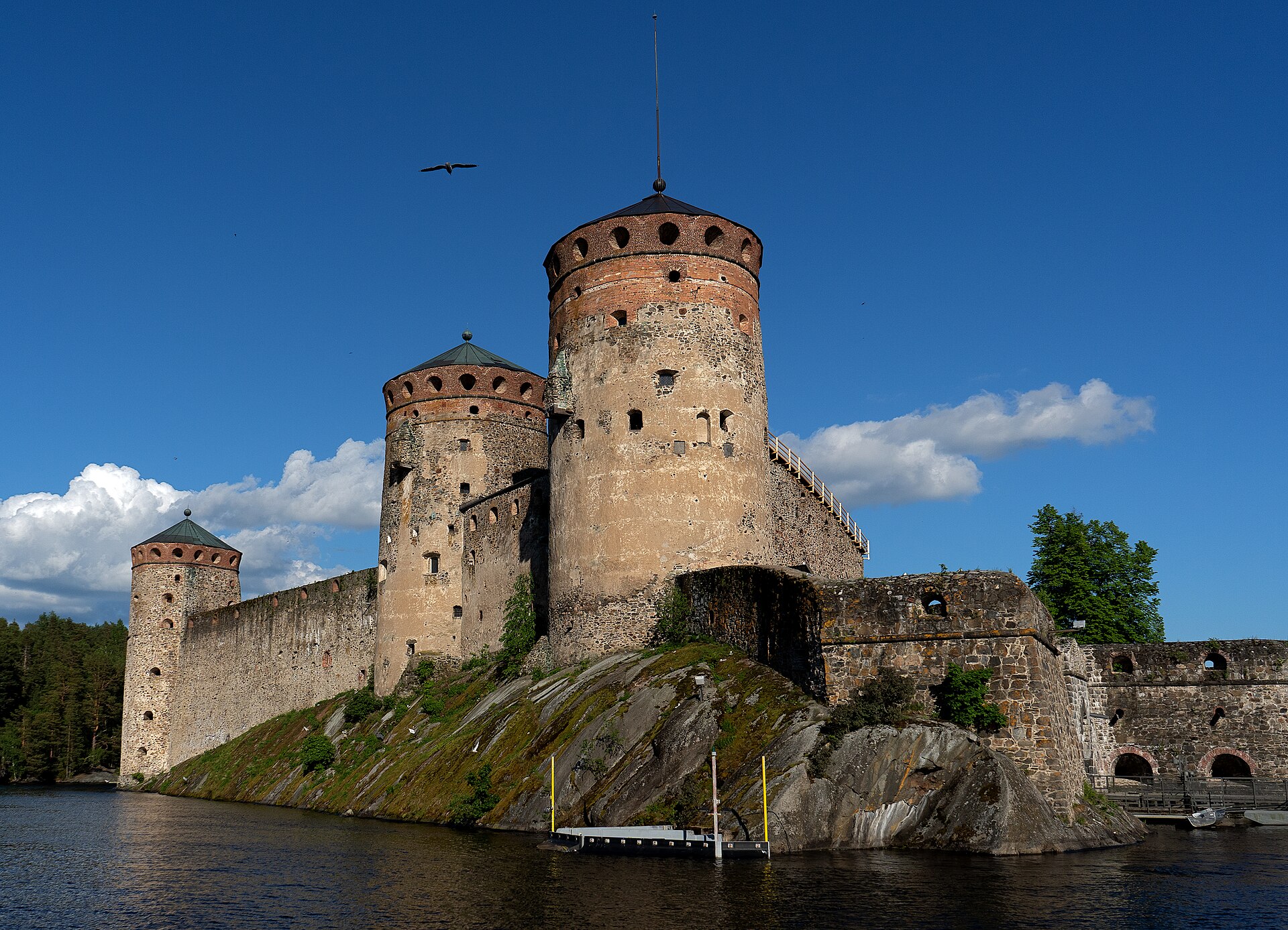
The first time you see Olavinlinna, the thing that catches you is that it does not sit beside the water so much as it grows out of it. The grey stone walls climb straight from the surface of the Kyronsalmi strait, and on a still morning the whole castle is doubled in the reflection below it, so that you seem to be looking at two fortresses joined at the waterline. There is no gentle slope of lawn leading up to the gate, no dry moat you can peer into. There is only the lake, the rock, and the walls, and the narrow channel of fast water that has always been the castle’s first and best defender.
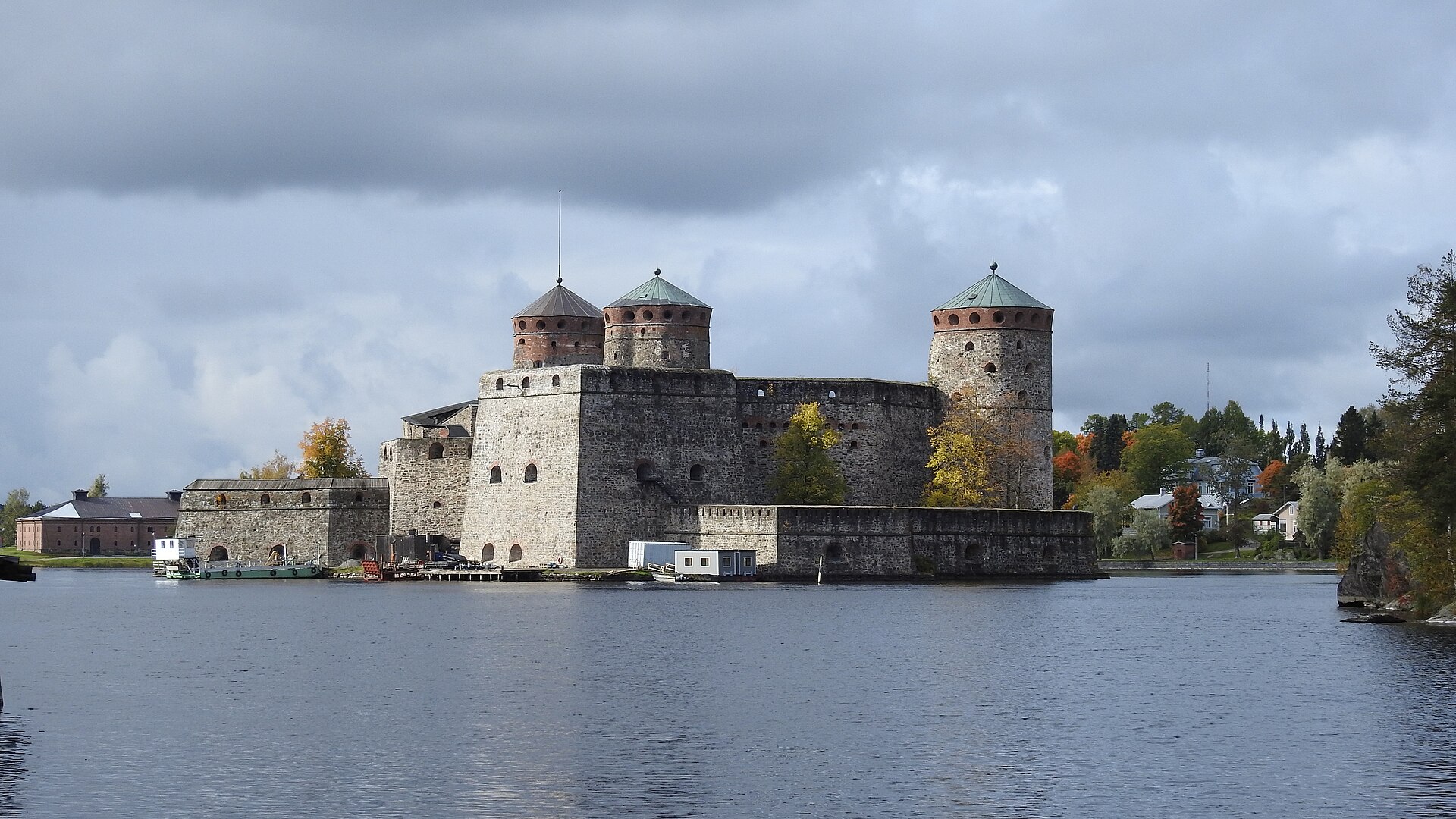
Olavinlinna stands on a small island in the strait that links two great Finnish lakes, Haukivesi to the north and Pihlajavesi to the south, right in the middle of what is now the town of Savonlinna in the region of Southern Savonia. For most of its life this was the far eastern edge of the Swedish realm, a lonely stone outpost pushed as close to the Russian frontier as its builders dared to place it. If you have spent time with the castles of France or the Rhine, Olavinlinna will feel like something from another world entirely, and in a sense it is. This is a border fortress of the northern lakes, and everything about it was shaped by ice, water, and the long argument between Sweden and Russia over who would rule the land in between.
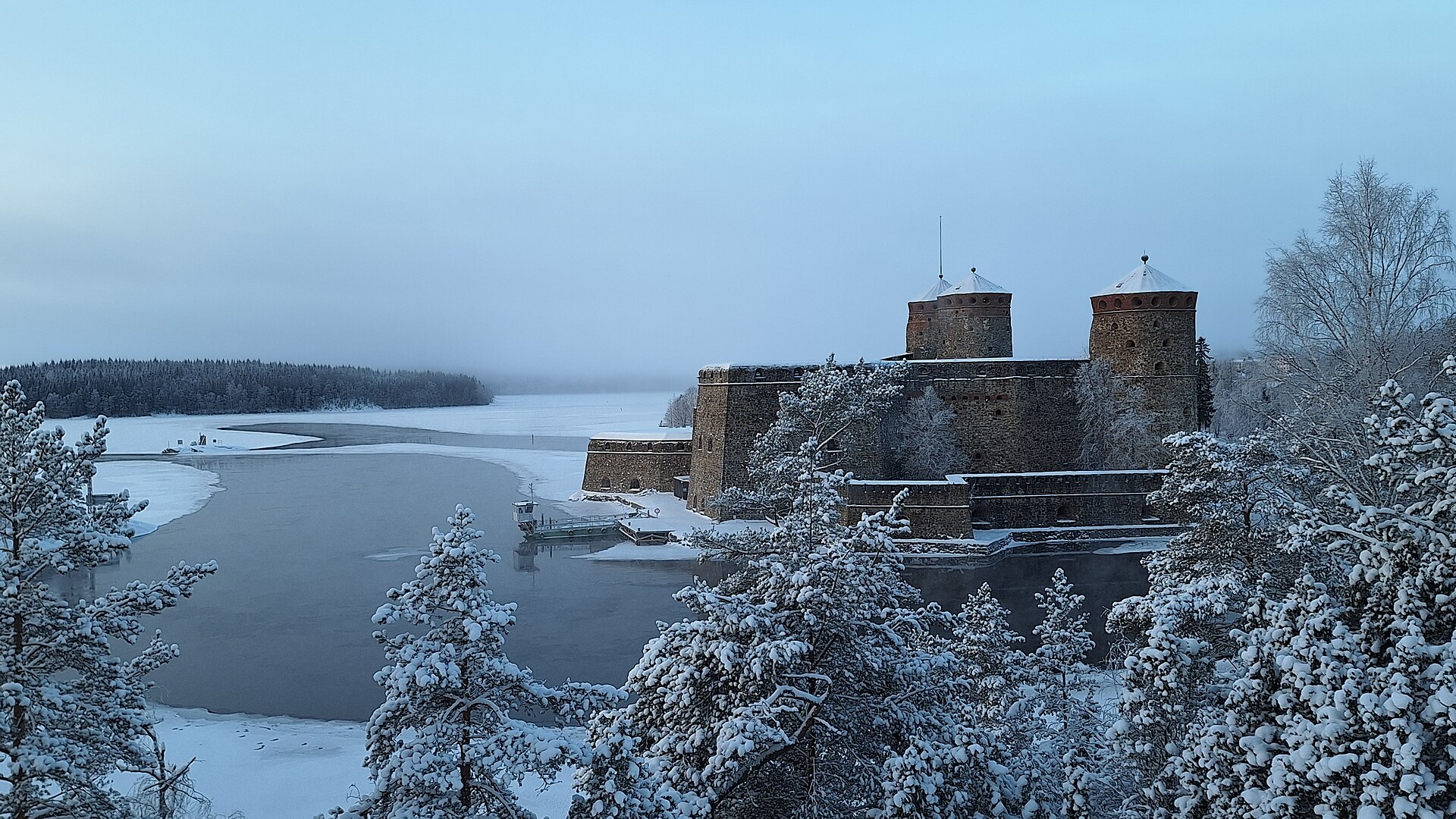
It helps to remember just how far north and east you are standing here. Savonlinna lies closer to the Arctic Circle than to the warm heart of Europe, and the seasons shape everything about the place. In the deep winter the strait freezes and the castle stands in a field of white, while in the light-drenched nights of high summer the towers glow pink under a sun that barely sets. The builders knew this rhythm intimately, and Olavinlinna was made to hold soldiers through months of darkness and ice as much as to repel armies in the brief campaigning season of the warmer months.
Why a Danish Knight Chose This Particular Rock
The man who founded Olavinlinna was not Finnish and not, strictly speaking, Swedish either. Erik Axelsson Tott came from a powerful Danish noble family, and he had risen to become one of the most influential figures in the Kalmar Union that bound the Scandinavian kingdoms together. As lord of Vyborg and effectively the ruler of eastern Finland, he understood better than anyone in Stockholm just how exposed this frontier really was. The old border drawn up by the Treaty of Noteborg back in 1323 had left the Savo wilderness as a vague and contested no-man’s-land, and the rising power of Moscow to the east made the lack of a strong fortress here feel dangerous.
So in 1475 Tott ordered a castle built on a bare skerry in the Kyronsalmi strait, and the choice of that particular rock was no accident. The channel here runs fast and deep, hard to cross and harder still to besiege from boats. An attacking army coming from the east would have to fight its way through a maze of lakes and narrows before it even reached the walls, and every one of those water barriers bought the defenders time. Tott named his new stronghold after Saint Olaf, the martyred Norwegian king who was the patron saint of knights across the north, and from that name came the Finnish Olavinlinna and the Swedish Olofsborg. He hired stonemasons said to have come from the Baltic lands, men who knew the newest ideas in fortress design, and set them to work on something Sweden had never built before.
Tott was gambling with his own resources as much as the crown’s, pushing the work forward with an urgency that suggests he sensed how little time there might be before the frontier caught fire again. The remoteness of the site meant that every barrel of lime, every load of timber, and every skilled mason had to be brought a great distance across water, and the logistics alone were a formidable achievement. That the central keep rose so quickly is a testament both to his drive and to the seriousness with which the men of the age regarded the Russian threat pressing in from the east.
Building for the Age of Gunpowder
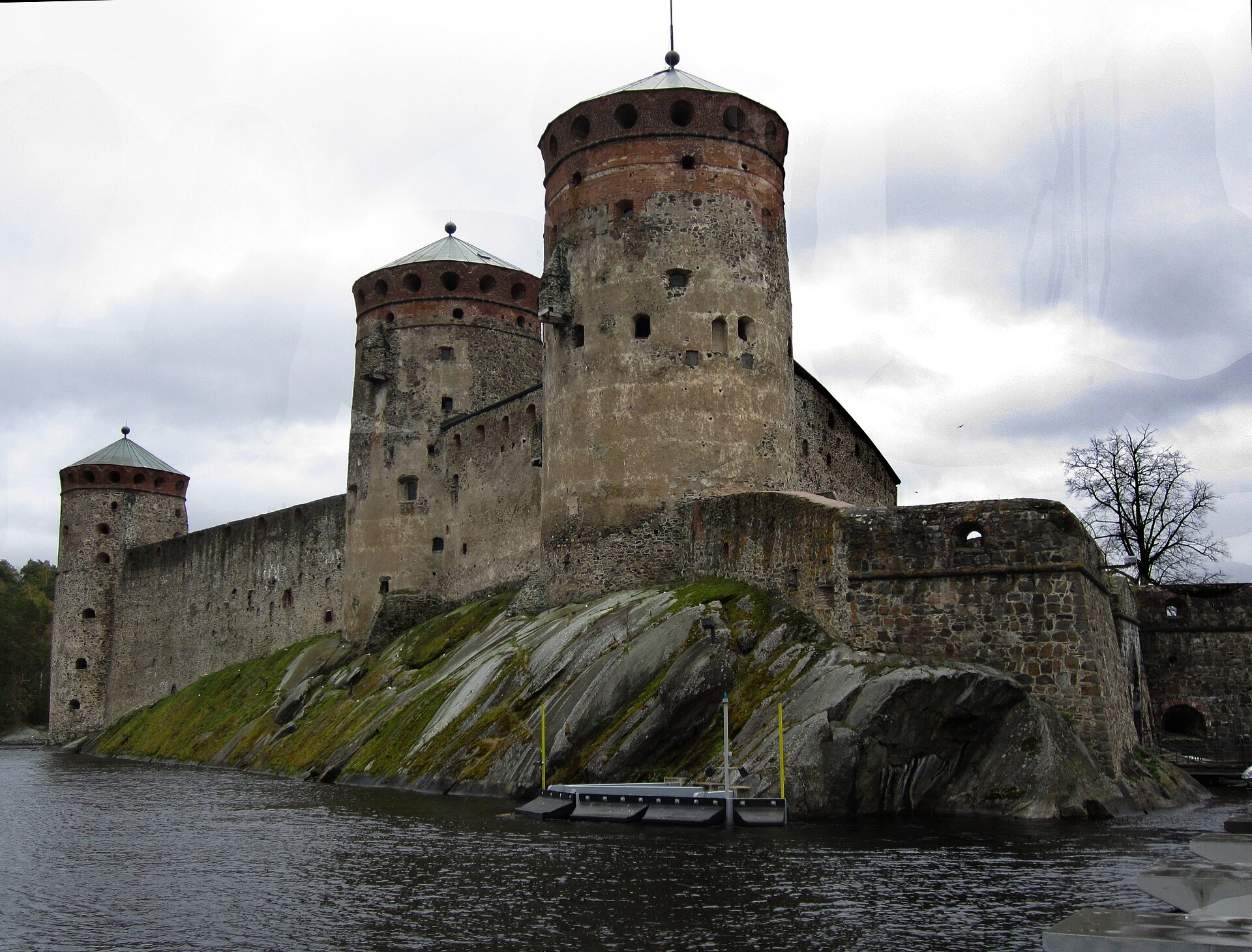
What made Olavinlinna genuinely new was that it was designed from the very beginning to face cannon. By the 1470s gunpowder artillery was starting to change how wars were fought, and the tall, thin walls of the older medieval castles, so good at stopping ladders and arrows, were dangerously brittle when a heavy iron ball struck them. Tott’s masons answered that threat with mass. They raised walls of enormous thickness and gave the castle rounded towers rather than square ones, because a curved surface deflects a cannonball where a flat corner catches it square and shatters.
Historians often describe Olavinlinna as the first Swedish castle built with a set of thick, rounded towers meant specifically to withstand artillery fire, and that makes it a small landmark in the history of European fortification standing far up in the Finnish lakes. The central keep with its three great towers was largely finished by about 1485, only a decade after the first stone was laid, which was remarkably quick work for such a remote site. Over the following ten years the builders added the outer curtain walls and further towers, and by around 1495 the fortress had taken on the compact, muscular shape that still dominates the strait today. Everything about it was practical. There was little of the decorative flourish you find in the palaces of the south, because this was never meant to charm anyone. It was meant to survive.
There is a lesson in stone here about how quickly the art of war was changing in these years. The very generation that built Olavinlinna was living through the end of the age of the knight and the beginning of the age of the gun, and the castle stands at that hinge. It looks backward to the medieval world of towers and curtain walls, yet it already reaches forward to the thick, low, cannon-proof fortresses that would come to define the centuries ahead. Few buildings capture that moment of transition so clearly, which is part of what makes Olavinlinna so precious to historians today.
The Round Towers and What They Were Meant to Do
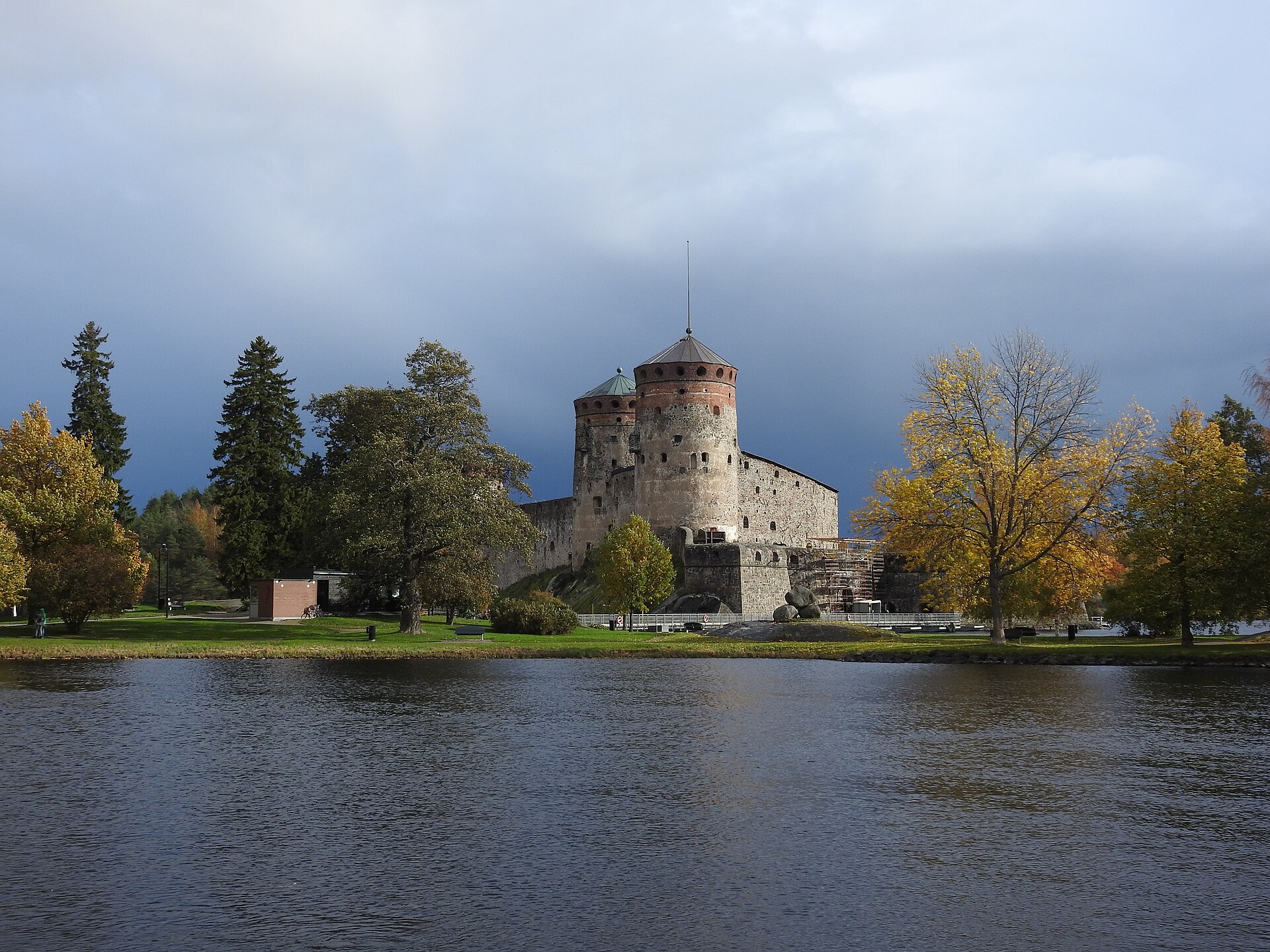
Walk around the base of the towers today and you begin to understand the thinking behind them. Each one is essentially a self-contained strongpoint, pierced with openings for guns at several levels so that defenders could sweep the water and the walls from many angles at once. If an enemy managed to take one stretch of wall, the towers on either side could still rake them with fire. The whole design is built around overlapping fields of shot, the idea being that no attacker should ever find a blind spot where they could work in safety.
The towers also carried the everyday life of the garrison. Inside their thick walls were chambers for the commandant and his officers, storerooms packed with grain and salted fish and gunpowder, and space for the soldiers who manned the place through the long, dark Finnish winters. Living here cannot have been comfortable. The stone held the cold, the lake wind cut through every opening, and supplies had to come by boat in summer or over the ice in winter, both journeys watched nervously for any sign of an approaching enemy. Yet the same isolation that made the castle hard to supply also made it hard to take, and for a long time that trade was one the Swedish crown was very willing to make.
Supplying such a garrison was a constant preoccupation, and much of the castle’s inner space was given over to storage against the possibility of a long siege or a hard winter. Grain, dried and salted fish from the lakes, ale, and above all gunpowder had to be kept dry and secure, and the management of these stores was as vital to survival as the strength of the walls. A fortress that could not feed and arm its defenders would fall no matter how thick its towers, and the commanders of Olavinlinna understood that a well-stocked cellar was a weapon in its own right.
Life on the Edge of Two Empires
To really grasp Olavinlinna you have to picture the world it was born into, a borderland where two expanding powers pressed against each other with a thinly settled wilderness between them. To the west lay Sweden, reaching ever further east across Finland. To the east lay first the republic of Novgorod and then the fast-growing Grand Duchy of Moscow, both hungry for control of the same fur-rich forests and the same trade routes through the lakes. The people of Savo, the farmers and fishermen who lived scattered through this country, found themselves caught in the middle, their fields raided and their loyalties fought over.
The castle was Sweden’s statement that this land was hers, a stone anchor dropped into disputed water. It served as an administrative centre as much as a military one, the seat from which royal officials taxed the region, dispensed justice, and tried to hold the loose frontier together. When you stand in the courtyard now it can be hard to imagine, but for centuries this quiet lake town was one of the tensest meeting points of two empires, and the walls around you were the sharp edge where those empires touched. Every stone was laid with the expectation that sooner or later someone would come to test it.
For the Swedish crown, holding this distant castle was also a matter of prestige and identity. To let Olavinlinna fall would have been to admit that the eastern reach of the kingdom was crumbling, and so successive kings poured men and money into a place most of them would never see. The castle became a symbol of Swedish resolve on the frontier, a fixed point around which the loose and dangerous borderlands could be organised and claimed. Its very stubbornness was the message, telling both the people of Savo and the watchers in the east exactly where the kingdom meant to stand.
When the Russians First Came Knocking
The test came soon enough. Within a generation of its founding, Olavinlinna was drawn into the wars between Sweden and Moscow that flared along the frontier at the end of the fifteenth century. In August 1499 a Russian force said to number around a thousand men appeared before the walls, though only a couple of hundred of them carried firearms, the rest relying on older weapons. They pressed their attack against the young fortress and were beaten off with heavy losses, the thick new walls and the guns in the towers doing exactly the job Tott had designed them for.
That first repulse set a pattern that would hold for a long time. Again and again over the following two centuries, armies came up through the lakes to challenge the castle, and again and again the water and the walls turned them away. A truce eventually settled the immediate conflict, and Olavinlinna went on guarding the strait through generations of uneasy peace broken by sudden violence. The castle earned a reputation as a stubborn, almost unconquerable place, and that reputation was well deserved. For more than two hundred years no enemy managed to break in by force. When Olavinlinna finally did fall, it would not be because its walls had failed.
Each failed assault only added to the legend of the place. Word spread through the frontier that Olavinlinna could not be taken, and that reputation was itself a kind of defence, discouraging attacks before they were ever launched. Commanders on both sides came to treat the castle as a fixed fact of the landscape, an obstacle to be worked around rather than thrown against. For the defenders who spent their lonely years in its towers, that hard-won prestige must have been a source of real pride, the knowledge that they held one of the strongest places in the whole of the north.
The Long Tug-of-War for Finland’s Eastern Border
The story of Olavinlinna is really the story of a border that would not stay still. Every few decades another war between Sweden and Russia redrew the line through these forests, and the castle’s fortunes rose and fell with each new treaty. In quiet years it settled into the slow rhythm of a garrison town, with a small community growing up in its shadow to supply the soldiers and trade across the lakes. In war years it became once more the front line, its guns loaded and its gates barred against whatever was coming up the water.
That growing community would eventually become the town of Savonlinna, known in Swedish as Nyslott, meaning simply the new castle. The town owed its very existence to the fortress, clustering close to its protection and taking its name from it. For the ordinary people of Savo, the castle was both a shield and a burden. It kept the worst of the raiding at bay, but it also drew war toward them, since any Russian advance had to reckon with Olavinlinna first. Living in its shadow meant living with the constant possibility that the frontier might shift again, and that the flags flying over the towers might change.
The relationship between fortress and town deepened over the generations until the two could hardly be imagined apart. Merchants, craftsmen, clergy, and officials all made their lives in the settlement that grew beneath the walls, and the castle’s calendar of garrison duty, taxation, and defence set the rhythm of the wider community. When the castle prospered the town prospered, and when war came both suffered together. That intertwined fate is written into the very name of Savonlinna, and it is why a walk through the modern town still feels, in some deep way, like a walk through the long shadow of the castle.
Surrender, and Then Surrender Again
For all its strength, Olavinlinna’s luck finally ran out in the great convulsions of the eighteenth century. During the Great Northern War, as Russia under Peter the Great overran Finland in the period Finns remember as the Greater Wrath, the garrison at Olavinlinna surrendered on the twenty-eighth of July 1714. After more than two centuries of defiance, the castle passed into Russian hands not through a shattered wall but through the wider collapse of Swedish power in the region. When peace came with the Treaty of Nystad in 1721, Olavinlinna was returned to Sweden, and for a short while the old order was restored.
It did not last. A new war broke out between the two crowns in the early 1740s, and once again Russian armies pushed into Finland. On the eighth of August 1743 the castle surrendered a second time, and on this occasion there was no reprieve. The Treaty of Abo that ended the war handed Olavinlinna and the whole surrounding region permanently to Russia, then ruled by the Empress Elizabeth. The border that the castle had guarded for so long now lay well to the west of it, and the great fortress of the Swedish frontier found itself suddenly deep inside the Russian empire. Its long career as a bulwark against the east was over.
The two surrenders were felt as national wounds far beyond the castle walls. In the Finnish memory the Russian occupations of these years were times of real suffering, and the loss of the great eastern fortress came to stand for the wider vulnerability of the whole country caught between two powerful neighbours. That a place so long thought impregnable could change hands twice within a single generation was a sobering lesson about how the fate of a single castle, however strong, is ultimately bound to the fortunes of the kingdom behind it.
Suvorov and the Century of Slow Neglect
Under its new masters, Olavinlinna did not immediately fall silent. The Russians understood the value of the position, and in the later eighteenth century the great general Alexander Suvorov, one of the most famous soldiers of the age, took a personal hand in overseeing the rearming and strengthening of the fortress. New bastions and gun positions were added in the style of the day, and for a time the old castle was pressed back into service as a working link in Russia’s western defences. The place that had once faced Russia now faced away from it, watching the Swedish lands it had lost.
But history was moving past Olavinlinna. When the whole of Finland was absorbed into the Russian empire as an autonomous Grand Duchy in 1809, the border it had guarded vanished entirely, and with it the castle’s reason for being. There was no longer a frontier here to defend, and a fortress in the middle of one’s own territory is simply an expensive old building. The garrison dwindled, the guns fell quiet, and Olavinlinna slid into a long decline. Through the middle of the nineteenth century it was used for humbler purposes and largely left to the weather, a magnificent relic slowly going to ruin among the lakes.
Suvorov’s attention, however, was a kind of last flowering rather than a true revival. The improvements he oversaw were real, but they were answers to a strategic situation that was already slipping away, and within a few decades the whole logic of the frontier had dissolved. It is one of the quieter ironies of the castle’s story that some of its most modern military works were added just as its usefulness as a fortress was ending, so that Olavinlinna entered its long sleep better armed than it had been for much of its fighting life.
Fire, Ruin, and a Slow Rescue
The lowest point came with fire. In the nineteenth century a series of blazes swept through the castle, destroying much of the original interior decoration and furnishings and leaving many of the once-grand chambers as bare stone shells. What war had failed to do in two hundred years, neglect and flame nearly accomplished in a few decades. By the time people began to look at Olavinlinna with fresh eyes, it was a battered and hollowed place, its roofs gone in parts and its rooms open to the sky.
Yet the very qualities that had made it a great fortress, the sheer mass and stubbornness of its stone, also made it a great survivor. The walls and towers stood, scorched but unbroken, and as the nineteenth century wore on a new appreciation of old buildings began to grow. Early restoration work started in the 1870s, and the castle came to be seen not as a useless ruin but as a treasure, a rare survival from the very edge of the medieval world. The most thorough restoration would come much later, in an ambitious campaign stretching across the 1960s and into the 1970s, when careful archaeological work and rebuilding brought the fortress back from the brink and made it safe to visit once more. Olavinlinna had been saved, though it would take an unexpected ally to give it a whole new life.
The slow rescue of the castle mirrored a wider awakening across nineteenth-century Europe, as nations began to treasure the medieval monuments they had so long ignored or plundered for building stone. For the Finns, increasingly conscious of their own distinct identity within the Russian empire, Olavinlinna became something more than an old ruin. It was a link to a deep past, a tangible piece of the story they were beginning to tell about themselves, and that growing sense of the castle as a national treasure would prove crucial to the efforts that eventually saved it.
How an Opera Festival Gave the Castle a Second Life
That ally was music. In 1912 the Finnish soprano Aino Ackte, one of the most celebrated singers of her generation, looked at the great stone courtyard of Olavinlinna and saw not a ruined fortress but a stage. She founded an opera festival within the castle walls, drawn by the extraordinary acoustics and the sheer romance of singing beneath those ancient towers. The idea was inspired, and though the festival went through interruptions in its early decades, it was revived in the 1960s and has since grown into one of the most important opera events anywhere in the world.
Every summer now the courtyard is roofed over and filled with seating, and audiences from across the globe gather in the heart of the medieval fortress to hear grand opera performed against a backdrop that no purpose-built theatre could ever match. The Savonlinna Opera Festival has become the castle’s second identity, the thing that fills its ancient rooms with life and voices where once there were only soldiers and cannon. It is a wonderful piece of historical irony that a fortress built to make the noise of war should end its days famous for making the most beautiful sound of all, and it is that reinvention, as much as any restoration, that truly rescued Olavinlinna.
What makes the festival so remarkable is the way it fuses two very different kinds of grandeur, the raw medieval power of the fortress and the polished artistry of grand opera, into a single unforgettable experience. To sit in that ancient courtyard as the summer light fades and the first notes rise into the stone is to feel centuries collapse into a single evening. The castle that was built to keep people out now draws them in from every corner of the world, and it is hard to imagine a more complete or more joyful transformation of a place once devoted entirely to war.
Walking the Castle Today
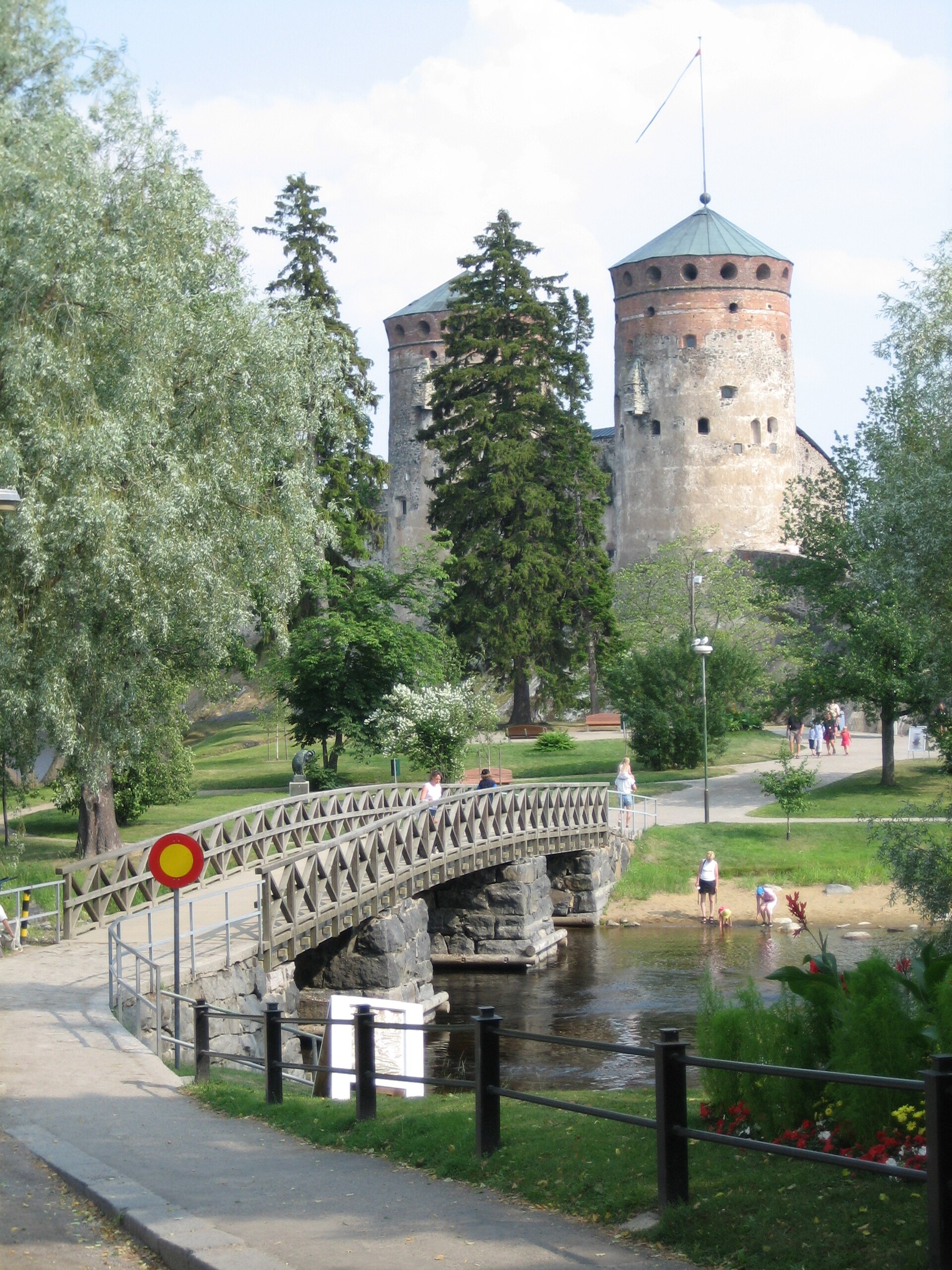
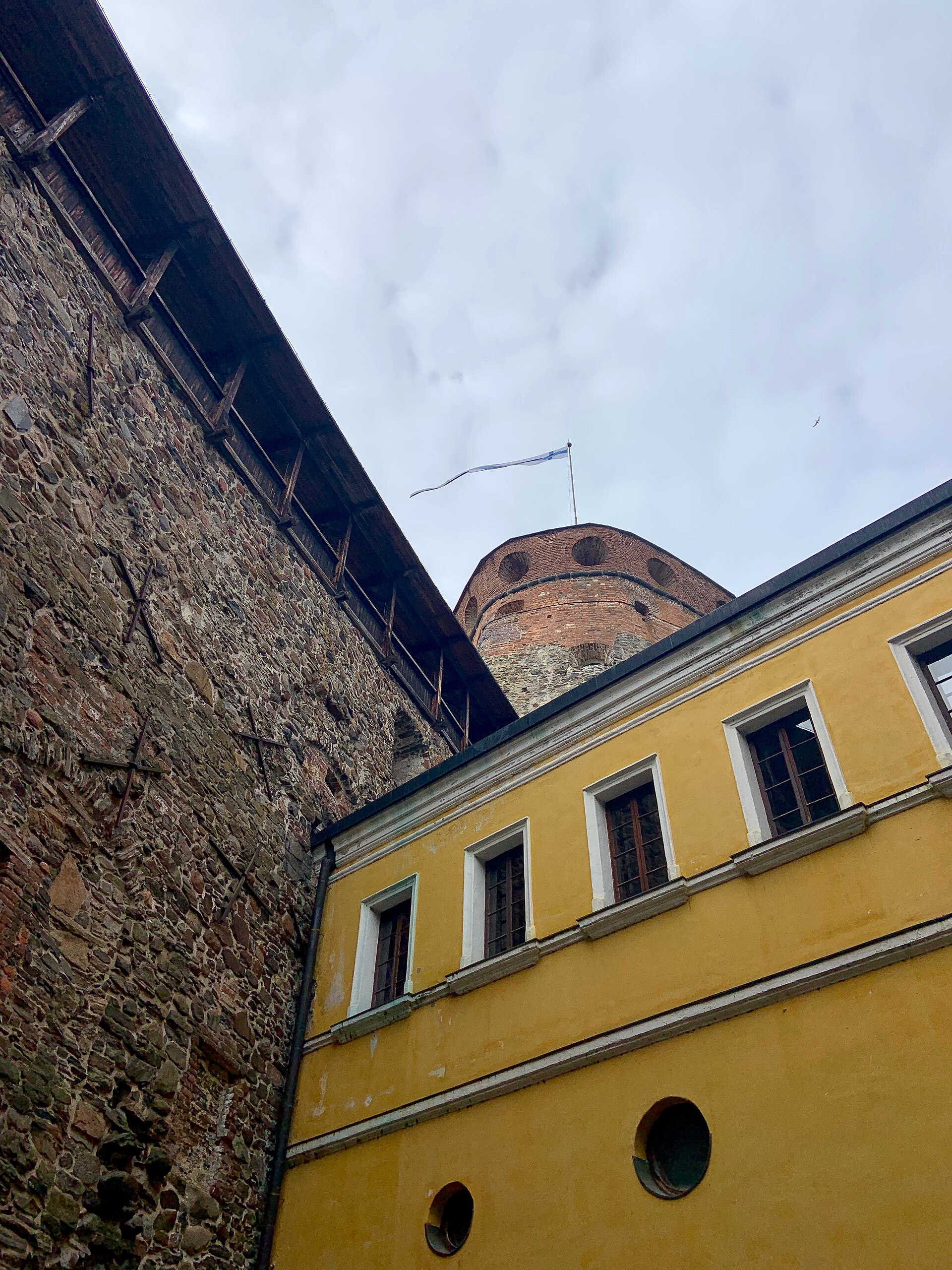
Visiting Olavinlinna now is a genuine pleasure, and it feels a world away from the grim border fortress of its founding. You reach the island by a series of walkways, including a section that swings aside to let boats pass through the busy strait, so that the approach itself becomes part of the experience. Once inside, the castle is normally explored on a guided tour, and the guides do a fine job of bringing its long, dramatic story to life as they lead you up the winding tower stairs and through the vaulted chambers.
Within the walls you will find the Castle Museum, which traces the history of the fortress and the region through objects and displays, and a small Orthodox Museum whose religious artefacts speak to the Russian centuries in the castle’s past. The rooms are mostly bare stone now, but that bareness has its own honesty, letting you feel the age and weight of the place without distraction. Climb to the top of a tower and you are rewarded with a sweeping view over the lakes and the rooftops of Savonlinna, the same water that protected the castle for so long spreading out silver in every direction. It is the kind of view that makes the whole long history suddenly feel real.
Take your time on the island if you can, because Olavinlinna rewards patience. Linger by the water where the current runs fast through the strait, trace the curve of a tower with your hand, and try to picture the generations of soldiers who watched this same horizon for the glint of approaching oars. The castle wears its long history lightly now, but it is all still here in the stone, and the more slowly you walk it, the more of that history you will feel rising up to meet you.
Finding Olavinlinna in the Finnish Lakeland
Olavinlinna sits right in the town of Savonlinna, deep in the Saimaa lake district of eastern Finland, roughly three hundred kilometres northeast of Helsinki. Getting there is part of the adventure, whether you come by train and bus through the forests and lakes or, in the classic way, arrive by boat across the water that has always been the castle’s natural approach. However you travel, the journey carries you into one of the most beautiful corners of Finland, a landscape of endless lakes, islands, and pine forest that looks much as it must have when Erik Axelsson Tott first chose this rock.
The castle is easy to combine with time spent exploring Savonlinna itself and cruising the surrounding lakes, and if you can plan your visit around the opera festival in high summer you will see Olavinlinna at its most alive. Even outside the festival, though, the fortress rewards the trip many times over. Here are the exact coordinates so you can find your way to the great grey castle on the water.
Castles Nearby
If Olavinlinna has given you a taste for the castles of the north, there are two more Nordic strongholds close in spirit that are well worth seeking out next.
- Turku Castle, on Finland’s southwestern coast, is the country’s other great medieval fortress and a perfect companion to Olavinlinna.
- Gripsholm Castle, on a lakeshore in Sweden, shares the same world of round towers, water defences, and long royal history.
A Fortress Reborn on the Water
Few castles have travelled such a long road as Olavinlinna. It began as a hard, practical answer to a dangerous frontier, a mass of grey stone dropped into a strait to hold back the east. It endured two centuries of sieges without once being taken by force, survived the loss of the very border it was built to guard, came through fire and long neglect, and then found an entirely new purpose as a place of music and celebration. Through all of it the walls have stood, patient and unbroken, watching the same water flow past.
That is what makes a visit here so moving. You are not just looking at a well-preserved old building but at a survivor, a place that has been a weapon, a prison of empires, a ruin, and a stage, and has somehow come through as itself. Standing in the courtyard where soldiers once waited for the enemy and singers now hold thousands spellbound, you feel the whole sweep of northern history close around you. Olavinlinna is proof that the strongest fortresses are not always the ones that win their wars, but the ones that learn, in the end, how to live in peace.
If you make the journey, give yourself the gift of an unhurried visit. Let the guide’s stories settle, climb every tower stair you are allowed to, and stand for a while on the walls as the light moves across the lakes. Olavinlinna has been waiting on its rock for more than five hundred years, and it has a great deal to say to anyone willing to stop and listen.
You May Like
Mafra, the Palace a King Built From a Vow