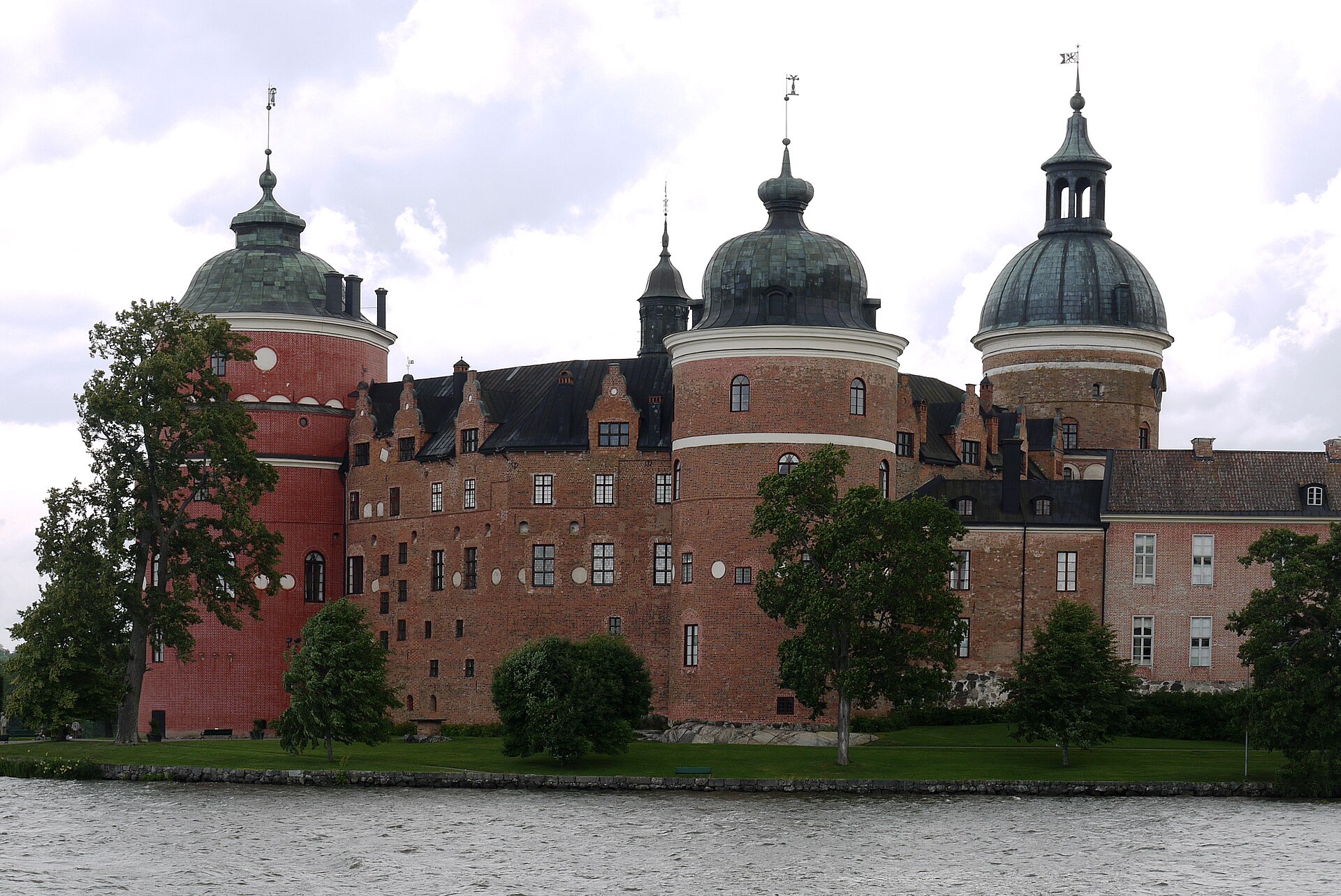
On a small island in Lake Mälaren, west of Stockholm, stands one of the most romantic and historically rich castles in Sweden. Gripsholm, with its round red-brick towers reflected in the calm water, is a Renaissance fortress of the Vasa kings, a treasure-house of Swedish history and art, and the home of one of the oldest national portrait collections in the world. It is, in a sense, the face of the Swedish nation preserved in a single castle.
Gripsholm has been at the heart of Swedish royal life for centuries, built and rebuilt by kings, the setting for intrigue and imprisonment, for theatre and art. Within its towers are preserved not only the layered interiors of successive royal ages but a vast gallery of portraits stretching across the whole of Swedish history, so that the castle holds the very faces of the kings, queens and great figures of the nation.
So come with me to the shores of Lake Mälaren, in the green heart of Sweden, and let us explore the castle of Gripsholm. We will trace its history from a medieval stronghold to a Vasa fortress, walk its royal chambers and its remarkable eighteenth-century theatre, wander its unrivalled portrait gallery, and discover the Viking runestones and captured cannon that guard its gate. Gripsholm is a castle where the whole story of Sweden is gathered, and one of the loveliest in the north.
In This Article
- A Castle on Lake Malaren
- Gustav Vasa’s Fortress of Round Towers
- Inside the Vasa Stronghold
- Red Brick Against the Water
- Chambers of Many Ages
- The Duke’s Chamber and Royal Prisoners
- The Theatre of a Royal Actor-King
- Stage Machinery of the Enlightenment
- The Face of a Nation
- Viking Runestones at the Gate
- The Boar and the Sow
- The Whole Castle From Above
- Mariefred and the Castle Today
A Castle on Lake Malaren
Gripsholm sits in one of the loveliest settings in Sweden, on a small island in Lake Mälaren, the great lake that stretches west from Stockholm into the heart of the country. Its red-brick walls and distinctive round towers rise directly from the water beside the charming little town of Mariefred, and on a still day the whole castle is doubled in the mirror of the lake, a vision of Renaissance romance.
The location, on an island connected to the shore, gave the castle both beauty and defensive strength, surrounded by water and set apart from the mainland. Lake Mälaren was a vital waterway at the heart of the Swedish kingdom, linking Stockholm to the interior, and a castle here commanded an important route as well as enjoying a magnificent setting.
The proximity to Stockholm, the capital, made Gripsholm a favoured royal retreat, close enough to the centre of power to be convenient yet far enough to offer peace and seclusion. Kings and queens came here to escape the pressures of the court, and the castle became one of the most beloved of the Swedish royal residences, a place of both politics and pleasure.
If you want to find this lakeside castle before you visit, here are the coordinates for Gripsholm on Lake Mälaren. Zoom in and you will see it on its island beside Mariefred, the round towers rising from the water in the gentle landscape of Södermanland, a Renaissance fortress set like a jewel in one of Sweden’s great lakes.
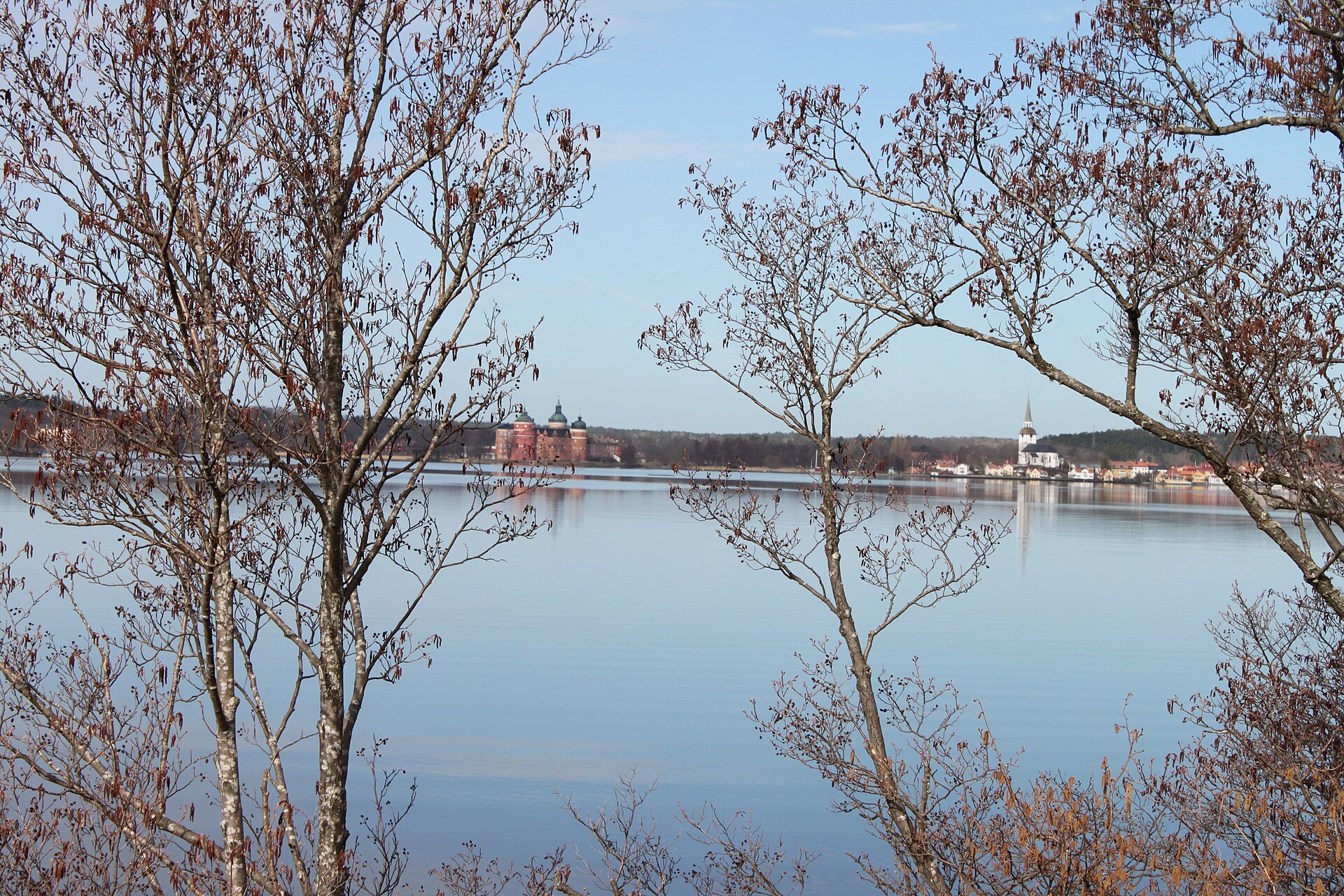
Lake Malaren, on which Gripsholm stands, is dotted with royal and noble castles and manors, for its shores and islands were long favoured by the great families of Sweden, and Gripsholm is among the finest jewels in this necklace of lakeside residences around the capital.
Gustav Vasa’s Fortress of Round Towers
There had been a stronghold on this island since the fourteenth century, built by a powerful medieval magnate named Bo Jonsson Grip, from whom the castle takes its name, Grip’s holm, or Grip’s islet. But the Gripsholm we see today was essentially the creation of King Gustav Vasa, the founder of the Vasa dynasty, who from 1537 rebuilt the castle into a modern Renaissance fortress.
Gustav Vasa gave the castle its defining feature, the four great round towers that rise at the corners of the compact, powerful structure. Round towers were the latest in defensive design, their curved walls better able to withstand and deflect the cannon fire that was transforming warfare, and they made Gripsholm a strong and modern fortress as well as a royal residence.
The rebuilding of Gripsholm was part of Gustav Vasa’s broader programme of consolidating royal power and modernizing the defences of his new kingdom. Having led Sweden out of the Kalmar Union to independence, Gustav was building a strong central monarchy, and his castles, including Gripsholm and Kalmar, were both fortresses to secure his rule and residences to display his authority.
The compact, four-towered form Gustav Vasa gave Gripsholm has remained its essential character ever since, a Renaissance fortress-palace of great strength and beauty. Later kings would add and alter, filling the castle with the interiors and treasures of successive ages, but the powerful silhouette of the round towers, rising from the lake, remains the enduring legacy of the dynasty’s founder.
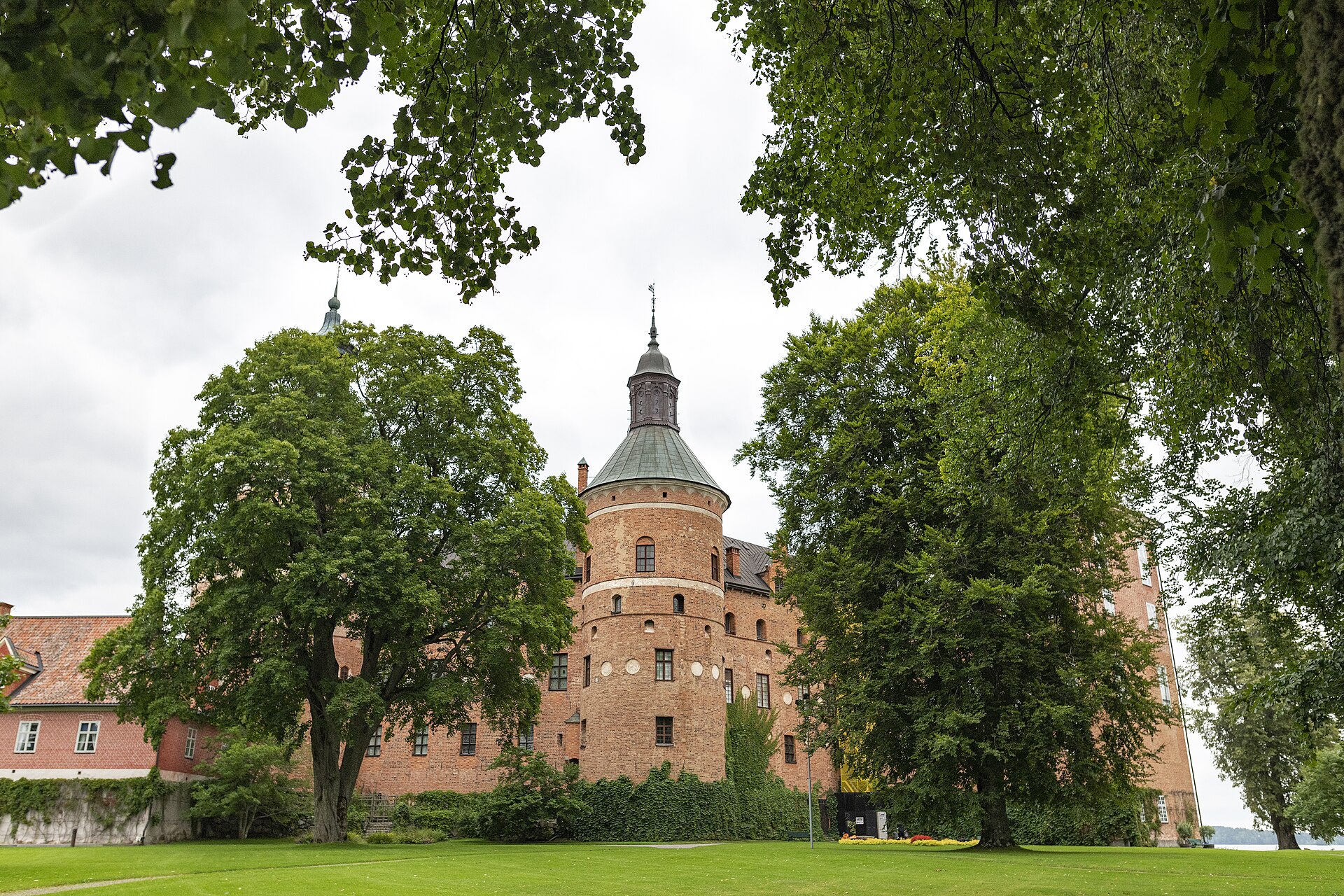
Gustav Vasa is regarded as the father of the modern Swedish nation, the man who won its independence and founded the dynasty that made it a great power, and the castles he built, Gripsholm chief among them, are monuments to that founding age of the Swedish state.
Inside the Vasa Stronghold
Passing into Gripsholm, the visitor enters a compact, powerful structure whose thick walls and enclosed courtyards recall its origins as a serious fortress. Unlike the sprawling pleasure palaces of later ages, Gripsholm is dense and strong, its buildings packed tightly within the ring of its walls and towers, every part designed with an eye to defence as well as habitation.
This compactness is part of the castle’s character, a reminder that it was built in a dangerous age when even a royal residence had to be a stronghold. The courtyards are intimate rather than grand, the passages sometimes narrow, the whole structure turned inward and defensive, a fortress first and a palace second, though it would become ever more palatial as the centuries passed.
Within these strong walls, successive generations of the royal family made their homes, and the interiors accumulated the layers of many ages, from the Renaissance of the Vasa kings to the refined Gustavian style of the eighteenth century and beyond. The fortress became a treasure-house of Swedish interior decoration, each age leaving its mark within the enduring shell of Gustav Vasa’s fortress.
To move through Gripsholm is thus to move through both space and time, from the strong defensive core to the elegant later rooms, from one century of Swedish royal life to another. The castle holds all these ages together within its round-towered walls, a fortress that became a palace and a palace that remembers it was once, above all, a stronghold on an island in the lake.
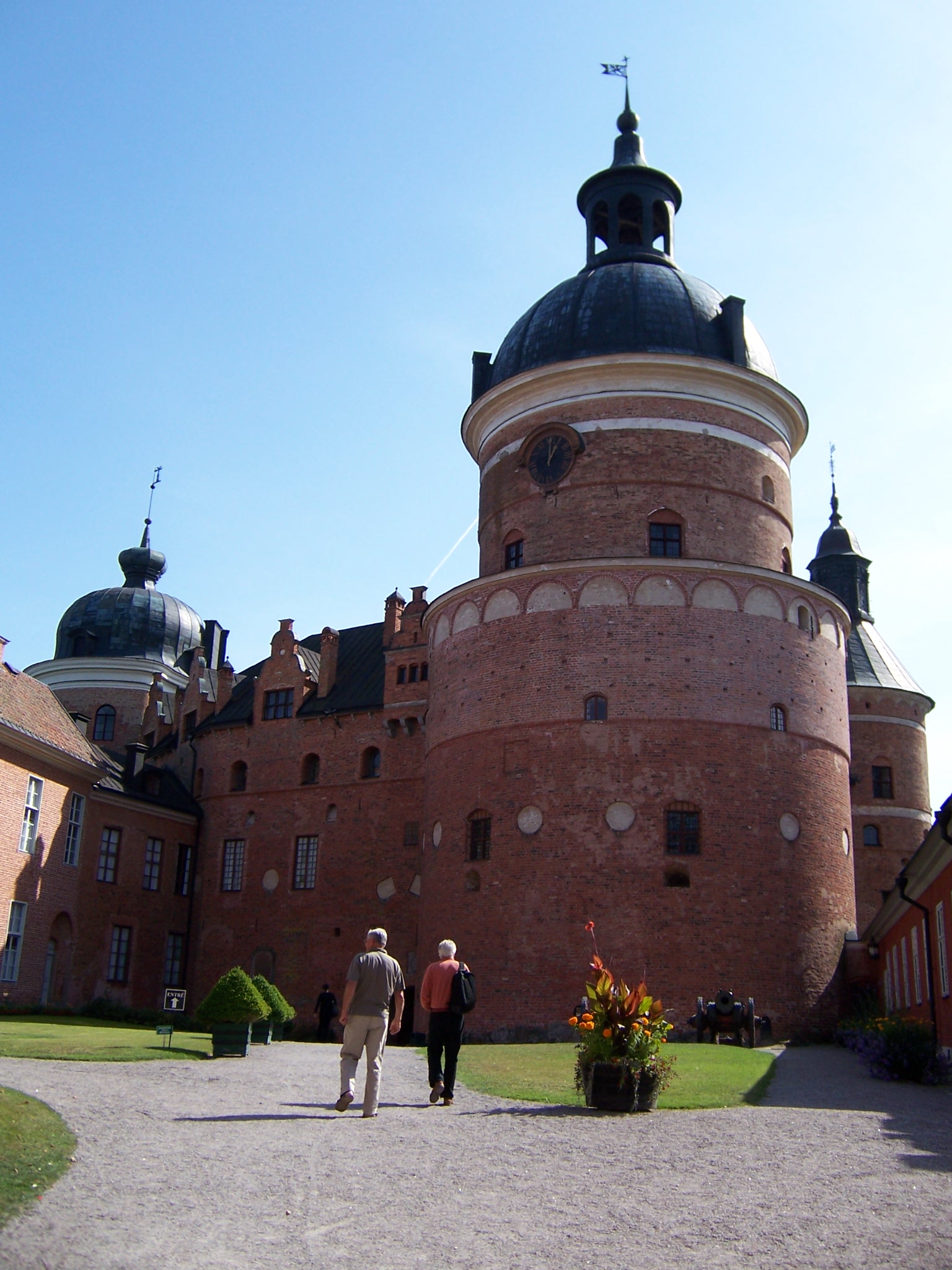
The very name of the castle, preserving the memory of the medieval magnate Bo Jonsson Grip, is a reminder that even the great Vasa fortress was built upon older foundations, and that the island had been a seat of power in Sweden long before Gustav Vasa raised his round towers upon it.
Red Brick Against the Water
Like so many of the great castles of the Nordic lands, Gripsholm is built of warm red brick, and this material gives it much of its distinctive beauty. Against the blue of the lake and the green of the surrounding landscape, the red-brick walls and towers glow with a rich, warm colour, and the whole castle has an inviting, almost domestic warmth despite its fortress origins.
Brick was the natural building material of the region, where good building stone was scarce but clay abundant, and the brick architecture of Sweden, like that of Denmark and the Baltic lands, developed into a rich tradition of its own. At Gripsholm the brickwork is handled with skill, the round towers and the walls given a pleasing solidity and texture.
The details of the facades, from the small windows of the defensive lower levels to the larger openings of the residential floors, tell the story of the castle’s dual nature, part fortress and part home. Over the centuries the exterior was adapted and refined, but the essential character of the red-brick, round-towered castle has remained constant, one of the most recognizable royal silhouettes in Sweden.
It is the combination of the strong red brick and the beautiful lakeside setting that makes Gripsholm so photogenic and so beloved. The warm walls reflected in the cool water, the round towers rising against the sky, create a picture of Renaissance romance that has drawn artists and visitors for centuries, and that remains one of the iconic images of the Swedish landscape.
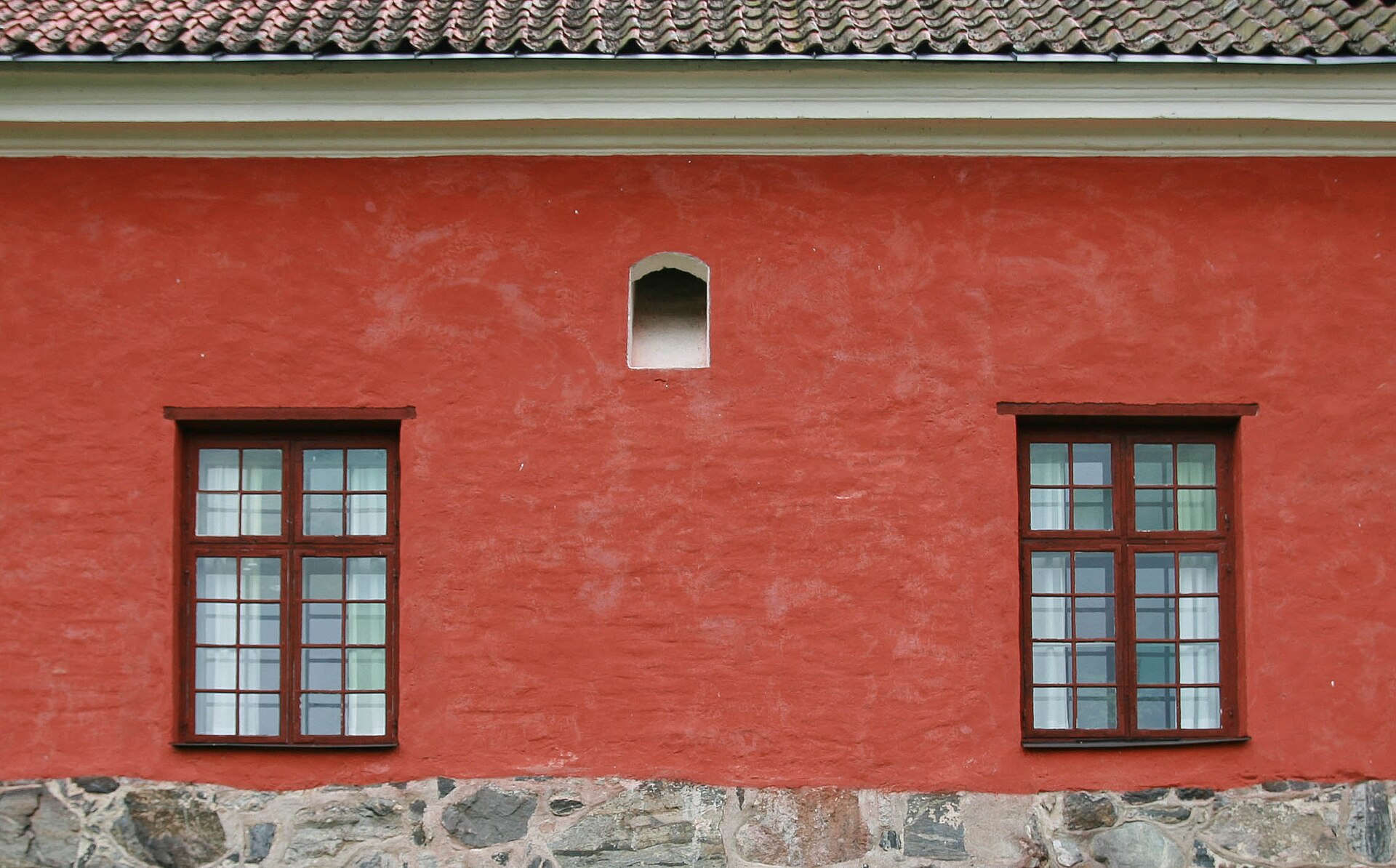
The reflection of the castle in the lake has made it a favourite subject for Swedish painters, and images of Gripsholm mirrored in the still water have become part of the visual identity of the nation, as recognizable in Sweden as any of its great buildings.
Chambers of Many Ages
The interiors of Gripsholm are one of its greatest treasures, for the castle preserves royal rooms from many periods, layered one upon another across the centuries. Because successive monarchs used and decorated the castle without sweeping away the work of their predecessors, Gripsholm offers a remarkably complete record of the evolution of Swedish royal interior decoration from the sixteenth century onward.
There are rooms from the age of the Vasa kings, with their Renaissance character, and elegant chambers from the eighteenth century in the refined Gustavian style that is one of Sweden’s great contributions to the history of design. Each room reflects the taste of its age, and moving through the castle is like walking through a gallery of Swedish interior styles across three hundred years and more.
This layering makes Gripsholm invaluable to historians of art and design, but it also makes it a delight for the ordinary visitor, who passes from one beautifully preserved room to another, each with its own atmosphere and character. The ceilings, panelling, furniture and decoration together create a vivid sense of the changing life of the Swedish court across the centuries.
The survival of these interiors owes much to the castle’s status as a royal property that was cared for and preserved rather than sold or radically rebuilt. As a result, Gripsholm is one of the most important repositories of historic interiors in Sweden, a castle where the visitor can trace the whole development of royal taste from the fortress age of Gustav Vasa to the refined elegance of the Gustavian court.
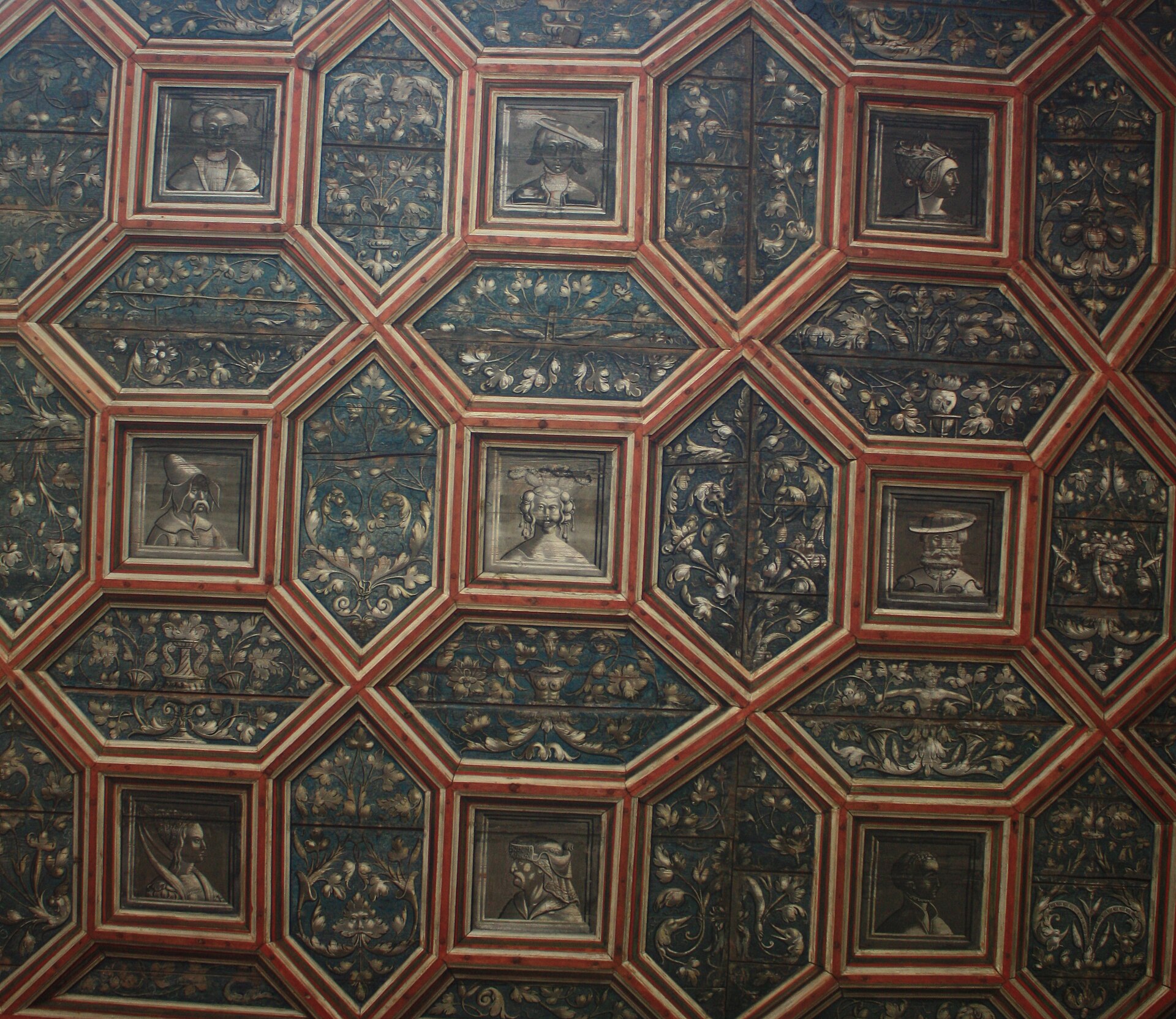
The Gustavian style that flourished at Gripsholm and across Sweden in the later eighteenth century, named for the kings Gustav III and his successors, is prized as one of the most refined of all neoclassical decorative styles, and the castle’s rooms in this manner are among the finest surviving examples.
The Duke’s Chamber and Royal Prisoners
Among the most precious rooms in Gripsholm is a chamber in one of the towers that preserves original decoration from the Renaissance age of the Vasa kings, a rare survival of sixteenth-century interior painting. Such early decoration is exceedingly rare, most having been lost or replaced over the centuries, and its preservation at Gripsholm gives an unusually direct glimpse of the Vasa court.
Gripsholm was not only a residence but at times a prison, for royal castles often served to confine members of the royal family who had fallen from favour or power. The castle held its share of such prisoners over the centuries, and this darker function is part of its history, the strong towers that protected the royal family also serving, on occasion, to imprison its own members.
The most famous of these episodes involves the deposed king Erik XIV, the brilliant, unstable Vasa monarch, who was held prisoner at Gripsholm among other castles after his brothers overthrew him. The image of the fallen king confined within the towers of a Vasa fortress captures the dangerous, intrigue-filled world of the sixteenth-century royal family, where the line between palace and prison could be thin.
These layers of history, the rare Renaissance chamber and the memory of royal prisoners, give Gripsholm a depth and a darkness beneath its lakeside beauty. The same strong towers that make the castle so picturesque were built for a hard and dangerous age, and they served, across the centuries, as both the comfortable home and the secure prison of the Swedish royal house.
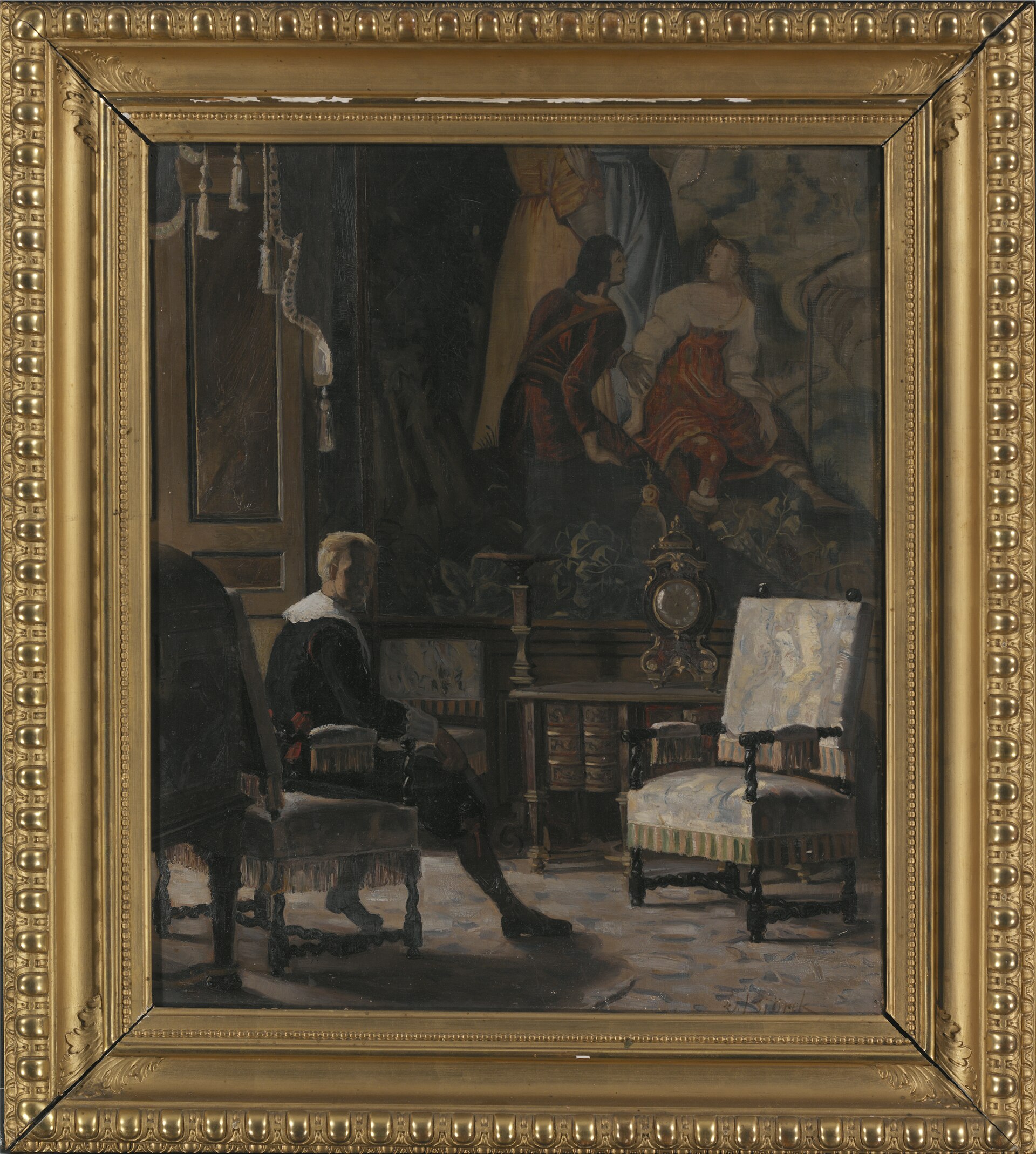
The use of royal castles as places of honourable imprisonment for fallen princes was common across Europe, and Gripsholm’s role in this respect connects it to a wider history of dynastic struggle, in which the same walls could shelter a king one year and confine him the next as the fortunes of the royal family shifted.
The Theatre of a Royal Actor-King
One of the most remarkable treasures of Gripsholm is its theatre, a jewel of the eighteenth century built for one of the most fascinating of all Swedish kings, Gustav III. A passionate lover of the theatre and the arts, Gustav had a beautiful court theatre created within the castle, and it survives today as one of the best-preserved eighteenth-century theatres in the world.
Gustav III was himself a playwright and an enthusiastic patron and participant in the drama, and he transformed the cultural life of Sweden, founding academies, theatres and institutions, and bringing the refined culture of the European Enlightenment to his court. The theatre at Gripsholm was one of the settings for his passion, an intimate and exquisite space where plays and operas were performed for the court.
The theatre is a perfect survival of its age, with its original auditorium, stage and decoration intact, allowing the visitor to step directly into the world of eighteenth-century courtly entertainment. Set within one of the castle’s round towers, it is an unexpected and delightful discovery, a little temple of the drama hidden inside the Vasa fortress.
That a king should love the theatre so passionately as to build such a jewel within his castle tells us much about the cultured, ambitious court of Gustav III, one of the high points of Swedish civilization. The theatre at Gripsholm is a monument to that culture, and to a king whose life, fittingly, ended in high drama, for Gustav III was himself assassinated at a masked ball, a death worthy of the operas he loved.
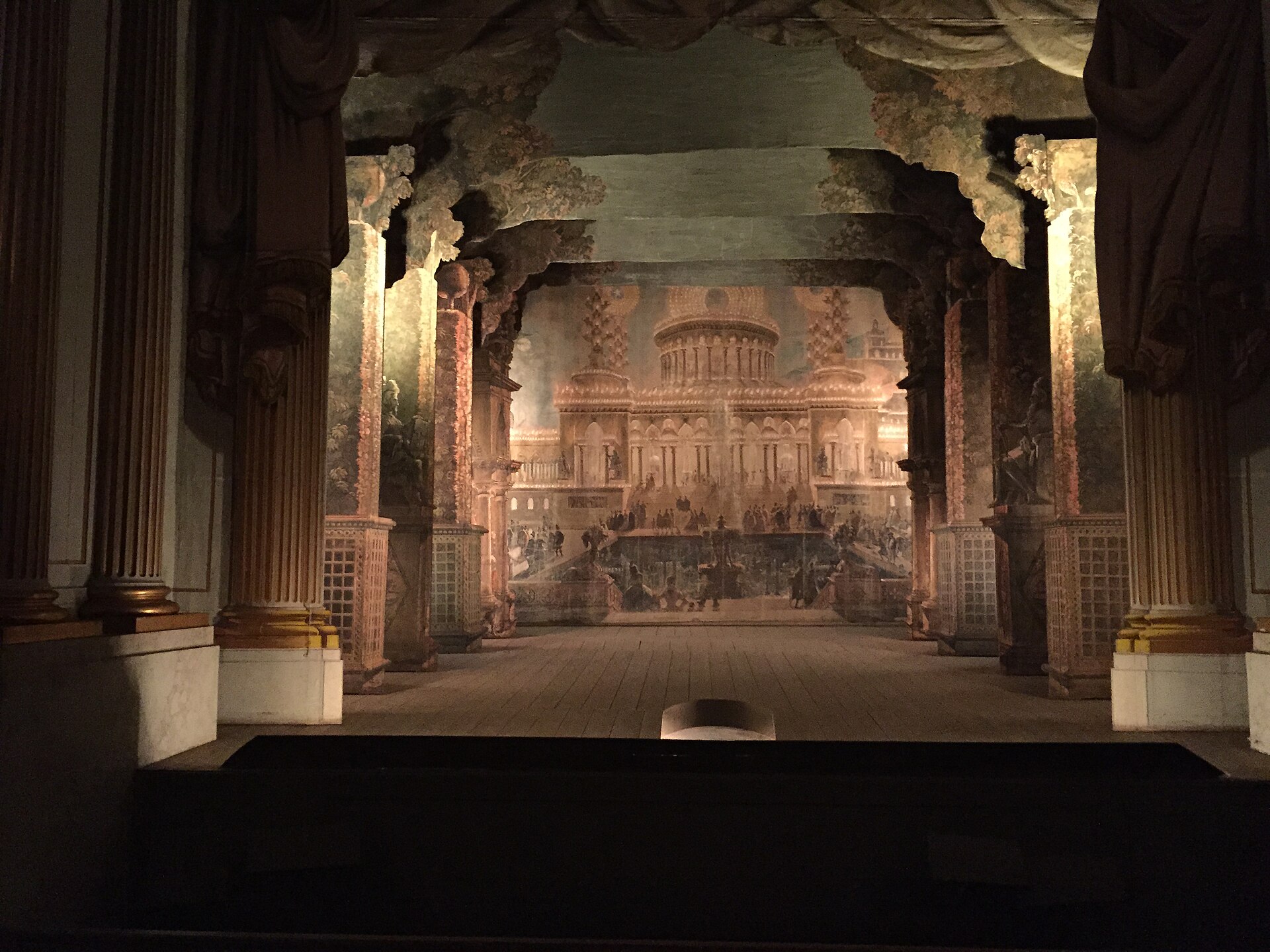
Gustav III’s reign is often seen as a golden age of Swedish culture, and his violent death at a masked ball in 1792 became one of the most famous events in the nation’s history, later immortalized in opera, so that the theatre-loving king ended his life as if in one of the dramas he adored.
Stage Machinery of the Enlightenment
Behind the beautiful auditorium of the Gripsholm theatre lies its most remarkable feature: the original stage machinery, a complex apparatus of wood, ropes and wheels that could change scenery, create special effects, and transform the stage in the elaborate manner beloved of eighteenth-century theatre. Its survival, intact and working, is extraordinarily rare and precious.
The stage machinery of the Baroque and Enlightenment theatre was a marvel of ingenuity, capable of sliding painted flats to change an entire scene in moments, of raising and lowering actors and gods, of conjuring waves, clouds and storms, all powered by human muscle behind the scenes. At Gripsholm this whole apparatus survives, a working monument to the theatrical craft of the age.
To see this machinery is to understand the technical sophistication of the eighteenth-century theatre, and the delight that audiences took in spectacle and transformation. The court of Gustav III, steeped in the culture of the Enlightenment, prized such marvels, and the machinery at Gripsholm allowed the king and his players to stage the elaborate productions they loved.
Together with the theatre at Drottningholm, another Swedish royal palace, the Gripsholm theatre is among the very few places in the world where the complete stage machinery of the eighteenth century survives, a treasure of theatrical history. It connects the modern visitor directly to the vanished world of Enlightenment drama, and to the theatre-loving king who created this jewel within his castle.
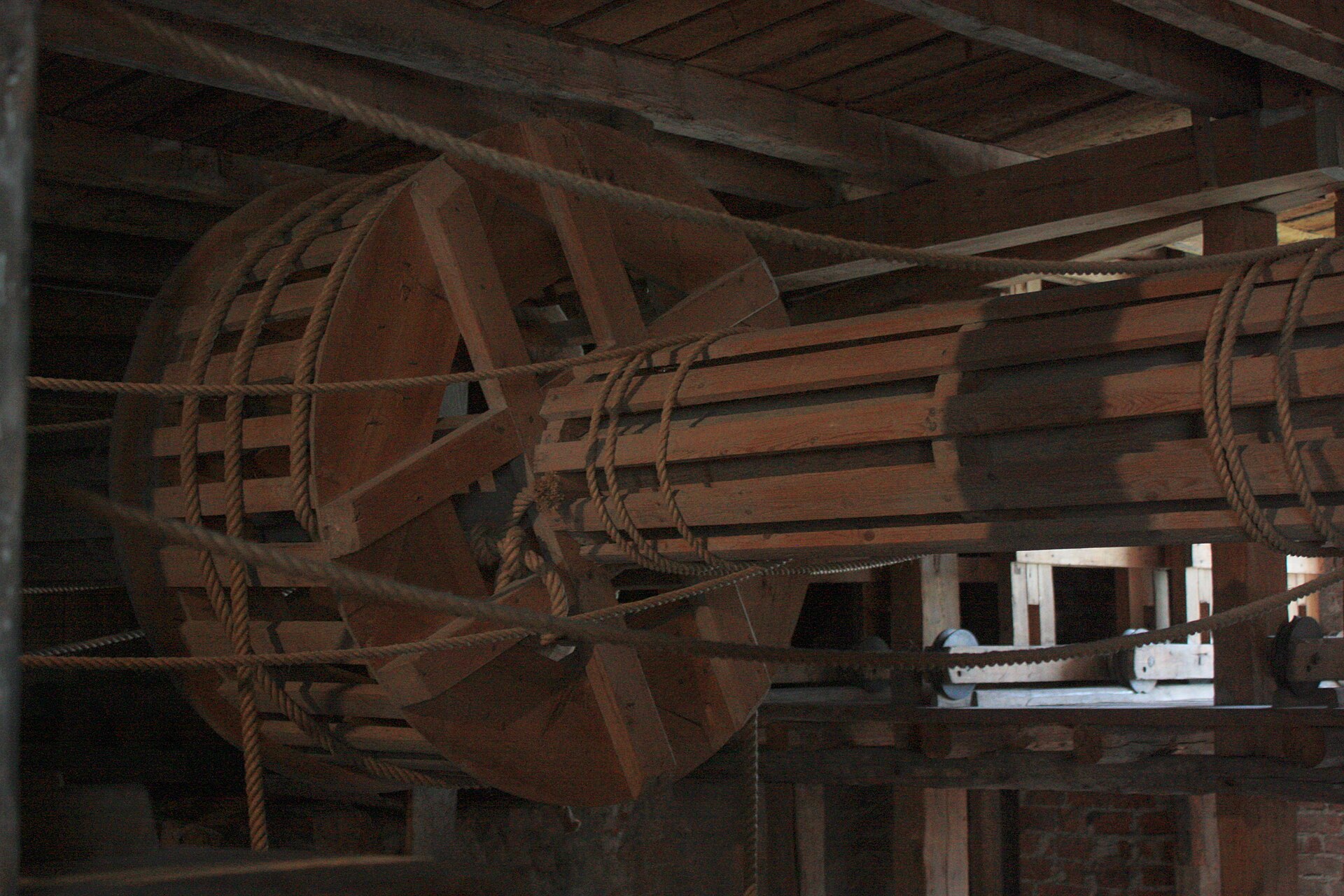
Scholars of theatre history travel to Gripsholm and Drottningholm specifically to study these rare survivals, for they preserve knowledge of stagecraft that would otherwise be lost, showing exactly how the illusions of the eighteenth-century stage were achieved by hand behind the scenes.
The Face of a Nation
The single greatest treasure of Gripsholm, and the thing that makes it unique among the castles of Sweden, is its role as the home of the Swedish National Portrait Gallery. The castle holds an immense collection of portraits, thousands of them, depicting the kings, queens, nobles, statesmen, scientists, artists and notable figures of Swedish history from the Middle Ages to the present day.
This collection is one of the oldest national portrait galleries in the world, its origins reaching back centuries to the royal habit of collecting portraits of monarchs and notable persons. Over time it grew into a systematic gallery of the faces of the nation, and it continues to grow today, with new portraits of contemporary Swedes added to the collection, so that it remains a living record.
To walk the portrait gallery of Gripsholm is to walk through the whole of Swedish history, meeting face to face the people who made it. Here are the Vasa kings and their successors, the great figures of Sweden’s age of power, the scientists and writers and artists who shaped its culture, gathered together in a single, unrivalled collection that puts a human face on the nation’s past.
The presence of this great collection transforms Gripsholm from a beautiful castle into a treasure-house of national memory, a place where the abstract story of Sweden becomes concrete in the faces of its people. It is a moving and fascinating experience, and it makes Gripsholm one of the most important cultural institutions in the country, the castle that quite literally holds the face of the Swedish nation.
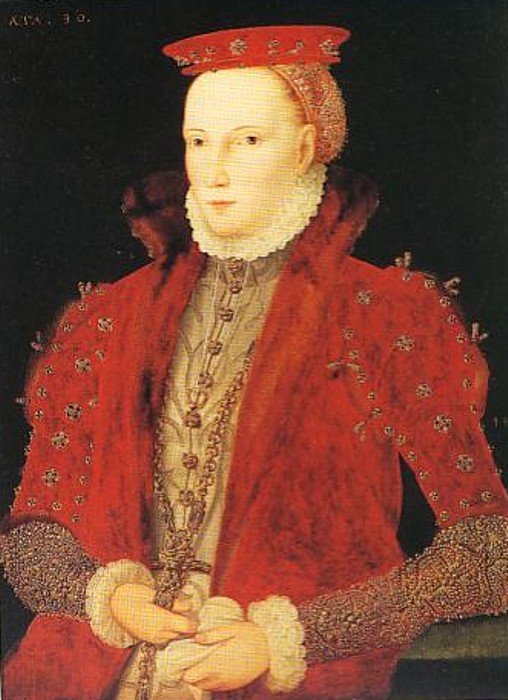
The tradition of the portrait collection reflects a very old human desire to preserve the likenesses of the notable dead, but at Gripsholm it was raised to the level of a national institution, so that the gallery is not merely a collection of pictures but a deliberate record of the nation’s identity through its people.
Viking Runestones at the Gate
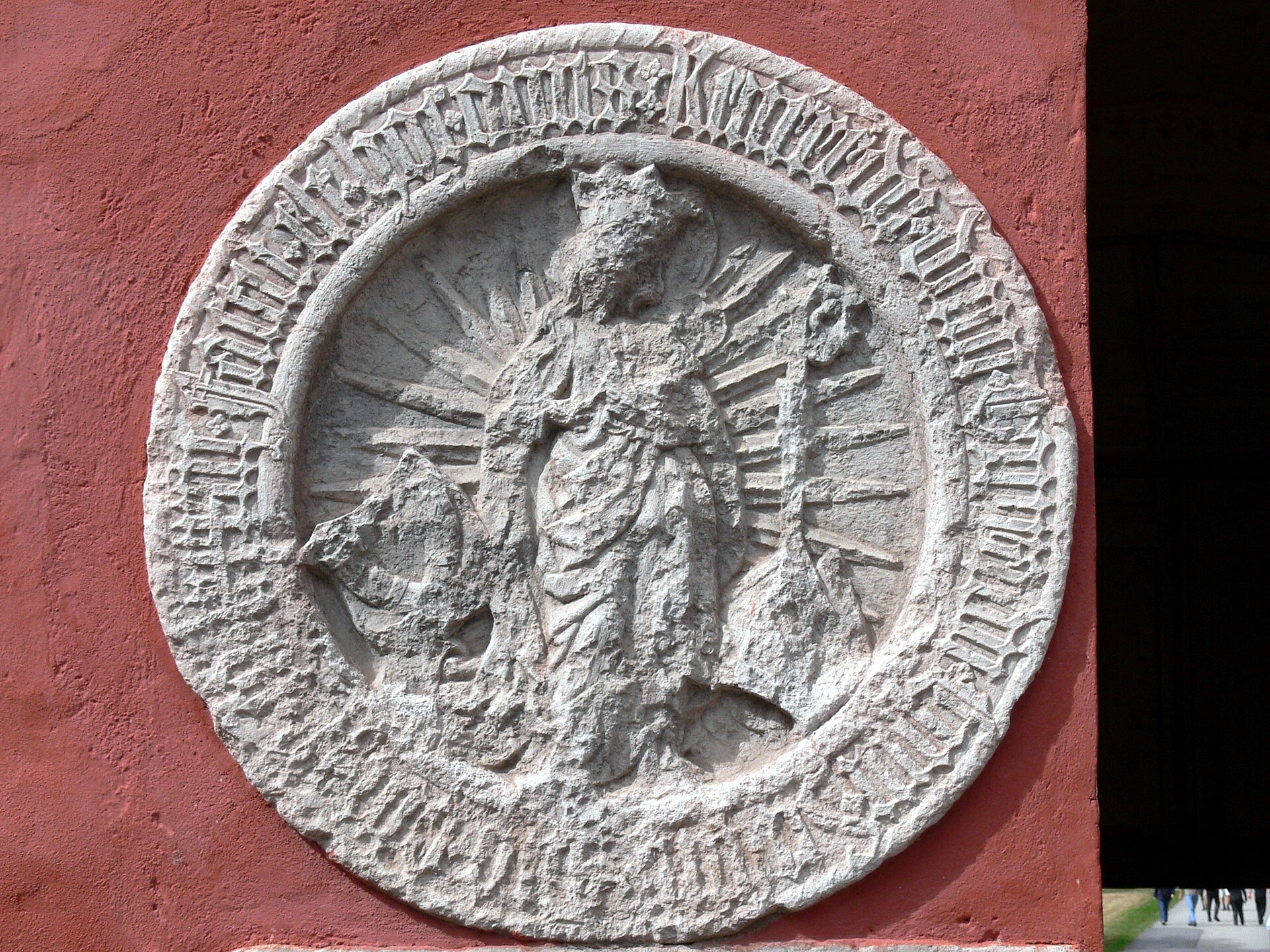
At the entrance to Gripsholm stand two ancient runestones, carved memorials from the Viking Age that predate the castle by five centuries and more. These weathered stones, inscribed with the angular runes of the Norse alphabet and often decorated with the interlaced serpent designs of the age, are moving relics of a far older Sweden, standing guard at the gate of the Renaissance fortress.
One of the Gripsholm runestones is particularly famous, for it commemorates a warrior who fell on a great and disastrous Viking expedition to the east, the ill-fated journey of Ingvar the Far-Travelled, in which many Swedish adventurers perished far from home in the eleventh century. The stone was raised by a grieving mother in memory of her lost son, a poignant message across a thousand years.
Such runestones are scattered across the Swedish landscape, memorials raised by families to their dead, often to those who died on Viking voyages of trade, raid and adventure, and they are among the most precious documents of the Viking Age. To find these ancient stones at the gate of Gripsholm links the castle to the deep prehistory of Sweden, long before the age of kings and fortresses.
There is something powerful about these thousand-year-old memorials standing at the entrance to the castle, a reminder that the land on which Gripsholm rises has been home to a proud and adventurous people for far longer than the Renaissance towers suggest. The runestones connect the visitor to the Viking world that lies beneath the whole later history of Sweden, and they are among the most evocative sights at the castle gate.
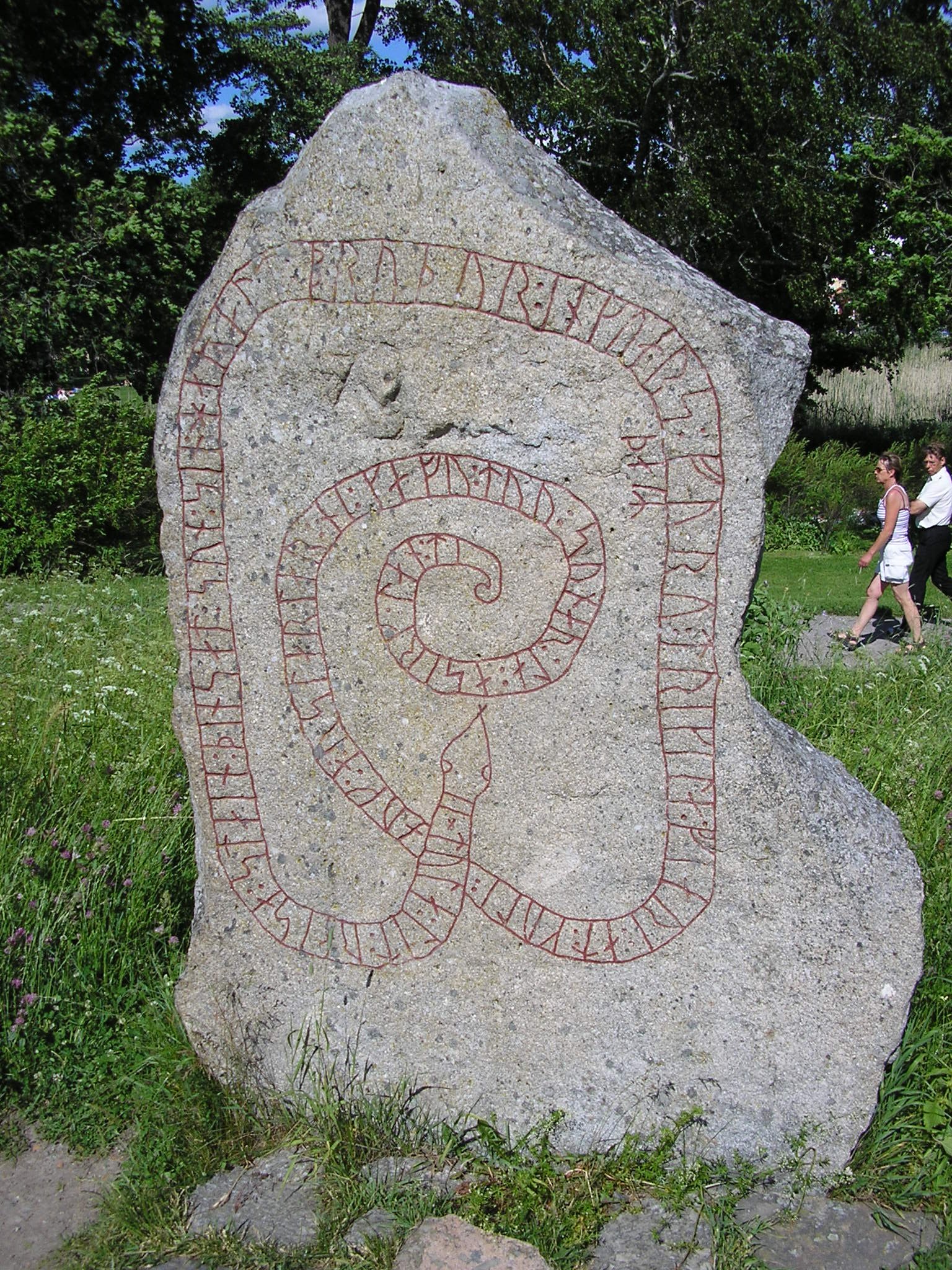
The Ingvar runestones, of which the Gripsholm stone is one, form a group scattered across the region, all commemorating men who died on the same catastrophic expedition to the lands around the Caspian Sea, and together they are among the most moving records of the reach and the risks of the Viking world.
The Boar and the Sow
Flanking the gate of Gripsholm stand two enormous old cannon, famous enough to have earned their own nicknames: Galten and Suggan, the Boar and the Sow. These great bronze guns are war trophies, captured in the conflicts of past centuries and brought to Gripsholm as symbols of Swedish military triumph, and they have guarded the castle gate for generations.
Captured cannon were prized trophies of war, tangible proof of victory over an enemy, and it was common to display them at royal castles as monuments to martial glory. The Boar and the Sow, with their affectionate popular names, have become beloved features of Gripsholm, their great barrels pointing out over the approach to the castle, relics of Sweden’s age as a great military power.
The age when these cannon were cast and captured was the age of the Swedish Empire, when Sweden was one of the great powers of Europe, its armies famed and feared across the continent. The trophies at Gripsholm recall that era of Swedish greatness, and their presence at the castle links this royal residence to the wider story of Sweden’s rise and its wars.
Today the Boar and the Sow are cherished landmarks, greeting every visitor who approaches the castle, their comical names belying their warlike origins. Between these captured cannon and the ancient runestones nearby, the gate of Gripsholm gathers together the whole sweep of Swedish martial history, from the Viking adventurers of the eleventh century to the imperial armies of the seventeenth.
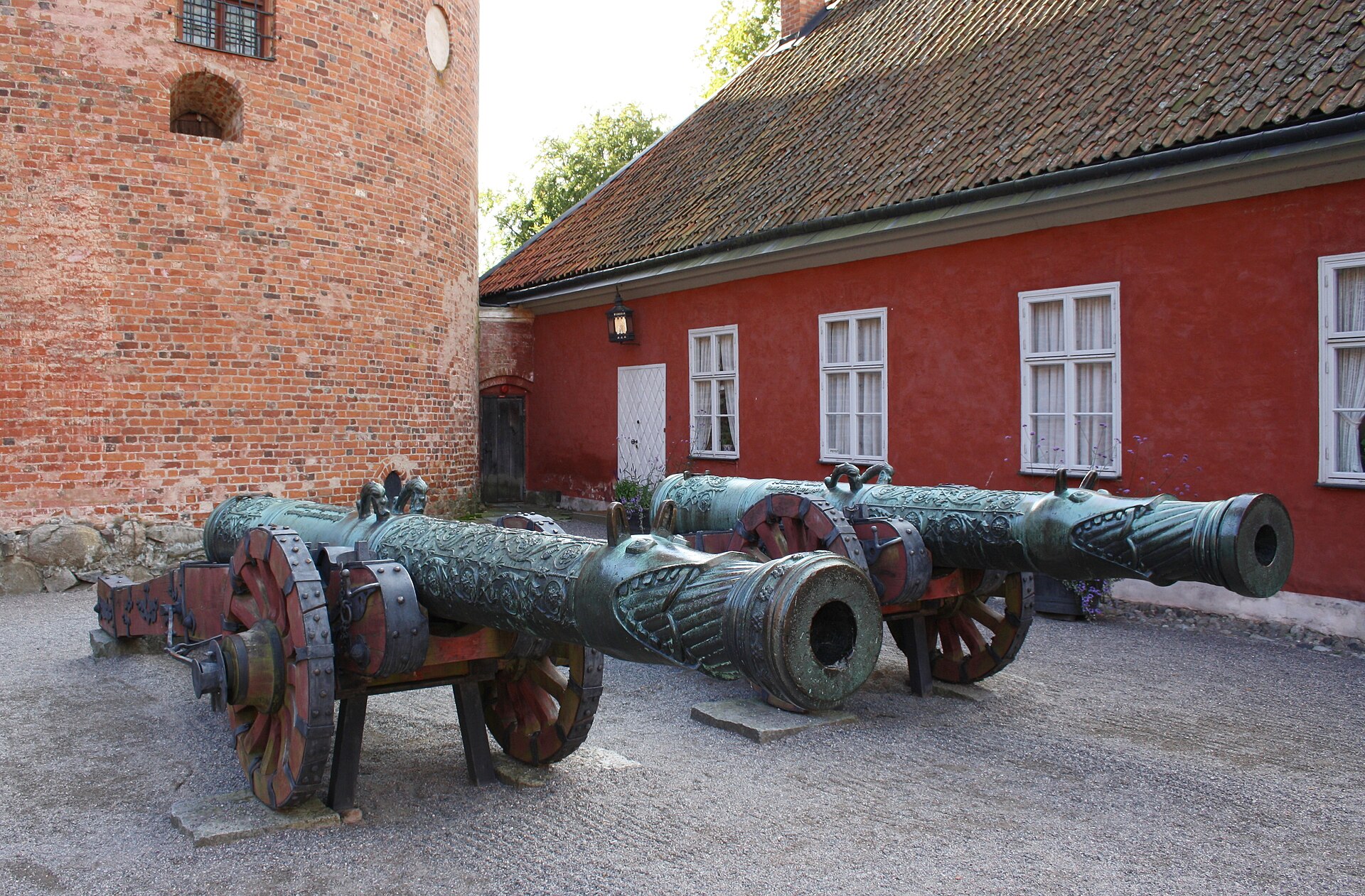
Trophies like these were part of a whole culture of martial display in the age of the Swedish Empire, when victories were celebrated with captured standards, guns and other spoils, and their survival at Gripsholm keeps alive the memory of the era when Sweden was among the most feared military powers in Europe.
The Whole Castle From Above
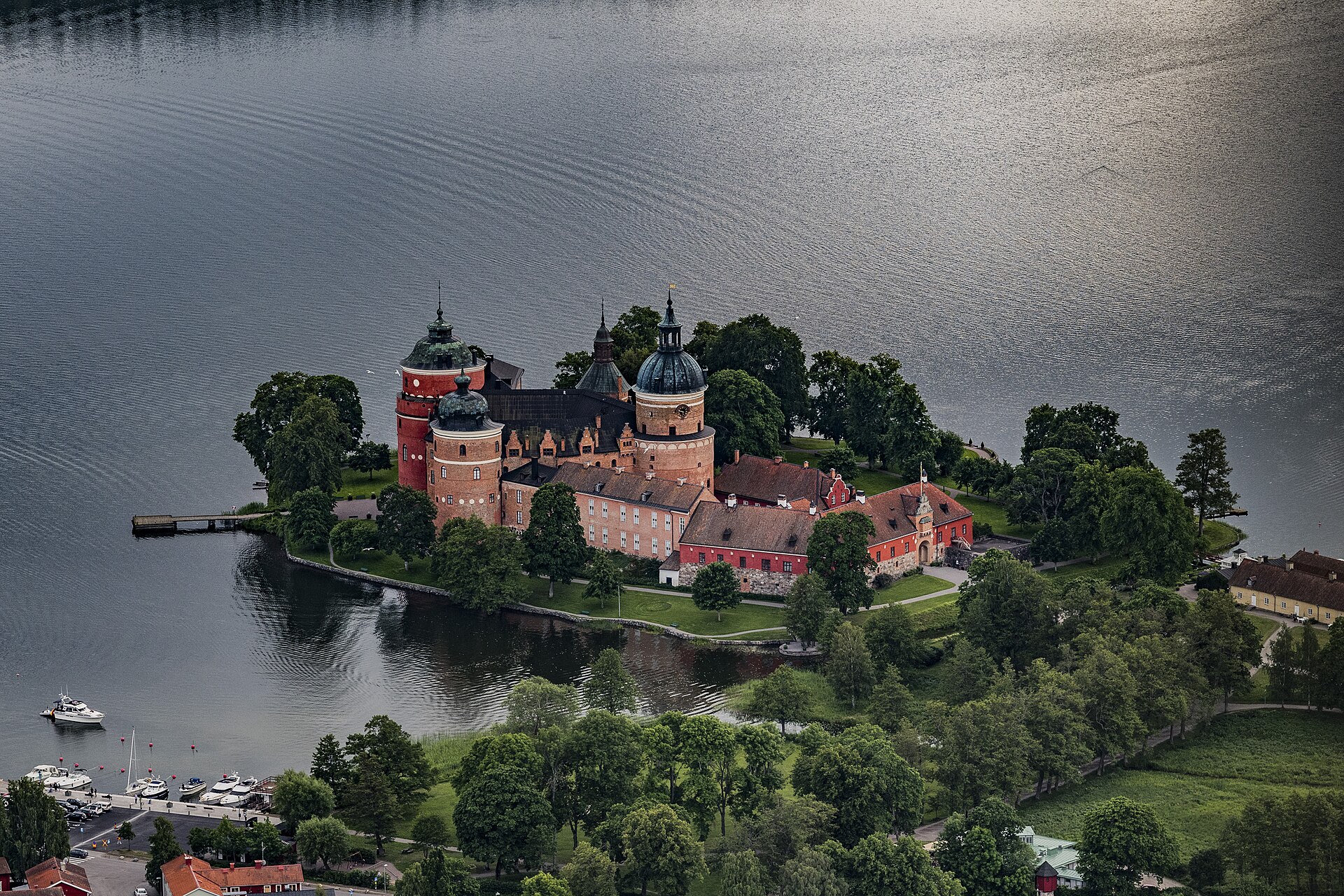
Seen from above, Gripsholm reveals the elegant logic of its design, a compact and powerful fortress with its four round towers set at the corners, the whole structure rising from its island in the lake. The aerial view shows how tightly and cleverly the castle is composed, a masterpiece of the Renaissance fortress-palace, strong and beautiful in equal measure.
The four-towered plan, the legacy of Gustav Vasa, gives the castle its distinctive and harmonious form, the round towers providing both defensive strength and architectural rhythm. From above, one appreciates how the whole structure was conceived as a unified design, compact and self-contained, a fortress that is also a work of art in its geometry and proportion.
The setting, too, is best appreciated from the air, the castle on its island beside the town of Mariefred, the waters of Lake Mälaren stretching away, the green landscape of Södermanland all around. The relationship between the castle, the town and the lake becomes clear, a royal fortress at the heart of a beautiful and historic landscape.
To take in the full sweep of the castle and its setting, it helps to see it whole, and this tour explores Gripsholm and the charming town of Mariefred beside it. It conveys the beauty of the four-towered fortress on its island, and the atmosphere of the whole lakeside scene, far better than any single view from the ground, a fitting introduction to one of Sweden’s loveliest castles.
Mariefred and the Castle Today
Beside the castle lies the enchanting little town of Mariefred, one of the best-preserved small towns in Sweden, its wooden houses and cobbled streets clustered around an old monastery church from which the town takes its name. Mariefred and Gripsholm together form one of the loveliest destinations in the country, a perfect marriage of royal castle and historic town by the lake.
The town has grown up in the shadow of the castle over the centuries, and its fortunes have long been bound to the royal residence, as those of so many castle towns are. Today Mariefred is a charming and peaceful place, a favourite excursion from Stockholm, its old-world atmosphere providing the perfect setting for the great castle at its edge.
One of the delights of a visit is the way many travellers arrive, for Mariefred is served by a historic narrow-gauge steam railway and by boats across Lake Mälaren from Stockholm, so that reaching Gripsholm can itself be a journey into the past. To approach the castle by steam train or by boat across the lake is to arrive in the proper, romantic style.
Today Gripsholm is one of the royal palaces of Sweden, open to the public as a museum and home to the great national portrait collection, one of the most visited and beloved castles in the country. Between its Vasa fortress, its royal interiors, its theatre and its unrivalled gallery of Swedish faces, set beside the charming town of Mariefred on its lovely lake, Gripsholm gathers the whole story of Sweden into one magnificent castle, and remains one of the true treasures of the north.
The steam railway that serves Mariefred is itself a beloved heritage attraction, run by enthusiasts and preserving the atmosphere of a bygone age of travel, so that the journey to Gripsholm has become part of the pleasure of visiting, a nostalgic prelude to the castle at the end of the line.
Castles Nearby
Why Gripsholm Holds the Face of a Nation
Gripsholm is a castle that gathers a whole nation into its walls. Behind the round red towers of Gustav Vasa lie the layered rooms of many royal ages, the exquisite theatre of an actor-king, and, above all, the great gallery of portraits that holds the very faces of Swedish history. Few castles anywhere carry so much of their country’s memory.
And it is beautiful as well as rich, its warm brick towers reflected in the still waters of Lake Mälaren, its gate guarded by Viking runestones and captured cannon, the charming town of Mariefred at its side. Gripsholm unites the deep past of the Viking Age, the fortress age of the Vasa kings, and the refined culture of the Enlightenment in a single lovely castle by the lake.
So make the short journey from Stockholm, by boat or by steam train if you can, and let Gripsholm reveal itself. Walk its royal chambers and its little theatre, wander its gallery of Swedish faces, and stand at its gate among the runestones and the cannon. Gripsholm is a castle where the whole story of Sweden is written, and one of the most rewarding and beautiful in all of Scandinavia.
You May Like
Mafra, the Palace a King Built From a Vow


2 thoughts on “Gripsholm Castle: The Vasa Fortress That Holds Sweden’s Face”