On a green island in the waters west of Stockholm stands the most beautiful royal palace in Sweden, a serene baroque masterpiece so graceful that it has earned the nickname of the Swedish Versailles. Drottningholm is a place of perfect symmetry and quiet elegance, its long facade mirrored in the water, its formal gardens stretching away in avenues and fountains, its grounds dotted with an exotic Chinese pavilion and one of the best-preserved eighteenth-century theatres in the world. And unlike so many great palaces, it is still very much alive, for it remains the home of the Swedish royal family to this day.
Drottningholm, the Queen’s Islet, owes its beauty to a succession of remarkable royal women and to the genius of the architects who served them. It was never a fortress built for war but a residence created for pleasure, display, and the refined life of a royal court, a Swedish answer to the great palaces of Europe. Across the centuries it has gathered a baroque palace, magnificent gardens, a jewel of a theatre, and a delightful Chinese pavilion, and the whole royal domain is now a UNESCO World Heritage Site. In this article you will explore all of its treasures. Come and discover Sweden’s most enchanting palace.
What follows is a tour through all the treasures of this royal domain, from the baroque palace and its grand state rooms to the perfectly preserved theatre, the exotic Chinese pavilion, and the magnificent gardens that surround them all. Each has its own story to tell, and together they build a complete picture of the pleasures and ambitions of the Swedish court across more than three centuries. Few places let you wander so freely through the refined world of European royalty, and fewer still where that world is still, quietly, being lived in today.

In This Article
- Sweden’s Own Versailles
- A Palace Born from Fire
- The Vision of Queen Hedvig Eleonora
- The Tessins, Father and Son
- The Baroque Gardens
- A Romantic English Landscape
- The Palace Theatre, Frozen in Time
- Original Machinery and Living Opera
- The Chinese Pavilion, a Royal Surprise
- A Taste for the Exotic East
- A Living Royal Home
- A World Heritage Site to Explore
- Finding Drottningholm Palace
- Castles Nearby
Sweden’s Own Versailles
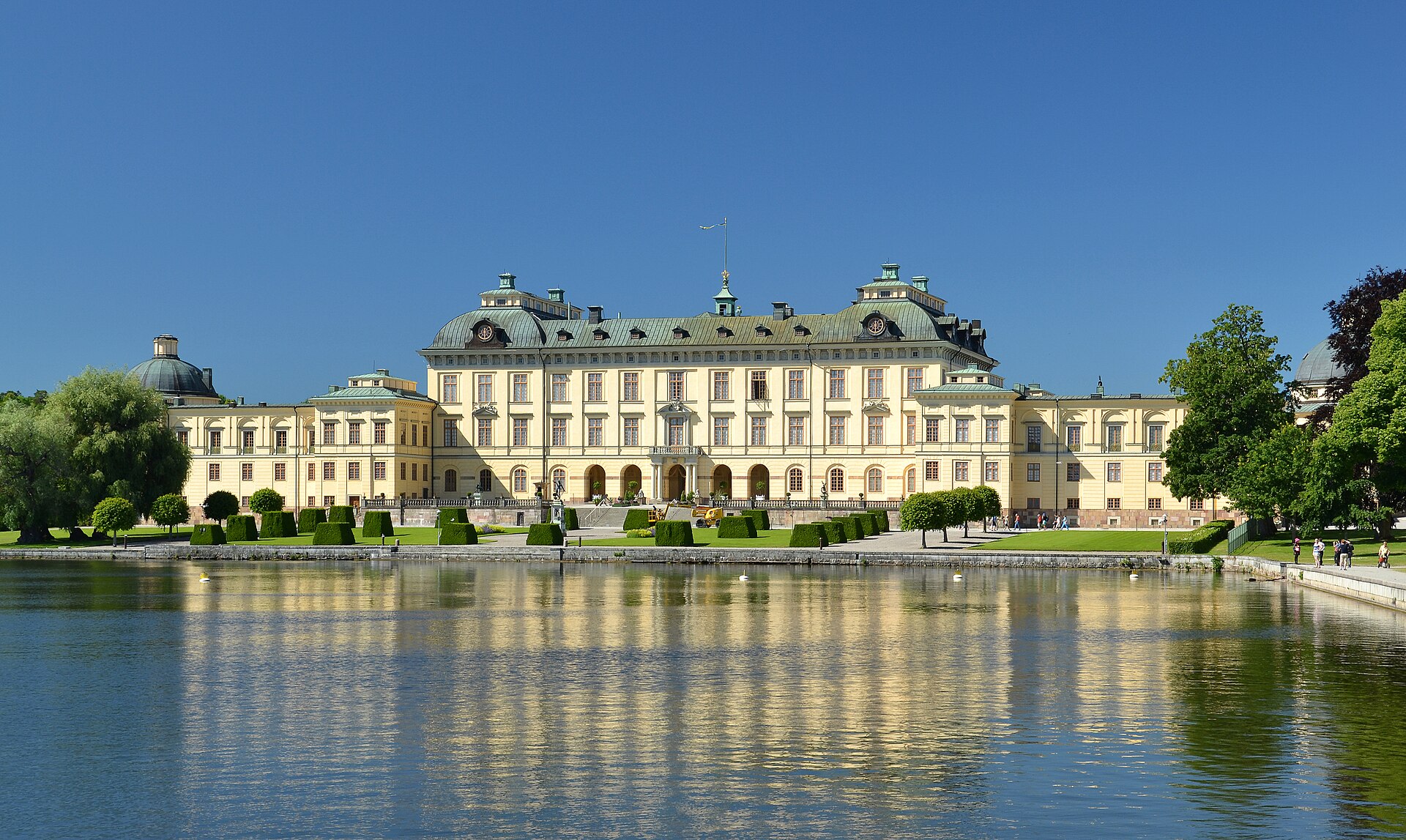
On a green island in the waters west of Stockholm stands a palace so graceful and so grand that it is often called the Versailles of Sweden. Drottningholm rises above its formal gardens in serene baroque symmetry, its long facade reflected in the still water, its avenues and fountains stretching away in perfect order. It is the finest royal palace in the country, a place of theatres and Chinese pavilions and clipped hedges, and it is still, to this day, the home of the Swedish royal family. To visit is to step into a world of eighteenth-century elegance kept wonderfully alive.
The name Drottningholm means the Queen’s Islet, and it is a fitting one, for this palace owes its existence and much of its beauty to a series of remarkable royal women. Unlike the grim border fortresses that guard so much of Scandinavia, Drottningholm was never built for war. It was built for pleasure, for display, and for the refined life of a royal court, a Swedish answer to the great palaces of France and the rest of Europe. Across its long history it has gathered a palace, a perfectly preserved theatre, an exotic Chinese pavilion, and some of the most beautiful gardens in the north. This is the story of Sweden’s most enchanting royal home.
There is a serenity to Drottningholm that sets it apart even from other great palaces. Perhaps it is the water that surrounds the island, or the perfect balance of the architecture, or the way the gardens seem to breathe calm into everyone who walks them, but visitors often remark on the sense of peace the place inspires. It is a palace made not for the clash of armies but for the gentle pleasures of court life, and something of that original purpose still lingers in the air, making a visit here feel less like a history lesson and more like a graceful escape into another age.
A Palace Born from Fire
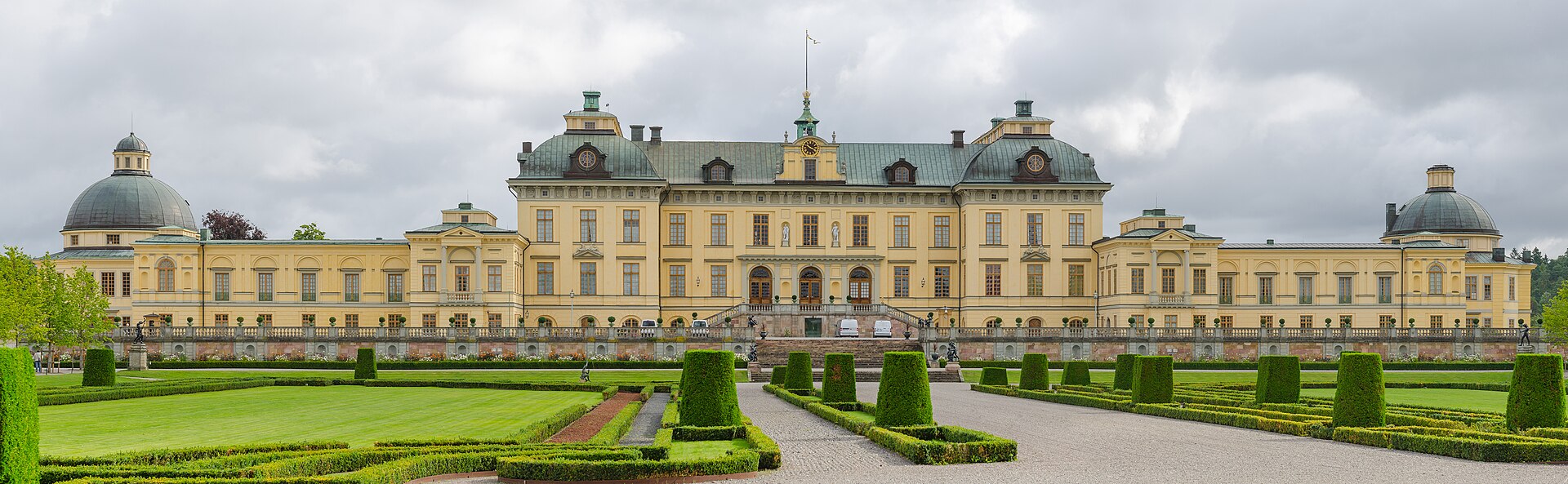
There has been a royal residence on this island for a very long time. An earlier palace stood here in the sixteenth century, built for a Swedish queen, and it was from that building that the place took its name of Drottningholm, the Queen’s Islet. But that first palace did not survive. In 1661 it was destroyed by fire, burning to the ground and leaving the royal family without their island retreat. It was out of the ashes of that disaster that the magnificent palace we know today was born.
The task of rebuilding fell to another queen, and she seized the opportunity to create something far grander than what had been lost. Rather than simply restoring the old building, she commissioned an entirely new palace in the latest and most fashionable style, a baroque masterpiece to rival the great royal residences of Europe. The fire of 1661, destructive as it was, thus became the spark for one of the most beautiful buildings in Sweden. What might have been a mere replacement became instead a bold statement of royal ambition, and the foundations were laid for the palace that still graces the island today.
Fires were a constant danger to the great houses of earlier centuries, when open flames provided all the light and heat, and many a palace and castle was lost to them over the years. In this case, though, the loss opened the way to something greater. It is a pattern that recurs throughout the history of architecture, where destruction clears the ground for bold new creation, and Drottningholm is one of the happiest examples. The queen who rebuilt it turned misfortune into opportunity, and the Sweden of today is the richer for it.
The Vision of Queen Hedvig Eleonora
The driving force behind the new Drottningholm was the dowager queen Hedvig Eleonora, one of the most powerful and cultured figures in seventeenth-century Sweden. Widowed young, she became a dominant presence at the Swedish court and a great patron of the arts and architecture, and she poured her energy and taste into the creation of a palace worthy of her ambitions. It was under her direction, beginning in the 1660s, that the grand baroque residence took shape on the island.
Hedvig Eleonora wanted Drottningholm to be a showpiece, a palace that would reflect the glory of the Swedish crown at a time when the country was a major European power. She spared no effort in achieving that vision, employing the finest architects and craftsmen of the age and overseeing the work across many years. The result was a residence of real magnificence, its grand staircase, its richly decorated state rooms, and its imposing facade all designed to impress. The palace stands today as a monument to her taste and determination, a lasting expression of the cultured ambition of a remarkable queen.
Hedvig Eleonora’s influence on Swedish culture extended far beyond this one palace, for she was a tastemaker and patron whose choices helped shape the artistic life of the whole country during her long and prominent life. In choosing to build in the grand baroque manner, she was aligning Sweden with the most sophisticated currents of European culture and asserting the kingdom’s place among the leading powers. Drottningholm was, in a sense, her great cultural project, and its enduring beauty is a testament to the vision and the will of a queen who understood the power of magnificence.

The Tessins, Father and Son
The architect who gave Drottningholm its grand form was Nicodemus Tessin the Elder, the leading builder of his day in Sweden, who drew up the designs for the new baroque palace and set the work in motion. Tessin was a master of the fashionable continental style, and his vision for Drottningholm was of a residence that could stand comparison with the finest palaces of France and Italy, with a monumental facade, a splendid interior, and gardens laid out in perfect geometric order.
When the elder Tessin died, the work was carried on by his son, Nicodemus Tessin the Younger, who was an equally gifted architect and who completed and refined his father’s designs. Between them, father and son shaped Drottningholm over many years into the harmonious whole we see today, and the Tessin name became synonymous with the golden age of Swedish palace architecture. Their collaboration across a generation gave the palace a rare unity of style, and it is thanks to their combined genius that Drottningholm ranks among the great baroque residences of Europe.
The partnership of the two Tessins gives Drottningholm a coherence that many palaces, built and rebuilt piecemeal over centuries, entirely lack. Because the son so faithfully carried forward and completed the father’s vision, the palace reads as a single unified design rather than a patchwork of competing styles. This unity is one of the quiet secrets of its beauty, the reason the eye finds it so satisfying, and it speaks to a rare continuity of purpose and talent passed from one generation to the next within a single gifted family.
It is a pleasing thought that so much of the beauty we enjoy at Drottningholm today flows from the talent of a single family working across two generations. In an age when architecture was often a collaborative and evolving affair, the Tessins gave this palace a guiding intelligence and a consistent artistic vision that carried it from first design to finished masterpiece. Their names deserve to be remembered alongside those of the queens who commissioned the work, for without their genius the royal ambition would never have taken such graceful and enduring form.

The Baroque Gardens
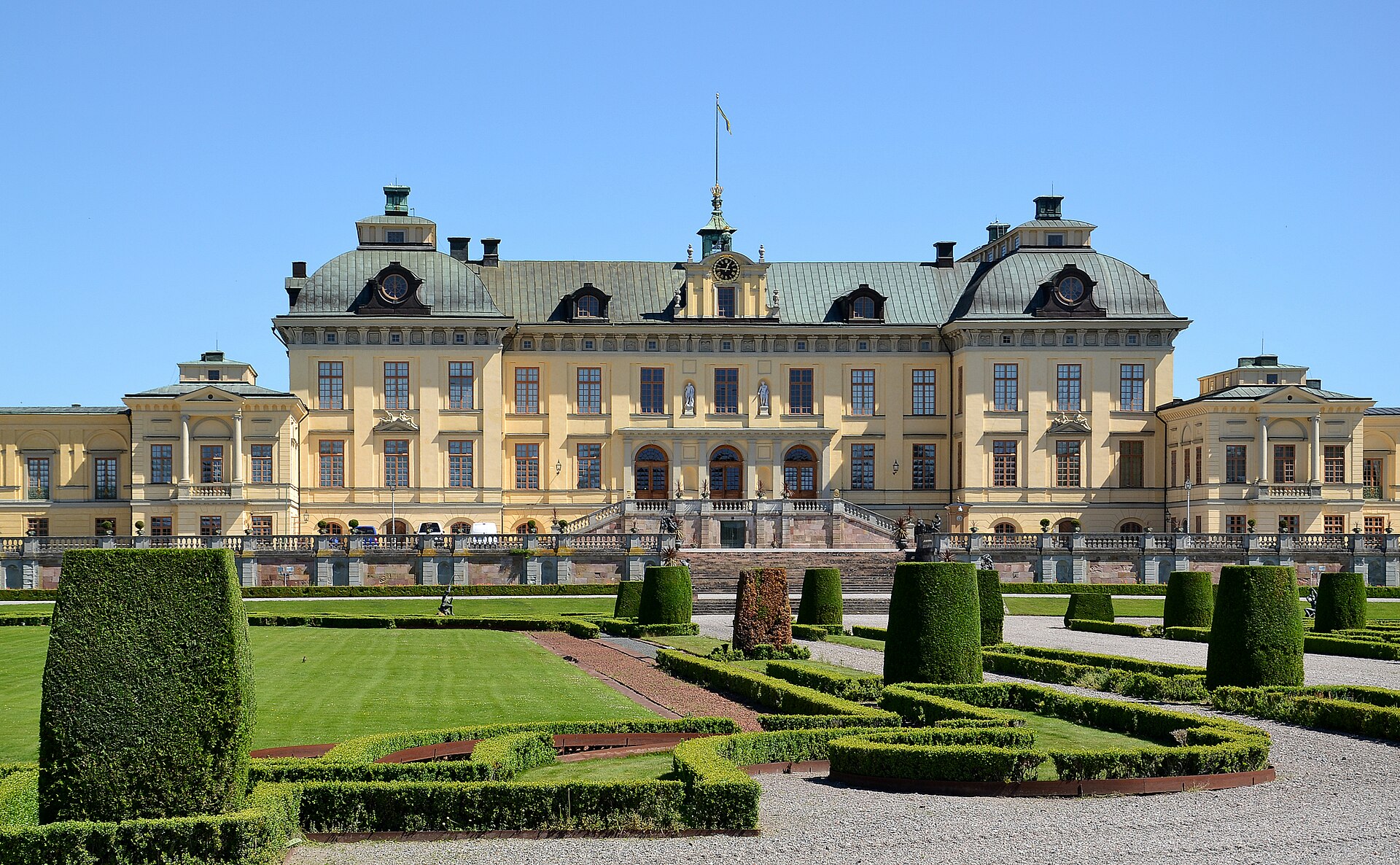
No visit to Drottningholm is complete without time spent in its magnificent gardens, which are among the finest formal gardens in all of northern Europe. Laid out in the grand French baroque style, they stretch away from the palace in a masterpiece of geometric design, with perfectly clipped hedges, straight gravel avenues, ornamental parterres, and splashing fountains all arranged in strict and beautiful symmetry. To walk them is to experience the seventeenth-century ideal of nature tamed and ordered by human art.
The gardens are adorned with fine sculptures, including bronze figures that were brought to Sweden as spoils of war and set among the greenery to add to the sense of royal splendour. Every vista is carefully composed, every avenue leading the eye toward some focal point, so that the whole garden becomes a kind of open-air work of art to be admired from the palace windows and explored on foot. In the changing light of the Swedish seasons, from the fresh green of summer to the crisp frost of winter, these gardens offer one of the most beautiful and beloved landscapes in the country.
The philosophy behind such a garden is as fascinating as its appearance. The baroque garden was meant to demonstrate the power of human reason and art to impose order upon nature, a living expression of the confident, ordered worldview of the age that created it. Every straight line and clipped hedge was a statement that the world could be understood, arranged, and controlled, and that the monarch who commanded such a garden commanded a kind of ideal miniature kingdom. To stroll these avenues is thus to walk through the very mindset of the seventeenth century, made visible in green and stone.
In every season the gardens offer something different to the visitor, from the bright bloom and greenery of the Swedish summer to the stark, sculptural beauty of the parterres under a dusting of winter snow. Locals return again and again to walk them at different times of year, and each visit reveals the design in a new light. This ever-changing quality, set against the unchanging geometry of the layout, is part of what makes the gardens of Drottningholm so endlessly rewarding and so deeply loved by the people of Stockholm.

A Romantic English Landscape
Beyond the strict geometry of the baroque parterres, Drottningholm also boasts a garden of a very different character, a romantic English-style landscape park laid out in a later age when tastes had changed. Where the baroque garden delights in order and symmetry, the English garden embraces a more natural, informal beauty, with winding paths, irregular plantings, canals, and picturesque views designed to look as though shaped by nature rather than by man.
This English park was created in the later eighteenth century under a Swedish king with a love of the arts and of the fashionable ideas of his time, and it reflects the great shift in garden design that swept Europe in that era. The two contrasting styles, the formal and the natural, sit side by side at Drottningholm, giving the grounds a wonderful variety and allowing visitors to move from the disciplined splendour of the baroque parterres to the gentle, romantic charm of the landscape park. Together they make the gardens of Drottningholm a living history of European taste.
The contrast between the two gardens tells a story about how European ideas changed over the course of a century. The shift from the formal French style to the natural English one reflected a deeper change in how people thought about nature, moving from a desire to dominate and order it toward a new appreciation of its wild and irregular beauty. At Drottningholm you can walk directly from one worldview into the other, feeling the great cultural transition of the age beneath your feet, and that layering of ideas is part of what makes the grounds so rich and rewarding to explore.

The Palace Theatre, Frozen in Time
One of the greatest treasures of Drottningholm is not the palace itself but the exquisite court theatre that stands beside it. The Drottningholm Palace Theatre, built in the 1760s, is one of the very best-preserved eighteenth-century theatres anywhere in the world, a place where the stagecraft of the baroque and rococo age survives virtually intact. To step inside is to travel back more than two centuries, into a jewel box of a theatre that looks almost exactly as it did when it first opened.
What makes the theatre so extraordinary is how little it has changed. After a period of neglect it was rediscovered and found to be remarkably complete, its auditorium, its stage, and above all its original machinery all surviving from the eighteenth century. This is not a reconstruction or a restoration in the usual sense but a genuine survival, a working theatre of the age of enlightenment preserved for the modern world. For anyone interested in the history of theatre, music, or design, it is one of the most precious buildings in Europe, a direct and living link to the vanished world of the eighteenth-century stage.
It is worth pausing to consider just how miraculous this survival really is. Theatres are fragile things, constantly rebuilt and modernised to suit changing tastes and safety requirements, and almost none from the eighteenth century have come down to us intact. That Drottningholm’s did is due to a happy accident of history, a long period during which it was simply closed up and forgotten, sparing it the modernisations that destroyed so many of its contemporaries. When it was rediscovered, it was as though a window into the past had been thrown open, and that is exactly what it remains today.

Original Machinery and Living Opera
The most astonishing thing about the Drottningholm Palace Theatre is that it still works, and works using its original eighteenth-century equipment. The elaborate wooden stage machinery, the systems of ropes, pulleys, and painted flats that could conjure storms, transform scenes, and produce all the magical effects beloved of baroque audiences, all survive and can still be operated. Performances here can use the very same machinery that thrilled royal audiences more than two hundred years ago.
Because of this remarkable survival, the theatre is not merely a museum but a living stage. It hosts performances of period opera and ballet, staged as far as possible in the authentic manner of the eighteenth century, using the original machinery, historically informed music, and appropriate style. To attend such a performance is a magical experience, a chance to hear the music of the age in the very setting for which it was created, with the painted scenery sliding into place by candlelight much as it did in the days of the enlightenment. Few places anywhere offer so complete a window into the theatrical world of the past.
Attending a performance in this setting is unlike any other theatrical experience. The knowledge that the machinery creaking into action above and around you is the very same that served audiences in the age of Mozart lends the evening an almost magical charge. The scale of the auditorium is intimate, the effects are handmade and human rather than electronic, and the whole experience invites you to see and hear a performance as people did more than two centuries ago. For lovers of music and theatre, it is little short of a pilgrimage, and it is one of the unique cultural treasures of Europe.

The Chinese Pavilion, a Royal Surprise
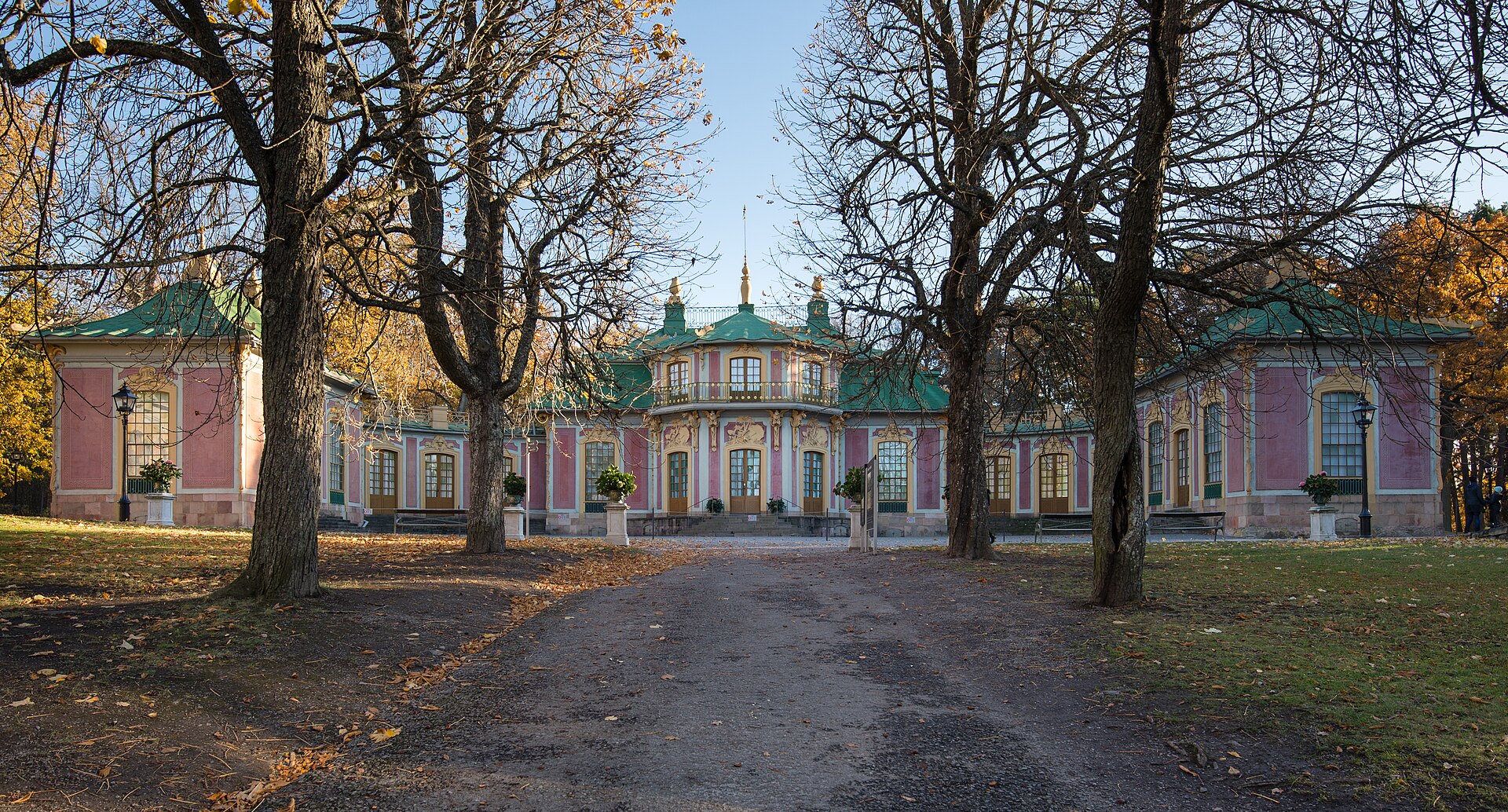
Tucked away in the grounds of Drottningholm is another of its great delights, the Chinese Pavilion, known in Swedish as Kina slott. This charming and exotic little palace was created in the eighteenth century as an expression of the era’s passionate fascination with the art and style of China and the East. With its curving roofs, its rich decoration, and its blend of European and Asian influences, it is one of the finest examples anywhere of the fashionable chinoiserie style that swept across Europe in that period.
The story of its creation is wonderfully romantic. The pavilion began as a surprise birthday gift from a Swedish king to his queen, a delightful token of royal affection secretly prepared and then revealed to her amid great celebration. The original structure was later replaced by the more permanent and elaborate pavilion that stands today, built to satisfy the queen’s love of the exotic style. That tender origin as a gift of love gives the Chinese Pavilion a special charm, and it remains one of the most enchanting and unexpected corners of the whole Drottningholm estate.
The chinoiserie style that the pavilion embodies was one of the great decorative fashions of its century, and Drottningholm’s Chinese Pavilion is widely regarded as one of its finest surviving expressions anywhere. Its blend of European craftsmanship and Asian-inspired ornament captures perfectly the playful, luxurious spirit of the rococo age, when the courts of Europe delighted in the exotic and the whimsical. That it began as a gift of love only adds to its charm, making it not just a beautiful building but a touching human story preserved in wood and paint.

A Taste for the Exotic East
The Chinese Pavilion is a perfect expression of a particular moment in European history, when the goods, art, and imagined splendours of China and the East exerted an irresistible fascination on the courts of Europe. Porcelain, silk, lacquerware, and tea flowed westward along the great trade routes, and with them came a craze for all things Chinese that shaped the decorative arts of the age. Kings and queens vied to create Chinese rooms and pavilions in their palaces, and Drottningholm’s is among the very finest.
Inside, the pavilion is richly decorated in the chinoiserie style, filled with beautiful objects and ornament that reflect the eighteenth-century European vision of the exotic East, a vision that was often more fantasy than accurate portrayal but was no less delightful for that. The rooms glow with colour and intricate detail, evoking a dreamlike idea of a distant and luxurious land. Wandering through them, you get a vivid sense of the tastes and imaginings of an age that looked eastward with such longing, and of the wealth and refinement of the Swedish court that could indulge such a fashionable and expensive passion.
This eastern fascination was not confined to decoration but touched every aspect of courtly taste, from the tea that was drunk to the porcelain it was drunk from, and the pavilion at Drottningholm was a place where all of these pleasures could be indulged together. It functioned as a retreat for relaxation and entertainment, a fashionable escape from the formality of the main palace where the royal family and their guests could enjoy the delights of the exotic style. Understanding this helps bring the pavilion to life, not as a mere curiosity but as a living part of the pleasures of the eighteenth-century court.
A Living Royal Home
What sets Drottningholm apart from so many other historic palaces is that it is not merely a museum but a living royal home. For more than forty years it has been the permanent private residence of the Swedish royal family, who live in one wing of the palace while the rest is opened to the public. This means that Drottningholm is not a relic of a vanished monarchy but the working home of a reigning royal house, giving it a special sense of continuity and life.
This dual role, as both a public monument and a private home, is managed with great care, and visitors can explore the grand state rooms and the beautiful grounds while the royal family goes about its life in the parts reserved for them. There is something rather wonderful about wandering a palace that is still genuinely lived in by royalty, and it gives the whole place an atmosphere quite different from that of a palace preserved only as a museum. Drottningholm remains what it was always meant to be, a royal residence, and that living continuity is a large part of its enduring magic.
The continued royal presence also means that Drottningholm is beautifully maintained and cared for, kept alive as a working residence rather than allowed to fossilise into a static exhibit. The rhythms of royal life, the comings and goings, the ceremonies and the quiet domestic moments, all continue within its walls, connecting the palace of today directly to the one Hedvig Eleonora built. In an age when so many royal palaces have become mere tourist sites, the fact that Drottningholm is still genuinely a home gives it a warmth and authenticity that is increasingly rare and precious.
Visitors sometimes wonder whether the presence of the royal family limits what can be seen, but the arrangement is managed so smoothly that most never feel any such restriction. The magnificent state rooms, the theatre, the pavilion, and the gardens are all open to explore, and the sense that real royal life continues just out of sight only adds to the atmosphere rather than detracting from it. It is a model of how a living heritage can be shared with the public while still remaining a genuine and private home, and it works beautifully.

A World Heritage Site to Explore
In recognition of its outstanding beauty and historical importance, the entire royal domain of Drottningholm, taking in the palace, the theatre, the Chinese Pavilion, and the gardens, has been designated a UNESCO World Heritage Site. It was among the first sites in Sweden to receive this honour, a fitting acknowledgement of its status as one of the best-preserved royal residences of its kind in Europe and a masterpiece of baroque and later court architecture and landscape design.
For the visitor, all of this adds up to a wonderfully rich day out. You can tour the sumptuous state rooms of the palace, marvel at the perfectly preserved theatre, explore the exotic delights of the Chinese Pavilion, and lose yourself in the magnificent gardens, all within a single beautiful estate. Each element has its own character and its own story, yet together they form a harmonious whole, a complete royal world created over centuries and preserved for us to enjoy. It is this combination of variety and unity that makes Drottningholm such a satisfying and memorable place to visit.
The World Heritage designation also reflects the completeness of what survives here, for it is rare to find a palace, a theatre, an exotic garden pavilion, and extensive formal and informal gardens all preserved together as a single harmonious ensemble. Each could stand alone as a treasure, but together they form something greater, a complete picture of the royal court culture of their age. That completeness is precisely what UNESCO recognised, and it is what makes a day at Drottningholm feel less like visiting a single monument and more like stepping into a whole vanished world kept wonderfully intact.
Finding Drottningholm Palace
Drottningholm is beautifully easy to reach from Stockholm, which makes it one of the most rewarding day trips from the Swedish capital. The palace lies just to the west of the city on the island of Lovon, and in the classic way you can travel there by boat, cruising out across the water much as royal visitors once did, a journey that makes a lovely prelude to the visit. Alternatively you can reach it quickly by a combination of metro and bus, so that the palace is within easy reach whatever your preference.
Once there, you can happily spend a full day exploring the palace, the theatre, the Chinese Pavilion, and the gardens, perhaps pausing for refreshment amid the beautiful surroundings. The estate pairs wonderfully with the other royal and historic sights of the Stockholm area, and it offers a peaceful, elegant contrast to the bustle of the city. Here are the exact coordinates so you can find your way to Sweden’s most enchanting royal palace.
However you choose to arrive, try if you can to make the approach by water at least once, for there is no finer way to first see the palace than from the deck of a boat, its long facade and gardens opening up gradually across the water exactly as they were designed to be seen. It is an experience that royal guests enjoyed for centuries, and it remains the most magical introduction to the beauty of Drottningholm.

Castles Nearby
If Drottningholm has charmed you, two more Swedish royal strongholds make a natural next stop.
- Gripsholm Castle, on a lakeshore not far from Stockholm, is one of Sweden’s great royal castles.
- Kalmar Castle, in the south, is the Renaissance fortress that guarded the gateway to the kingdom.
The Queen’s Enchanted Islet
Drottningholm is a palace quite unlike the fortresses that guard so much of Scandinavia. Where they were built to keep enemies out, it was built to draw admirers in, to delight the eye and to display the refinement and ambition of the Swedish crown. From the baroque vision of Queen Hedvig Eleonora to the exotic Chinese pavilion given as a royal gift of love, from the perfectly preserved theatre with its working eighteenth-century machinery to the magnificent formal gardens, every part of the estate speaks of beauty, artistry, and the pleasures of a royal court at its height.
That is what makes a visit here so uplifting. You are not confronting the hard realities of medieval warfare but wandering through a world of elegance and imagination, one that is still living and breathing as the home of a reigning royal family. To stroll the gardens, to sit in the ancient theatre, to glimpse the exotic delights of the Chinese Pavilion is to enter a vision of grace and refinement that has been lovingly preserved across the centuries. Drottningholm is the queen’s enchanted islet, and it remains one of the most beautiful and beloved royal places in all of Europe.
If your travels take you to Stockholm, set aside a day for Drottningholm. Sail out across the water or ride the metro and bus to the island, and give yourself time to wander the palace, the theatre, the Chinese Pavilion, and the gardens at leisure. It is one of the loveliest and most complete royal estates in all of Europe, and a visit leaves you with a lasting sense of the grace and imagination of the age that made it. The queen’s enchanted islet has been delighting visitors for centuries, and it is more than ready to work its magic on you.
You May Like
Mafra, the Palace a King Built From a Vow


One thought on “Drottningholm Palace: Sweden’s Enchanted Royal Versailles”