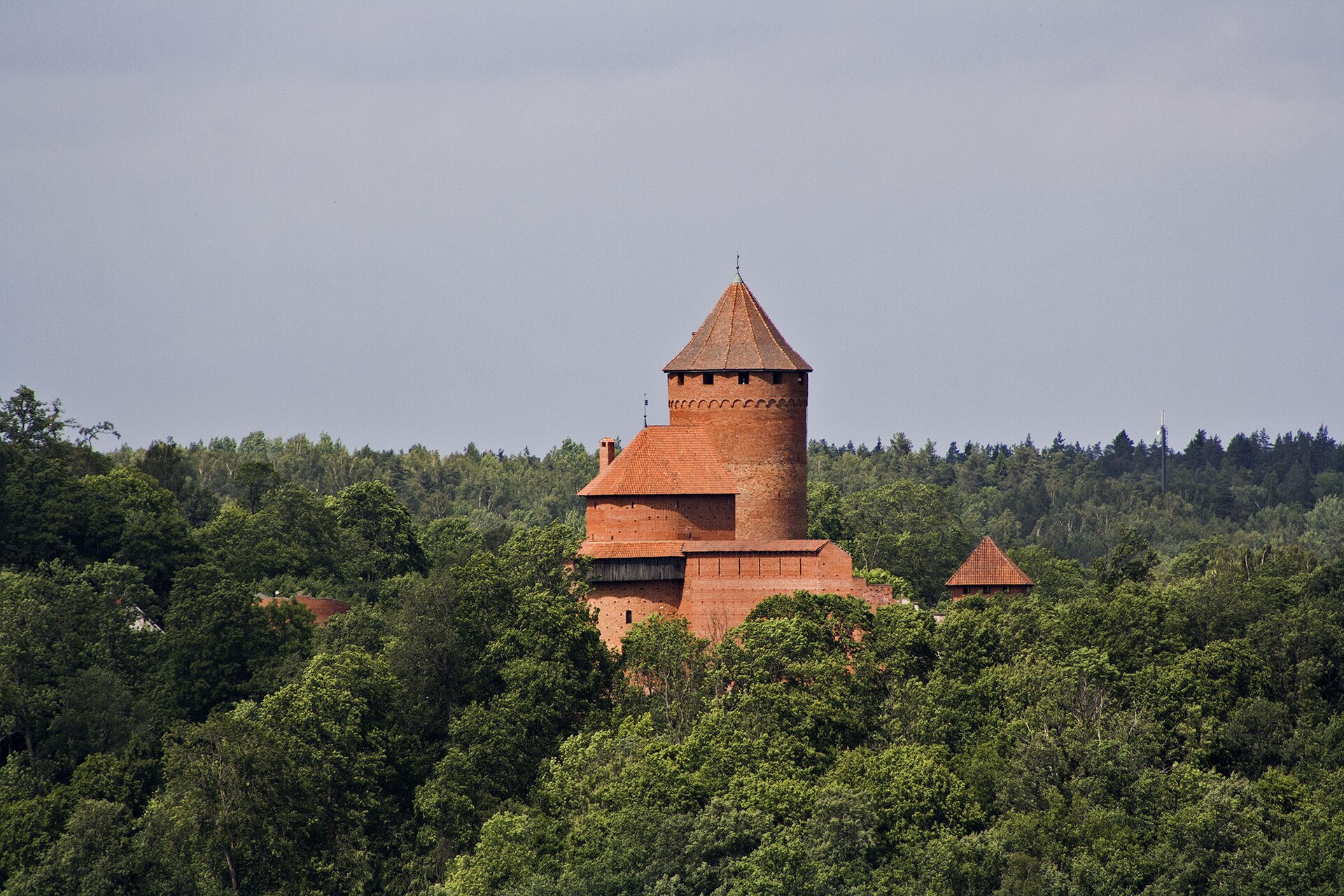
High on a wooded hill above the winding Gauja River, in a valley so lovely that Latvians call it their Switzerland, rises one of the most beautiful and historic castles in the whole of the Baltic. Turaida is a fortress of warm red brick, crowned by a tall round tower that stands proud against the sky, its walls glowing against the deep green of the surrounding forest. Built more than eight hundred years ago, it has watched over this enchanting landscape through the whole dramatic story of medieval Latvia, from the age of the pagan Livs to the crusaders who conquered them and the archbishops who ruled from its walls.
Yet Turaida is more than a medieval fortress, for the hill it stands on has been a place of power since long before the first brick was laid, and the reserve that surrounds it today holds a wooden church, an ancient legend of love and sacrifice, and a whole landscape of Latvian heritage. Across the centuries the castle has been a tribal stronghold, an archbishop’s fortress, a fire-blackened ruin, and finally a beloved museum. In this article you will follow the whole of that long story. Come and discover Turaida, the red castle above the Gauja.
What makes Turaida so rewarding is the way it lets you experience so many layers of the Baltic past within a single visit. On this one hill you can trace the world of the ancient Livs, the drama of the medieval crusade, the long rule of the archbishops, the melancholy of ruin, and the tender romance of legend, all set against a landscape of extraordinary natural beauty. Few places anywhere gather so much history and meaning into so beautiful a setting, and that richness is what makes the red castle above the Gauja so unforgettable.

In This Article
- The Red Castle Above the Gauja
- A Stronghold of the Ancient Livs
- The Archbishop of Riga’s Fortress
- The Great Round Tower
- A Border Castle in a Crusader Land
- Life Inside the Castle
- Warmth Beneath the Floor
- Centuries of Change
- Fire and Abandonment
- The Turaida Museum Reserve
- The Wooden Church and the Rose of Turaida
- Exploring Turaida Today
- Finding Turaida Castle
- Castles Nearby
The Red Castle Above the Gauja
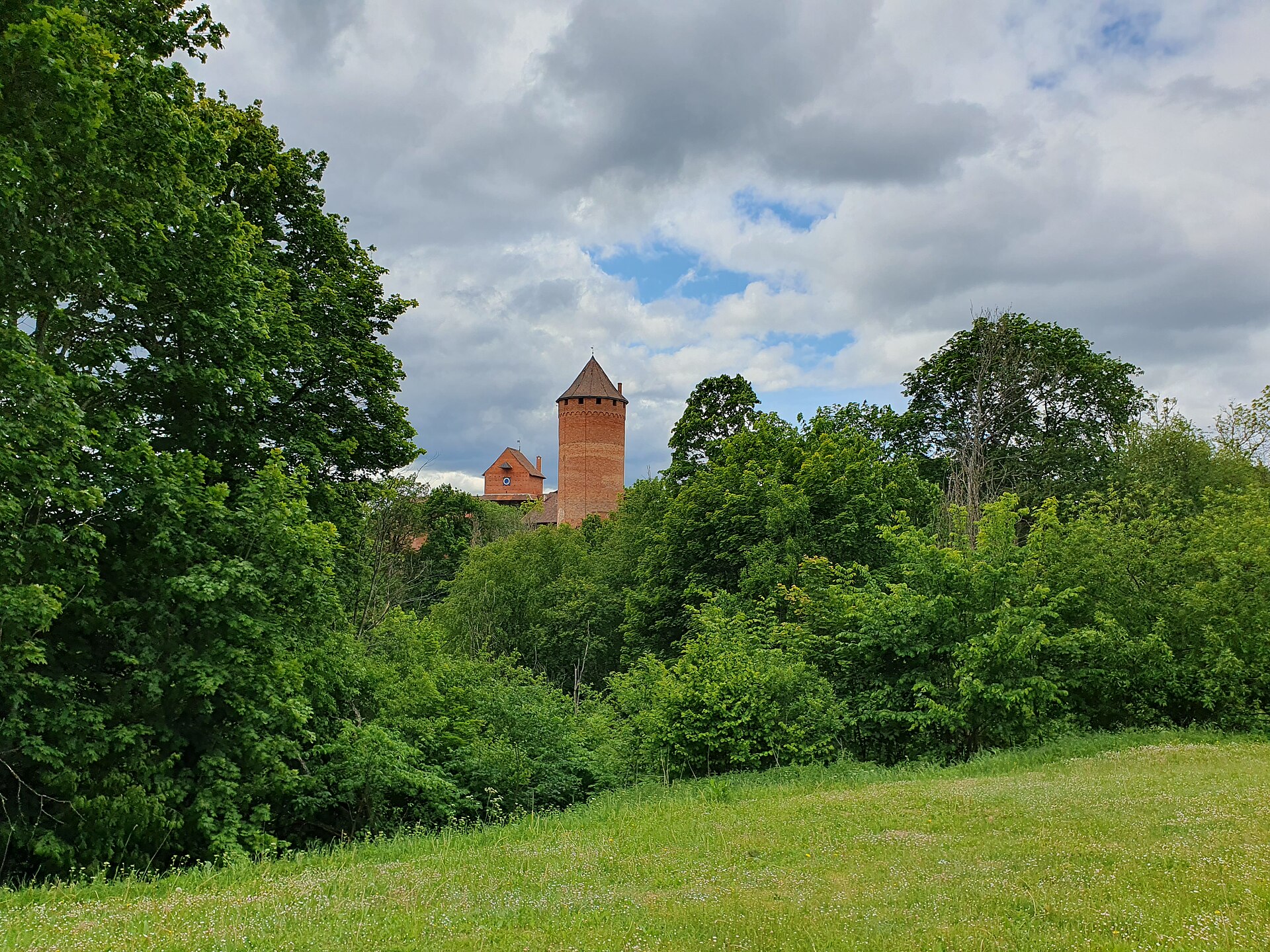
High on a wooded hill above the winding Gauja River, in the beautiful valley that Latvians sometimes call their Switzerland, rises one of the most striking castles in the whole of the Baltic. Turaida is a fortress of warm red brick, its great round tower standing tall against the sky, its walls glowing against the deep green of the surrounding forest. Set in one of the loveliest landscapes in Latvia, near the town of Sigulda, it is a place of real beauty and deep history, and it draws visitors from across the country and beyond.
But Turaida is far more than a picturesque red tower on a hill. Its story reaches back more than eight centuries, to the age when the pagan peoples of the Baltic were being drawn, often violently, into the Christian and feudal world of medieval Europe. The castle stands on ground that was sacred and significant long before the first brick was laid, and across the centuries it has been a tribal stronghold, an archbishop’s fortress, a ruin, and finally a beloved museum. To visit is to journey deep into the history of Latvia and the Baltic. This is the story of Turaida, the red castle above the Gauja.
There is a special quality to the way Turaida sits within its landscape, the red of its brick set against the endless green of the forested valley, that lodges in the memory of everyone who sees it. In autumn, when the trees of the Gauja valley turn to gold and crimson, the scene becomes almost impossibly beautiful, and even under the grey skies and snow of the northern winter the castle has a stark and haunting appeal. It is a place that repays visiting in every season, each one lending the red castle a different and unforgettable character.
A Stronghold of the Ancient Livs
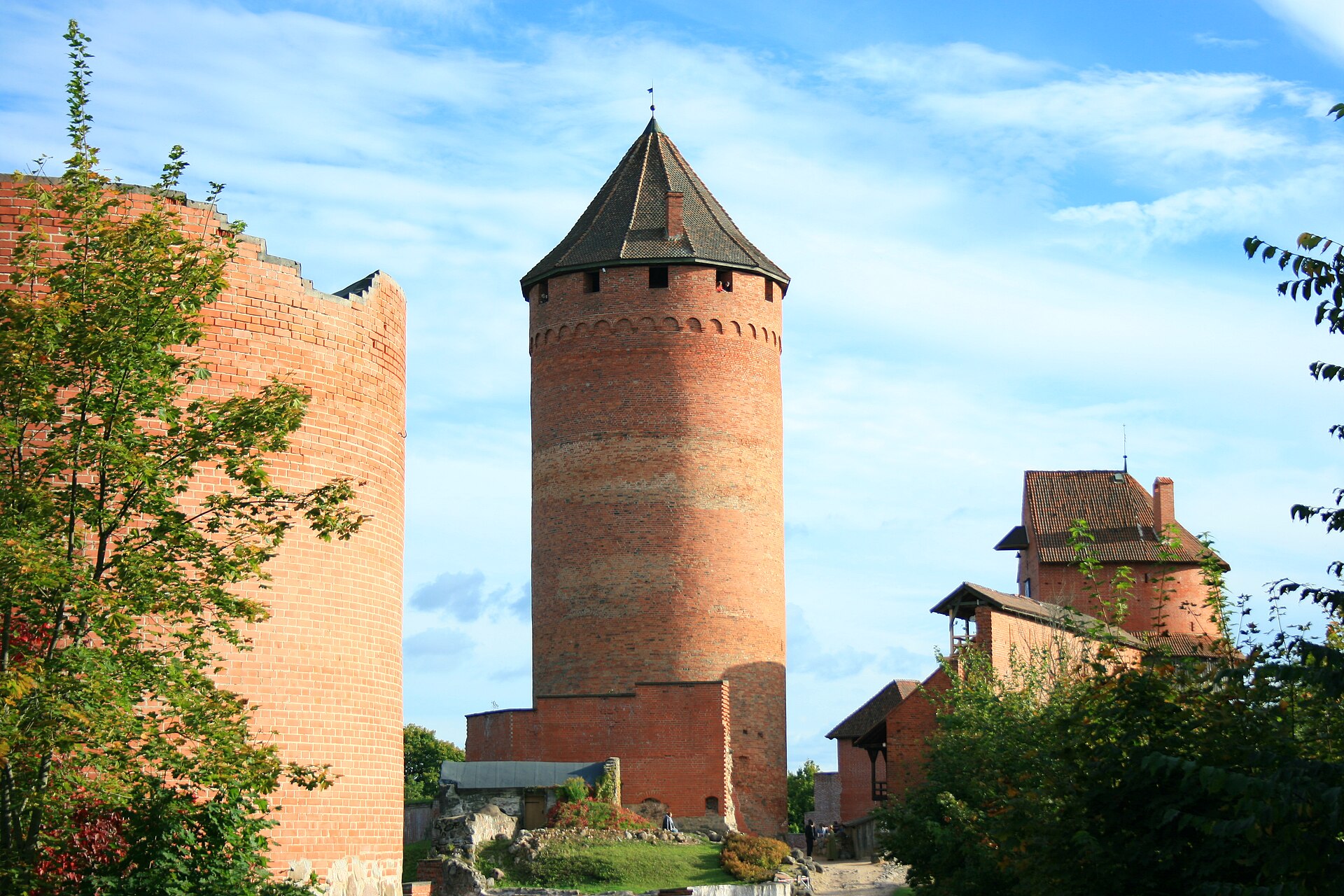
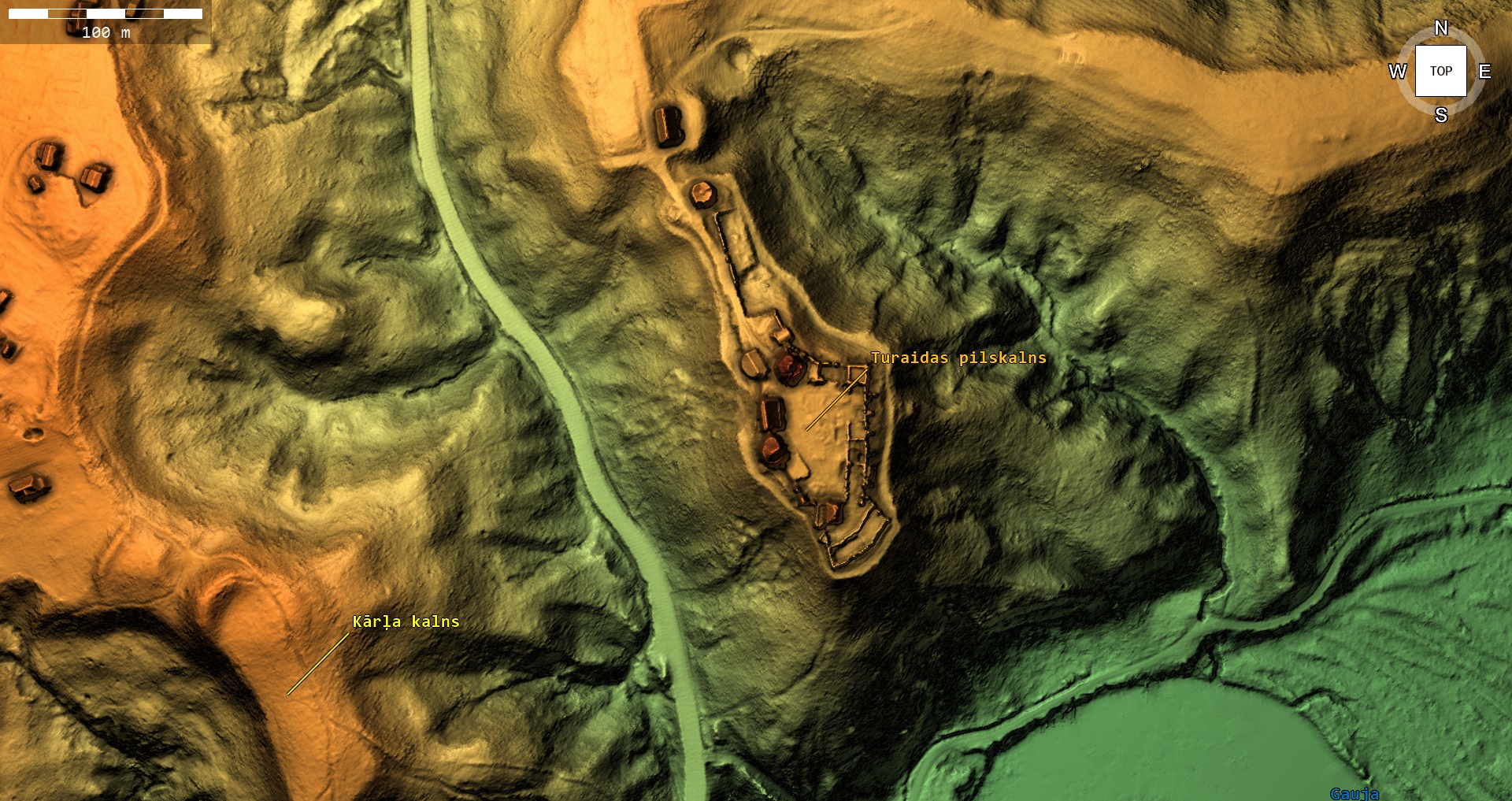
Long before the red brick castle rose on this hill, the site was already a place of power, home to a wooden stronghold of the Livs, one of the ancient Baltic peoples who inhabited this land. The very name Turaida is said to come from the language of the Livs and to carry a meaning connected to their old beliefs, a reminder that this was a place of significance to the people who lived here long before the coming of the German crusaders and churchmen.
The Livs were among the native peoples of what is now Latvia, and their hill fort commanded the strategic river valley and the lands around it. For them, this height above the Gauja was a natural fortress and a centre of their world. When the newcomers arrived from the west, bringing with them a new religion and a new order, they recognised the value of this ancient stronghold and chose to build their own fortress upon it. In this way the red castle of Turaida rose directly upon the foundations of a far older Baltic world, its history reaching back beyond the written record into the age of the pagan Livs.
The presence of the earlier Livonian fort beneath the medieval castle is a powerful reminder that the coming of the crusaders did not write history on a blank page but built upon a world that was already ancient. The Livs and the other Baltic peoples had their own culture, beliefs, and centres of power long before the German churchmen arrived, and places like Turaida were significant to them in ways we can only partly recover. To stand on this hill is to stand on layers of history reaching back into deep antiquity, long before the first stone of the archbishop’s castle was ever laid.
This deep continuity of occupation, from prehistoric hill fort to medieval castle to modern museum, gives Turaida a resonance that reaches far beyond its brick walls. The hill has been important to the people of this valley for well over a thousand years, a fixed point in a changing world, and something of that long significance can still be felt as you stand upon it today. It is a place where the whole depth of Latvian and Baltic history seems to gather, layer upon layer, reaching back into a past far older than the castle itself.
The Archbishop of Riga’s Fortress
The stone castle of Turaida was born out of one of the great dramas of medieval Baltic history, the crusade that brought the lands of present-day Latvia and Estonia under German and Christian control. In the early thirteenth century, as the church and its crusading knights extended their power across the region, a new fortress was ordered here, and the building of the brick castle began in the year 1214 on the command of the powerful Albert, the Bishop, later Archbishop, of Riga.
Albert of Riga was the driving force behind the Christianisation and conquest of Livonia, and the castle at Turaida was one of the strongholds through which he and his successors secured their hold on the land. It became an important seat of the archbishops of Riga, a centre of their power in the region and a base from which they governed the surrounding territory. For centuries Turaida served as one of the key fortresses of the archbishopric, its red walls a symbol of the authority of the church in a land that had so recently been pagan. Its founding date of 1214 makes it one of the venerable monuments of Latvian history.
The founding of Turaida in 1214 places it among the oldest and most historically important monuments in Latvia, a direct link to the dramatic age when the country entered the written record of European history. Albert of Riga and the crusade he led utterly transformed this land, founding the city of Riga, establishing the church, and building the network of castles from which the new order was imposed. Turaida is one of the most impressive survivals of that transformative era, and its red walls carry the memory of the momentous and often violent birth of medieval Livonia.
The archbishops of Riga were among the most powerful figures in medieval Livonia, wielding both spiritual and temporal authority over great swathes of land, and castles like Turaida were the instruments of that power. From these strongholds they governed their domains, defended their interests against rivals, and maintained the church’s grip on a land only recently won for Christendom. Turaida’s long service as one of the chief seats of the archbishopric gave it a central place in the history of the region, and its walls witnessed the exercise of church power across many centuries.
The Great Round Tower
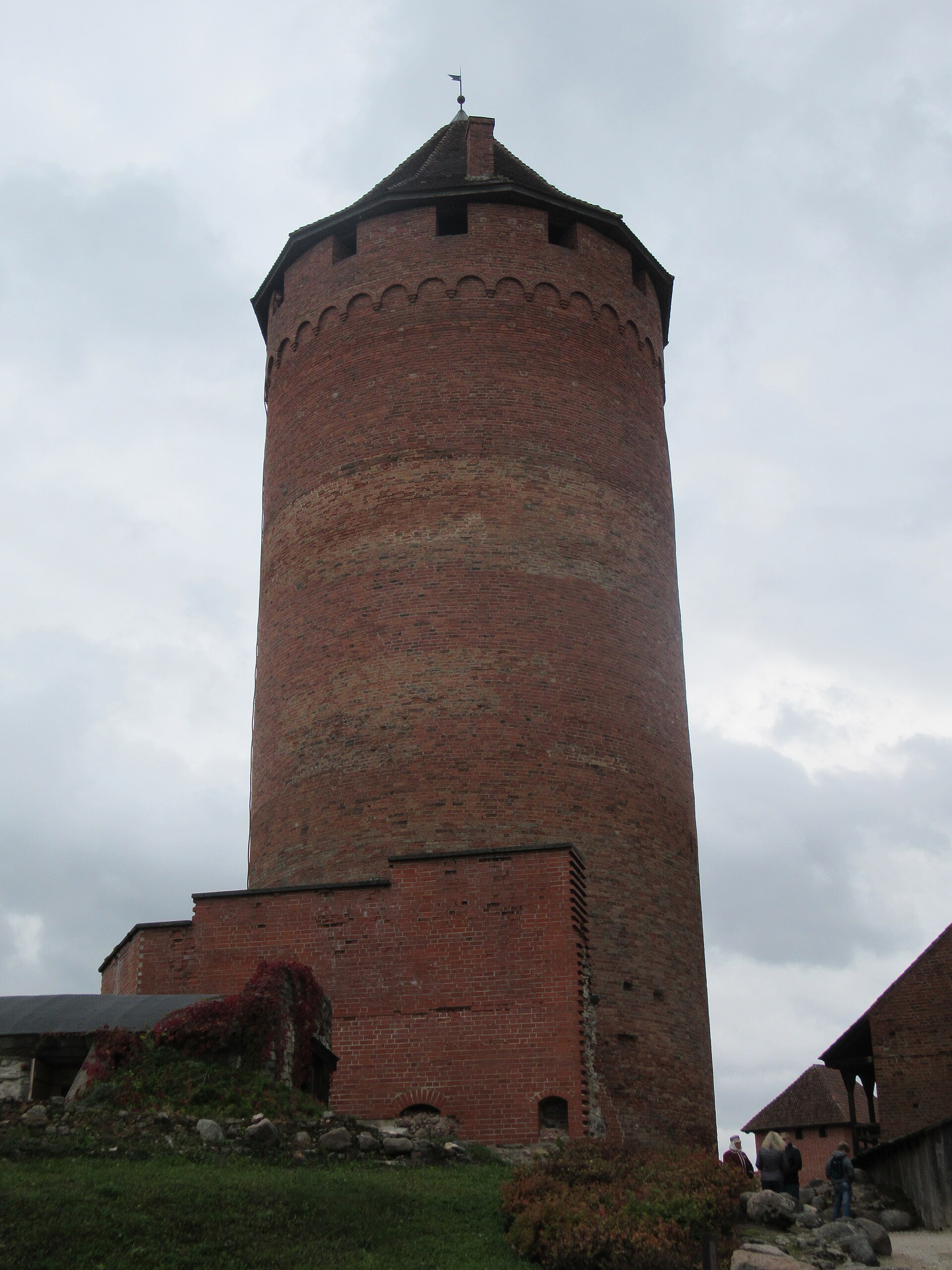
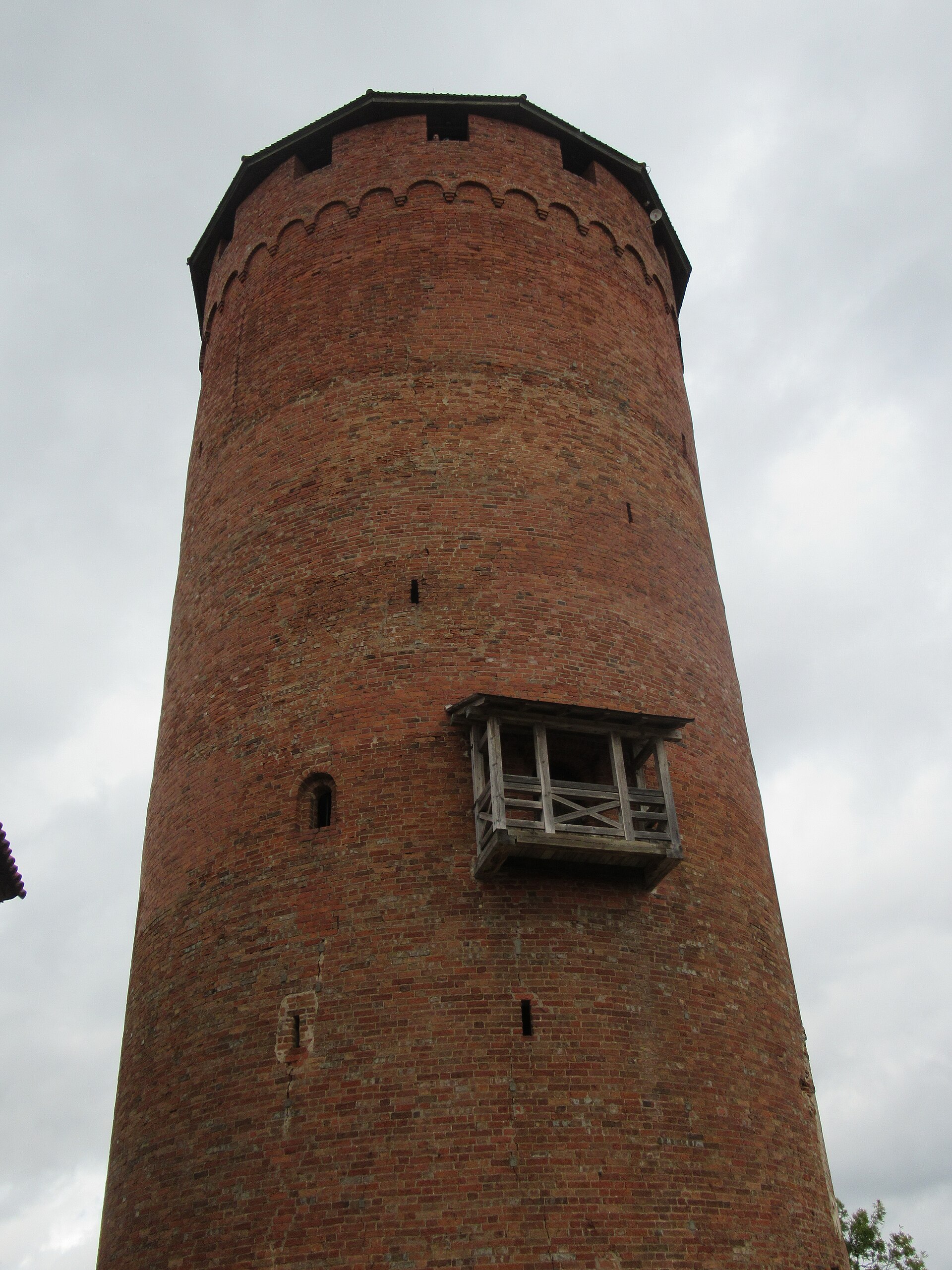
The most striking and iconic feature of Turaida is its great round tower, a tall cylinder of red brick that rises high above the rest of the castle and dominates the whole hilltop. This mighty tower served as the castle’s principal stronghold and its last line of defence, a place of refuge and command in times of danger. Its rounded form was well suited to withstanding attack, and its commanding height gave the defenders a superb view over the surrounding countryside and the approaches to the castle.
Climbing to the top of the tower today is one of the great pleasures of a visit to Turaida, for the reward is a magnificent panorama over the Gauja valley, the forests, and the rolling landscape of the region. From this vantage point you can appreciate both the strategic brilliance of the castle’s position and the sheer beauty of its setting. The tower has become the very emblem of Turaida, instantly recognisable and much loved, and it stands as a proud reminder of the strength and ambition of the medieval builders who raised it more than eight hundred years ago.
The round form of the tower was a deliberate and clever choice, for a cylindrical wall has no corners for an enemy’s engines or miners to attack and deflects blows more effectively than a flat surface. Towers of this kind became a hallmark of the most advanced fortress design of the age, and Turaida’s is a fine example. Beyond its military virtues, though, the tower simply looks magnificent, and its bold vertical thrust against the sky gives the whole castle its unmistakable silhouette. It is no wonder that this great red cylinder has become the enduring symbol of Turaida.
For many visitors the climb up the tower is the highlight of the whole visit, a moment when the long history of the place and the beauty of its setting come together in a single sweeping view. As you catch your breath at the top and gaze out over the endless green of the Gauja valley, you understand instantly why the builders chose this hill and why the castle has held such a place in the hearts of Latvians for so long. It is a view that stays with you, and it crowns any visit to Turaida perfectly.

A Border Castle in a Crusader Land
Turaida was born into a turbulent and violent age, when the land of Livonia was a frontier of conquest and conversion, contested between the crusaders and the native peoples they sought to subdue. In this dangerous world, a strong castle was an absolute necessity, both to hold down the surrounding land and to defend against the many threats that beset the newcomers. Turaida was one of a network of such fortresses that the church and its knights raised across the region to secure their conquest.
The castle stood watch over an important river valley and the lands around it, a strategic point in the shifting geography of power in medieval Livonia. Nearby stood other strongholds belonging to rival powers, for the region was divided among the archbishop, the crusading order, and other lords, and the balance between them was often uneasy. Turaida’s role as a border fortress in this complex and contested land shaped its early centuries, and the castle would have seen its share of the conflicts that troubled Livonia throughout the Middle Ages. It was a stronghold built for a hard and dangerous world.
The political landscape of medieval Livonia was extraordinarily complex, divided as it was among the archbishop, the crusading order, the bishops, and the towns, all of whom held lands and castles and pursued their own interests. In this fragmented and often quarrelsome world, a strong fortress was essential not only against external enemies but against one’s neighbours and rivals. Turaida’s role within this intricate web of competing powers shaped its history profoundly, and understanding that context helps explain why so formidable a castle was needed to hold what might seem, on a map, a relatively small piece of land.
Life Inside the Castle
Beyond its great tower, Turaida contained a range of buildings that housed the many activities of a medieval castle. Within its walls were residential quarters, halls, storerooms, workshops, and all the spaces needed to support the life of the archbishop’s officials, their households, and the garrison that defended the place. The castle was a self-contained world, a centre of administration and defence as well as a residence, and its buildings reflected these many functions.
Life within the castle would have combined the routines of governance and defence with the practical business of daily survival in a often harsh northern climate. The castle had to store food and supplies against the long winters and the possibility of siege, and its workshops produced and repaired the many things needed to keep the community going. Today, the restored and reconstructed buildings, together with the exhibitions housed within them, allow visitors to gain a vivid sense of what life was like inside this medieval stronghold, bringing to life the world of the people who lived and worked here across the centuries.
The community that inhabited Turaida would have included not only soldiers and officials but craftsmen, servants, and labourers, a whole society in miniature gathered within and around the castle walls. The archbishop’s representatives governed the surrounding district from here, collecting dues, dispensing justice, and maintaining the church’s authority over a population that had so recently been brought into the Christian fold. In this way the castle was not merely a military outpost but the beating heart of the surrounding region, the place where power and daily life came together on the hill above the Gauja.

Warmth Beneath the Floor
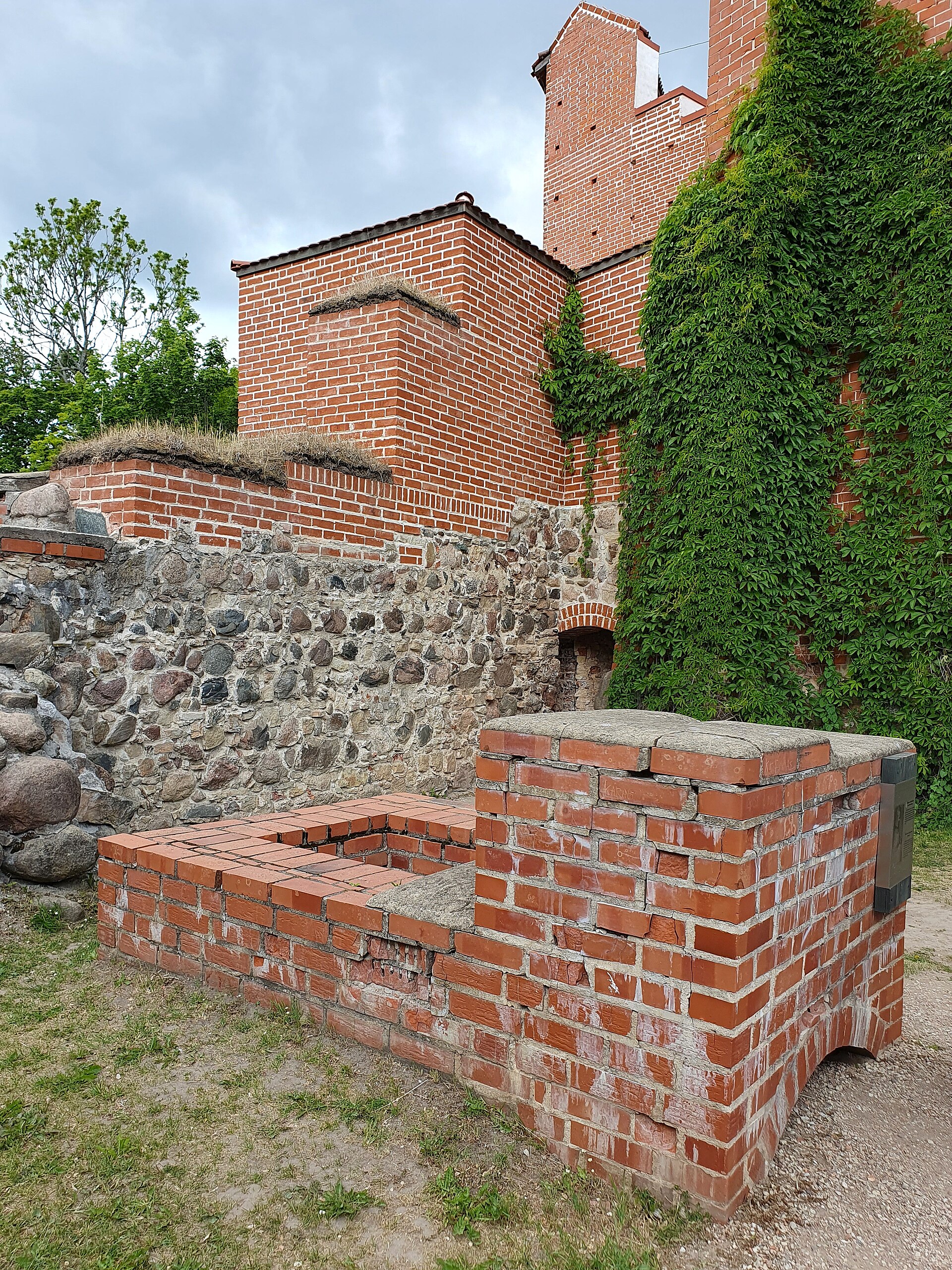
Among the most fascinating features to be discovered at Turaida is evidence of the ingenious heating system that once kept parts of the castle warm through the bitter Baltic winters. Medieval builders in the north developed a clever technology, sometimes called a hypocaust, in which hot air from a furnace below was channelled up through the floors to heat the rooms above. It was a sophisticated solution to the challenge of keeping a stone castle habitable in a cold climate, and its presence at Turaida speaks of the skill and knowledge of those who built and lived here.
Such heating systems were a mark of comfort and status, allowing the more important rooms of the castle to be kept warm without the smoke and mess of open fires within them. The furnace would be stoked below, heating stones that radiated their warmth upward long after the fire had died down. Discovering the remains of such a system reminds us that medieval castles, for all their grim military purpose, were also homes, and that their builders devoted real ingenuity to making them liveable. It is one of the many details that bring the daily life of Turaida vividly to mind.
Details like the heating system are precisely what bring a medieval castle to life for the modern visitor, for they speak of the real human beings who lived here and their efforts to make a hard existence more comfortable. It is easy to think of castles only in terms of war and grand history, but they were also homes where people cooked, slept, worked, and tried to keep warm through long dark winters. The clever engineering of the hypocaust reminds us of the ingenuity and humanity of the people of the Middle Ages, and it makes the distant past feel suddenly and touchingly close.
Centuries of Change
Like all great castles, Turaida did not remain unchanged across the centuries but was continually expanded, rebuilt, and adapted to meet the shifting needs of its owners and the changing demands of warfare. Over the course of the Middle Ages and beyond, new buildings were added, old ones altered, and the defences strengthened to keep pace with developments in the art of war, including the coming of gunpowder artillery that transformed how fortresses had to be built and defended.
These successive changes have left their traces in the fabric of the castle, so that a careful visitor can read in its walls the long story of its evolution. The Turaida of the later centuries was in many ways a different place from the fortress first raised in 1214, shaped by generations of building and rebuilding. This layering of history is part of what makes the castle so interesting to explore, for it is not a single frozen moment but the accumulated work of many ages, each leaving its mark upon the hill above the Gauja.
Tracing the different phases of building at Turaida is a little like reading the rings of an ancient tree, each layer telling of a different period in the castle’s long life. The coming of gunpowder in particular forced great changes on fortresses everywhere, as tall thin walls gave way to thicker, lower defences able to withstand and mount cannon. Turaida’s adaptation to these new realities is written into its structure, and the attentive visitor can find in its walls a whole history of the evolving art of war across the medieval and early modern centuries.

Fire and Abandonment
The long life of Turaida as a working castle came to an end in dramatic fashion in the later eighteenth century, when a devastating fire swept through the fortress. According to the accounts, the blaze was started by a lightning strike, and it caused such destruction that the castle was left largely in ruins. After this catastrophe, Turaida was abandoned as a residence and stronghold, its great days finally over, and it began the long period of decay that would reduce it to a romantic ruin.
For generations after the fire, the castle stood neglected on its hill, its walls crumbling and its buildings falling into decay, a picturesque relic of a vanished age. The fortress that had guarded the Gauja valley for more than five centuries seemed destined to slowly dissolve into the landscape. Yet the ruins retained a powerful hold on the imagination, standing as a haunting reminder of the region’s medieval past, and in time this fascination would inspire the great effort of restoration that would bring the red castle back to life.
The destruction of Turaida by fire is a reminder of how vulnerable even the mightiest buildings were to the elements in an age before modern protections. A single lightning strike could undo in a night what had taken centuries to build, and countless great castles and churches across Europe met their end in just this way. For Turaida, the fire marked the definitive close of its active life, but it also, paradoxically, preserved the castle as a monument, for a ruin abandoned is at least spared the constant rebuilding that transforms living buildings beyond recognition.
The Turaida Museum Reserve
In the twentieth century, Turaida was rescued and reborn as the heart of a great museum reserve, one of the most important cultural and historical sites in all of Latvia. A major programme of restoration and reconstruction brought the ruined castle back to life, raising its walls and its iconic tower once more and recreating much of its medieval appearance. Today the castle stands proud and complete again, welcoming visitors from around the world to explore its halls and climb its famous tower.
But the Turaida Museum Reserve is much more than the castle alone, for it encompasses a whole landscape of history and heritage spread across the hill and its surroundings. Alongside the fortress, the reserve preserves a range of other historic buildings and monuments, together with exhibitions that tell the long story of the region and its people. It has become a place where the deep past of Latvia is preserved, studied, and shared, and a visit here offers a rich and rewarding encounter with the history and culture of this beautiful land.
The transformation of Turaida from a neglected ruin into a flourishing museum reserve is a wonderful example of how a nation can reclaim and celebrate its heritage. The careful work of restoration and the creation of the reserve have ensured that this precious site is not only preserved but made accessible and meaningful to all who visit. In doing so, Latvia has honoured both the deep history of the place and the ongoing importance of the past to national identity, and Turaida has become a source of pride and a symbol of the country’s rich and ancient story.

The Wooden Church and the Rose of Turaida
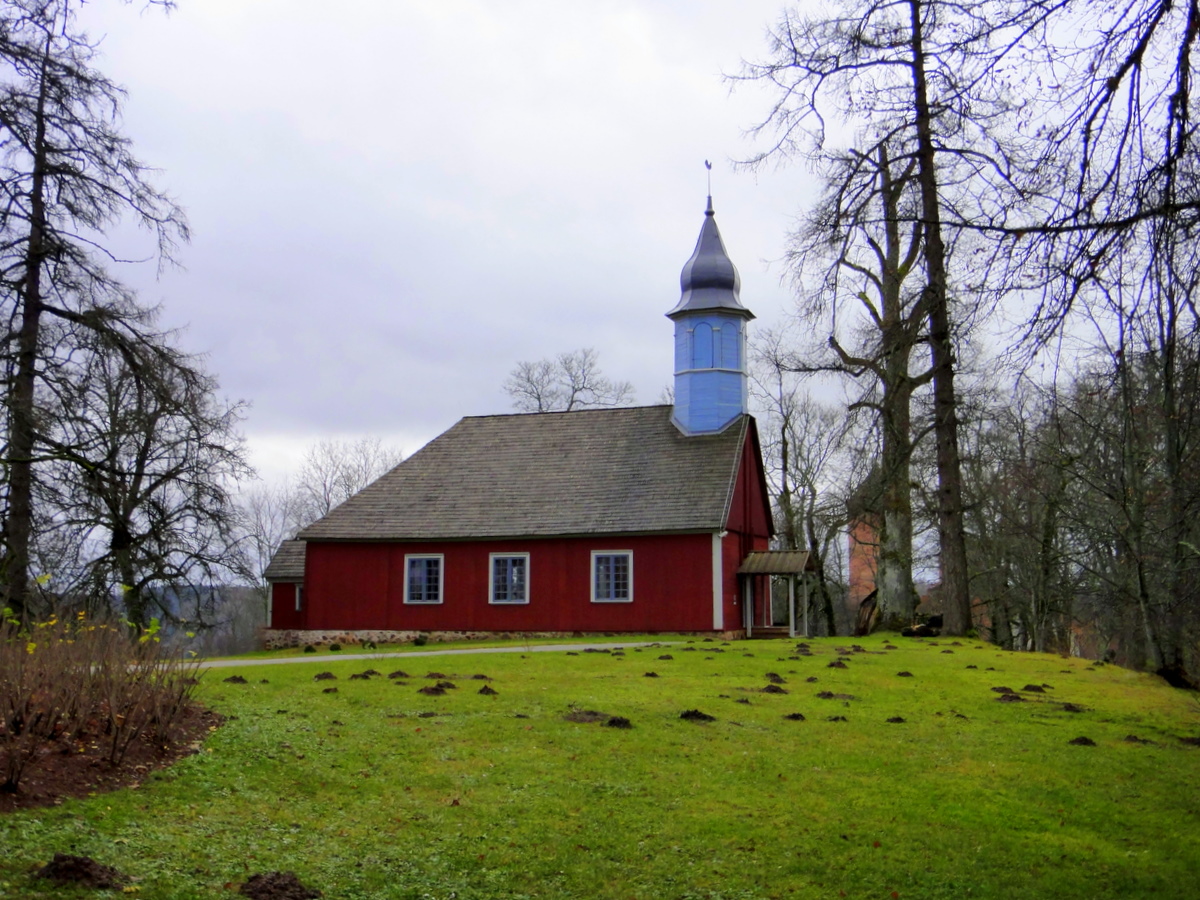
Among the treasures of the Turaida reserve is a charming old wooden church, a beautiful example of the traditional timber architecture of the region, which stands not far from the castle. This simple and lovely building is one of the oldest of its kind in the area, and it adds greatly to the atmosphere of the place, a reminder of the religious life of the community that once gathered here. Its weathered timbers and modest beauty make it a beloved part of any visit.
Near the church lies the setting of one of Latvia’s most cherished and poignant legends, the story of the Rose of Turaida, a beautiful young woman said to have lived here in the seventeenth century. According to the tale, she chose to die rather than betray her love and her honour, and her grave near the old church has become a place of pilgrimage, especially for young couples. This tender and tragic story has woven itself deeply into the culture of the region, and it lends Turaida an added layer of romance and meaning that touches all who hear it.
Legends like that of the Rose of Turaida are precious threads in the cultural fabric of a nation, carrying values and emotions across the generations in a way that dry history never can. The tale of the young woman who died to protect her honour has been told and retold, celebrated in song and story, and it has made Turaida a place of pilgrimage for those who cherish its message of faithfulness and love. That such a tender human story should be woven into the setting of the great medieval castle only deepens the emotional resonance of the place.
Exploring Turaida Today
A visit to Turaida today is a wonderfully rich and rewarding experience, offering far more than a single monument. The centrepiece, of course, is the great red castle, with its iconic tower to climb, its restored buildings to explore, and its exhibitions to enjoy, all set on a commanding hill with magnificent views over the valley. Wandering the castle, you can piece together its long and dramatic history while taking in the beauty of its setting.
Beyond the castle, the wider reserve invites exploration, from the historic wooden church and the legendary grave to the beautiful grounds and the surrounding landscape of the Gauja valley. The whole area is a place of great natural beauty as well as deep history, and it can easily fill a full and memorable day. Whether you come for the medieval castle, the poignant legends, the traditional architecture, or simply the stunning scenery, Turaida offers one of the most complete and enchanting historical experiences in all of Latvia.
What makes Turaida so satisfying is the way it brings together so many different kinds of pleasure in a single visit. History, legend, architecture, and natural beauty all meet here on the hill above the Gauja, and each enriches the others. You can lose yourself in the medieval story of the castle, be moved by the legend of the rose, admire the traditional wooden church, and drink in the glorious views of the valley, all in the course of a single day. Few heritage sites offer so complete and varied an experience, and it is this richness that keeps visitors coming back.
Take your time as you explore, for Turaida is a place best savoured slowly. Linger on the tower to enjoy the view, wander the quiet paths between the historic buildings, and let the atmosphere of the reserve settle around you. There are peaceful corners to be found and small details to be discovered everywhere, and the more unhurried your visit, the more the depth and beauty of the place reveal themselves. A day at Turaida is a day well spent, and it leaves visitors with memories that linger long after they have gone.

Finding Turaida Castle
Turaida Castle is easy to reach and makes a superb day trip from the Latvian capital, Riga, lying only a modest distance away near the town of Sigulda in the beautiful Gauja National Park. The journey out from Riga carries you into one of the loveliest regions of Latvia, a landscape of forested hills and river valleys that fully deserves its nickname as the Latvian Switzerland, and the trip itself is a pleasure.
The castle sits within the Gauja National Park, a protected area of outstanding natural beauty, and it pairs wonderfully with the many other attractions of the Sigulda area, including other historic castles, scenic viewpoints, and outdoor activities. You can easily combine a visit to Turaida with a wider exploration of this stunning region, making for a full and varied day. Here are the exact coordinates so you can find your way to the red castle above the Gauja.
Castles Nearby
If Turaida has drawn you into the history of the Baltic, two more great fortresses of the region make a fine next stop.
- Trakai Island Castle in Lithuania is the fairy-tale island stronghold of the grand dukes.
- Malbork Castle in Poland is the colossal brick fortress of the Teutonic Knights who shaped the crusader Baltic.
The Red Castle Above the Gauja
Few castles anywhere gather so much beauty, history, and legend into a single place as Turaida. Rising in red brick above one of the loveliest valleys in the Baltic, it tells the whole story of medieval Latvia, from the ancient Livs who first fortified this hill to the crusaders and archbishops who raised the great stone castle upon it, and on through fire and ruin to its rebirth as a cherished museum. To climb its famous tower and gaze out over the Gauja valley is to feel the depth of history and the richness of the land spread out before you.
That is what makes a visit to Turaida so rewarding. You are not merely admiring a picturesque tower but stepping into the deep past of Latvia, into a story that reaches back beyond the written record and forward to the legends still told today. Between the mighty castle, the old wooden church, the poignant tale of the Rose of Turaida, and the sheer beauty of the setting, the place offers an experience of rare depth and charm. Turaida is the red castle above the Gauja, and it remains one of the true treasures of the Baltic world.
If your travels take you to Latvia, a visit to Turaida is not to be missed. Make the short journey from Riga into the beautiful Gauja valley, climb the great red tower, wander the reserve, and pause at the grave of the rose, and give yourself time to take in the glorious views over the forested hills. The red castle has stood above the Gauja for more than eight centuries, through conquest and fire and rebirth, and it is ready to share the deep story of Latvia with everyone who comes to visit.
You May Like
Mafra, the Palace a King Built From a Vow


One thought on “Turaida Castle: The Red Fortress Above Latvia’s Gauja Valley”