High above the old town of Tbilisi, crowning the steep ridge of Sololaki that rises sheer from the banks of the Kura river, stands the ancient fortress of Narikala, the great citadel that has guarded the Georgian capital for the better part of two thousand years. Its weathered walls and towers, climbing the rocky spine of the hill, are the very emblem of Tbilisi itself, and no visitor to the city can fail to be drawn to this brooding stronghold that watches over the tangle of streets and rooftops far below.
In this article you are invited to explore the long and turbulent history of Narikala, a fortress that has passed through the hands of Persians and Arabs, Georgians and Mongols, Ottomans and Russians, each of whom left their mark upon its stones. From its origins as a Persian citadel in the mists of late antiquity, through the golden age of medieval Georgia and the catastrophe that shattered it in the nineteenth century, down to its restoration in our own day, Narikala tells the story of Tbilisi and of Georgia itself.

In This Article
- A Fortress on the Sololaki Ridge
- The Ancient Persian Citadel
- The Arab Emirate of Tbilisi
- David the Builder and the Georgian Golden Age
- The Coming of the Mongols
- The Walls and Towers
- The Church of Saint Nicholas
- The Persian and Ottoman Centuries
- The Catastrophe of 1827
- The Old Town Below
- The Mother of Georgia
- The Botanical Garden and the Cable Car
- The Enduring Citadel
- Castles Nearby
- The Soul of Tbilisi
A Fortress on the Sololaki Ridge
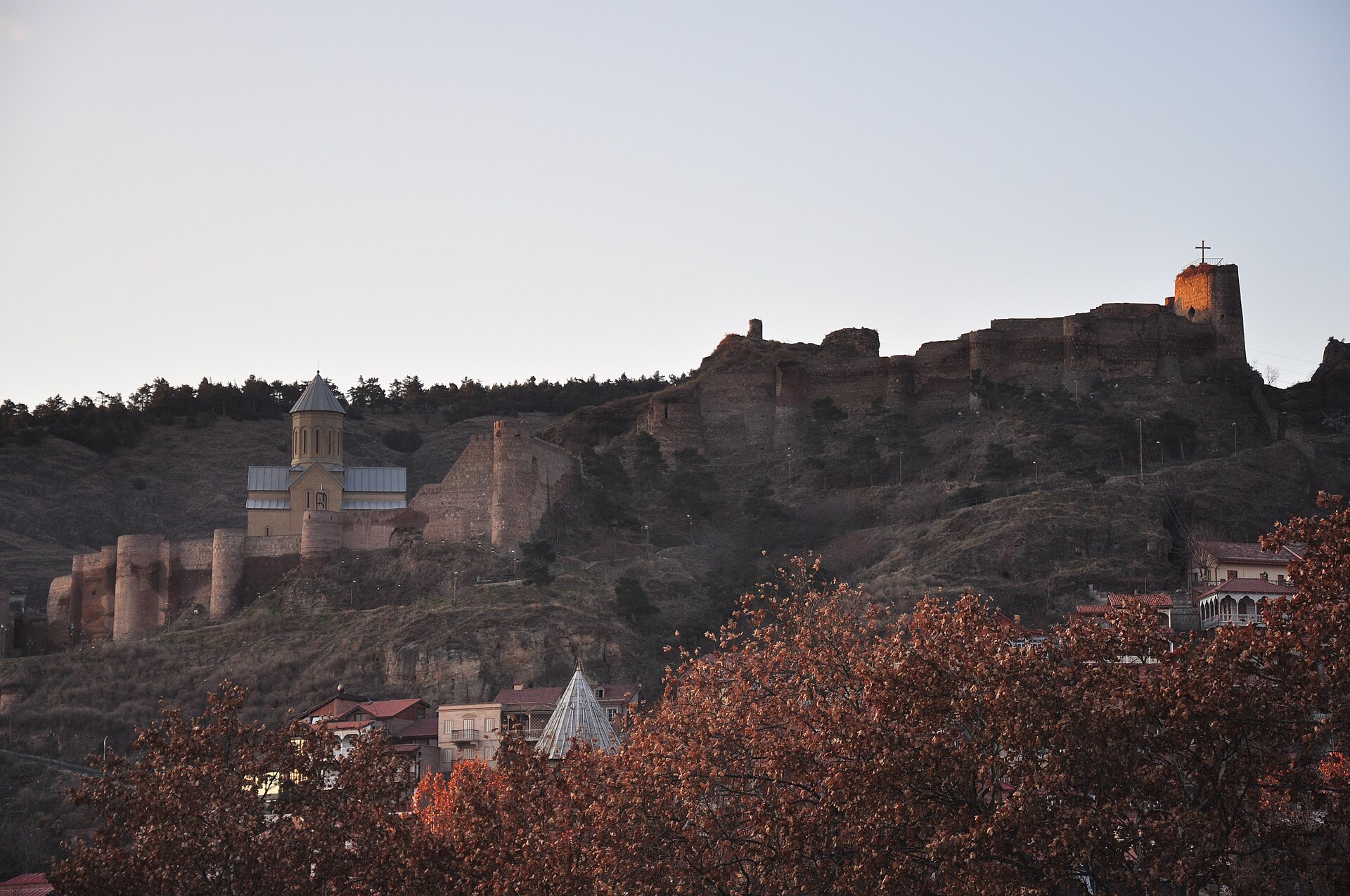
The strength and the beauty of Narikala both spring from its position, for the fortress crowns the steep and rocky ridge of Sololaki that rises abruptly from the western bank of the Kura, the river that the Georgians call the Mtkvari. From this commanding height the citadel dominates the old town of Tbilisi, which clusters at its foot and spreads out along the river, and it controls the narrow defile through which the river and the roads pass. Whoever held Narikala held the key to the city.
The fortress consists of two main walled sections climbing the spine of the hill, linked and adapted to the difficult terrain, so that the walls seem almost to grow out of the living rock. From below, the ramparts and towers present a formidable and picturesque silhouette against the sky, and from above, the view over the city and the river is simply magnificent. It is a position of great natural strength and great natural beauty, and it has been recognized as such by every people who has ever held the city.
The name Sololaki, borne by the ridge on which Narikala stands, is itself said to derive from an Arabic word for the water channels that once brought water to the fortress and the gardens, a small linguistic trace of the long centuries of Muslim rule over the city. The whole hill is steeped in history in this way, its very place-names carrying the memory of the many peoples who have lived and fought here. To walk the ridge is to move through a landscape where every stone and every name has a story to tell of the long and layered past of Tbilisi.
The two walled sections of the fortress, an upper and a lower, are joined together to form a single defensive system that follows the natural line of the ridge, rising and falling with the contours of the rock. This adaptation to the terrain is characteristic of the best mountain fortresses, which draw their strength as much from the ground on which they stand as from the walls that crown it. At Narikala the marriage of stone and rock is so complete that in places it is hard to tell where the natural cliff ends and the built wall begins.
The Ancient Persian Citadel
The origins of Narikala reach back into the deep antiquity of the region, for the hill on which it stands was settled by human beings as long ago as the fourth millennium before Christ. The earliest fortress on the site is documented to around the year 364, in the reign of the Georgian king Varaz-Bakur, and by the late fourth century the citadel was in the hands of the Persians, whose great empire then dominated much of the Caucasus. Georgian tradition, however, attributes its founding to the legendary king Vakhtang Gorgasali, the founder of Tbilisi itself.
In these early centuries the fortress was known by other names, and it stood at the frontier of the great struggle between the Persian empire and the Christian kingdoms of the Caucasus. The kings of Kartli, the heartland of eastern Georgia, recaptured the citadel by the middle of the fifth century, and thereafter it changed hands many times as the fortunes of war swayed back and forth. From the very beginning, Narikala was a place fought over by empires, a prize whose possession meant the control of a strategic crossroads between east and west.
The legend that credits the founding of the fortress to King Vakhtang Gorgasali, the fifth-century monarch who is also said to have founded Tbilisi itself, reflects the deep hold that Narikala has upon the Georgian national imagination. Whether or not the story is literally true, it expresses a profound truth about the place, namely that the fortress and the city are seen as having been born together, twin creations bound up with the origins of the nation. In Georgian memory, Narikala is as old as Tbilisi, and both are as old as Georgia itself.
Archaeological investigation of the hill has revealed traces of human presence stretching back thousands of years before the first documented fortress, confirming that this commanding height was recognized as a place of importance from the very earliest times. It is easy to understand why, for the ridge above the river offered both security and a controlling position over the crossing and the routes that met there. Long before there was a Tbilisi, and long before there was a Georgia, human beings had already made their home upon the hill where Narikala would one day rise.

The Arab Emirate of Tbilisi
In the seventh century a new power arose in the Near East, the Arabs, who carried the banner of Islam across a vast swath of the world and in time reached the Caucasus. Tbilisi fell under Arab control and became the seat of an emirate, and the fortress of Narikala was greatly expanded under the Umayyad rulers who now held the city. For centuries Tbilisi was a Muslim enclave in a largely Christian land, and Narikala was the stronghold from which the Arab emirs governed their domain.
The long period of Arab rule left a deep mark upon Tbilisi and upon its citadel, and much of the fortress as it developed owed something to this era. The Arab emirate endured, with interruptions, for several centuries, and it was only with the rise of a united Georgian kingdom that the city and its fortress would at last be brought firmly under Georgian control. The stones of Narikala thus remember the age when Tbilisi was a frontier city of the Islamic world, a meeting place of faiths and peoples.
The Arab emirate of Tbilisi was a remarkable episode in the history of the Caucasus, a Muslim state set down amid the Christian kingdoms of the region, and for a time it flourished as a center of trade and culture. The emirs who ruled from Narikala minted their own coins and governed a diverse population, and the city under their rule was a cosmopolitan meeting place of Georgians, Armenians, Arabs, and others. This long period of Muslim rule is one of the reasons that Tbilisi has always been a city of many peoples and faiths, a character it retains to this day.
The transition from Arab to Georgian rule was a gradual and hard-fought process, spanning generations of struggle, and it was only completed when the resurgent Georgian monarchy under David the Builder finally took the city for good. The long persistence of the Arab emirate, however, ensured that its influence upon Tbilisi ran deep, and it is one of the reasons that the city developed the tolerant, multicultural character for which it has long been known. Narikala presided over this whole long process, the strong point around which the fate of the city turned.

David the Builder and the Georgian Golden Age
The turning point in the history of both Tbilisi and Narikala came with the reign of one of the greatest of all Georgian monarchs, King David the Fourth, known to history as David the Builder, who ruled from 1089 to 1125. It was David who broke the power of the invaders, united the Georgian lands, and in the year 1122 captured Tbilisi, making the ancient city the capital of his resurgent kingdom. Under his rule and that of his successors, Georgia entered upon a golden age of power and culture.
David the Builder expanded and strengthened the fortress of Narikala, adapting it to serve as the citadel of his royal capital. The golden age that he inaugurated reached its height under his great-granddaughter, Queen Tamar, when Georgia stood as one of the most powerful states of the region, and throughout this brilliant period Narikala remained the strong heart of the kingdom’s chief city. The fortress that had been the stronghold of Persian and Arab overlords now became a symbol of Georgian royal power and national revival.
The capture of Tbilisi by David the Builder in 1122 was one of the great turning points of Georgian history, for it restored the ancient capital to Georgian hands after centuries of foreign rule and set the seal upon the unification of the kingdom. David is remembered as the greatest of Georgia’s kings, a warrior, a lawgiver, and a patron of the church and of learning, and it is fitting that the fortress of the capital he reclaimed should bear the marks of his work. Under David and his successors, Narikala stood at the very center of a proud and powerful Georgian state.
The golden age that David the Builder inaugurated is remembered by Georgians as the summit of their national history, a time when their kingdom stood among the great powers of the age, when art and learning flourished, and when the great churches and monasteries that still adorn the land were raised. That Narikala should have been the citadel of the capital throughout this brilliant period gives it a special place in the affections of the Georgian people, for it was here, in the strong heart of Tbilisi, that the power of the golden age was anchored.
The Coming of the Mongols
The golden age of medieval Georgia was brought to an end, as so much else was, by the coming of the Mongols in the thirteenth century, whose vast armies swept across the Caucasus and reduced the once mighty kingdom to a tributary state. Tbilisi and its fortress fell under Mongol domination, and it was the Mongols who gave the citadel the name by which it is still known today. They called it Narin Qala, which means the little fortress, and from this the modern name Narikala is derived.
The Mongol period was a time of hardship and decline for Georgia, and the fortress that had symbolized the nation’s greatness now stood as a reminder of its subjugation. Yet Narikala endured, as it always had, through this dark age as through so many others, and the name the Mongols gave it has outlasted their empire by many centuries. It is a curious irony that the citadel of the Georgian capital should bear to this day a name bestowed upon it by one of the most terrible of its conquerors.
The story of the name Narikala is a reminder of how deeply the Mongol conquest cut into the life of the peoples it touched, leaving traces that endure long after the conquerors themselves have vanished. The Mongols swept across half the known world in the thirteenth century, and everywhere they went they left their mark, in destruction and in language and in memory. That the citadel of Tbilisi should carry a Mongol name to this day is a small but telling instance of the lasting impact of that great upheaval upon the history of the Caucasus.
The Walls and Towers
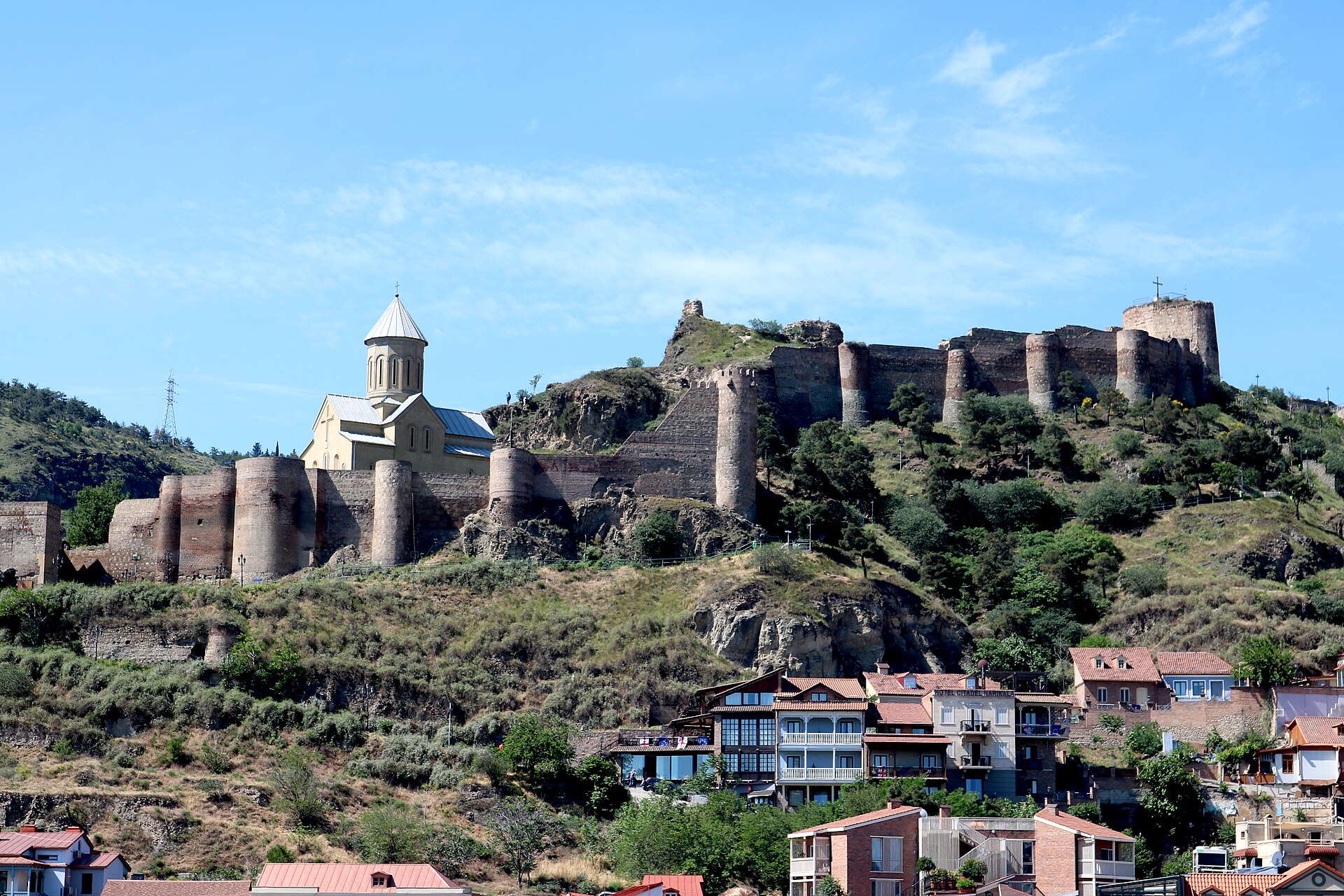
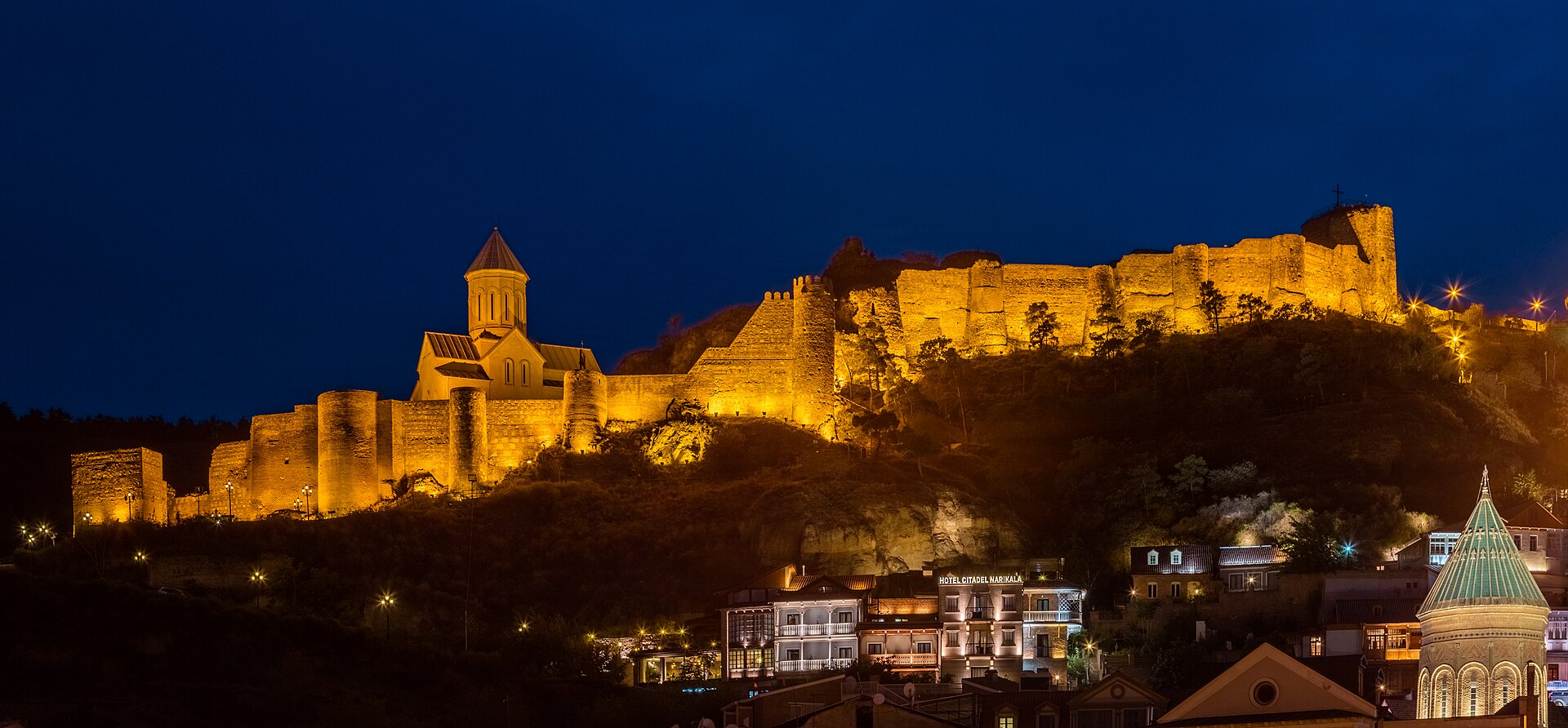
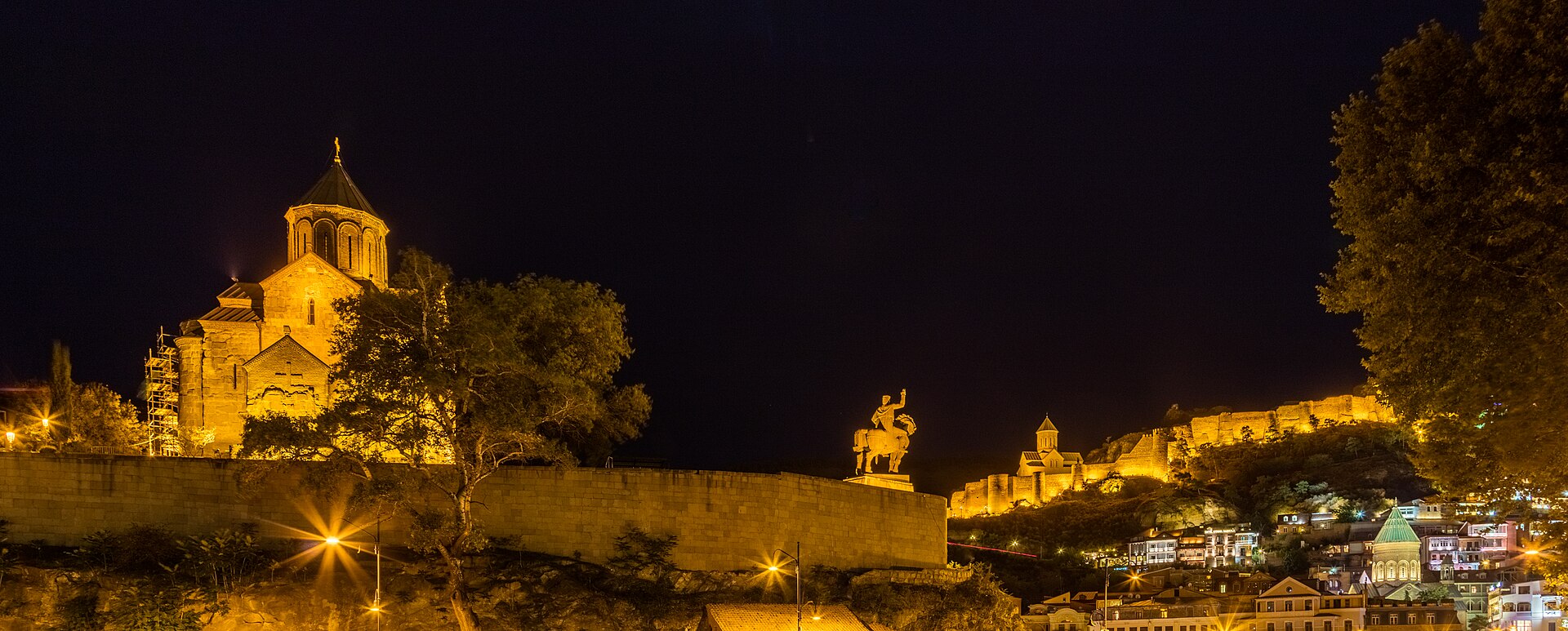
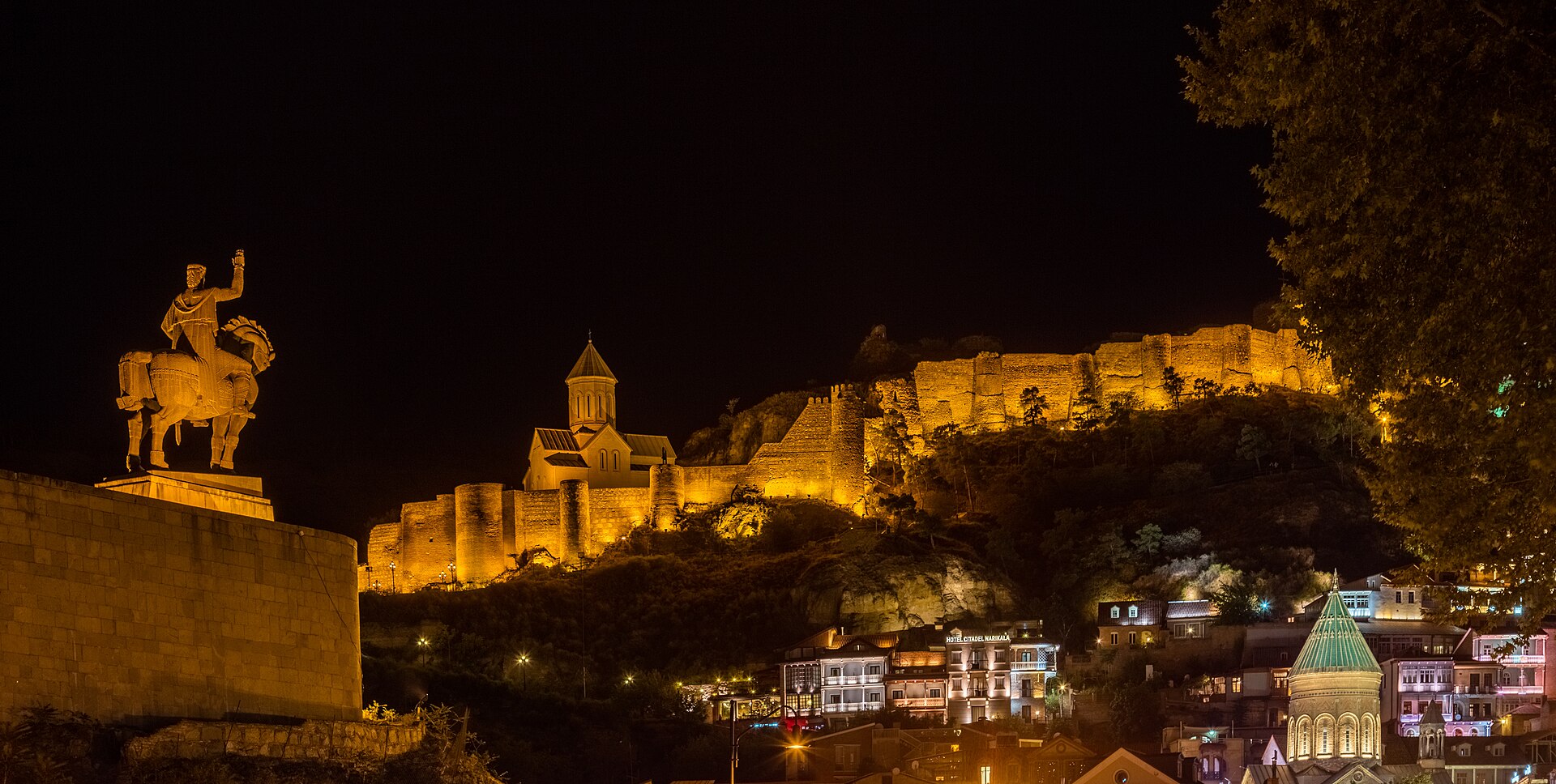
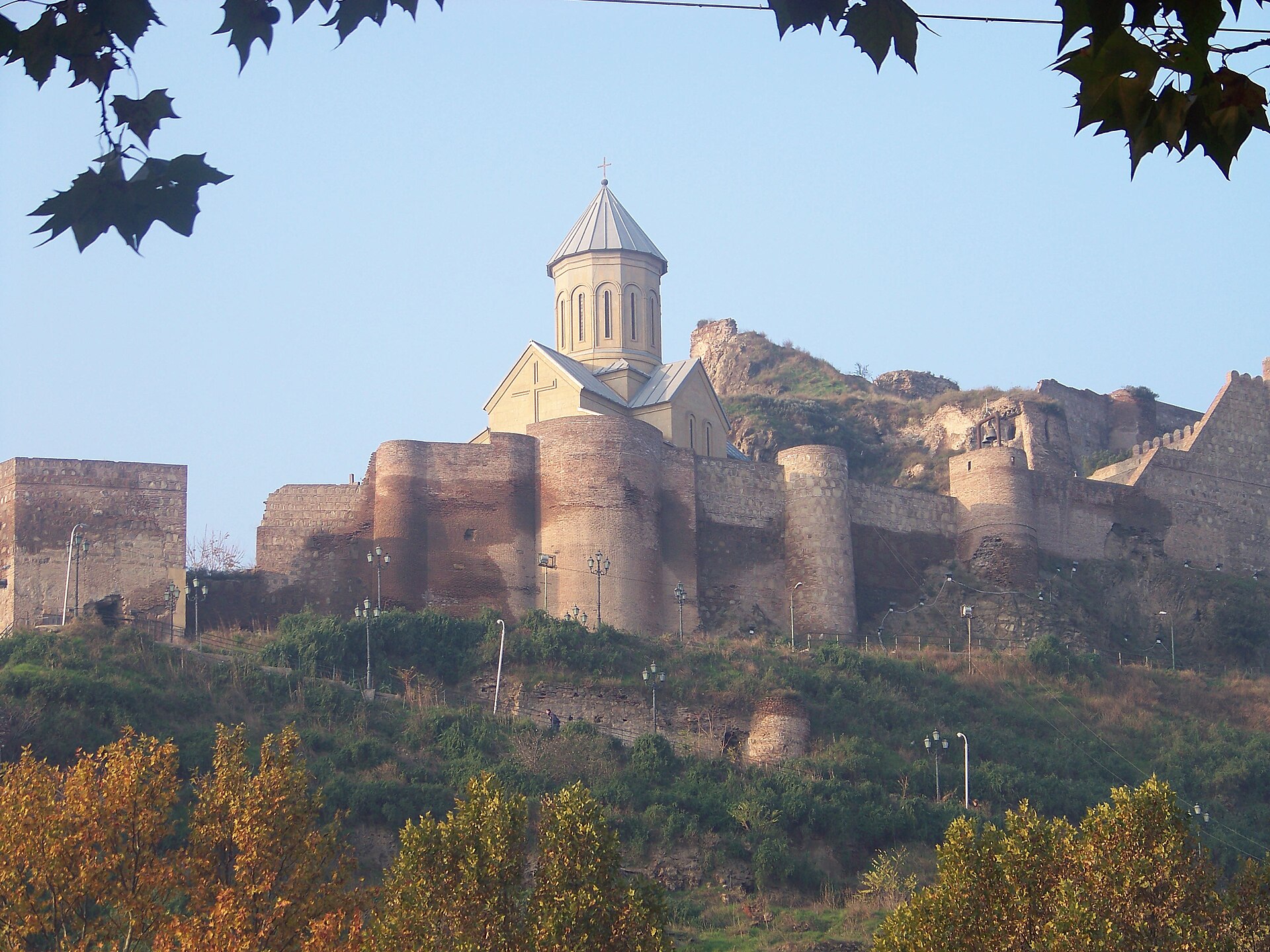
The fortifications that the visitor sees today are, for the most part, the work of the sixteenth and seventeenth centuries, though they stand upon far older foundations and incorporate the labor of many earlier ages. The walls climb the steep ridge in two main sections, studded with towers and following the contours of the rock, and they present from below a picturesque and formidable aspect that has made Narikala one of the most photographed sights in all of Georgia.
Built of stone and brick, the walls and towers were designed to take full advantage of the natural strength of the hill, and their irregular, organic form reflects the difficult terrain to which they were adapted. Some of the towers are round and some square, and the whole forms a rambling, romantic complex that rewards exploration. To walk along the surviving ramparts is to trace the outline of centuries of military engineering, layer upon layer, all bound together by the common purpose of guarding the city below.
Exploring the walls and towers of Narikala today is an adventure in itself, for the fortress rambles over the difficult terrain in a way that invites the visitor to climb and to discover. There are steep stairways and hidden corners, towers to be entered and ramparts to be walked, and at every turn a new view opens out over the city or the river. The very irregularity of the fortress, so different from the geometric precision of some later strongholds, is part of its romantic charm, and it reflects the many hands and many ages that shaped it over the centuries.
The materials of the walls, a mixture of rough stone and fired brick laid in courses, are typical of the building traditions of the region, and they give the fortress its warm, earthy coloring that glows especially beautifully in the light of the setting sun. Over the centuries the walls have been patched and rebuilt so many times that they form a kind of patchwork of different eras, each repair using whatever materials came to hand. This layered, much-mended quality is part of what makes Narikala feel so alive with history, a structure that has been shaped and reshaped by countless hands across the ages.
The Church of Saint Nicholas
Within the lower court of the fortress stands the Church of Saint Nicholas, a place of worship that reminds us that Narikala was never merely a place of war but also a place of faith. The original church on this spot was lost long ago, and the building that stands today was reconstructed in the years 1996 and 1997, built in the traditional Georgian style known as the prescribed cross, with a central dome rising above the meeting of the arms.
The interior of the church is adorned with frescoes depicting scenes from the Bible and from the history of Georgia, a fitting decoration for a church that stands at the very heart of the nation’s ancient capital. The rebuilding of the church in the last years of the twentieth century, soon after Georgia regained its independence, was an act of national and spiritual renewal, and it restored to Narikala a living religious presence that it had lacked for many years. Today the church draws worshippers and visitors alike to the fortress on its hill.
The reconstruction of the Church of Saint Nicholas is part of a broader revival of the Georgian Orthodox Church that followed the collapse of Soviet rule and the restoration of national independence. Throughout Georgia, churches that had been closed or destroyed were reopened and rebuilt in those years, as the nation reclaimed its ancient Christian heritage. That this work should have been carried out at Narikala, the very heart of the old capital, was especially significant, a sign that the spiritual life of Georgia was being restored along with its political freedom.
The Persian and Ottoman Centuries
In the centuries that followed the Mongol domination, Georgia was caught between the two great Muslim empires that flanked it, the Ottomans to the west and the Safavid Persians to the east, and Tbilisi and its fortress were fought over and held in turn by both. Under the Safavid ruler Rostom in the seventeenth century, the fortress was strengthened and fortified, and for long periods it was garrisoned by Persian troops and served as the seat of Iranian power in the city.
This was a time of great suffering for Tbilisi, which was sacked and burned more than once in the endless wars between the empires, and Narikala stood at the center of these struggles as the key to the possession of the city. The fortress changed hands repeatedly, and each new master repaired and adapted its walls to suit his own needs. The Narikala of this period was a hard-worked frontier fortress, a place of garrisons and gunpowder, standing guard over a city that knew little peace.
The position of Tbilisi on the frontier between the Ottoman and Persian empires made it one of the most fought-over cities in all of western Asia, and its history in these centuries is a long tale of sieges, sackings, and changes of master. Through it all, Narikala remained the prize, the strong point whose possession decided the fate of the city. The fortress bears the marks of these hard centuries in its much-repaired and much-adapted walls, a physical record of an age when Tbilisi lay at the mercy of the great powers that surrounded it.
The Catastrophe of 1827
The event that gave Narikala its present ruined appearance came in the year 1827, when disaster struck the ancient fortress. An earthquake damaged large portions of the walls and towers, and the sections that were left dangerous were subsequently demolished. By this time Georgia had come under the rule of the Russian empire, and the military importance of the old citadel had begun to fade, so that there was little will to undertake the great labor of a full restoration.
It is often said that the destruction was caused by the explosion of a powder magazine within the fortress, ignited by a lightning strike, and this dramatic story has become part of the lore of Narikala. Whatever the exact cause, the result was the same, the reduction of much of the fortress to the picturesque ruin that we see today. From that time onward Narikala ceased to be a working stronghold and became instead a monument to the past, a romantic relic crowning the hill above the city.
The transformation of Narikala from a working fortress into a romantic ruin mirrors a change that came over many old castles in the nineteenth century, as the advance of military technology rendered the old stone strongholds obsolete. Cannon and gunpowder had already begun to change the nature of war, and the coming of the modern age made citadels like Narikala redundant as instruments of defence. What was lost as a fortress, however, was gained as a monument, and the ruined Narikala has charmed and fascinated visitors ever since in a way that a working garrison never could.
Even in its ruined state, the fortress lost none of its hold upon the imagination of the people of Tbilisi, who continued to regard it as the ancient guardian of their city. Poets and painters were drawn to its romantic silhouette, and travelers climbed to its walls to admire the view and to muse upon the passing of empires. The ruin of Narikala, far from diminishing its importance, seemed only to deepen its meaning, making it a monument to the endurance of the city through all the disasters of its long and troubled history.

The Old Town Below
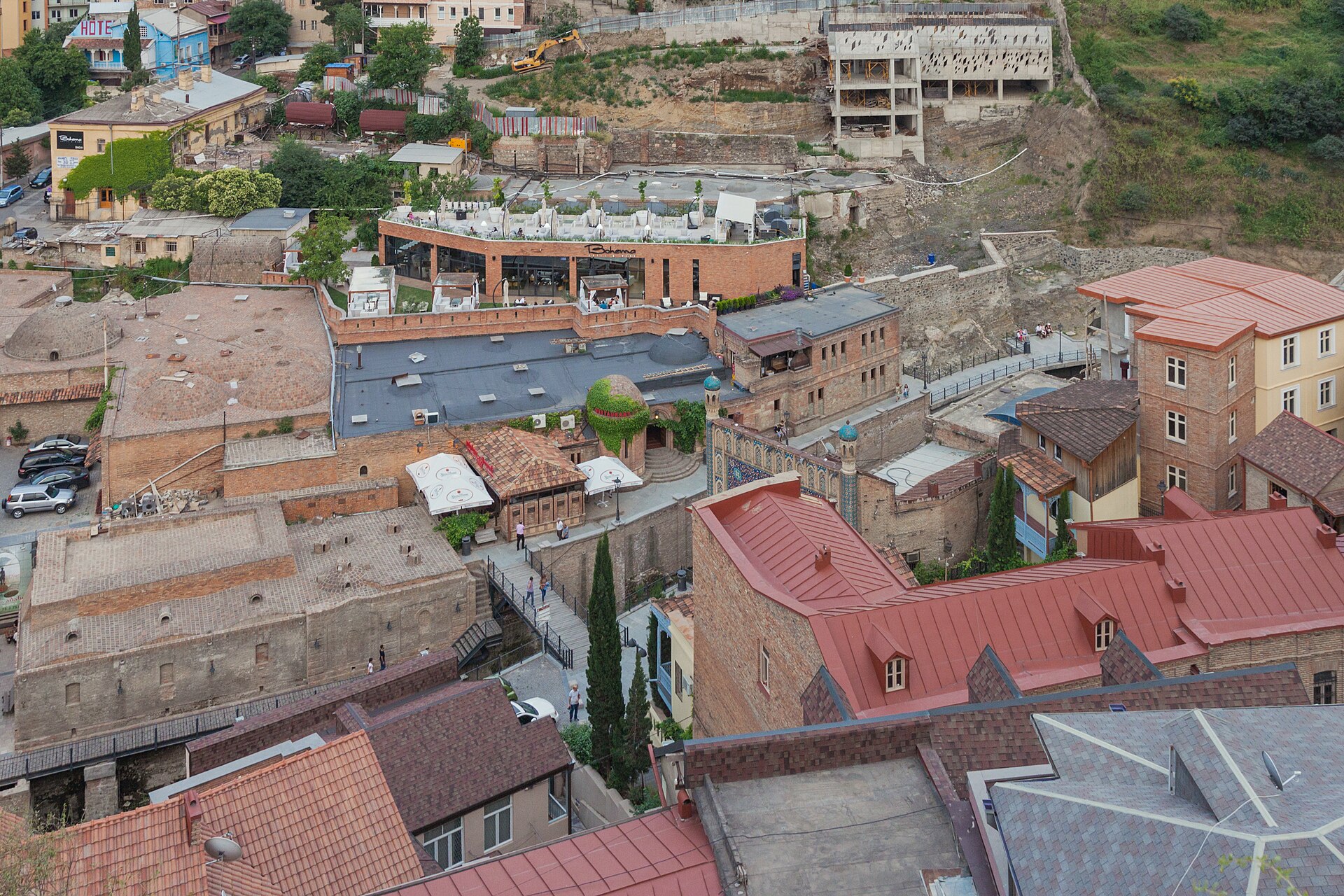
One of the greatest pleasures of a visit to Narikala is the tremendous view it commands over the old town of Tbilisi spread out below. From the ramparts the eye takes in the jumble of red-tiled roofs and carved wooden balconies, the domes of churches, the winding course of the Kura river, and the famous sulphur bath district of Abanotubani with its distinctive brick domes. It is one of the finest urban panoramas in all of the Caucasus.
This view is not merely beautiful but historically eloquent, for it lays out beneath the visitor the whole ancient fabric of Tbilisi, a city that has grown up in the shelter of the fortress over the course of many centuries. To stand upon the walls of Narikala and gaze down upon the old town is to see at a glance the intimate relationship between the citadel and the city it has always guarded, the two bound together in a single organic whole that has endured through all the vicissitudes of history.
The sulphur baths of Abanotubani, visible from the walls of Narikala, are one of the most ancient and characteristic features of Tbilisi, and they are bound up with the very legend of the city’s founding. It is said that King Vakhtang Gorgasali discovered the hot springs while hunting, and founded the city on the spot, giving it the name Tbilisi from the Georgian word for warm. To look down from Narikala upon the domes of the baths is thus to look upon the mythical birthplace of the city, a fitting view from the fortress that has guarded it ever since.
The old town of Tbilisi that spreads beneath the fortress is one of the most atmospheric urban landscapes in the entire Caucasus, a maze of narrow streets lined with houses whose ornate wooden balconies overhang the lanes. Churches, mosques, and a synagogue stand within a short distance of one another, a testament to the city’s long tradition of religious coexistence. From the heights of Narikala this whole rich tapestry is laid out before the visitor, an unrivaled vantage from which to appreciate the beauty and the diversity of the ancient city.

The Mother of Georgia
Rising above the fortress on the crest of the Sololaki ridge stands one of the most striking monuments in all of Tbilisi, the great aluminum statue known as Kartlis Deda, the Mother of Georgia. Erected in the twentieth century, this towering female figure holds in one hand a bowl of wine, to welcome those who come as friends, and in the other a sword, to meet those who come as enemies. She embodies the spirit of the Georgian nation, hospitable yet fierce in its own defence.
The statue stands close by the fortress, and the two together form the great landmark of the Sololaki ridge, visible from all over the city. To climb from Narikala up to the Mother of Georgia is a natural continuation of any visit, and the walk offers ever finer views over Tbilisi as one ascends. The pairing of the ancient fortress with the modern statue is a fitting one, for both are symbols of the endurance and the identity of Georgia, standing guard together over the capital.
The figure of Kartlis Deda, the Mother of Georgia, with her bowl of wine and her sword, captures something essential about the character of the Georgian people as they see themselves, a people famed for their warm hospitality but fierce in the defence of their freedom. The statue has become one of the great symbols of the nation, and its position above Narikala, on the crest of the ancient ridge, links the modern spirit of Georgia to the deep history embodied in the fortress below. Together, the two form a powerful image of a nation that honors both its past and its enduring values.
Erected in 1958 to mark the fifteen-hundredth anniversary of the founding of Tbilisi, the Mother of Georgia has watched over the city for more than half a century, and she has become as beloved a symbol of Tbilisi as the fortress itself. Her simple, powerful form, visible from far across the city, speaks directly to the heart of the Georgian people, expressing in a single image the values of welcome and defiance that they hold most dear. Standing beside the ancient walls of Narikala, she links the deep past of the nation to its living present.

The Botanical Garden and the Cable Car
In the modern age, the ancient fortress has been made easily accessible to visitors by a cable car that glides up from Rike Park on the bank of the Kura, carrying passengers swiftly and comfortably to the summit of the ridge beside Narikala. The ride itself is a delight, offering spectacular aerial views of the old town and the river, and it has made the fortress one of the most popular attractions in the whole of Tbilisi. For those who prefer to walk, a network of winding paths leads up through the old streets to the citadel.
Just beyond the fortress, on the far side of the ridge, lies the National Botanical Garden of Georgia, a green oasis that occupies the valley behind Narikala. Once the royal gardens, it is a place of great beauty and tranquility, with paths winding among trees and flowers from all over the world. The combination of the historic fortress, the towering statue, and the peaceful garden makes the Sololaki ridge one of the most rewarding places to spend a day in all of Tbilisi.
The development of the cable car and the careful preservation of the fortress reflect the importance that modern Tbilisi places upon its heritage as a source of both pride and prosperity. Tourism has become a vital part of the Georgian economy, and Narikala, as the great symbol of the capital, is at the heart of the city’s appeal to visitors from around the world. The investment in making the fortress accessible and welcoming is thus both a celebration of the past and an investment in the future, ensuring that the ancient citadel continues to play a central role in the life of the city.

The Enduring Citadel
For all that it stands in ruins today, Narikala remains the great symbol and the ancient guardian of Tbilisi, a fortress whose history is inseparable from the history of the city and the nation. Few citadels anywhere have watched over their city for so long, or passed through the hands of so many different peoples and empires, and few are so beloved by the people who live in their shadow. Narikala is, quite simply, the heart of old Tbilisi.
The fortress has been the subject of restoration and conservation in recent years, as Georgia has sought to preserve and to celebrate this most precious of its historic monuments. The walls have been stabilized, the church rebuilt, and the whole site made safe and welcoming for the many visitors who come to explore it. In this way Narikala continues its long life, no longer as a fortress of war but as a monument of peace, a place where the past and the present of Tbilisi meet.
To stand upon the ramparts of Narikala at the end of the day, as the sun sinks behind the hills and the lights begin to twinkle in the old town below, is to feel the full weight of the history that this ancient fortress has witnessed. Empires have risen and fallen, the city has been destroyed and rebuilt many times over, and through it all Narikala has kept its silent watch upon the ridge. It is this sense of deep and enduring continuity, of a place that has outlasted so much, that gives the fortress its special power over the imagination of all who visit it.
There is a particular magic to Narikala that sets it apart even from the many other splendid sights of Tbilisi, a magic that comes from its great age, its commanding position, and the sheer density of the history gathered upon its hill. It is a place that repays quiet contemplation as much as active exploration, a place to sit upon an ancient wall and to imagine the long procession of peoples and events that have passed beneath its towers. In Narikala, the whole story of Tbilisi, and of Georgia, is written in stone upon a single unforgettable ridge above the Kura.
If you would like to see exactly where this ancient citadel stands upon the map, you can find it here:
View on Google Maps: 41.6875, 44.8092
From its commanding ridge above the Kura, Narikala has watched over Tbilisi through nearly two thousand years of history, and it watches over the city still.
Castles Nearby
If Narikala has drawn you to the great citadels that guard their cities from a commanding height, you may enjoy these other famous fortresses:
- The Citadel of Aleppo: Four Thousand Years on a Single Hill
- Belgrade Fortress: The Kalemegdan Stronghold at the Confluence
The Soul of Tbilisi
Narikala is more than a ruin upon a hill, for it is the very soul of Tbilisi, the ancient heart of a city that has grown up around and beneath it for nearly two thousand years. Through all the invasions and disasters that have swept over the Georgian capital, the fortress has endured, and its survival is bound up with the survival of the city and the nation it has guarded for so long. To the people of Tbilisi it is a symbol of their history and their resilience, a stone witness to all that they have suffered and overcome.
If you should visit Tbilisi, the climb to Narikala is one of the great experiences the city has to offer, whether you make the ascent on foot through the winding old streets or glide up in the cable car from the park by the river. From the summit the whole of the old town is spread out beneath you, the domes and rooftops and the river winding through, and behind you the ancient walls climb on toward the statue of the Mother of Georgia. It is a view, and a place, that no traveler to Georgia should miss.
Whether you come for the history, for the views, or simply for the pleasure of wandering its ancient walls, Narikala will not disappoint you, and you will carry away the memory of this great fortress on its ridge above the Kura as one of the highlights of any visit to the beautiful and welcoming land of Georgia.
You May Like
Chittorgarh Fort: The Largest Fort in India and the Legend of the Jauhar